
Review · BERLIN
Private Taxi Tour City East & West History and Architecture 3-4h
Berlin rewards a moving tour. This private taxi ride covers East and West Berlin in three to four hours, giving you a fast, comfortable introduction to a city shaped by emperors, war, division, and reunification. I like the personal pickup and the chance to adjust the route to your interests. I also like that guide Gunter Bauer adds small stories to streets and buildings that are easy to miss from a standard sightseeing bus. The main drawback is simple: there is a lot to absorb, and some stops are brief photo visits rather than full tours.
The tour works especially well in cold or wet weather, when you can stay in a heated, air-conditioned taxi between stops. I also value the private format, since older relatives, families, or anyone with limited walking ability can set the pace. The one thing to consider is the price, $150.18 per person, which makes the most sense for a small group that wants convenience and personal attention.
Key points to know before booking
- A true cross-city overview: The route links Charlottenburg, Tiergarten, the government quarter, Mitte, Alexanderplatz, Potsdamer Platz, and Checkpoint Charlie.
- Gunter Bauer is the main advantage: He is praised for clear English, personal stories, careful driving, photo help, and a friendly manner.
- Useful in poor weather: You spend much of the tour inside a warm taxi, with stops for close-up views and pictures.
- Private and adjustable: Only your group rides, and the route can be shaped around architecture, Berlin’s division, royal history, or the Nazi era.
- Pickup is included inside the S-Bahn ring: Hotel or apartment pickup is provided there, while airport and out-of-center pickups cost extra.
- Expect a city sampler, not a museum day: Major sights are introduced from outside, with selected short visits such as the Humboldt Forum, Hackesche Höfe, and the Topography of Terror.
Why a private taxi is a smart way to meet Berlin
Berlin is spread out. The Brandenburg Gate, Kaiser Wilhelm Memorial Church, East Side neighborhoods, government buildings, and Checkpoint Charlie are not arranged in one tidy walking circuit. A taxi tour solves that problem by connecting distant areas without making you spend half the day changing trains.
The private setup matters. You are not waiting for a large group or following a fixed walking pace. You can ask to linger at the Reichstag, shorten a stop that does not interest you, or focus more heavily on the Cold War and the Berlin Wall. Gunter’s approach also includes practical help, such as taking pictures and helping with local transport questions after the tour.
This is not a quiet, slow architectural walk. You will see a great deal through the vehicle windows, then get out at selected points. That format gives you orientation quickly, but anyone wanting lengthy museum visits should book those separately.
More Private History Tours in Berlin
- Berlin Private Complete History All Day Walking Tour
★ 5.0 · 474 reviews - Berlin Private Half-Day Walking Tour: Discover the German Capital’s History
★ 5.0 · 244 reviews - The History of Berlin: WWII PRIVATE Walking Tour With Locals
★ 5.0 · 209 reviews
Charlottenburg and the polished face of West Berlin
The western section begins around Breitscheidplatz and the Kaiser Wilhelm Memorial Church. The damaged church tower and west portal remain as a war memorial, while Egon Eiermann’s modern blue-glass church was built around them. Berliners gave the newer buildings the memorable nicknames lipstick and powder compact.
Inside the modern church, the thousands of blue glass blocks create a calm, almost mysterious light. The double-wall construction also keeps much of the traffic noise out. The catch is that the concrete needs frequent repair, so scaffolding is a familiar part of the view.
Nearby, Berlin Zoo is introduced from the outside, especially at the Elephant Gate and Lion Gate. It is one of Germany’s oldest zoos and holds about 16,000 animals from roughly 1,600 species. Its themed buildings reflect the countries associated with the animals, though wartime damage altered parts of the grounds.
The Theater des Westens adds a different note. Built when Berlin’s prosperous residents were moving toward the leafy western districts, this ornate theater recalls the era of villas, gardens, and imperial display. It now serves mainly as a musical theater and still contains an imperial box.
Ku’damm, KaDeWe, and the shopping heart of West Berlin
Kantstrasse leads toward Kurfürstendamm, usually shortened to Ku’damm. The boulevard was modeled partly on the Champs Élysées and once offered grand villas, cafes, cinemas, and nightlife. Today it is more strongly associated with shops, luxury brands, and large modern stores.
The tour pauses around Tauentzienstrasse and Kaufhaus des Westens, better known as KaDeWe. The department store covers about 60,000 square meters and is famous for its upper gourmet floor, where you can find oysters, champagne, chocolate, bread, and cheese. The visit is free, but your appetite may not be.
This section helps explain the difference between old West Berlin glamour and modern retail Berlin. The guide also points out Nollendorfplatz and the unusual history of the subway lines. Charlottenburg once resisted having a noisy, dirty railway pass its elegant villas, so the rail system developed in ways that still shape the city.
At Urania, you hear about Berlin’s long tradition of bringing science to the public. The nearby wide green strip was once part of a plan for a car-friendly city with elevated roads. Thankfully, that vision was not fully built.
Tiergarten, the Victory Column, and the presidential palace
Tiergarten is more than a large park in the middle of Berlin. It began as a royal hunting ground, then opened to the public under Friedrich II. Later, garden designer Peter Joseph Lenné reshaped it with paths, lakes, and views, using the Landwehr Canal to drain wet ground.
World War II left the park badly damaged. Trees were destroyed, and potatoes were grown near the Reichstag. Allied help supported later replanting, creating the broad green center you see today.
The Victory Column is one of the tour’s clearest reminders of imperial Germany. Originally erected near the Reichstag, it celebrated victories over Denmark, Austria, and France. Hitler moved it to its present position, then added another drum to mark a later victory that never came.
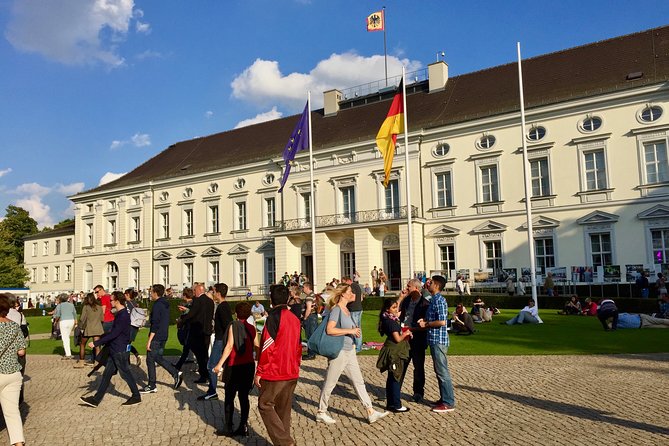
Bellevue Palace, the official Berlin residence of the Federal President, offers another glimpse of state power. The small palace was built for August Ferdinand, a younger brother of Friedrich II, and once had a view toward Charlottenburg Palace. That view has disappeared behind modern development.
The House of World Cultures, known locally as the Pregnant Oyster, adds a lighter architectural story. The curved roof was so ambitious that it collapsed in 1980. The building was rebuilt and now presents non-European art and performances.
More Private History Tours in Germany
- Private Tour: Jewish Heritage Walking Tour of Berlin
★ 5.0 · 29 reviews - Private Berlin WWII and Cold War History Tour with Local Expert Guide
★ 5.0 · 28 reviews - Berlin: Private Bike Tour of the Berlin Wall and Third Reich
★ 5.0 · 23 reviews - Nuremberg: 1.5-Hour Private Tour through Historical Old Town
★ 4.8 · 283 reviews
The government quarter and the architecture of reunification
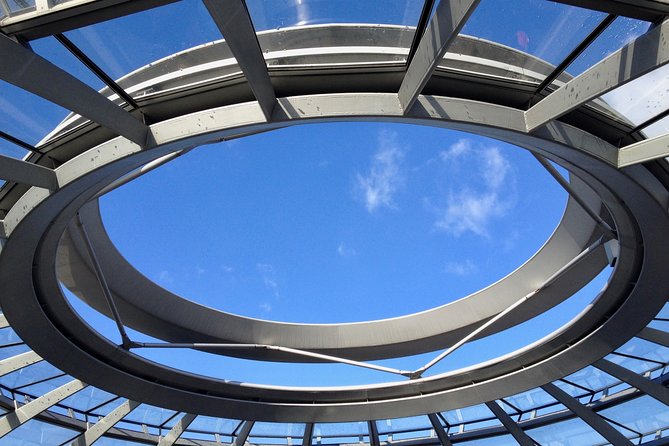
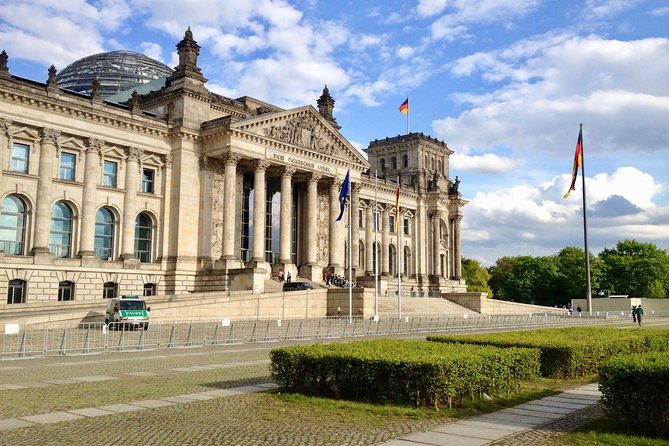
The Reichstag is presented as both a historic building and a modern working parliament. Its original Wilhelminian exterior survived war and decades of neglect near the Wall. After reunification, the interior was gutted and redesigned, while the glass dome became a symbol of a more open government.
The nearby Paul-Löbe Building contains committee rooms where much of parliamentary work actually happens. Its glass and open forms allow parts of the process to be seen from outside. The large Federal Chancellery, with ten floors and about 500 offices, shows the scale of the modern German government.
You also pass the building used for regular press briefings, recognizable by its large central window. This part of the tour is especially useful if you want to understand how Berlin’s political center was rebuilt after reunification rather than simply photograph the famous landmarks.
Hackesche Höfe and the Jewish quarter
Hackesche Höfe offers a welcome change from monumental government buildings. Built in 1908, the connected courtyards mixed housing, workshops, small factories, and offices. Their restoration after the fall of the Wall helped revive this part of Mitte.
Today, the former workshops are mainly shops and small businesses. You may see Königliche Porzellan-Manufaktur products and the familiar East Berlin Ampelmännchen designs. The stop is short, around ten minutes, so treat it as an atmospheric introduction rather than a long shopping visit.
The New Synagogue on Oranienburger Strasse is one of Berlin’s most striking religious buildings, with Moorish details and a gold dome. The main synagogue was destroyed in World War II, but the front section has been rebuilt and now contains an exhibition about Jewish life in Berlin.
Security is strict. Expect airport-style checks, and allow extra time if you plan to enter beyond the quick exterior view.
The Wall, the Palace of Tears, and Berlin’s divided streets
Berlin’s division is easier to understand when you see how ordinary transport and city streets were controlled. At Friedrichstrasse station, East Berliners could cross toward the West, but the station was filled with barriers, customs checks, and observation points.
The nearby Palace of Tears preserves that experience. It recalls the painful farewells between people who could meet briefly but could not freely return across the border. The station also served international trains, including the Paris to Moscow route, and became associated with escape attempts.
The tour also passes an earlier border area near the Invalidenstrasse harbor. Günter Litfin was killed there while trying to swim across after the Wall went up. These details turn the Wall from an abstract political story into something tied to real streets and real people.
Checkpoint Charlie is a short photo stop, but the guide is refreshingly clear about what you are seeing. The present guard hut is a replica, as is the famous sign. The location still matters because of the 1961 tank confrontation between American and Soviet forces, one of the most dangerous moments of the Cold War.
Unter den Linden, the Brandenburg Gate, and Gendarmenmarkt
Unter den Linden is Berlin’s grand ceremonial boulevard. It began as a bridle path from the royal palace toward the hunting grounds, then grew into a route lined with palaces, the State Opera, Humboldt University, and the State Library.
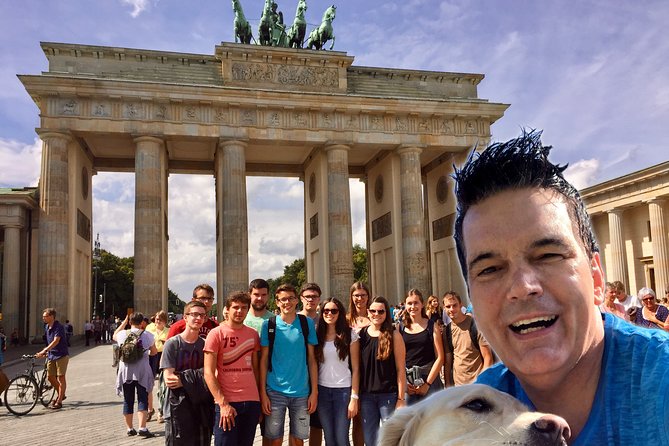
The Brandenburg Gate sits on Pariser Platz, the city’s formal receiving room. War and the Wall once left it isolated, but the surrounding buildings have been rebuilt in modern versions of their former shapes. The French and American embassies, the Academy of the Arts, and the Liebermannhaus now frame the square again.
The former Soviet embassy nearby was designed to display Soviet power. Its size and palace-like form were meant to make a political point in the center of Berlin. At the Forum Fridericianum, you see the State Opera, St. Hedwig Cathedral, Humboldt University, and the old Royal Library.
A glass panel in Bebelplatz recalls the Nazi book burning of May 10, 1933. It is easy to miss, but Gunter’s commentary gives the square a moral weight that its elegant buildings alone cannot provide.
Gendarmenmarkt is one of Berlin’s most beautiful squares. The German and French cathedrals flank the concert hall, although neither church is technically a cathedral. The French church reflects the role of Huguenot refugees in Berlin, while the German cathedral now presents German parliamentary history.
The Neue Wache, once a guardhouse, is now a memorial to victims of war and tyranny. Inside is Käthe Kollwitz’s enlarged sculpture of a mother mourning her dead son. The stop is brief but worth taking seriously.
Humboldt Forum, Alexanderplatz, and old Berlin
The Humboldt Forum occupies the former site of the Berlin Palace. The palace was destroyed after the war by East German authorities, despite surviving sections and international criticism. The current building combines a modern interior with a detailed reconstruction of the palace exterior and Schlüter courtyard.
The forum houses non-European collections and material connected with Humboldt University. A thirty-minute visit gives you a taste, not a full museum experience. If this interests you, plan a separate return visit.
Alexanderplatz reveals another side of East Berlin. Its socialist redesign created a broad open space for parades, surrounded by buildings meant to represent modern socialism. The television tower remains the most visible symbol of that plan and is still Germany’s tallest structure.
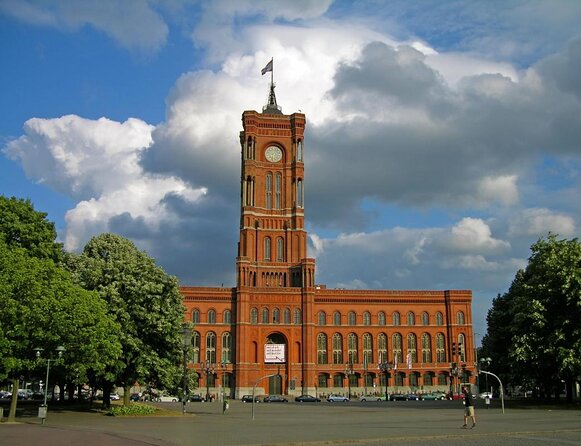
Nearby, the red-brick Red City Hall is named for its masonry, not for the political party of the mayor. The Nikolaiviertel offers a reconstructed version of old Berlin around the city’s oldest church. The quarter was largely rebuilt in the 1980s, so it is best understood as a carefully made historical setting rather than an untouched old neighborhood.
Potsdamer Platz, embassies, and the Topography of Terror
Potsdamer Platz was once a major traffic and entertainment center. After decades of emptiness near the Wall, it was rebuilt with the Sony Center, corporate towers, hotels, and new shops. The architecture is bold, but the area can feel planned rather than naturally grown.
The route then follows parts of the Kulturforum, created as a western counterpart to Museum Island. The Philharmonie, New National Gallery, State Library, picture gallery, and museums for decorative arts and musical instruments occupy this cultural district.
Along the Landwehr Canal, you pass government and embassy buildings. The former Reichsmarineamt now forms part of the Defense Ministry, and the nearby Bendlerblock recalls the failed July 20, 1944 attempt to kill Hitler. The Nordic embassies share a distinctive connected complex, while other embassies use styles meant to signal national identity.
The Topography of Terror is one of the most important stops. It brings together the former Nazi security district, an open-air documentation area, surviving sections of the Berlin Wall, and information about the Nazi terror system. The visit is short, around fifteen minutes, but it gives you a clear reason to return for a longer look.
Time, price, and who gets the best value
The price is $150.18 per person. That is not cheap for a three to four hour city tour, but this is a private taxi service with pickup, parking, WiFi, air conditioning, and both the driving and guiding costs included. For two people, it is a premium way to get oriented. For a family or small group sharing the vehicle, the cost becomes easier to justify.
I would choose it if you have limited time, poor weather, older companions, children, or a strong interest in Berlin’s political history. It is also useful on a first day, when you want to learn the city’s shape before returning to selected museums and neighborhoods.
I would not choose it as your only Berlin experience if you prefer long walks, quiet museum visits, or slow time in cafes. The route is packed. At some stops, you may have only ten or fifteen minutes, and traffic can affect the rhythm.
Pickup inside the S-Bahn ring is included. Airport pickup from BER and locations outside the ring cost extra. A toddler seat, booster seat, and baby seat on request make the tour easier for families. Service animals are allowed, and the activity is private.
Should you book this Berlin taxi tour?
Book it if you want a warm, efficient, history-heavy introduction to Berlin and prefer a guide who can adapt the ride to your group. Gunter Bauer’s personal approach, clear English, careful driving, photo help, and willingness to answer questions are central to the experience.
Skip it if you want a full day inside museums or a low-cost group tour. The best way to use this experience is as a city orientation: see the major districts, learn what matters, mark the places you want to revisit, and then explore those sites at your own pace.
FAQ
How long does the private taxi tour last?
The tour lasts approximately three to four hours.
Where does pickup take place?
Pickup is included from a hotel, apartment, or other requested location within Berlin’s S-Bahn ring.
Is airport pickup included?
No. Pickup from BER airport or locations outside the S-Bahn ring is available for an additional charge based on the Berlin taxi tariff.
Is this a private tour?
Yes. Only your group participates in the activity.
Is the tour offered in English?
Yes. The tour is offered in English.
Are child seats available?
A toddler seat for children from six months to three years and a booster seat for older children are available. A baby seat can be brought on request.
What is included in the price?
Private transportation, WiFi, an air-conditioned vehicle, parking fees, and pickup within the S-Bahn ring are included. The taxi ride and city tour taxes are also included. Lunch is not included.
More Architecture and Landmark Tours in Berlin
- Venice: St. Mark’s Basilica Guided Tour & VR History Intro
★ 3.9 · 4,880 reviews - Venice’s Best: Basilica, Doge’s Palace, Gondola & History Gallery
★ 4.5 · 2,478 reviews - Córdoba: Skip-the-Line Great Mosque-Cathedral History Tour
★ 4.7 · 1,690 reviews - Pantheon Elite Guided Tour – Rome’s Iconic Ancient Temple
★ 5.0 · 1,447 reviews
Just added around Berlin
- Historic center of Berlin – Tour in Italian★ 5.0 · 143 reviews
- Berlin Food & Cultural Tour: Must-Try German & Berliner Classics★ 5.0 · 51 reviews
- Private Berlin WWII and Cold War History Tour with Local Expert Guide★ 5.0 · 28 reviews
- Private Tour: Jewish Heritage Walking Tour of Berlin★ 5.0 · 29 reviews
- Small-Group Historical Bike Tour in Berlin★ 4.5 · 103 reviews
- East Berlin Food & History Tour with Eating Europe★ 5.0 · 204 reviews
- Explore Berlin History and Highlights Sightseeing Walking Tour★ 5.0 · 81 reviews
- Berlin: Private Bike Tour of the Berlin Wall and Third Reich★ 5.0 · 23 reviews
Architecture & Landmark Tours, compared.
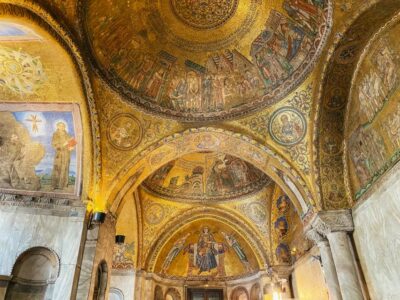
St. Mark’s Basilica Guided Tour & VR History Intro
Read our review →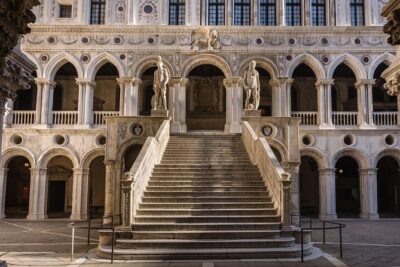
Venice’s Best: Basilica, Doge’s Palace, Gondola & History Gallery
Read our review →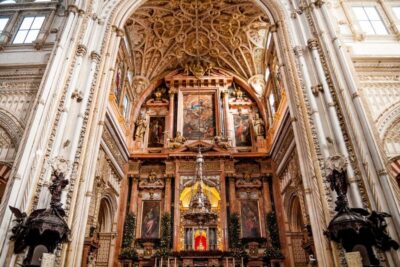
Córdoba: Skip-the-Line Great Mosque-Cathedral History Tour
Read our review →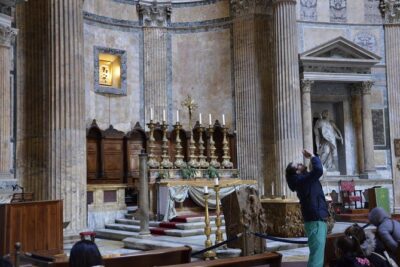
Pantheon Elite Guided Tour – Rome’s Iconic Ancient Temple
Read our review →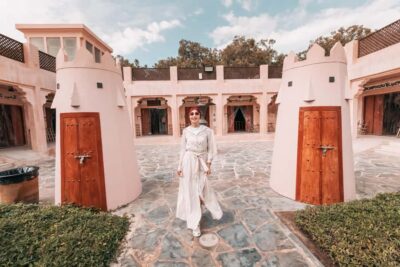
Abu Dhabi Grand Mosque, Palace, and Heritage Village
Read our review →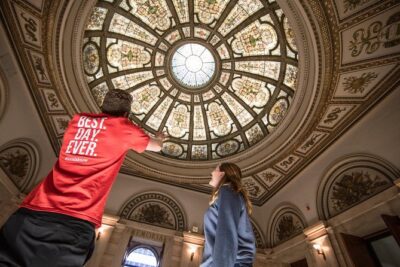
Chicago in a Day: Food, History & Architecture Walking Tour
Read our review →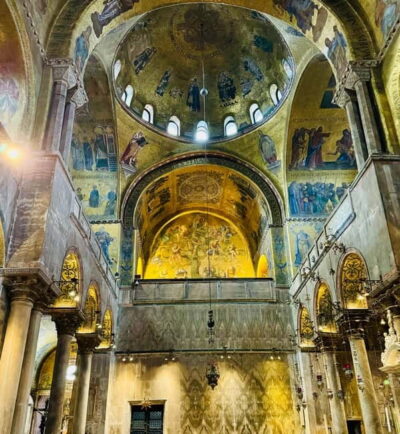

Colosseum Special Access Tour, with Ancient Temples & Tombs
Read our review →Browse the lists this tour appears in