

Review · BERLIN
Explore Berlin History and Highlights Sightseeing Walking Tour
Berlin rewards a good walking tour. This 3.5-hour route links the Brandenburg Gate, Nazi-era sites, Cold War landmarks, grand Prussian squares, and Museum Island into one clear story. I especially like the small group limit of 15 and the way the walk covers several major chapters of Berlin’s past without charging admission for each stop.
I also like the guides’ personal, engaging approach. Aurel, Cairan, Rhys, Steve, Paul, Aaron, Eugen, and others have earned praise for clear explanations, humor, patience, and thoughtful answers. The main drawback is simple: this is a long walking tour, and one unhappy customer missed it after realizing the distance would be too much.
Key points at a glance
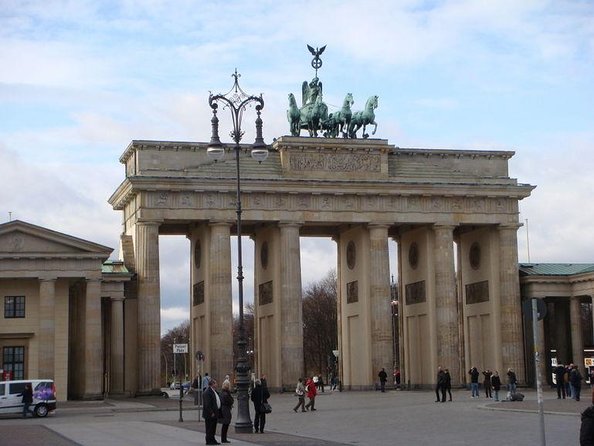
- Three and a half hours on foot: You cover 11 central Berlin sights, with stops ranging from 15 to 20 minutes.
- A full sweep of Berlin’s past: The route moves from Prussian grandeur to Nazi crimes, World War II, the Berlin Wall era, and reunification.
- Small groups help: With no more than 15 people, you have a better chance to hear the guide and ask questions.
- No entry tickets are needed: The value comes from on-site explanation, not museum admission or interior visits.
- The route ends at Museum Island: This gives you a useful starting point for further sightseeing after the tour.
- English only: The tour is offered in English, with several guides praised for easy-to-follow explanations.
What this Berlin walking tour does best
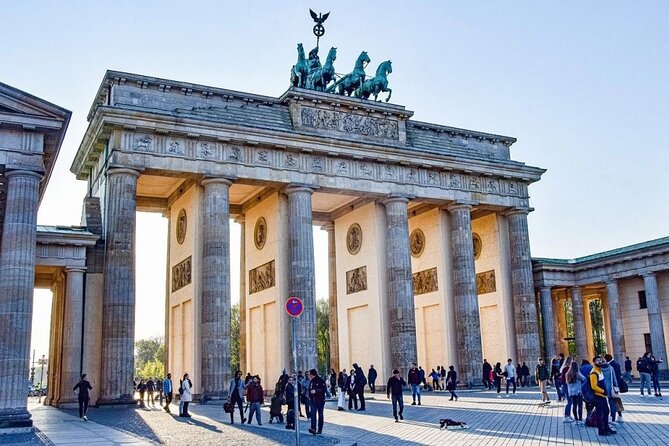
Berlin can feel like a history book scattered across a large city. One monument recalls Prussia, the next points to Hitler’s dictatorship, and a few minutes later you are standing where East and West Berlin once faced one another.
This tour helps you connect those pieces. It starts at the Brandenburg Gate and ends on Museum Island, moving through the central sights in a sensible order. You are not simply checking off landmarks. You are hearing how the city changed from royal capital to imperial center, Nazi headquarters, divided Cold War city, and reunited German capital.
The price is $32.58 per person. For three and a half hours with an expert guide, that is a fair deal, especially if you want context rather than a quick photo stop. You will still need to pay for your own food and transport before or after the tour, and the route does not include museum entry. Still, most of the major stops are free to see, so there are no surprise admission costs during the walk.
The tour starts at 10:00 a.m. beside Wurst 🙂 am Brandenburger Tor, at Ebertstraße and Scheidemannstraße. It finishes on Museum Island. The start and finish points are useful for sightseeing, though you should plan your route back to your hotel or onward destination.
More History Walking Tours in Berlin
- Berlin: History of the Third Reich Guided Walking Tour
★ 4.7 · 791 reviews - Berlin Historical Highlights Walking Tour
★ 4.9 · 657 reviews - Berlin Private Complete History All Day Walking Tour
★ 5.0 · 474 reviews
Brandenburg Gate and the Reichstag: Berlin’s grand front door
The Brandenburg Gate is the natural opening scene. You get about 20 minutes here to hear how this famous neoclassical gate witnessed major changes in Berlin. It is one of those places that looks familiar from photographs, yet its meaning shifts once you understand the events that unfolded around it.
The stop is free, but the real value is the guide’s explanation. You can take photographs, see the broad approach to the gate, and begin placing the city’s political history on a physical map.
The Reichstag comes next, also for about 20 minutes. This building has served as a parliament during Germany’s imperial period, survived the notorious fire shortly after Hitler became chancellor, and became a key target when Soviet forces captured Berlin at the end of World War II.
This is an exterior visit, so do not expect a tour of the parliamentary interior or its glass dome. That is not a flaw if you understand what you are booking. The guide gives you the setting and the story, while you remain outside and keep moving.
The Holocaust Memorial and the Führerbunker site
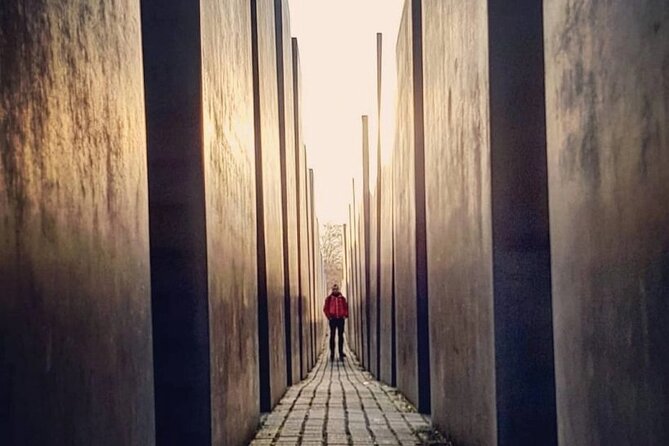
The Memorial to the Murdered Jews of Europe is one of the tour’s most serious stops. You have about 15 minutes to consider the memorial and the history behind its construction.
The field of concrete blocks is deliberately open to interpretation, and a guide can help you think about the site without reducing it to a quick photograph. This part of Berlin asks for quiet attention. The tour’s broader historical approach is useful here because the memorial sits close to buildings and streets connected with the Nazi government.
The nearby Führerbunker site is one of the strangest places on the route. Today, it is an ordinary car park. Beneath this area was the bunker where Hitler spent his final days and ended his life as Soviet troops closed in on Berlin.
You get around 15 minutes here. There is no preserved underground bunker to enter, and the plain setting can feel anticlimactic. That is also the point. The absence of a dramatic monument reflects Germany’s approach to the site, which has not been turned into a shrine.
The Luftwaffe headquarters and Topography of Terror
The Federal Ministry of Finance occupies a building with a complicated past. It was formerly the headquarters of the Luftwaffe, Germany’s air force under the Nazi regime. The guide explains its construction, wartime use, and later Cold War importance during a 15-minute stop.
This is a good example of why a walking guide adds value. A government building can look like just another large block of stone if you do not know what happened there. The building’s later use also shows how Berlin’s structures were reused rather than erased after the war.
You then spend about 20 minutes at the Topography of Terror. The site was once home to the SS, Gestapo, and SD, the agencies that helped organize Nazi terror and persecution. Today, it is a documentation and memorial site.
The tour focuses on both the Nazi period and the effort to remember it after the war. That second part matters. Berlin’s memorials are not only about what happened between 1933 and 1945. They also tell you how later generations chose to confront those crimes.
If you want a longer visit to the Topography of Terror exhibition, you will need to return on your own. The walking tour provides an introduction rather than an extended museum session.
More History Walking Tours in Germany
- Berlin: Charité Hospital Walking Tour of Medical History
★ 4.9 · 276 reviews - Berlin Private Half-Day Walking Tour: Discover the German Capital’s History
★ 5.0 · 244 reviews - Berlin History Walking Tour with a French-Speaking Guide
★ 5.0 · 240 reviews - The History of Berlin: WWII PRIVATE Walking Tour With Locals
★ 5.0 · 209 reviews
Checkpoint Charlie and the divided city
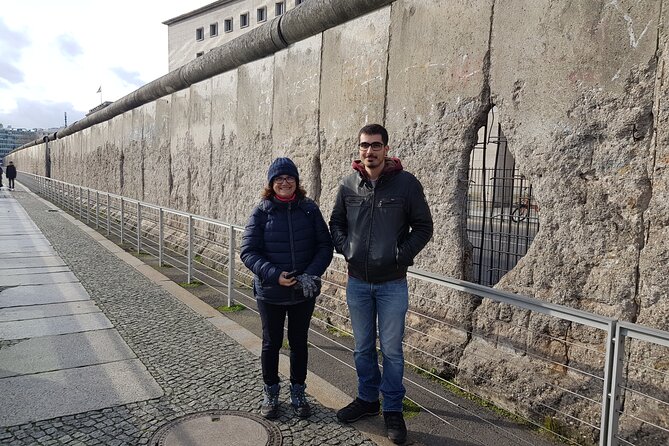
Checkpoint Charlie receives about 20 minutes. This was one of the best-known crossing points between East and West Berlin during the Cold War, and its name has become shorthand for the city’s division.
The location is easy to photograph, but the modern setting can make it hard to imagine the tension that once filled the street. A guide’s account gives the checkpoint a political and human frame. You learn why this crossing mattered and how it fit into the larger story of a city split by ideology, concrete, and armed power.
This stop is a reminder that Berlin’s twentieth-century story did not end in 1945. The tour keeps moving from the Nazi dictatorship into postwar division, helping you see the city as a place shaped by several different regimes rather than one single period.
Gendarmenmarkt and Bebelplatz: Prussian Berlin
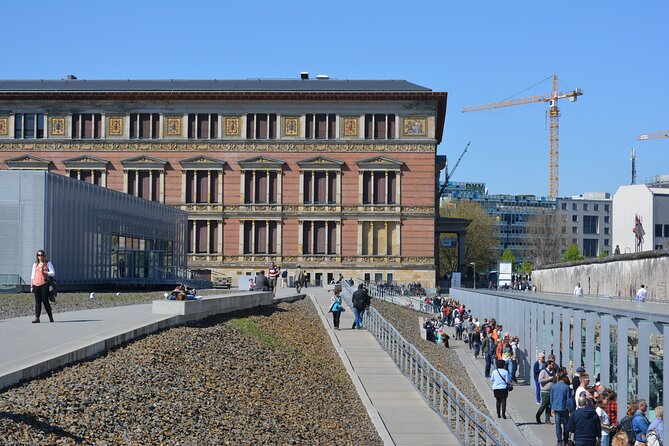
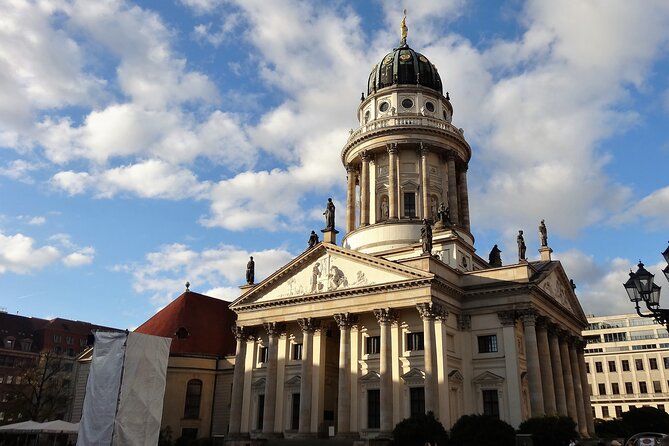
Gendarmenmarkt changes the mood. After the heavy wartime and Nazi sites, you reach one of central Berlin’s most elegant squares. The stop lasts about 15 minutes and covers the square’s foundation, development, and 18th and 19th-century architecture.
The setting helps explain the scale and ambition of Frederick the Great’s Prussian capital. You are looking at grand civic architecture, not just decorative facades. The guide connects the buildings to the political goals and cultural identity of the city.
Bebelplatz offers another shift, though its history is much darker. Surrounded by impressive buildings from Prussia’s royal period, the square is associated with the Nazi book burning of 1933. You spend about 15 minutes hearing why the buildings were designed and what happened here.
The memorial to the book burning is easy to miss if you do not know where to look. This is exactly the sort of stop where a guide earns the fee. You may pass through the square admiring the architecture, yet miss the memorial and its warning without an explanation.
Unter den Linden and the road toward Museum Island
The walk continues along the eastern end of Unter den Linden for roughly 20 minutes. This historic boulevard brings together several important institutions and memorials.
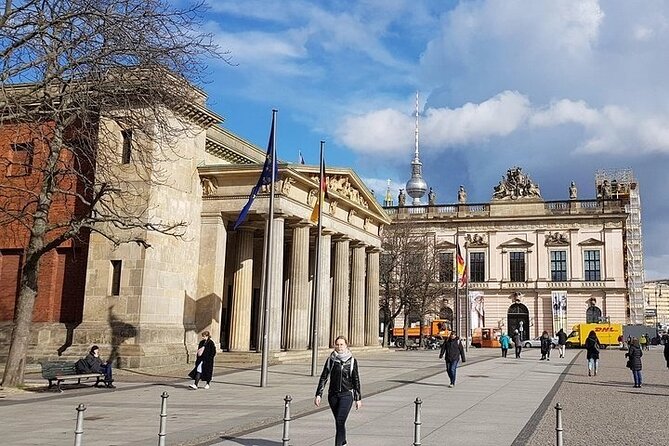
The route includes Humboldt University, the Memorial to Victims of War and Tyranny, and the German History Museum. Each stop adds another layer to the city’s story. You see how education, national memory, and public history occupy the same central corridor.
The Memorial to Victims of War and Tyranny is especially useful as a pause in the route. It widens the focus beyond one government or one conflict and asks you to consider the human cost of war and political violence.
The guide’s chronological approach works well here. One review praised Steve for organizing the material so the story moved efficiently from Prussia through later periods. That kind of structure matters when you are absorbing a lot of names, dates, buildings, and political changes in a single morning.
Museum Island and views toward Alexanderplatz
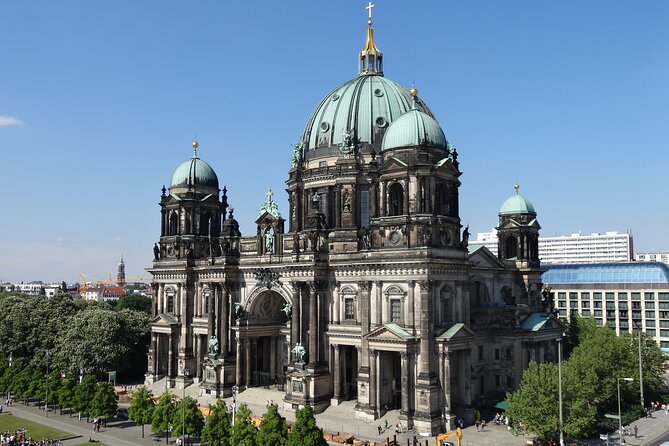
Museum Island is the final stop, with about 20 minutes devoted to the area. The guide introduces medieval Berlin, the former city palace, Berlin Cathedral, and the five major museums that now occupy the island.
You also look toward Alexanderplatz from the eastern side of Museum Island. That view opens the story toward postwar East Berlin. The contrast between the historic center and the socialist-era city is one of the most useful visual lessons on the route.
The tour ends here, rather than returning you to the starting point. That is convenient if you want to continue with a museum, Berlin Cathedral, or a walk toward Alexanderplatz. It also means you should not book the tour assuming you will finish near the Brandenburg Gate.
Museum Island deserves more time than this tour can provide. Think of the final stop as an orientation. You will understand the area better and can then decide which museum or nearby sight deserves your afternoon.
Guide quality is the heart of the experience
The strongest part of this tour is the guide. The repeated praise is not just for factual detail. It is for the way the guides make a large amount of history understandable during a long walk.
Aurel is described as especially strong at linking architecture, war damage, rebuilding, and modern Berlin. Cairan is praised for bringing the past to life, answering questions carefully, and using exercises that helped connect visitors to difficult historical periods. Rhys is noted for humor and clear explanations, including for a family member with only basic English.
Steve is praised for an easygoing manner and a well-organized chronological story. Paul received good marks for patience with children and clear English. Eugen is described as relaxed and courteous, while Aaron is praised for enthusiasm, warmth, and a strong command of Berlin’s past.
The guide can vary by date, so you should not book solely to get one named person. The consistent pattern is encouraging: the tour depends on guides who explain, answer questions, and adjust their approach to the group.
Pace, group size, and physical demands
Three and a half hours is a serious amount of time on foot. The route covers 11 stops, and the walking between them is part of the experience. You will want comfortable shoes, water, and perhaps a snack. One review jokingly advised bringing snacks because there is a lot to take in, and that is practical advice.
The group can include up to 15 people. That is small enough to feel more personal than a large city tour, while still keeping the price moderate. Some departures may be smaller, and one group had only three people, allowing plenty of direct conversation with the guide.
This is not the right choice if you need frequent seating or cannot walk several hours. The provider states that most people can participate, and service animals are allowed. Still, the route is explicitly a walking tour, so assess your stamina honestly before booking.
The tour is near public transportation, but no private vehicle or transfer is included. Plan to arrive at the meeting point before 10:00 a.m. and allow time to find the exact corner.
Who should book this tour?
I would choose this tour for a first visit to Berlin, especially if you want a strong orientation before exploring museums and neighborhoods on your own. It suits history-minded adults, families with older children, and anyone who wants the main central sights explained in one morning.
It is also a good fit for non-German speakers because the tour is offered in English, and the guides have been praised for clear communication. Families should note that the historical material includes Nazi crimes, war, persecution, and dictatorship. The subject matter is serious, though guides also use humor and a friendly manner where appropriate.
You may want something else if you prefer entering museums, spending a long time at each monument, or exploring Berlin by public transport rather than on foot. This route favors breadth and explanation over lengthy visits inside individual sites.
The cancellation policy is generous if your plans change: you can cancel up to 24 hours before the local start time for a full refund. Changes or cancellations inside that window are not refundable.
Should you book it?
Book it if you want a clear, well-paced introduction to central Berlin and do not mind walking for three and a half hours. At $32.58, the mix of expert explanation, small-group attention, and 11 major stops offers solid value.
Skip it if distance is a concern, or if you want a tour built around museum interiors rather than outdoor landmarks. For most first-time visitors, though, this is a practical way to get the city’s major historical threads in place. Afterward, you can return to the sites that caught your attention, already knowing why they matter.
FAQ
How long does the Berlin history walking tour last?
The tour lasts approximately 3 hours and 30 minutes.
What time does the tour start?
The tour starts at 10:00 a.m.
Where does the tour meet?
The meeting point is Wurst 🙂 am Brandenburger Tor, at Ebertstraße and Scheidemannstraße, 10117 Berlin, Germany.
Where does the tour end?
The tour ends on Museum Island in Berlin.
How many people can join the tour?
The maximum group size is 15 travelers.
Is the tour offered in English?
Yes. The tour is offered in English.
Are entrance tickets included?
No entrance tickets are needed or included. The listed stops are outdoor visits, and the tour fee covers the expert guide.
Is this a walking tour?
Yes. Walking is the main activity, and no transport is included.
Can I cancel for a full refund?
Yes. You can cancel at least 24 hours before the experience start time for a full refund. Cancellations or changes made less than 24 hours before the start time are not refunded.
Just added around Berlin
- Historic center of Berlin – Tour in Italian★ 5.0 · 143 reviews
- Berlin Food & Cultural Tour: Must-Try German & Berliner Classics★ 5.0 · 51 reviews
- Private Berlin WWII and Cold War History Tour with Local Expert Guide★ 5.0 · 28 reviews
- Private Tour: Jewish Heritage Walking Tour of Berlin★ 5.0 · 29 reviews
- Small-Group Historical Bike Tour in Berlin★ 4.5 · 103 reviews
- East Berlin Food & History Tour with Eating Europe★ 5.0 · 204 reviews
- Berlin: Private Bike Tour of the Berlin Wall and Third Reich★ 5.0 · 23 reviews
- Berlin Beers & Battlefields Tour: War History and German Beer★ 5.0 · 29 reviews
History Walking Tours, compared.
History and Hauntings of Salem Guided Walking Tour
Read our review →
Freedom Trail History Small Group Walking Tour
Read our review →
Historic Charleston Guided Sightseeing Walking Tour
Read our review →
Tapas Walking Tour with Food, Wine, and History
Read our review →
Savannah History and Haunts Candlelit Ghost Walking Tour
Read our review →
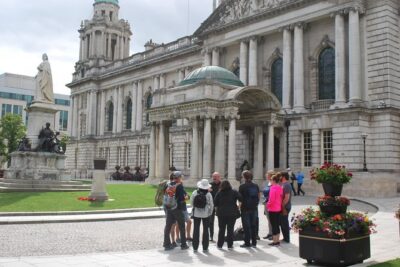
A History of Terror – Belfast City Centre Walking Tour
Read our review →Browse the lists this tour appears in