Review · BERLIN
Private Tour: Jewish Heritage Walking Tour of Berlin
Berlin remembers in public. Plaques sit in pavements, courtyards carry old stories, and former deportation sites now ask you to pause.
I like the private format, since your guide can adjust the pace and answer family-history questions. I also like the range of places, from the Otto Weidt Museum to the Gleis 17 memorial and the New Synagogue. The main drawback is that this is a serious, emotionally demanding four hours, and some sites are spread across Berlin, so you will need a Berlin AB Zone transport ticket in addition to the tour price.
The tour costs $191.62 per person and includes a private guide, but not food, drinks, or public transport. That price can make sense for a couple or family that wants focused attention, especially if Jewish Berlin is a major reason for your visit. The tour is offered in English, and a multilingual guide may also operate in German or Hebrew.
Key points to know before booking
- A private guide shapes the experience: Only your group takes part, so the conversation can follow your interests and family questions.
- The route covers several eras: You move from Jewish immigrant life in the courtyards of Mitte to Nazi persecution, resistance, remembrance, and present-day Berlin.
- The Otto Weidt Museum is the emotional center: The preserved workshop tells how a blind brush maker protected Jewish employees.
- Gleis 17 requires transport: The memorial at Grunewald station is not simply another central walking stop, and the €2.70 AB Zone ticket is extra.
- Guides are a major strength: Eran, Ioana, Nikolai, Zvika, Ariel, Asaf, Sarah, Oren, Finn, and others have earned praise for clear explanations, patience, and flexibility.
- Wear good shoes and prepare for weather: The tour operates in rain or shine and involves a moderate amount of walking.
Why a private tour helps in Berlin
Jewish Berlin is not contained in one museum or one old quarter. Its story is scattered across courtyards, memorials, cemeteries, streets, railway tracks, and buildings that survived in altered form.
That makes a private guide useful. You are not just moving from one plaque to the next. A strong guide can connect the Jewish community’s growth in the 19th century with the destruction of the Nazi period, then explain how Berlin remembers those events today.
The private setup also suits families. Nikolai, for example, was praised for working well with children aged 10 and 12, while Asaf adjusted the tour when rain changed the day. Other guides, including Eran, Ioana, and Zvika, were praised for answering questions and adapting the conversation to personal family connections.
You should expect a walking tour with public transport between some locations, not four continuous hours on foot in one neighborhood. The moderate walking requirement is manageable for most people, but the route includes outdoor memorials and city streets. Comfortable shoes are not optional decoration here.
More History Walking Tours in Berlin
- Berlin: History of the Third Reich Guided Walking Tour
★ 4.7 · 791 reviews - Berlin Historical Highlights Walking Tour
★ 4.9 · 657 reviews - Berlin Private Complete History All Day Walking Tour
★ 5.0 · 474 reviews
Hackesche Höfe and Jewish life in old Berlin
The tour begins at Hackesche Höfe, a series of connected courtyards on Rosenthaler Straße. The complex dates from the late 19th century and once drew Jewish artisans, merchants, and immigrants.
The courtyards are attractive, but the value is not only architectural. This is where your guide can help you picture daily urban life: workshops, small businesses, homes, and cultural activity packed into a busy part of Berlin.
You spend about 15 minutes here, with no admission charge. That is enough for an introduction, but not a full architectural tour. The stop works best as a starting point, giving you a sense of Jewish life before the horrors that dominate later parts of the day.
I would pay close attention to how your guide describes the community as part of Berlin’s ordinary social and commercial life. That framing matters. Jewish history here was not only about persecution. It also involved work, culture, family, faith, and participation in city life.
The New Synagogue and Centrum Judaicum
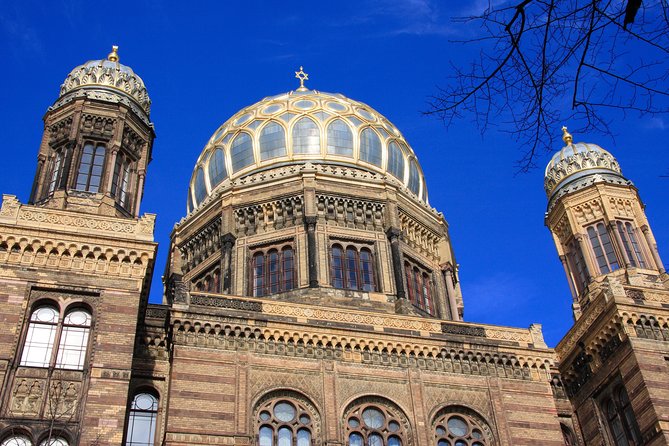
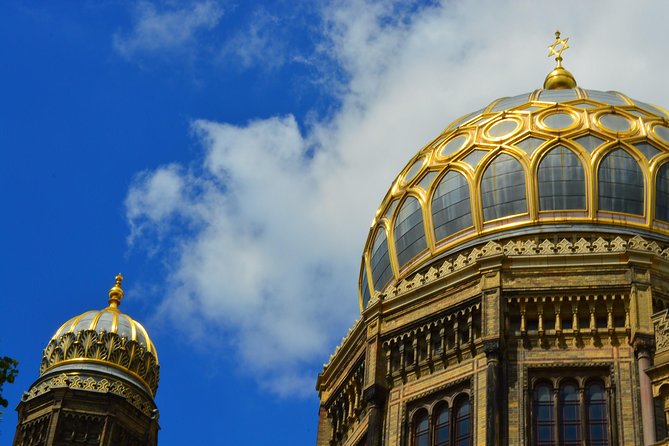
The next stop brings you to the New Synagogue and the Stiftung Neue Synagoge Berlin, also called Centrum Judaicum. The synagogue first opened in 1866, and its restored exterior, with its large dome and detailed design, is one of the tour’s most recognizable Jewish landmarks.
The visit listed for this stop lasts about 10 minutes and is free. That timing suggests you should expect an exterior-focused introduction rather than a long museum visit. The center itself preserves and presents Jewish life in Berlin through exhibitions, educational programs, lectures, and cultural events.
The New Synagogue is especially useful for understanding the scale and confidence of Jewish life in prewar Berlin. Its appearance recalls a major religious and cultural institution, not a small remnant. Your guide can also place the building’s restoration in the larger story of remembrance and renewal.
Do not book this tour expecting extended indoor museum time at every location. Some stops are brief, and the quality depends heavily on the guide’s explanation. This is one reason the private format helps. You can ask for more context here if architecture, religious life, or modern Jewish Berlin interests you.
Otto Weidt’s workshop and the human scale of persecution
The Museum Blindenwerkstatt Otto Weidt is likely to be the most personal stop. It occupies the original workshop of Otto Weidt, a blind brush maker who employed and protected Jewish workers during the Nazi period.
You spend about 25 minutes here, again without an admission charge. The small museum preserves the workspace and presents the stories of the people Weidt tried to protect. The account includes false papers and other efforts to prevent employees from being deported.
This is not a grand museum with a large collection. Its force comes from the direct connection between one workplace and the people who depended on it. The setting helps you think about resistance as a series of risky decisions made in ordinary rooms, not only as dramatic public action.
One family described this museum as especially touching. I can see why. After hearing about institutions and deportation systems, you encounter a specific employer trying to save specific workers. The personal scale can make the history easier to grasp, even as it makes the subject harder to bear.
Allow yourself time to pause here. The official schedule gives 25 minutes, so the stop is concise, but your guide’s storytelling can give it weight.
More History Walking Tours in Germany
- Berlin: Charité Hospital Walking Tour of Medical History
★ 4.9 · 276 reviews - Berlin Private Half-Day Walking Tour: Discover the German Capital’s History
★ 5.0 · 244 reviews - Berlin History Walking Tour with a French-Speaking Guide
★ 5.0 · 240 reviews - The History of Berlin: WWII PRIVATE Walking Tour With Locals
★ 5.0 · 209 reviews
Gleis 17 at Grunewald station
Gleis 17, or Platform 17, is one of the tour’s most important stops. From this railway station in Grunewald, thousands of Jewish people were deported to concentration camps and extermination sites between 1941 and 1945.
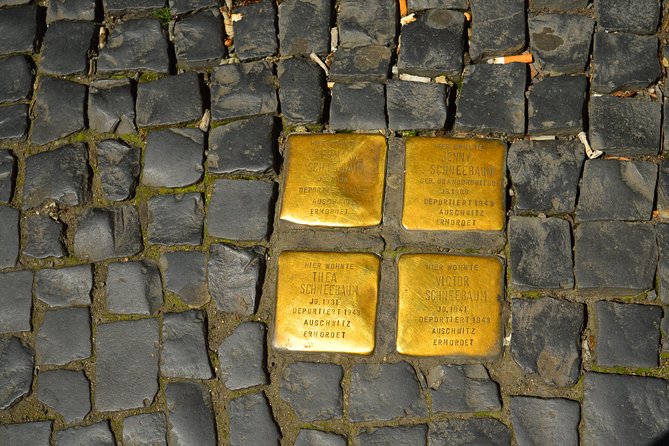
The memorial uses metal plaques set into the ground. They record deportation dates and the people transported, turning the railway platform into a record of the machinery of persecution.
You spend about 15 minutes here. The stop is free, but it requires a Berlin AB Zone transport ticket, listed at €2.70. Plan for that extra cost and listen carefully to your guide’s instructions about getting around the city.
Gleis 17 is not a sightseeing stop in the usual sense. There is no cheerful photo opportunity or grand interior. The power comes from the plain railway setting and the steady sequence of names and dates underfoot.
The trip to Grunewald also helps you understand that deportation was organized through normal systems of transport and administration. A guide can make that connection clear in a way that a quick independent visit may not.
The Old Jewish Cemetery and the women of Rosenstraße
The itinerary also includes the Alter Jüdischer Friedhof, or Old Jewish Cemetery. The grounds contain graves and memorials connected with scholars, philosophers, and community leaders. The tombstones and inscriptions offer another way to approach Jewish Berlin, through individual lives and communal memory.
You have about 15 minutes here. Expect a quiet pause rather than a lengthy cemetery study. The stop adds balance to the day because it shifts attention away from the Nazi period and toward the people who helped shape Jewish life in Berlin across generations.
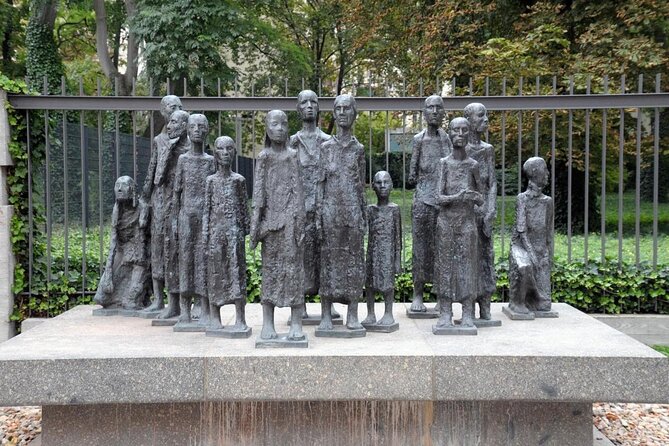
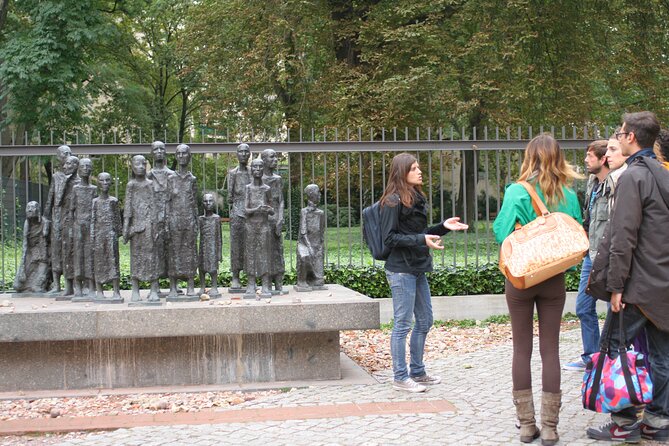
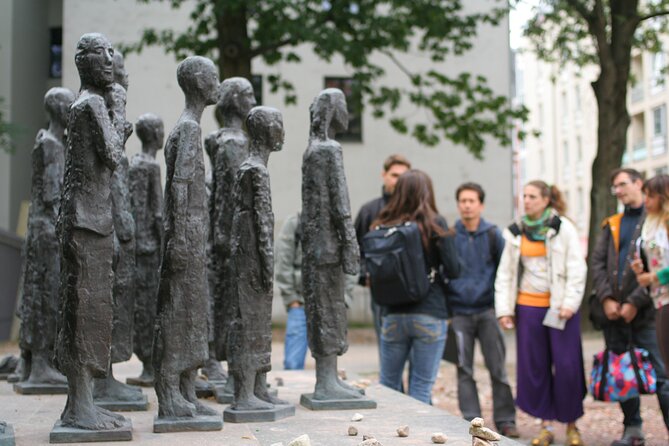
Another important location is the Block der Frauen on Rosenstraße. This memorial recalls the women who protested in 1943 for the release of their Jewish husbands after the men were arrested for deportation.
The action lasted several days and showed remarkable courage under the Nazi regime. The memorial’s inscription explains what happened at the site, giving your guide a firm starting point for discussing protest, family, and the limits of obedience.
The schedule assigns 15 minutes here. That is enough to hear the basic story and ask questions, but you may want to spend longer if this episode interests you. It is one of the tour’s clearest examples of public resistance by ordinary people.
The Holocaust Memorial in central Berlin
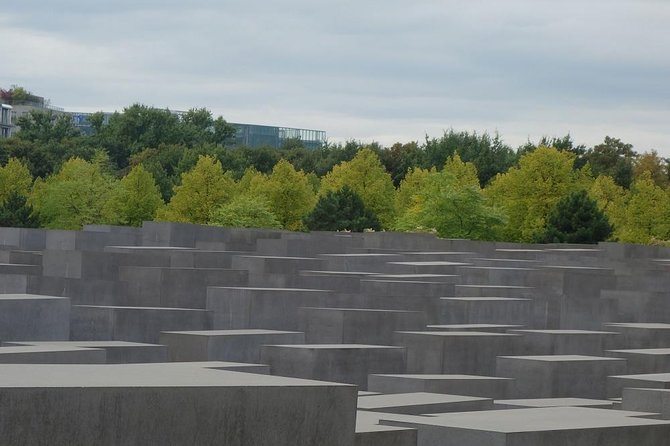
The final listed stop is the Memorial to the Murdered Jews of Europe, often called the Holocaust Memorial. Designed by Peter Eisenman and opened in 2005, it contains 2,711 concrete slabs arranged across an uneven field.
You walk between slabs of different heights. The design can feel disorienting, especially as the paths dip and rise. That physical experience is central to the memorial’s purpose, but your response will be personal. Some people find it powerful; others may prefer memorials with more direct historical information.
The scheduled time is about 20 minutes, and there is no admission fee for the outdoor memorial. Your guide can explain the design and connect it with the earlier stops, especially the deportation memorial at Gleis 17 and the individual stories at the Otto Weidt Museum.
The memorial is near major central sights, so it can also help you orient yourself in Berlin. Still, it is not the place for a rushed checklist approach. Walk quietly, listen, and give yourself room to think.
The guides make or break the experience
This subject calls for more than memorized dates. You need someone who can explain difficult events plainly, answer questions honestly, and recognize when your group needs a slower pace.
Eran received repeated praise for covering a great deal while remaining engaging and clear. Ioana was noted for sharing both historical material and modern Jewish life, along with personal anecdotes. Nikolai was praised for patience, strong subject knowledge, and help with Berlin’s subway system.
Zvika was especially attentive to a family’s German background and helped connect the city’s history with their own story. Ariel was described as flexible, while Asaf handled a rainy day and younger family members well. Sarah was praised for her Spanish, and other guides, including Oren, Finn, Mickail, and Rennes, were recognized for strong communication and extra details beyond the obvious sites.
Guide assignments can vary, so you cannot choose from this list based on the information provided. But the pattern is useful: the company appears to place real weight on guides who can personalize the experience rather than simply recite information.
Price, transport, and practical value
At $191.62 per person, this is not a budget walking tour. The price is easier to justify for a small private group, since you are paying for exclusive guide time rather than a seat in a large public group.
The value depends on your goals. If you want a quick introduction to Berlin’s Jewish sites, a cheaper group tour or self-guided route may be enough. If you want to ask about family history, spend time on difficult questions, or adjust the pace for children, the private format earns its keep.
The tour lasts about four hours. Public transport is extra, at €2.70 for the required Berlin AB Zone ticket, and food and drinks are not included. Pickup is offered, which can simplify the start, especially if you are staying at a central hotel.
Dress for the forecast. The experience operates in all weather, and several stops are outside. Wear solid walking shoes, bring water, and expect a reflective rather than lighthearted day.
Free cancellation is available up to 24 hours before the start time. Changes or cancellations made within 24 hours are not accepted for a refund.
Who should book this Berlin tour?
I would recommend it to first-time Berlin visitors who want a clear introduction to Jewish Berlin, families with older children, and anyone with a personal connection to Germany or Jewish history.
It also suits non-Jewish visitors. The tour explains Jewish life as part of Berlin’s wider story, so you do not need prior knowledge to follow it. The guides’ ability to discuss both historical events and modern Jewish life adds useful balance.
I would think twice if you dislike solemn memorials or prefer long, leisurely visits inside museums. Several stops are short, and the day covers a lot of ground. You should also be comfortable paying for public transport and walking in changing weather.
Should you book it?
Book this tour if you want personal guidance through scattered and emotionally serious sites, especially if you plan to ask questions or connect the subject with your family history. The Otto Weidt Museum, Gleis 17, Rosenstraße, and the Holocaust Memorial give the day real substance.
Skip it if you only want a quick view of the New Synagogue or a relaxed architectural walk. For most people seeking a focused introduction to Jewish Berlin, though, the private format, adaptable guides, and carefully chosen memorials make the $191.62 price reasonable.
FAQ
How long does the Jewish Heritage Walking Tour of Berlin last?
The tour lasts approximately four hours.
Is the tour private?
Yes. Only your group participates, and the experience includes a private guide.
What language is the tour offered in?
The tour is offered in English. It may also be operated by a multilingual guide in German or Hebrew.
Is hotel pickup available?
Pickup is offered. The supplied tour information does not specify which hotels or areas are covered.
Is public transportation included?
No. A Berlin AB Zone ticket, listed at €2.70, is not included in the tour price.
Are food and drinks included?
No. Food and drinks are not included.
How much walking is involved?
A moderate amount of walking is involved. Good walking shoes are recommended, and the tour operates in all weather conditions.
More Private History Tours in Germany
- Nuremberg: 1.5-Hour Private Tour through Historical Old Town
★ 4.8 · 283 reviews - Eagle’s Nest-Berchtesgaden-Obersalzberg Private Half Day WWII Historical Tour
★ 5.0 · 64 reviews - Quedlinburg UNESCO World Heritage Group Tour (private)
★ 4.6 · 32 reviews
More Private History Tours in Berlin
- Private Taxi Tour City East & West History and Architecture 3-4h
★ 5.0 · 42 reviews - Private Berlin WWII and Cold War History Tour with Local Expert Guide
★ 5.0 · 28 reviews - Berlin: Private Bike Tour of the Berlin Wall and Third Reich
★ 5.0 · 23 reviews
Just added around Berlin
- Historic center of Berlin – Tour in Italian★ 5.0 · 143 reviews
- Berlin Food & Cultural Tour: Must-Try German & Berliner Classics★ 5.0 · 51 reviews
- Private Berlin WWII and Cold War History Tour with Local Expert Guide★ 5.0 · 28 reviews
- Small-Group Historical Bike Tour in Berlin★ 4.5 · 103 reviews
- Explore Berlin History and Highlights Sightseeing Walking Tour★ 5.0 · 81 reviews
- Berlin: Private Bike Tour of the Berlin Wall and Third Reich★ 5.0 · 23 reviews
- East Berlin Food & History Tour with Eating Europe★ 5.0 · 204 reviews
- Berlin Beers & Battlefields Tour: War History and German Beer★ 5.0 · 29 reviews
Jewish Heritage Tours, compared.
Budapest Jewish Heritage Memorial Walking Tour & Synagogue Entry
Read our review →
Jewish Heritage Guided Tour with Synagogue Ticket
Read our review →
3-Hour Porto Jewish Heritage Walking Tour with Local Guide
Read our review →
Private Jewish Heritage Journey by Barcelona Dreaming
Read our review →
Anne Frank and the Jewish History of Amsterdam Private Tour
Read our review →
Lisbon Jewish Heritage and History – Private Tour Van
Read our review →