

Review · MAZOVIA PROVINCE
Warsaw: Jewish History Guided Walking Tour in English
Warsaw remembers in layers. This 150-minute walking tour brings Jewish Warsaw into focus through streets, surviving buildings, photographs, and stories of courage. I especially like the way it begins with centuries of Jewish life, not only the Holocaust, and the way guides connect the past with Warsaw’s Jewish community today. The Nożyk Synagogue and the former ghetto streets give the history a clear physical setting. The main drawback is simple: you stay outdoors for the full two and a half hours, so cold, rain, or heat can affect the experience.
The $26 price is fair for a live English-speaking guide and a serious historical walk. Guides such as Andrzej, Jacek, Aga, Anna, Christopher, and Luke have been praised for clear storytelling, thoughtful answers, and a good sense of pace. You join a general walking group, not automatically a private tour, and a larger group can make it harder to hear every word.
Key points to know before you book
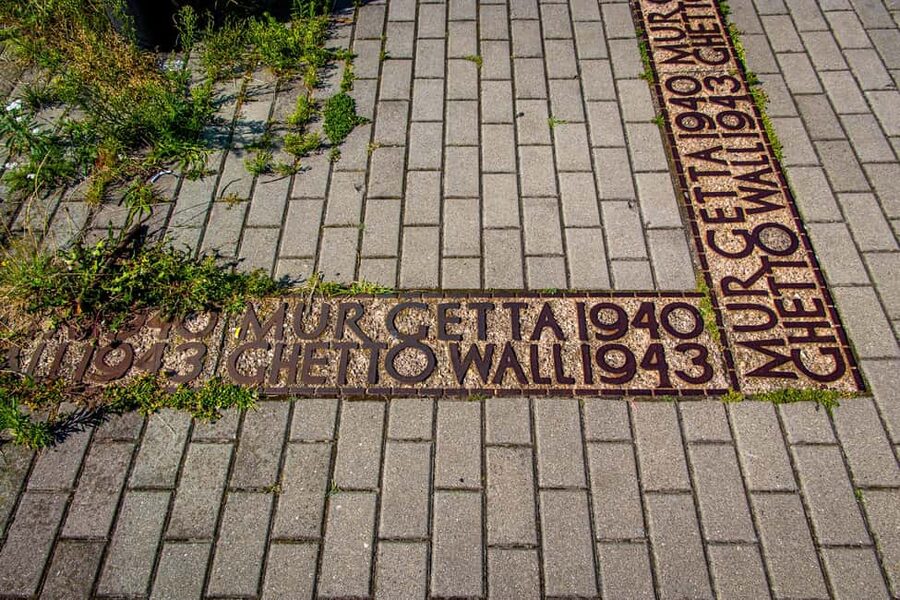
- The Nożyk Synagogue is Warsaw’s only surviving pre-war synagogue, giving the walk one of its most important physical landmarks.
- Chłodna Street recalls the ghetto bridge that once joined two separated sections of the Warsaw Ghetto.
- Waliców Street marks a former ghetto boundary and opens the story toward the Warsaw Uprising and wartime Warsaw.
- The tour begins with Jewish life before the war, including political involvement, artists, writers, actors, and journalists.
- Guides use photos, maps, humor, and personal insight to explain places where very little of the old city remains.
- You walk outside for 150 minutes, so sturdy shoes and weather-appropriate clothing matter more than fancy equipment.
Why Jewish Warsaw needs more than a Holocaust timeline
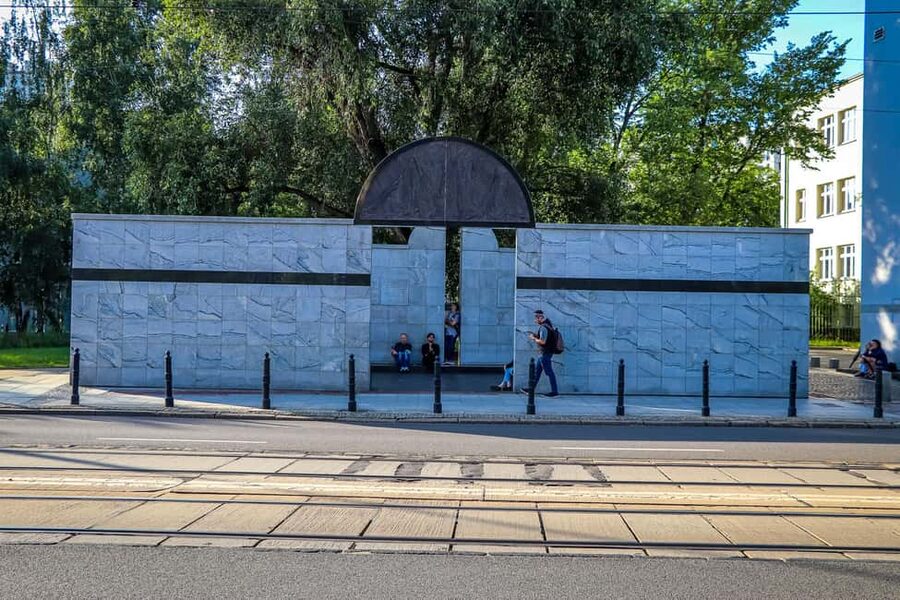
Before the Second World War, Warsaw was the second-largest Jewish city in the world. That fact changes how you see the city. You are not simply walking through a site of wartime suffering. You are tracing the streets of a major Jewish center with its own politics, newspapers, theater, schools, religious life, businesses, and arguments about the future.
I value this wider frame. If a tour begins and ends with death, it can reduce a whole society to its destruction. This walk first explains how Jews helped shape Warsaw over centuries, including participation in Polish uprisings against occupying powers during the 19th century. You then get a clearer sense of what the Nazis destroyed.
The interwar period receives particular attention. Warsaw was home to Jewish artists, actors, writers, and journalists, and its cultural life reached a remarkable scale. Your guide explains this world before moving into the German occupation, the creation of the ghetto, resistance, deportation, and destruction.
That order matters. It gives the people in the story names, professions, ambitions, and ordinary lives. The Holocaust remains central, but it is not allowed to erase everything that came before it.
More Jewish Heritage Tours in Poland:
- Schindler’s List Movie Tour: Historic Sites & Film Location
★ 5.0 · 23 reviews - Budapest Jewish Heritage Memorial Walking Tour & Synagogue Entry
★ 5.0 · 568 reviews - Budapest: Jewish Heritage Guided Tour with Synagogue Ticket
★ 4.8 · 533 reviews
Starting at Grzybowski Square and All Saints Church
The meeting point is next to All Saints Church at Grzybowski Square. Look for the yellow umbrella. This is a useful arrangement because the marker is easy to spot, and one person specifically found the meeting point simple to locate even on a cold morning.
Grzybowski Square sits in an area where several strands of Warsaw’s past meet. The church, the surrounding streets, and the nearby traces of Jewish Warsaw help set the tone before the walking begins. Your guide uses the first part of the tour to establish the city’s Jewish presence and explain how the neighborhood changed during and after the war.
The tone is serious, but it does not have to be grim every minute. Guides have been praised for using gentle humor and ordinary stories to keep a difficult subject understandable. Luke, Andrzej, and Jacek were singled out for combining warmth with clear explanations. That balance is important when you spend two and a half hours discussing persecution and death.
You should expect regular stops rather than a fast march from landmark to landmark. Still, the group remains outside throughout. Wear warm layers in winter, bring protection from rain when needed, and plan for a full walking session without a scheduled café break.
Nożyk Synagogue, a rare survivor
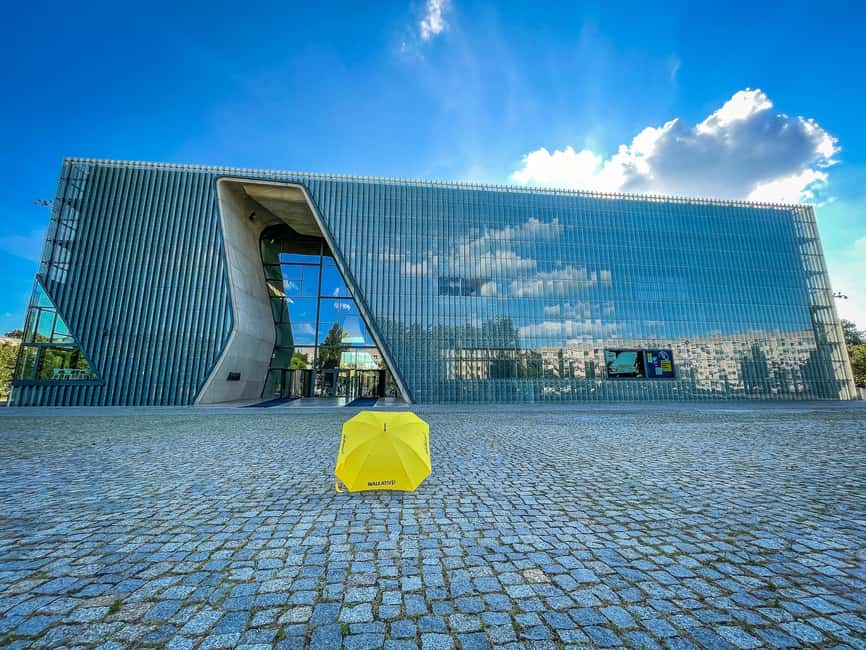
The Nożyk Synagogue is one of the emotional anchors of the walk. It is the only surviving pre-war synagogue in Warsaw, making it a rare piece of the Jewish city that existed before 1939.
Seeing it helps you understand the scale of what disappeared. Warsaw once had many Jewish places of worship and a large population connected to them. One surviving synagogue cannot recreate that city, but it gives you a real building rather than only an account in a book.
The tour is advertised as seeing the synagogue. Do not assume that entry is included. One person who had already gone inside wished the rest of the group could have entered too, so you should treat the standard experience as an exterior visit unless the guide tells you otherwise.
This is also a good place to ask questions. The guides are used to explaining religious, cultural, and civic life together, rather than treating Jewish history as a separate subject with no connection to Polish history. That broader approach makes the building more than a photo stop.
Chłodna Street and the vanished bridge
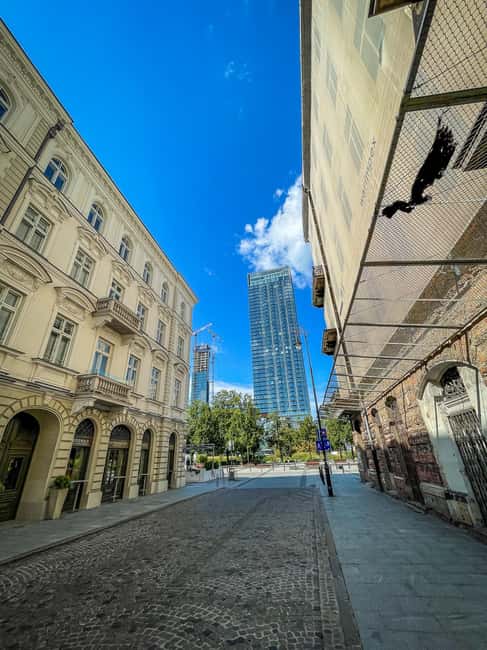
Chłodna Street carries one of the clearest visual reminders of how the Warsaw Ghetto was organized. The tour visits the site of the bridge that once joined two sections of the ghetto.
The bridge is gone. That absence is part of the lesson. You stand in a present-day street and hear how the ghetto was divided, how people moved through a controlled and dangerous space, and how a structure built above the street became an image associated with separation and survival.
This is where photographs and maps can make a major difference. One guide brought visual material to help the group understand locations that no longer look as they did during the war. Another person wished maps and photos had been used more consistently, which is useful advice: the tour works best when you pay close attention to the guide’s visual references and ask for clarification if the modern street makes the past hard to picture.
The site does not offer a preserved bridge or a complete wartime scene. You need to use your imagination, guided by evidence. That can feel less immediate than entering a preserved building, but it also shows how thoroughly Warsaw was damaged and rebuilt.
More History Walking Tours in Poland:
- Gdańsk City Sights & History Guided Walking Tour in English
★ 4.8 · 876 reviews - Best of Wroclaw 3-Hour History and Culture Walking Tour
★ 4.9 · 49 reviews - History and Hauntings of Salem Guided Walking Tour
★ 5.0 · 14,564 reviews - Lisbon: History, Stories and Lifestyle Walking Tour
★ 4.8 · 10,902 reviews
Waliców Street and the changing city
Waliców Street once formed part of the ghetto border. It also connects the Jewish history walk to the wider story of the Warsaw Uprising and the city’s wartime fate.
Here, the guide explains boundaries, occupation, resistance, and the way different wartime events overlap in Warsaw. The subject is not presented as a single, simple story. Jewish resistance, Polish resistance, German control, and the city’s destruction belong to connected but distinct chapters.
For you, the value is in seeing how history is spread through ordinary streets. There may be no grand monument at every stop. Instead, you get a street name, a surviving fragment, an old photograph, or a change in the shape of the neighborhood. Guides often supplement what you see with pictures from the period, making the contrast between then and now easier to grasp.
The modern setting can also be a limitation. If you prefer fully preserved sites with rooms, objects, and original interiors, parts of this tour may feel abstract. If you want to understand how a city carries scars even after its buildings are gone, the street-based format is powerful.
The Warsaw Uprising and Jewish life after catastrophe
The walk does not treat the Warsaw Ghetto as an isolated episode. It places the ghetto within the history of occupied Warsaw and explains the Warsaw Uprising as part of the city’s wider wartime experience.
That connection is useful because visitors can otherwise mix together different uprisings, dates, and groups. A good guide separates the events while showing how the city’s destruction affected everyone. Guides have been praised for being factual, direct, and willing to answer difficult questions without softening terrible events.
The subject can be emotionally heavy. One guide reportedly asked people before sharing especially disturbing details, an approach I appreciate. You can prepare yourself for painful material, but you are not forced into a constant stream of graphic description.
The walk also returns to resilience. You hear about people who resisted, helped others, preserved memory, and rebuilt community life. The ending looks toward the young, diverse, energetic Jewish community in Warsaw today. That gives the tour a needed present-day dimension. Jewish Warsaw is not only a vanished world.
Guide quality, language, and group size
The tour is in English with a live local guide. The strongest part of the experience is the human delivery. Jacek was praised for his pace and engagement, Christopher for exceptional insight into Warsaw’s streets and monuments, and Aga and Agnieszka for clear, fact-based explanations.
Other guides, including Anna, Luke, Andrzej, and Yatzic, have been praised for fluent English, humor, compassion, and the ability to invite questions. You may not receive a particular guide, but the repeated strength of the guiding team is a good reason to choose a live walk instead of relying only on a museum visit or guidebook.
The tour joins a general walking group. That means the group size can vary, and one person found it difficult to hear every sentence when the group was large and the guide walked ahead. Stay near the guide, speak up if you cannot hear, and avoid drifting to the back at busy crossings.
There is also an unusual flexibility in the format. When Christopher had only one customer, he still offered the tour and made it a personal experience. The normal arrangement is not private, but you can contact the supplier after booking to ask about organizing a smaller private walk.
How the 150-minute length feels
Two and a half hours is long enough to build a serious historical argument, but not so long that the walk becomes an all-day commitment. Several people found that the time passed quickly and even wished the tour had continued.
I think the length works because the route covers several periods:
- Jewish life in Warsaw before the war
- Jewish participation in 19th-century Polish struggles
- The cultural energy of the interwar years
- The German occupation and the Warsaw Ghetto
- The bridge site on Chłodna Street
- The ghetto border on Waliców Street
- The Warsaw Uprising
- Jewish life in Warsaw today
You should not expect a detailed museum-style treatment of every topic. The guide must keep the group moving and select the most useful facts. The benefit is a connected overview. The tradeoff is that visitors with specialist interests may want a longer private tour or additional museum time.
The walking pace has generally been described as comfortable. Still, this is not a seated lecture. Bring water and wear shoes you can use on city streets for 150 minutes.
Price, booking, and practical value
At $26 per person, this is a good-value introduction to Jewish Warsaw. Your payment covers the walking tour, a local English-speaking guide, the reservation fee, and the guide’s payment. You are paying for interpretation and context, not entry tickets to a series of indoor attractions.
That distinction helps explain the price. Much of the history survives in gaps, street plans, photographs, and stories. The guide does the work of connecting those pieces. A good guide can turn a bare street corner into a meaningful historical location, and this experience has repeatedly delivered that human explanation.
Hotel pickup and drop-off are not included. You need to reach Grzybowski Square yourself and find the yellow umbrella beside All Saints Church. The tour allows cancellation up to 24 hours before the start for a full refund, and you can reserve now and pay later, useful if your Warsaw plans are still shifting.
I would not choose this as a casual sightseeing walk with children who need constant visual entertainment. The subject is difficult, and much of the impact comes through listening. It suits adults, older teenagers, history readers, people researching family connections, and anyone who wants more than a quick monument photo.
Is this tour right for you?
Book it if you want a clear introduction to Jewish Warsaw, prefer learning from a live guide, and can give two and a half outdoor hours to a serious subject. It is especially useful early in your Warsaw visit because the guide can help you understand later visits to museums, monuments, and former ghetto sites.
You may prefer a private tour if you want a slower pace, more time for questions, or a tailored family-history discussion. You may also want another indoor visit afterward, since this walk does not replace a museum and does not guarantee synagogue entry.
For $26, I like the balance: strong historical context, several important locations, and guides who bring patience, humor, and personal commitment to difficult material. Pack for the weather, stay close enough to hear, and arrive ready to listen. If you do, this walking tour can give Warsaw’s Jewish story the human scale it deserves.
FAQ
Where does the Jewish history walking tour meet?
It meets next to All Saints Church at Grzybowski Square. Look for the yellow umbrella.
How long does the tour last?
The tour lasts 150 minutes, or two and a half hours.
What language is the tour in?
The tour is conducted in English by a live guide.
Is the Nożyk Synagogue included?
The tour includes seeing the Nożyk Synagogue, which is the only surviving pre-war synagogue in Warsaw. Entry inside is not guaranteed as part of the standard tour.
Does the tour include hotel pickup?
No. Hotel pickup and drop-off are not included. You need to make your own way to Grzybowski Square.
Is this a private tour?
No. The tour joins a general walking group. If you want a smaller private tour, you can contact the supplier after booking to discuss arranging one.
Can I cancel or pay later?
You can cancel up to 24 hours in advance for a full refund. You can also reserve your place and pay later.
Just added around Poland
- Best of Wroclaw 3-Hour History and Culture Walking Tour★ 4.9 · 49 reviews
- Schindler’s List Movie Tour: Historic Sites & Film Location★ 5.0 · 23 reviews
- Krakow: Vistula River Cruise with Historical Views★ 3.5 · 357 reviews
- Krakow: Kościuszko Mound Ticket – History & Views!★ 4.4 · 303 reviews
- Krakow Old Town Segway Tour — 2H of History, Fun & Discovery★ 4.8 · 91 reviews
- Warsaw: Historic Private Tour in Retro Fiat★ 4.9 · 41 reviews
- Small-Group Historical Guided Tour of Warsaw with pick up/drop off. Public Tour.★ 4.5 · 343 reviews
- Warsaw: Chopin Concert at Historical Venue in Old Town★ 4.7 · 445 reviews
Jewish Heritage Tours, compared.
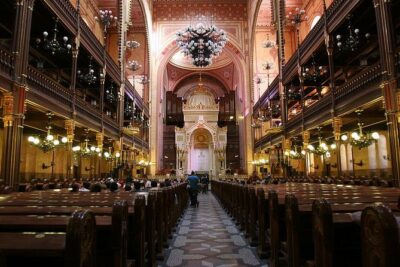
Budapest Jewish Heritage Memorial Walking Tour & Synagogue Entry
Read our review →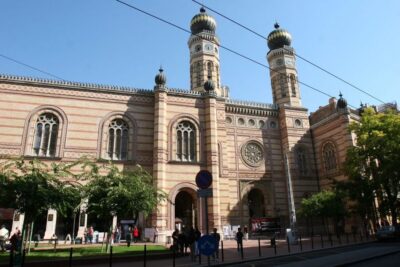
Jewish Heritage Guided Tour with Synagogue Ticket
Read our review →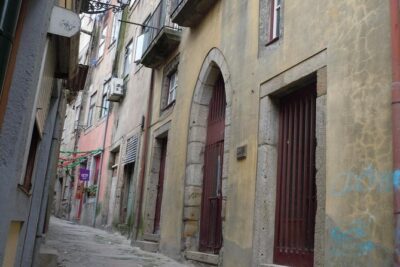
3-Hour Porto Jewish Heritage Walking Tour with Local Guide
Read our review →
Private Jewish Heritage Journey by Barcelona Dreaming
Read our review →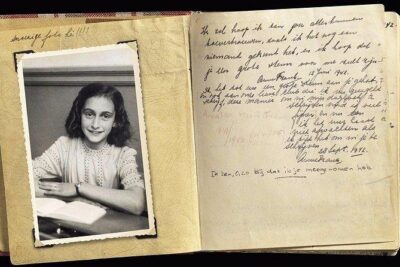
Anne Frank and the Jewish History of Amsterdam Private Tour
Read our review →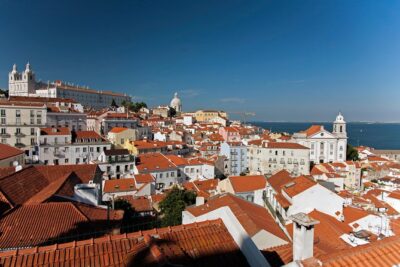
Lisbon Jewish Heritage and History – Private Tour Van
Read our review →
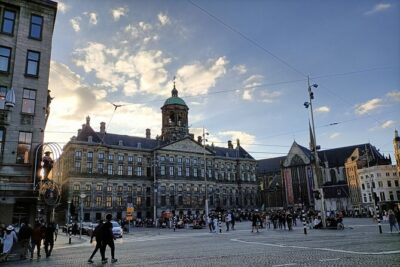
Anne Frank and Amsterdam Jewish History Walking Tour
Read our review →Browse the lists this tour appears in