Review · BERLIN
Berlin: Guided Bike tour of the Berlin Wall and Third Reich
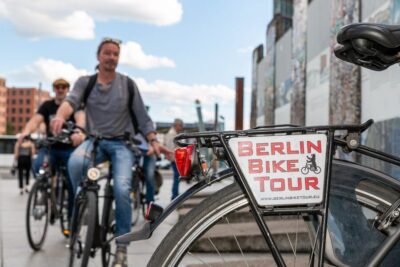
Berlin’s hardest history is easier to grasp on two wheels. This three-hour ride links the Berlin Wall, Nazi-era sites, Jewish memorials, and Cold War landmarks while a local guide explains what happened where you are standing. I especially like the small-group format of up to 15 people and the way the bike lets you cover far more ground than a walking tour.
I also like that the tour uses ordinary city bikes with helmets, baskets, and infant seats available on request. The main caution is that the route is not fixed: guides follow the Free Berlin concept and may design different routes, so you might not visit every advertised stop. If Checkpoint Charlie or the Holocaust Memorial is essential to you, ask about must-see stops at the beginning.
Key points to know before you book
- Three hours and roughly 13 kilometers: The ride is easygoing, with regular stops and a mostly flat city route.
- History comes first: Expect explanation and discussion at each stop, not just quick photo breaks.
- The route can change: Guides have freedom to build their own ride around the Berlin Wall and Third Reich themes.
- Several guides bring personal insight: Guides named in feedback include Paul, Simon, Simone, Juliette, Theo, Peter, Yonis, Constantine, and Jacob.
- Good value at $42.34: Your fee covers the bike, helmet, professional guide, and a broad tour of central Berlin.
- English and German options: Check which language you select. Checkpoint Charlie is included only on the English version according to the tour information.
Starting in Berlin’s small old town
The ride begins at Free Berlin Bike Tours & Rental on Poststraße 11, beside Nikolaiviertel. This is Berlin’s only genuine old-town quarter, though the word old needs a little explaining.
Nikolaiviertel was heavily damaged during the Second World War and later rebuilt, so what you see is not an untouched medieval neighborhood. That makes it a useful opening stop. Your guide can explain how Berlin’s past was preserved, reconstructed, and sometimes recreated after the bombing and division of the city.
You spend about 10 minutes here before setting off. That short pause is typical of the tour. You get the historical frame, then keep moving.
The bikes are city bikes, and helmets are included. A rear basket or basket carriage gives you room for a water bottle, light coat, or small bag. This is a practical touch, especially since you will be stopping and starting often.
More WWII and D-Day Tours in Germany
- Berlin: History of the Third Reich Guided Walking Tour
★ 4.7 · 791 reviews - The History of Berlin: WWII PRIVATE Walking Tour With Locals
★ 5.0 · 209 reviews - Berlin: Nazi History Walking Tour
★ 4.8 · 33 reviews
From the New Synagogue to Jewish Berlin
The next stop is the New Synagogue and Centrum Judaicum on Oranienburger Straße. The building is striking, but the important story here concerns the November 1938 pogrom known as Kristallnacht, or the Night of Broken Glass.
The guide explains how a police officer showed civil courage and helped prevent the synagogue from being destroyed that night. It is a brief stop, around five minutes, but it gives you a human story rather than only another date and statistic.
The route also includes memorials connected with deportation and Holocaust victims. One of these memorials was created during the East German period and has a much harsher, less polished feel than the better-known memorial near Brandenburg Gate.
That contrast is useful. Berlin’s memorial culture is not one single style or message. Different political periods chose different ways to remember the dead, and a bike tour can show you those differences without requiring a separate museum visit for each one.
Seeing what the Berlin Wall actually did
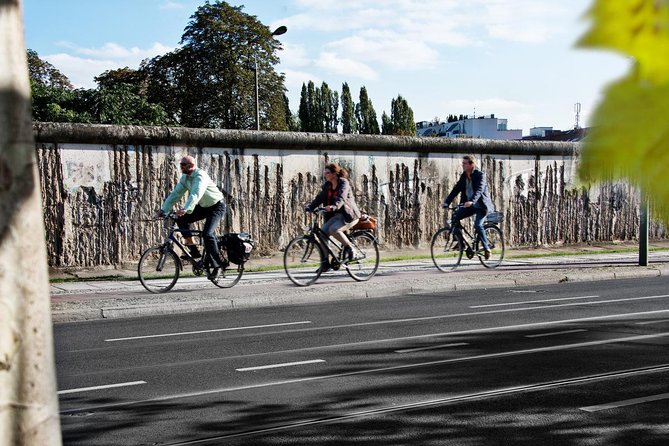
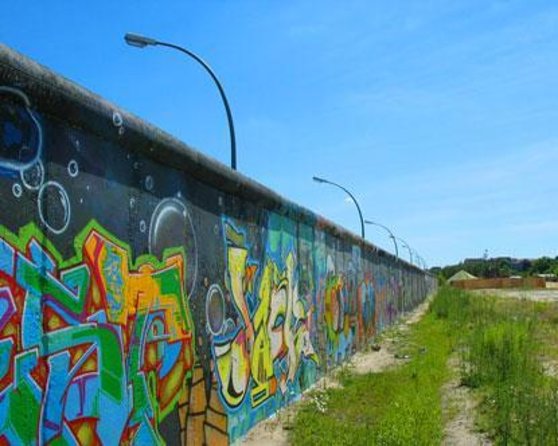
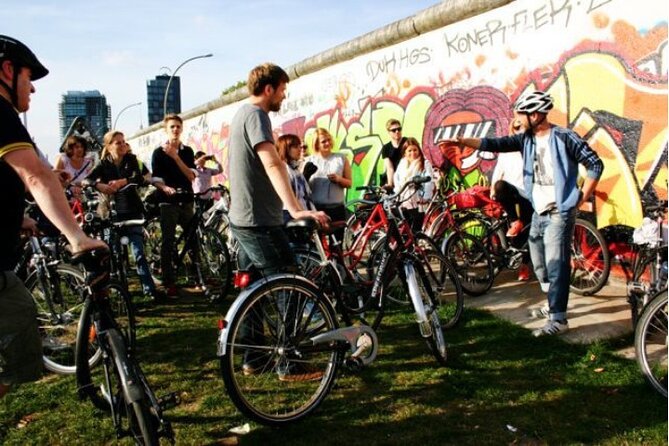
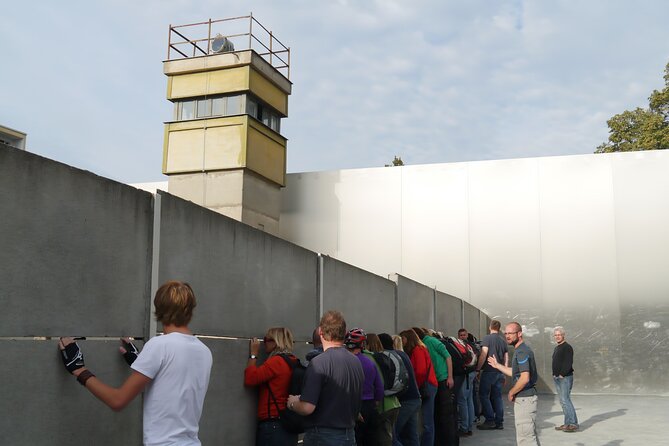
The Berlin Wall Memorial is the heart of the ride. Many visitors see isolated wall fragments in busy parts of central Berlin, but those pieces can be hard to interpret. Here, the former border is easier to understand as a system.
You can see the relationship between the wall, the death strip, watchtowers, and the spaces on both sides. The point is not simply that a concrete barrier divided Berlin. The point is how the border controlled movement, cut streets and neighborhoods apart, and created a dangerous zone where escape could mean death.
The stop lasts about 10 minutes, though a strong guide may spend longer here. The best guides use questions to find out what the group already knows and then adjust the explanation. Simone, Simon, Peter, and Paul were especially praised for making the subject personal and understandable. Paul, a native of West Berlin, added his own memories of life before the Wall fell.
Do not assume this stop replaces a full visit to the Berlin Wall Memorial. If you want time to read every panel, walk the preserved border strip, and visit the documentation center, return later on your own. The bike tour gives you orientation and context, not a museum-length visit.
Mauerpark and the city’s change of mood
From the memorial, the ride continues to Mauerpark. Today, the park is associated with its Sunday flea market and open-air atmosphere. Its earlier meaning was far more severe: this was part of the border zone that divided Berlin for 28 years.
The stop shows how a place tied to fear and restriction became a public space for music, markets, and free expression. That change is one of the more memorable ideas on the route. Berlin did not erase its divided past, but it did give former border spaces new uses.
Mauerpark also gives the ride a welcome change of pace. The tour is serious, and the park helps break up the heavier material. You spend about 10 minutes here before continuing toward Humboldthain.
More WWII and D-Day Tours in Berlin:
- Private Berlin WWII and Cold War History Tour with Local Expert Guide
★ 5.0 · 28 reviews - Berlin: Private Bike Tour of the Berlin Wall and Third Reich
★ 5.0 · 23 reviews - Vienna: World War II Historical Walking Tour
★ 4.8 · 1,772 reviews - Zagreb: City & History Walking Tour & WW2 Tunnels
★ 4.9 · 1,202 reviews
Humboldthain’s flak tower and Nazi construction
At Humboldthain, you see a massive flak tower built during the Nazi period. It served as an air-raid shelter and an artillery platform, a reminder of the scale and force of Nazi Germany’s military planning.
The structure is also a useful place to discuss Nazi architecture. These were not modest buildings. They were built to dominate, protect, and project power.
The stop includes a panoramic view, which helps you connect Berlin’s central districts with the historical events being discussed. You are not only hearing about wartime planning in the abstract. You are looking across the city while seeing one of its surviving military structures.
The visit lasts around 10 minutes. The route’s steady rhythm works well here: ride, stop, listen, ask questions, then continue.
Günter Litfin and the personal cost of the Wall
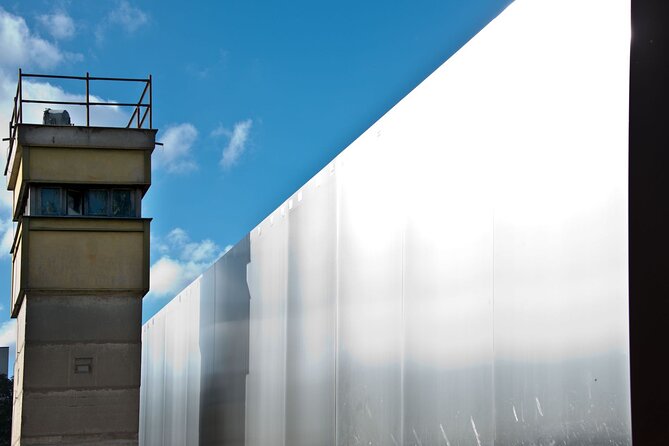
The Günter Litfin Memorial preserves an original watchtower. It honors Günter Litfin, identified here as the first person shot at the Wall.
This is one of the tour’s shortest stops, about five minutes, but it carries a lot of weight. A wall can sound like a political idea. Litfin’s story makes it personal. The watchtower also helps you picture how guards monitored escape attempts and how exposed the border zone was.
You then ride to Invalidenfriedhof, a cemetery divided by the Wall. The burial ground was created for Prussian military figures, so it connects earlier German military history with the twentieth-century division of Berlin.
The guide focuses on escape stories here, helped by the cemetery’s position near former checkpoints and a canal that served as a natural boundary between East and West Berlin. Again, you should expect an overview rather than a long cemetery visit. The stop is listed at about five minutes.
Spreebogenpark and Hitler’s unrealized Berlin
Spreebogenpark offers a broad view of Germany’s government district. From here, the guide discusses the plans of Albert Speer, Hitler’s architect, including the proposed Great Hall.
The planned building would have held 180,000 people. That figure is so enormous that it helps explain the megalomania behind the Nazi redevelopment plans for Berlin. This is one of the places where seeing the modern government quarter while discussing an unrealized dictatorship project becomes especially effective.
The tour does not treat the city as a museum frozen in one period. You see today’s democratic institutions while learning how another political system imagined remaking Berlin as a stage for absolute power.
The stop takes about 10 minutes. It is also a good example of why cycling works here. The distance between Nazi-era plans, the Wall, and the current government district becomes clear when you move through the city instead of jumping between isolated attractions by vehicle.
The Reichstag and Germany’s democratic story
At the Reichstag Building, the guide explains Hitler’s rise to power and Germany’s democratic development. You stop outside, with no time to enter the building or visit its glass dome.
That limitation matters. If the Reichstag interior is high on your list, arrange a separate visit. On the bike tour, the value comes from the setting and the explanation. The Reichstag is not just an impressive government building. It represents the fragility of democracy, the destruction of democratic government under Hitler, and Germany’s later return to parliamentary rule.
The stop lasts about five minutes. A guide may adapt the route to group interests, but you should not count on a long presentation here.
Holocaust memorials and the Fuhrerbunker
The tour passes memorials for major groups persecuted and murdered during the Holocaust, including the Memorial to the Murdered Jews of Europe near Brandenburg Gate. The large field of concrete blocks is designed to make you feel uncertain and disoriented as you move through it.
The guide gives you time to consider the memorial and may invite discussion about what it means. One stop is listed at around 10 minutes. That is enough for an introduction, but not enough for a quiet, extended visit if you want to explore every path.
Nearby, the route reaches the site of the Fuhrerbunker. Today, there is no dramatic ruin to see. The location is marked by an ordinary parking area, and the guide explains why the bunker site was not turned into a monument that could encourage Nazi worship or pilgrimage.
That plain setting is part of the lesson. The end of Hitler’s rule is discussed in a place that does not offer a grand final image. If you want a full study of the bunker, this tour will only provide the location and basic context.
Checkpoint Charlie and the Cold War
On the English version, the route includes Checkpoint Charlie, the best-known former border crossing between East and West Berlin. The guide explains its role as a crossing associated with the United States and Soviet Union and discusses the moment when a confrontation there nearly sparked a much wider war.
Checkpoint Charlie is famous, but the modern site can feel highly commercial. The tour’s value is not the reconstructed guard booth or the photo opportunity. It is the explanation of why this crossing mattered during the Cold War and how Berlin became a front line in the conflict between the superpowers.
One important warning: this stop appears only on the English version of the tour. Confirm your language choice if Checkpoint Charlie is a priority.
What the cycling feels like in practice
Berlin is flat, and the ride is described as easy rather than athletic. One family group covered about 13 kilometers at a relaxed pace, with plenty of breaks. Children aged 10, 14, and 17 handled it comfortably, and infant seats can be requested.
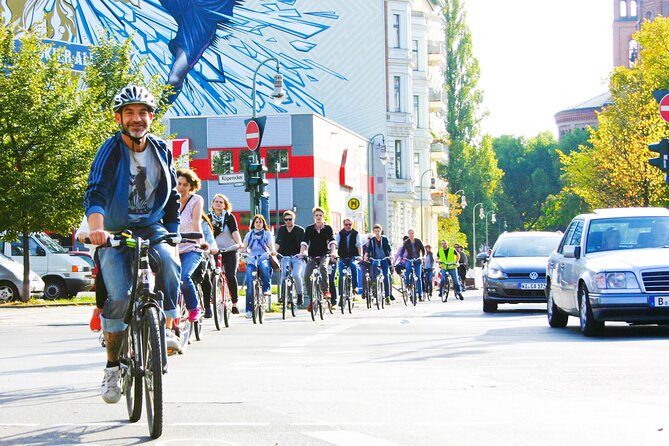
You will still be cycling in an urban setting. One rider found the main roads and cycle lanes daunting, although the guide gave clear instructions and waited when people were stopped at red lights. Another group appreciated that Constantine chose many park routes and stayed attentive to the group.
The safest approach is to stay close, follow the guide’s signals, and speak up if you are uncomfortable. The group maximum is 15, though one larger booking was split into smaller groups. A group of 12 was considered less easy to manage by one participant, so the experience may feel more relaxed when the group is small.
Rain does not automatically cancel the ride. The tour operates in all weather, and Simon received praise for keeping the experience worthwhile during a rainy afternoon. Dress for the forecast and bring water. Food and drinks are not included.
The guides make the difference
The route has a strong framework, but the guide shapes the experience. Paul brought a West Berlin perspective and spoke about differences between East and West Berlin before and after reunification. Simon was praised for being warm, clear, and good with questions.
Simone added personal stories and encouraged discussion around difficult subjects. Juliette was appreciated for adjusting the route, while Theo gave clear cycling instructions and offered confident answers. Yonis, Peter, Constantine, and Jacob were also singled out for their energy, personal insight, or strong command of the subject.
That variety is both a strength and a small risk. You may get a memorable, personal presentation, but the depth and order of the stops can vary. One participant found the information disjointed and wanted a more linear account. Another expected the full Third Reich route but did not visit several advertised locations.
The Free Berlin concept allows guides to choose their own route. Tell your guide at the start if you must see the Holocaust Memorial, Reichstag, Checkpoint Charlie, or Invalidenfriedhof. The guide may not be able to include everything, but asking early gives you the best chance.
Is $42.34 good value?
At $42.34 per person, the price is fair for a three-hour guided ride with a bike, helmet, and a guide who can connect sites spread across central Berlin. You are paying for movement, interpretation, and local context, not admission tickets. All listed stops are viewed from the outside, and no food or drinks are included.
I see the strongest value in the range. In three hours, you can connect the Wall, Nazi architecture, Jewish memorials, the government district, the Fuhrerbunker site, and the Cold War border. Doing that on foot would take much longer, while a bus would give you less immediate contact with the streets and former border lines.
The price is less attractive if you want long visits inside museums or memorial grounds. In that case, use the bike tour as an introduction and return independently to the Berlin Wall Memorial, Reichstag, Holocaust Memorial, or other sites that catch your attention.
Who should book this bike tour?
I would choose this ride if you want a broad first look at Berlin’s twentieth-century history and enjoy learning while moving. It suits families, first-time visitors, and anyone who finds geography easier to understand when the guide shows the distance between places.
It is also a good fit if you want something more active than a bus tour but not a hard workout. The flat terrain, regular stops, baskets, helmets, and infant-seat option make it workable for many mixed-age groups.
I would hesitate if you need a fixed itinerary or a slow, detailed visit at each memorial. The route can change, and three hours is not long enough to study every site. The tour is best seen as a well-guided introduction, with the option to return to the places that speak to you most.
FAQ
How long is the Berlin Wall and Third Reich bike tour?
The tour lasts approximately three hours. One family described riding about 13 kilometers at an easy pace with frequent stops.
What is included in the price?
The price includes use of a city bike, helmet, and professional guide. Infant seats can be provided on request.
Where does the tour begin and end?
It begins at Free Berlin Bike Tours & Rental, Poststraße 11, 10178 Berlin, Germany. The tour ends back at the same meeting point.
Is Checkpoint Charlie included on every tour?
No. Checkpoint Charlie is listed as included only on the English version of the tour. Confirm your selected language if this stop matters to you.
Can children join the tour?
Yes. Children are welcome, but they must be accompanied by an adult. Infant seats can be requested.
What happens if the weather is bad?
The tour operates in all weather conditions, so you should dress appropriately. The experience can also be changed or canceled if the minimum number of participants is not met, with another date or a full refund offered.
Should you book it?
Book this tour if you want Berlin’s Wall, Nazi, Holocaust, and Cold War stories tied together by geography and explained by a lively local guide. The bike gives you a better sense of distance and change than a string of indoor visits, and the price is reasonable for three hours of equipment and guiding.
Before you ride, tell the guide your must-see locations. If a fixed Third Reich route is essential, this may not be the safest choice because guides have freedom to adjust the stops. For most visitors who want a thoughtful overview, easy cycling, and plenty of ideas for further exploring, it is a strong introduction to Berlin’s difficult and important past.
More History Bike, Segway and Tuk-Tuk Tours in Berlin
- Small-Group Historical Bike Tour in Berlin
★ 4.5 · 103 reviews - Berlin (E)Bike Tour Historical Highlights in Small groups
★ 4.5 · 24 reviews - Historical Singapore Bike Tour on Full-Sized Bicycles
★ 5.0 · 1,421 reviews - Charlotte’s Ultimate Southern Charm Historical City Cart Tour
★ 5.0 · 1,347 reviews
More Cold War and Communism Tours in Berlin
- Berlin: Cold War & Berlin Wall History Guided Bike Tour
★ 4.8 · 422 reviews - Berlin Wall History Small Group Cycling Tour
★ 4.9 · 152 reviews - Berlin: Historical Sights & Berlin Wall Tour with a Berliner
★ 5.0 · 62 reviews - Berlin: Cold War History and Berlin Wall Guided Walking Tour
★ 5.0 · 33 reviews
Just added around Berlin
- Historic center of Berlin – Tour in Italian★ 5.0 · 143 reviews
- Berlin Food & Cultural Tour: Must-Try German & Berliner Classics★ 5.0 · 51 reviews
- Private Berlin WWII and Cold War History Tour with Local Expert Guide★ 5.0 · 28 reviews
- Private Tour: Jewish Heritage Walking Tour of Berlin★ 5.0 · 29 reviews
- Small-Group Historical Bike Tour in Berlin★ 4.5 · 103 reviews
- Berlin: Private Bike Tour of the Berlin Wall and Third Reich★ 5.0 · 23 reviews
- East Berlin Food & History Tour with Eating Europe★ 5.0 · 204 reviews
- Explore Berlin History and Highlights Sightseeing Walking Tour★ 5.0 · 81 reviews
Cold War & Communism Tours, compared.
Communism History and Nuclear Bunker Guided Tour
Read our review →
Prague Communism History and Nuclear Bunker Tour
Read our review →
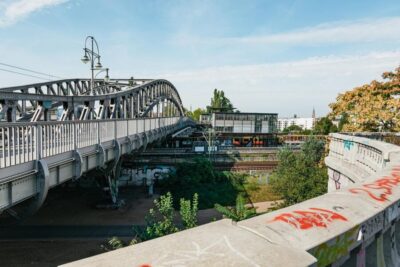
Cold War & Berlin Wall History Guided Bike Tour
Read our review →
Chisinau: Discover Soviet Heritage of Transnistria
Read our review →
Communist History Tour with House of Terror Option
Read our review →