
Review · CENTRAL HUNGARY
Budapest: Communist History Tour with House of Terror Option
The past still speaks through Budapest’s streets. This two-hour tour links Parliament, Liberty Square, Soviet-era memorials, the 1956 uprising, and a Cold War nuclear bunker with a museum visit. I especially like the small groups of up to 10 people and the chance to choose between the playful Budapest Retro Center and the grim House of Terror Museum.
I also like the local guides’ personal connection to the subject. Guides such as Alexandra, Flora, Bea, Noémi, Kati, and Veronika have been praised for explaining difficult events with care, clarity, and useful family stories. The main drawback is the subject itself: parts of the House of Terror and the walking route can be emotionally heavy, and the museum choices offer very different moods.
Key things to know before booking
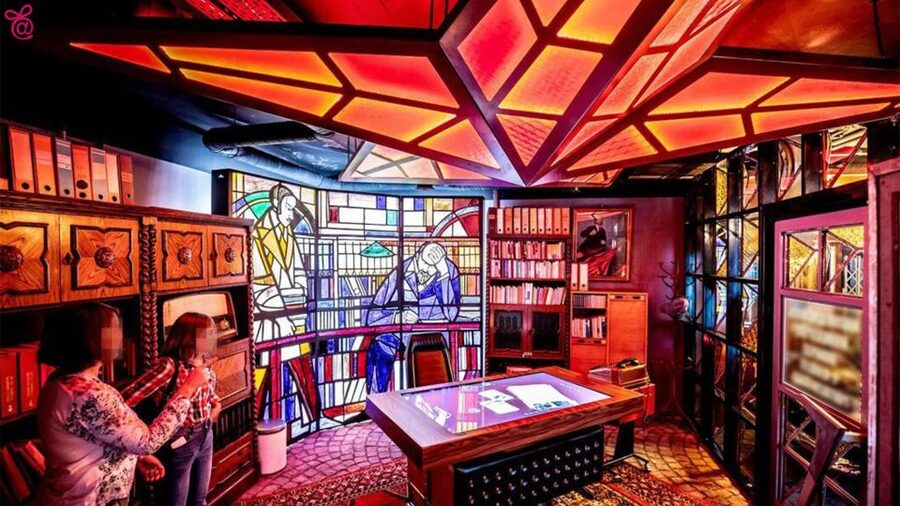
- Two distinct museum choices: The morning option combines the walk with the Budapest Retro Center, while afternoon options focus on the House of Terror Museum.
- A compact route through central Budapest: You see Parliament, Liberty Square, the Soviet Liberation Memorial, Cardinal Mindszenty’s former exile windows, and places linked to 1956.
- A guide-led history lesson: The English-speaking guide explains Hungary’s 45 years under Communist rule and Soviet military occupation.
- Small groups matter: With no more than 10 people, you can ask questions and hear personal context more easily.
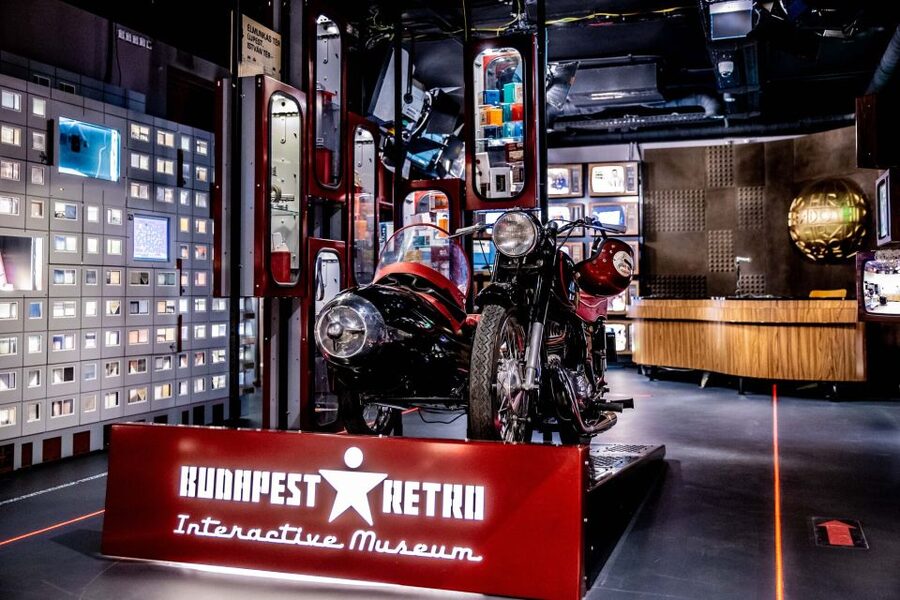
- The Retro Center is lighter in tone: Its three floors feature period homes, vehicles, space-flight displays, and interactive exhibits from the 1960s through the 1980s.
- The House of Terror is confronting: Expect material about the Nazi period, Communist repression, political trials, labor camps, deportations, interrogation, and torture.
Starting at Parliament and the monuments of repression
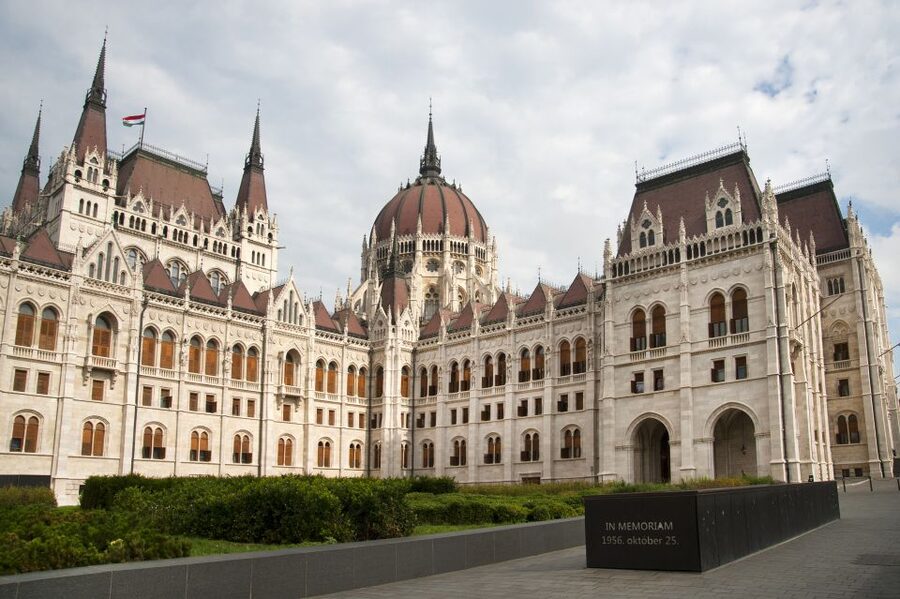
The tour begins near the Hungarian Parliament, one of Budapest’s most striking buildings. Here, the guide sets the scene for the decades after World War II, when Hungary came under Soviet military occupation and a Communist system took hold.
This opening is useful because it gives you more than dates. You begin to see how public places in central Budapest became tied to state power, protest, mourning, and resistance. The first section also introduces the victims of the red dictatorship through dramatic memorials near Parliament.
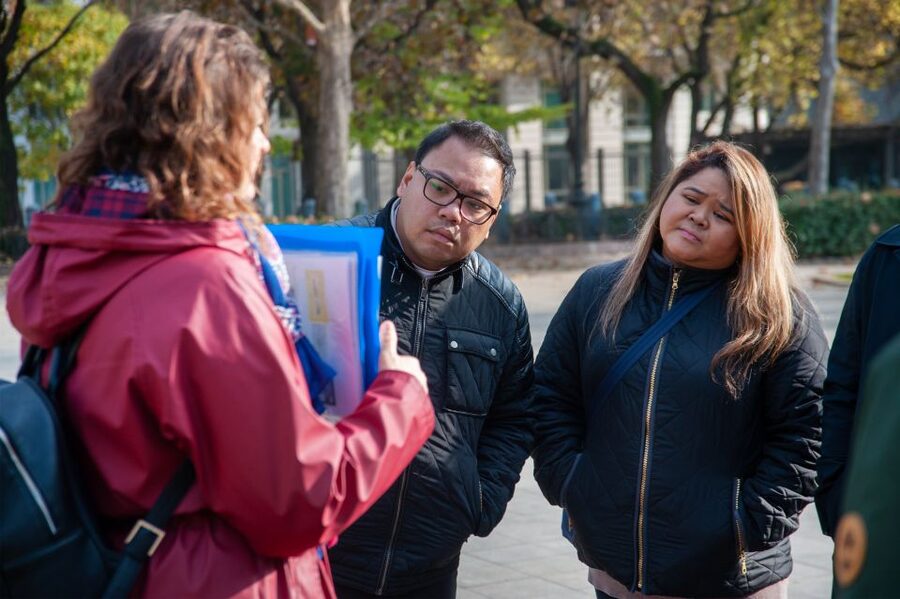
I would pay close attention here, even if you have limited background in Hungarian history. The guide’s job is to connect the monuments to the people affected by the regime, not simply point out buildings and move on. Several guides have been praised for explaining the subject in clear English and for answering questions with patience.
The route is a walking tour, so you should expect to remain on your feet and move between outdoor sites. One participant who was unwell found it difficult to keep up, although the guide was considerate. If you use walking aids or need a slower pace, tell the guide at the beginning. Alexandra was specifically praised for waiting until everyone had caught up.
More Cold War and Communism Tours in the world:
- Prague: Communism History and Nuclear Bunker Guided Tour
★ 4.7 · 2,417 reviews - Prague Communism History and Nuclear Bunker Tour
★ 5.0 · 1,742 reviews - Bucharest: Communism and History Guided City Walking Tour
★ 4.9 · 918 reviews
Liberty Square and the last Soviet monument
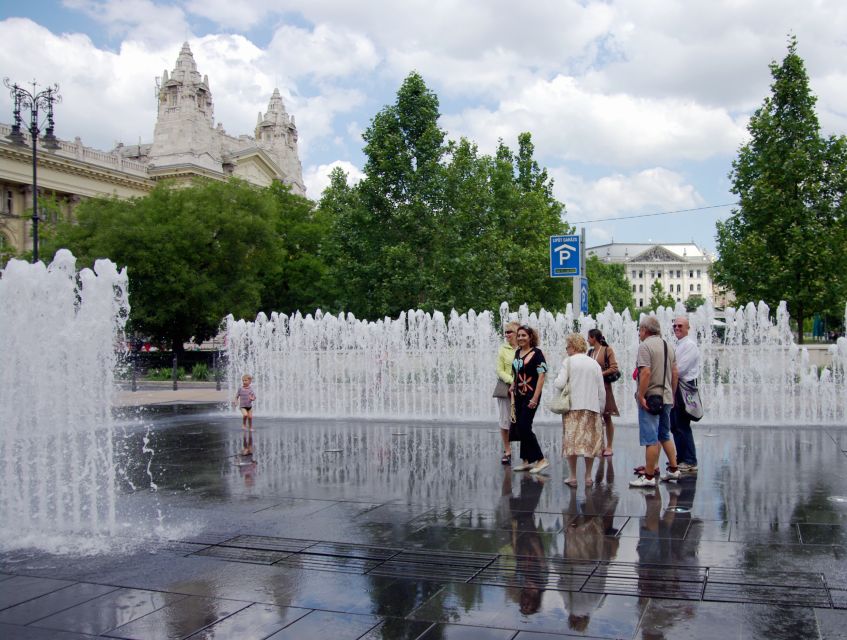
From Parliament, the walk continues to Liberty Square. This is one of the most meaningful stops because it contains the Soviet Liberation Memorial, described as the last Communist monument in Budapest still in its original place.
The square gives you a direct look at the competing memories that shape modern Hungary. The monument recalls the Soviet defeat of Nazi Germany and the end of World War II, yet the Soviet presence that followed brought its own political controls and suffering. That tension is central to understanding why the site remains so charged.
A good guide can make this stop much more than a quick photograph. You will hear about the difference between official state memory and the private memories held by Hungarian families. Guides who grew up during the Communist era can add details about daily life, silence, fear, and the things people did not discuss openly.
That personal angle was one of the strongest parts of the experience for me. Kati, for example, was praised for combining dates and political events with personal stories and even explaining American involvement with Hungary. Veronika was also praised for describing what it was like to grow up under the Communist system.
Cardinal Mindszenty and the cost of speaking out
The route also passes the famous windows where Cardinal József Mindszenty spent many years in exile. Mindszenty was the leading anti-Communist figure in Hungary’s Catholic Church, and his long confinement in the American Embassy became a symbol of the era’s political pressure.
This stop helps you understand how opposition worked under a dictatorship. Resistance did not always mean taking to the streets. It could involve religious leadership, private belief, refusing to cooperate, or simply preserving a different account of events inside the family.
The guide explains these sites in the wider story of postwar Hungary. That context is important because the Communist period did not appear from nowhere. The tour also discusses World War II and Nazi rule, particularly in the guided House of Terror option, before moving into Soviet control and the political system of the 1950s.
You may find the amount of information dense, especially if you are new to Central European history. The small group helps here. You can ask the guide to slow down, explain a term, or clarify how one event led to the next.
The Cold War bunker and the hidden machinery of fear
One of the more unusual details on the route is the chance to see the ventilation channels of a secret underground nuclear bunker built during the Cold War. You do not simply hear about military tension from a textbook. You encounter a physical trace of the fear that shaped the city.
The bunker also shows how much of the Communist system operated out of sight. Official monuments and public speeches told one story, while underground facilities, state security, surveillance, and preparation for conflict told another.
This stop will appeal to anyone interested in the Cold War, military history, or the practical side of life behind the Iron Curtain. Tim, one particularly enthusiastic participant, described the tour as a strong choice for anyone interested in the Cold War and Soviet occupation.
Do not expect a large bunker visit with a long underground exploration. The supplied details refer to the ventilation channels, so the value comes from the explanation and the link to the wider Cold War system. The guide turns a technical feature into a clue about the era.
A few more history tours around the world worth a look
- History and Hauntings of Salem Guided Walking Tour
★ 5.0 · 14,564 reviews - Colosseum: Underground and Ancient Rome Tour
★ 4.7 · 12,691 reviews - Lisbon: History, Stories and Lifestyle Walking Tour
★ 4.8 · 10,902 reviews - London Small Group Tour of Historical Pubs
★ 5.0 · 10,422 reviews
The 1956 uprising through places, not just dates
The walking route includes sites connected with Hungary’s anti-Soviet revolution of 1956. This is one of the most important chapters in the tour. Hungarians rose against the Communist government and Soviet control, only to face a violent response and harsh consequences.
The power of this section comes from seeing the city as a place where political history happened. You are not only memorizing that an uprising occurred in 1956. You are hearing how ordinary people, students, religious figures, and political opponents became involved, and how the revolt changed the lives of families for decades.
Several guides have been praised for explaining the aftermath as well as the uprising itself. That matters because 1956 was not a neat victory story. The tour addresses the consequences, the repression that followed, and the long road to the end of Communism in 1989.
This is also where the guide’s personal approach can make a difference. Bea, Adam, Kati, and other guides have been praised for sharing family or childhood memories of Communist Hungary. Those stories cannot replace historical evidence, but they can help you understand how public events affected daily life.
Morning option: a lighter look at the Budapest Retro Center
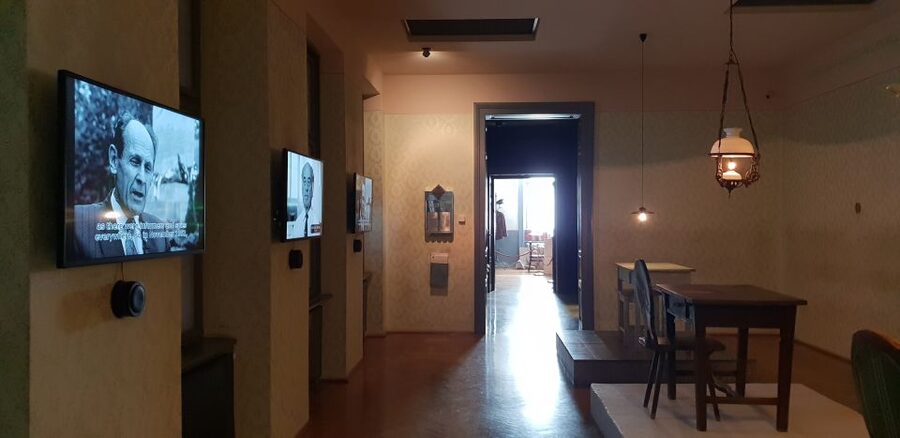
If you choose the morning tour, the walking section is followed by a one-hour guided visit to the Budapest Retro Center. This is the friendlier, more playful choice, though the subject matter still carries serious historical weight.
The museum covers everyday life from the 1960s through the 1980s. Its three floors include street scenes, typical vehicles, Soviet-Hungarian space-flight material, period home interiors, and thousands of objects from the era.
The displays are arranged in an interactive way. You can dress as a Communist comrade or try presenting the news as a television announcer from the period. These activities may sound light, but they help you picture ordinary life under a system that is often taught only through political speeches and repression.
I would choose this option if you want a broader look at how people lived, worked, traveled, decorated their homes, and consumed popular culture. It is also the better fit for families or for anyone who finds the House of Terror too intense.
The limitation is that a playful museum cannot cover every political detail. One person found the museum less rewarding than the walking tour, even though the guide did their best to explain the important exhibits. If your main goal is state violence and political repression, choose the House of Terror instead.
Afternoon option: the House of Terror Museum
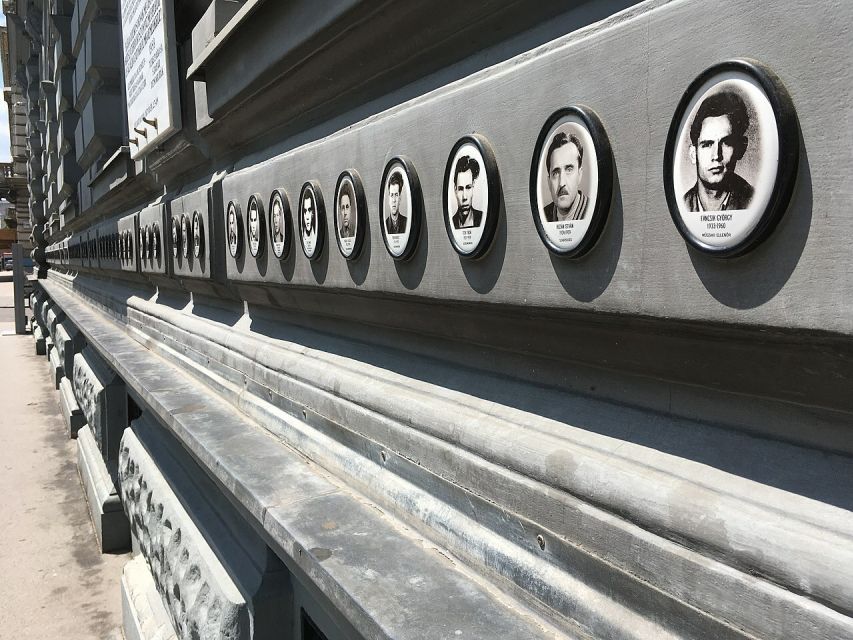
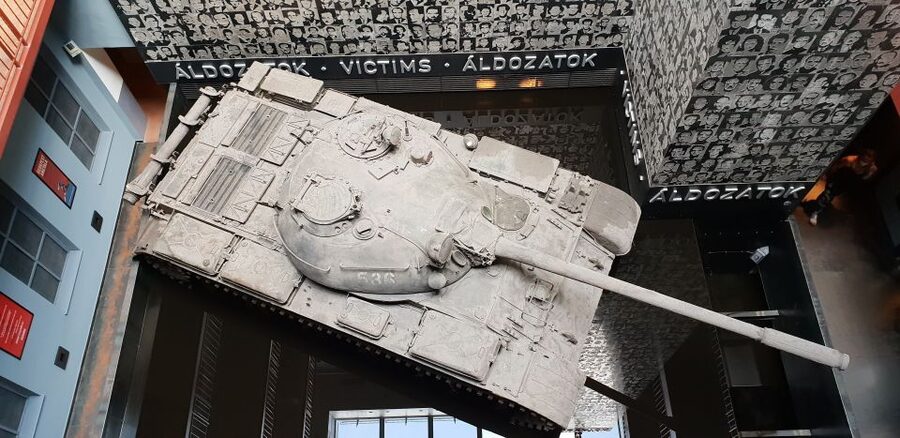
The afternoon option adds a ticket to the House of Terror Museum, housed in the former headquarters of the ÁVO State Protection Police. This was Hungary’s version of the Soviet secret police, and the building was used during some of the darkest years of the dictatorship.
The museum presents Hungary from World War II through Nazi rule, the postwar Communist takeover, and the brutal 1950s. You will encounter displays on the economy and daily life of the period, mass deportations, labor camps, political trials, interrogation, torture, and the 1956 revolution.
You may visit the museum independently with the ticket included in the afternoon option. The tour guide is not a museum employee, so do not look for your ticket at the museum ticket office. Your guide provides it.
This arrangement gives you some freedom, but it also means the museum experience may depend on how well you prepare. The guide-led House of Terror option is the stronger choice if you want help connecting the exhibits. Noémi, Alexandra, Flora, and other guides have been praised for explaining difficult displays clearly and for giving visitors the context that can be hard to find when walking through alone.
The museum can be disturbing. Interrogation rooms, torture cells, deportations, labor camps, and political trials are not easy subjects, and the presentation is designed to confront you. I would not choose this option simply because it is famous. Choose it because you genuinely want to face this part of Hungary’s past.
Guided House of Terror visits for more context
The third choice is a guided visit inside the House of Terror Museum. This is the best fit if you want a structured explanation rather than a short introduction followed by independent viewing.
The guide leads you through the building and explains the chain of events from World War II to Nazi rule, Soviet occupation, Communist political control, and the events of 1956. You also hear about the end of Communism in 1989, giving the museum a clear historical endpoint.
I like this option for first-time visitors to Budapest who do not already know the region’s political background. The building contains powerful objects and rooms, but it can be hard to understand the links between them without help. A guide can explain why a room matters, how the police operated, and where personal suffering fits into the wider system.
The strongest praise has gone to guides who combine facts with compassion. One guide was able to handle a mixed-language family group by giving the tour in English and Hungarian. Another extended the visit by about 30 minutes to explain more of the museum. Those examples suggest that guide quality is a major part of the value.
Still, the museum is not a cheerful sightseeing stop. If you want a gentler afternoon, take the Retro Center option instead.
The guides are the main reason to book
The tour is sold as a history walk with museum access, but the guide makes the biggest difference. You are not just getting directions between monuments. You are getting explanation, translation of difficult political ideas, and a chance to ask questions in a small setting.
The most praised guides include Alexandra, Flora, Noémi, Bea, Kati, Veronika, Naomi, Beata, Adam, and others. Their strengths vary, but the pattern is clear: good preparation, strong English, patience, and a personal connection to Hungary’s recent past.
Some groups have been very small, with only two or three participants. That can turn the experience into a near-private lesson. One group included an English-speaking husband and a Hungarian-speaking niece, and the guide handled both languages. The advertised language is English, so you should not book expecting a bilingual tour, but the example shows how flexible a guide may be.
The guide is an independent professional, not a museum employee. That is worth knowing because the tour provider and museum operate separately. Your guide remains the person to contact for the included ticket and the explanation around the museum visit.
Is $58 good value for two hours?
At $58 per person, this is not the cheapest way to see Budapest. The value depends on how much you want guided interpretation rather than simple entry to a museum.
For that price, you receive a professional English-speaking guide, the Communist-themed walk when included in your chosen option, and admission to either the Budapest Retro Center or the House of Terror Museum. A group capped at 10 also gives you a better chance to ask questions than a large coach tour.
The price makes the most sense for visitors with little background in Hungarian history, Cold War enthusiasts, students, and people with family ties to Hungary. It also suits anyone who wants a serious historical introduction during a short Budapest visit.
If you already know the period well and prefer to read museum panels alone, you may find the cost harder to justify. The House of Terror can be visited without this tour, and the Retro Center is more casual. You are paying mainly for structure, context, and access to a guide who can explain the unspoken parts of the story.
The free-cancellation policy up to 24 hours before departure and the option to reserve now and pay later add flexibility. Check the exact meeting point carefully because it changes with the option you choose.
Who should take this tour?
I would recommend it to you if you want to understand modern Budapest beyond grand architecture and cafés. The tour explains why certain monuments matter, how Soviet control shaped Hungary, and why memories of the Communist period remain personal and sometimes painful.
It is especially suitable for:
- People interested in the Cold War and 1956
- Visitors with Hungarian family connections
- Students studying Communism or modern European history
- Anyone who prefers a guide to explain museums
- Small groups who want time for questions
- Visitors choosing between a serious museum and a lighter cultural display
I would think twice if you dislike emotionally difficult museums, have trouble walking for two hours, or want a relaxed sightseeing activity. The tour is not designed as light entertainment, particularly when you choose the House of Terror.
Should you book the Budapest Communist History Tour?
Yes, if you want a clear and personal introduction to Hungary’s Communist period. The walking route gives you the political setting, while the museum choice lets you decide how intense or playful the second half should feel.
Choose the morning Retro Center option for everyday life, period objects, interactive displays, and a lighter mood. Choose the afternoon House of Terror option for a confronting look at repression. Choose the guided House of Terror visit if you want the most help making sense of the museum’s difficult material.
For the best experience, arrive ready to ask questions and tell your guide if you need a slower walking pace. At $58, it is a fair buy for the right audience, especially when the group is small and the guide brings personal insight to a complicated past.
FAQ
How long does the Budapest Communist History Tour last?
The stated duration is two hours.
How much does the tour cost?
The listed price is $58 per person.
What language is the tour offered in?
The live tour guide speaks English.
How large is the group?
The tour is limited to 10 participants.
What locations are visited during the walking tour?
The route begins near the Hungarian Parliament and continues to memorials, Liberty Square, the Soviet Liberation Memorial, the windows associated with Cardinal Mindszenty, Cold War bunker ventilation channels, and sites connected with the 1956 revolution.
What is included with the morning option?
The morning option includes the Communist-themed walking tour and a one-hour guided visit to the Budapest Retro Center.
What is included with the afternoon House of Terror option?
The afternoon option includes the walking tour and an entry ticket to the House of Terror Museum. The museum visit may be taken independently.
Is the House of Terror visit guided?
A separate option includes a guided House of Terror visit. The afternoon option described above provides entry for a visit on your own after the walking tour.
Is the tour operated by the House of Terror Museum?
No. The guide is an independent professional and is not employed by the museum.
Can I cancel the tour for a refund?
You can cancel up to 24 hours in advance for a full refund. You can also reserve now and pay later, according to the booking conditions provided.
Just added around the world
- Civil War History Tour – The Battle of Franklin, Tennessee★ 4.9 · 85 reviews
- Cobh: 3-Hour Cultural Tour Plus★ 4.9 · 31 reviews
- Classical guitar concert in a historic olive press★ 5.0 · 23 reviews
- Ostuni: E-bike Tour, Ancient Olive Trees & Oil Tasting★ 4.9 · 42 reviews
- City tour historic old town Zurich★ 4.7 · 38 reviews
- City of Side: Mix Tour History, Nature, Culture Mosque Visit★ 4.8 · 21 reviews
- London: Historic City Walking Tour(& Rooftop Garden Access*)★ 4.8 · 54 reviews
- City of Side: Green Canyon, Waterfall, Ancient City Mix Tour★ 4.5 · 109 reviews
Cold War & Communism Tours, compared.
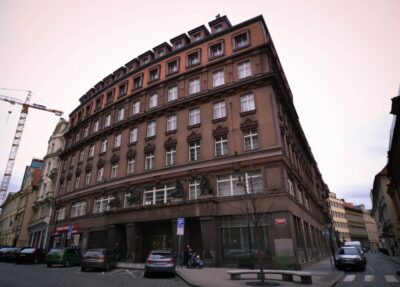
Communism History and Nuclear Bunker Guided Tour
Read our review →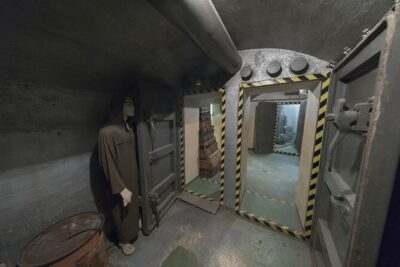
Prague Communism History and Nuclear Bunker Tour
Read our review →
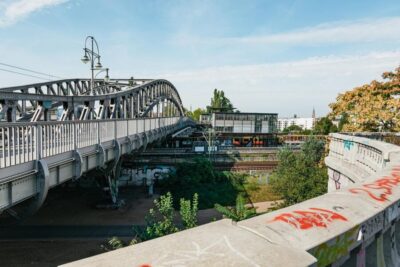
Cold War & Berlin Wall History Guided Bike Tour
Read our review →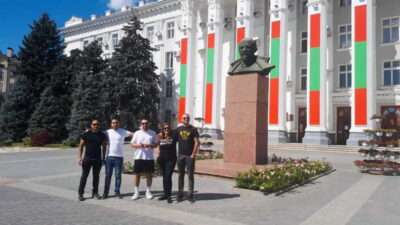
Chisinau: Discover Soviet Heritage of Transnistria
Read our review →
Guided Bike tour of the Berlin Wall and Third Reich
Read our review →
Tbilisi old town & soviet heritage – Private driver-guided Tour
Read our review →Browse the lists this tour appears in