
Review · ISTRIA COUNTY
Pula: Historic Walking Tour with Local Guide & City Views
Pula’s old stones tell more stories than gladiators. This 90-minute to two-hour walking tour links the Roman Amphitheatre, three ancient gates, the market, and Forum Square with lively local detail. I like the focus on alternative facts and the chance to shape the conversation around food, culture, nature, or daily life.
I also like the guide’s personal connection to the city. Marina has worked as a licensed Istrian guide for more than 18 years, and the excellent feedback singles out her clear explanations, patience, and useful local tips. The main consideration is that the tour is conducted in German, and entrance to the Amphitheatre costs extra if you choose to go inside.
Key points
- Begin beneath Pula’s Roman Amphitheatre: Meet at the arena entrance under the wooden roof, an easy landmark in the city center.
- See three surviving Roman gates: The Twin, Hercules, and Sergii gates each offer a different clue about Pula’s ancient defenses and city life.
- Stop at the local farmers’ market: This is where the tour connects Roman trade with present-day Istrian food and shopping.
- Hear the story behind the goat: At Forum Square, the guide explains the goat on the regional flag while pointing out the August Temple and Venetian city hall.
- Choose a more personal conversation: You can focus on local lifestyle, culture, nature, food, or other interests.
- Expect a German-speaking tour: A private group option is available, and the route is wheelchair accessible.
Starting beneath Pula’s Roman Amphitheatre
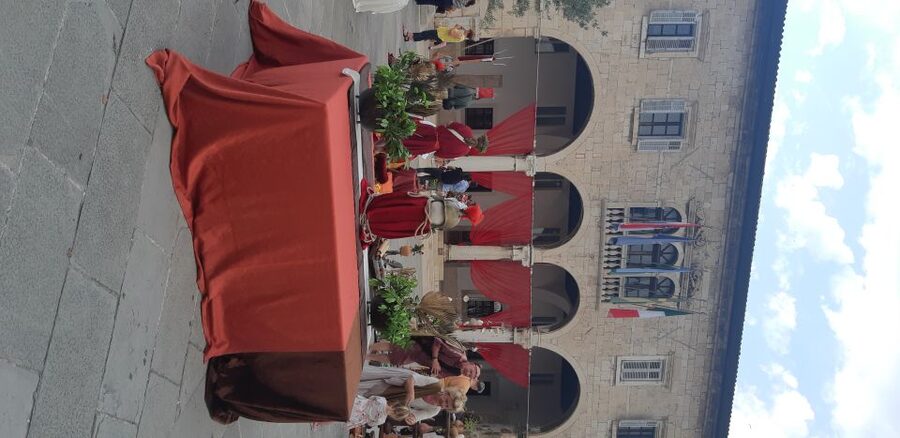
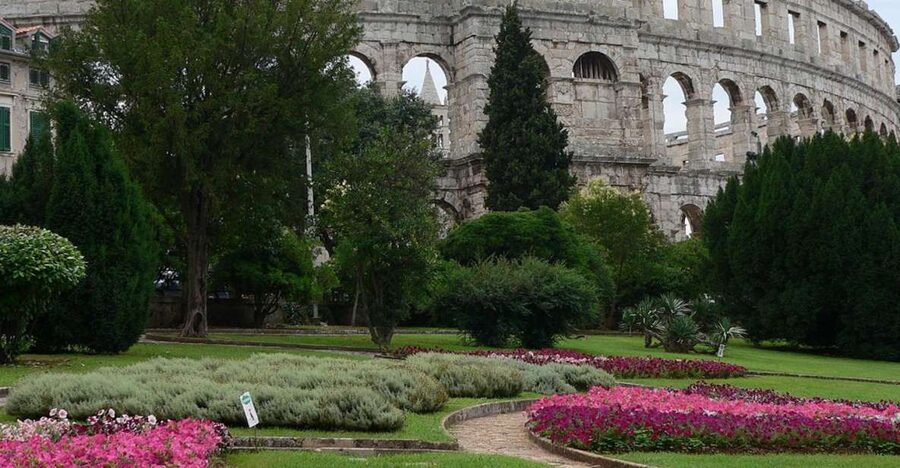
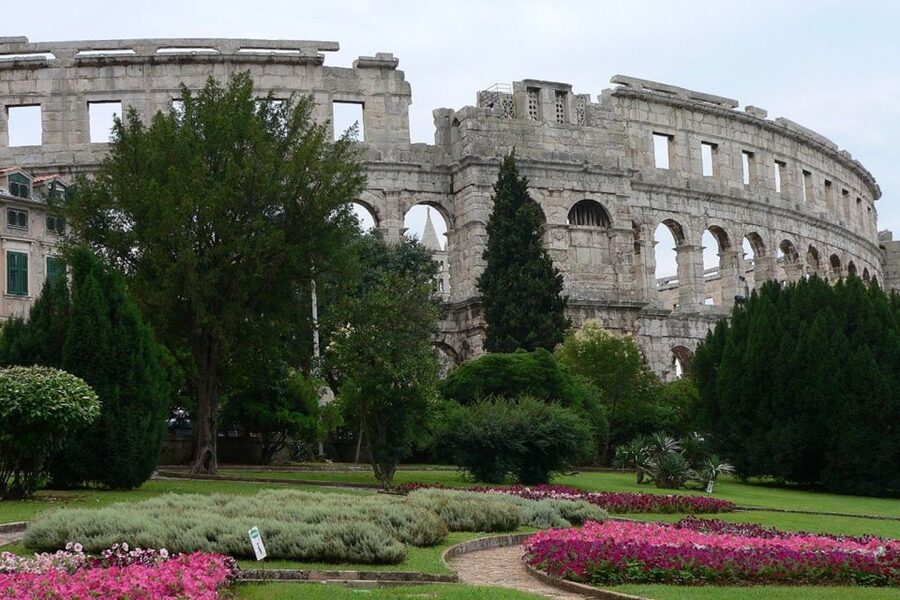
Your meeting point is at the entrance to the Arena, under the wooden roof. This is a practical place to begin because Pula’s most famous monument is impossible to miss, and you can get your bearings before the walking starts.
The Amphitheatre is the tour’s opening lesson in Roman Pula. You will learn what it was built for and how its role went beyond gladiatorial contests. That wider explanation matters. If you only look at the arena as a dramatic shell of stone, you miss how it fitted into the city’s public life.
The tour does not require you to enter the monument. Entrance fees are not included, so you can decide if an interior visit suits your budget and schedule. One particularly useful detail from the tour experience is that the choice can be discussed with the guide, rather than treated as an automatic part of the walk.
At $29 per person, this flexible start helps keep the price reasonable. You pay for interpretation and company through the city, not for a bundled entry ticket you may not want. If you have already visited the Arena inside, you can spend your time on the surrounding streets instead.
More History Walking Tours in Croatia
- Dubrovnik Old Town History Walking Tour
★ 5.0 · 1,684 reviews - Dubrovnik: Ancient City Walls & Wars Walking Tour
★ 5.0 · 1,270 reviews - Zagreb: City & History Walking Tour & WW2 Tunnels
★ 4.9 · 1,202 reviews
Following the old streets beyond the arena
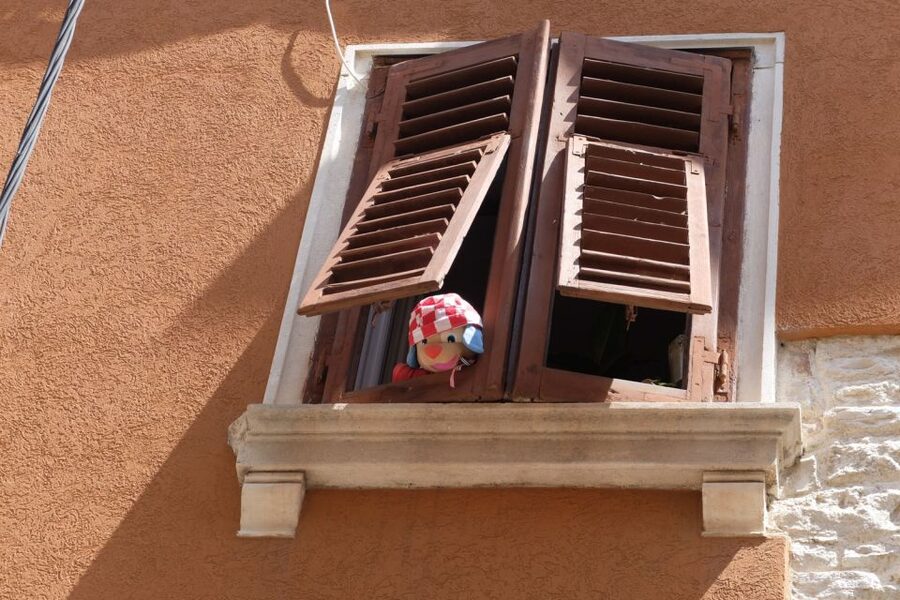
From the Amphitheatre, the route leads into the older parts of Pula. The appeal here is not a long list of dates. It is the chance to see how several periods and cultures left their marks on streets that are still part of everyday city life.
The guide introduces alternative facts about Pula, which gives the walk a different feel from a basic monument checklist. You can ask questions about local customs, buildings, food, or the way the city works now. That personal approach is especially useful if you want more than a standard account of Roman ruins.
Marina has guided in Istria for over 18 years and specializes in German-speaking guests. Her experience should suit you if you prefer explanations that are clear and conversational rather than rushed. The feedback also highlights that she takes time for questions and offers good suggestions for the rest of your stay.
One point deserves care: the information identifies Marina as the guide, while one comment refers to Veronika. That may mean more than one guide is involved with the experience. If having a particular guide matters to you, confirm this when booking.
Three Roman gates with different stories
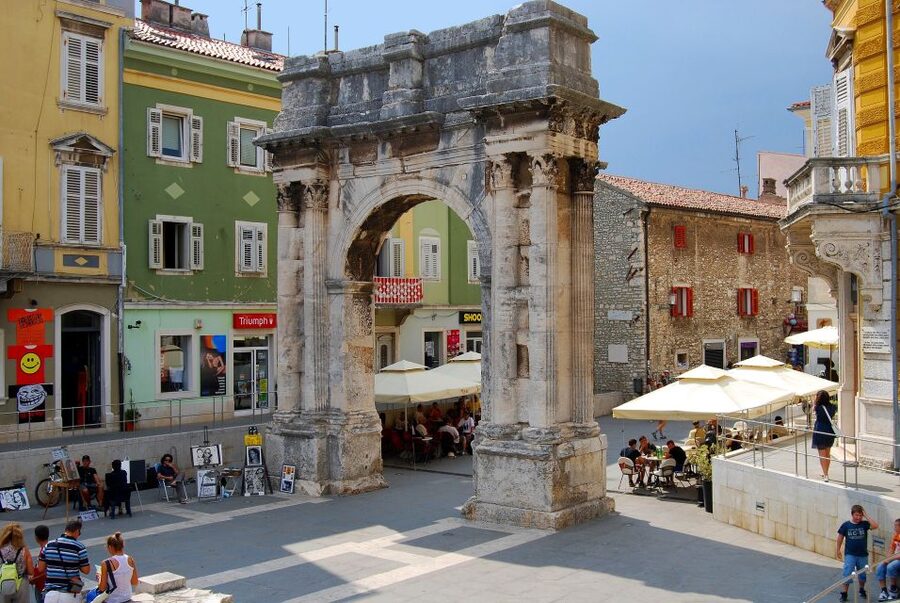
Pula still has three Roman city gates: the Twin Gate, Hercules Gate, and Sergii Gate. Seeing them together gives you a better sense of the city’s former entrances than viewing one isolated arch on a map.
The Twin Gate is known for its paired openings and carefully preserved details. Your guide uses those details to explain how the city was organized and how people moved through it.
The Hercules Gate is smaller and more understated than the Arena, but that is part of its value. It rewards close attention. Rather than simply pointing and moving on, the guide can use its carved elements to help you read the stonework and understand what survives from the Roman period.
The Sergii Gate adds another layer. Its appearance reflects the importance of the Sergii family, and its position helps show how ancient Pula connected public spaces, roads, and civic life. Exact explanations are easier to follow when you are standing at the gate itself, with the guide directing your eye to the details.
These stops are good examples of why a walking tour can be worth the fee. You could find the gates on a map, but it is harder to understand what you are looking at without someone connecting them to the city around you.
Tasting the daily life of Pula’s farmers’ market
The farmers’ market is one of the tour’s most useful changes of pace. After ancient stone and formal monuments, you see the place where local people buy and sell products grown in Istrian soil.
Marina is a passionate cook and a strong supporter of local cuisine, so food is not an afterthought here. You can talk about ingredients, regional cooking, and what belongs on a local table. The information provided does not promise tastings or food purchases, so treat this as a guided market visit rather than a food tour.
I like this stop because it brings Pula into the present. Roman ruins can sometimes make a city feel like an open-air museum. The market reminds you that Pula is still a working place, where people shop, trade, and cook.
If food matters to you, this is also the point where asking questions pays off. You can request suggestions about local dishes or ingredients, though the tour does not promise restaurant reservations, tastings, or a separate cooking lesson.
Same place, a different slice of the past:
- Walking Tour of Split with a ‘Magister’ of History
★ 5.0 · 1,122 reviews - Dubrovnik Combo: Old Town & Ancient City Walls
★ 5.0 · 1,019 reviews - Split Walking Tour with Professor of History
★ 5.0 · 926 reviews - Split: History and Heritage Walking Tour
★ 4.9 · 650 reviews
Reading Pula through Forum Square
The route continues to Forum Square, the civic heart of Roman Pula. In Roman times, the Forum was more than a market. It was a central public place where trade, politics, religion, and social life came together.
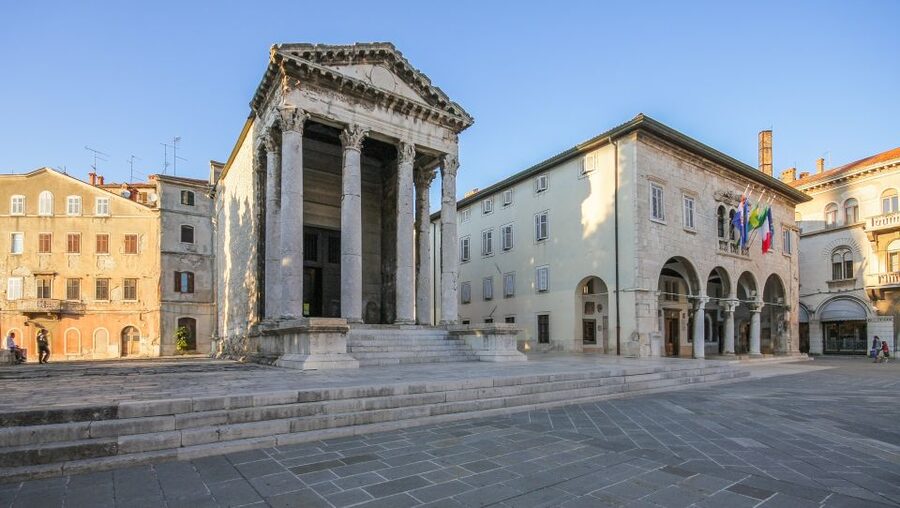
Here you will see the remains of the August Temple. The surviving structure gives the guide a firm starting point for explaining Roman public religion and the way monuments shaped the center of a city.
You will also admire the Venetian city hall. Its presence helps explain that Pula’s story did not stop with Rome. The city passed through several cultural and political periods, and Forum Square puts those layers side by side.
This is also where you learn why a goat appears on the regional flag. It is a small detail, but it is exactly the sort of fact that makes a tour memorable. It gives you a story to carry beyond the main monuments and helps connect local identity with the wider Istrian region.
A private conversation rather than a fixed script
The tour can be arranged as a private group, which matters if you want to ask many questions or move at a slower pace. One party of seven adults and a friendly small child found the format comfortable, so the experience can work for a small family group as well as couples or friends.
The guide can focus on the subjects that interest you most. Local lifestyle, culture, nature, and food are all named possibilities. You should still be realistic about the time available. A 90-minute route cannot cover every side of Pula in detail, so choosing two or three priorities will make the experience more useful.
The comments about the guide repeatedly praise clear explanations, strong subject knowledge, and a tour that feels lively rather than dull. One visitor described the walk as very entertaining and informative, while another appreciated that the guide responded fully to questions. Those points suggest that the quality comes from the conversation as much as from the route.
The language is German. This is a clear advantage for German-speaking visitors who want history explained naturally, but it makes the tour a poor fit if you need English or another language. The activity information lists German as the available language, so do not assume multilingual guiding.
What the $29 price really covers
At $29 per person, the price is fair for a guided city walk of up to two hours, especially if you value local explanation rather than simply collecting photographs. You are paying for a licensed guide, a carefully connected route, and access to local context around food, architecture, and city life.
The fee does not include admission to the Amphitheatre. That keeps the base cost lower, but you need to budget separately if you want to explore inside. The tour can still work well without the entrance because much of its content takes place on the streets, at the gates, market, and Forum.
The private-group option may increase the appeal for families or friends who want a more direct exchange with the guide. No private-group supplement is provided, so check the final price before confirming.
You can cancel up to 24 hours before the start for a full refund, and the reserve-now, pay-later option allows you to hold a place without paying immediately. These terms are useful if your Istrian plans are still shifting.
Who will enjoy this Pula walk most
I would recommend this tour to German-speaking visitors who want a first introduction to Pula without spending half a day on a large sightseeing program. It fits couples, small families, and friends who prefer to ask questions as they go.
It is also a good match for food-minded visitors. The market stop and the guide’s interest in cooking give the walk a local flavor that a purely Roman-focused tour would lack.
Families should find the short format manageable, especially since a small child was part of one well-received group. The route is listed as wheelchair accessible, which is important if mobility affects your planning, though you may still want to confirm the exact route and any surface conditions before arrival.
You may want a different activity if you need English, want extensive interior time at the Arena, or prefer a tour devoted only to Roman archaeology. This walk covers several centuries and connects monuments with daily life, so its strength is range and conversation rather than exhaustive detail at one site.
Practical advice before you book
Wear comfortable shoes. The experience is a walking tour through old parts of the city, and even a short route feels better when you are not distracted by sore feet.
Arrive at the Arena entrance under the wooden roof. Since this is the main attraction in Pula, finding the meeting point should be straightforward, but allowing a little extra time is sensible if you are unfamiliar with the city.
Think about your priorities before meeting the guide. If you care most about food, ask for market and cooking discussion. If Roman remains matter more, request extra attention at the gates and Forum. The guide is prepared to adapt the conversation.
If you want to enter the Amphitheatre, ask about it at the beginning. The choice is not included in the tour fee, and deciding early helps you understand how much time remains for the outdoor route.
Finally, remember that the tour lasts 90 minutes to two hours. That range gives the guide some flexibility, but it also means the exact pace may depend on questions, group size, and whether you choose to enter the Arena.
Should you book this Pula tour?
Book it if you speak German and want Pula explained by someone with long local guiding experience. The strongest parts are the personal format, the clear route from the Arena to Forum Square, the three Roman gates, and the market stop that connects ancient Pula with life today.
At $29, it offers good value for a short orientation walk, especially for a first visit. I would skip it only if you need another language, want a major focus on the Arena interior, or prefer to explore alone with no set route.
For most German-speaking couples, families, and small groups, this is a practical way to get oriented, hear useful stories, and leave with better ideas for what to see and eat next in Pula.
FAQ
How long does the Pula walking tour last?
The tour lasts between 90 minutes and two hours. The exact timing can depend on the starting time, group, questions, and pace.
What language is the tour conducted in?
The live tour guide speaks German. German is the only language specified for this experience.
Where does the tour meet?
The meeting point is at the entrance to Pula’s Arena, under the wooden roof.
Is entrance to the Amphitheatre included?
No. The walking tour includes the guide, but entrance fees are not included.
How much does the experience cost?
The listed price is $29 per person. Any separate entrance fee for the Amphitheatre is not included.
Can I book a private group?
Yes. A private-group option is available.
Is the tour wheelchair accessible?
Yes. The activity is listed as wheelchair accessible.
Can I cancel for a full refund?
Yes. You can cancel up to 24 hours in advance for a full refund.
Do I have to pay when I reserve?
No. The reserve-now, pay-later option lets you hold your plans without paying immediately.
Just added around Croatia
- Šibenik: Croatia in a Day, Vistas, History, Olive Oil, Wine★ 5.0 · 30 reviews
- Dubrovnik: Red History Museum Regular Ticket★ 4.6 · 134 reviews
- Pula: Historic Sites Guided Walking Tour★ 4.8 · 78 reviews
- Lumbarda: Half-Day Kayaking and History with Wine delight★ 5.0 · 49 reviews
- Experience Split History Walking Tour With Local Historian★ 5.0 · 28 reviews
- Dubrovnik: Small-Group Guided Old Town History Walking Tour★ 4.9 · 37 reviews
- Dubrovnik Old Town: Night tour with History, Wine & Bites★ 4.7 · 59 reviews
- Dubrovnik: Historical Tour with Game of thrones details★ 4.9 · 43 reviews
History Walking Tours, compared.
History and Hauntings of Salem Guided Walking Tour
Read our review →
Freedom Trail History Small Group Walking Tour
Read our review →
Historic Charleston Guided Sightseeing Walking Tour
Read our review →
Tapas Walking Tour with Food, Wine, and History
Read our review →
Savannah History and Haunts Candlelit Ghost Walking Tour
Read our review →
A History of Terror – Belfast City Centre Walking Tour
Read our review →Browse the lists this tour appears in