
Review · HONSHU
Osaka: Castle History Walking Tour / Castle Tower Admission
Walls can tell a war story. This 90-minute English walking tour makes Osaka Castle easier to understand by showing how its moats, gates, stonework, and tower worked together as a fighting machine. I especially like the focus on the castle’s military design and the chance to see its largest stone, details that are easy to miss when you visit alone.
The skip-the-line tower entry is another strong point, especially later in the morning when queues can grow. The tour also earns praise for friendly guides such as Saya, Mao, Spike, Yuta, Kaz, and Ken, who explain the setting in clear, engaging English. The main consideration is that this is a walking tour of the grounds and castle tower, not a guided explanation of every floor inside the museum.
Key things to know before you go

- The defenses are the main attraction: You will study triple moats, layered gates, sharp turns, and masugata entrances built to confuse and slow attackers.
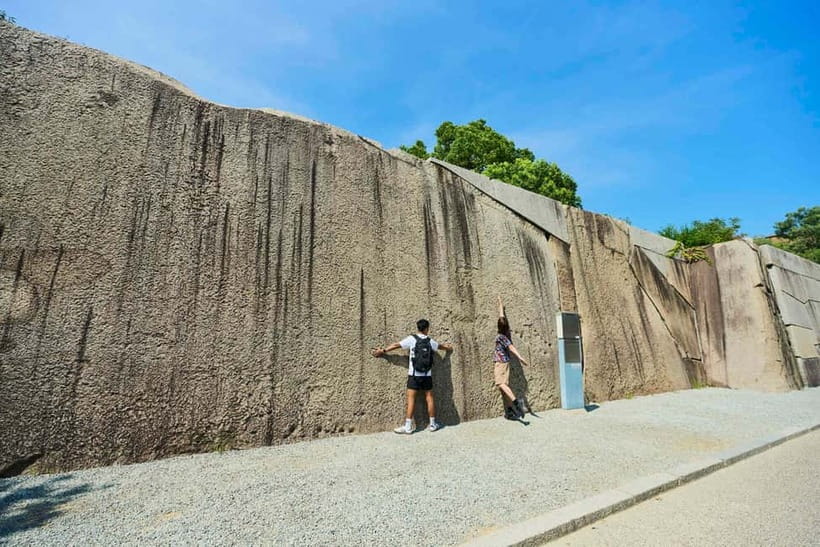
- The largest stone has a story: The guide explains how huge stones were moved in the 16th century and points out marks left by specialist craftsmen.
- The tower visit ends with city views: The admission ticket lets you enter Osaka Castle Tower and reach the upper levels for a broad view over Osaka.
- Skip-the-line access saves useful time: You enter through a separate route, which can be especially helpful when the castle is busy.
- Hokoku Shrine adds political context: The stop connects Osaka Castle with Toyotomi Hideyoshi and the legacy that later threatened Tokugawa rule.
- The tour suits curious families: Several reviews praise guides for holding the attention of children and teenagers while also answering detailed questions from adults.
Meeting at Lawson S Otemae Rest House Store
Your meeting point is in front of Lawson S Otemae Rest House Store. This matters because there are several Lawson convenience stores in the Osaka Castle area, so you should check the map carefully before setting out.
Look for the Local Guide Stars sign. Arriving at the correct shop is the first practical hurdle, and a few extra minutes can prevent a rushed start. The tour begins in the Otemae area, with the castle grounds ahead and the guide ready to explain what you are about to see.
Wear comfortable shoes. The route crosses historical grounds, stone surfaces, gates, and outdoor paths. Weather-appropriate clothing also matters because part of the experience takes place outside before you reach the tower.
The activity lasts 90 minutes, and starting times vary by date. An early start can be a smart choice. One visitor who took the 9 AM tour found the castle and elevator much easier before the larger crowds arrived later in the morning. By around 11 AM, lines had become much longer.
More Castle and Palace History Tours in Japan
- Tokyo: Imperial Palace and Shogun Historical Walking Tour
★ 5.0 · 2,251 reviews - Tokyo Castle & Imperial PalaceーShogun Walking Tour
★ 4.7 · 1,068 reviews - Tokyo: Imperial Palace Japanese History Walking Tour
★ 4.9 · 987 reviews
Reading the castle from the outside in
The best part of this experience comes before the tower. Instead of treating Osaka Castle as a pretty building with a famous name, the guide asks you to look at it as a carefully planned defense system.
You will see outer moats and multiple defensive layers designed to delay an attacking army. The triple moats created distance between the enemy and the central stronghold. Each additional wall and gate forced attackers to spend time, lose formation, and expose themselves.
The route also points out multi-layered gates and masugata entrances. A masugata entrance uses a boxed or angled approach that makes a direct charge difficult. An invading force could enter one space, find its route blocked or redirected, and then face defenders from above and from the sides.
That design becomes much clearer when you physically walk the route. You are not simply told that attackers faced obstacles. You can see the zigzagging paths and imagine how difficult it would have been to move quickly while under fire.
This is where the tour earns its price. A self-guided visit gives you the stone walls and views, but it may not explain why the path bends, why gates are positioned as they are, or how one defensive layer supported another.
Giant stones, hidden marks, and clever masonry
Osaka Castle’s stone walls are impressive even if you have no interest in military history. The tour gives them a practical purpose.
You will see the castle’s largest stone and learn how builders in the 16th century moved huge blocks into place. The exact methods become part of the story of engineering, labor, planning, and power. Moving such stones was not a minor construction task. It showed what a ruling house could organize and command.
The guide also points out marks cut into stones by master craftsmen. These marks are easy to overlook because they blend into the walls. Once you know to look for them, the masonry becomes less anonymous. You begin to see individual work teams and construction details rather than one enormous pile of rock.
The shape of the walls matters, too. Their angles were designed to make climbing difficult. The placement and finish of the stonework helped protect the castle while also displaying authority.
Guides have been praised for explaining the walls, turrets, and stonework in a way that works for both first-time visitors and people who already know something about Japanese castles. Tore singled out the explanations of the stone walls and turrets, while other participants appreciated unusual facts they would likely have missed alone.
Hokoku Shrine and the Toyotomi story
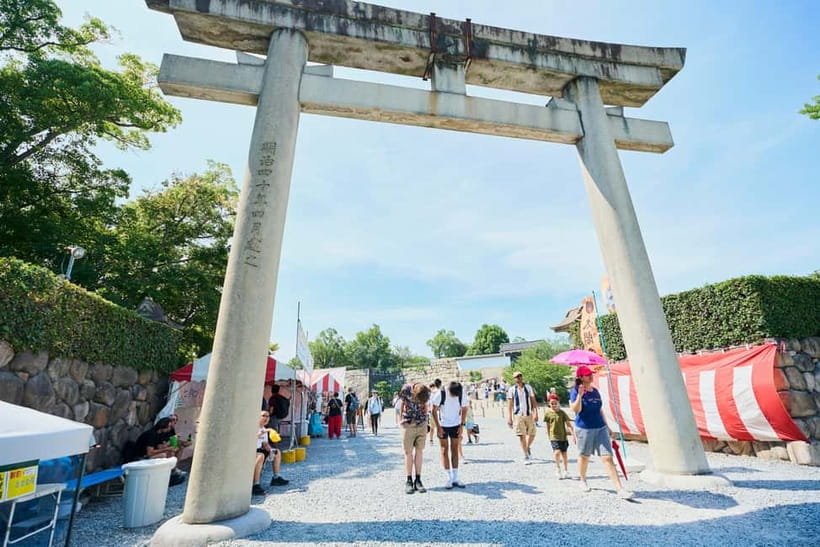
The route includes Hokoku Shrine, which adds an important political and cultural layer. The shrine is tied to Toyotomi Hideyoshi, the leader associated with Osaka Castle’s origins and legacy.
This stop helps explain why the castle mattered beyond defense. It represented power, ambition, and the attempt to shape Japan under Toyotomi rule. The later conflict with Tokugawa Ieyasu was not just a local dispute. It was a struggle over who would control the country and whose political order would survive.
The guide connects this story to the fall of the supposedly invincible fortress in 1614 and 1615. Osaka Castle’s defenses were formidable, but walls alone could not protect the Toyotomi cause forever. The conflict between Hideyoshi’s supporters and Ieyasu’s growing authority eventually changed the castle’s place in Japanese history.
This part is valuable because it keeps the visit from becoming a list of dates. You see the castle as both a military machine and a symbol of competing claims to power.
The shrine may also offer a quieter pause in the route. One person taking the tour happened to see a traditional Japanese wedding ceremony there, though that is not a scheduled part of the experience. Treat that as a lucky possibility, not something to plan around.
More History Walking Tours in Japan
- Kyoto Gion: 2-Hour Geisha Culture & History Walking Tour
★ 5.0 · 1,186 reviews - Hiroshima Historical Walking Tour – Why A-Bomb was Dropped
★ 4.8 · 893 reviews - Hiroshima Peace (Heiwa) Walking Tour at World Heritage Sites
★ 5.0 · 872 reviews - Tokyo Castle & Imperial PalaceーShogun Walking Tour
★ 5.0 · 724 reviews
Inside Osaka Castle Tower
The tour includes admission to Osaka Castle Tower. After the outdoor explanation, the tower gives you a chance to see the stronghold in its role as a command post and final defensive position.
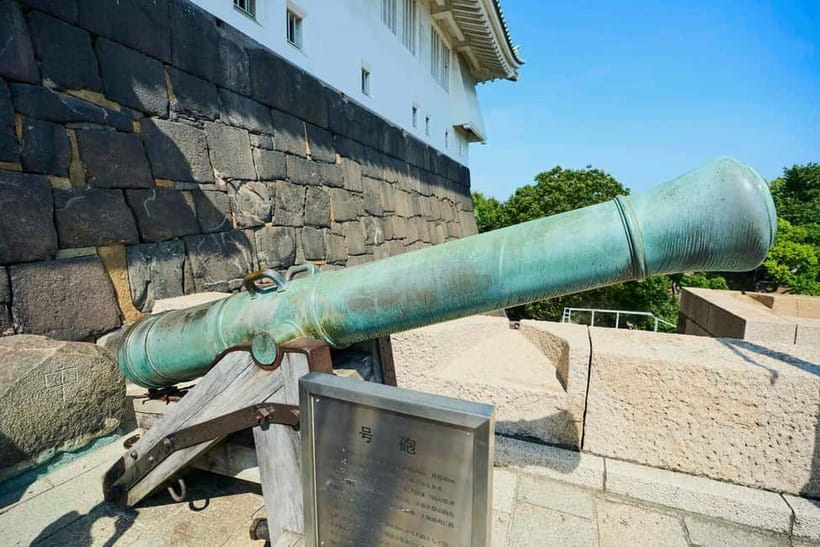
The guide explains features such as arrow slits and gun ports. These openings were not decorative. They allowed defenders to watch, aim, and attack while remaining protected behind thick walls.
Gold also enters the story. Its use at the castle had a psychological purpose as well as a decorative one. Wealth and brilliance could impress allies, intimidate opponents, and signal the power of the ruling house.
At the top, you get the promised city view. The panorama is a fitting reward after following the walls and gates from ground level. From above, you can better appreciate the scale of the castle grounds and the relationship between the central tower and its surrounding defenses.
The admission ticket is included, but the guide does not lead a detailed tour of every floor in the museum. That distinction is important. The structured portion focuses on the castle’s design, story, and key sights, then gives you time to look around the tower on your own.
One useful detail is that some tours finish at the top floor. You may have time afterward to continue exploring independently, take photographs, and read the museum displays at your own pace.
What the guides do well
The strongest praise is directed at the guides. Their value is not simply knowing dates. It is knowing where to stop, what to point out, and how to explain a complicated setting without turning the walk into a lecture.
Saya is praised for being friendly, funny, and careful about making sure the group understood the story. Mao receives repeated praise for warmth, clear historical explanations, and pointing out details that are easy to miss. Spike is described as especially strong on the castle’s history and as attentive to the comfort and safety of an older participant.
Yuta has been praised for answering detailed questions and for making the tour feel like a relaxed conversation. Ken is noted for his wider knowledge of Osaka, patience with the group, and a useful visual recap at the end. Kaz receives praise for enthusiasm, clear English, and adapting the pace to a family member with mobility concerns.
The guide may vary, so you should not book expecting one particular person. Still, the repeated pattern is encouraging: friendly delivery, strong English, local context, and a willingness to answer questions.
Families may find this better than a standard museum visit. One guide kept even a three-year-old engaged for the whole experience, while another tour held the attention of teenage boys. That will depend on your group, but the route gives children something concrete to see: giant stones, gates, moats, weapons openings, and a tower.
Is $33 a fair price?
At $33 per person, the tour is not the cheapest way to see Osaka Castle. The castle grounds themselves can be visited without a guide, and some visitors may prefer to move at their own pace.
The price makes more sense when you value three things: an English-speaking guide, the included tower admission, and separate entry that helps you avoid the main line. You are paying for interpretation, not just access.
I think the best value comes from the way the tour links separate features into one story. Without a guide, you might admire the moat, photograph the stone wall, enter the tower, and leave. With the right explanations, you understand why the moat is there, how the gate traps an attacker, why the wall angle matters, and how the Toyotomi and Tokugawa conflict shaped the castle’s fate.
It is also useful for a first visit to Osaka because guides may answer broader questions about Osaka history and Japanese culture. Several participants praised guides for recommendations and wider context after the main castle explanation.
The value is weaker if you want a long, detailed museum visit or extensive time inside every tower display. This tour gives you a guided framework, then leaves some indoor exploration to you.
Timing, pace, and practical comfort
The route involves steady walking through historical areas, but the experience is designed as a manageable 90-minute visit rather than a full-day castle study. The outdoor sections can be exposed to sun, rain, or cold, so dress for the forecast.
The early morning option deserves serious thought. The 9 AM start can help you reach the tower before the heavier queues. It also leaves the rest of the day open for lunch, museums, or another Osaka neighborhood.
The skip-the-line feature is helpful, but it should not be read as a promise that every part of the castle will be empty. You may still encounter other visitors inside, at the elevators, or around the viewing areas. The benefit is that you avoid the main ticket queue through a separate entrance.
The tour is a good match for solo visitors and small groups. One person received a private experience when nobody else joined, though that is not guaranteed. Larger families should arrive together and be ready to keep the group moving through gates and narrow points.
Free cancellation is available up to 24 hours before the start time, and you can reserve while paying later. Those policies help if your Osaka schedule is still shifting.
Who should book this Osaka Castle tour?
I would choose this tour if you want the castle to make sense, not just look impressive. It is particularly well suited to people interested in military strategy, architecture, Japanese political history, or the engineering behind large stone structures.
Families can benefit from the short format and the guide’s storytelling. Older members of a group may also appreciate the guide’s attention to pace and comfort, though you should still expect walking across outdoor historical grounds.
You may prefer a self-guided visit if you want to spend hours reading museum displays, photograph every corner without a schedule, or avoid paying for interpretation. The tour does not provide a floor-by-floor guided museum visit, and the guide cannot replace your own time inside the tower.
Should you book it?
Book it if you want the walls, gates, moats, shrine, and tower to connect into one clear story. The combination of military design, Toyotomi and Tokugawa politics, giant stones, and city views gives you far more than a quick photo stop.
I would aim for an early departure, confirm the exact Lawson meeting point, wear good shoes, and keep time afterward for self-guided exploration inside the tower. At $33, it is a fair choice for an informative first visit, especially when skipping the main line matters to your schedule.
FAQ
How long does the Osaka Castle tour last?
The advertised duration is 90 minutes.
What language is the tour conducted in?
The tour is conducted in English with a live English-speaking guide.
Does the price include Osaka Castle Tower admission?
Yes. Admission to Osaka Castle Tower is included.
Does the guide explain every floor of the museum?
No. The activity does not include a guided tour of each floor in the Osaka Castle museum. You can explore those areas independently.
Does the tour include skip-the-line access?
Yes. The experience uses a separate entrance for skip-the-line access.
Where is the meeting point?
Meet in front of Lawson S Otemae Rest House Store. There are several Lawson stores nearby, so confirm the location on Google Maps and look for the Local Guide Stars sign.
What should I wear?
Wear comfortable shoes and clothing suited to the weather. The tour includes walking through outdoor historical areas.
What will I see besides the main tower?
The route includes outer moats, defensive walls, layered gates, masugata entrances, the castle’s largest stone, stone marks, Hokoku Shrine, and the main tower.
Is the tour suitable for children?
Yes. The experience is suitable for families, and guides have kept both very young children and teenagers engaged. The route still requires walking and attention during explanations.
Can I cancel for a full refund?
You can cancel up to 24 hours in advance for a full refund. You can also reserve now and pay later.
Just added around Japan
- Shuri+Naha: Cycling Tour Explore Water Heritage with E-Bike★ 4.9 · 22 reviews
- Tokyo: Nagano Snow Monkeys and Zenkoji Tour with Temples★ 4.9 · 19 reviews
- Osaka: Kyoto & Nara & Uji Historical and Scenic One-Day Tour★ 4.7 · 21 reviews
- Osaka: Dark Side of Osaka Night Walking Tour★ 4.9 · 89 reviews
- Osaka: Osaka Castle & Historical Museum Guided Tour★ 4.8 · 28 reviews
- Nikko Heritage & Nature Day Trip from Tokyo★ 4.8 · 94 reviews
- Hiroshima: Miyajima Half-day Historical Walking Tour★ 4.7 · 100 reviews
- Kyoto: Historic Higashiyama Walking Tour★ 5.0 · 31 reviews
Castle & Palace History Tours, compared.

Edinburgh Castle Guided History Tour with Tickets
Read our review →
Venice’s Best: Basilica, Doge’s Palace, Gondola & History Gallery
Read our review →
Imperial Palace and Shogun Historical Walking Tour
Read our review →
Saadian Tombs & Bahia Palace, Medina Guided Tour
Read our review →
Charleston historical walking tour with a Professor of History at The Citadel
Read our review →
Abu Dhabi Grand Mosque, Palace, and Heritage Village
Read our review →
Buda Castle District Dark History, Legends and Vampire Night Tour
Read our review →
Tokyo Castle & Imperial PalaceーShogun Walking Tour
Read our review →Browse the lists this tour appears in