
Review · LISBON DISTRICT
Lisbon: Street Art and Historical Walking Tour
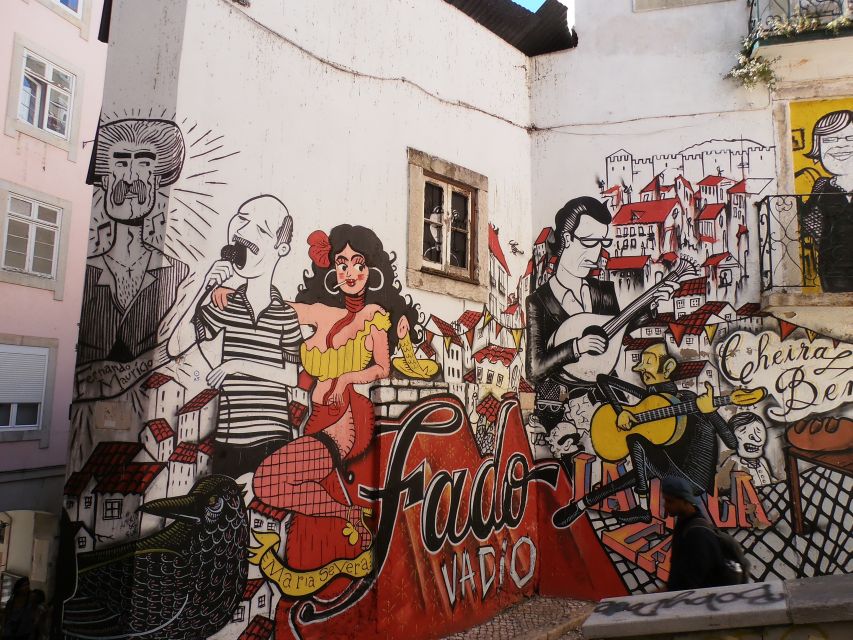
Street art gives Lisbon another voice. This three-hour walk mixes excellent city views with the work of artists such as Vhils, Nomen, Odeith, and Gonçalo Mar. I like the way it links art to Lisbon’s politics, neighborhoods, and past, rather than treating painted walls as simple photo stops. I also like the small group, limited to eight people, which gives the guide room to adjust the pace and answer questions. The main drawback is the footing: steep streets, cracked sidewalks, traffic, and protruding stones make this a poor fit for anyone with mobility problems.
You meet at the church by Miradouro da Graça, one of Lisbon’s best high viewpoints, then walk through Graça, Mouraria, and Alfama toward the eastern side of the city. The route has been described as mostly downhill, but downhill does not mean effortless. Wear proper shoes, bring water, and expect a three-hour walk with no meal or hotel transfer included.
Key points at a glance

- Start at Miradouro da Graça: Take in rooftops, the Tagus area, and Lisbon’s hills before the walking begins.
- Street art with context: See works linked to artists including Vhils, Nomen, Odeith, and Gonçalo Mar.
- Three old neighborhoods: Graça, Mouraria, and Alfama show different sides of Lisbon beyond the main postcard stops.
- Viewpoints along the way: Miradouro Portas do Sol and other overlooks add frequent pauses and strong photo opportunities.
- Small English-speaking group: With no more than eight participants, the guide can keep the conversation personal.
- Good value at $35: For three hours of guiding, local taxes, art interpretation, and city orientation, the price is fair.
Why this Lisbon walk is more than a graffiti tour

Lisbon’s street art is not confined to one district or one style. You may see large painted walls, detailed portraits, and pieces that respond to the city’s social and political life. The appeal of this tour is the explanation around the art. A wall becomes a starting point for talking about the artist, the neighborhood, and the ideas behind the work.
That context is what makes the tour useful even if you do not normally seek out street art. A reviewer described the experience as suitable for people with no special interest in art, and that makes sense. You do not need to identify techniques or know Lisbon’s art scene in advance. A good guide can show you what to look for, explain why a particular piece matters, and help you notice the difference between commissioned work and unauthorized graffiti.
The guides have also received strong praise for their personal approach. Rui is repeatedly singled out for his command of Lisbon’s art and history, while Andriy and Andre are also named positively in the feedback. Guide assignments can change, but you should expect an English-speaking local guide with a clear interest in the subject.
More History Walking Tours in Lisbon
- Lisbon: History, Stories and Lifestyle Walking Tour
★ 4.8 · 10,902 reviews - Lisbon: Private Dark History Walking Tour with Drinks
★ 4.8 · 387 reviews - Lisbon Essential Walking Tour: History, Stories and Lifestyle
★ 5.0 · 316 reviews
Meeting at Miradouro da Graça
The tour begins at the church beside Miradouro Sophia de Mello Breyner Andresen, commonly called Miradouro da Graça. The meeting address is Calçada da Graça, 1100-265 Lisboa.
This is a smart place to begin. You start above much of the city, so the first view gives you a quick sense of Lisbon’s steep hills, layered rooftops, and broad urban setting. You can also see the area around São Jorge Castle and the city spreading toward the river. It is a useful orientation point before you head into the streets.
Give yourself enough time to find the church and viewpoint. The meeting point is specific, but the name Miradouro da Graça is more commonly used than the full name of the lookout. Arriving early also lets you enjoy the view without trying to do that while locating your guide.
The opening stop is not just decoration. It helps explain why walking Lisbon feels different from walking a flat European capital. Hills control the route, viewpoints appear suddenly, and neighborhoods can change within a few minutes on foot.
Graça and the first street art stops
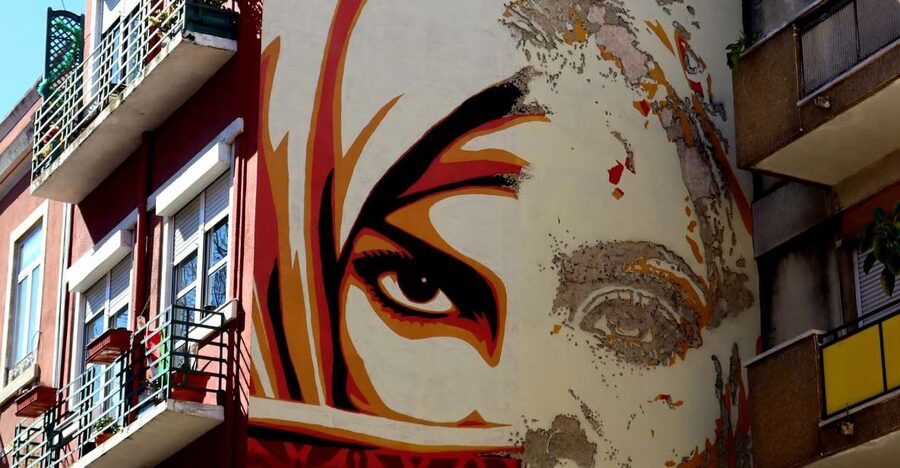
From Graça, the tour begins to connect the high viewpoints with the city’s street art. This neighborhood is a good place to see how art fits into everyday Lisbon. Instead of moving from one formal gallery to another, you look at work placed along ordinary streets and buildings.
The guide may point out pieces by artists such as Vhils, Nomen, Odeith, and Gonçalo Mar. Each has a different visual language, so the tour is not simply a parade of similar murals. The value lies in comparing their approaches and learning about their place in Lisbon’s urban art scene.
Vhils is especially associated with carved or cut-away portraits, while the other artists named here represent different sides of Portuguese and international street art. The exact pieces on view can change, since outdoor art is exposed to weather, renovation, and new work. That is part of the nature of the subject. You are seeing a living public art scene, not a fixed museum collection.
Rui has been praised for explaining artists’ lives, political ideas, and working methods. That kind of commentary can turn a quick look at a wall into a longer conversation about who gets to shape public space. It also gives you a better basis for judging the work for yourself.
Mouraria, where art meets city life
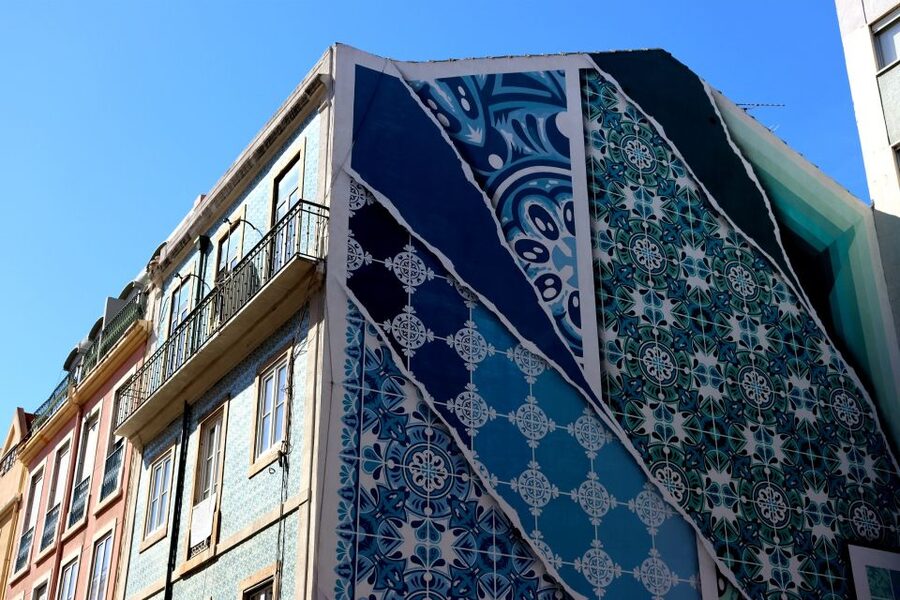
The route continues toward Mouraria, a district with strong cultural importance and a more everyday feel than Lisbon’s grandest visitor sites. Here, the point is not only to find paintings. You also learn how the area functions as a lived neighborhood.
This is where the tour’s mix of art and local history earns its price. A guide can explain how streets, buildings, and residents shape the setting around each work. You are not looking at isolated art objects. You are seeing how creative work appears in a district with its own identity.
The route also gives you a chance to ask practical questions about Lisbon. Guides have been praised for discussing what to see and do, not just reciting dates. If you are early in your stay, use this part of the walk to ask about other areas, cultural sites, and ways to spend your remaining time.
Mouraria can also bring some of the less polished walking conditions. Lisbon’s old streets are not always smooth, and the tour involves traffic awareness, uneven paving, cracks, and stones that can catch your foot. One reviewer specifically praised the guide’s attention to safety in these conditions. You should still take responsibility for your footing and avoid rushing to photograph every wall.
More History Walking Tours in Portugal
- Historic Walking Tour Through Lisbon’s Oldest Neighborhood
★ 5.0 · 233 reviews - Lisbon Fado History Cultural Walking Tour
★ 5.0 · 118 reviews - Porto: Historic City Center Walking Tour
★ 4.7 · 1,172 reviews - Porto: Historical Center Walking Tour
★ 4.8 · 898 reviews
Alfama and the view from Portas do Sol
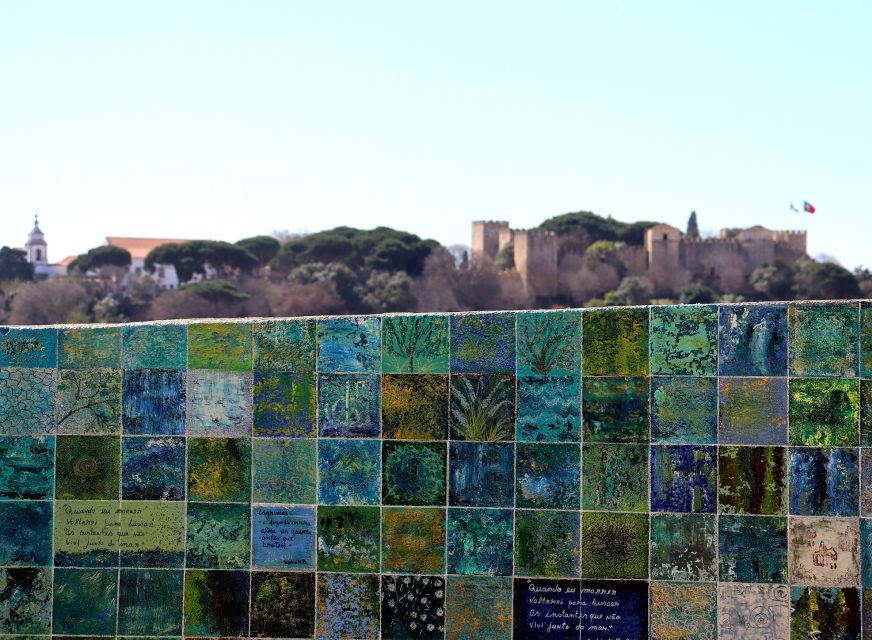
Alfama brings a different mood to the walk. Its narrow lanes and old streets can feel more enclosed than the open viewpoint at Graça. The tour uses the district to show you a side of Lisbon that is easy to miss if you limit your visit to major monuments and broad avenues.
The route leads toward Miradouro Portas do Sol, one of the city’s best-known overlooks. This is a natural pause point after walking through tighter streets. From here, you get a wide view over Alfama and the city toward the river area, with São Jorge Castle nearby.
São Jorge Castle is not entered as part of this experience, but it remains an important visual and historical reference along the route. The guide uses the castle and the surrounding districts to explain Lisbon’s cultural heritage. That is useful if you plan to visit the castle separately, since you will already have some context for its place in the city.
Portas do Sol is also one of the busiest points on this route. It can be hard to linger quietly when other people are enjoying the same view. Still, the stop earns its place because it lets you see how the city’s hills, old districts, and major landmarks fit together.
What the guide adds to the experience
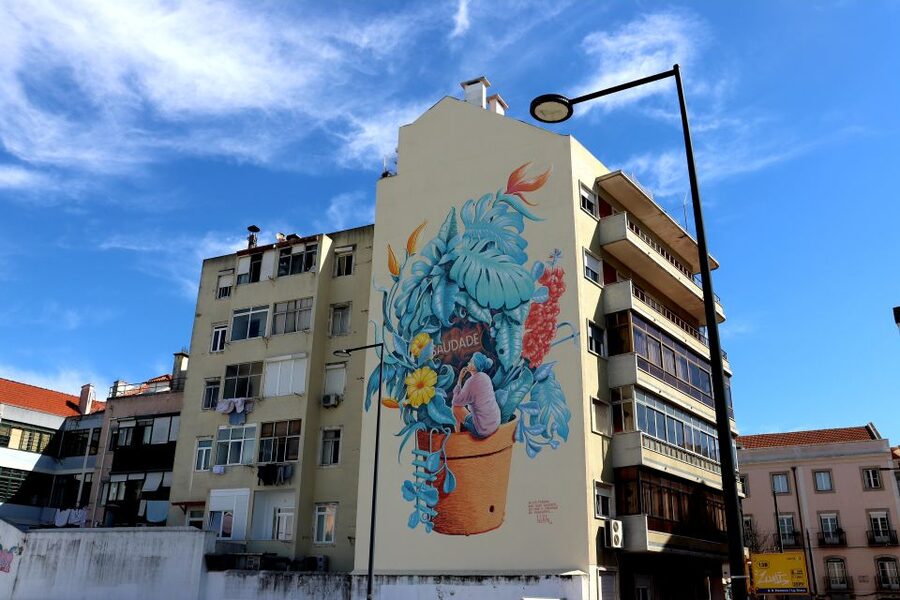
The strongest reason to book this walk is the guide. The art itself is free to see, but finding the best pieces and understanding them takes time. A local guide saves you that search and provides the background that a map or casual stroll cannot.
Rui receives particular praise for making the art and history feel connected. One review describes him as passionate about street art and careful in selecting the works shown. Another notes that he adapted the amount of information to the group’s interests. That balance matters. You want enough detail to understand what you are seeing, but not a lecture that leaves you staring at the pavement while the guide talks on.
The group limit of eight is another practical advantage. With a large group, a narrow street or busy viewpoint can turn into a slow shuffle. A small group makes it easier to hear the guide, ask questions, and stop without blocking the whole sidewalk.
The advertised language is English. If you enjoy discussion, this format should suit you better than a self-guided route. If you prefer complete independence and very little commentary, you may find the structure less appealing.
Is three hours the right length?
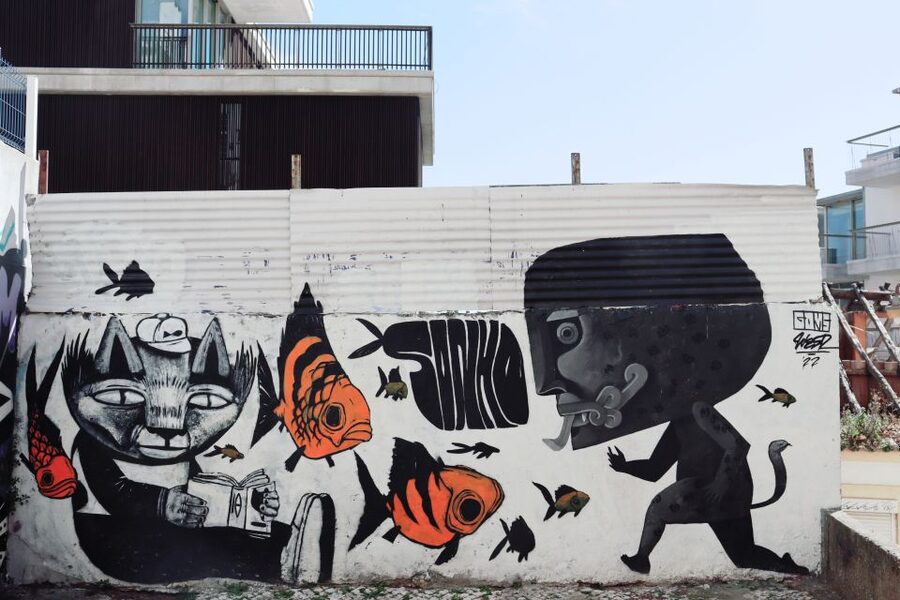
Three hours gives the guide enough time to connect several districts without making the walk feel like a quick photo circuit. You get viewpoints, art, neighborhood history, and practical local conversation in one outing.
The length can sound demanding, especially in Lisbon’s heat. Yet one review found the three hours passed comfortably and described much of the route as downhill. You should not treat that as a promise of an easy stroll. Downhill streets can still put pressure on your knees, and old paving can slow you down.
There are no meals or drinks included, so eat before you meet and carry water. The tour is not designed around a café stop, and pausing for food could reduce the time available for the art and viewpoints.
I would schedule this walk early in your Lisbon stay. It gives you a useful map of Graça, Mouraria, and Alfama, and the guide can help you decide where to return later. It also works well as a morning or afternoon activity, depending on the available start time.
Price, value, and practical limits
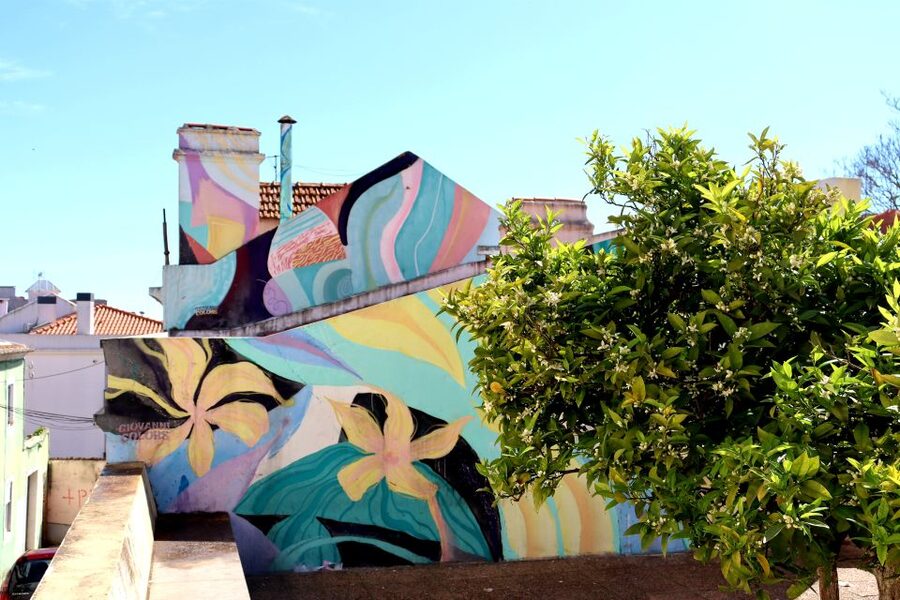
At $35 per person, the tour is reasonably priced for three hours with a local guide, a group capped at eight, and local taxes included. You are paying for interpretation and route planning, not admission tickets. Since the art is displayed outdoors, the guide’s knowledge is the part that makes the experience worth buying.
The value is strongest if you care about more than taking photographs. You will get more from it if you want to understand why certain artists matter, how the neighborhoods fit together, and what public art says about Lisbon today.
The price is less attractive if you already know Lisbon’s street art well or prefer to explore without a set route. You can see public works independently, but you may spend more time searching and receive far less background.
Hotel pickup and drop-off are not included. You need to reach Miradouro da Graça yourself, then arrange your own way back after the walk. This is simple enough for most visitors already staying in Lisbon, but it is worth adding travel time when planning your day.
Free cancellation is available up to 24 hours before the start, and you can reserve now and pay later. Those terms are helpful if your schedule is still shifting.
Who should book this tour?
I would recommend it to first-time Lisbon visitors who want an introduction to the city beyond major monuments. It is also a strong choice for people interested in urban art, photography, local politics, architecture, or the way neighborhoods change over time.
Families with older children and teenagers may like the mix of views, walking, and large-scale art. The small group keeps the experience more personal, and the subject can be easier to engage with than a traditional monument tour.
You should think twice if you have limited mobility. The experience is specifically not suitable for people with mobility impairments, and the streets can include uneven surfaces, cracks, traffic, and protruding tiles. Comfortable walking shoes are essential for everyone.
Should you book the Lisbon Street Art and Historical Walking Tour?
Book it if you want street art explained within the setting of Lisbon’s older neighborhoods. The combination of Miradouro da Graça, Mouraria, Alfama, Portas do Sol, São Jorge Castle views, and works by major urban artists gives you a broad look at the city in three hours.
I especially like that the tour does not treat art as a detached attraction. The best guides connect each piece to people, politics, place, and local life. At $35, that is fair value for a small group and a strong introduction to Lisbon’s less obvious side.
Skip it if you need a flat, easy walk, dislike group tours, or want to focus only on formal monuments. For everyone else, bring good shoes, arrive ready for hills, and leave room in your day to stop when a wall makes you rethink the street around it.
FAQ
How long is the Lisbon Street Art and Historical Walking Tour?
The tour lasts three hours.
What price should I expect?
The listed price is $35 per person.
Where does the tour meet?
You meet by the church at Miradouro Sophia de Mello Breyner Andresen, also known as Miradouro da Graça. The address is Calçada da Graça, 1100-265 Lisboa, Portugal.
What language is the tour conducted in?
The live tour guide speaks English.
How large is the group?
The group is limited to eight participants.
Which Lisbon neighborhoods does the walk visit?
The route includes Graça, Mouraria, and Alfama.
Which viewpoints are included?
The experience begins at Miradouro da Graça and continues toward viewpoints including Miradouro Portas do Sol.
Which artists might I see?
The tour may include work by Vhils, Nomen, Odeith, and Gonçalo Mar.
Are meals and drinks included?
No. Meals and drinks are not included.
Is the tour suitable for people with mobility impairments?
No. The experience is not suitable for people with mobility impairments. Comfortable walking shoes are recommended because the route includes uneven streets and difficult footing.
More Street Art Tours in Lisbon
- Naples Spanish Quarters Walking Tour Street Art, Folklore & Sweet
★ 5.0 · 797 reviews - Naples: Street Art & History Tour in the Spanish Quarters
★ 4.9 · 540 reviews - 3-Hour Atlanta Beltline Food, Street Art and History Tour
★ 5.0 · 345 reviews - Atlanta: Beltline Food, Street Art, and History Walking Tour
★ 5.0 · 47 reviews
Just added around Lisbon
- Lisbon on a Tuk Tuk Tour: History & Viewpoints★ 4.9 · 204 reviews
- Lisbon: Jewish History Tour of Lisbon★ 4.8 · 84 reviews
- Lisbon Fado History Cultural Walking Tour★ 5.0 · 118 reviews
- Lisbon city tour on history, culture and current topics★ 5.0 · 41 reviews
- Lisbon Jewish Heritage and History – Private Tour Van★ 5.0 · 294 reviews
- Lisbon Essential Walking Tour: History, Stories and Lifestyle★ 5.0 · 316 reviews
- Historic Walking Tour Through Lisbon’s Oldest Neighborhood★ 5.0 · 233 reviews
- Lisbon: Private Dark History Walking Tour with Drinks★ 4.8 · 387 reviews
History Walking Tours, compared.

History and Hauntings of Salem Guided Walking Tour
Read our review →
Freedom Trail History Small Group Walking Tour
Read our review →
Historic Charleston Guided Sightseeing Walking Tour
Read our review →
Tapas Walking Tour with Food, Wine, and History
Read our review →
Savannah History and Haunts Candlelit Ghost Walking Tour
Read our review →
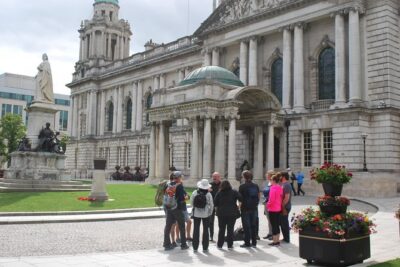
A History of Terror – Belfast City Centre Walking Tour
Read our review →Browse the lists this tour appears in