
Review · LISBON
Lisbon Essential Walking Tour: History, Stories and Lifestyle
Lisbon reveals itself on foot. This three-hour tour links Bairro Alto, San Roque, Carmo, Baixa, and Alfama, giving you a useful first look at the city’s hills, viewpoints, churches, and political past. I like the stop for coffee and pastry, and I like that the included tram ride adds a real Lisbon experience rather than another stretch of pavement. The main drawback is the terrain: with close to four miles of walking reported by one participant, this is not a gentle outing for anyone who struggles with hills or uneven streets.
The $30.25 price is fair for a small group capped at 15 people, especially with a guide, tram trip, snack, and insurance included. Guides such as Ricardo, Beatrice, Paulo, Ana, and Sofia have been praised for making Portuguese history easy to follow, though one poor experience involved unclear narration and another had a meeting-point mix-up. I would book it early, ideally for your first day, and wear proper shoes.
Key points to know before booking
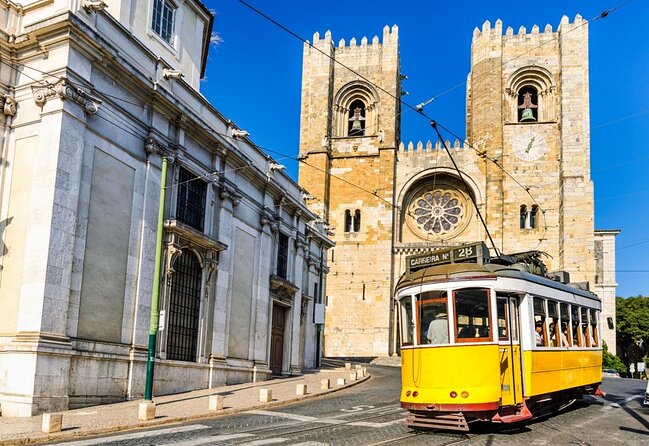
- Three hours across Lisbon’s historic core: You move from Bairro Alto and São Pedro de Alcântara to Baixa, Alfama, and Lisbon Cathedral.
- The walking is serious: Hills, steps, narrow lanes, and roughly four miles of movement can make this tiring.
- San Roque is a major interior highlight: Its plain exterior gives little warning of the gilded, tiled, and painted interior.
- You get a tram ride and a café break: Coffee and cake are included, while other food and drinks are not.
- Guides are a major strength: Ricardo, Beatrice, Paulo, Ana, Sofia, and others are praised for clear storytelling and personal tips.
- The group stays manageable: A maximum of 15 people gives the guide a better chance to answer questions and keep the walk together.
Why this makes a smart first day in Lisbon
Lisbon can feel confusing at first. Its districts climb steep slopes, streets change character quickly, and the city’s story stretches from medieval reconquest to dictatorship and democracy. A good introductory walk gives you a mental map before you start tackling museums, castles, and tram routes on your own.
This tour does that well. It begins in Bairro Alto, crosses viewpoints and major churches, drops into Baixa, then climbs again toward Alfama. You are not simply ticking off monuments. You are seeing how Lisbon’s neighborhoods fit together.
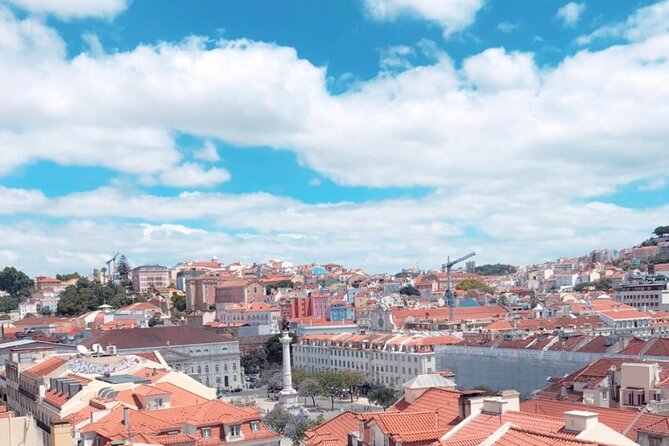
The route also gives you several useful orientation points. From São Pedro de Alcântara, you look across Baixa toward the south bank of the Tagus. Later, from Portas do Sol, you see Alfama spreading downhill toward the river. Those views help you understand why Lisbon feels both grand and demanding.
I especially like the balance between explanation and movement. You get historical context at the church of San Roque, a political story at Carmo, a snack in Baixa, and a short ride on public transport. The tour keeps changing pace, which matters during three hours on foot.
More History Walking Tours in Lisbon
- Lisbon: History, Stories and Lifestyle Walking Tour
★ 4.8 · 10,902 reviews - Lisbon: Private Dark History Walking Tour with Drinks
★ 4.8 · 387 reviews - Historic Walking Tour Through Lisbon’s Oldest Neighborhood
★ 5.0 · 233 reviews
Bairro Alto and the story of a rebuilt city
Your walk begins in five-centuries-old Bairro Alto. The neighborhood is now closely associated with nightlife and fado, but the opening discussion focuses on how Lisbon changed after the earthquake of 1755.
That disaster reshaped the city. Families from Baixa and nearby districts moved into or helped renew this higher neighborhood. The point is not only to memorize a date. You start to see Lisbon as a city repeatedly rebuilt, adapted, and reorganized.
The guide’s role matters most here. Paulo has been praised for combining facts with humor and stories that work for families of different ages. Ricardo is often singled out for making Lisbon’s past feel connected to the streets around you. A strong guide can turn an ordinary lane into a clue about the city’s growth.
Bairro Alto is also a practical beginning because it puts you into the city’s hill country right away. If your shoes are uncomfortable or the climb feels hard here, you will know early that the rest of the route requires some effort.
The view from São Pedro de Alcântara
After Bairro Alto, the group passes through the garden at Miradouro de São Pedro de Alcântara. This is one of the route’s best pauses because it gives your eyes a break from narrow streets.
From the terrace, you can look across Baixa and toward the south bank of the Tagus River. The stop lasts about 15 minutes, enough for pictures and a short explanation without turning into a long scenic halt.
This is a good example of the tour’s value. You could reach the viewpoint yourself, but a guide helps place it on the route and explains what you are seeing. You begin to recognize the city’s layered layout: high neighborhoods above the lower central streets, with the river opening the view beyond.
Bring water. Lisbon’s hills can feel warm and tiring, and the viewpoint does not remove the uphill sections still ahead.
San Roque, plain outside and lavish within
I would count Igreja de São Roque as one of the tour’s strongest stops. The church was built by the Jesuits and was among the first Jesuit churches in Portugal, as well as one of the earliest in the world.
From the outside, the church is austere. Inside, the mood changes completely. Gilding, tiles, and paintings create a display of Mannerist and Baroque art. The contrast is memorable, and it gives the guide a chance to explain how religious buildings communicated wealth, devotion, and power.
You spend about 20 minutes here. That is enough for an introduction, but not enough for a full museum visit. If you are an art lover, you may want to return later and examine the church and museum at your own pace.
This stop also shows why a walking tour can beat a simple sightseeing bus. The guide can point out the change in style and tell you what deserves your attention before you move on.
More History Walking Tours in Portugal
- Lisbon: 3-Hour The Slave Trade – An Historical Walking Tour
★ 4.9 · 179 reviews - Lisbon Fado History Cultural Walking Tour
★ 5.0 · 118 reviews - Lisbon: Historical Walking Tour with Jeronimos Monastery
★ 4.5 · 71 reviews - Lisbon: Jewish History in Portugal Guided Walking Tour
★ 4.6 · 52 reviews
Carmo and the Carnation Revolution
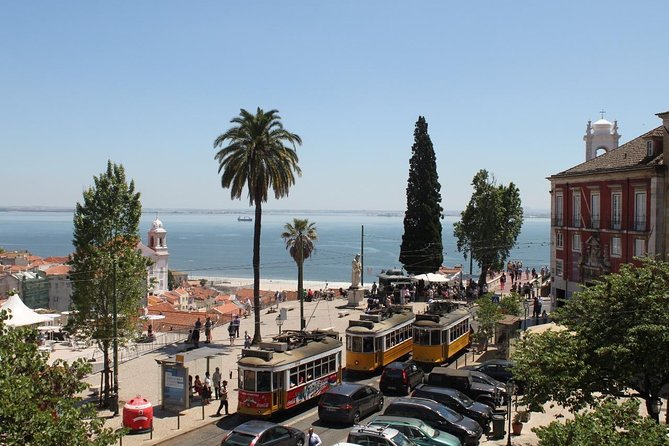
The route heads downhill to the Carmo convent and church. The Gothic architecture is striking, but Carmo matters for more than its medieval appearance.
This is where the Carnation Revolution began in 1974, ending nearly five decades of dictatorship in Portugal. That modern political story gives the tour a useful counterweight to churches and old streets. Lisbon is not presented as a city frozen in the past. You also learn how recent events shaped the Portugal you visit today.
The stop lasts about 20 minutes. The guide’s storytelling is especially important here because the event can be reduced to a date unless someone explains its human and political meaning. Beatrice has been praised for combining historical detail with humor and practical advice, while Ricardo is often described as engaging and easy to listen to.
The downhill direction is welcome, but do not confuse it with an easy walk. Lisbon’s paving, slopes, and frequent changes in level continue throughout the route.
Santa Justa and the Baixa pause
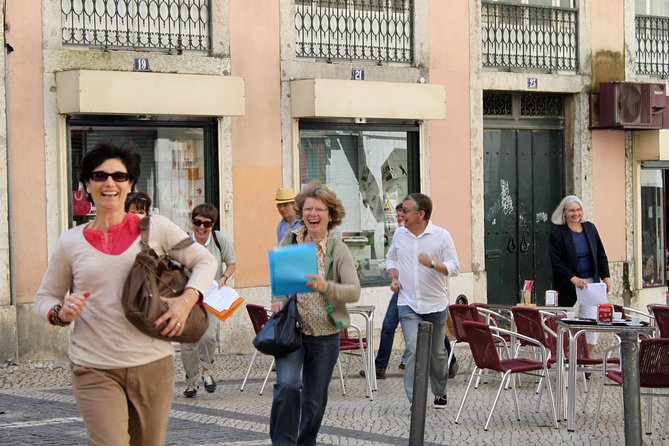
Next comes the Santa Justa elevator, a Gothic Revival landmark and one of Lisbon’s best-known viewpoints. The elevator is an impressive piece of urban engineering, linking the lower Baixa area with the higher streets near Carmo.
The listed 15-minute stop does not include admission to the elevator. That distinction matters. You will see the monument and learn about its role, but the ticket price for riding or accessing any paid section is not part of the tour cost.
The route then reaches Baixa, the central district rebuilt after the 1755 earthquake. Here you get a 15-minute coffee and pastry break in a local café. This is a small feature, but it improves the rhythm of the day. You can sit, eat, ask questions, and reset before the next section.
The snack is included, while other food and drinks are not. A coffee and pastry will not replace lunch, so plan another meal before or after the tour. Still, the stop is a pleasant local touch, and the pastel de nata has been specifically praised as part of the experience.
Praça da Figueira and the tram ride
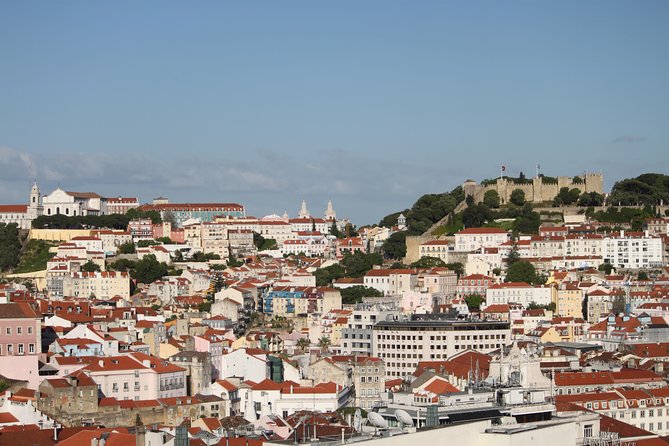
After the café pause, you continue through Baixa and Praça da Figueira. This is the central part of the city, with several important sights nearby. The walk gives you a chance to connect the reconstructed lower town with the older districts above it.
Then comes the included tram trip. The route description places the ride between the castle area and Portas do Sol, while tour feedback identifies it as a Tram 28 experience. Either way, this is more than a transport shortcut. Lisbon’s trams are part of daily city life, and riding one gives you a feel for how the steep neighborhoods are linked.
The ride also saves your legs for Alfama. That is a smart choice in a walking tour, since the most enjoyable part of the day can disappear if you are already exhausted.
Because public trams can be busy, stay close to the guide and keep track of your belongings. The tour includes the ride, but it does not promise a private carriage or a quiet trip.
Alfama, fado, and the final cathedral
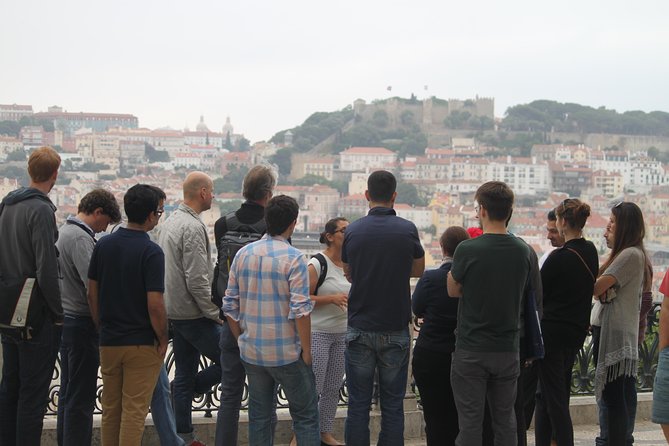
At Portas do Sol, you see the Monastery of São Vicente de Fora, the National Pantheon, and the rooftops of Alfama. The view is a high point of the route, both literally and visually.
Alfama is one of Lisbon’s oldest and most traditional districts. Its narrow streets run downhill toward the Tagus, and the area is linked with fado houses and festivals for the saints, especially St. Anthony.
This section is where the tour feels most like a neighborhood walk rather than a list of monuments. You move through lanes that can be difficult to understand on your own, while the guide explains how Alfama fits into Lisbon’s culture. Beatrice has been praised for explaining the origins of fado and for helping people understand the city’s public transport and street layout.
The tour ends at Lisbon Cathedral, built in 1150, three years after Christian forces retook the city from the Moors. It has changed over time, so its appearance combines several architectural styles. Finishing here gives the walk a clear historical endpoint and leaves you close to other central sights.
What the guides add to the experience
The strongest part of this tour is the guide. The route itself is good, but several guides have received unusually warm praise for the way they tell the story.
Ricardo is described as a professor with a strong command of Lisbon’s past. Paulo is praised for being friendly, funny, and helpful with restaurant and fado suggestions. Beatrice is noted for her care, organization, humor, and ability to keep a group interested. Ana has been praised for finding back alleys and keeping a long walk engaging. Sofia is credited with passion and strong historical context, while Joao is described as interactive and enjoyable.
You should not assume you will receive a particular guide unless the booking specifically allows that choice. Still, the pattern is encouraging. The best guides do more than recite dates. They connect the earthquake, Jesuit art, the Carnation Revolution, fado, and daily Lisbon life.
There have been a few practical problems. One booking was not properly sent to the guide, and the meeting information was incorrect. Another person found the narration unclear and did not enjoy the walk apart from the tram ride. These appear to be exceptions within a very strong overall rating of 4.8 from 316 ratings, with 95 percent recommending the experience, but they are worth remembering. Confirm your meeting details and speak up if you cannot hear.
Price, pace, and who should book
At $30.25 per person, the tour offers solid value. You receive about three hours with a professional guide, a tram trip, coffee and cake, and liability and personal accident insurance. The group limit of 15 is also useful, since a smaller group makes questions easier and reduces the chance of being lost in a crowd.
You are paying mainly for the guide’s interpretation and the route design. The included sights are mostly viewed from public streets or entered without a separate admission charge. The Santa Justa elevator is not included, and you pay for any extra food or drinks yourself.
I would recommend this for first-time visitors, couples, families with older children, and anyone who wants historical context before exploring alone. It also suits a short Lisbon stay because it covers several districts in one morning or afternoon.
I would be cautious if you have trouble walking hills, need frequent rest, or dislike uneven streets. The tour is not described as wheelchair-specific, although most people can participate and service animals are allowed. Comfortable shoes and water are not optional extras here.
The experience is offered in English, with multiple languages available when you select your booking. Free cancellation is available up to 24 hours before the start time. Inside that window, refunds and changes are not accepted.
Should you book the Lisbon Essential Walking Tour?
Book it if you want a useful first orientation, enjoy city history, and are ready to walk uphill. The combination of San Roque’s lavish interior, Carmo’s political importance, Alfama’s lanes, the Tram 28 ride, and a pastry break gives you more substance than a basic photo stop tour.
Skip it if you want a slow museum visit, a mostly flat route, or a private experience. For most first-time visitors, though, this is a well-priced way to understand Lisbon before you explore it on your own. Schedule it early in your stay, listen for restaurant and fado tips, and leave room afterward to revisit the places that catch your eye.
FAQ
How long does the Lisbon Essential Walking Tour last?
The tour lasts approximately three hours.
How much does the tour cost?
The listed price is $30.25 per person.
What is included in the tour?
The price includes a professional guide, a tram trip, coffee and cake, and liability and personal accident insurance.
Is the Santa Justa elevator ride included?
No. The Santa Justa elevator stop is included, but admission is not.
Does the tour include food?
It includes a coffee and pastry break in a local café. Other food and beverages are not included.
Where does the tour start and end?
The tour starts in Lisbon and ends at Lisbon Cathedral. The supplied meeting information does not give a more specific starting address.
How many people can join the tour?
The maximum group size is 15 people.
Can I cancel for a full refund?
Yes. You can cancel up to 24 hours before the experience starts for a full refund. Cancellations or changes made less than 24 hours before the start time are not accepted.
Just added around Lisbon
- Lisbon: Historical Walking Tour with Jeronimos Monastery★ 4.5 · 71 reviews
- Lisbon Sunset Sailing – Small Group (max 10) Wine & History★ 4.8 · 41 reviews
- Queer Lisbon History Tour: scene/history★ 4.9 · 20 reviews
- Lisbon: Private Historic Tour by Eco Tuk Tuk★ 5.0 · 78 reviews
- Lisbon: Private Guided Tour of Historical Center by Tuk Tuk★ 4.7 · 67 reviews
- Lisbon: Sunset Sailing with Portuguese Wine and History★ 5.0 · 270 reviews
- Lisbon with Tukxi: Historical Secrets by Tuk-Tuk★ 4.8 · 96 reviews
- Lisbon in One Day: Full-Day Minivan Historic Tour★ 4.5 · 32 reviews
History Walking Tours, compared.
History and Hauntings of Salem Guided Walking Tour
Read our review →
Freedom Trail History Small Group Walking Tour
Read our review →
Historic Charleston Guided Sightseeing Walking Tour
Read our review →
Tapas Walking Tour with Food, Wine, and History
Read our review →
Savannah History and Haunts Candlelit Ghost Walking Tour
Read our review →
A History of Terror – Belfast City Centre Walking Tour
Read our review →Browse the lists this tour appears in