

Review · LISBON DISTRICT
Lisbon: 3-Hour The Slave Trade – An Historical Walking Tour
Lisbon’s grand story has a painful chapter. I like this tour because it connects familiar city sights with Portugal’s role in the Atlantic slave trade, and because guide Rui Fernandes explains the subject with care, historical detail, and room for questions. I also value the small group, which makes a difficult topic feel more like a thoughtful discussion than a lecture.
The $35 price is fair for three hours with a specialist guide, particularly if you want more than the usual Age of Discovery story. The main drawback is the amount of information: the advertised tour lasts three hours, but some outings run closer to three and a half, so it may feel demanding if you prefer a quick sightseeing walk.
Key points to know before booking
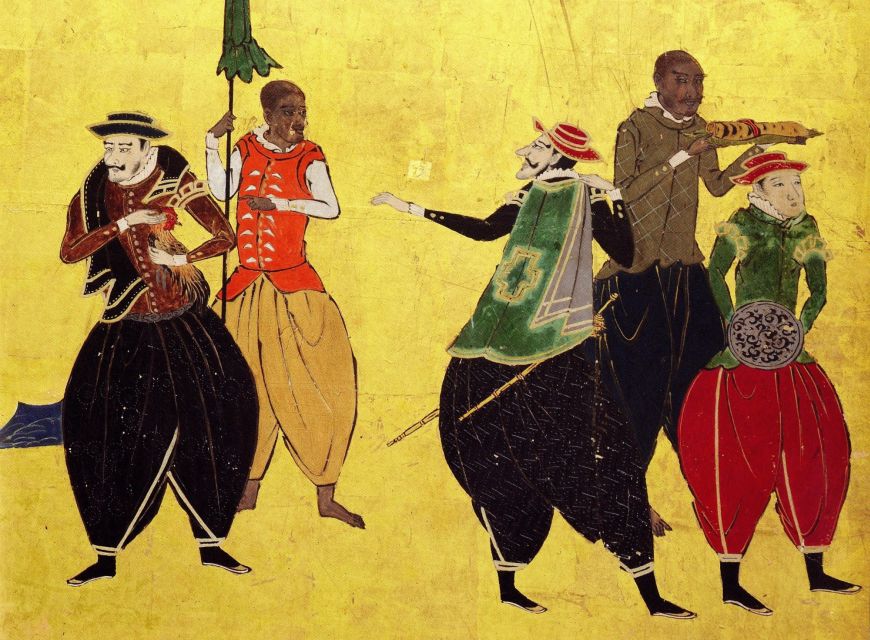
- The walk begins in Alfama: Meet at Largo do Chafariz de Dentro, in Lisbon’s oldest district, where narrow streets and old buildings provide the first setting for the discussion.
- Rui Fernandes is the central strength: His background in history, political science, and economics helps him explain the moral, political, religious, and financial sides of slavery.
- The route links ordinary sights to difficult history: Streets, churches, squares, monuments, and grand buildings are used to explain how slavery shaped Lisbon.
- The pace is generally gentle: Several people found the walk relaxed, with little steep climbing, though comfortable shoes are still important on cobbled streets.
- This is not a light sightseeing stroll: You will hear about violence, forced labor, racism, colonialism, and the long effects of the slave trade.
- The small group matters: The advertised limit is six participants, though another description says eight. Either way, the format is designed for questions and conversation.
Starting in Alfama, where Lisbon’s story gets complicated
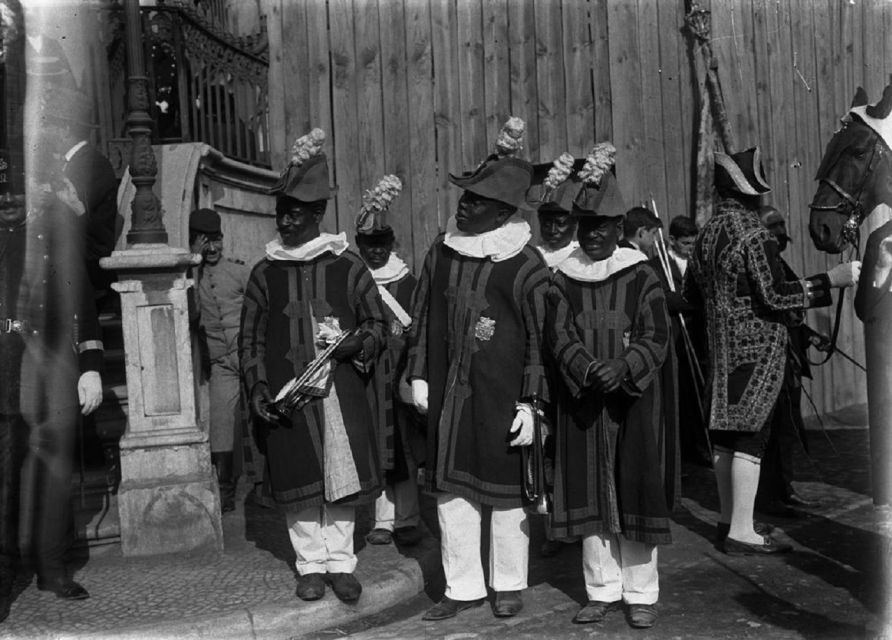
Your meeting point is Largo do Chafariz de Dentro, a square in Alfama. This is a practical place to begin because the neighborhood is tied to Lisbon’s earliest layers, and the opening discussion sets up the wider story of slavery in the Iberian Peninsula before Portugal’s Atlantic expansion.
You are not simply being shown pretty lanes and old facades. The guide uses the streets and buildings to ask how a city remembers its past, and which parts of that past are often left out. That approach gives the walk a clear purpose from the first stop.
The route moves through back streets as well as main avenues. You will pause at public squares, churches, monuments, and buildings whose former uses or associations help explain Portugal’s role in the trade. The exact stops can vary with the group and guide, so you should think of this as a moving history conversation rather than a fixed checklist of landmarks.
Alfama’s uneven paving means you should wear shoes with good support. The walk is described as mostly flat or only mildly inclined, but Lisbon is still a city of cobblestones, and three hours on hard pavement can be tiring.
More History Walking Tours in Lisbon
- Lisbon: History, Stories and Lifestyle Walking Tour
★ 4.8 · 10,902 reviews - Lisbon: Private Dark History Walking Tour with Drinks
★ 4.8 · 387 reviews - Lisbon Essential Walking Tour: History, Stories and Lifestyle
★ 5.0 · 316 reviews
From Iberian slavery to the Atlantic system
One of the tour’s useful features is that it does not begin with Portugal’s ships crossing the Atlantic. The discussion first considers the origins of slavery in the Iberian Peninsula, giving you a wider frame for understanding what changed in the fifteenth century.
Under the direction of Prince Henry the Navigator, Portugal began the process that developed into the Atlantic slave trade during the first half of the fifteenth century. The tour explains how this system differed in scale and reach from earlier forms of enslavement, and how it became tied to maritime expansion, commerce, and empire.
The subject is presented as a crime against human beings, not as a dry economic footnote. That moral clarity matters. Lisbon’s monuments and wealth can look impressive, but the tour asks you to consider the human cost behind the systems that helped create Portugal’s prosperity.
You will also hear how the trade operated over centuries. Between 12 and 14 million Africans were sold into slavery and carried across the Atlantic to the Americas, with the system lasting roughly four centuries. The numbers are staggering, but the guide’s work is to connect those figures to places, institutions, and daily life.
Reading Lisbon’s monuments in a new way

The most effective part of a city history walk is often the moment when a familiar sight changes meaning. Here, the guide uses Lisbon’s monuments, churches, and public spaces to show how the slave trade touched the capital.
You might pass a building you would otherwise photograph and move on from. Instead, you are encouraged to consider its connection to commerce, government, religion, colonial administration, or the movement of people and goods. The tour does not claim that every old building is directly linked to slavery, but it shows how the city’s development was tied to a larger system.
This is also why the tour works well after, or alongside, a standard Lisbon sightseeing day. The Age of Discovery is often presented through voyages, navigators, and technical achievement. Rui’s approach adds the people who were captured, sold, transported, and forced to work within that story.
A useful detail from the experience is the use of relevant images to help explain the past. Visual material can make unfamiliar events easier to picture, especially when the walk moves quickly between centuries and locations. It also helps keep the talk connected to what you are seeing in front of you.
Daily life for enslaved people in Lisbon
The tour does not stop at royal policy or overseas trade routes. It also addresses the day-to-day life of enslaved people living in historic Lisbon.
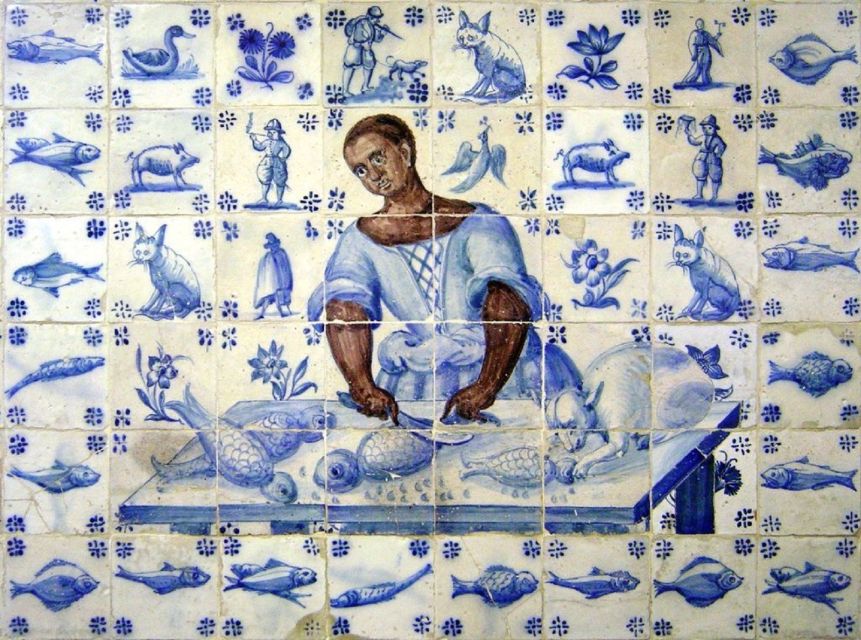
That focus is important because large numbers can make suffering feel distant. By discussing daily conditions, labor, social position, and the presence of African communities in Lisbon, the guide brings the subject back to individual lives and the city’s streets.
You should expect this part of the walk to challenge the polished image of old Lisbon. The point is not to make every sight feel bleak, but to show that the city’s history includes people who were present, working, buying, selling, worshipping, and surviving under forced conditions.
Rui’s delivery is a major benefit here. He is described as patient, clear, and willing to answer questions without rushing. He also makes an effort to include everyone in the group, which is especially helpful when the subject connects to family history or personal identity.
More History Walking Tours in Portugal
- Historic Walking Tour Through Lisbon’s Oldest Neighborhood
★ 5.0 · 233 reviews - Lisbon Fado History Cultural Walking Tour
★ 5.0 · 118 reviews - Lisbon: Jewish History in Portugal Guided Walking Tour
★ 4.6 · 52 reviews - Lisbon: Street Art and Historical Walking Tour
★ 4.9 · 42 reviews
Brazil, Africa, and the end of Portuguese trade
Portugal’s connection with Brazil receives particular attention. The tour explains why Brazil mattered to Portugal’s economy and empire, and how the movement of people, products, and money tied Lisbon to the Atlantic world.
You will also learn about Portugal’s African colonies and the struggle for liberation by African nationalists. This extends the discussion beyond the abolition of the slave trade. Ending the legal trade did not erase colonial power, racial hierarchy, or the effects of centuries of exploitation.
The walk therefore covers a long span of time. It begins with earlier Iberian practices, moves through the birth of the Atlantic slave trade and the Age of Discovery, then continues to abolition, colonial rule, and African independence movements.
That range is intellectually useful, but it is also the main challenge. You are taking in political, economic, religious, and social history while walking through the city. If you like context, you will appreciate the scope. If you prefer one narrow period, you may find the three hours packed.
A thoughtful guide makes the difficult material accessible
Rui Fernandes receives the strongest praise for his command of the subject and his manner of presenting it. He speaks clear English at an even pace, answers questions fully, and adjusts the discussion to the group.
That last point matters. A fixed speech can make a sensitive subject feel distant or rehearsed. Rui’s willingness to pause and explain lets you follow the argument, ask about a specific building, or connect Portugal’s past to the present.
His own family connection to the subject has also added personal depth for some groups. That does not replace historical evidence, but it can make the conversation feel grounded in real lives rather than only dates and institutions.
The guide’s African background is another important part of the experience. It does not make the tour automatically perfect, but it gives the walk a perspective that is often missing from standard accounts of Portuguese expansion. Rui’s approach has been described as inclusive and sensitive when participants have ancestors affected by slavery.
You should still expect a serious history lesson, not entertainment in the usual sightseeing sense. The tone is warm and conversational, but the subject includes brutality, coercion, and racism. That balance is one of the tour’s strengths.
The coffee break and the practical rhythm of the walk
A coffee and WC break are included during the outing. Several descriptions place this at a pleasant café, sometimes with a pastel de nata, giving you a chance to rest, ask informal questions, and regain energy.
The pause is useful for more than comfort. Three hours of concentrated listening can be a lot, especially in warm weather. The guide has been praised for looking for shade and keeping the pace comfortable, which makes the experience more manageable in summer.
The walk is conducted in English. The group is intended to be very small, with a stated maximum of six participants, although the activity information also gives a limit of eight. You should confirm the current group size when booking if that matters to you.
There is no hotel pickup or drop-off. You make your own way to Largo do Chafariz de Dentro, so allow time to find the square before the start. Comfortable shoes are essential, and pets are not allowed.
Is $35 good value for three hours?
At $35 per person, I consider this good value if you want a serious, place-based history lesson. You are paying for a live guide, local knowledge, three hours of explanation, and a small-group setting where questions are welcome.
The price is especially reasonable when you compare it with the cost of a private guide. This is not a private tour, but the small group gives you more access to the guide than a large city walk would. Rui can remember names, respond to individual questions, and adjust the level of detail.
The value depends on your interests. If you want a quick introduction to Lisbon’s main sights, a free orientation walk may suit you better. This tour spends much of its time on one difficult subject, so its worth comes from depth rather than the number of attractions checked off.
You should also factor in the emotional cost. This is not a carefree morning of sightseeing. You may leave with a more complete understanding of Lisbon, but also with difficult questions about how tourism presents national history.
Who should take this Lisbon history walk?
I recommend it most strongly to anyone interested in Portugal, colonialism, African history, the Atlantic world, or the moral side of travel. It is also a strong choice if you have already seen Lisbon’s major monuments and want to understand the forces behind them.
The tour suits adults and older children who can stay engaged with a detailed historical discussion. The relaxed pace and modest hills make it physically manageable for many ages, although cobbles and three hours of walking still require basic stamina.
It is particularly valuable for visitors who have heard Portugal’s maritime story presented without much discussion of slavery. The tour fills that gap directly and links the past to present-day Portugal, including the continuing effects of racism and colonial history.
I would not choose it if you want a fast, humorous introduction to Lisbon or a tour centered on food, architecture, or scenic viewpoints. The walking is secondary to the teaching, and the subject deserves your full attention.
Booking details worth remembering
The activity costs $35 per person and lasts three hours, with some outings taking three to three and a half hours. It includes a live English-speaking guide, local taxes and fees, and the coffee and WC break.
Cancellation is free up to 24 hours before the scheduled start, and you can reserve now and pay later. These terms are helpful when your Lisbon plans are still shifting.
Meet at Largo do Chafariz de Dentro. Since there is no hotel transportation, plan your route in advance. Wear comfortable shoes, bring water for the walk, and allow a little extra time so you are not searching for the square at the last minute.
Should you book The Slave Trade Historical Walking Tour?
Yes, if you want to understand Lisbon beyond its postcard surface. The tour’s strongest qualities are Rui Fernandes’s clear teaching, the small group, the careful treatment of a painful subject, and the way ordinary streets and monuments become evidence in a larger story.
Book it early in your Lisbon stay if possible. The guide’s suggestions about food, shops, transport, and other parts of the city can help shape the rest of your visit, and the historical context will change how you see later sightseeing.
Skip it only if your time is very short or you are looking for a light introduction. For $35, this is a serious, worthwhile use of three hours, especially for anyone who believes a city’s history should include the people and systems that made its prosperity possible.
FAQ
Where does the tour meet?
The meeting point is Largo do Chafariz de Dentro, a square in Lisbon’s Alfama district.
How long does the walking tour last?
The advertised duration is three hours. Some outings may last three to three and a half hours, so allow a little extra time.
What language is the tour conducted in?
The tour is conducted in English.
How many people are in the group?
The activity is described as a small-group tour limited to six participants. Another activity detail gives a maximum of eight, so confirm the current limit when booking.
What does the tour cover?
It covers the origins of slavery in the Iberian Peninsula, the Atlantic slave trade, the Age of Discovery, daily life for enslaved people in Lisbon, Brazil’s importance, abolition in Portugal, Portuguese colonies in Africa, and African liberation movements.
Is a break included?
Yes. The tour includes one coffee break and one WC break. The break may take place at a café.
What should I bring?
Bring comfortable shoes for walking on Lisbon’s streets and cobblestones. Pets are not allowed, and hotel pickup and drop-off are not included.
More Three-Hour Tours in Lisbon
- Berlin: 3-Hour World Heritage Cruise to Potsdam
★ 4.5 · 1,569 reviews - Edinburgh: 3-Hour Historical Walking Tour in Italian
★ 4.7 · 734 reviews - 3-Hour Porto Jewish Heritage Walking Tour with Local Guide
★ 4.5 · 396 reviews - 3-Hour Atlanta Beltline Food, Street Art and History Tour
★ 5.0 · 345 reviews
Just added around Lisbon
- Lisbon: Private Guided Tour of Historical Center by Tuk Tuk★ 4.7 · 67 reviews
- Lisbon: Sunset Sailing with Portuguese Wine and History★ 5.0 · 270 reviews
- Lisbon with Tukxi: Historical Secrets by Tuk-Tuk★ 4.8 · 96 reviews
- Lisbon: Jewish History in Portugal Guided Walking Tour★ 4.6 · 52 reviews
- Lisbon: Tuk-Tuk Tour Historical Alfama old town private tour★ 4.7 · 30 reviews
- Lisbon in One Day: Full-Day Minivan Historic Tour★ 4.5 · 32 reviews
- Lisbon: Historic City Tour by Tuk-Tuk★ 5.0 · 116 reviews
- Lisbon: Guided Tuk-Tuk Tour Alfama and history★ 5.0 · 22 reviews
History Walking Tours, compared.
History and Hauntings of Salem Guided Walking Tour
Read our review →
Freedom Trail History Small Group Walking Tour
Read our review →
Historic Charleston Guided Sightseeing Walking Tour
Read our review →
Tapas Walking Tour with Food, Wine, and History
Read our review →
Savannah History and Haunts Candlelit Ghost Walking Tour
Read our review →
A History of Terror – Belfast City Centre Walking Tour
Read our review →Browse the lists this tour appears in