
Review · LISBON
History-mistery of Lisbon (secrets societies and black arts)
Lisbon keeps a few secrets after sunset. This private walking tour connects Lisbon’s ancient beliefs, Knights Templar, Freemasonry, underground waterworks, royal politics, and revolution through a chain of central city landmarks. Guide Slava brings a warm, energetic style to subjects that can easily become dry or overly fanciful.
I like the unusual route, which takes you beyond Lisbon’s standard viewpoints and pastry stops. I also like the way the tour uses real places, including the Carmo ruins, Rossio Station, a Masonic lodge, and Lisbon’s aqueduct system, to give abstract stories a physical setting. The main consideration is the subject matter itself: some explanations involve legends, symbols, and theories, so this suits curious minds more than anyone seeking a strictly conventional history lesson.
The walk lasts roughly two to three hours, though the available description and customer comments suggest it can run closer to three and a half hours when discussion continues. It costs $44.58 per person, is offered in English, and begins at 6:00 p.m. The evening timing works well for a cooler walk, but Lisbon’s hills still require comfortable shoes and a reasonable level of fitness.
Key Things to Know Before You Go
- Secret societies are the central theme: Expect discussion of the Knights Templar, Freemasons, symbols, indigenous beliefs, and hidden networks of influence.
- The route uses eight central Lisbon stops: You move from Alfredo Keil Garden through Príncipe Real, Bairro Alto, Rossio, Carmo, and other historic areas.
- Slava is a major part of the experience: His enthusiasm, warmth, and willingness to answer questions receive strong praise.
- The tour is private: Only your own group participates, which makes it easier to ask questions or request more detail.
- Hills are part of the deal: Lisbon’s center includes uphill stretches, particularly around the upper neighborhoods and viewpoints.
- The ending point is central: You finish at Praça Dom Pedro IV, also called Rossio Square, with easy access to the surrounding center.
Why This Lisbon Walk Feels Different
Most first walks through Lisbon focus on tiled façades, grand plazas, viewpoints, and the earthquake of 1755. This tour uses those same streets but asks a different set of questions. Who shaped the city before Portugal existed in its modern form? Why do certain symbols appear in public buildings? How did secret societies, royal families, religious orders, and political movements influence Portugal?
That approach gives you a second layer of sightseeing. You still see attractive gardens, fountains, stations, squares, and ruins, but you are encouraged to examine what they might represent. The tour is not simply a procession from one monument to the next. It is a guided conversation about power, belief, symbols, and competing versions of the past.
Slava’s style seems particularly suited to this format. He is described as personable, enthusiastic, and willing to adjust the amount of information to the group. That matters here because the subject can easily become overwhelming. You may want a quick explanation of a symbol, or you may want to spend several minutes discussing the Templars and Freemasonry. A private format gives you more room to steer the conversation.
The evening start at 6:00 p.m. is useful for two reasons. The light can be pleasant around the viewpoints and older streets, and you avoid taking on the route during the hottest part of the day. On the other hand, the tour may finish after dark depending on the pace and season, so keep your attention on uneven pavement and uphill sections.
A few more history tours around Lisbon worth a look
- Lisbon: History, Stories and Lifestyle Walking Tour
★ 4.8 · 10,902 reviews - Lisbon: Live Fado Show with Port Wine in Historic Center
★ 4.7 · 4,166 reviews - Lisbon: Fado Show with Wine in a Historic Venue
★ 4.8 · 1,294 reviews
Alfredo Keil Garden and Lisbon Before Portugal
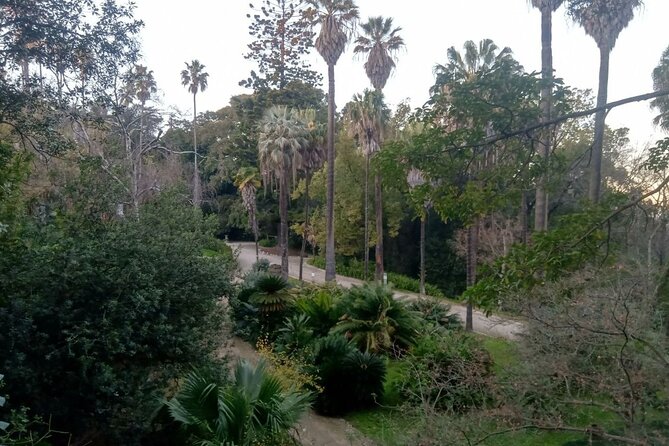
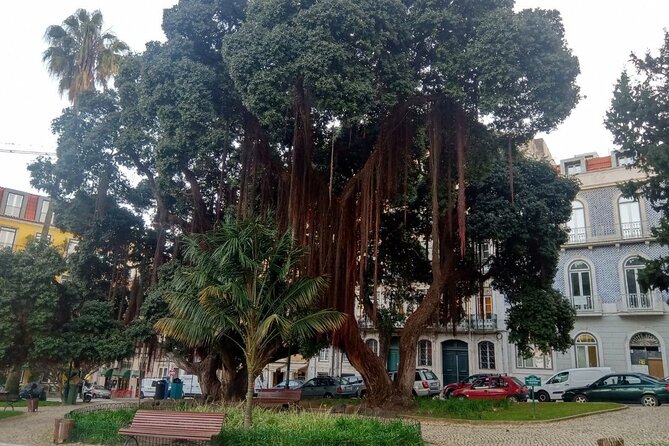
The tour begins at Alfredo Keil Garden, at Avenida da Liberdade 89. The meeting point is beneath large ceiba trees, an atmospheric setting for a walk about hidden beliefs and old power systems.
Here, the discussion reaches back before Portugal became the country you know today. You consider who lived in the area, what those communities believed, and how older traditions may have shaped later stories. This opening is important because it establishes the tour’s main idea: Lisbon’s identity did not begin with one king, one religion, or one political movement.
The garden itself receives about 20 minutes. Admission is free, and no ticket is needed. You should arrive with enough time to find the meeting point, especially if you are unfamiliar with Avenida da Liberdade.
Príncipe Real, the Aqueduct, and Water Beneath the City
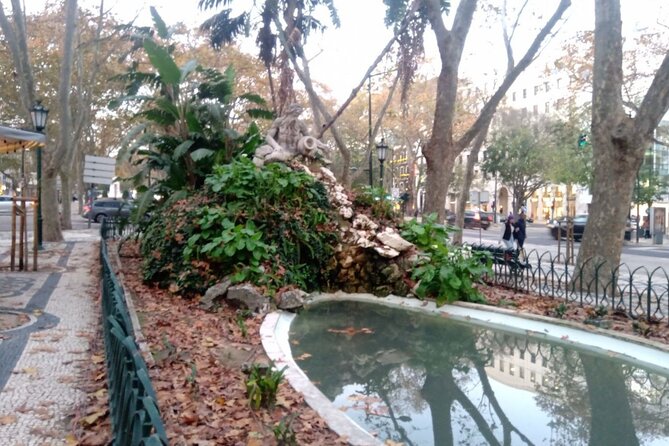
From Alfredo Keil Garden, the route continues to Jardim do Príncipe Real, a charming English-style garden with an old cedar tree and an underground reservoir. This stop adds a practical side to the mystery theme. Instead of looking only at symbols and secret groups, you learn how water moved beneath Lisbon.
The discussion includes Lisbon’s aqueduct, built before the 1755 earthquake, and the branching network of underground passageways connected with it. That does not mean you should expect to enter a subterranean tunnel. The value is in understanding the city above your feet and the engineering systems that helped keep Lisbon supplied.
I like this stop because it links everyday infrastructure with historical power. Water systems are rarely as glamorous as palaces or churches, but they tell you a great deal about how a city functioned. The garden also gives the group a change of pace before the route moves into more politically charged subjects.
You spend about 20 minutes here. The stop is free, though the outdoor setting means weather can affect comfort.
The Mysterious Fountain on Rua do Século
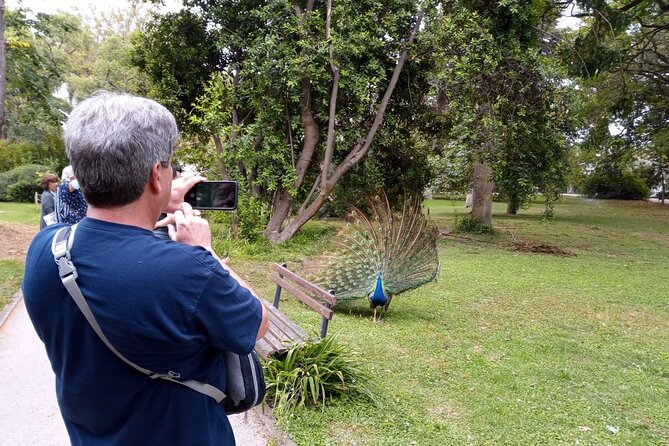
At Chafariz da Rua do Século, the fountain becomes a doorway into one of the tour’s more unusual subjects. It sits in front of the house where the Marquis of Pombal was born, linking a modest urban feature with one of the figures associated with the shaping of modern Lisbon.
The conversation asks what the supreme secret of secret societies might be and how such ideas connect with indigenous tribes, the Marquis of Pombal, and Portugal’s influence in South America. This is where the tour moves furthest from standard sightseeing. You are not just hearing a biography of one statesman. You are being asked to consider how political figures, colonial connections, belief systems, and hidden organizations may overlap.
This section will work best if you enjoy open-ended discussion. If you prefer every claim to be presented as settled fact, you may find the tone less comfortable. The tour’s appeal comes from its willingness to examine theories and connections that are usually left out of a basic city walk.
Allow about 15 minutes at the fountain.
Same place, a different slice of the past:
- Lisbon: Daytime or Sunset Boat Cruise with History and Wine
★ 5.0 · 1,053 reviews - Explore Lisbon by Tuk Tuk: History and Viewpoints
★ 5.0 · 840 reviews - Private Tuk Tuk Tour Through Lisbon’s Historical Streets
★ 5.0 · 734 reviews - Lisbon Highlights – Private Tour with Van and Local Guide
★ 5.0 · 716 reviews
Bairro Alto and a Working Masonic Connection
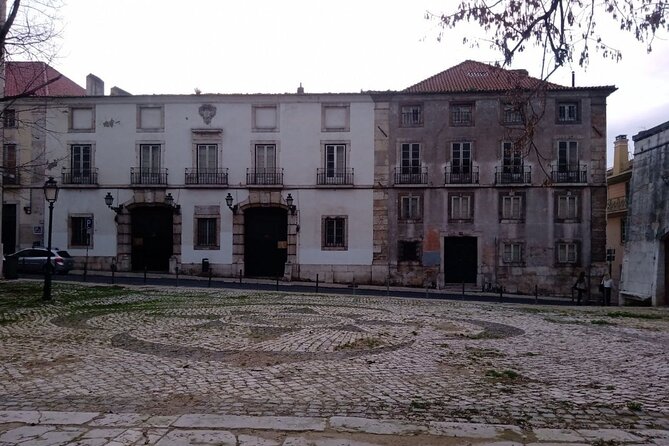
The route passes through Bairro Alto, a neighborhood commonly associated with nightlife and bars. This tour treats it differently. Instead of focusing on evening entertainment, you stop outside a Masonic lodge and discuss Freemasonry’s influence in Portugal, both in the past and the present.
This is one of the clearest examples of the tour’s method. A place that many people pass without much thought becomes a prompt for a larger conversation about organizations, membership, secrecy, and political influence. You do not need prior knowledge of Freemasonry to follow the explanation, but curiosity helps.
The stop lasts about 15 minutes. Because it takes place outside, the experience depends on looking at the building and listening rather than entering a major attraction. That keeps the cost low, but it also means the value comes mainly from Slava’s explanation and your questions.
São Pedro de Alcântara and Lisbon’s Foundation Stories
At Miradouro de São Pedro de Alcântara, you get one of the route’s best visual pauses. The viewpoint looks across central Lisbon toward Avenida da Liberdade and Praça da Restauração, or Restoration Square.
Here, the subject shifts to Lisbon’s coat of arms and the myths surrounding the city’s foundation. A viewpoint is always more useful when you know what you are looking at, and this stop gives the panorama a story. Rather than taking a quick photograph and moving on, you consider how civic symbols help cities explain their own beginnings.
The scheduled time is about 10 minutes, so do not expect a long break. This is also a useful point to catch your breath after the climb through the upper neighborhoods. Bring water, especially in warm weather.
Rossio Station and the Pull of Sintra
Estação do Rossio is one of Lisbon’s most memorable buildings, with an ornate Manueline-style façade and a strong connection to the suburban railway line toward Sintra. The tour pauses here for about 10 minutes.
The discussion concerns Sintra’s special appeal and why notable people from different countries have wanted to own property there. The subject fits the overall theme: Sintra is not treated only as a pretty day trip, but as a place linked with status, imagination, artistic interests, and personal myth.
This stop can also help you plan another day in Lisbon. If Sintra is on your list, you will already know the station from which many visitors begin that trip. The tour does not include a train ride or a Sintra visit, so think of this as historical context rather than a transport service.
Praça Dom Pedro IV and the Royal Family’s Psychological Portrait
The route reaches Praça Dom Pedro IV, better known as Rossio Square. The tour explores buildings on the southern side of the square before moving toward a final portrait of the royal family during the time of Dom Pedro IV.
This section also connects Portugal with Rio de Janeiro. That link is especially useful because Portuguese royal history cannot be understood only from Lisbon. The relationship between Portugal and Brazil changed the position of the royal family, affected political decisions, and shaped the story of both countries.
The guide’s approach here is described as psychological as well as political. Instead of listing dates and titles, you consider personalities, family pressures, ambitions, and connections across the Atlantic. That can make the material easier to remember, though it also means the discussion is interpretive.
The scheduled time is about 15 minutes, and the official end point is Praça Dom Pedro IV 72. Since the tour continues to Largo do Carmo in the stated route, confirm the exact finishing location with the provider when booking. The supplied details name both Rossio and Carmo in different parts of the description.
Carmo Ruins, the 1975 Revolution, and Portugal Under Salazar
Largo do Carmo provides the strongest architectural ending. The square contains the ruins of the Carmo Monastery, now associated with a museum, and the headquarters of Portugal’s National Guard. It also connects with a museum about the 1975 revolution.
The tour asks whether that event should be understood as a romantic revolution or a coup d’état. That question gives you a more complicated view of political change. Revolutions are often presented as clear breaks between good and bad, but the reality usually involves competing groups, uncertain motives, and different memories.
The discussion also compares Salazar’s Portugal with life in the Soviet Union. This is not a light final stop, but it gives the walk a modern political edge. You finish by considering censorship, authority, public life, and how ordinary people experience a restrictive government.
Carmo is a fitting place to close because it brings together the tour’s main concerns: religious institutions, military power, political change, public memory, and the stories a country tells about itself.
Price, Timing, and Physical Effort
At $44.58 per person, the tour is reasonably priced for a private, English-language walk lasting about two to three hours. Its value depends less on admission tickets, since the stops are free, and more on the guide’s ability to connect them into a coherent story.
A private group is a real advantage if you enjoy asking questions. You are not simply standing at the back of a large crowd while a guide gives a fixed speech. Slava’s style appears flexible, and the tour can become longer when the group wants more detail. Plan for about two and a half hours, but allow up to three and a half if you want a relaxed pace and extended discussion.
Lisbon’s hills are the main physical issue. The route includes Bairro Alto, Príncipe Real, and São Pedro de Alcântara, so comfortable walking shoes are essential. Most people can participate, but the experience is not ideal if you need a completely flat route or frequent seated breaks.
There are group discounts, though the exact terms are not provided. Mobile tickets are available, and confirmation is sent at booking. Free cancellation is available up to 24 hours before the 6:00 p.m. start. If poor weather cancels the walk, you can receive a different date or a full refund. The same applies if the minimum number of participants is not met.
Who Will Enjoy This Tour Most?
I would choose this walk if you like history with unanswered questions. It is particularly suitable for anyone interested in:
- Knights Templar and Freemasonry
- Symbols in architecture and civic buildings
- Lisbon before and after the 1755 earthquake
- Portuguese royal history and Brazil
- Salazar’s dictatorship and the 1975 revolution
- Unusual explanations of familiar landmarks
You do not need prior knowledge. The guide’s enthusiasm and willingness to answer questions make the material approachable. Still, you should enjoy interpretation and debate. This is not a conventional chronology of Lisbon, and it is not a ghost walk built around jump scares.
It may be less suitable if your main goal is to enter monuments, see major interiors, or cover as many classic sights as possible. The tour spends time on ideas and connections, so you will see fewer standard attractions than on a typical introductory city walk.
Should You Book History-Mystery of Lisbon?
Book it if you want Lisbon to feel stranger, more political, and more layered than it appears at first glance. The route is central, the price is fair for a private experience, and Slava’s warm delivery helps keep complex material engaging.
Skip it if you want only firmly established facts or a flat, easy stroll. For everyone else, this is a smart choice for a second day in Lisbon, when you already know the basic sights and want to notice the symbols, institutions, and stories behind them. Wear good shoes, keep an open mind, and leave room for the walk to run longer than planned.
FAQ
Where does the tour begin?
It begins at Av. da Liberdade 89, 1250-096 Lisboa, Portugal, in Alfredo Keil Garden.
What time does the tour start?
The tour starts at 6:00 p.m.
Where does the tour end?
The stated end point is Praça Dom Pedro IV 72, 1100-202 Lisboa, Portugal. Largo do Carmo is also included as a final route stop in the tour details, so confirm the exact ending location when booking.
How long does the tour last?
The listed duration is approximately two to three hours. The pace may be longer when the group spends extra time discussing the subjects.
Is this a private tour?
Yes. Only your group participates in the activity.
What language is offered?
The tour is offered in English.
Are admission tickets included?
The listed stops have free admission. The experience is primarily an outdoor walking tour.
Is the route physically demanding?
Lisbon’s center has hills to climb, including uphill sections around the upper neighborhoods and viewpoints. Most people can participate, but comfortable shoes are important.
Can I cancel for a full refund?
Yes. You can cancel at least 24 hours before the local start time for a full refund. Poor weather or failure to meet the minimum number of participants may also lead to a different date or a full refund.
Just added around Lisbon
- Tuk tuk experience through the historic neighborhood of Alfama★ 5.0 · 63 reviews
- Tomar & Obidos The Roman Legacy Villages World Heritage Tour★ 5.0 · 57 reviews
- Jewish Sephardic history in Lisbon★ 4.5 · 48 reviews
- Half Day Historical Walking Tour about the Slave Trade in Lisbon★ 5.0 · 172 reviews
- Tagus River Heritage and Traditional Lunch Bicycle Tour★ 5.0 · 23 reviews
- Charming Sintra on Private Guided Tour with History (All Day)★ 5.0 · 38 reviews
- Sintra Private Personalized Half-Day Experience★ 4.5 · 177 reviews
- Sintra World Heritage and Cascais Village Private Deluxe Tour★ 5.0 · 76 reviews
Lisbon History Tours, compared.
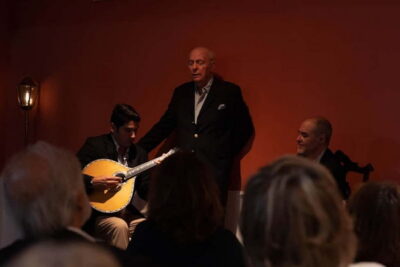
Live Fado Show with Port Wine in Historic Center
Read our review →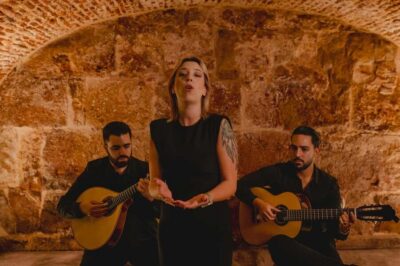
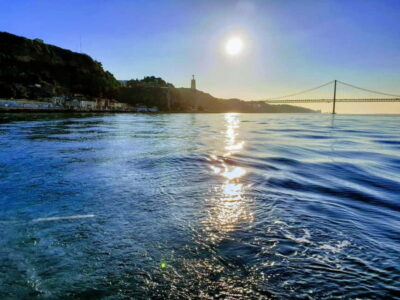
Daytime or Sunset Boat Cruise with History and Wine
Read our review →
Explore Lisbon by Tuk Tuk: History and Viewpoints
Read our review →
Private Tuk Tuk Tour Through Lisbon’s Historical Streets
Read our review →
Lisbon Highlights – Private Tour with Van and Local Guide
Read our review →
Templar Tour Convent of Christ & Almourol Castle from Lisbon
Read our review →Browse the lists this tour appears in