

Review · LISBON
Half Day Historical Walking Tour about the Slave Trade in Lisbon
Lisbon’s postcard story has another side. This three-hour walk connects Alfama, Baixa, Rossio, and Lisbon’s waterfront with Portugal’s role in slavery, colonial trade, and the African influences that helped shape the country. I like the small maximum group of eight, which gives you room to ask serious questions, and I like the guide’s use of historical images and documents to make vanished places easier to picture. The main consideration is the subject itself: this is a sober tour, not a light sightseeing stroll.
Guide Rui Fernandes receives especially strong praise for his preparation, clear delivery, patience, and willingness to handle difficult questions directly. The route covers a moderate amount of ground, but it is not suited to anyone with walking difficulties. Wear comfortable shoes, and leave room afterward to think about what you have heard.
Key points at a glance
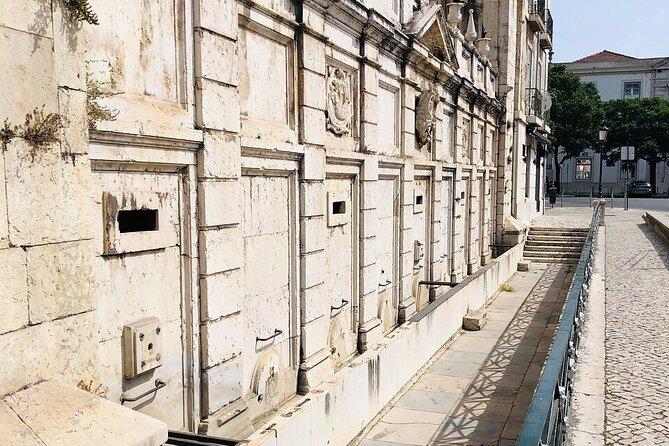
- A different Lisbon story: The walk looks past the usual Age of Discovery celebration and explains how slavery supported Portuguese trade and society.
- Seven central stops: You move from Largo do Chafariz de Dentro through Alfama, the waterfront, Praça do Comércio, Baixa, Rossio, Restauradores, Igreja de São Domingos, and Largo do Carmo.
- Small-group format: With no more than eight people, you can hear clearly and ask questions without shouting across a crowd.
- History grounded in real streets: The tour discusses where enslaved people lived, worked, worshipped, and were traded in Lisbon.
- A wider time frame: The discussion reaches from Roman and Moorish forms of slavery to the Atlantic trade and Portugal’s colonial collapse in the 1970s.
- Good value for serious history: At $39.78 per person, the price buys a focused, specialist-led walk rather than a general city overview.
Why this tour adds something important to Lisbon
Lisbon is often introduced through ships, explorers, tiled facades, and ocean trade. Those subjects matter, but they can leave out the people who made the system work. This walk asks you to look at Portugal’s overseas expansion through the lives of enslaved Africans and other captives.
I value that wider frame. The tour does not treat the Atlantic slave trade as an isolated event that began suddenly in the 15th century. It places Portuguese involvement within older systems connected to Roman rule, Muslim societies, European kingdoms, religious institutions, monarchies, and family life.
That approach helps you understand two things at once. Portugal played a major role in the Atlantic slave trade, and slavery itself existed in several forms long before the Atlantic system took shape. You get a more accurate picture without reducing the subject to a single date or a single continent.
The route also shows why this is not only African history or colonial history. Slavery affected Lisbon’s economy, religious organizations, public life, and social order. The guide connects that past to Portugal’s political history and to the end of the colonial empire after the April 25 revolution.
More History Walking Tours in Lisbon
- Lisbon: History, Stories and Lifestyle Walking Tour
★ 4.8 · 10,902 reviews - Lisbon: Private Dark History Walking Tour with Drinks
★ 4.8 · 387 reviews - Lisbon Essential Walking Tour: History, Stories and Lifestyle
★ 5.0 · 316 reviews
Starting at Largo do Chafariz de Dentro
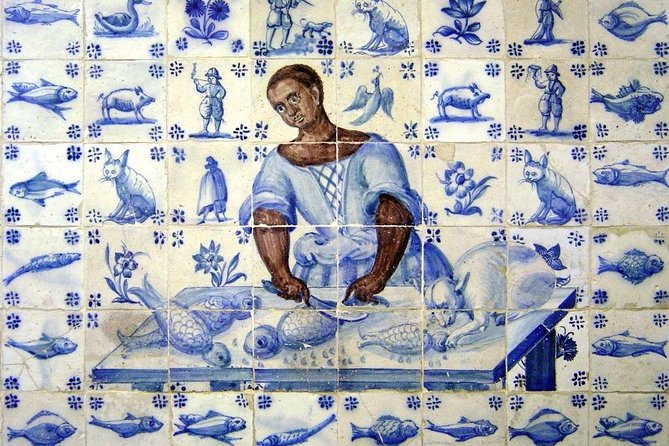
The tour begins at Largo do Chafariz de Dentro, at number 30, in Lisbon’s Alfama district. This is a useful meeting place because the first part of the walk immediately places you in one of Lisbon’s oldest neighborhoods.
You begin with an introduction to the subject and the route. That opening matters. Slavery is too large and complicated a topic to handle as a few isolated facts, so a clear explanation at the start helps you understand what the guide is trying to show.
The guide’s style appears to be one of the strongest parts of the experience. Rui Fernandes is praised for explaining difficult material in a direct but respectful way, correcting errors with evidence rather than turning the discussion into a political argument. If you have questions, this is the sort of tour where you should ask them.
Alfama and the long story of slavery
The Alfama stop lasts about 30 minutes and provides the historical foundation for the rest of the walk. You learn how different societies that settled in Portugal practiced slavery, including the Romans and Moors, before the Portuguese became active in the Atlantic trade during the mid-15th century.
This is one of the most useful parts of the tour because it prevents a common mistake: treating all systems of slavery as identical. The walk gives you a longer timeline, then explains how Portugal’s involvement in Africa and the Atlantic changed the scale and reach of human trafficking.
Alfama is also a strong setting for this discussion. You are not sitting in a classroom looking at a map. You are walking through one of the city’s oldest neighborhoods while considering how people of different backgrounds lived alongside one another under unequal conditions.
The guide uses photographs, images, and historical documents to support the explanation. Those visual aids are especially helpful when he describes people and buildings that are no longer visible. You may look at an ordinary street and begin to understand that its past cannot be read from its present appearance alone.
Campo das Cebolas and the question of public memory
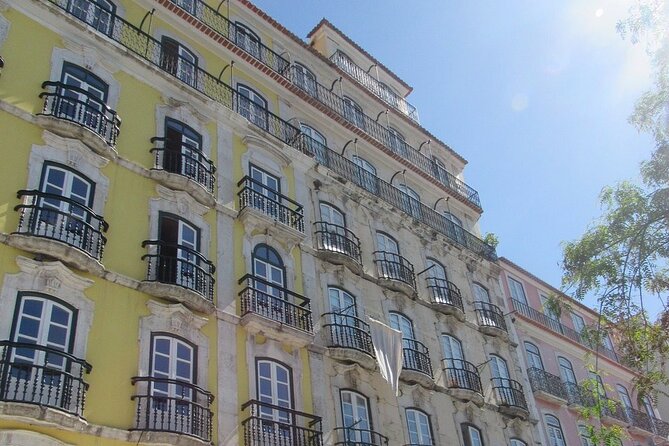
The next stop is Campo das Cebolas, where a monument to the victims of the slave trade is planned for the future. The stop is brief, around 10 minutes, but its meaning is large.
A planned memorial raises a basic question: how does a city choose what to remember in public? Lisbon has many monuments tied to exploration and empire. A memorial to those harmed by the slave trade changes the balance of that story by giving public space to people who were treated as cargo, labor, and property.
I find this one of the most thoughtful parts of the route because it connects history with memory. You are not only learning what happened. You are also considering what Lisbon has acknowledged, what it has left out, and how public recognition may change over time.
More History Walking Tours in Portugal
- Historic Walking Tour Through Lisbon’s Oldest Neighborhood
★ 5.0 · 233 reviews - Lisbon: 3-Hour The Slave Trade – An Historical Walking Tour
★ 4.9 · 179 reviews - Lisbon Fado History Cultural Walking Tour
★ 5.0 · 118 reviews - Historical Walking Tour of Lisbon
★ 5.0 · 73 reviews
Praça do Comércio and the business of empire
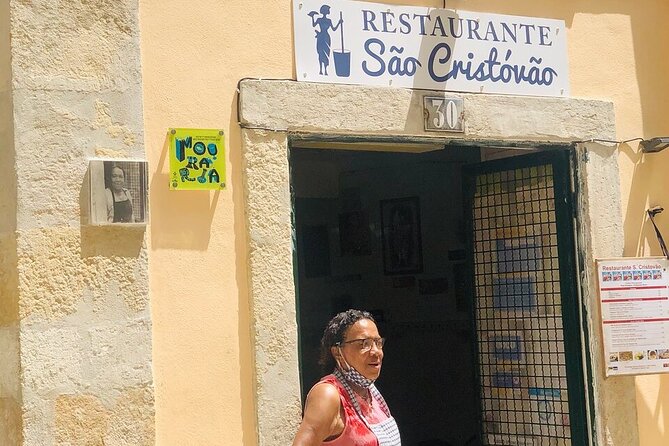
At Praça do Comércio, also known as Terreiro do Paço, the guide explains how the slave trade fit into colonial commerce. This was the commercial heart of Lisbon, so the setting helps you see slavery as an economic system rather than a distant humanitarian tragedy with no connection to daily business.
The stop takes about 15 minutes. Expect the focus to be on trade, money, colonial links, and the way human beings were folded into wider commercial networks. The square’s grand appearance can easily encourage a romantic view of Lisbon’s maritime past. This discussion gives you a needed correction.
The value here is context. Portugal’s involvement was not only about voyages and conquest. It also involved finance, shipping, labor, goods, political power, and institutions. That wider explanation gives the waterfront a different meaning for the rest of your visit.
Baixa, Rossio, and Restauradores: ordinary lives in an extraordinary system
The walk continues through Baixa, Rossio, and Restauradores for about 30 minutes. This is where the tour shifts from major trade systems to the daily lives of enslaved captives from Africa and other parts of the world who lived in Lisbon.
That shift is important. Big historical figures and trade routes can make slavery seem abstract. Discussion of work, residence, religion, family connections, and public life brings the subject closer to human scale.
This section also helps you see how slavery shaped Lisbon itself. The city was not simply a European port sending ships overseas. Enslaved people were present in the city, and their labor and status formed part of urban life.
One strength of a walking tour is that you keep moving through the places where these systems operated. You do not get a polished museum display that separates the past from the city outside. The ordinary streets become prompts for questions about who had freedom, who did not, and whose work made city life possible.
Igreja de São Domingos and religious institutions
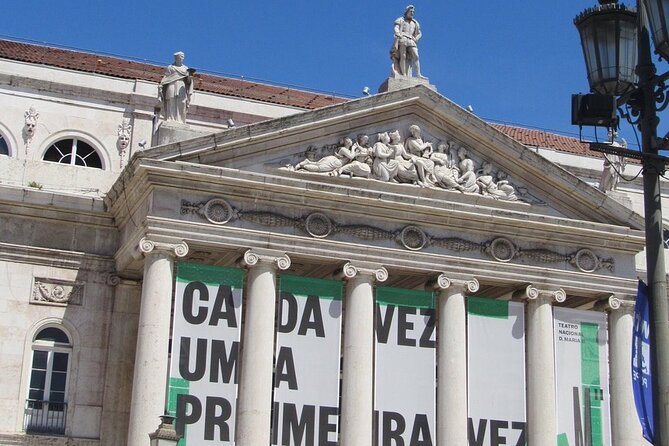
At Igreja de São Domingos, the tour examines how enslaved captives interacted with religious organizations. The stop lasts about 10 minutes.
Religion is an essential part of the story because churches and religious institutions were not separate from the social structures around them. The discussion considers how faith, power, social rank, and slavery could exist together, including the religious ideas used to justify or manage unequal systems.
This stop is short, but it adds an important layer. A basic tour might explain slavery through royal decrees and commercial records. Here, you also consider how enslaved people encountered the institutions that shaped public and private life.
Largo do Carmo and the end of the colonial empire
The tour ends at Largo do Carmo, after about 15 minutes of discussion. This location is associated with the April 25 coup and revolution, which led to the eventual collapse of Portugal’s colonial empire in the mid-1970s.
Ending here gives the walk a political conclusion. The subject is not confined to the 15th and 16th centuries. Portugal’s colonial system lasted into the modern era, and the revolution changed the country’s relationship with its overseas territories.
The end point also makes practical sense. You finish in a central part of Lisbon rather than returning to the starting location. If you want to continue sightseeing, you can plan your next stop from Largo do Carmo. The tour does not include hotel transportation, so you should arrange your own way to the meeting point and from the end point.
What the guide does especially well
Rui Fernandes is the central reason this tour receives such strong marks. He is described as highly prepared, clear, friendly, and willing to answer a long list of questions. Several details make his approach especially useful:
- He uses photographs and documents to support the spoken explanation.
- He places Portuguese slavery in a global setting instead of treating it as a narrow national topic.
- He explains difficult material without softening the facts.
- He allows time for questions and conversation.
- He has a personal family connection to the subject, which he shares during the tour.
That last detail is handled as part of the experience rather than as a marketing hook. It gives the subject an added human dimension, while the tour’s main value still comes from its historical material and structure.
The small group is a real advantage. With a maximum of eight people, the guide can respond to individual questions and adjust the pace. You are less likely to lose the thread of the discussion than on a large city walk.
Walking conditions, timing, and practical value
The experience lasts about three hours. The listed stops add up to roughly two hours, with the remaining time used for walking between locations, transitions, and discussion. It is best understood as a steady half-day walk, not a quick introduction.
The route is described as moderate, with planned stops and no hills noted in one detailed account. Still, the operator advises a moderate level of fitness and does not recommend the experience for people with walking difficulties. Comfortable shoes are the sensible choice.
The tour is offered in English and includes a mobile ticket and a professional guide. Food, drinks, hotel pickup, and hotel drop-off are not included. Bring water if you need it, and consider eating before or after, since the tour does not provide a refreshment break.
At $39.78 per person, the price is fair if you want a focused history experience led by a specialist. It is less useful if you only want a quick orientation to Lisbon’s main sights. You will see important central areas, but the purpose is interpretation, not landmark collecting.
Who should book it?
I would recommend this walk to anyone who wants a more honest understanding of Lisbon’s past, especially if you have already seen the standard Age of Discovery story and want to know what it leaves out.
It is particularly suited to:
- History-focused visitors
- People interested in African and Portuguese connections
- Families with older teenagers who can engage with serious subject matter
- Visitors who prefer small groups
- Anyone seeking a thoughtful alternative to a general city tour
- Black visitors who want Portugal’s role in slavery addressed openly rather than hidden behind empire and exploration
You should think twice if you want a cheerful, low-effort sightseeing walk. The material is difficult, and the tour asks you to pay attention. Its rewards come from understanding, not entertainment.
Should you book this Lisbon slavery history tour?
Yes, if you want to see Lisbon beyond its monuments and polished maritime story. The route is practical, the group is limited to eight, the price is reasonable, and Rui Fernandes brings careful research and strong communication to a subject that many city tours avoid.
Book it early if your schedule is fixed, since it is commonly reserved well ahead of time. You can cancel for a full refund up to 24 hours before the start time, but changes or cancellations inside that period are not accepted.
This is not a substitute for every Lisbon sightseeing tour. It is a focused addition to one. If you are ready for a serious walk through Alfama, Baixa, and the waterfront, this experience can change how you read the city for the rest of your trip.
FAQ
How long is the historical walking tour?
The tour lasts approximately three hours.
Where does the tour begin?
The meeting point is Largo do Chafariz de Dentro 30, 1100-605 Lisboa, Portugal.
Where does the tour end?
The tour ends at Largo do Carmo, 1200-092 Lisboa, Portugal.
What language is the tour offered in?
The experience is offered in English.
How many people can join the tour?
The group has a maximum of eight participants.
Is the tour suitable for people with walking difficulties?
No. A moderate level of physical fitness is recommended, and the tour is not recommended for people with walking difficulties.
Just added around Lisbon
- History-mistery of Lisbon (secrets societies and black arts)★ 5.0 · 29 reviews
- Tuk tuk experience through the historic neighborhood of Alfama★ 5.0 · 63 reviews
- Tomar & Obidos The Roman Legacy Villages World Heritage Tour★ 5.0 · 57 reviews
- Jewish Sephardic history in Lisbon★ 4.5 · 48 reviews
- Tagus River Heritage and Traditional Lunch Bicycle Tour★ 5.0 · 23 reviews
- Charming Sintra on Private Guided Tour with History (All Day)★ 5.0 · 38 reviews
- Sintra Private Personalized Half-Day Experience★ 4.5 · 177 reviews
- Sintra World Heritage and Cascais Village Private Deluxe Tour★ 5.0 · 76 reviews
History Walking Tours, compared.
History and Hauntings of Salem Guided Walking Tour
Read our review →
Freedom Trail History Small Group Walking Tour
Read our review →
Historic Charleston Guided Sightseeing Walking Tour
Read our review →
Tapas Walking Tour with Food, Wine, and History
Read our review →
Savannah History and Haunts Candlelit Ghost Walking Tour
Read our review →
A History of Terror – Belfast City Centre Walking Tour
Read our review →Browse the lists this tour appears in