
Review · LISBON
Jewish Sephardic history in Lisbon
Lisbon’s Jewish past is hiding in plain sight. This four-hour walk links Shaare Tikva Synagogue with the streets, squares, and memorials tied to Jewish life, persecution, and Portuguese history. I like the small groups of no more than eight and the chance to visit the synagogue from inside, with admission included. I also like the personal touch brought by guides such as Paulo Levy, whose own rediscovered Jewish roots give the subject unusual feeling.
The main caution is simple: this is a serious walking tour, not a parade of surviving Jewish buildings. Lisbon’s earthquake, fires, and centuries of Inquisition destroyed much of the physical evidence. You need patience, sturdy shoes, and an interest in hearing the story behind places that may look ordinary at first glance.
Key points to know before booking
- Shaare Tikva is the centerpiece: This synagogue was the first built in Portugal since the late 15th century, and its interior visit is included.
- The Jewish past is often invisible: Much of the tour explains former communities and sites that no longer survive.
- Expect several miles on foot: The route includes narrow streets, slopes, and many steps, with about four miles covered according to one detailed account.
- Paulo Levy brings a personal connection: His rediscovered Jewish heritage adds warmth to the discussion of Sephardic life in Portugal.
- Tuesday and Thursday matter: The synagogue interior can only be visited on those days.
- The tour connects Jewish and Portuguese history: You will also hear about Lisbon, the Inquisition, the 1755 earthquake, literature, and major political events.
What this Lisbon Jewish heritage walk is really about
At $84.10 per person, this is not the cheapest walking tour in Lisbon. But the price includes the synagogue entrance, a professional guide, and a private-feeling group capped at eight people. For anyone seriously interested in Sephardic history, that makes the cost easier to justify.
The key is knowing what you are buying. You are not walking through a preserved Jewish quarter with one intact building after another. Instead, you are connecting scattered clues across central Lisbon. The guide explains where Jewish communities lived, how they were forced to change, and how later disasters erased much of the visible record.
That approach can be rewarding, but it asks something from you. You need to listen, ask questions, and use your imagination. Without the guide, several stops would look like ordinary Lisbon streets and public squares.
The tour is offered in English and lasts about four hours. It begins near Shaare Tikva Synagogue and usually finishes somewhere in Lisbon’s old town. Alfama is given as a possible end point, but the final location can change based on weather, the group’s energy, and general curiosity.
More Jewish Heritage Tours in Portugal
- Lisbon Jewish Heritage and History – Private Tour Van
★ 5.0 · 294 reviews - Lisbon: Jewish History Tour of Lisbon
★ 4.8 · 84 reviews - Lisbon: Jewish History Private Tour
★ 4.8 · 59 reviews
Inside Shaare Tikva Synagogue
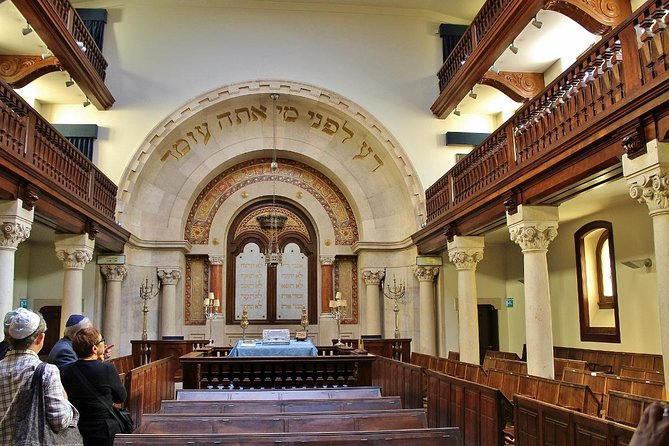
The tour begins at R. Alexandre Herculano 59, where you meet at Shaare Tikva, also called Lisbon’s synagogue. This is the first synagogue built in Portugal since the late 15th century, making the opening visit especially important.
You spend about 45 minutes inside. Admission is included, and the guide accompanies you through the site rather than leaving you to wander alone. A member of the synagogue staff may also introduce the building, its membership, and its place in Lisbon’s present-day Jewish community.
This is the strongest physical stop on the route. The rest of the walk deals largely with lost buildings, former neighborhoods, and historical events. Here, you have an actual Jewish house of worship in front of you.
The synagogue visit also gives the rest of the tour a useful starting point. You first hear how Jewish communities appeared, disappeared, and later returned to Portugal. The discussion reaches back to the Jewish diaspora after the exodus from Egypt, then follows the movement of Jewish people across countries and continents before reaching Portugal.
You should plan carefully around the synagogue schedule. The interior can only be visited on Tuesdays and Thursdays. A dress code applies: shoulders must be covered, and shorts and mini-skirts are not allowed. Passport details are required for every person at booking, including name, number, expiry date, and country, due to security rules.
Walking through Príncipe Real toward Chiado
After the synagogue, the route moves through Príncipe Real Park toward Chiado. This section takes about 30 minutes and has no additional admission charge.
Here, the value comes from the explanation rather than a major Jewish monument. Your guide uses Lisbon’s streets and neighborhoods to describe how Jewish communities fitted into the wider city. You may pass places that seem unrelated until the guide connects them to Portuguese culture, trade, literature, religion, or the movement of people.
This is also where the walking starts to feel like a proper city tour. Several people praised the guides for explaining more than Jewish history alone, including Portuguese customs and the development of Lisbon. Paulo Levy is especially well regarded for his enthusiasm and for greeting people along the way, giving the walk a friendly local tone.
Do not treat this as a gentle stroll. Lisbon’s central streets can be steep, and the route later includes narrow passages and steps. The tour requires moderate physical fitness. If four miles of walking sounds like a lot, you may want to ask about the exact route before booking.
Bertrand bookstore and the literary connection
In Chiado, the tour stops at Bertrand, founded by Pedro Faure in 1732. It is recognized as the world’s oldest operating bookstore, and the stop includes an admission component.
The bookstore adds a welcome change of pace. The guide discusses a famous Jewish writer and points out a curiosity connected with the shop. The exact emphasis can vary, but the larger point is clear: Jewish influence in Portugal is not limited to synagogues and religious sites. It also appears in literature, ideas, and the culture of Lisbon.
One particularly useful part of this stop is the discussion of Fernando Pessoa. Several people found the literary connection memorable and left wanting to read one of his books. If Portuguese literature is new to you, this is a good example of how the tour widens beyond a narrow list of Jewish locations.
Still, keep your expectations in check. Bertrand is not a Jewish museum, and this is not a long literary visit. It is one piece of a larger conversation about people, writing, identity, and the way Lisbon’s Jewish past fits into Portuguese life.
More Jewish Heritage Tours in Lisbon:
- Lisbon: Jewish History in Portugal Guided Walking Tour
★ 4.6 · 52 reviews - Budapest Jewish Heritage Memorial Walking Tour & Synagogue Entry
★ 5.0 · 568 reviews - Budapest: Jewish Heritage Guided Tour with Synagogue Ticket
★ 4.8 · 533 reviews - 3-Hour Porto Jewish Heritage Walking Tour with Local Guide
★ 4.5 · 396 reviews
Praça do Comércio and the turning points of Portugal
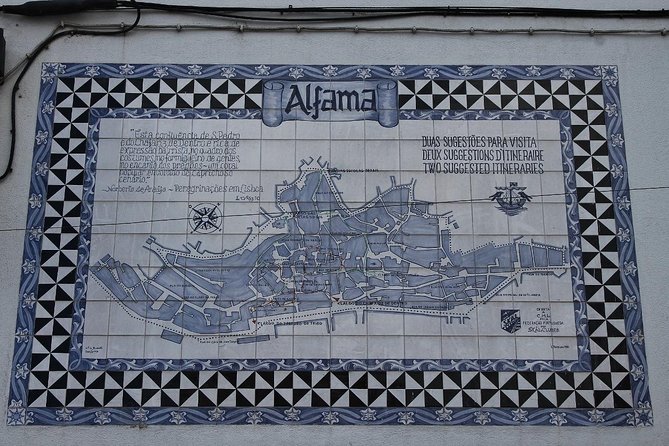
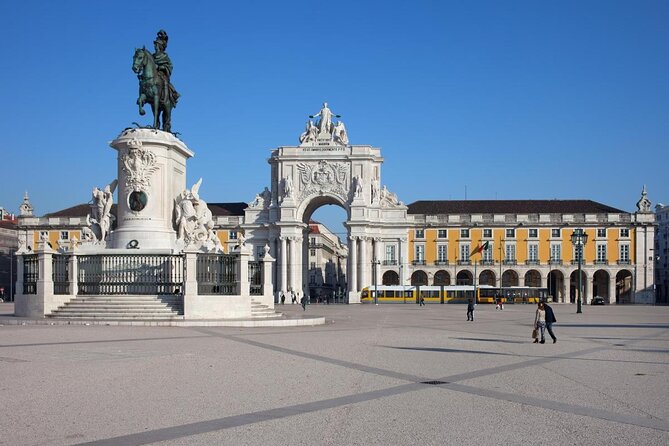
The route continues into Baixa and reaches Praça do Comércio, also called Terreiro do Paço. This is Portugal’s largest square and one of Lisbon’s most recognizable public spaces.
You spend about 30 minutes here while the guide explains events that changed the country. The stop is not presented as a single Jewish monument. Instead, the square provides a setting for understanding political and social forces that affected Jewish life in Portugal.
This is one reason the guide matters so much. The physical evidence has been damaged or erased, but the city’s major squares still help establish scale and context. You hear how the Jewish community was connected to Portugal’s wider story, rather than treating Jewish history as an isolated subject.
The square is also a practical orientation point. By this stage, you have crossed several central neighborhoods and can see how the tour joins different parts of Lisbon. The route remains on foot, so take water and wear shoes with good grip.
Rossio Square and the former Inquisition headquarters
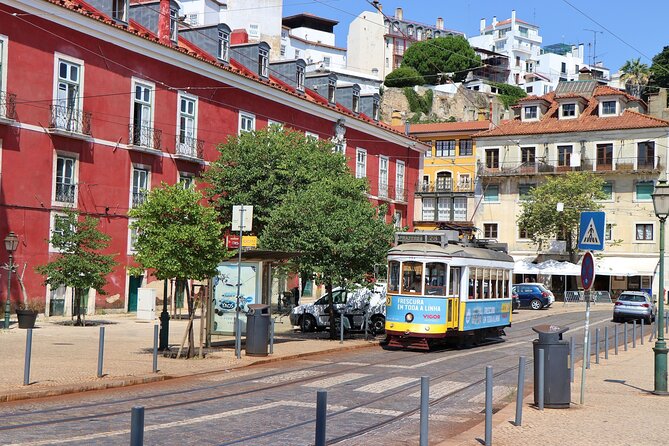
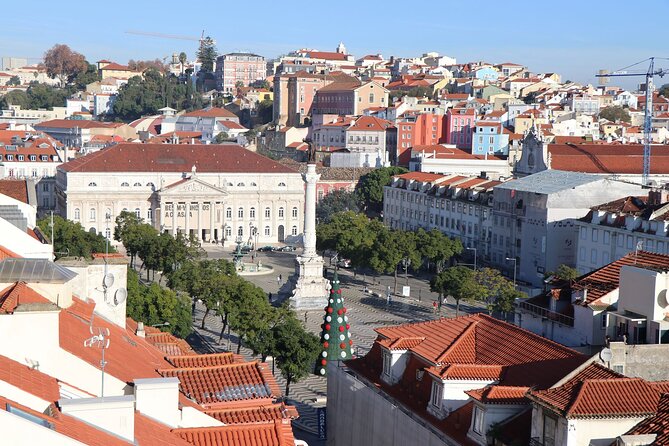
From Praça do Comércio, the walk continues toward Praça Dom Pedro IV, usually called Rossio Square. The visit here lasts about an hour, making it one of the longer outdoor sections.
At the center is the Column of Pedro IV, known as the Soldier King. Four female figures at its base represent Justice, Wisdom, Strength, and Moderation. Nearby, the D. Maria II National Theatre occupies the site of the former Estaus Palace.
That detail carries a heavy meaning. The Estaus Palace served as the headquarters of the Portuguese Inquisition from the middle of the 15th century until the theater replaced it in 1842. The guide explains how this institution shaped the fate of Jewish converts and New Christians.
This stop can feel dense because it combines architecture, public memory, religion, and political power. It is also one of the clearest examples of the tour’s method: you are not looking at a preserved Jewish site, but you are standing where major events unfolded.
The hour here may feel long if you prefer a fast-moving sightseeing tour. If you enjoy historical explanation, it gives your guide time to answer questions and connect the Inquisition with earlier events at other stops.
The 1506 Lisbon Massacre at São Domingos
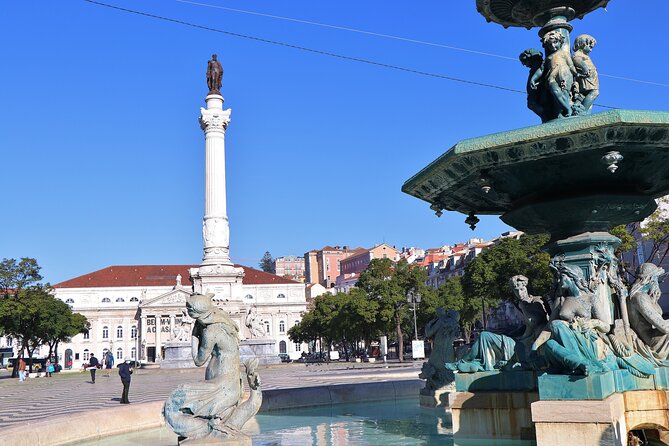
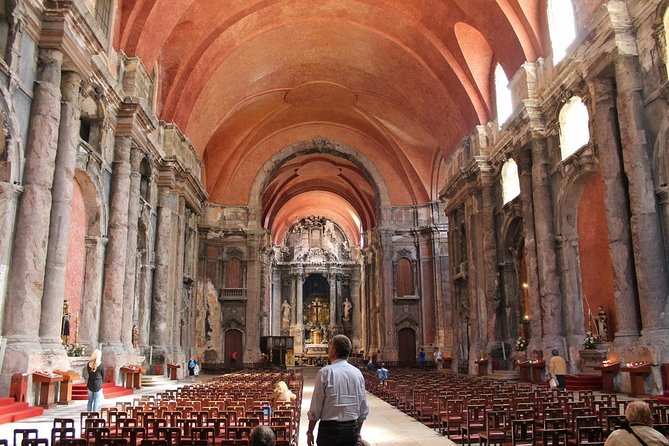
The final major stop is Igreja de São Domingos. The church is linked to the Lisbon Massacre of April 19, 1506, when more than 3,000 New Christians were murdered over the following three days. The killings ended only when the king’s forces intervened.
The church was the center of the violence, making this one of the most painful parts of the route. Your guide explains what happened and why, placing the massacre within the wider persecution of Jews and forcibly converted Christians in Portugal.
This stop is not easy sightseeing, and it should not be treated as a quick photo opportunity. It gives the tour its emotional weight. The synagogue at the beginning shows a living community, while São Domingos points to the fear, violence, and forced conversion that shaped the community’s past.
The church itself is not presented as a preserved Jewish building. That distinction matters. You are visiting a place connected to an event, not entering a former synagogue or a fully reconstructed Jewish quarter.
Why the missing buildings are part of the lesson
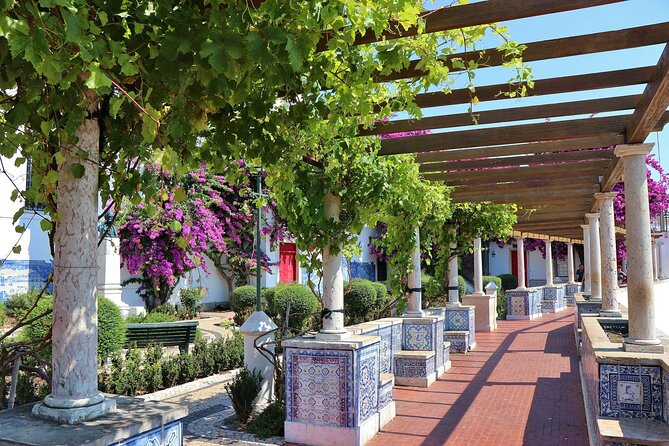
A common misunderstanding is expecting a Jewish walking tour to reveal a long row of clearly marked Jewish sites. Lisbon cannot provide that kind of route.
The 1755 earthquake, tsunami, and fires destroyed much of the older city. Later, the Inquisition damaged or transformed Jewish symbols, buildings, and places. As a result, you often stop in locations where the Jewish connection must be explained rather than displayed.
That can feel disappointing if your main goal is architecture. One detailed account described the synagogue portion as excellent but found the rest of the route too much walking with too few visible Jewish remains. That is a fair warning, not a reason to dismiss the tour.
I would book this experience if you enjoy putting pieces together. The guide’s stories supply the missing links, and the absence of surviving buildings becomes part of the subject. You learn not only where Jewish life flourished, but also how persecution and disaster erased its public signs.
The guides make the difference
Paulo Levy receives the strongest praise, and for good reason. He is described as passionate about both Judaism and Portugal, with a personal story involving the rediscovery of his Jewish heritage. That experience gives his commentary an intimate quality.
You may also meet a synagogue staff member for the opening explanation before joining Paulo for the city walk. This arrangement can work well because the synagogue portion and the wider city route require different kinds of knowledge.
Paulo’s English is described as excellent, and he is patient with questions. He covers Jewish history, Portuguese history, Lisbon culture, literature, and his own connection to Sephardic identity. If you book, ask questions rather than simply following along. The tour rewards conversation.
The guide may suggest an authentic Portuguese restaurant at the end, sometimes for lunch or dinner. That meal is not included, and you should not count on it as a formal part of the program. It can be a pleasant way to continue the conversation, but the tour officially excludes lunch and other items not listed.
Walking, timing, and what to bring
The advertised duration is about four hours, but the exact pace can change. Weather, daylight, synagogue scheduling, and the group’s physical ability may affect the route and final stopping point.
A few practical choices will make the experience better:
- Wear comfortable shoes with reliable grip.
- Bring water, especially in warm weather.
- Dress for the synagogue, with covered shoulders and no shorts or mini-skirts.
- Leave room for questions, since the guide’s explanations are a major part of the value.
- Check that your date is Tuesday or Thursday if entering the synagogue is essential.
- Tell the operator about physical concerns before the tour begins.
One group found the afternoon timing rushed because of an event at the synagogue and the earlier sunset. That is worth noting. A four-hour walk scheduled late in the day may feel compressed, especially when the guide is trying to cover difficult history and answer questions.
The end point is flexible. It may be in Alfama, but it can also be elsewhere in Lisbon’s old town. Plan your evening with that uncertainty in mind.
Is the $84.10 price fair?
For a large group and a route with no major entrance fees, $84.10 might feel high. Here, the group is limited to eight, the synagogue ticket is included, and the guide stays with you throughout the historic sites.
The best value comes from interpretation. You are paying for access to the synagogue, but also for a guide who can explain places that no longer announce their Jewish past. A self-guided walk would cost less, yet you would miss much of the meaning.
The price is easiest to justify for visitors with a family connection to Sephardic Judaism, an interest in Jewish Portugal, or a strong curiosity about the Inquisition and Lisbon’s lost communities. If you only want to see intact historic buildings, the value is less certain.
Free cancellation is available up to 24 hours before the start time. Changes or cancellations within 24 hours are not accepted for a refund.
Who should book this experience?
I recommend it to visitors who want a serious, personal account of Jewish life in Portugal and who are comfortable learning through stories rather than displays. It also suits anyone who wants Jewish history placed within the larger story of Lisbon.
Families can enjoy it if children are willing to walk and listen. One account even described a reluctant son becoming engaged with the tour. Still, younger children may find the long walking sections and difficult subject matter demanding.
I would not choose it for anyone with limited mobility, a strong dislike of hills and steps, or an expectation of a preserved Jewish quarter. The tour can be fascinating, but it is not light sightseeing.
Should you book the Lisbon Sephardic history tour?
Book it if Shaare Tikva Synagogue, the Inquisition, Sephardic identity, and the lost Jewish quarters of Lisbon interest you. Choose Tuesday or Thursday, prepare for several miles on foot, and arrive ready to ask questions.
Skip it if you mainly want visible Jewish monuments or a short, easy walk. The synagogue is the clearest physical highlight, while the rest depends on the guide’s storytelling.
For the right audience, this is a thoughtful way to understand Lisbon’s Jewish past. Paulo Levy’s personal connection and the small group format give the history a human voice, while the missing buildings remind you how much was erased.
FAQ
How long does the Jewish Sephardic history tour last?
The tour lasts approximately four hours.
Where does the tour begin?
It begins at Shaare Tikva Synagogue, R. Alexandre Herculano 59, 1250-010 Lisbon.
Where does the tour end?
It ends somewhere in Lisbon’s old town. Alfama is listed as a possible end point, but the exact location may change with weather, group ability, and curiosity.
Is the synagogue entrance included?
Yes. The tour includes entry to Shaare Tikva Synagogue, and the guide accompanies you inside to explain its history.
On which days can you enter the synagogue?
The inside visit is available only on Tuesdays and Thursdays.
Is there a dress code?
Yes. Shoulders must be covered, and shorts and mini-skirts are not permitted.
How many people can join the tour?
The maximum group size is eight people.
Do you need to provide passport information?
Yes. At booking, passport details are required for every participant, including name, number, expiry date, and country.
Is food included?
No. Lunch and any items not specifically mentioned are excluded. The guide may suggest a Portuguese restaurant after the tour, but that meal is not included.
Just added around Lisbon
- History-mistery of Lisbon (secrets societies and black arts)★ 5.0 · 29 reviews
- Tuk tuk experience through the historic neighborhood of Alfama★ 5.0 · 63 reviews
- Tomar & Obidos The Roman Legacy Villages World Heritage Tour★ 5.0 · 57 reviews
- Half Day Historical Walking Tour about the Slave Trade in Lisbon★ 5.0 · 172 reviews
- Tagus River Heritage and Traditional Lunch Bicycle Tour★ 5.0 · 23 reviews
- Charming Sintra on Private Guided Tour with History (All Day)★ 5.0 · 38 reviews
- Sintra Private Personalized Half-Day Experience★ 4.5 · 177 reviews
- Sintra World Heritage and Cascais Village Private Deluxe Tour★ 5.0 · 76 reviews
Jewish Heritage Tours, compared.
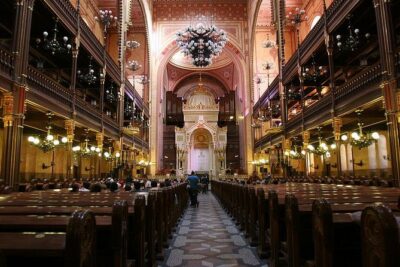
Budapest Jewish Heritage Memorial Walking Tour & Synagogue Entry
Read our review →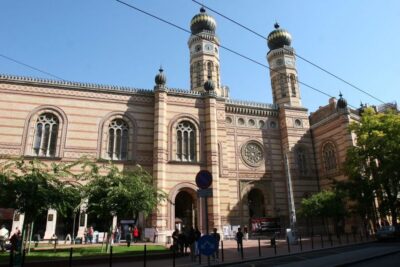
Jewish Heritage Guided Tour with Synagogue Ticket
Read our review →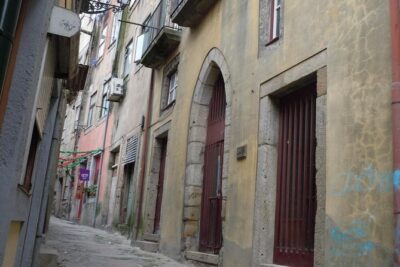
3-Hour Porto Jewish Heritage Walking Tour with Local Guide
Read our review →
Private Jewish Heritage Journey by Barcelona Dreaming
Read our review →
Anne Frank and the Jewish History of Amsterdam Private Tour
Read our review →
Lisbon Jewish Heritage and History – Private Tour Van
Read our review →
Browse the lists this tour appears in