
Review · BERLIN
Charité Hospital Walking Tour: Exploring Berlin’s Medical History
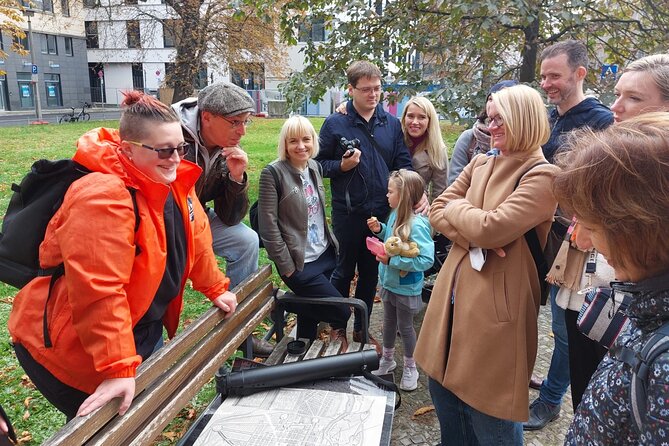
Berlin’s medical past is full of surprises. This two-hour walk around Charité connects scientific breakthroughs, wartime choices, socialist-era hospital life, and Cold War escape attempts in a small group of no more than 15 people. I like the compact route and the way a guide adds human stories to monuments and buildings you could easily pass without noticing. I also like that the tour costs $30.12, includes the guide and all fees, and fits neatly into a busy Berlin day.
The main consideration is simple: you do not tour the hospital interiors. The route stays outdoors, and the experience requires good weather. If you want access to medical collections or working clinical spaces, this is not that kind of visit. If you enjoy history told through places, it offers a thoughtful look at science, ethics, and Berlin life without taking up half a day.
Key points at a glance
- Six stops in about two hours: Each stop receives roughly 20 minutes, keeping the pace steady and focused.
- Robert Koch’s complicated legacy: Learn about his Nobel Prize winning work and the first pharmaceutical scandal in medical history.
- A rare 18th-century building: The Tieranatomisches Theater is Berlin’s oldest surviving academic building.
- Medicine meets politics: The route covers doctors during the Third Reich, hospital life under socialism, and the fall of the Berlin Wall.
- Small-group format: The maximum of 15 people should make it easier to hear the guide and ask questions.
- A useful city-center finish: The walk ends by Humboldthafen, about a 10-minute walk from Berlin Central Station.
Why Charité makes such a good walking tour
Charité is more than a hospital name. It is one of the key places for understanding how medicine changed from theory and tradition into modern science. The hospital was established in the 18th century, and its story runs through the growth of Berlin itself.
That makes this route more interesting than a simple parade of statues. You move from public monuments to old academic architecture, then into questions about medical power and political pressure. The guide’s job is to connect those pieces. A plaque alone may tell you who a person was. A good explanation tells you why that person mattered, and what his work meant for ordinary people.
I especially like the range of subjects covered in a short time. You hear about tuberculosis, anthrax, cholera, pathology, eye surgery, veterinary medicine, Nazi crimes, East German escape attempts, and current issues. That is a lot of ground, but the 20-minute stops give the walk a clear rhythm.
The experience is also a good match for visitors who prefer an outdoor introduction to a complicated place. You are not committing to a long museum visit or an entire day of medical history. Instead, you get a guided framework that can help you decide what deserves more attention later.
More History Walking Tours in Berlin
- Berlin: History of the Third Reich Guided Walking Tour
★ 4.7 · 791 reviews - Berlin Historical Highlights Walking Tour
★ 4.9 · 657 reviews - Berlin Private Complete History All Day Walking Tour
★ 5.0 · 474 reviews
Robert Koch Denkmal: science with a warning label
The tour begins at Robert-Koch-Platz, where you meet by the Robert Koch monument. This is a practical starting point because it introduces both Charité and one of the most important scientists connected with it.
You learn why Charité was founded in the 18th century and how the hospital became part of Berlin’s medical story. Robert Koch’s work is central here. He discovered the causes of tuberculosis, anthrax, and cholera, achievements that changed how doctors understood infectious disease.
But the stop does not turn Koch into a flawless hero. You also hear about the first pharmaceutical scandal in medical history. That detail matters because it gives the tour some needed balance. Medical progress can save lives, but the people behind it still made mistakes, faced pressure, and sometimes acted in ways that harmed public trust.
The monument itself is free to see, as are all the outdoor stops. The value comes from the explanation. Without a guide, you might see a statue and move on. With context, the monument becomes a starting point for a larger question: how did doctors move from guesswork toward evidence?
Plan to arrive at Robert-Koch-Platz with enough time to find the meeting point. The start address is Robert-Koch-Platz, 10115 Berlin, and the tour is offered in English.
Tieranatomisches Theater and the medicine of another age
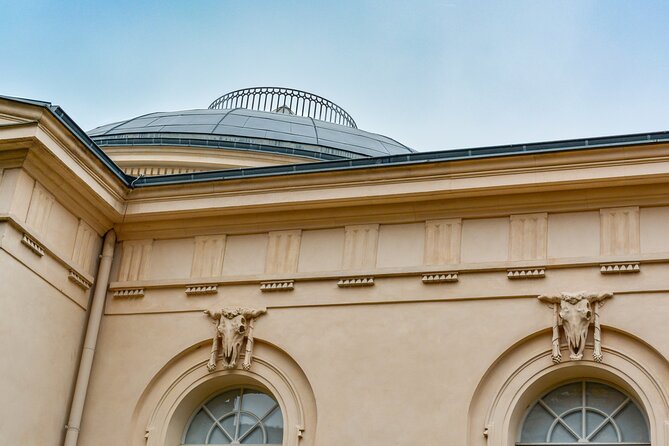
The second stop is the Tieranatomisches Theater, an 18th-century neoclassical building described as the oldest surviving academic building in Berlin. Its name refers to animal anatomy, and that focus gives the tour a useful change of pace.
Here, you hear how veterinarians studied animal diseases before modern science had taken hold. The stories of treatment from that period help show how uncertain medicine could be. Doctors and veterinarians worked with limited tools, incomplete explanations, and traditions that were not always supported by evidence.
I find this stop valuable because it puts later breakthroughs in perspective. It is easy to admire modern medicine without considering how much earlier practitioners had to work out. Seeing the old academic setting helps you picture a time when observation, anatomy, and experiment were slowly becoming more important.
The stop is also good for travelers who enjoy architecture but do not want a tour focused only on buildings. The neoclassical design gives you something visual to appreciate, while the guide fills in the academic and medical background. Since the tour does not include entry into buildings where clinical or university work takes place, expect to learn about the site from outside rather than explore its rooms.
Rudolf Virchow and the birth of social medicine
At the monument to Rudolf Virchow, the focus shifts from infectious disease to pathology and public health. Virchow is presented as the father of modern pathology and the founder of social medicine.
That combination is important. Pathology examines disease through the body and its tissues. Social medicine asks how living conditions, work, poverty, and public policy affect health. Together, those subjects broaden the story beyond individual doctors and patients.
This part of the tour can help you understand why Charité matters as an institution, not just as a collection of famous names. Medical care is never only about what happens in a treatment room. It is also shaped by housing, sanitation, public decisions, and access to care.
The 20-minute format works well here. Virchow’s career could fill a much longer lecture, but the stop gives you a clear introduction without getting bogged down in every detail. If this is the subject that catches your interest, you can use the walk as a starting point for further reading or museum visits in Berlin.
More History Walking Tours in Germany
- Berlin: Charité Hospital Walking Tour of Medical History
★ 4.9 · 276 reviews - Berlin Private Half-Day Walking Tour: Discover the German Capital’s History
★ 5.0 · 244 reviews - Berlin History Walking Tour with a French-Speaking Guide
★ 5.0 · 240 reviews - The History of Berlin: WWII PRIVATE Walking Tour With Locals
★ 5.0 · 209 reviews
Albrecht von Graefe and the changing science of sight
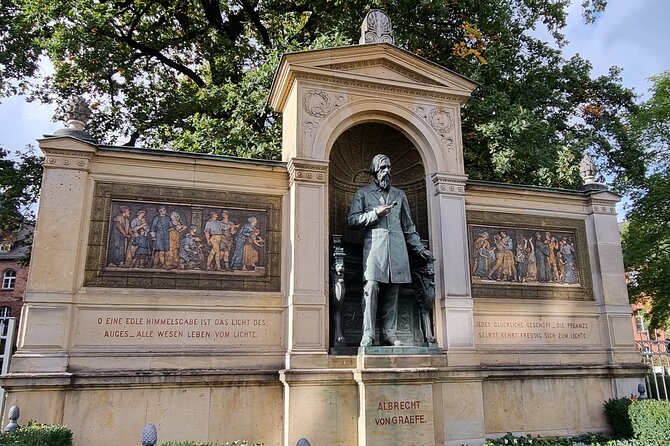
The fourth stop honors Albrecht von Graefe, a pioneering ophthalmologist. His monument was the first in Berlin dedicated to a scientist, which gives the site significance beyond the medical specialty itself.
Eye medicine is a useful subject for a walking tour because it makes scientific progress easy to picture. Vision affects daily life in an immediate way, and advances in ophthalmology could change a person’s independence, work, and quality of life.
The guide’s storytelling matters especially at stops like this. A monument gives you a name and a date, but not necessarily a sense of the person’s impact. The experience is strongest when the guide explains how von Graefe’s work changed the field and why Berlin chose to honor him publicly.
This is another outdoor stop, with no admission charge. It is brief, so you should not expect a technical lesson in eye surgery. Instead, you get a compact account of an important doctor and a glimpse into how Berlin began treating scientists as public figures worthy of monuments.
Charité Campus Mitte: medicine under political pressure
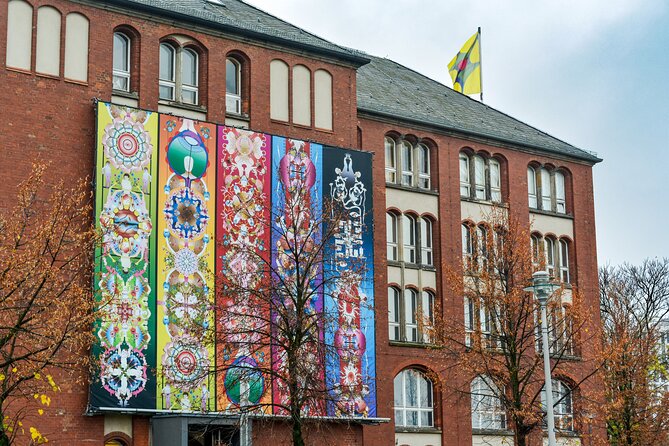
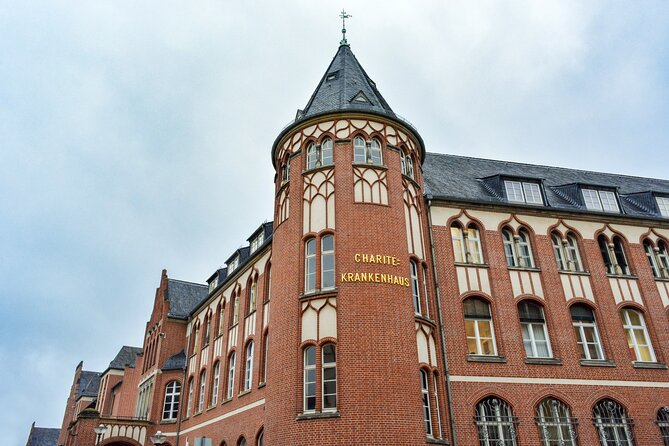
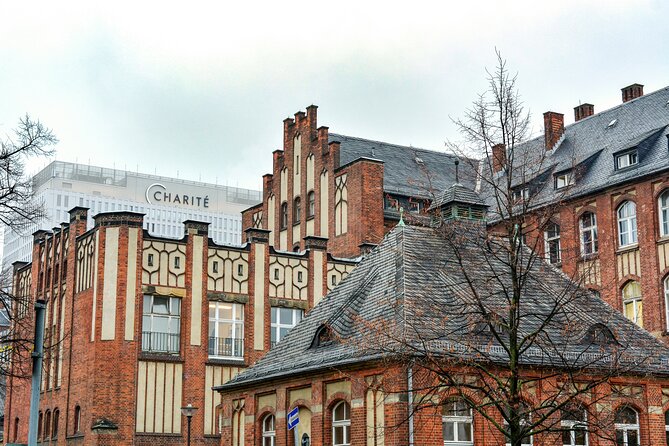
The walk then reaches Charité Campus Mitte, with its red-brick neogothic buildings. This is likely the most visually memorable section of the route. The architecture gives you a strong sense of place, but the subject matter is difficult.
You learn how some doctors abused medicine during the Third Reich, while others continued to help people without discrimination until the final days of the Second World War. That contrast is essential. It shows that medical institutions are not automatically moral simply because they treat disease. Doctors still have choices, and those choices become especially important when governments demand obedience.
I appreciate that the route addresses both failure and courage. A softer tour might celebrate famous physicians and avoid the darker chapters. This one makes room for ethical questions: What happens when medicine is used by a dictatorship? How should a hospital respond when professional duties conflict with political orders? What does personal courage look like inside an institution?
The campus is still connected with clinical and university operations, so the tour does not take you inside working buildings. That limitation may disappoint anyone hoping for a hospital interior, but it also keeps the route respectful of an active medical site. You see the architecture, hear the history, and avoid disrupting present-day work.
Humboldthafen and stories of East Berlin escape
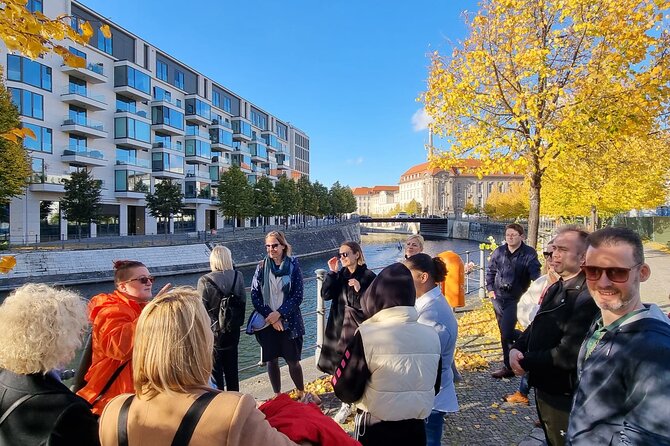
The final stop is near the Humboldthafen canal, outside Charité campus. Here, the story moves into the socialist era and the years after the Berlin Wall fell.
You hear about East Berliners who attempted to swim across the city canal to reach the West. The setting gives this history an immediate physical quality. A canal may look ordinary today, but knowing that people risked their lives in the water changes how you see it.
The stop also covers hospital life during the socialist period and after reunification. That widens the tour beyond the famous scientists. You get a sense of how a large hospital functioned under a different political system and how its role changed after the Wall came down.
The end point is on Alexanderufer, by Humboldthafen, about a 10-minute walk from Berlin Central Station. That makes the finish convenient if you are continuing your sightseeing, catching a train, or using the station as a transport hub. The route does not return to the starting point, so plan your next move from the northern end rather than assuming you will finish back at Robert-Koch-Platz.
What the two-hour format really gives you
Each of the six stops lasts about 20 minutes. That structure keeps the tour moving, but it also means you will receive an introduction rather than an exhaustive study of Charité.
For most visitors, that is a sensible trade. Two hours is long enough to cover the major people and political chapters, yet short enough to fit between other Berlin plans. You can schedule it on a morning or afternoon when you want something more substantial than a quick monument stop but less demanding than a full-day excursion.
The small group size helps. With a maximum of 15 people, the guide should be easier to hear than on a large coach-style tour, and questions are less likely to disappear into a crowd. The experience is offered in English, and confirmation arrives when you book.
The route is outdoors, so wear shoes suited to walking and check the weather. The tour requires good weather, and poor conditions can lead to a new date or a full refund. Service animals are allowed, the route is near public transportation, and most people can participate. The supplied information does not give a total distance or promise step-free access at every point, so anyone with specific mobility needs should confirm those details before booking.
Is $30.12 a fair price?
At $30.12 per person, the tour is priced as a focused guided walk rather than a major attraction visit. All fees and taxes are included, and there is no separate admission charge for the outdoor stops.
The value depends on how much you want interpretation. If you only want to look at the monuments, you can see them without paying for a tour. But the route’s subjects are not always easy to understand from signs alone. The guide links Robert Koch’s discoveries with medical ethics, connects Virchow to public health, and explains why a canal near the hospital became part of Berlin’s Cold War story.
The small-group setting also makes the price easier to justify. You are not paying for a large vehicle, a full-day program, or access to an attraction. You are paying for two hours of guided context in a group capped at 15 people.
The experience has a five-star rating from 26 ratings, and all recorded participants recommend it. The strongest praise centers on the guide’s storytelling and the way the walk combines medical history with current issues. That is the feature I would value most. This tour succeeds or fails on the guide’s ability to turn names and buildings into clear, memorable stories.
Who should book this Charité walk?
I would recommend it to you if you like:
- Medical history presented for a general audience
- Berlin’s difficult 20th-century past
- Short walking tours with a clear route
- Architecture linked to social and political stories
- Small groups rather than large organized sightseeing
- Tours that leave you near a major train station
It is especially useful for a first visit to Berlin because it adds a less familiar subject to the usual Wall, palace, and museum circuit. It also suits repeat visitors who want to explore a part of the city through a specific theme.
You may want to skip it if your main goal is to enter hospital buildings, see medical instruments, or visit clinical and university facilities. You should also think twice if rain is likely or if you prefer a relaxed pace with long breaks. The six-stop structure is efficient, but it is still a walking tour with a steady schedule.
Free cancellation is available up to 24 hours before the start time. Changes or cancellations made later are not refunded, so keep that deadline in mind when arranging your Berlin plans.
Should you book it?
Book this tour if you want a concise, serious, and story-led look at Charité and Berlin medicine. The best reasons are the unusual subject, the small group, the strong guide focus, and the range of stories packed into two hours.
I would not book it expecting an indoor hospital tour. I would book it expecting monuments, architecture, outdoor explanations, and frank discussion of science, politics, and ethics. At $30.12, it is a fair choice for a visitor who values context and wants to see a side of Berlin that most standard city walks leave out.
FAQ
Where does the Charité Hospital Walking Tour begin?
The tour begins at Robert-Koch-Platz, 10115 Berlin, Germany, near the Robert Koch monument.
Where does the tour finish?
It ends on Alexanderufer by the Humboldthafen canal. The end point is about a 10-minute walk from Berlin Central Station.
How long does the tour last?
The tour lasts approximately two hours. The route includes six stops, with about 20 minutes at each stop.
What language is the tour offered in?
The tour is offered in English.
How many people can join the tour?
The maximum group size is 15 travelers.
Are hospital and university buildings included?
No. The tour does not include visits inside buildings where clinical or university operations take place.
What happens if bad weather cancels the tour?
Because the experience requires good weather, you will be offered a different date or a full refund if poor weather causes cancellation.
Just added around Berlin
- Historic center of Berlin – Tour in Italian★ 5.0 · 143 reviews
- Berlin Food & Cultural Tour: Must-Try German & Berliner Classics★ 5.0 · 51 reviews
- Private Berlin WWII and Cold War History Tour with Local Expert Guide★ 5.0 · 28 reviews
- Private Tour: Jewish Heritage Walking Tour of Berlin★ 5.0 · 29 reviews
- Small-Group Historical Bike Tour in Berlin★ 4.5 · 103 reviews
- East Berlin Food & History Tour with Eating Europe★ 5.0 · 204 reviews
- Explore Berlin History and Highlights Sightseeing Walking Tour★ 5.0 · 81 reviews
- Berlin: Private Bike Tour of the Berlin Wall and Third Reich★ 5.0 · 23 reviews
History Walking Tours, compared.
History and Hauntings of Salem Guided Walking Tour
Read our review →
Freedom Trail History Small Group Walking Tour
Read our review →
Historic Charleston Guided Sightseeing Walking Tour
Read our review →
Tapas Walking Tour with Food, Wine, and History
Read our review →
Savannah History and Haunts Candlelit Ghost Walking Tour
Read our review →
A History of Terror – Belfast City Centre Walking Tour
Read our review →Browse the lists this tour appears in