
Review · KAMAKURA
Kamakura Historical Walking Tour with the Great Buddha
Kamakura rewards those who walk slowly. This five-hour small-group tour packs ancient shrines, temple gardens, street food, a forest trail, the Great Buddha, and the seaside into one well-planned day. I like the maximum group size of seven, which should make it easier to ask questions and keep a steady pace. I also like that the price includes temple entries, street-food samples, lunch, photos, and a certified guide.
The main catch is the walking. You cover about 5 kilometers, including a 2.5-kilometer hiking trail with slippery sections. If you want a gentle sightseeing day, this may feel like work. If you enjoy a bit of uphill walking and want more than a quick photo of the Great Buddha, the route offers good value for $98.44 per person.
The guides can make a real difference. Past tours have been led by Isao, Mark, Ken, Fujii, Yoko, and Rookie, with praise for their patience, local knowledge, friendly manner, and help with onward train travel. Still, arrive early at the clock tower outside Kamakura Station. One person missed the tour after waiting at the wrong place, and the group leaves on time.
Key points to know before you book
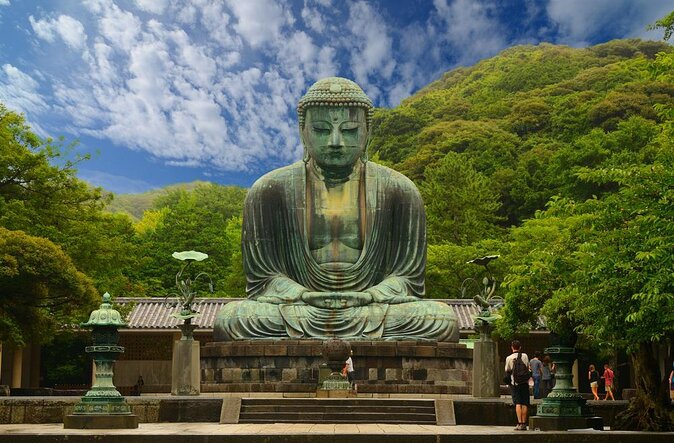
- A full Kamakura sampler: You visit Komachi Street, Tsurugaoka Hachimangu, Hasedera, the Great Buddha, Yuigahama Beach, and Kamakura Seaside Park.
- Food is part of the day: Street-food samples and a temple lunch are included, along with vegetarian and vegan choices, though options are limited.
- The hike is real: About 2.5 kilometers of trail walking can be steep or slippery, especially after rain.
- The Great Buddha is not the only star: Hasedera adds coastline views, gardens, and a small cave before you reach Kotoku-in.
- A small group helps: The maximum of seven people gives the guide room to answer questions about customs, shrines, and temple etiquette.
- Plan for one extra cost: Local transportation is not included and is listed at 440 yen.
Starting at Kamakura Station and Komachi Street
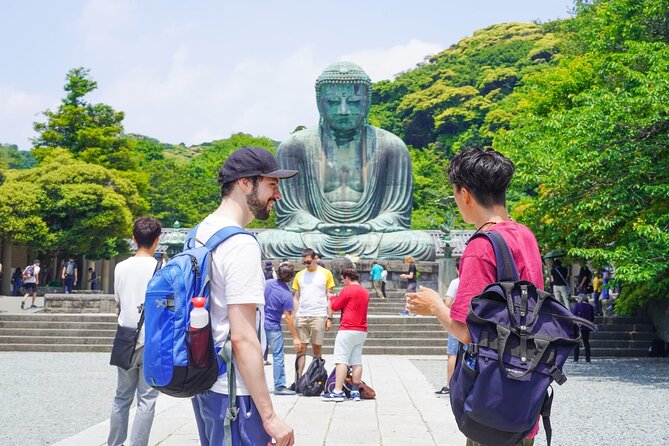
The meeting point is the clock tower plaza at the west exit of JR Kamakura Station. The tour starts at 10:00 a.m., so I would arrive with time to spare. Kamakura is an easy day trip from the greater Tokyo area, but the station area can be busy, and the meeting point is specific.
The first stop is Komachi Street, the shopping road running from the station toward Tsurugaoka Hachimangu. You spend about 20 minutes sampling Japanese snacks and street foods. This is a smart opening because it gives you a quick taste of Kamakura before the longer walk begins.
Do not expect a full meal here. The point is sampling, not sitting down for a long lunch. Additional food costs extra, and the exact choices can vary. If you have a serious allergy, take care: the operator cannot promise an allergy-free meal because the food comes from kitchens it does not control. Substitutions may also be limited.
For vegetarian and vegan visitors, choices are available but not extensive. The tour notes that many Japanese restaurants are not fully prepared to provide vegetarian menus, so you should tell the operator about your needs in advance and remain flexible.
More History Walking Tours in Japan
- Tokyo: Imperial Palace and Shogun Historical Walking Tour
★ 5.0 · 2,251 reviews - Kyoto Gion: 2-Hour Geisha Culture & History Walking Tour
★ 5.0 · 1,186 reviews - Tokyo Castle & Imperial PalaceーShogun Walking Tour
★ 4.7 · 1,068 reviews
Tsurugaoka Hachimangu and Kamakura’s samurai past
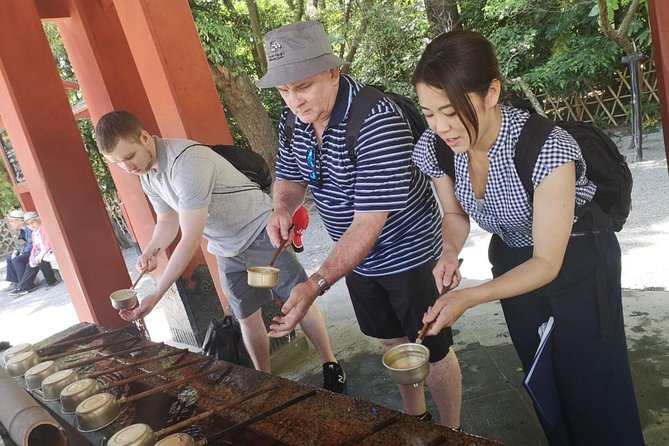
From Komachi Street, the group continues to Tsurugaoka Hachimangu, Kamakura’s major Shinto shrine. You have about 30 minutes here, enough for an introduction to Japanese religious customs and the role the shrine played in the city’s past.
A guide is especially useful at a place like this. Shrines and temples can look beautiful while leaving a first-time visitor unsure about what to do. Your guide can explain the difference between Shinto and Buddhism, how to behave at a shrine, and why the site matters to Kamakura.
This stop is not built around a long private lecture. Thirty minutes moves quickly, especially if the shrine grounds are busy. I would use the time to listen closely, ask direct questions, and take a few photos rather than trying to see every corner.
The strongest part of this tour is its interpretation. Guides such as Ken, Mark, and Rookie have been praised for explaining customs and answering questions about daily Japanese culture. That can turn a string of attractive buildings into a more understandable visit.
Hasedera’s gardens, views, and cave
Hasedera receives about 50 minutes, making it one of the longer stops. The temple is known for its scenic views toward the coast, carefully maintained grounds, and a small cave. It gives the day a change of pace after the shopping street and shrine.
You will want comfortable shoes here. Even if the walking trail is usable, temple grounds can involve stairs and uneven surfaces. The tour information specifically asks you to wear suitable hiking clothes and shoes because parts of the trail may be slippery.
The view toward Yuigahama Beach is one reason Hasedera earns this much time. On a clear day, the coast gives you a wider sense of Kamakura than the temple streets alone. The cave adds another layer to the visit, though the available details do not indicate how long you spend inside it.
Lunch is included, described as a temple lunch. Several tour experiences also included lunch at Hasedera, with a Japanese-style meal and a view from the restaurant area. This is valuable at the halfway point because you do not have to spend time choosing a restaurant or pay separately for the main meal.
Still, keep your expectations practical. Vegetarian and vegan food is available, but the range is limited. If food is central to your trip, this is not a dedicated culinary tour. It is a sightseeing walk where food keeps you going.
Meeting the Great Buddha at Kotoku-in

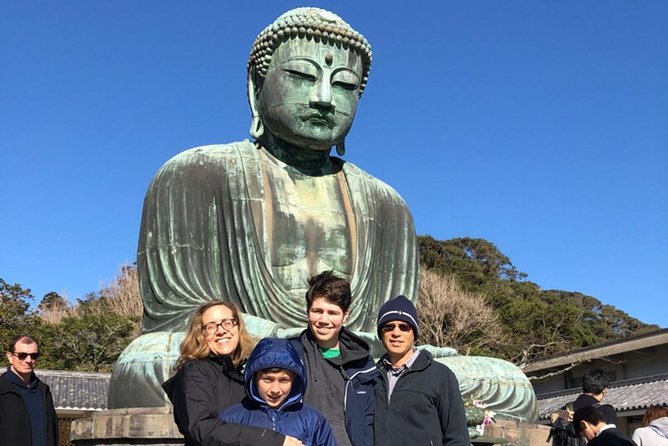
The tour then reaches Kotoku-in and the Great Buddha of Kamakura. You spend about 40 minutes here, which should give you time to take in the statue, hear its story, and photograph the temple grounds without rushing through in a few minutes.
The Great Buddha is one of Kamakura’s essential sights. It has been at Kotoku-in for more than 750 years, and its scale makes a strong impression even when you have seen photographs beforehand. The included entrance fee removes one small task from the day and makes the $98.44 price easier to assess.
This stop works best when your guide provides context. A large bronze statue can become just another photo stop without explanation. The guides praised for this tour tend to connect the monuments with Japanese customs, local history, and the way the sites fit together.
Weather can change the route. In poor conditions, the group uses a train to reach the Great Buddha instead of the hiking trail. That is useful protection against a wet and slippery walk, though it also means the day may feel less like a hike than originally planned. Transportation costs are listed separately at 440 yen.
Same place, a different slice of the past:
- Kyoto: Fushimi Inari, Kinkakuji, Bamboo Grove 1 Day Bus Tour
★ 4.8 · 4,316 reviews - World Heritage Shirakawa-go and Experience Tours from Kanazawa
★ 5.0 · 4,049 reviews - World Heritage Kyoto & Nara Uji Authentic Matcha Experience
★ 5.0 · 1,573 reviews - Kanazawa: World Heritage Shirakawa-go Morning Guided Tour
★ 4.9 · 988 reviews
The trail, Enoshima views, and the coast
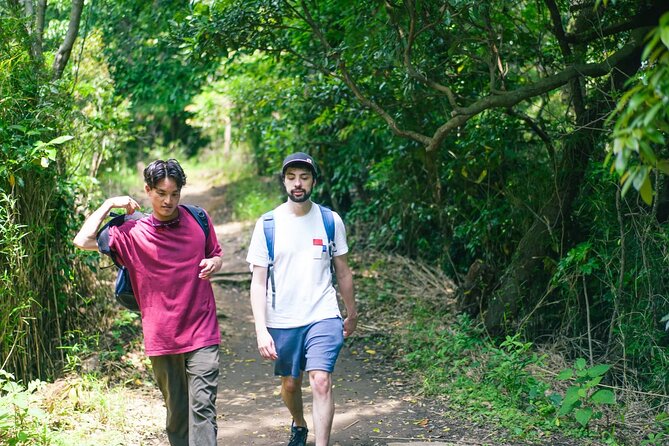
The hiking section is the part to consider most carefully. The full outing involves about 5 kilometers of walking, and the trail itself is about 2.5 kilometers. Some sections are steep or slippery, so I would bring water, a towel, and shoes with solid grip.
The route passes by Enoshima Island and continues toward Yuigahama Beach. Enoshima is a pass-by rather than a full visit, so do not book this tour expecting time to explore the island. You get the view and the coastal setting, then continue with the group.
At Yuigahama Beach, you have about 20 minutes for photographs. The beach is sandy, shallow, and popular, and the tour presents a chance to see a side of Kamakura that temple-focused day trips often miss. There is also a stop at Kamakura Seaside Park’s Yuigahama Area, with another 20 minutes for coastal photos.
The tour notes that you may see Mt. Fuji across the ocean. Treat that as a bonus, not a promise. Weather and visibility control the view. Even without Fuji, the beach and sailboats give the final part of the day a lighter feel after the shrines, temples, and trail.
What the guides add to the experience
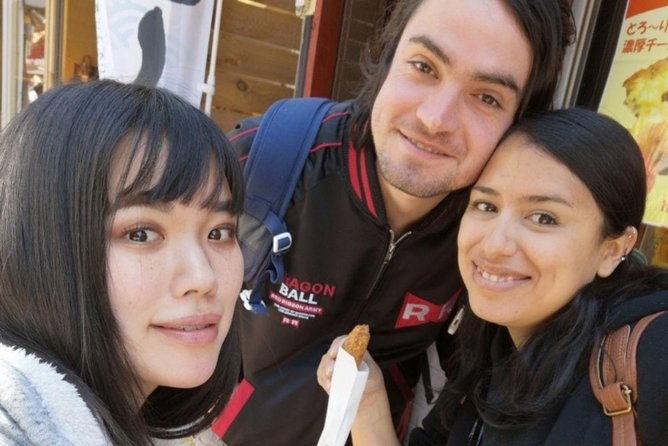
The guide is the difference between simply moving from place to place and understanding what you see. Past guides named in the tour feedback include Isao, Mark, Ken, Fujii, Yoko, and Rookie. Their praised qualities include friendly conversation, patience, clear English, attention to individual interests, and help with train directions after the tour.
One especially useful feature is the small-group format. With no more than seven people, you can ask about shrine etiquette, vegetarian food, local customs, or the best way to return to Yokohama. A large bus tour rarely gives you that kind of personal exchange.
The route can also be adjusted when conditions or trail access require it. If weather makes the trail unusable, the operator may change the route or use the train. That flexibility is sensible, though it means the exact order and walking balance may change.
The tour must start on time. This is not a drop-in walking tour where you can catch up later. Confirm the meeting point, arrive early, and keep your phone available in case the guide needs to contact you.
Is $98.44 a fair price?
At $98.44, this is not the cheapest way to see Kamakura. You could visit individual temples and the Great Buddha independently, and you would then control your timing. Public transportation and extra food would be separate costs, but independent sightseeing can still cost less.
The value here comes from combining several services in five hours:
- A certified local guide
- Entrance to Hasedera
- Entrance to the Great Buddha at Kotoku-in
- Street-food samples
- Temple lunch
- Photos
- A small group capped at seven people
For a first visit to Japan or the Tokyo area, I think the package makes sense. You save the work of planning the connections between Komachi Street, the shrines, temples, trail, and coast. You also receive explanations that guidebooks cannot provide in the moment.
The price is less attractive if you dislike fixed schedules, already know Kamakura well, or want a slow temple day. You also need to budget for the 440-yen transportation fee and any extra food.
Who should take this Kamakura walk?
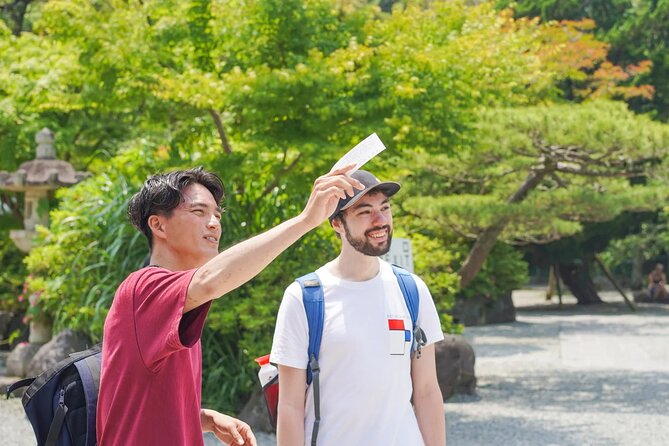
I would recommend it most strongly to first-time visitors who want a clear introduction to Kamakura without spending a full day organizing stops. It suits people who like cultural sites but also want food, a short hike, and the beach.
It is also a good fit if you are staying in Tokyo or Yokohama and want a structured day trip. The guide can help with train questions, which is useful when you are unfamiliar with Japan’s rail system.
Think twice if you have difficulty walking for several hours, dislike uneven trails, or want a wheelchair-friendly route. The information says most people can participate, but it also clearly describes slippery hiking sections and about 5 kilometers on foot.
Summer requires special care. Japan can reach around 40°C, while winter temperatures can fall to about -5°C. Dress for the season, carry water, and do not assume that a pleasant morning will remain mild all day.
Free cancellation is available up to 24 hours before the 10:00 a.m. start. Cancellations later than that are not refunded, and weather cancellations offer either another date or a full refund.
Final verdict: book it for context, not just photos
I would book this tour if I wanted a well-rounded first look at Kamakura and preferred local guidance to independent planning. The best features are the small group, the combination of major sights and coast, the included food, and the chance to ask practical questions along the way.
I would skip it if my priority were a slow, private visit or a low-cost day built around only the Great Buddha. The hiking, fixed departure, limited dietary flexibility, and separate transportation cost deserve attention.
For most active first-time visitors, though, this is a sensible introduction. Bring good shoes, water, a towel, and a little patience for the schedule. Kamakura gives you temples, shrines, snacks, forest paths, and the sea in one day, which is a fine return for five hours on foot.
FAQ
How long does the Kamakura walking tour last?
The tour lasts approximately five hours.
What time does the tour begin?
The tour starts at 10:00 a.m.
Where is the meeting point?
Meet at the clock tower plaza outside the west exit of JR Kamakura Station, at 12-3 Onarimachi, Kamakura, Kanagawa.
Where does the tour end?
The activity ends back at the meeting point.
Is the Great Buddha entrance fee included?
Yes. Entrance to the Great Buddha at Kotoku-in is included.
Is Hasedera Temple included?
Yes. The entrance fee for Hasedera Temple is included.
Is lunch included?
Yes. Temple lunch is included. Vegetarian and vegan menus are available, but choices are limited.
How much walking is involved?
The tour covers about 5 kilometers of walking, including a hiking trail of about 2.5 kilometers.
What happens if it rains?
If rain makes the hiking trail unsuitable, the group uses a train to see the Great Buddha instead. Routes may change because of weather.
Is transportation included?
Transportation is not included. The listed transportation cost is 440 yen.
What is the maximum group size?
The tour has a maximum of seven travelers.
Can I cancel for a full refund?
You can cancel at least 24 hours before the start time for a full refund. Later cancellations and changes are not accepted for a refund.
Just added around Japan
- [Day trip bus tour from Kanazawa Station] Weekend only! World Heritage Shirakawago Day Bus Tour★ 5.0 · 46 reviews
- [One-day bus tour departing from Kanazawa Station] Shirakawa-go and Gokayama – Two World Heritage Villages Enjoyable Bus Tour★ 5.0 · 253 reviews
- World Heritage Shirakawa-go Perfect Guided Tour from Kanazawa★ 5.0 · 220 reviews
- Morning Hiking Tour: Mt. Futaba & Hiroshima’s History★ 5.0 · 25 reviews
- History of Hiroshima Group Walking Tour★ 5.0 · 23 reviews
- Walking Through History: Hiroshima’s Path to Peace★ 5.0 · 31 reviews
- Hiroshima & Miyajima: Private Full-Day Tour with a Local Guide★ 5.0 · 39 reviews
- Hike Japan Heritage Hakone Hachiri with certified mountain guide★ 5.0 · 46 reviews
History Walking Tours, compared.
History and Hauntings of Salem Guided Walking Tour
Read our review →
Freedom Trail History Small Group Walking Tour
Read our review →
Historic Charleston Guided Sightseeing Walking Tour
Read our review →
Tapas Walking Tour with Food, Wine, and History
Read our review →
Savannah History and Haunts Candlelit Ghost Walking Tour
Read our review →
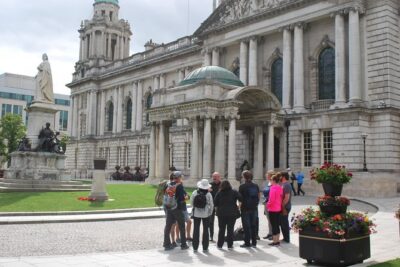
A History of Terror – Belfast City Centre Walking Tour
Read our review →Browse the lists this tour appears in