Review · BERLIN (STATE)
Berlin Wall History Small Group Cycling Tour
The Wall still speaks through its gaps. This four-hour bicycle tour follows the former border from Bornholmer Straße toward Checkpoint Charlie, linking memorials, watchtowers, escape sites, and the places where Berlin changed forever. I especially like the small group of three to eight people, which gives the guide room to explain rather than simply point. I also like that a bicycle, guide, fees, and a rain poncho are included in the $40 price.
The main consideration is language: the live guide speaks German. You will also be cycling in all weather, and there is no food or drink included, so bring water and dress for the forecast. Still, the route covers far more ground than a walking tour, and guide Ferenz has earned warm praise for mixing clear facts with personal memories of the period around reunification.
Key points at a glance
- Begin where the Wall first opened: Start at the Square of 9 November 1989 on Bornholmer Straße, the first East Berlin border crossing opened that night.
- See more than surviving concrete: The route includes a watchtower, parts of the former Death Strip, border crossings, cemeteries, memorials, and markings that explain what disappeared.
- Cover Berlin’s central sights by bike: Mauerpark, Brandenburg Gate, Potsdamer Platz, Checkpoint Charlie, Museum Island, and the Tränenpalast all fit into the four-hour ride.
- Hear personal and tragic stories: Escape attempts and the human cost of the border give meaning to otherwise quiet streets and open spaces.
- Expect practical equipment: A bicycle is supplied, as are entry fees and a rain poncho when needed. Large bags and luggage are not allowed.
- Get strong value for $40: The price works well if you want a guided introduction to Berlin’s Wall history without arranging a bike rental and route yourself.
Starting where the Wall came down
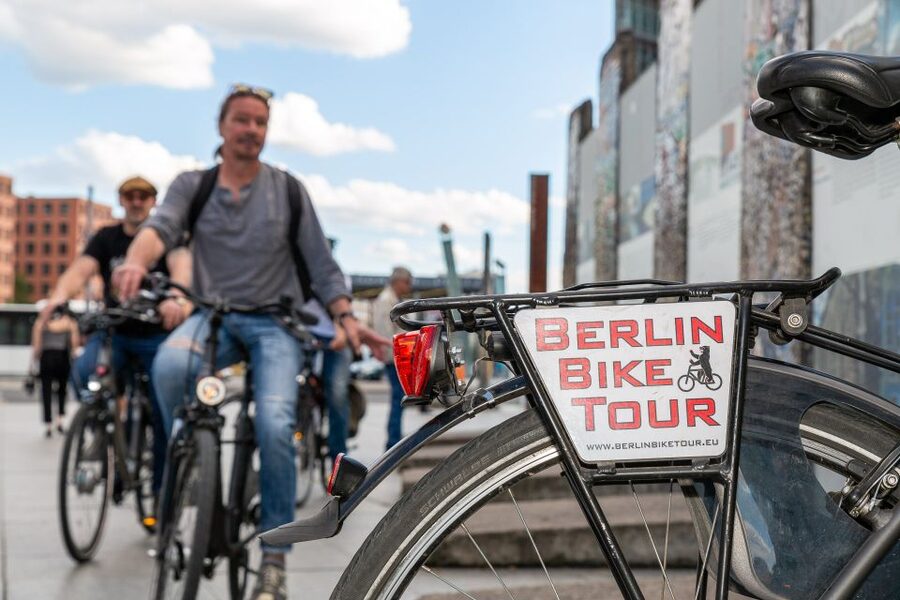
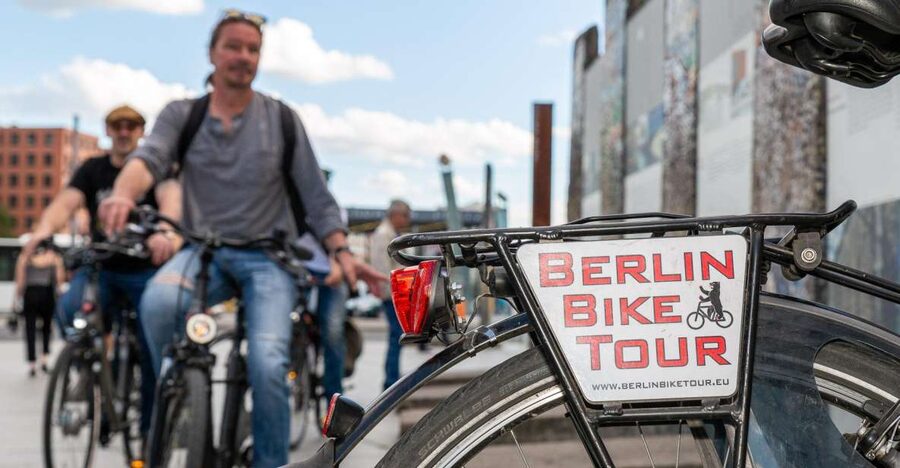
The meeting point is Berlin Bike Tour at 75 Bornholmer Straße, in the northern part of the city. It is easy to reach, with Björnsonstraße tram stop about one minute away and Bornholmer Straße S-Bahn station about two minutes on foot. Schönhauser Allee is another option, about a ten-minute walk away.
The tour begins at the Square of 9 November 1989. This is a smart starting point because the story begins with the Wall opening, not with a dry list of dates. On that night, the Bornholmer Straße crossing became the first place where East German citizens crossed into West Berlin after border guards gave way.
You will hear how the crossing opened and how the cherry trees along Bornholmer Straße came to be planted. The trees add a gentle, living layer to a site tied to fear and confusion. They also show how Berlin has chosen to remember the Wall without leaving every former border site frozen in its old form.
This first stop gives the whole ride a clear frame. You are not merely following a vanished barrier. You are tracing how a divided city was sealed, how people tried to escape it, and how the border finally failed.
More Small-Group History Tours in Germany
- Small group Potsdam: A Journey Through History and Palaces
★ 4.7 · 317 reviews - Small group Potsdam: A Journey Through History and Palaces
★ 4.5 · 151 reviews - Small-Group Historical Bike Tour in Berlin
★ 4.5 · 103 reviews
Mauerpark and the surviving border line
From Bornholmer Straße, the route moves through Mauerpark. The park occupies part of the former border zone, and its name keeps the past close even as the area has taken on a modern public life.
Cycling here helps you understand the scale of the old strip. On foot, you might focus on a single section of wall or a memorial panel. By bicycle, you can connect one former checkpoint and border section to the next, seeing how the line cut across neighborhoods.
The tour points out original traces where possible, including a watchtower and parts of what was called the Death Strip. Very little of the Wall remains, so these fragments matter. The absence is part of the lesson, but the surviving structures help you picture the fences, patrol routes, and controlled spaces that once divided Berlin.
The guide also follows rabbit images painted or marked on the ground. These small signs lead toward Brandenburg Gate and give the route a simple thread to follow. They are a lighter detail within a serious subject, useful when four hours of border history might otherwise feel heavy.
Bernauer Straße and the Chapel of Reconciliation
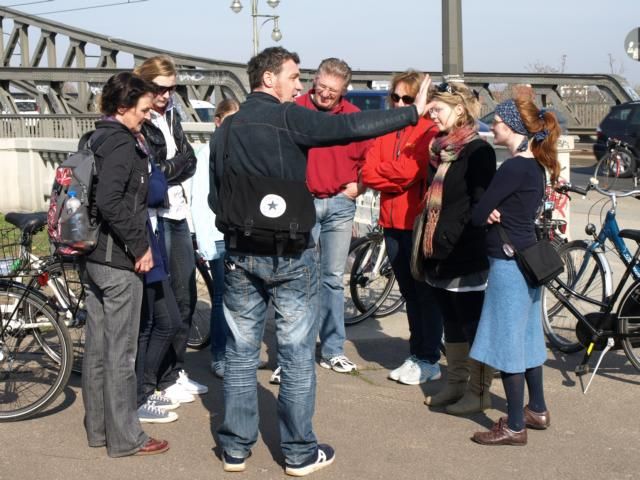
Bernauer Straße is one of the key places on the route. The Wall once ran directly along this street, splitting buildings, sidewalks, and ordinary daily life. The area now holds memorials that explain the border in a more personal way than a broad city view can.
The Chapel of Reconciliation is especially important. It occupies the site of a former church that became trapped in the border strip and was later demolished. The chapel recalls that lost building and the people affected by the division around it.
Expect stops with stories of escape attempts and the risks people took to cross. The tour does not treat the Wall as a single political object. It connects the border to homes, churches, streets, and individuals who had to make frightening choices.
This is one reason the bicycle format works well. You can move between sites while the guide fills in the connections. The ride has a sense of progress, but the stops keep you from rushing past the human details.
Chausseestraße, Invaliden Cemetery, and Günter Litfin
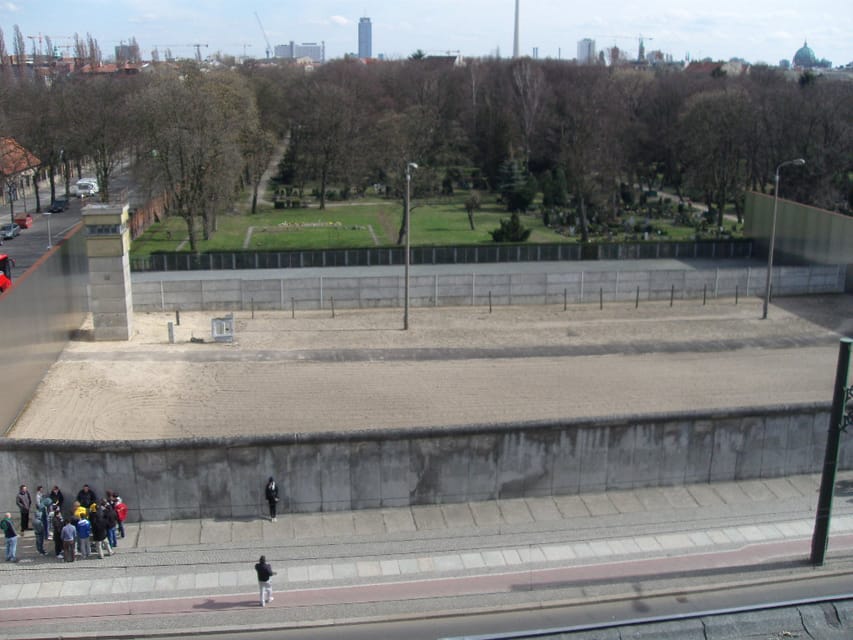
The route continues to the former Chausseestraße border crossing and then to Invaliden Cemetery. These places broaden the story beyond the best-known Wall images.
Chausseestraße was a formal crossing point, where movement between East and West was controlled. Seeing it after Bornholmer Straße helps you compare different parts of the border system. One place is remembered for the night the gates opened. The other shows the routine machinery of regulated passage.
Invaliden Cemetery brings a more somber tone. The cemetery sits near the former border and is connected to the way the Wall cut through established urban spaces. You will not just see a barrier line in an empty field. You will see how it pressed against places of burial, memory, and older Berlin.
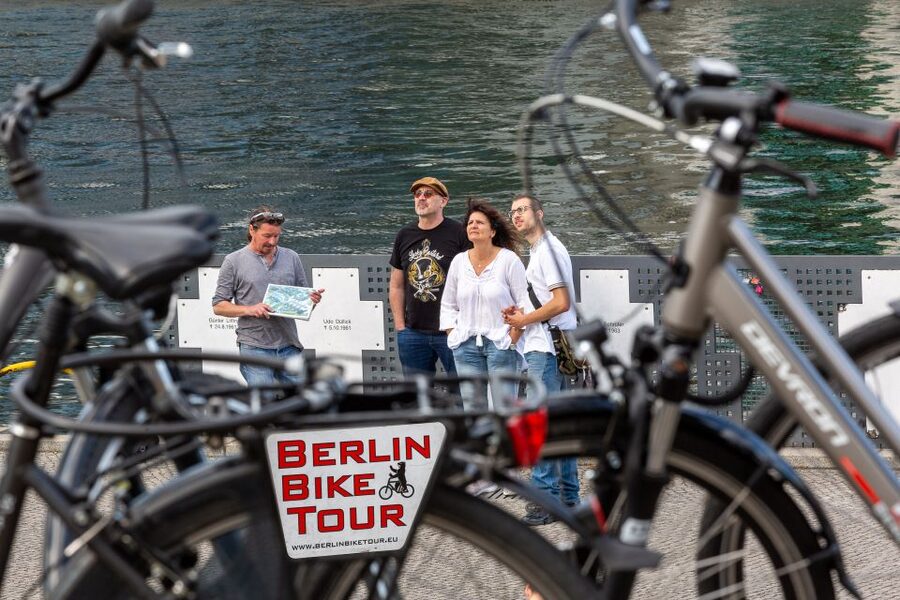
The memorial to Günter Litfin is another serious stop. Litfin was killed while trying to cross the border, and the memorial keeps attention on the people who died in attempts to leave East Germany. The stop is brief in physical size but large in meaning. It reminds you that the Wall was enforced with lethal force, not simply watched by guards.
The exact amount of time spent at each point depends on the guide and the group. That is normal for a small-group tour, but it also means you should not expect a fixed, minute-by-minute schedule.
More Cold War and Communism Tours in Berlin:
- Berlin: Cold War & Berlin Wall History Guided Bike Tour
★ 4.8 · 422 reviews - Berlin: Guided Bike tour of the Berlin Wall and Third Reich
★ 5.0 · 160 reviews - Berlin: Historical Sights & Berlin Wall Tour with a Berliner
★ 5.0 · 62 reviews - Berlin: Cold War History and Berlin Wall Guided Walking Tour
★ 5.0 · 33 reviews
Along the Government Bank to the Parliament of the Trees
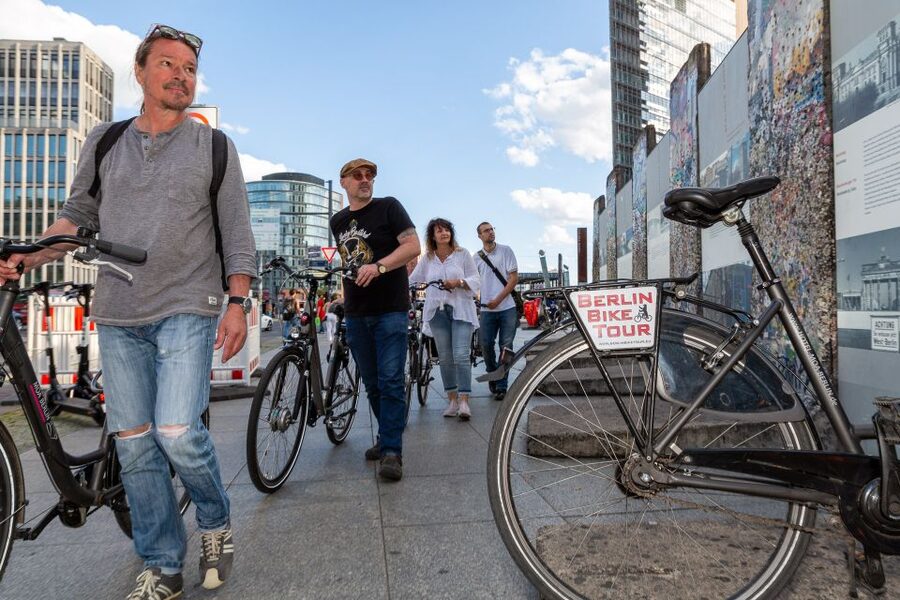
The ride follows the former border near the Government Bank before reaching the Parliament of the Trees. This stretch shows how the Wall crossed the center of Berlin, including areas that now feel open and civic.
The Parliament of the Trees is a memorial made from sections of the Wall and planted trees. It honors people who died at the border and places their names within a public setting. The contrast is powerful: concrete fragments remain, but trees and open space have changed the mood of the old border zone.
I value this section because it shows how remembrance works in Berlin. The city did not preserve every meter of the Wall. Instead, it kept selected pieces and markers, then placed them among parks, government buildings, roads, and new public spaces.
For you, this is also a useful transition into the major central sights. The ride moves from lesser-known memorial locations toward places most visitors already have on their list.
Brandenburg Gate and the route through central Berlin
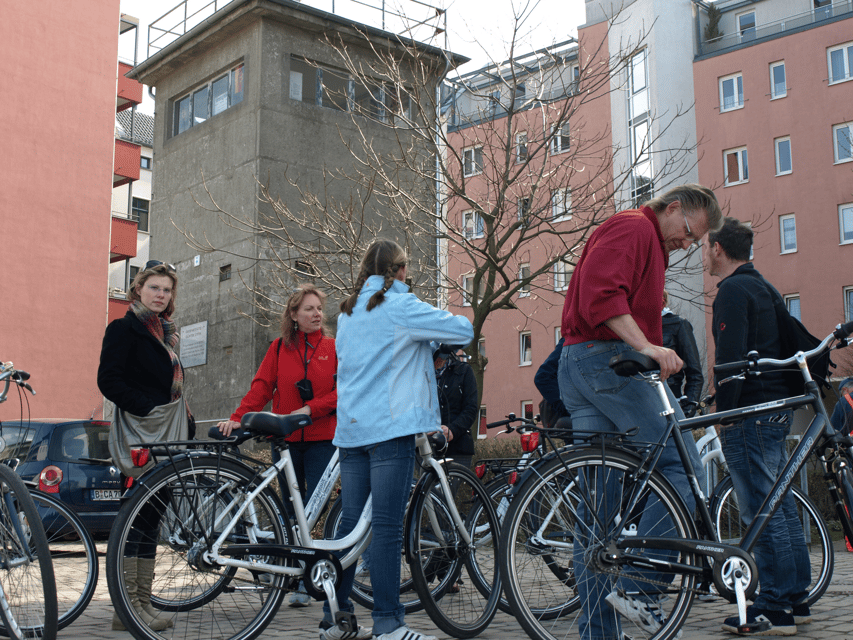
Brandenburg Gate is one of the most recognizable landmarks in Germany, but its Wall-era meaning is easy to miss if you only take a photograph from the front. During the division of Berlin, the gate stood in the border zone and was inaccessible to ordinary passage.
The tour takes you through the gate and onward toward the Tränenpalast on Friedrichstraße. Along the way, you pass the Friedrichstadt Palace, Museum Island, the New Synagogue, and the Old Berlin Post Office.
This portion gives you a strong sense of how the former border ran through the heart of the city. Berlin’s major cultural and civic landmarks are close together, yet the division once made crossing between the city’s sectors difficult or impossible.
Cycling lets you see these sights without turning the tour into a long march. You can pause for the guide’s explanation, then cover the next section quickly. The tradeoff is that this is a sightseeing ride, not a stop-and-enter museum tour. The supplied information does not indicate interior visits, so plan to admire these places from outside during the route.
Potsdamer Platz and Checkpoint Charlie
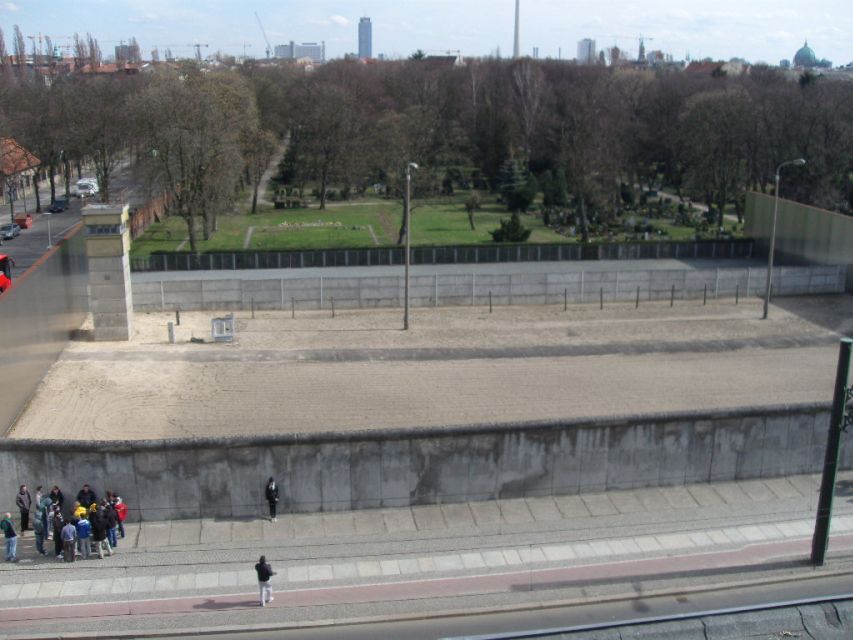
Potsdamer Platz is another place where old and new Berlin meet. Before the Wall, it was a major urban crossroads. During the division, the area became part of the border zone and was largely empty. Today, it is known for modern buildings and busy city life.
The contrast can be startling. If you have only seen the rebuilt square, the guide’s explanation helps you picture the broad, restricted area that once occupied this central location. It is a good example of why a Wall tour needs context. The concrete itself is gone in many places, but the city’s shape still carries the memory of division.
Checkpoint Charlie brings the tour to one of the most famous former crossings. Its name is widely known, and the site can feel highly commercial compared with quieter memorials such as the Günter Litfin memorial or the Chapel of Reconciliation.
That difference is useful. The route does not rely only on postcard locations. It shows you both the famous checkpoint and the less polished places where the Wall’s effects are easier to feel.
The Tränenpalast and Berlin’s final stories
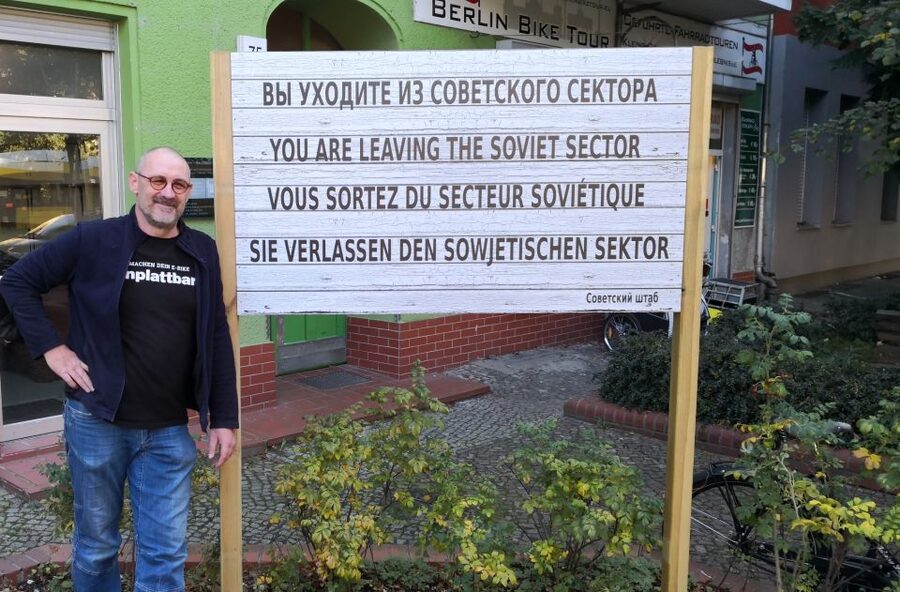
The Tränenpalast, or Palace of Tears, on Friedrichstraße was a departure hall for people leaving East Berlin. Families often had to say goodbye there, and the name reflects the emotional scenes connected with the building.
The stop adds a personal ending to the central part of the ride. Bornholmer Straße represents the border opening. The Tränenpalast represents the controlled departures and painful separations that came before it.
The route also passes Museum Island, the New Synagogue, the Old Berlin Post Office, and Friedrichstadt Palace. These sights place the Wall story in the wider history of Berlin. You are not confined to a single memorial site. You are riding through a city where political division, Jewish history, state power, theater, commerce, and reunification all sit close together.
After the Tränenpalast, the tour returns to the Berlin Bike Tour starting point. Four hours is enough time for a substantial introduction, but not enough for long museum visits or detailed exploration of every location. If you want to enter the Wall Memorial buildings or spend an hour at the Tränenpalast, plan a separate visit.
Why the bicycle makes a difference
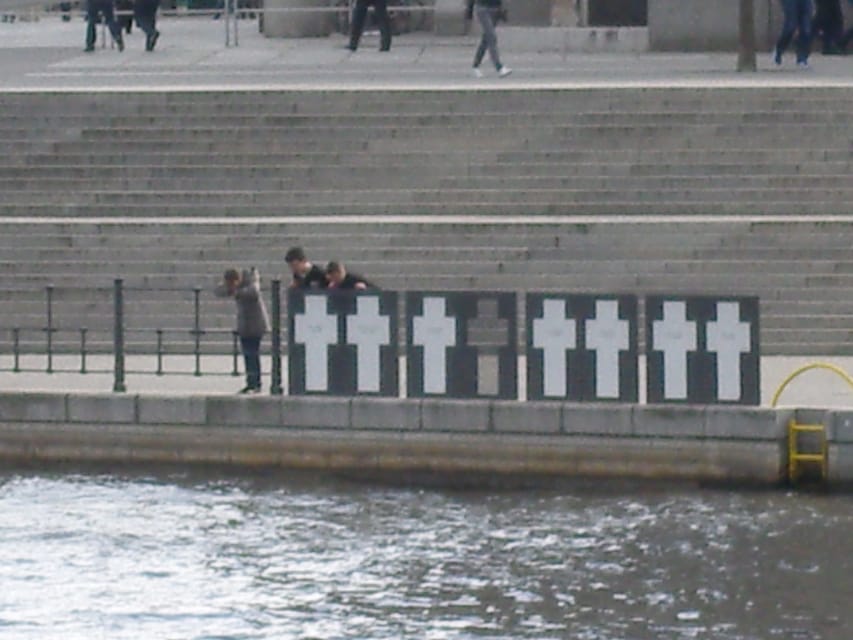
The route covers a large section of Berlin’s former Wall line. A bicycle keeps the day moving and lets you see sites that would be spread out on foot. You are not using a sightseeing bus, so you also get a closer view of streets, parks, memorial stones, and remaining sections of the border.
The group size matters. With a maximum of eight people, the guide can stop for questions and adjust explanations to the group. It also makes the ride feel less like a rolling lecture. The minimum group size is three people, so the tour is designed for a small party rather than a private one-person outing.
The included bicycle adds real value to the $40 price. You do not need to arrange a separate rental, and fees are included. At four hours, the cost is reasonable for a guided route that links major sights with less obvious memorials.
There are limits. This is not a leisurely café-to-café bike ride, and food and drinks are not provided. Large bags and luggage are not allowed. Bring a small day bag only, along with sunglasses, a sun hat, and a camera. You should also bring a passport or ID card, as specifically requested for the activity.
The tour runs in all weather. On rainy days, a poncho is provided, but you still need clothing suited to cycling in wet or cool conditions. A dry, sunny day will make the ride more comfortable, yet the rain policy means you do not need perfect weather to take part.
Language, guide style, and who will enjoy it
The live tour guide speaks German. That is the most important booking consideration for international visitors. If you do not understand German, the historical explanations and personal stories will be difficult to follow, and the value of the tour will drop sharply.
For German-speaking visitors, the guide style appears to be a major strength. Ferenz receives particular praise for combining friendliness, clear information, and professional delivery. His personal glimpse into the period around the fall of the Wall adds something a printed guide cannot provide.
The ride suits adults, families with older children, and teenagers who can cycle for four hours with regular stops. One direct assessment found it suitable for young people because the route combines movement with clear stories rather than asking them to stand in museums all day.
You will enjoy this most if you want a connected story of Berlin’s division. It is less suitable if you want only the surviving Wall sections, a relaxed ride with little commentary, or a tour in English.
Is the $40 price fair?
At $40 per person, the price is strong for what is included. You receive the bicycle, guide, fees, and rain protection when needed. More important, you receive a planned route that connects Bornholmer Straße, Bernauer Straße, Chausseestraße, Invaliden Cemetery, Brandenburg Gate, Potsdamer Platz, Checkpoint Charlie, and the Tränenpalast.
You could visit several of these places independently, but fitting them together by public transport or on foot would take planning. You would also miss the guide’s explanation of how the sites relate to one another. The value is not just the bike. It is the route design and the stories between stops.
The price does not include meals or drinks, and the tour is not a substitute for entry to museums. Treat it as a well-priced orientation and history ride. Afterward, you can return to the places that deserve more time, especially the Wall Memorial at Bernauer Straße or the Tränenpalast.
Should you book the Berlin Wall cycling tour?
I would book this tour if you speak German and want a serious, well-paced introduction to Berlin’s Wall history. The small group, broad route, included bicycle, and personal guide style make it a better value than simply renting a bike and following a map.
The strongest reason to choose it is the range of places. You get the dramatic story of Bornholmer Straße, the memorial focus of Bernauer Straße and Invaliden Cemetery, the central landmarks around Brandenburg Gate and Potsdamer Platz, and the emotional weight of the Tränenpalast.
Skip it if you need an English-speaking guide, dislike cycling in uncertain weather, or want long indoor visits at museums. For everyone else, this is a practical way to understand how the Wall shaped Berlin, and how little concrete is needed to tell a very large story.
FAQ
Where does the Berlin Wall cycling tour start?
The tour starts at Berlin Bike Tour, 75 Bornholmer Straße, Berlin 10439.
How long does the tour last?
The cycling tour lasts four hours.
How much does the tour cost?
The listed price is $40 per person.
How many people are in the group?
The small group has a minimum of three participants and a maximum of eight.
What language is the tour conducted in?
The live guide speaks German.
Is a bicycle included?
Yes. A bicycle is included in the tour price.
Is a rain poncho provided?
Yes. A rain poncho is provided when necessary, and the tour operates in all weather.
What major places does the route visit?
The route includes Bornholmer Straße, Mauerpark, Bernauer Straße, Chausseestraße, Invaliden Cemetery, the Günter Litfin memorial, the Parliament of the Trees, Brandenburg Gate, Potsdamer Platz, Checkpoint Charlie, and the Tränenpalast.
What should I bring?
Bring a passport or ID card, sunglasses, a sun hat, and a camera.
Can I bring luggage or a large bag?
No. Luggage and large bags are not allowed.
More Small-Group History Tours in Berlin
- London Small Group Tour of Historical Pubs
★ 5.0 · 10,422 reviews - Boston: Freedom Trail History Small Group Walking Tour
★ 5.0 · 6,450 reviews - Madrid Tapas & Taverns Small Group Food & History Tour
★ 5.0 · 2,664 reviews - Hidden Alleyways and Historic Sites Small-Group Walking Tour
★ 5.0 · 2,335 reviews
More History Bike, Segway and Tuk-Tuk Tours in Berlin
- Berlin (E)Bike Tour Historical Highlights in Small groups
★ 4.5 · 24 reviews - Berlin: Private Bike Tour of the Berlin Wall and Third Reich
★ 5.0 · 23 reviews - Historical Singapore Bike Tour on Full-Sized Bicycles
★ 5.0 · 1,421 reviews - Charlotte’s Ultimate Southern Charm Historical City Cart Tour
★ 5.0 · 1,347 reviews
Just added around Berlin
- Historic center of Berlin – Tour in Italian★ 5.0 · 143 reviews
- Berlin Food & Cultural Tour: Must-Try German & Berliner Classics★ 5.0 · 51 reviews
- Small-Group Historical Bike Tour in Berlin★ 4.5 · 103 reviews
- Private Berlin WWII and Cold War History Tour with Local Expert Guide★ 5.0 · 28 reviews
- Private Tour: Jewish Heritage Walking Tour of Berlin★ 5.0 · 29 reviews
- East Berlin Food & History Tour with Eating Europe★ 5.0 · 204 reviews
- Explore Berlin History and Highlights Sightseeing Walking Tour★ 5.0 · 81 reviews
- Berlin: Private Bike Tour of the Berlin Wall and Third Reich★ 5.0 · 23 reviews
Cold War & Communism Tours, compared.
Communism History and Nuclear Bunker Guided Tour
Read our review →
Prague Communism History and Nuclear Bunker Tour
Read our review →
Cold War & Berlin Wall History Guided Bike Tour
Read our review →
Chisinau: Discover Soviet Heritage of Transnistria
Read our review →
Communist History Tour with House of Terror Option
Read our review →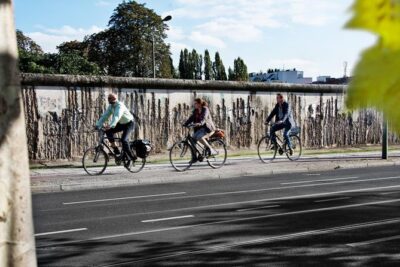
Guided Bike tour of the Berlin Wall and Third Reich
Read our review →