
Review · DALMATIA
Split Walking Tour with History Professor
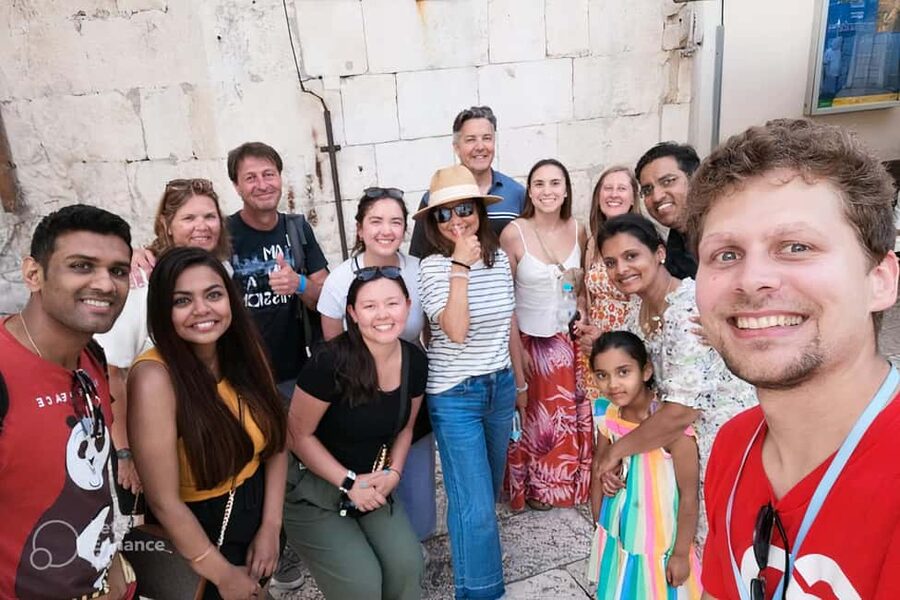
History comes alive in Split. This two-hour walking tour pairs Diocletian’s Palace with the medieval lanes, Venetian traces, Napoleonic-era streets, and modern corners many visitors miss. I like the clear historical thread and the chance to see the city with Mario, a local history professor who teaches with humor and questions instead of a dry monologue. The main consideration is that cathedral and Temple of Jupiter admission costs extra, and the route is not suitable for wheelchair users.
I also like the small-group format, which gives you a better chance to ask questions and keep up with the guide. The tour is in English, costs $23 per person, and includes several of Split’s major sights without making the whole experience feel like a checklist. The advertised timing is two hours, though the description also refers to two hours and 15 minutes, so confirm the exact schedule when you book.
Five good reasons to consider this Split walk
- Mario teaches rather than simply recites: He uses questions, humor, and conversation to make Roman and later periods easier to follow.
- The route reaches beyond Diocletian’s Palace: You also see Marmontova Street, Prokurative, Fruit’s Square, and traces of Venetian, Ottoman, and Napoleonic influence.
- The palace is explained in layers: The substructures, Peristyle, Vestibule, cathedral, Temple of Jupiter, and Golden Gate each reveal a different part of Split’s past.
- Game of Thrones locations add a modern hook: The tour connects familiar screen locations with the real history of the city.
- The price is sensible for a guided introduction: At $23, you get a live English-speaking guide and a compact route through central Split, though entry fees are separate.
Why this tour gives you more than Diocletian’s Palace
Diocletian’s Palace is the obvious reason to visit central Split. Its Roman walls, courtyards, and stone passageways are impressive even when you know little about the emperor who built it. But if you only see the palace, you miss how the city changed around it.
This walk links several eras in one route. You begin with Roman Split, then move through medieval use of the palace, later Venetian influence, Ottoman pressure in the wider region, Napoleon’s mark, and the shape of modern city life. That wider story is the chief reason I would choose this tour over a basic palace-only walk.
The route also gives you useful orientation. Split’s old center can feel like a maze of pale stone alleys, open squares, gates, and buildings fitted into older walls. A guide helps you understand why a Roman structure became a medieval neighborhood and why modern streets sit so close to ancient foundations.
The tour is described as a small-group experience, with private tours available by request through the provider. A smaller group matters here. The palace has narrow spaces and busy public areas, so staying close to a guide is easier than it would be with a large crowd.
More History Walking Tours in Croatia
- Walking Tour of Split with a ‘Magister’ of History
★ 5.0 · 1,122 reviews - Split Walking Tour with Professor of History
★ 5.0 · 926 reviews - Split: History and Heritage Walking Tour
★ 4.9 · 650 reviews
Starting at the Riva model of Split
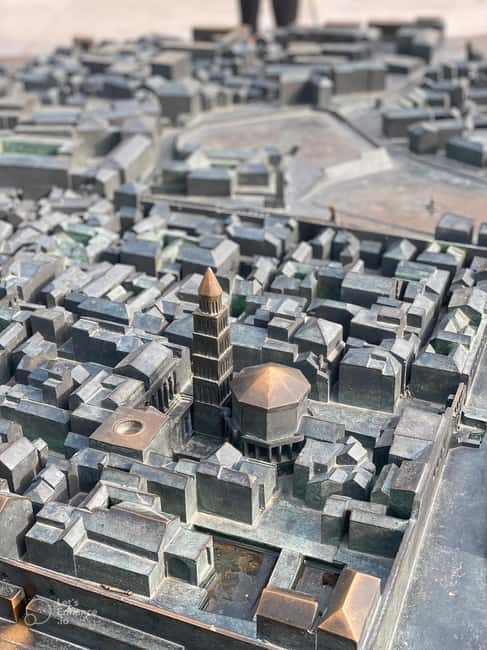
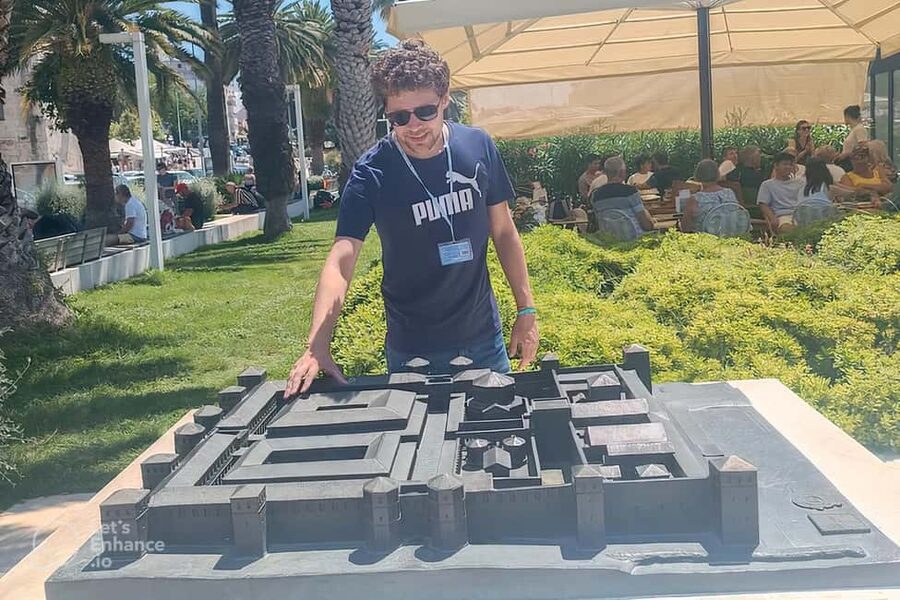
The meeting point is next to the Brass Gate of Diocletian’s Palace. The tour begins at a model of Split’s historical core near Riva Harbor, where you can get your bearings before entering the old center.
I like this starting point because the model gives you a visual map of the city. Before you begin walking through Roman corridors and later streets, you can see how the palace sits beside the harbor and how the central area developed around it.
Plan to arrive ready to walk. Comfortable shoes and comfortable clothing are specifically recommended, and that advice makes sense for a route through old stone surfaces, open squares, and historic passageways. This is not a coach tour with long pauses between sights. You move through the center on foot.
The palace substructures reveal the Roman plan
The Diocletian Palace substructures are one of the strongest early stops. These lower chambers help explain the layout of the palace above them and show how Roman construction supported the imperial complex.
You do not just look at old stone and move on. Mario’s role is to connect the surviving structure with the way the palace worked. His academic background is useful here because Roman sites can otherwise become a blur of names, dates, and walls.
The stop is scheduled for about five minutes, so expect a focused explanation rather than a long underground visit. That short timing keeps the full route moving, but it also means you may want to ask your most important questions while you are there.
Peristyle: Split’s great Roman stage
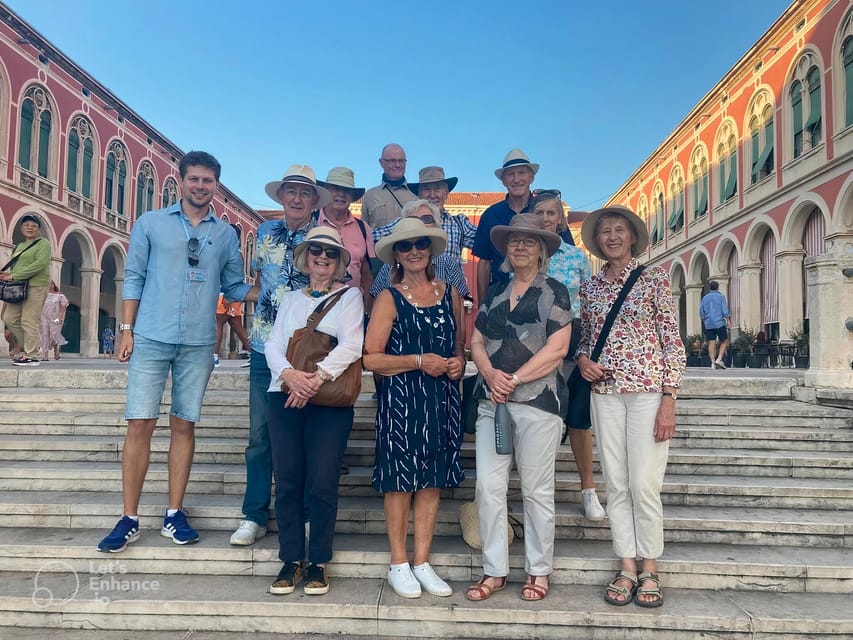
The Peristyle is one of the key visual moments of the walk. This ceremonial space gives you a sense of the palace’s scale and formality, even after centuries of change.
Here, the Roman past feels especially close. The open court helps you understand how the palace was organized, while later buildings show how Split continued to use and adapt the old complex.
The scheduled stop lasts about 10 minutes. That is enough time for a strong explanation and photographs, but the square can be crowded and active. Stay near the guide so you do not lose the thread of the story when the group moves on.
Mario’s teaching style seems particularly well suited to a place like this. He has been praised for being personable, funny, and interactive, with a habit of asking questions rather than speaking at the group without pause. If you enjoy history presented as a conversation, this is likely one of the better parts of the tour.
More History Walking Tours in Split:
- SPLIT-PRIVATE Walking Tour of Diocletian’s Palace & Old Town
★ 5.0 · 467 reviews - Split: Local History and Culture 90-Minute Walking Tour
★ 5.0 · 194 reviews - Private History Split Walking Tour in English
★ 5.0 · 159 reviews - Split: Walking tour of Split with a ‘Magister’ of History
★ 5.0 · 110 reviews
The Vestibule and the changing palace
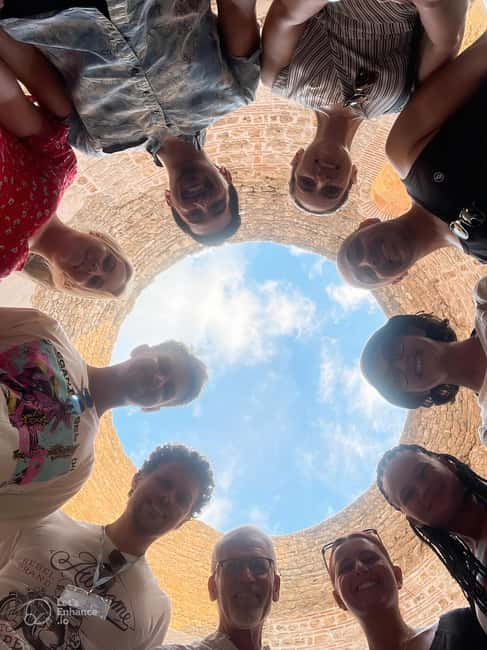
The Vestibule is another short but important stop. This circular space shows the palace’s ceremonial side and helps you picture how visitors once moved through the imperial complex.
The stop lasts about 10 minutes. You will get more than a quick photograph because the guide uses the site to explain Roman design and later changes. The larger point is that Split’s old center is not a preserved museum frozen in one period. It is a place repeatedly altered for new needs.
That is the central idea of the tour. Roman architecture supplies the foundation, but medieval residents, later rulers, religious institutions, and modern businesses all left their mark.
Cathedral of Saint Domnius and the Temple of Jupiter
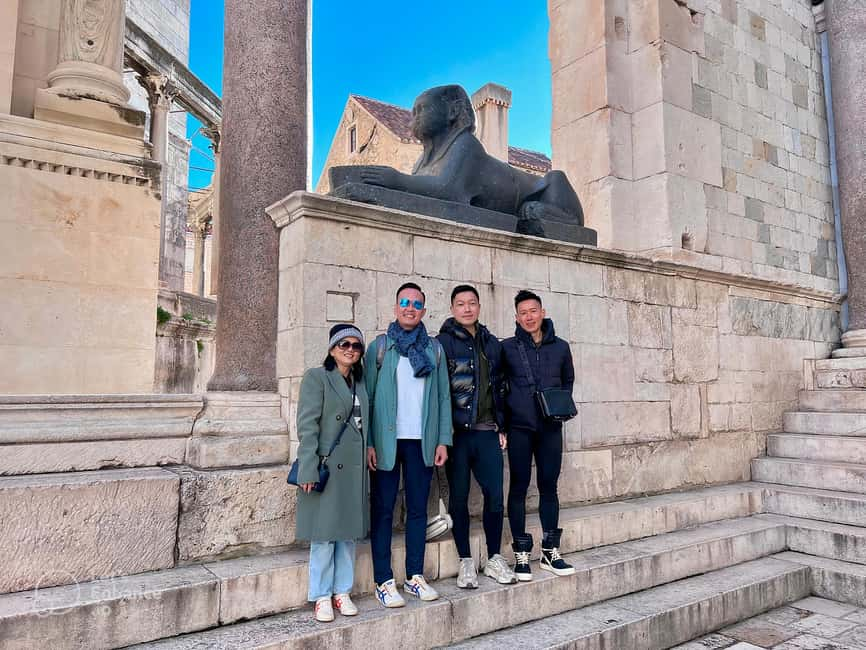
The Cathedral of Saint Domnius receives about 20 minutes, making it one of the longer palace stops. Its presence inside the former Roman complex captures the way old buildings were given new religious and civic roles.
Admission is not included, so budget a separate entry fee if you want to go inside. The tour can still discuss the cathedral without that extra ticket, but the paid admission affects the total cost of the experience.
The Temple of Jupiter has a scheduled 10-minute stop, and admission is also excluded. It provides another useful contrast between Roman religion and the later Christian life of the palace.
I appreciate that the tour places these sites in a wider sequence rather than treating them as unrelated monuments. You see how the Roman emperor’s palace, ancient religious spaces, and later Christian buildings occupy the same compact center. That makes Split easier to understand than a simple list of sights.
The Golden Gate and Grgur Ninski
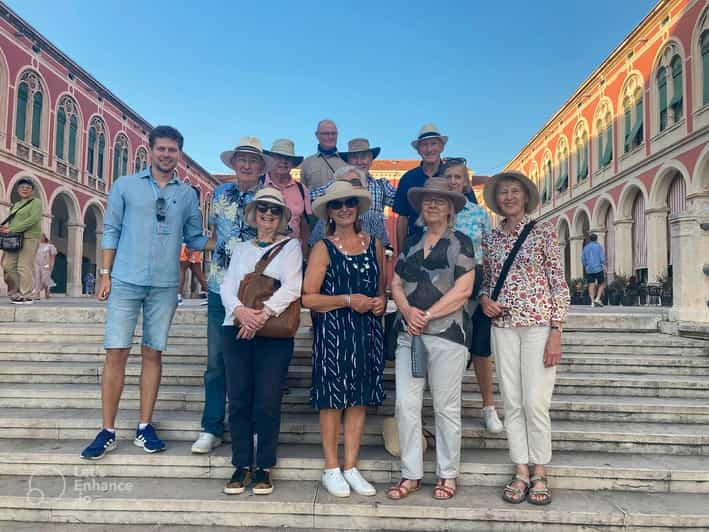
The Golden Gate gets about 10 minutes. As one of the major entrances to Diocletian’s Palace, it helps you see how people entered and moved through the imperial complex.
This is also a good point for practical orientation. After seeing interior spaces, you get a stronger sense of the palace as a walled structure with controlled access. The gate connects the old center to the city outside it.
The next stop is the statue of Grgur Ninski, also known as Gregory of Nin, with about 10 minutes scheduled. The statue is a familiar meeting point in Split, but a guide gives you a reason to pause rather than simply walk past it.
This part of the route adds a local reference beyond Roman history. It keeps the tour from becoming too focused on emperors and ancient stone. You get a look at how Split remembers important figures from later Croatian history as well.
Marmontova Street and Napoleon’s mark
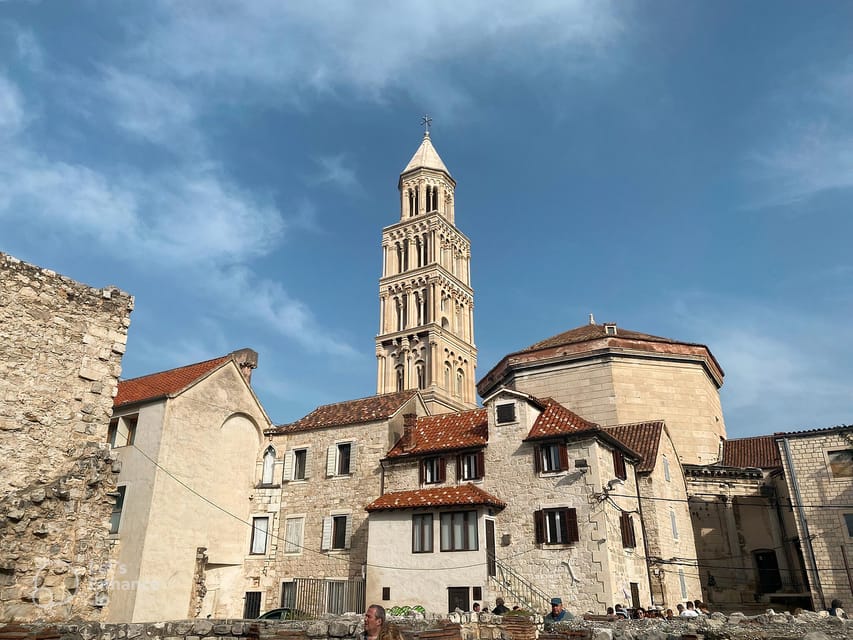
Marmontova Ulica shifts the tone again. The street connects the old center with later urban development and the period of French influence under Napoleon.
The route description specifically points to Venetian, Ottoman, and Napoleonic influence. That matters because Split’s past was shaped by more than Rome. A good walking tour should explain the forces that affected the city after the imperial palace lost its original purpose.
The 10-minute stop gives you a compact introduction to this later chapter. You might find this especially useful if you already know the Roman story but want to understand why central Split looks and feels layered rather than purely ancient.
Prokurative and Fruit’s Square
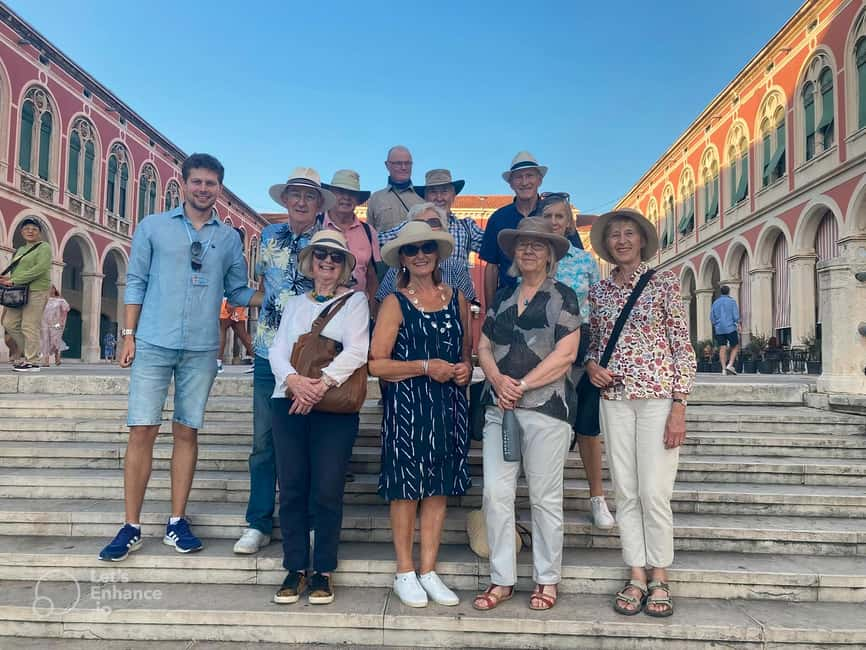
Prokurative, officially Trg Republike, is scheduled for another 10-minute stop. Its architecture and open layout offer a clear change from the tight palace lanes.
This is one of the places where the tour’s promise of medieval and modern Split becomes more visible. You leave the most concentrated Roman spaces and see how the city expanded and presented itself in later periods.
The final listed stop is Fruit’s Square, or Trg Brace Radic, with about 15 minutes. It is a fitting place to end because it brings together old urban life, local legends, and the ongoing use of Split’s center.
By this point, the route has moved from an emperor’s palace to a living city. That is the strongest part of the itinerary for me. You are not left with the idea that Split is merely an archaeological site. You see it as a place where people still walk, meet, work, and use spaces that began with Roman planning.
Game of Thrones locations with real local context
The tour includes Game of Thrones locations, but that feature should be viewed as an extra hook rather than the main reason to book. Fans get familiar screen references, while history-minded visitors get a chance to see how filming locations fit into the real city.
I like this approach because popular culture can make an old place easier to enter. You can enjoy the connection without losing the larger story of Roman, medieval, Venetian, Ottoman, and French influence.
The exact filming locations are not individually listed, so you should not expect a dedicated television-themed route. Instead, the show appears as one part of a broader walk through central Split.
Mario’s teaching style and what it means for you
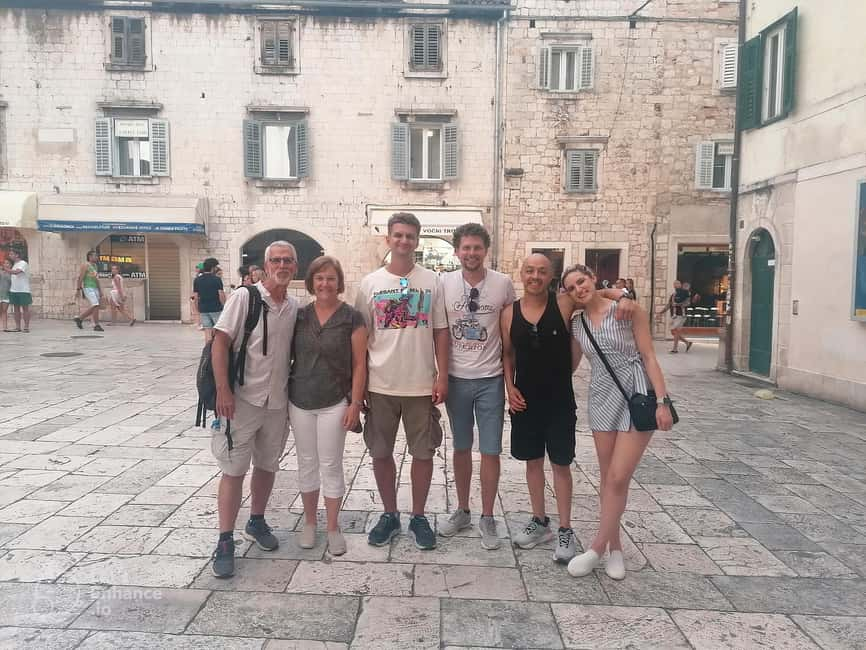
The guide is Mario, a local history professor. His teaching style is the most praised feature of the experience. He is described as funny, charismatic, friendly, enthusiastic, and highly informed, but the more useful detail is how he presents the material.
Mario asks questions and encourages participation. That helps you stay alert when the subject turns to dates, rulers, religious change, or Roman planning. He also adjusts his explanations to different levels, so you do not need a background in ancient history to follow along.
I would choose this tour if you want more than a list of facts. You should expect a guide who explains why a place matters and invites you to think about it. The approach may be less ideal if you prefer to wander silently or take photographs without pauses.
The language is English, and the tour is suitable for all ages. Families can use the questions and legends to keep younger children interested, though the amount of historical material may work best for children who can manage a steady walking tour.
Is $23 a fair price?
At $23 per person, the tour offers good value for a guided introduction to Split’s central history. You receive a live English-speaking guide, a route covering major palace sights, and a broader look at later city development.
The value is strongest if you are new to Split or have only limited time. In two hours, you get a framework that can make independent exploring afterward much easier. You will know what the palace is, how it connects to the modern center, and which later streets and squares deserve another look.
Keep two costs in mind. Admission to the Cathedral of Saint Domnius and the Temple of Jupiter is not included, and the walk does not replace a full visit to every interior. The tour is best understood as a guided orientation with substantial historical explanation, not as an all-inclusive entry ticket.
The stated duration is two hours, while the description also refers to two hours and 15 minutes. Check the available start time and exact duration when booking, especially if you have a ferry, meal, or other reservation afterward.
You can cancel up to 24 hours before the tour for a full refund, and the reserve-now, pay-later option gives you some flexibility. Those policies are useful if your Split plans depend on changing travel arrangements.
Who should book this walk?
I would recommend it to you if you:
- Want Roman, medieval, and modern Split explained as one connected story.
- Prefer a guide who asks questions and uses humor.
- Like history but do not want a stiff lecture.
- Want Game of Thrones references without taking a television-only tour.
- Have two hours for a strong introduction to the old center.
- Are comfortable walking on historic surfaces and through compact urban spaces.
You may want another option if you need a wheelchair-accessible route, want extensive time inside paid attractions, or prefer to explore alone at your own pace. The tour is not suitable for wheelchair users, and the cathedral and Temple of Jupiter require separate admission.
Should you book the Split history professor tour?
Book this tour if you want Split to make sense, not just look attractive. For $23, Mario’s teaching style, the small-group setting, and the route from the Riva model through the palace and later city give you a useful first reading of Split.
I would especially choose it early in a stay, since the palace, gates, squares, and streets will mean more afterward. Just wear comfortable shoes, allow for separate admission fees, and confirm whether your departure is scheduled for two hours or two hours and 15 minutes.
FAQ
Where does the Split walking tour meet?
The guide waits next to the Brass Gate of Diocletian’s Palace. The tour begins at a model of Split’s historical core near Riva Harbor.
How long does the tour last?
The activity is listed as lasting two hours. The description also refers to two hours and 15 minutes, so check the exact timing when you select a departure.
What language is the tour in?
The live tour guide speaks English.
Are entrance fees included?
Admission to the Cathedral of Saint Domnius and the Temple of Jupiter is not included in the tour price.
Is the tour suitable for all ages?
Yes. The activity is described as appropriate for all ages.
Is the tour suitable for wheelchair users?
No. The activity is not suitable for wheelchair users.
Just added around Split
- Split: Local History and Culture 90-Minute Walking Tour★ 5.0 · 194 reviews
- Split: Private Walking Tour in the Historical Town Center★ 5.0 · 25 reviews
- Split: Historical & Gastro Treasures Tour with Green Market★ 4.9 · 144 reviews
- Split: Walking tour of Split with a ‘Magister’ of History★ 5.0 · 110 reviews
- Experience Split History Walking Tour With Local Historian★ 5.0 · 28 reviews
- History Split Walking Tour in French -Small group★ 5.0 · 41 reviews
- Split History and Gastro Small-Group Tour with Food and Drinks★ 5.0 · 375 reviews
- Private History Split Walking Tour in English★ 5.0 · 159 reviews
History Walking Tours, compared.
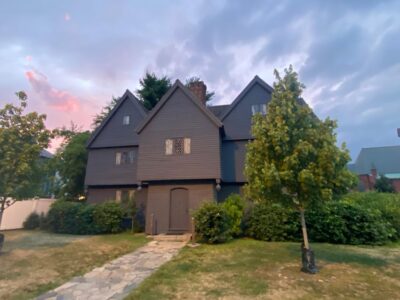
History and Hauntings of Salem Guided Walking Tour
Read our review →
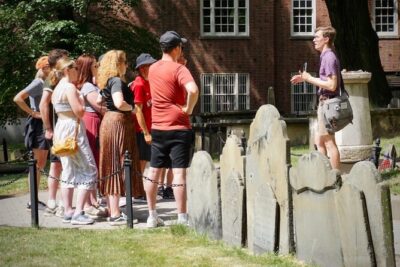
Freedom Trail History Small Group Walking Tour
Read our review →
Historic Charleston Guided Sightseeing Walking Tour
Read our review →
Tapas Walking Tour with Food, Wine, and History
Read our review →
Savannah History and Haunts Candlelit Ghost Walking Tour
Read our review →
A History of Terror – Belfast City Centre Walking Tour
Read our review →Browse the lists this tour appears in