
Review · DALMATIA
Split: Walking tour of Split with a ‘Magister’ of History
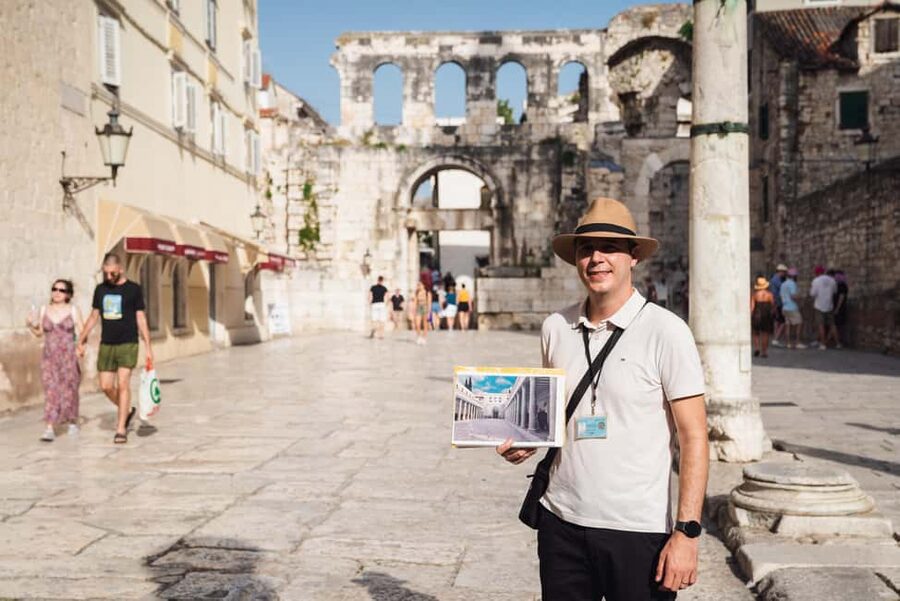
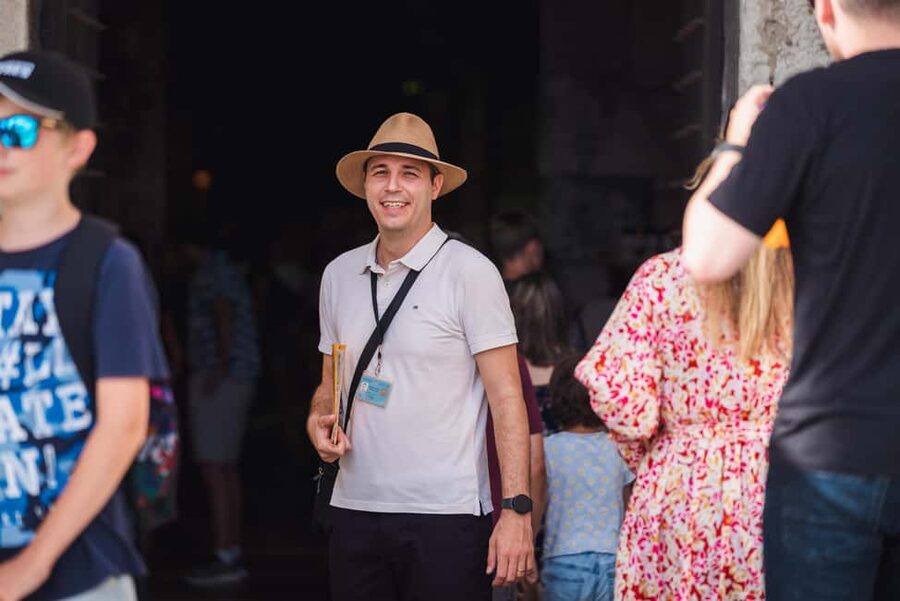
Split’s palace is still alive. This 110-minute walk makes sense of the Roman core by pairing you with Toni, a local historian, former teacher, and lifelong resident of Split. I like the way he connects Roman, medieval, Venetian, and modern life instead of treating the palace as a museum frozen in time.
I also like the 3D reconstructions Toni brings along. Seeing how the palace may have looked gives shape to walls, courtyards, and fragments that can otherwise feel hard to read. The tour’s question-friendly style is another plus, though you should know it does not include entry to paid museums or monuments.
A palace tour works best with a guide who can explain layers without drowning you in dates. Toni’s Master’s degree in history and teaching background help here, and his local connection gives the walk a personal feel. The one drawback is that the route takes place rain or shine, and the old town’s uneven surfaces make it unsuitable for wheelchair users.
Key points to know before you book
- Toni brings Split’s past into focus: His background as a history teacher helps him explain complex events in a clear, lively way.
- The palace is still the city center: You walk through Roman remains, medieval homes, later additions, and streets used by modern Split.
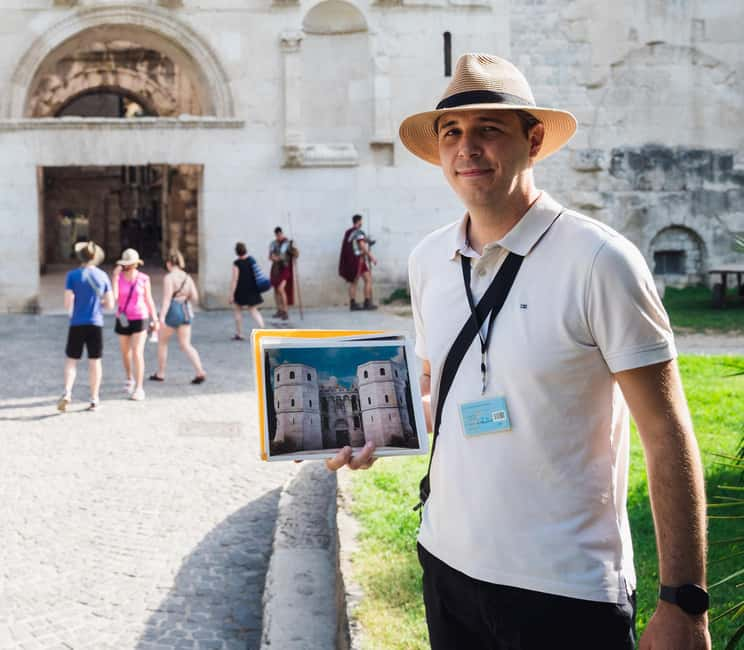
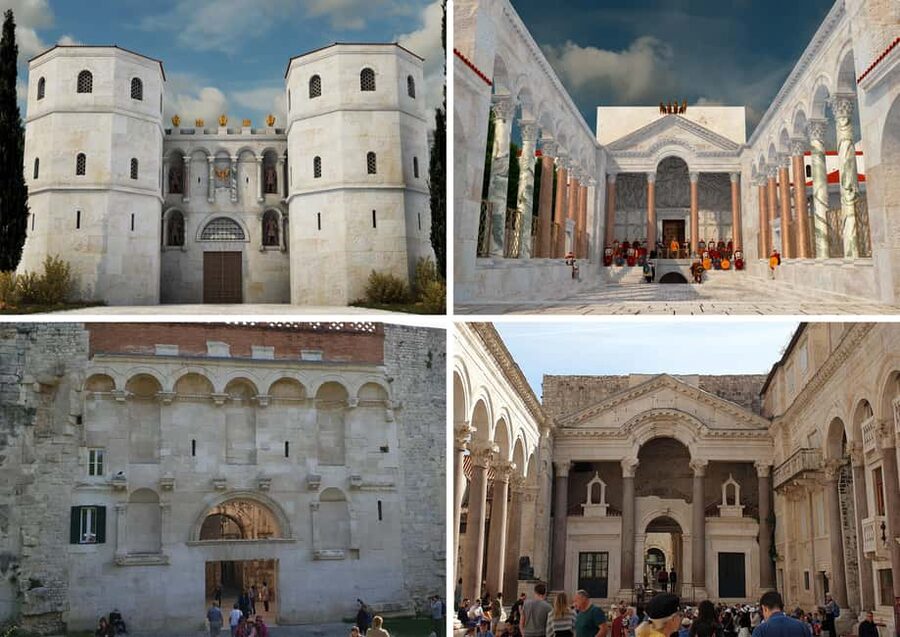
- 3D images make the ruins easier to understand: Printed visual reconstructions show how key structures may have looked in their Roman form.
- Questions are part of the experience: Toni encourages conversation and can move beyond the planned material when you want more context.
- The route ends at the Golden Gate: You begin by the Riva and finish near Bishop Gregory of Nin and the northern entrance.
- The $33 price reflects the guide, not admissions: No paid sites or museums are entered, so you pay for interpretation and the nearly two-hour walk.
Why this Split walk is more than a palace stroll
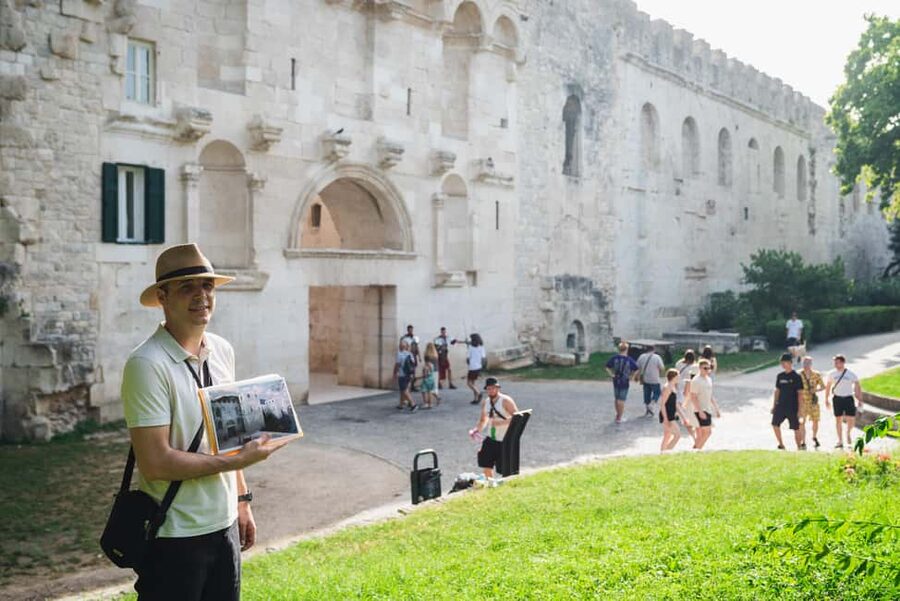
I think the main value here is interpretation. Diocletian’s Palace is not a tidy archaeological park with every building labeled and separated. It is a working piece of Split, with homes, shops, lanes, churches, courtyards, and Roman remains sharing the same space.
That can be exciting, but it can also be confusing. A column may sit beside a medieval wall, while a modern café occupies a space that once served a very different purpose. Toni’s job is to show you how those layers fit together.
He begins with the oldest parts of Split and moves forward through time. You start with the Roman setting of Diocletian’s Palace, then meet medieval and Venetian traces before reaching the city as it functions today. I appreciate that approach because it explains not only what you are seeing, but also why Split developed in this unusual way.
The tour is in English and lasts 110 minutes. That is long enough for real context without turning the walk into an all-day commitment. You should still expect plenty of standing, short walks, and pauses in crowded old-town spaces.
More History Walking Tours in Croatia
- Walking Tour of Split with a ‘Magister’ of History
★ 5.0 · 1,122 reviews - Split Walking Tour with Professor of History
★ 5.0 · 926 reviews - Split: History and Heritage Walking Tour
★ 4.9 · 650 reviews
Meeting Toni by the Riva and Bronze Gate
The meeting point is at the Bronze Gate, also called the Brass Gate, at Obala Hrvatskog narodnog preporoda 22. This is the southern entrance to Diocletian’s Palace, directly near Split’s seaside Riva Promenade.
The simplest plan is to find the Riva first, then walk along the waterfront toward the palace entrance. Look for the gate leading from the promenade into the palace area. Starting here gives the tour a useful orientation: the sea is behind you, the palace is ahead, and the route is about to move from open waterfront into tight historic streets.
Toni’s local background matters from the first few minutes. He was born in Split and has lived there all his life, so he can talk about the city not just as an ancient site but as a place that continues to change. Several tours can explain dates. A lifelong resident can also explain how the old center fits into everyday Split.
The group format encourages questions. That is useful if you want to ask about Croatia’s more recent past, local customs, buildings you pass later in your stay, or how modern life works inside the old center.
Bronze Gate and Diocletian’s Cellars
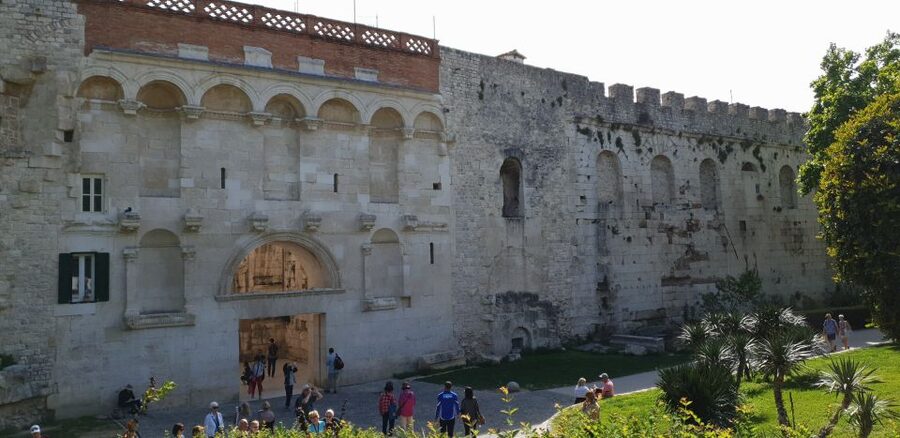
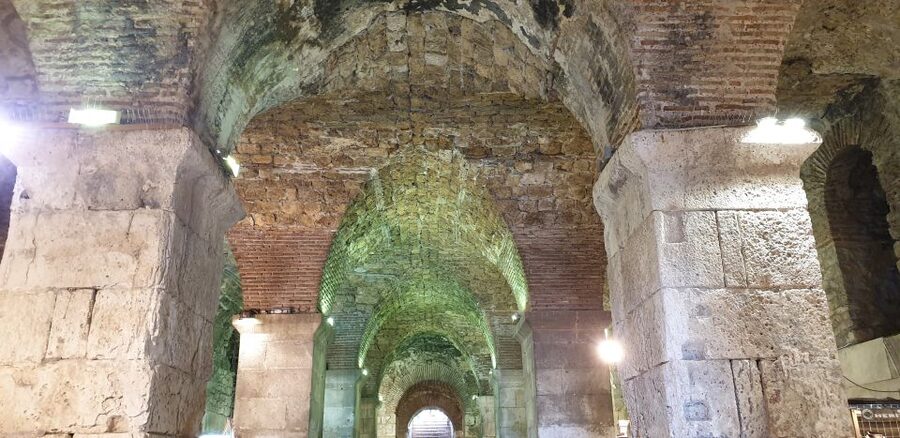
The first guided stop is the Bronze Gate, where Toni introduces the southern side of the palace. You then pass toward Diocletian’s Cellars, with about ten minutes spent in this part of the route.
The cellars are important because they help you understand the palace’s original layout. They preserve the shape of spaces above them and show how the Roman complex was built. Toni uses this point to explain the relationship between the palace’s grand public areas and its more private sections.
You do not need a separate ticket to enter Diocletian’s Palace itself. That is worth keeping in mind when judging the price. The tour does not enter paid museums or ticketed monuments, but the palace streets and open areas are available as part of the walking experience.
This section can be a little hard to picture without help. Stone walls and passages rarely explain their former purpose on their own. The 3D images are especially useful here. A reconstruction gives you a reference point, then Toni can direct your eye back to the surviving pieces.
One hour inside Diocletian’s Palace
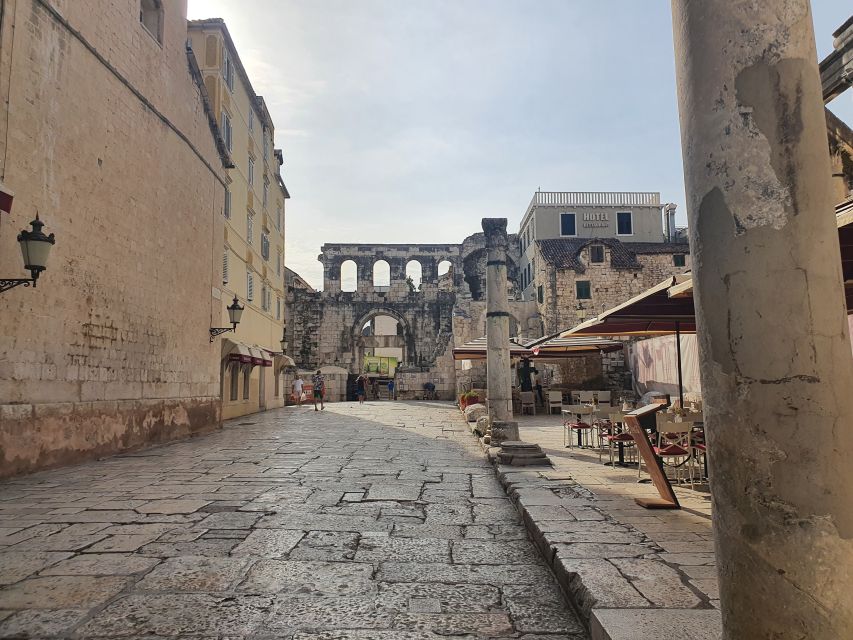
The central part of the tour is a roughly one-hour guided walk through Diocletian’s Palace. This is where the experience earns its price, especially if you want more than a quick look at the most famous squares.
Toni covers the former private residence of Diocletian along with later medieval houses preserved within the palace area. You see how new construction was placed over, beside, and within earlier Roman spaces. The result is not a single historical period, but a city center built up over centuries.
I like tours that explain this kind of overlap because it changes how you look at the walls. A narrow lane is not simply an attractive old street. It may follow an older route, run beside a Roman structure, or pass through a space later adapted for domestic use.
The pace appears to be one of the tour’s practical strengths. Toni has been praised for keeping the walk steady, finding shade when possible, and avoiding the worst crowds when he can. That matters in summer, when Split’s old center can become packed and hot.
Still, you should bring water. The tour takes place rain or shine, and there is no promise of constant shade. Comfortable shoes are sensible because the route passes through historic streets rather than a smooth modern promenade.
More History Walking Tours in Split:
- SPLIT-PRIVATE Walking Tour of Diocletian’s Palace & Old Town
★ 5.0 · 467 reviews - Split: Local History and Culture 90-Minute Walking Tour
★ 5.0 · 194 reviews - Private History Split Walking Tour in English
★ 5.0 · 159 reviews - History & Cultural Walking Tour of Split and Diocletian’s Palace
★ 5.0 · 104 reviews
Peristyle, Vestibule, and Triklinij
The Peristyle is the tour’s major visual stop. This remarkably preserved Roman square contains several of Split’s best-known monuments and gives you the clearest sense of the palace as a grand ceremonial setting.
Toni spends about ten minutes guiding you through the square, but the surrounding stops add more detail. You see the Mausoleum of Diocletian, the Temple of Jupiter, and the Vestibule. Each place helps explain a different part of Roman palace life.
The Vestibule receives a shorter five-minute visit. Its circular form and strong architectural presence make it easy to remember, while Toni’s reconstructions help you imagine how it related to the palace’s original interior spaces.
Triklinij also receives about five minutes. The name may be unfamiliar before the tour, but this is exactly where a trained guide helps. Instead of offering only a label, Toni can place the space within the palace plan and explain what its surviving remains tell you.
The short stop lengths do not mean you simply rush past. They show how the tour is arranged: a few focused explanations at important places, tied together by the walk between them. If you enjoy asking questions, use these pauses to follow up rather than waiting for a formal question period.
Cathedral of Saint Domnius and Jupiter’s Temple
The route passes by the Cathedral of Saint Domnius and Jupiter’s Temple rather than entering them. That distinction matters if you are hoping for interior visits.
The cathedral is part of the palace’s most famous cluster, and Toni uses the area to show how later religious buildings occupy and adapt older Roman spaces. You can look closely at the setting while keeping in mind that the tour fee does not cover paid entry.
Jupiter’s Temple receives a similar pass-by treatment. From the outside, it adds another piece to the palace’s religious and architectural story. The visit is brief, so this is not a substitute for a dedicated cathedral or museum tour.
For me, the strength here is connection. Toni’s explanation links the individual monuments instead of presenting them as unrelated photo stops. You leave with a better idea of how the main square, religious buildings, palace rooms, and later homes relate to one another.
Silver Gate, North Wall, and Golden Gate
After the central palace area, the route moves toward the Silver Gate and then the Golden Gate. The Silver Gate receives a short guided stop of about three minutes, while the Golden Gate gets around five minutes.
The Golden Gate is the finish, but it also provides a strong closing point. Along the north wall, you can see the statue of Bishop Gregory of Nin. Toni uses this area to bring the story beyond Roman rule and into Split’s medieval and Venetian periods.
Ending at the northern gate also gives you a useful position for continuing on your own. You can return into the old center, explore Piazza Square, or use the palace as a reference point while you walk elsewhere in Split.
The final section is a reminder that the palace did not disappear when the Roman period ended. Its walls and entrances continued to shape the city. Medieval buildings, Venetian influence, and modern Split all appear within the same compact area.
The 3D images make the difference
Ancient ruins can be difficult to read. You see a column, a wall, or a floor plan, but the original building may be gone. Toni’s printed 3D and computer-generated reconstructions help fill in that missing picture.
The images show how key palace structures may have appeared in Roman times. You can compare the reconstruction with what remains in front of you, which makes the explanation more concrete.
This is not the same as walking through a fully restored monument. The pictures are interpretations, and the past is not always certain. One of Toni’s strengths is his willingness to separate what is established from what is less certain rather than forcing every mystery into a neat story.
That honesty adds value. You get the drama of ancient Split without being asked to accept every detail as proven fact.
What the $33 price includes
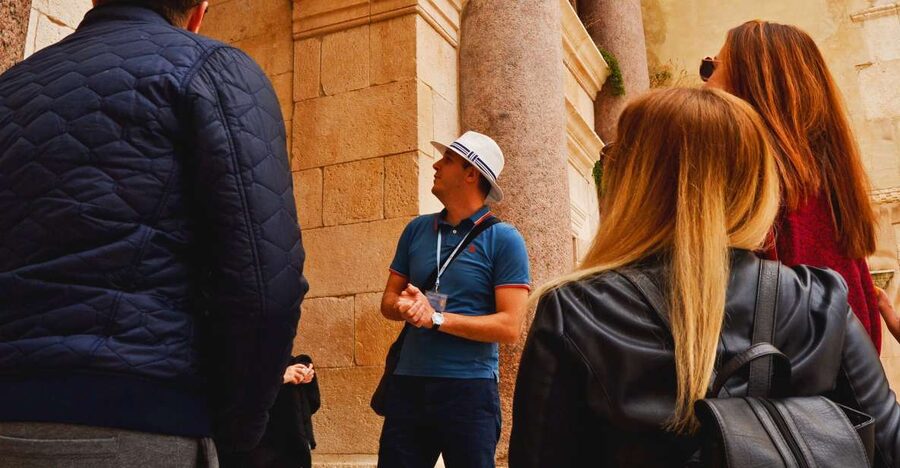
At $33 per person, this is not the cheapest way to walk around Split. You can enter the old center on your own without paying an admission fee, and you can see many exterior sights for free.
The difference is the guide. You are paying for 110 minutes of structured explanation, the chance to ask questions, Toni’s local perspective, and the visual material he has prepared. For someone who wants only a quick look and a few photographs, that may feel expensive.
For someone arriving in Split with little background, the price is easier to justify. The palace can seem like a maze of impressive but disconnected pieces. Toni gives you a framework that can improve the rest of your time in the city.
The tour also has practical flexibility. You can reserve now and pay later, and cancellation is free up to 24 hours before the start for a full refund. These terms are useful if your Croatian itinerary may shift.
Who will enjoy this tour most?
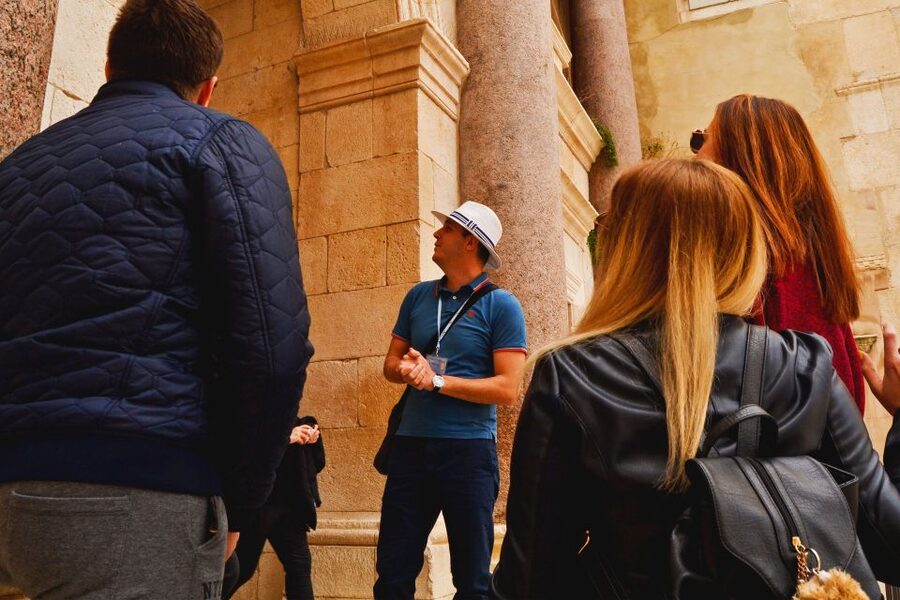
I would choose this walk if you enjoy history but do not want a lecture delivered from a script. Toni’s former teaching career helps him adjust to questions and explain difficult points in plain language.
It is also a good match for families with older children. One parent specifically noted that a 12-year-old enjoyed the experience, and the images can help younger visitors understand why a pile of old stones matters.
You should consider it if you want recent Croatian context as well as Roman history. Toni can discuss later events and modern Split when asked, so the conversation does not have to stop with the ancient palace.
This may be less suitable if you have limited mobility, dislike walking on old-town surfaces, or want to enter every major monument. Wheelchair users cannot take the tour, and the activity is not suitable for people over 95. It also runs in all weather, so check the forecast and bring a drink.
Should you book the Split history walk?
Book it if Diocletian’s Palace is one of your main reasons for visiting Split and you want to understand what you are seeing. The strongest reasons are Toni’s local perspective, his teaching background, his openness to questions, and the 3D images that give the ruins a visible past.
I would especially aim for the first available time if your schedule allows. Split’s old center can grow much busier as the day goes on, and an earlier start may make it easier to hear explanations and find shade.
Skip it if you prefer exploring alone, plan to spend most of your time inside paid museums, or want a short photo walk with little commentary. But if $33 fits your budget, this is a thoughtful way to get your bearings in Split and understand why the palace is not just an ancient monument. It is the city’s living center.
FAQ
How long does the walking tour last?
The tour lasts 110 minutes.
What language is the tour in?
The live tour guide speaks English.
Where does the tour start?
It starts at the Bronze Gate, also called the Brass Gate, at Obala Hrvatskog narodnog preporoda 22 by Split’s Riva Promenade.
Where does the tour finish?
The tour finishes at the Golden Gate of Diocletian’s Palace.
Does the tour include entry to paid sites or museums?
No. The tour does not enter paid sites or museums. Entering the general area of Diocletian’s Palace does not require admission.
Are 3D reconstructions included?
Yes. The guide uses 3D reconstructions of important palace sites during the walk.
Can I cancel for a full refund?
Yes. You can cancel up to 24 hours in advance for a full refund.
Is the tour suitable for wheelchair users?
No. The tour is not suitable for wheelchair users. It also is not suitable for people over 95.
Just added around Split
- Split Walking Tour with History Professor★ 5.0 · 23 reviews
- Split: Local History and Culture 90-Minute Walking Tour★ 5.0 · 194 reviews
- Split: Historical & Gastro Treasures Tour with Green Market★ 4.9 · 144 reviews
- Split: Private Walking Tour in the Historical Town Center★ 5.0 · 25 reviews
- Experience Split History Walking Tour With Local Historian★ 5.0 · 28 reviews
- History Split Walking Tour in French -Small group★ 5.0 · 41 reviews
- Split History and Gastro Small-Group Tour with Food and Drinks★ 5.0 · 375 reviews
- Private History Split Walking Tour in English★ 5.0 · 159 reviews
History Walking Tours, compared.
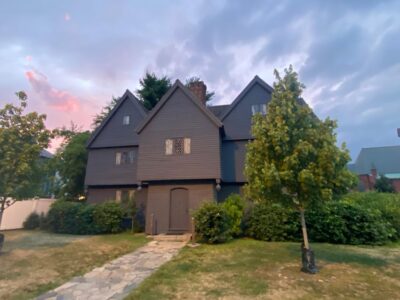
History and Hauntings of Salem Guided Walking Tour
Read our review →
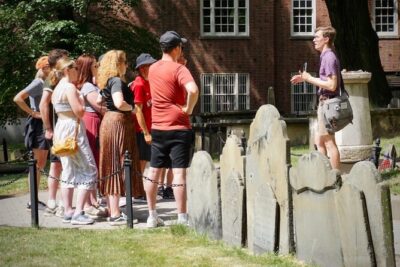
Freedom Trail History Small Group Walking Tour
Read our review →
Historic Charleston Guided Sightseeing Walking Tour
Read our review →
Tapas Walking Tour with Food, Wine, and History
Read our review →
Savannah History and Haunts Candlelit Ghost Walking Tour
Read our review →
A History of Terror – Belfast City Centre Walking Tour
Read our review →Browse the lists this tour appears in