
Review · LISBON DISTRICT
Lisbon: African History and Heritage Walking Tour
Lisbon’s past reaches far beyond its monuments. I like the tour’s honest look at African history in Portugal, and I like how it connects Moorish influence, the slave trade, religion, architecture, and modern identity. The main drawback is the walking: expect uphill sections, and this experience is not suitable for people with mobility impairments.
This is not a quick stroll past pretty squares. With a live guide in English, Spanish, or Portuguese, you spend 3.5 hours examining how Africans shaped Lisbon and how Portugal’s imperial story affected the wider world. Guides such as Al, Alcides, Alfie, and Jose have earned praise for clear explanations, warm service, and their ability to answer questions. Wear comfortable shoes, arrive ready to think, and bring patience for difficult subjects.
Key points to know before you book
- A different view of Lisbon: The route treats Africans as active participants in Portuguese society, not as a footnote to Portugal’s past.
- Historic route through central Lisbon: You walk from Alfama and Chafariz D’El Rei through Campo das Cebolas, Praça do Comércio, Baixa, Rossio, and nearby landmarks.
- Serious subjects handled directly: Slavery, colonialism, religious integration, class divisions, and the treatment of African women are all part of the discussion.
- A strong guide makes the difference: Al and Alcides are praised for linking local places to Portugal, Africa, Spain, Rome, and the Americas.
- Bring the right footwear: The route includes uphill walking, cobbled streets, and several hours on your feet.
- Good value for history-minded visitors: At $176 per person, the price is high, but the tour offers a focused interpretation that standard sightseeing tours often leave out.
Why this walking tour adds something important
Lisbon is easy to admire at street level. The tiled buildings, grand plazas, and steep lanes do much of the work. But it is also easy to leave the city with a polished version of Portuguese history, one that gives little space to African people and African influence.
This tour corrects that imbalance. It places Africa at the center of the story, beginning with Lisbon’s Moorish roots and continuing through the arrival of enslaved Africans, religious life, colonial expansion, urban development, and modern Portuguese society.
I appreciate that the tour is not limited to one period. You are not given a single lecture about slavery and then sent back to the postcard version of Lisbon. Instead, the route links different centuries and shows how African presence affected work, worship, commerce, architecture, and daily life.
That wider view is the main reason to book. If you have already taken a basic Lisbon orientation walk, this experience can fill in the gaps. One participant took it early in a visit and felt it supplied information missing from other tours. That is sensible advice: the earlier you take it, the more clearly you may see Lisbon afterward.
More History Walking Tours in Lisbon
- Lisbon: History, Stories and Lifestyle Walking Tour
★ 4.8 · 10,902 reviews - Lisbon: Private Dark History Walking Tour with Drinks
★ 4.8 · 387 reviews - Lisbon Essential Walking Tour: History, Stories and Lifestyle
★ 5.0 · 316 reviews
Starting in Alfama, where Lisbon’s layers begin
The tour begins at A Padaria Portuguesa, then moves into Alfama, Lisbon’s oldest neighborhood. The meeting point is practical rather than grand, so check the exact branch and arrive with enough time to find your guide.
Alfama is a strong opening because its narrow streets carry several layers of history. The neighborhood was founded by the Moors, and the guide uses it to introduce Africa’s connections with Lisbon, Portugal, and other peoples around the Mediterranean and Iberian Peninsula.
This part of the walk is less about ticking off monuments and more about changing your frame of reference. You begin to see Lisbon not simply as a European capital looking outward toward Africa, but as a place shaped by movement between North Africa, Iberia, West Africa, and the Atlantic world.
The streets can be steep and uneven. You will want shoes with a firm sole, and you should not treat this as an easy flat walk. The physical effort is part of the route, but it can also limit the tour for anyone with reduced mobility.
Chafariz D’El Rei and the public signs of class
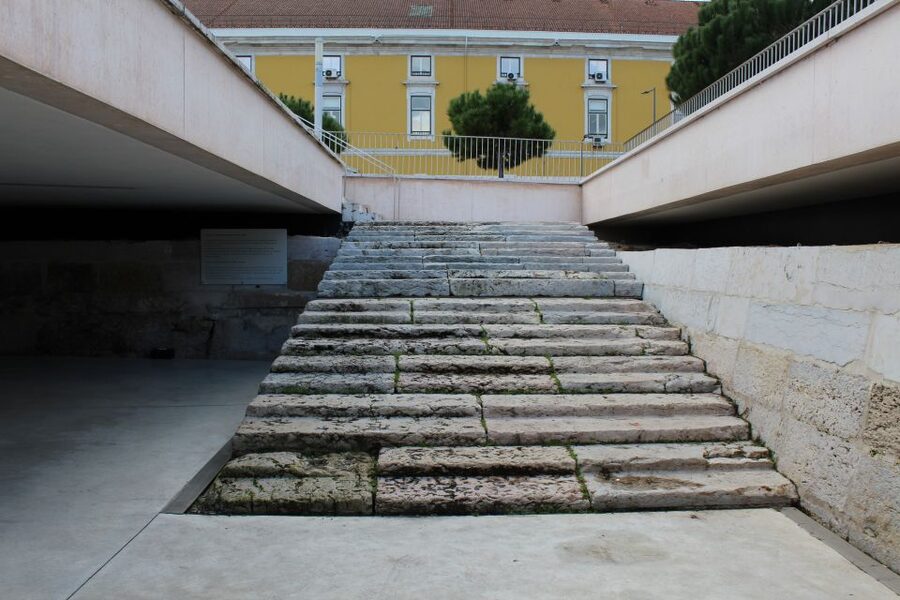
At Chafariz D’El Rei, the guide discusses the fountain as evidence of medieval social divisions. The site helps explain how public spaces reflected rank, status, and access to resources, with Africans included in that story.
This is one of the more useful stops because it shifts the discussion away from famous rulers and major battles. A fountain may look like a minor landmark, but it can reveal who worked, who waited, who controlled public life, and how people were seen within the city.
You will likely get more from this stop if you listen for the connection between physical space and social order. The tour’s strength is not only naming African influence, but showing how that influence appeared in ordinary parts of Lisbon.
The stop also sets up a wider theme: African people were present in Portugal across long periods, not only during the age of Atlantic slavery. That point matters because many visitors first encounter African history in Lisbon through the country’s empire, without considering earlier connections.
Campo das Cebolas and Lisbon’s port history
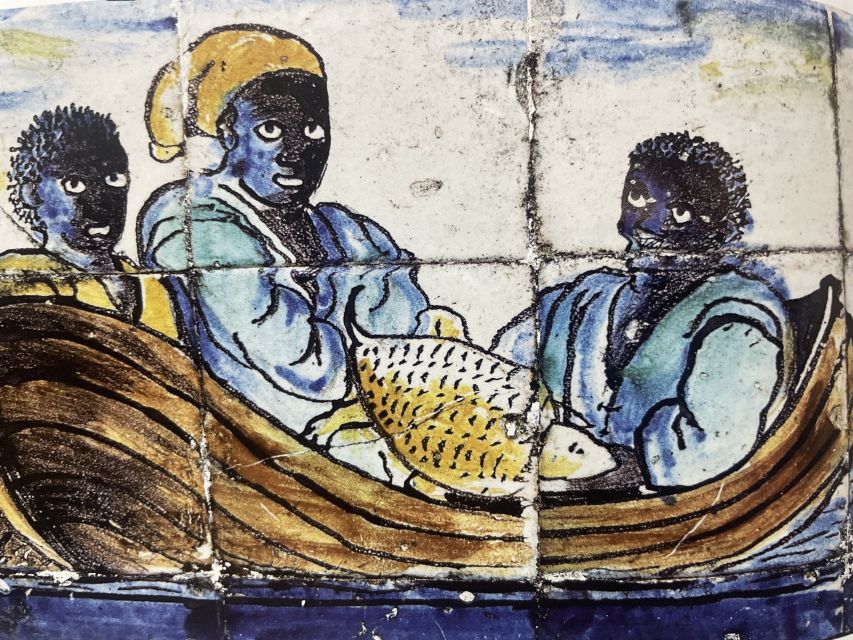
The route continues to Campo das Cebolas, an area linked to Lisbon’s old port. Here the discussion turns toward the arrival of the first African slaves in Europe and the role of Lisbon in the transatlantic slave route.
This is a difficult section of the tour, and it should be. Portugal’s maritime achievements cannot be separated from the buying, selling, transport, and forced labor of human beings. A good guide has to hold both facts at once: Portugal helped open major ocean routes, and those routes carried terrible human costs.
The port setting makes the subject especially direct. This was not an abstract event happening somewhere far away. Lisbon’s waterfront was tied to commerce, movement, and the arrival of enslaved Africans in Europe.
I value the decision to place this discussion along the old port rather than confining it to a museum room. You are walking through a working part of the city while considering the people whose lives were treated as cargo. The setting does not make the subject easier, but it makes it harder to ignore.
More History Walking Tours in Portugal
- Historic Walking Tour Through Lisbon’s Oldest Neighborhood
★ 5.0 · 233 reviews - Lisbon Fado History Cultural Walking Tour
★ 5.0 · 118 reviews - Lisbon: Street Art and Historical Walking Tour
★ 4.9 · 42 reviews - Porto: Historic City Center Walking Tour
★ 4.7 · 1,172 reviews
Praça do Comércio and the center of imperial power
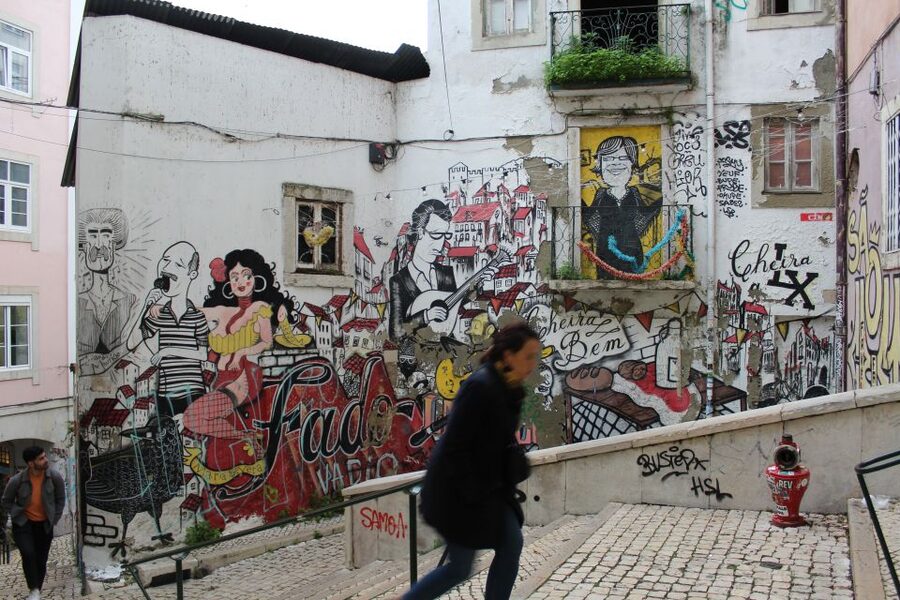
Praça do Comércio is one of Lisbon’s most recognizable public spaces. It is also a fitting place to discuss Portugal’s commercial and political power, including its part in the slave trade.
The square has hosted major events in Portuguese history, and its scale can make Portugal’s ambitions feel grand. The guide uses that grandeur as a prompt for a more complete story. Trade, royal authority, ocean voyages, and empire brought wealth and influence, but they were also tied to violence and exploitation.
This is where the tour moves beyond a local history lesson. Lisbon’s role affected Africa, the Americas, and Europe. The guide may connect the city’s past to the wider system of colonial expansion, helping you understand why a square in central Lisbon matters far beyond Portugal.
You should expect a serious tone here. This is not a stop designed only for photographs. You will have time to look at the space, but the purpose is to understand what happened around it and what the city’s monuments do not always explain.
Baixa after the 1755 earthquake
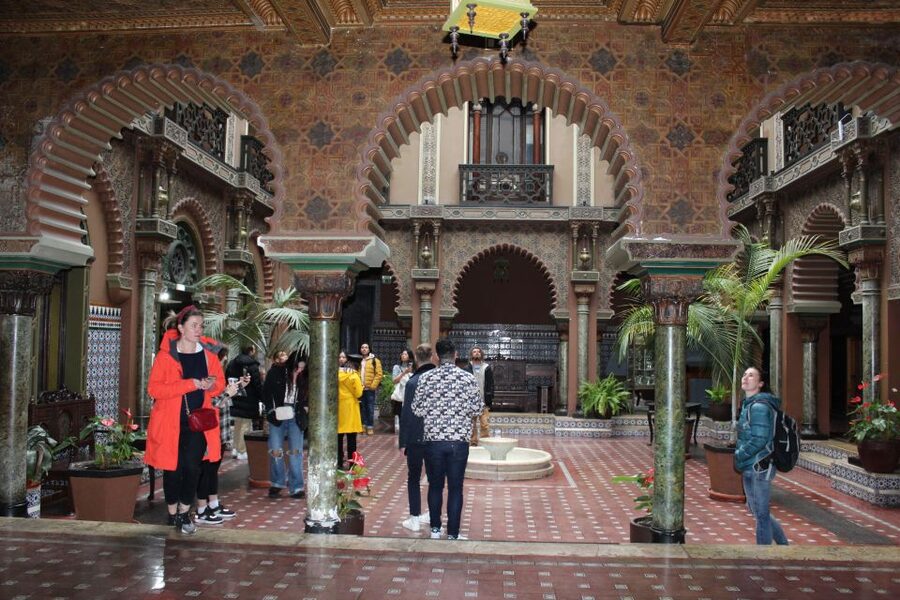
Baixa is Lisbon’s central neighborhood, rebuilt after the devastating earthquake of 1755. On this part of the walk, the focus turns to the interaction of Africans within Portuguese society.
The rebuilt streets provide a useful contrast with Alfama. Baixa feels more planned and formal, while Alfama feels older and more irregular. That change lets the guide discuss how people of African heritage lived and worked within a society being reshaped by disaster, commerce, religion, and state power.
The value of this stop lies in the social history. You are not only hearing how Lisbon was rebuilt. You are considering who participated in the city’s economic and cultural life, how Africans were integrated, and where inequality remained.
The route also shows why a walking tour can be more revealing than a list of dates. Buildings and streets become evidence. You learn to ask who built them, who used them, who profited from them, and who was excluded.
Rua Cor de Rosa and the lives of African women
Rua Cor de Rosa introduces a more specific and personal subject. The guide discusses African women who provided services in this part of the city.
The wording of the stop points to the limited choices available to many women, as well as the way their labor was part of Lisbon’s urban economy. It adds gender to a tour that might otherwise focus mainly on trade, politics, and religion.
This is an important inclusion. African history is not only the story of merchants, sailors, rulers, or enslaved men. Women also worked, served, survived, and shaped city life, often in circumstances controlled by others.
The stop may feel less visually dramatic than Praça do Comércio or Rossio. That is precisely why it matters. It asks you to pay attention to lives that are easily overlooked when sightseeing is built around grand buildings.
Rossio, integration, and the making of colonies
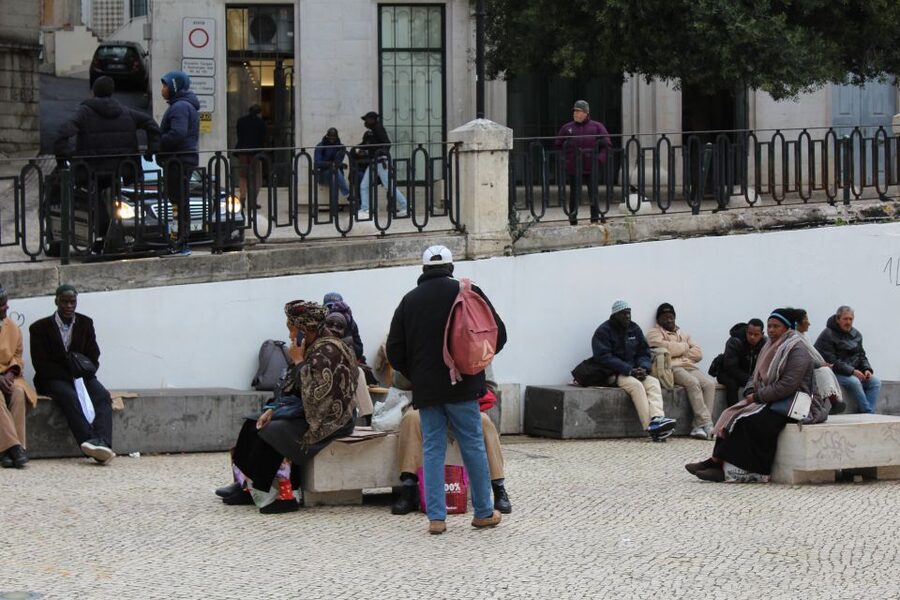
Rossio is one of Lisbon’s busiest central areas. Here the guide discusses the integration of Africans into Portuguese society and the creation of colonies.
This section brings the story closer to modern Portugal. It encourages you to consider how older systems of power continued into the colonial era and how African presence in Lisbon developed through both forced movement and later migration.
The word integration needs careful handling. It does not mean that life was equal or easy. The subject includes belonging, discrimination, cultural exchange, and the tension between Portuguese identity and African heritage.
The guide’s job is especially important at this point. Al has been praised for linking Lisbon’s local story to events across coastal West Africa, Spain, Rome, and the Americas. Alcides has also been singled out for explaining lesser-known Black history in the city. Those connections can help you place Lisbon in a wider world rather than treating its colonial past as an isolated national story.
São Domingos Church and African religious life
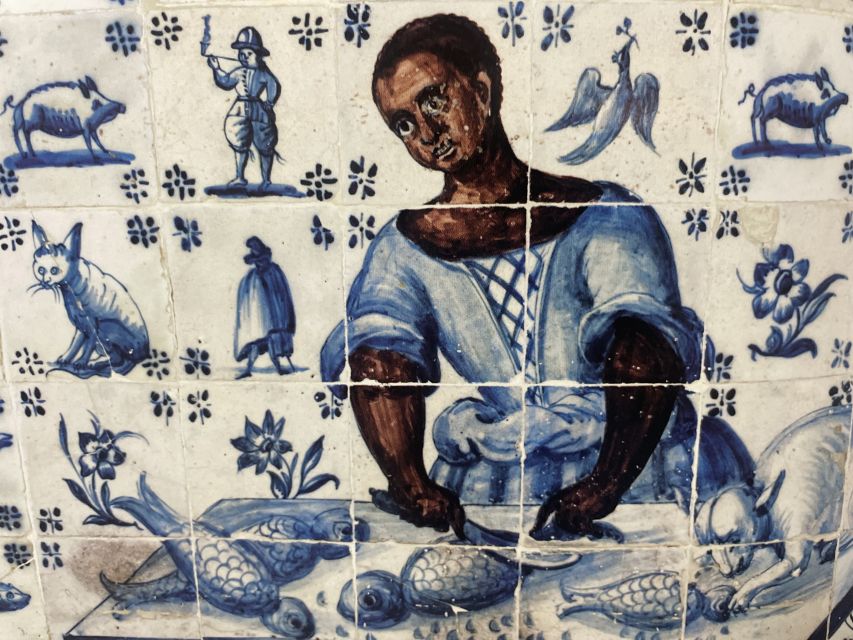
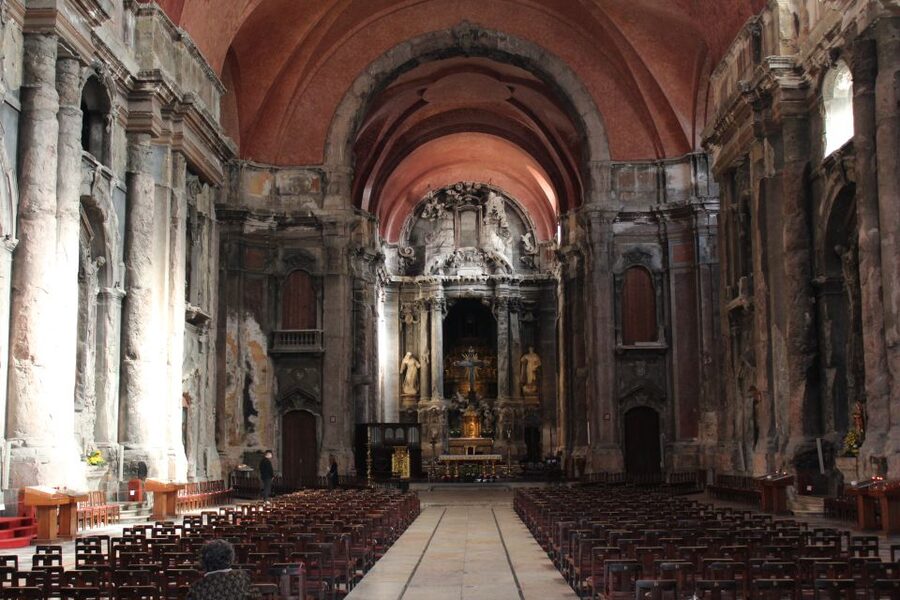
At the Church of S. Domingos, the tour examines how Africans were integrated into Catholic religion and the achievements associated with that process.
Religion can be a difficult subject because conversion often occurred within unequal systems. The discussion is not simply about people adopting Catholic practices. It also concerns how Africans found ways to participate in religious institutions and how their presence affected Portuguese religious life.
The church offers a strong setting for this conversation. You are looking at a place of worship while considering questions of identity, power, acceptance, and cultural change.
I also like that the tour includes achievement rather than presenting African people only as victims. A truthful account must include exploitation and suffering, but it should also recognize skill, endurance, faith, community, and contribution.
Rossio Station and Portugal’s colonial ambitions
The final major stop is Rossio train station, built in the 19th century in the Manueline architectural style. Its design reflects Portugal’s wish to present itself as a major European power.
The station is a useful place to discuss the Berlin Conference of 1884, when European powers divided Africa into colonial territories. The building’s decorative language and national pride can be read alongside Portugal’s effort to claim its place among the European states competing for African colonies.
This connection is one of the tour’s more unusual features. A railway station may seem far removed from the slave trade or African religious life, but it represents a later phase of the same broad story: national ambition, imperial competition, transportation, and control.
Look closely at the station as you listen. The point is not simply that it is attractive. Its style carries a political message about Portugal’s place in Europe and its claims abroad.
The guide shapes the whole experience
The route covers a lot in 3.5 hours. The guide has to move between medieval history, Moorish influence, slavery, Catholicism, colonialism, architecture, and present-day identity without losing the thread.
That is why guide quality matters so much here. Al is praised for presenting a vivid account of people, culture, and time, while Alcides is praised for making lesser-known Black history understandable. Jose has been described as friendly and helpful, including offering a good restaurant recommendation. Alfie has also received praise for explaining Moorish and Portuguese history clearly.
Your guide may not be one of these individuals, but the experience is designed around a live guide rather than an audio recording. You can ask questions, request clarification, and explore a subject that interests you instead of following a fixed script in silence.
The tour is available in English, Spanish, and Portuguese. That makes it useful for a wider range of visitors, though the depth and style will depend on the guide leading your group.
Is $176 a fair price?
At $176 per person, this is expensive for a walking tour. You are paying for a 3.5-hour experience, a guide, and a bottle of water. Food, drinks, hotel pickup, and drop-off are not included.
The value depends on what you want from Lisbon. If you only want landmarks and photographs, the price may feel hard to justify. You can see many of the places on your own.
If you want a focused interpretation of African heritage, the price becomes easier to understand. The route brings together subjects that are often scattered across museums, books, and separate historical stops. You are also paying for explanation and context, not transportation or admission tickets.
I would compare it with the cost of a private or specialist walking experience in Lisbon. For a history-focused visitor, the tour can be worthwhile, especially if you take it near the start of your stay and use what you learn during the rest of your time in the city.
Who should book this Lisbon walk?
I would recommend it to curious visitors who want a fuller account of Portugal’s past. It is especially suited to anyone interested in African diaspora history, colonialism, the Moorish period, religious change, or the ways cities preserve and forget their past.
It also suits repeat visitors who have already seen the main monuments. You will recognize familiar places, but the commentary may change how you understand them.
I would not choose it for a short, light sightseeing stroll. The subjects are serious, the route involves hills, and the tour asks you to listen closely for several hours. Families and school-age children may find parts of the history difficult, though the tour’s suitability will depend on their age and interest.
Bring water beyond the included bottle if you prefer to drink often, wear comfortable shoes, and leave room in your schedule for thoughtful conversation. The cancellation policy allows a full refund when you cancel at least 24 hours ahead, and reserve now, pay later booking keeps your plans flexible.
Should you book the African History and Heritage Walking Tour?
Book it if you want Lisbon explained through its African connections, not just its famous viewpoints and tiled streets. The strongest parts are the honest treatment of slavery and colonialism, the attention to African religious and social life, and the way the route links ordinary streets with global history.
Skip it if steep walking is a serious problem or if you want a relaxed architecture tour with little discussion of difficult subjects. At $176, it needs to match your interests.
For the right visitor, this is a valuable first-day experience. It gives you a sharper lens for seeing Alfama, Baixa, Rossio, the waterfront, and the city’s grand buildings. You leave with more than a list of places. You leave better prepared to ask who helped create Lisbon, who paid the cost, and whose story deserves more space.
FAQ
How long does the African History and Heritage Walking Tour last?
The tour lasts 3.5 hours.
What languages are available?
The live tour guide may lead the experience in English, Spanish, or Portuguese.
Where does the tour meet?
The meeting point is A Padaria Portuguesa.
What is included in the price?
The price includes a bottle of water, a guide, and the walking tour.
Is hotel pickup included?
No. Hotel pickup and drop-off are not included.
Is food included?
No. Food and drinks are not included, although a bottle of water is provided.
Is the tour suitable for people with mobility impairments?
No. The experience is listed as unsuitable for people with mobility impairments, and the route includes uphill walking.
Can I cancel for a full refund?
Yes. You can cancel up to 24 hours in advance for a full refund.
Just added around Lisbon
- Lisbon: Jewish History Private Tour★ 4.8 · 59 reviews
- Lisbon: Street Art and Historical Walking Tour★ 4.9 · 42 reviews
- Lisbon on a Tuk Tuk Tour: History & Viewpoints★ 4.9 · 204 reviews
- Lisbon: Jewish History Tour of Lisbon★ 4.8 · 84 reviews
- Lisbon Fado History Cultural Walking Tour★ 5.0 · 118 reviews
- Lisbon city tour on history, culture and current topics★ 5.0 · 41 reviews
- Lisbon Jewish Heritage and History – Private Tour Van★ 5.0 · 294 reviews
- Lisbon: Private Dark History Walking Tour with Drinks★ 4.8 · 387 reviews
History Walking Tours, compared.
History and Hauntings of Salem Guided Walking Tour
Read our review →
Freedom Trail History Small Group Walking Tour
Read our review →
Historic Charleston Guided Sightseeing Walking Tour
Read our review →
Tapas Walking Tour with Food, Wine, and History
Read our review →
Savannah History and Haunts Candlelit Ghost Walking Tour
Read our review →
A History of Terror – Belfast City Centre Walking Tour
Read our review →Browse the lists this tour appears in