
Review · DALMATIA
Split: History and Heritage Walking Tour
History comes alive in Split’s streets. This $18 walking tour takes you through the UNESCO-protected Palace of Diocletian, Romanesque churches, medieval defenses, Gothic palaces, and modern shops built into a 1,700-year-old city center. I especially like the local storytelling, which turns emperors, Croats, Venetians, and palace life into an easy-to-follow story. I also like the low price, since you get a guided introduction to Split without paying for hotel transfers or extra attractions.
The main drawback is group size. It is advertised as a small-group walk, but one outing reached almost 30 people, making it harder to hear and causing pauses while the group caught up. The tour runs in all weather, so comfortable shoes, a hat, and rain protection are sensible.
Key points to know before booking
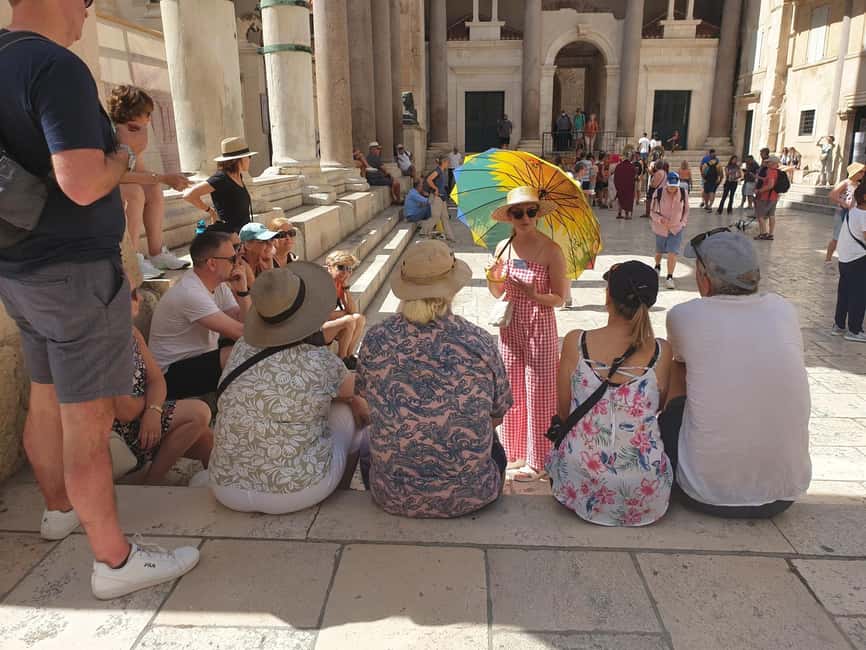
- Meet under the old Roman arch on Peristil Square: Look for a yellow T-shirt or yellow umbrella beside the Tourist Information Office.
- See Split’s unusual living palace: Roman stonework, medieval buildings, homes, cafés, and shops all share the same compact center.
- Expect story-led guiding: Guides such as Antonella, Antonela, Nikolas, and Doris are praised for clear explanations, humor, and local perspective.
- The tour covers accessible public areas: Admission tickets, food, drinks, and hotel transfers are not included.
- Game of Thrones information is a bonus: Fans can hear about filming locations alongside the main Roman and medieval story.
- Allow for weather and walking conditions: The tour goes ahead in sun or rain, and it is not suitable for people with high blood pressure or hearing impairments.
Why Split’s old center works so well on foot
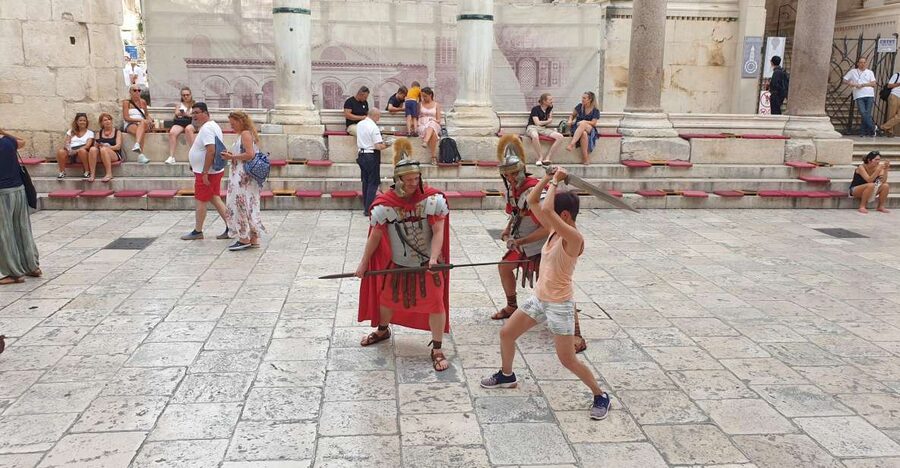
Split is unusually easy to understand once you know its central idea: the old town grew inside and around the palace of Roman emperor Diocletian. Instead of looking at one isolated ruin, you walk through a working city where ancient walls frame shops, churches, narrow passages, and daily life.
That setting gives the tour real value. You are not simply standing beside preserved columns while a guide lists dates. You are moving through a place where Roman architecture, medieval additions, and modern businesses occupy the same small area.
The story begins with Diocletian himself. The tour explains how he rose from an obscure background to become one of the most powerful men in the Roman world. That personal rise gives the palace a human angle. You begin to see it not just as an old building, but as the retirement residence of an emperor who deliberately shaped the city around his own power and status.
The guides also connect Roman Split with later Croatian and Venetian influences. That broader timeline matters because the palace is not frozen in one period. Every later generation reused, altered, or built around what came before.
More History Walking Tours in Croatia
- Walking Tour of Split with a ‘Magister’ of History
★ 5.0 · 1,122 reviews - Split Walking Tour with Professor of History
★ 5.0 · 926 reviews - SPLIT-PRIVATE Walking Tour of Diocletian’s Palace & Old Town
★ 5.0 · 467 reviews
Meeting at Peristil Square
The starting point is Peristil Square, under the old Roman arch at the northern side of the square, next to the Tourist Information Office. Look for a yellow T-shirt or yellow umbrella. This is a practical meeting place, but the setting is also part of the introduction.
Peristil is one of the most important spaces in the palace complex. It gives you an immediate sense of scale and structure before the group moves into smaller lanes. From here, your guide can explain how the palace once functioned and what remains today.
Arrive with enough time to locate the yellow meeting marker. The old center can feel confusing at first, particularly if you approach from the waterfront or arrive while shops and cafés are busy. The guide may wait for late arrivals, but you should not count on a long delay.
The tour ends back at the same meeting point. That makes it easy to continue exploring, return to your hotel, or use the square as a reference point for later wandering.
Walking through a 1,700-year-old palace
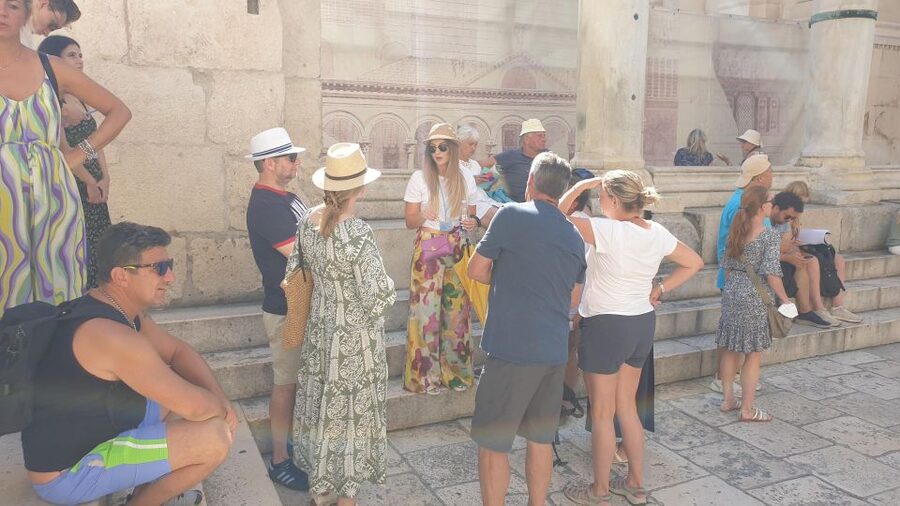
The main attraction is the Palace of Diocletian, built around 1,700 years ago. The important point is that you do not experience it as a single museum building. The palace survives as part of Split’s urban core.
Your guide explains how the complex once worked and points out what has survived. You can expect a mix of Roman remains, later structures, narrow routes, and contemporary shops. This combination is the reason a guide helps. Without context, ancient stone can look like a collection of disconnected fragments. With explanation, the walls and spaces begin to fit together.
The tour focuses on the major highlights of the palace and the city’s old center. Exact pacing can depend on the group and the crowds. One detailed account described a large group slowing the walk because people had to catch up. That is worth knowing if you prefer a quiet, private visit.
At $18, the tour does not promise an intimate experience every time. Its value comes from making the palace readable quickly, especially if you have only a short stay in Split.
Romanesque churches and layers of later Split

The route also includes Romanesque churches and other historic buildings that show how the city changed after the Roman period. These stops help you see that Split’s story continued long after Diocletian.
Roman structures are the headline, but the medieval layer gives the city much of its character. The guide explains how later residents adapted the old complex instead of abandoning it. You see how medieval life developed among Roman walls, followed by the influence of Venice and other powers.
This is also where the local guides add something a printed guidebook cannot easily provide. Antonella and Antonela are repeatedly praised for explaining complex events in clear language. Their strongest quality is not simply factual accuracy. They make the sequence understandable, so you can follow the change from Roman rule to Croatian settlement and Venetian influence without getting lost in names and dates.
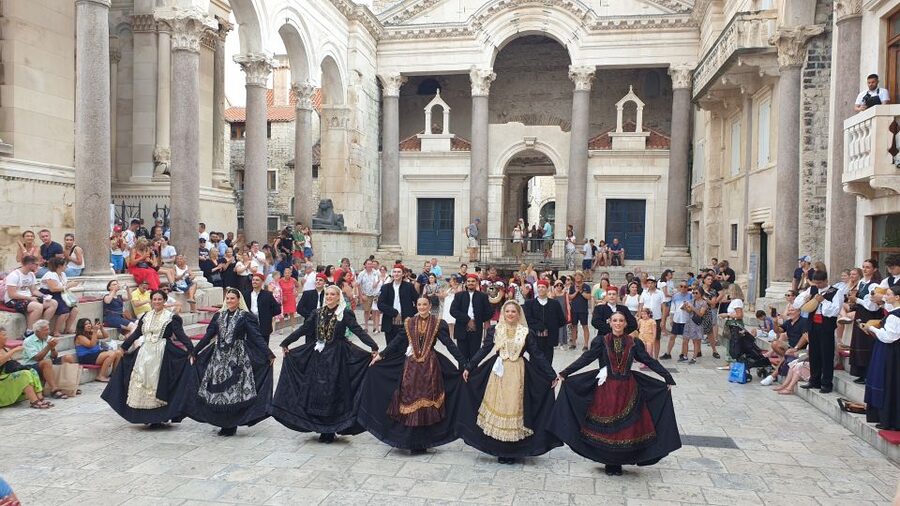
Traditional singing may also appear along the route, as one outing encountered it during the walk. It is not presented as a guaranteed part of the tour, but it shows how the historic center remains connected to living local culture.
More History Walking Tours in Split:
- Split: Local History and Culture 90-Minute Walking Tour
★ 5.0 · 194 reviews - Private History Split Walking Tour in English
★ 5.0 · 159 reviews - Split: Walking tour of Split with a ‘Magister’ of History
★ 5.0 · 110 reviews - History & Cultural Walking Tour of Split and Diocletian’s Palace
★ 5.0 · 104 reviews
Medieval fortifications and Gothic palaces
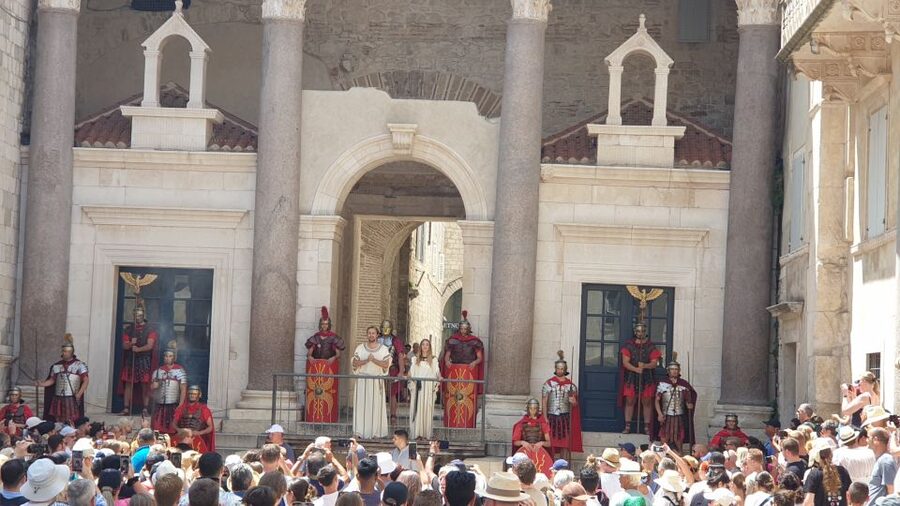
The tour moves beyond the Roman palace to medieval fortifications and Gothic palaces. These buildings help you spot the difference between the imperial Roman plan and the later city that grew inside it.
Fortifications are especially useful for understanding Split as a defended settlement. Gothic palaces, meanwhile, show the wealth and influence of later local families. Your guide ties these structures to the wider political story, including the arrival of Croatian communities and the long Venetian influence on architecture and city life.
I like this part of the walk because it prevents the tour from becoming only a Diocletian biography. You learn how a Roman imperial complex became a medieval town and then a modern city center.
The route is also a good introduction to the way Split’s old town functions today. A shopfront or café may sit beside a wall that is centuries or even millennia older. That contrast is not a flaw in the setting. It is the central fact of Split.
What the guides do best
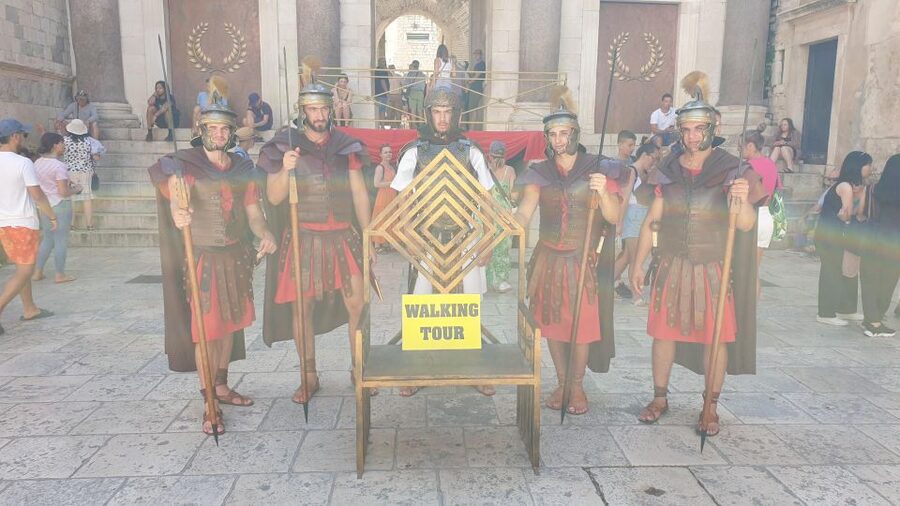
The strongest part of this experience is the guiding. Antonella and Antonela receive especially high praise for combining enthusiasm with clear explanations. Nikolas is also singled out for connecting the city’s past with the present, while Doris helped keep a rainy walk comfortable with an umbrella.
The best guides on this tour use stories rather than a long list of dates. They explain Diocletian’s rise, the drama of Roman politics, the arrival of Croats, and the Venetian period in a way that keeps the group moving and listening.
You can also expect questions to be welcomed. Several comments highlight friendly guides who answered questions and adjusted explanations so the material remained easy to follow. That helps if you are interested in history but do not already know much about Roman or Croatian history.
The experience seems especially good for couples and mixed-interest groups. One guide kept a self-described non-history enthusiast entertained, while other accounts praise the tour as fun as well as informative. That balance matters. A history walk should teach you something without turning your holiday into a classroom.
The Game of Thrones connection
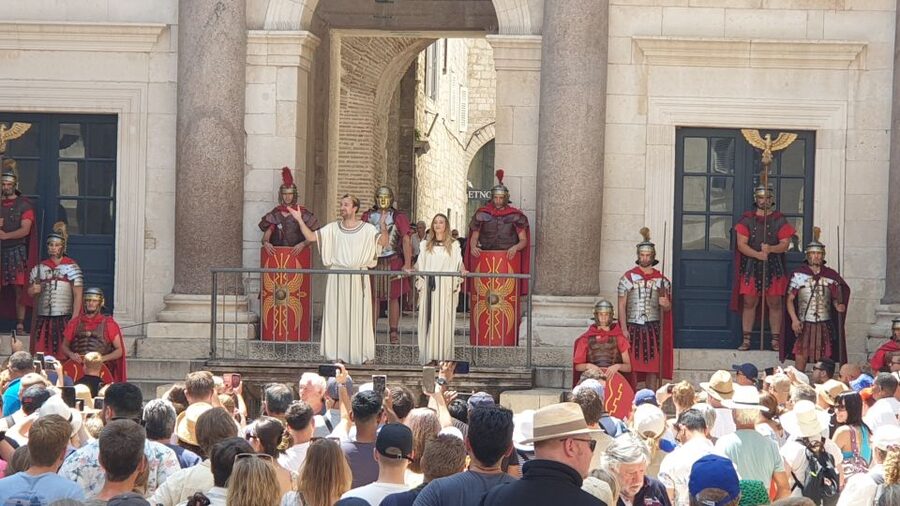
Game of Thrones locations are included as bonus information. This is not the central subject, and you should book the tour for the history rather than for a dedicated television pilgrimage.
Still, the reference can add a useful modern link. If you know the show, hearing where filming took place may help you recognize parts of the old center in a new way. If you do not care about the show, the main tour remains focused on the palace, churches, fortifications, palaces, and city history.
The bonus works best as a short extra rather than the reason to choose this experience.
Price, inclusions, and real value
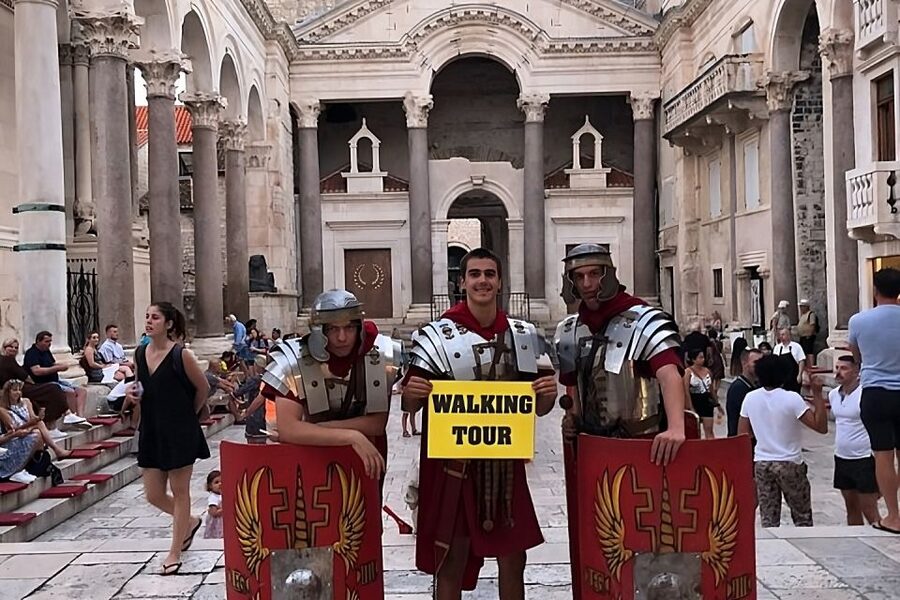
At $18 per person, this is an inexpensive way to get oriented in Split. The price includes the walking tour and a guide, but not hotel pickup, admission tickets, food, or drinks.
That means you are paying for interpretation rather than transport or entry to a paid attraction. For a first visit, I think that is a fair trade. Split’s old center is compact, but the layers of history are easy to miss when you walk alone. A good guide can save you time and give you a framework for exploring afterward.
You should also understand that the tour does not remove every possible cost. If your route includes a site requiring admission, that ticket is separate. The available information does not specify which paid interiors are visited, so check the current arrangements when booking.
The reserve-and-pay-later option is useful if your schedule may shift. Cancellation is allowed up to 24 hours in advance for a full refund. That gives you some flexibility, particularly if weather or transport plans are uncertain.
Group size, pace, and weather
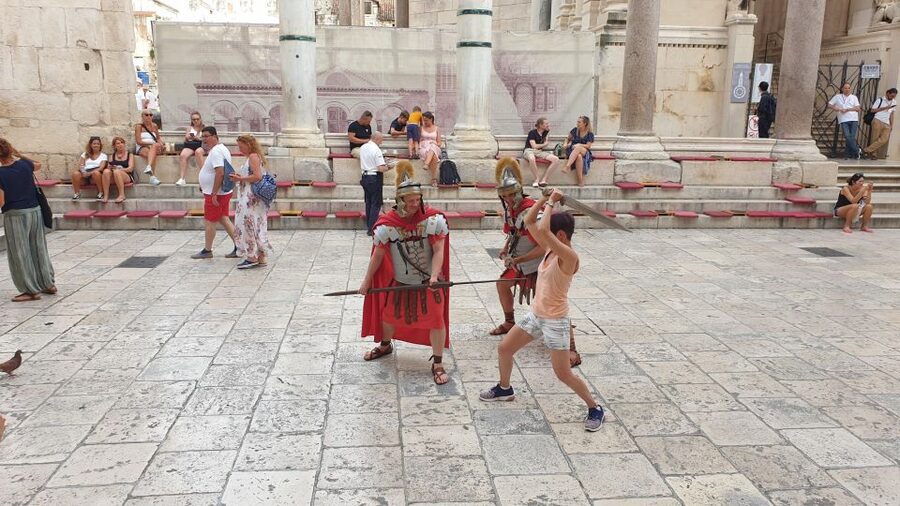
The walk is suitable for all ages, but it takes place outdoors and continues in rain or sun. Wear comfortable shoes and clothes, and bring a hat. A light rain layer or umbrella makes sense, since the tour does not stop simply because the weather turns wet.
The group-size promise deserves a careful note. Many accounts describe a small group, but one group reached almost 30 people. A group that size can make the experience less personal and create delays at narrow streets or crowded corners.
If your guide is Antonella, Antonela, Nikolas, or another well-liked local guide, you can expect a strong presentation. Even so, position yourself close enough to hear, especially in noisy areas. People with hearing impairments may find the tour difficult, and the activity is not suitable for people with high blood pressure.
The pace is described as quick, informative, and fun. That suggests a useful overview rather than a slow architectural study. If you want to photograph every doorway or spend several minutes at each church, you may need to return independently afterward.
Who should take this tour
I would choose this tour early in a Split visit, particularly if you have only 48 hours. One account described it as a strong base for further exploration, and that is exactly how I would use it.
It suits you if:
- You want a clear introduction to Roman and medieval Split.
- You enjoy stories, local context, and historical characters.
- You are traveling with someone who may lose interest in a dry lecture.
- You want to see the main old-town sights without arranging transport.
- You like walking through active neighborhoods rather than visiting ruins in isolation.
- You want Game of Thrones information as an extra, not the main purpose.
It may not suit you if you need a private or very quiet tour, dislike walking in poor weather, or have difficulty hearing a guide in a larger group.
Practical tips for a better visit
Meet at Peristil Square early enough to find the yellow T-shirt or umbrella. The old center is compact, but the first meeting point can be easy to miss if you are arriving in a hurry.
Wear shoes with good support. The tour passes through historic streets and crowded areas, and comfort matters more than dressing up. Costumes are not allowed, so keep your clothing practical and respectful.
Do not plan a large meal or another tightly timed activity immediately afterward. The exact duration is not provided, and a large group may move more slowly. The return to Peristil makes onward plans simple, but leave some breathing room.
Listen for the links between periods. The most useful lesson is not one isolated fact about Diocletian. It is the way Roman, Croatian, Venetian, medieval, and modern Split occupy the same small area.
Should you book the Split History and Heritage Walking Tour?
At $18, I think this is a strong-value introduction to Split, especially for a first visit or a short stay. The most praised feature is the guiding, with Antonella and Antonela earning repeated approval for enthusiasm, clarity, and lively storytelling.
Book it if you want the old center to make sense rather than simply look old. Skip it if you need a private experience, cannot manage an outdoor walk in changing weather, or expect every tour to remain genuinely small.
For most visitors who want history without a heavy lecture, this tour offers a useful start. Take notes on the places that catch your eye, then return after the walk and explore them at your own pace.
FAQ
Where does the tour start?
It starts on Peristil Square under the old Roman arch at the northern part of the square, next to the Tourist Information Office. Look for a yellow T-shirt or yellow umbrella.
Where does the tour end?
The walk ends back at the meeting point on Peristil Square.
What is included in the price?
The price includes a small-group walking tour and a tour guide.
Are admission tickets included?
No. Admission tickets are not included.
Are hotel transfers included?
No. Hotel pickup and drop-off are not included.
Are food and drinks included?
No. Food and drinks are not included.
Which languages are available?
The tour is available in Russian, English, German, and French.
What should I bring?
Bring comfortable shoes, a hat, and comfortable clothes. Since the tour runs in all weather, rain protection is also sensible.
Does the tour operate in bad weather?
Yes. The tour takes place in rain or sun.
Can I cancel for a full refund?
Yes. You can cancel up to 24 hours in advance for a full refund.
Just added around Split
- Split Walking Tour with History Professor★ 5.0 · 23 reviews
- Split: Local History and Culture 90-Minute Walking Tour★ 5.0 · 194 reviews
- Split: Private Walking Tour in the Historical Town Center★ 5.0 · 25 reviews
- Split: Historical & Gastro Treasures Tour with Green Market★ 4.9 · 144 reviews
- Split: Walking tour of Split with a ‘Magister’ of History★ 5.0 · 110 reviews
- Experience Split History Walking Tour With Local Historian★ 5.0 · 28 reviews
- History Split Walking Tour in French -Small group★ 5.0 · 41 reviews
- Split History and Gastro Small-Group Tour with Food and Drinks★ 5.0 · 375 reviews
History Walking Tours, compared.

History and Hauntings of Salem Guided Walking Tour
Read our review →
Freedom Trail History Small Group Walking Tour
Read our review →
Historic Charleston Guided Sightseeing Walking Tour
Read our review →
Tapas Walking Tour with Food, Wine, and History
Read our review →
Savannah History and Haunts Candlelit Ghost Walking Tour
Read our review →

A History of Terror – Belfast City Centre Walking Tour
Read our review →Browse the lists this tour appears in