Review · TOKYO
Tokyo: 3-Hour Bike/E-Bike Tour of the City’s Hidden Gems
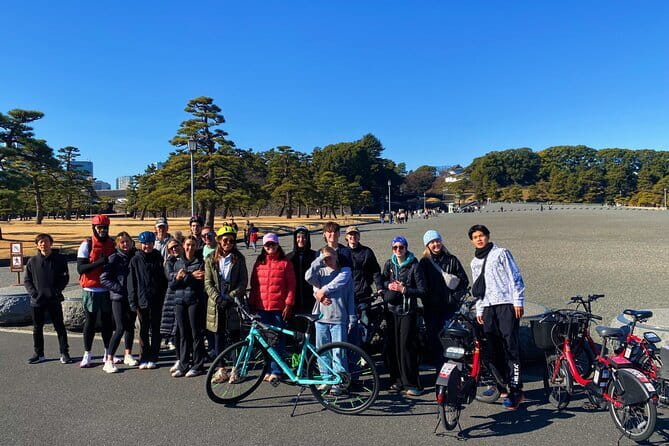
Tokyo rewards movement. This three-hour bike tour links major sights, quiet streets, and busy neighborhoods in one lively ride. I like the efficient 18-kilometer route, and I like that the small group is capped at seven people. The main consideration is simple: you need to feel comfortable riding near traffic and pedestrians.
I also like the option of an e-bike, especially in Tokyo’s heat or on the hills between central neighborhoods. Guides including Show, Naoki, Kosei, Kazu, Miguel, and Rinto have earned strong praise for clear explanations and careful direction. The tradeoff is that the tour moves quickly, and the historical commentary is sometimes brief.
Key points at a glance
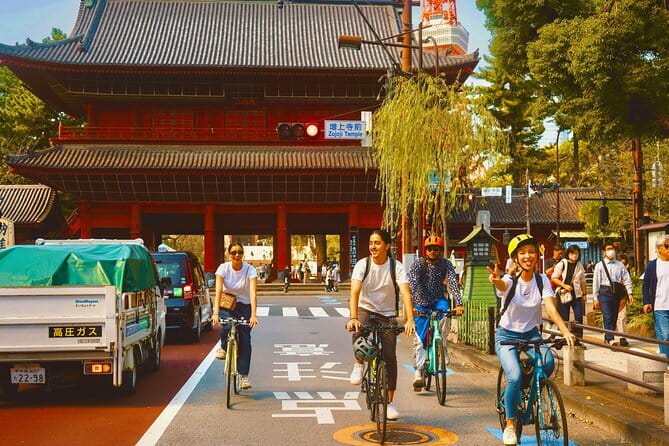
- 18 kilometers in three hours: You cover far more ground than on foot, from Zojo-ji and Tokyo Tower to Shibuya and Yoyogi Park.
- E-bike option available: Helpful in warm weather and on uphill sections, though bike sizes and performance may vary.
- Small groups of seven or fewer: This makes it easier to ask questions and stay close to the guide.
- A smart route through central Tokyo: The ride connects old temples, imperial sights, modern architecture, fashion streets, and famous public spaces.
- Helmet rental costs extra: Bring ¥1,000 in cash if you want one. Child seats cost ¥3,000 and must be arranged at least two days ahead.
- Best for active sightseers: You need a moderate fitness level and confidence around city traffic.
Why a bike is a smart way to see Tokyo
Tokyo is enormous, and its best-known districts are spread across a wide area. On foot, you can spend much of a day moving between them. By train, you get there quickly, but you miss the gradual change from one neighborhood to the next.
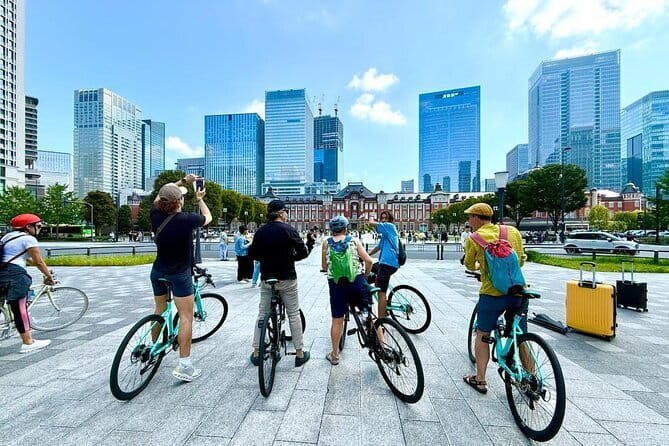
This ride gives you both speed and street-level views. You might pass from the formal surroundings of the Imperial Palace to the red-brick grandeur of Tokyo Station, then continue toward Aoyama’s polished shops and Shibuya’s crowded streets. That change of mood is one of the tour’s real strengths.
The route covers about 18 kilometers, but you are not pedaling nonstop. Stops at temples, gates, plazas, and city landmarks give you time for pictures and short explanations. The result feels more like a fast-moving introduction to Tokyo than a long athletic outing.
The e-bike is worth considering for many people. Several riders found the ride easier with electric assistance, particularly during hot summer conditions and on hills. One older couple in their late 60s completed the tour comfortably with e-bikes, while another rider noted that people on regular bikes lagged behind on climbs.
That said, the standard bicycles are not automatically a bad choice. One rider found a regular bike perfectly manageable. If you cycle often and the weather is mild, you may not need the extra power. Just remember that this is still a physical activity, even with assistance.
More History Bike, Segway and Tuk-Tuk Tours in Japan
- Historical Kyoto E-Bike Tour
★ 5.0 · 181 reviews - Sakurajima Century Lava Climb Journey with E-bike
★ 5.0 · 54 reviews - Nara: Bike Tour in Ancient Capital UNESCO World Heritage
★ 5.0 · 43 reviews
Starting beside Zojo-ji and Tokyo Tower
The meeting point is at Shiba Park Building in Minato City, close to Zojo-ji. This is a useful starting place because the first stop gives you an immediate sense of Tokyo’s unusual mix of tradition and modern city life.
Zojo-ji is a major Buddhist temple, and Tokyo Tower rises behind it. The contrast makes an excellent first photograph: old religious architecture in the foreground, a bright orange communications tower behind it. You may also have a chance to look inside the temple, though that depends on access at the time of the visit.
The stop lasts about 15 minutes. That is enough for pictures and a short introduction, but not enough for a long temple visit. If you want detailed time inside Zojo-ji, you may need to return independently.
From here, the ride begins to show its practical advantage. Instead of waiting for another train or walking long blocks, you roll directly into the next part of central Tokyo.
The Imperial Palace and Otemon Gate
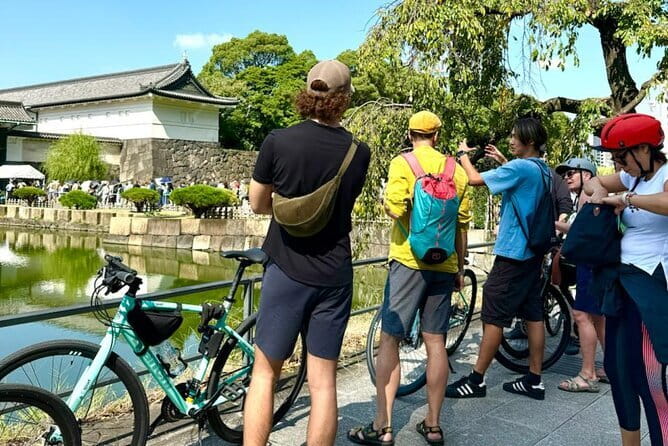
The Imperial Palace stop is brief, around 10 minutes. You see the entrance area, the palace grounds from the public side, and the guards. It is not an interior palace visit, so set your expectations accordingly.
The palace is important less for a single dramatic building than for what it represents. This is the working residence of Japan’s emperor, placed in the center of one of the world’s largest cities. The open space around it creates a sharp contrast with Tokyo’s dense commercial districts.
The route then reaches Kokyo Otemon Gate, one of the palace’s most recognizable entrances. Its historic gate structure offers better picture opportunities than the earlier palace stop, and the guide can help explain how the entrance fits into the larger palace grounds.
You get about 10 minutes here. That is enough to look around, take photographs, and hear basic context. It is not a full palace tour, and access to paid areas is not part of the experience.
Tokyo Station’s red-brick face
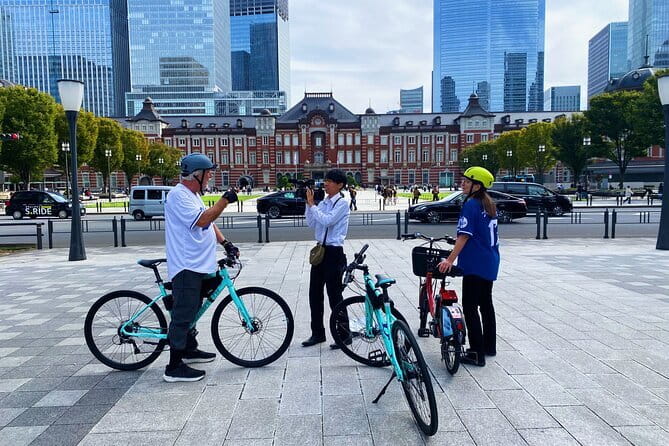
Tokyo Station Marunouchi Plaza is another short stop, usually about 10 minutes. The station opened in 1914, and its red-brick facade gives this busy transport center a more formal, historic appearance than many modern stations.
This is a good example of how the tour mixes famous sights with useful city orientation. Tokyo Station is not just an architectural stop. It is one of the city’s main transportation hubs, and seeing its Marunouchi side helps you understand the relationship between the palace, business district, and rail network.
You will not have time for a long station exploration. Think of this as a photo and orientation stop. If you plan to return later, the station’s interior and surrounding Marunouchi streets are worth further time.
More History Bike, Segway and Tuk-Tuk Tours in Tokyo:
- Historical Singapore Bike Tour on Full-Sized Bicycles
★ 5.0 · 1,421 reviews - Charlotte’s Ultimate Southern Charm Historical City Cart Tour
★ 5.0 · 1,347 reviews - Barcelona: 2.5-Hour Bike or E-Bike Historical Tour
★ 4.5 · 1,262 reviews - Asheville Historic Downtown Guided Electric Bike Tour with Scenic Views
★ 5.0 · 1,234 reviews
Akasaka Palace and the Olympic stadium
The stop at Akasaka Palace is only about five minutes, and admission is not included. The former royal villa now serves as a state guesthouse, giving you another look at Japan’s imperial and governmental past.
Because the stop is so short, you should see it as a passing introduction rather than a complete visit. If the palace interests you, you may want to make a separate visit on another day.
The route continues to Japan National Stadium, where the 2020 Tokyo Olympic and Paralympic Games took place. You spend about 15 minutes here, making it one of the longer stops on the route.
The stadium provides a clear link to recent Japanese history and modern architecture. It also marks a shift in the tour’s mood. The palace districts feel formal and ceremonial, while the stadium and nearby streets feel more contemporary and urban.
Aoyama, Cat Street, and the ride into Shibuya

Aoyama is a short five-minute stop with a very different character. The area is known for high-end fashion and distinctive architecture. You will not have time to shop, but cycling through the district lets you see how Tokyo’s polished design culture appears at street level.
Next comes Shibuya Cat Street, another five-minute stop. The route passes fashion brands, smaller shops, and vintage stores. This part of the ride feels more youthful and informal than the palace district.
The short stops are useful, but they also reveal one limitation. You are seeing a lot, yet you are not spending much time in any single place. If you want shopping, cafe time, or a careful look at architecture, note the places that interest you and return later.
Shibuya Crossing and the finish near Yoyogi Park
The tour reaches Shibuya Crossing near the end, when the ride has already taken you through several different sides of Tokyo. The stop lasts about five minutes, and the group bikes through the famous crossing area.
This is the most energetic section of the route. It can also be the most demanding, since you are riding among cars and pedestrians. You need to follow the guide closely and stay alert. One useful criticism of the experience is that the ride can feel wild if you are not comfortable cycling in city traffic.
The tour finishes in Jinnan, a shopping and dining area between Shibuya and Yoyogi Park. It is about a five-minute walk to Yoyogi Park and roughly 10 minutes to Shibuya Station. Ending here is practical because you can continue exploring Harajuku, Shibuya, or the park without returning to the starting point.
The guides make the difference

The route is strong, but the guide shapes the experience. Show is praised for answering questions and explaining Japanese culture and history clearly. Naoki has guided solo riders and larger small groups, and his careful direction has helped people feel secure on the streets.
Kosei has been especially good at keeping energy up on hot days. Miguel has been described as friendly and helpful, with a good grasp of the sights. Rinto has made a point of explaining the route and stopping for water.
The commentary is not intended to be an academic lecture. It is practical, light, and focused on the places you are seeing. If you want a long discussion of Japanese political history or Buddhist philosophy, this tour may feel too brief. If you want useful context, local recommendations, and answers to questions as you ride, it fits well.
Some riders wished the guides used headsets. That is a fair point. With traffic, wind, and pedestrians around you, it can be difficult to hear every word. Stay close to the guide during explanations, and ask for a repeat if needed.
Safety, fitness, and bike choice
You should have a moderate level of fitness. Even with an e-bike, the tour includes several hours of riding, stops, starts, city streets, and uphill sections. Warm, humid weather can make the ride feel harder than the distance suggests.
The guide leads the group and helps with directions, but you remain responsible for controlling the bicycle. You should already be comfortable riding in traffic and around pedestrians. This is not the right pick if you are nervous on a bicycle or have not ridden for many years.
Bike insurance is included. A raincoat is supplied on rainy days, though the activity requires good weather and may be moved or canceled if conditions are poor.
Helmets are not included. You can rent one for ¥1,000, and you should bring cash if you want one. A child seat costs ¥3,000 and must be requested at least two days before the tour, with cash brought on the day.
The supplied mini pouch is a useful touch. It gives you a place for a phone, wallet, or keys while riding, rather than forcing you to manage a loose bag.
Is $59.45 a fair price?
At $59.45 per person, the tour offers solid value if you want an active overview of central Tokyo. You get a bicycle, guide, insurance, and a route that would be difficult to organize efficiently on your own in only three hours.
The value is strongest for a first visit or a short stay. You see Zojo-ji, the Imperial Palace area, Tokyo Station, Otemon Gate, Akasaka Palace, the Olympic stadium, Aoyama, Cat Street, Shibuya Crossing, and Yoyogi Park in one outing.
The price is less attractive if you want long visits inside attractions. Admission is free at most stops because the tour mainly views them from outside. Akasaka Palace admission is not included, and the schedule does not provide time for a full interior visit.
The maximum group size of seven helps justify the cost. A small group can keep moving through Tokyo without the delays common to a large coach tour. It also gives you more opportunity to ask the guide questions or request a short photo stop.
Free cancellation is available up to 24 hours before the start time. Changes or cancellations inside that window are not accepted, and poor weather may lead to a different date or a full refund.
Who should book this ride?
I would choose this tour if you want to see many parts of Tokyo quickly, prefer an active outing, and like learning through conversation rather than standing in a museum. It is particularly useful early in your stay because the route helps you get your bearings across central Tokyo.
The e-bike option makes it suitable for a wider range of fitness levels, but it does not remove the need for balance, attention, and stamina. Older riders have enjoyed it, yet the ride can still feel demanding on a hot day.
I would be cautious about booking it if you dislike traffic, want a slow cultural tour, or hope to spend a long time at each landmark. The title suggests quiet discoveries, but several stops are Tokyo classics rather than obscure places. That is not a serious flaw, but the route is best understood as a highlights ride with some quieter sections.
Should you book it?
Book this tour if you want a fast, friendly introduction to Tokyo by bicycle, especially if you have only half a day. Choose an e-bike if the weather is hot, you are unsure about hills, or you simply want to save energy for Shibuya afterward.
Skip it if you need a slow pace, extensive interior visits, or complete separation from city traffic. For active sightseers who want temples, imperial landmarks, modern districts, and famous streets in one well-planned route, the $59.45 price is reasonable and the experience offers a lot of Tokyo in three hours.
FAQ
How long is the Tokyo bike tour?
The tour lasts approximately three hours.
How far do you ride?
The route covers about 18 kilometers.
What sights are included?
Stops include Zojo-ji, the Imperial Palace area, Tokyo Station, Otemon Gate, Akasaka Palace, Japan National Stadium, Aoyama Street, Shibuya Cat Street, Shibuya Crossing, and Yoyogi Park.
Where does the tour start?
It starts at Shiba Park Building in Shibakoen, Minato City, Tokyo.
Where does the tour finish?
It finishes in Jinnan, near Yoyogi Park and Shibuya. Yoyogi Park is about a five-minute walk away, and Shibuya Station is about a 10-minute walk.
Is an e-bike available?
Yes. You can choose a bicycle or an e-bike.
Is a helmet included?
No. Helmet rental costs ¥1,000. Bring cash if you want one.
Can I request a child seat?
Yes. A child seat costs ¥3,000, and you must contact the provider at least two days before the tour. Bring cash on the tour date.
What languages are offered?
The in-person guide service is offered in English and Japanese.
How many people can join the tour?
The tour has a maximum of seven travelers.
Is the tour suitable for all fitness levels?
No. Participants should have a moderate level of physical fitness and feel comfortable riding around traffic and pedestrians.
What happens if the weather is poor?
The experience requires good weather. If it is canceled because of poor weather, you can receive a full refund or choose a different date.
More E-Bikes in Tokyo
- San Sebastian E-bike trour: Basque History and Cultural.
★ 5.0 · 367 reviews - Nashville’s Historic Electric Bike Tour
★ 5.0 · 189 reviews - Athens: Small Group E-Bike Tour of Historic Highlights
★ 4.9 · 154 reviews - Athens Highlights by E-Bike: Small-Group Historic Tour
★ 5.0 · 131 reviews
More Bike Tours in Tokyo
- Historic Athens: Small Group Electric Bike Tour
★ 4.9 · 966 reviews - Bordeaux: Historic Center & Chartrons District Bike Tour
★ 4.8 · 709 reviews - Intramuros, Manila: Historical Bamboo Bike Tour
★ 4.8 · 583 reviews - Historic Bike Tour in Tucson
★ 5.0 · 553 reviews
Just added around Tokyo
- Tokyo: Mount Fuji Private Full-Day Trip with Hotel Pickup★ 5.0 · 18 reviews
- Tokyo: Customized Private Historical Guided Photoshoot Tour★ 5.0 · 25 reviews
- Private Tour Through the Tokyo National Museum & Ukiyo-e★ 4.7 · 17 reviews
- Tokyo: Imperial Palace, the history of Japan (ENGLISH GUIDE)★ 5.0 · 77 reviews
- Tokyo: Edo Castle & East Garden of the Imperial Palace Tour★ 4.7 · 112 reviews
- Tokyo: Nagano Snow Monkeys and Zenkoji Tour with Temples★ 4.9 · 19 reviews
- Kyoto: Nijo Castle World Heritage Guided Tour with Admission★ 4.9 · 37 reviews
- Historic Kanda Sake Tasting at Tokyo’s Oldest Shop (1596)★ 4.9 · 33 reviews
History Bike, Segway & Tuk-Tuk Tours, compared.
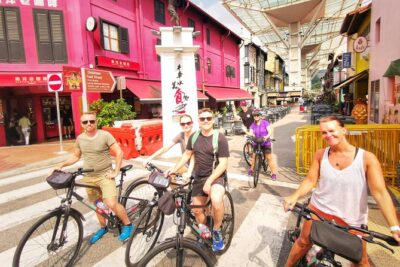
Historical Singapore Bike Tour on Full-Sized Bicycles
Read our review →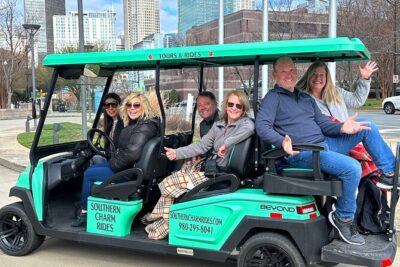
Charlotte’s Ultimate Southern Charm Historical City Cart Tour
Read our review →
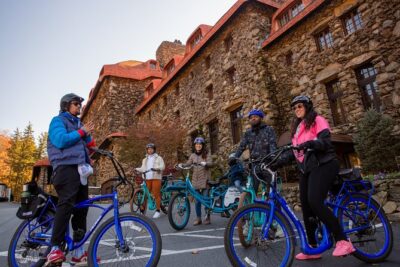
Asheville Historic Downtown Guided Electric Bike Tour with Scenic Views
Read our review →
Private Guided Historic Electric Cart Tour of St. Augustine
Read our review →
60-Minute Guided Segway History Tour of Savannah
Read our review →
Historic Athens: Small Group Electric Bike Tour
Read our review →