
Review · UNGUJA SOUTH REGION
Stonetown Historical Walking Tour & Traditional Lunch
Stone Town rewards slow feet. I like the way this three-hour walk joins major sights with the city market, including fish auctions and spice stalls. I also like that lunch, water, entrance fees, and a live English-speaking guide are included. The main drawback is value: at $60 per person, some people may find the price high for a short tour, especially if they already know Stone Town.
The route begins near the old slave market and ends with a local meal, giving you both difficult history and everyday island life. Guides such as Ahmed and Juma have been praised for clear historical explanations, but the exact guide may vary. Also note the transport wording carefully: the standard meeting point is the Old Fort at 9 AM, while hotel collection is optional and arranged separately.
Key points to know before you book
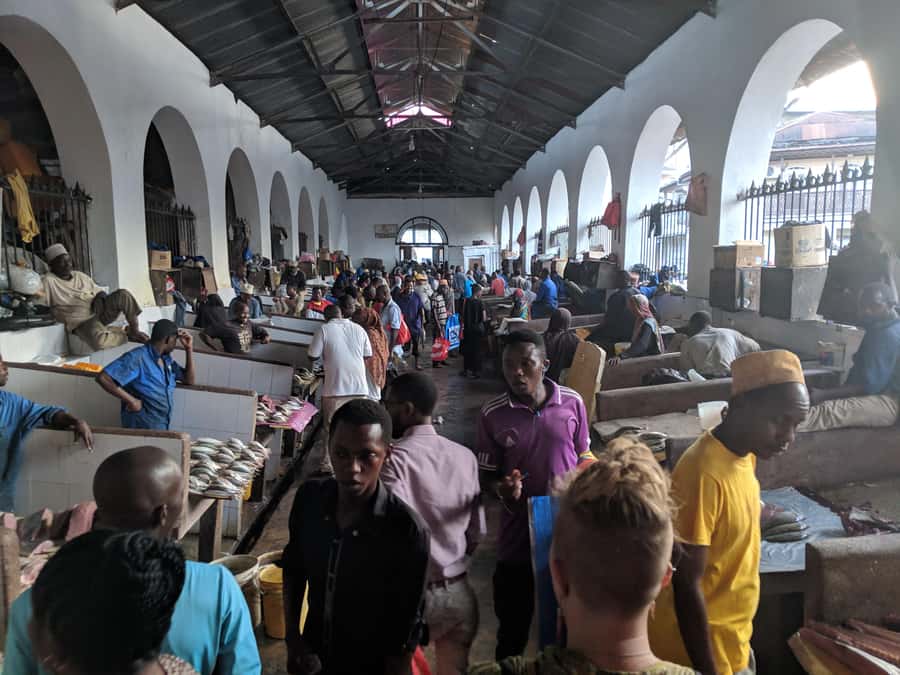
- Fish auctions at the city market: You may see locals bidding on freshly landed seafood, along with stalls selling fruit, meat, chicken, and spices.
- A strong concentration of landmarks: The walk includes the Palace Museum, House of Wonder, Old Fort, Tippu Tip’s house, Peace Memorial, Natural History Museum, and more.
- A serious opening: The route starts at the Anglican Church on the former slave market site, adding difficult but important context to the town.
- Freddie Mercury photo stop: You can pause outside the house associated with the Zanzibar-born singer.
- Lunch is part of the price: A local meal at a cozy restaurant closes the tour, along with drinking water and entrance fees.
- Flexible transport and booking: You meet at the Old Fort at 9 AM, or arrange optional pickup from a hotel in Zanzibar’s North or West Region.
Starting at the old slave market site
The tour opens at the Anglican Church, one of the most important parts of the former slave market site. This is not a light introduction, and that is a good thing. Stone Town’s beauty can make it easy to focus only on carved doors, old buildings, and narrow lanes. The opening reminds you that the town was also tied to the East African slave trade.
From here, you enter the tight streets of Stone Town on foot. A walking tour makes sense because the old center is best seen at street level. Cars cannot offer the same view of doorways, small shops, market activity, and the changing mix of Arab, Persian, Indian, and European influences.
The early section also helps you get your bearings. Stone Town can feel confusing at first, with lanes that twist and open suddenly into wider spaces. A guide keeps the route moving and explains what you are seeing instead of leaving you to guess at every old wall.
More Local Culture and Traditions Tours in the world:
- Amsterdam Food and Cultural Tour with Tastings
★ 5.0 · 4,315 reviews - Sevilla Food Tour: Tapas, Wine, History & Traditions
★ 5.0 · 3,468 reviews - Tromsø: Reindeer Camp and Sami Cultural Tour with Lunch
★ 4.7 · 3,326 reviews
The city market and its fish auctions
The market is one of the most useful parts of this experience because it shows Stone Town as a living town, not a museum set. It is described as the biggest market on the islands, with locals buying and selling fruit, fish, meat, chicken, and spices.
The fish auctions are the special feature. You may see local buyers bidding on seafood, a direct look at how food moves from the coast to the kitchens of Zanzibar. This is a more revealing stop than simply walking past a row of souvenir stalls. It gives you a sense of local trade and daily routines.
Expect the market to be active and crowded. Keep your belongings close, watch your step, and follow your guide through the busiest areas. If you like taking pictures, ask before photographing people, especially during the auction. The tour information does not promise a particular auction time or a specific catch, so treat it as a chance to see the market in action rather than a guaranteed performance.
The market can also be a sensory stop. You may notice fresh produce, seafood, meat, and spices in close quarters. That is part of the experience, though visitors who dislike strong food smells or crowded indoor spaces may find this section less comfortable.
The Palace Museum and Stone Town’s grand buildings
After the market, the route turns to the principal sights of Stone Town. The Palace Museum is one of the key stops. It helps explain the town’s links to Zanzibar’s ruling families and its wider connections across the Indian Ocean.
The House of Wonder, also called Bait-al-ajab, is another major landmark. It is described as the largest and tallest building in Stone Town, so it is hard to miss as you move through the old center. The tour may focus on the exterior or include the applicable entrance visit, and you should listen to your guide for the current arrangement.
One practical point matters here: the buildings are important, but the condition of historic sites can vary. Do not expect every landmark to look polished or fully restored. Stone Town’s old buildings carry layers of use, repair, and wear. That gives the walk character, but it also means you may find some places less visually grand than their names suggest.
A good guide makes the difference. The strongest feedback about this experience centers on guides who can explain the city’s past and answer questions. Ahmed has been singled out for a thorough visit and strong command of Stone Town’s history. Juma has also been warmly praised for guiding people through the streets and the story of the town. You cannot be certain which guide you will receive, but asking for Ahmed or Juma may be worthwhile if either is available.
Old Fort, Tippu Tip, and the layers of power

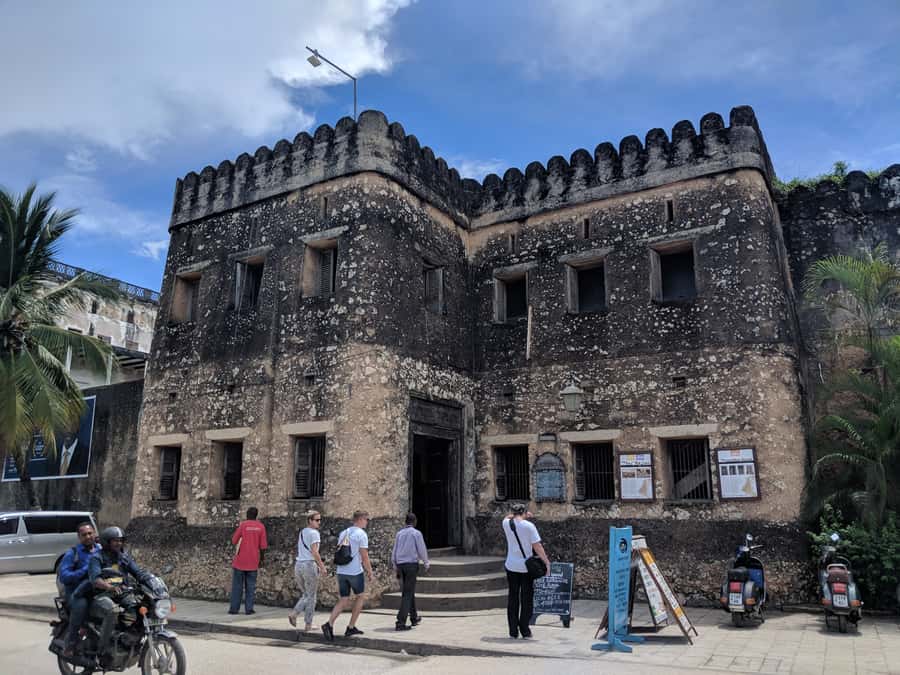
The Old Fort is one of the best-known landmarks on the route. Its heavy walls offer a clear change from the market streets and grand ceremonial buildings. You will see how Stone Town’s rulers and visitors shaped the town through defense, trade, religion, and government.
The tour also visits Tippu Tip’s house. Tippu Tip was a major trader in East Africa, and his name connects Stone Town to the long-distance trade networks that crossed the region. The stop adds another layer to the route, moving beyond royal buildings and colonial-era landmarks.
The tour’s value here is not simply the number of sites. It is the way the stops connect. The former slave market, a palace, a fort, a trader’s house, and a market all point to different parts of Stone Town’s past. If your guide explains those links clearly, you leave with a better sense of how the city developed.
Three hours is enough for a broad introduction, but not enough for a slow, detailed visit inside every site. You should expect a brisk route with stops for explanation and photographs. If you want long museum visits or time to study every room, a private or longer tour may suit you better.
More History Walking Tours in the world:
- History and Hauntings of Salem Guided Walking Tour
★ 5.0 · 14,564 reviews - Lisbon: History, Stories and Lifestyle Walking Tour
★ 4.8 · 10,902 reviews - Boston: Freedom Trail History Small Group Walking Tour
★ 5.0 · 6,450 reviews - Historic Charleston Guided Sightseeing Walking Tour
★ 5.0 · 6,216 reviews
Freddie Mercury’s house and the modern Stone Town
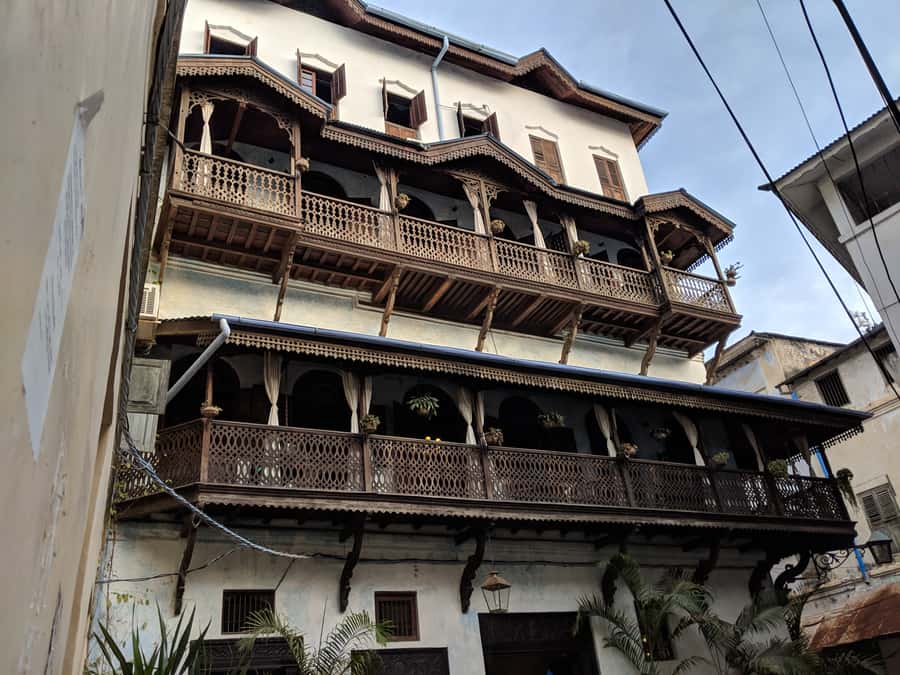
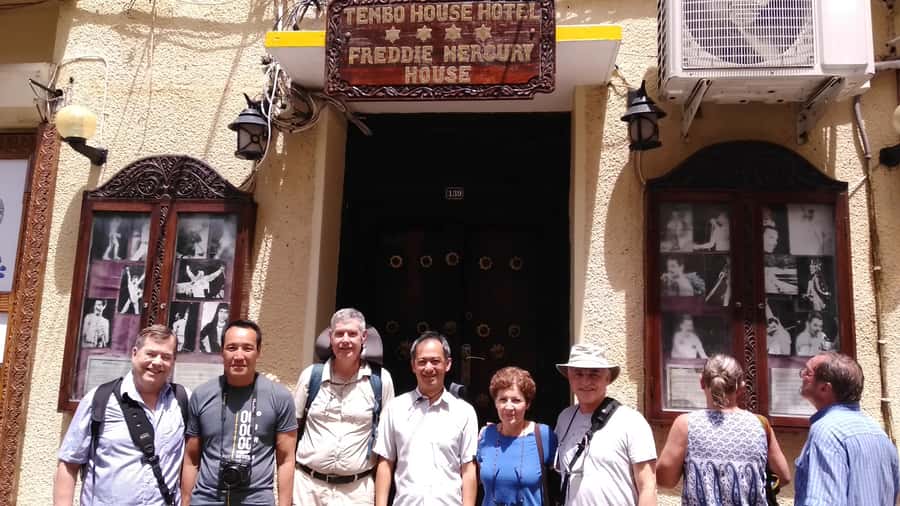
The Freddie Mercury stop gives the tour a more recent and familiar point of reference. You can take a picture near the house associated with the singer, who was born in Zanzibar. It is one of the easiest stops to recognize, especially if you know his music.
Do not expect this to be a full museum visit or an extended music history presentation. The appeal is the photo and the connection between a global cultural figure and Stone Town’s streets. It also breaks up the heavier historical material with a lighter, contemporary stop.
This is a good example of the tour’s broad approach. It does not focus only on one period or one community. Instead, you see religious, commercial, royal, military, colonial, and popular cultural parts of the town in a single walk.
Peace Memorial and the Natural History Museum
The Peace Memorial is included among the sights covered on the route, as is the Natural History Museum. These stops expand the tour beyond the best-known waterfront landmarks.
The memorial offers a chance to consider Zanzibar’s political and social past, while the Natural History Museum adds a different subject to the day. The exact time spent at each place may depend on the pace of the group and access on the day.
This part of the walk is useful if you want more than a photo tour. It gives your guide room to explain the island’s story from several angles. Still, the itinerary covers many places in only three hours, so you should not assume every museum or landmark receives a long interior visit.
Lunch in a local restaurant
The tour ends with lunch at a cozy local restaurant. That is a sensible finish after a morning on foot, and it adds value to the $60 price. You get a meal rather than simply being dropped back at your hotel after the sights.
The supplied details do not specify the menu, so do not book this expecting a particular dish. The meal is described as local, which makes it a useful chance to try Zanzibar-style food in a straightforward setting.
Lunch also gives you time to ask follow-up questions. Guides who explain the city well can often clarify points that were easy to miss in the narrow streets. One booking specifically praised the lunch location, while another felt the overall tour was expensive for three hours and lunch. Both points are fair. The meal improves the package, but the total value still depends on how much history and access your guide provides.
Is $60 a fair price?

At $60 per person, the tour sits above the cost of simply walking around Stone Town on your own. You are paying for a guide, entrance fees, drinking water, lunch, and a planned route through a large number of sights.
I think the price makes more sense if you want structure and historical explanation. Stone Town’s streets are easy to wander, but it is harder to understand the meaning of the old slave market site, the palace, the fort, Tippu Tip’s house, and the market without local context.
The price is less attractive if you mainly want photographs or already know the city. Three hours is a compact time frame, and one person specifically considered the tour expensive for its length and included meal. That is the central value question: are you buying a convenient introduction, or do you want a longer, slower historical visit?
The package includes entrance fees, guide fees, water, and lunch. Hotel pickup and drop-off are not part of the standard inclusions. Optional pickup is available from hotels in the North or West Region of Zanzibar, but you need to provide the hotel name and room number and meet the representative in your lobby. If you are staying elsewhere, plan on reaching the Old Fort yourself.
Timing, comfort, and who will enjoy it
The listed meeting time is 9 AM in front of the Old Fort. A morning start gives you a clear plan for the day, but you should wear comfortable shoes because the tour is entirely centered on walking through narrow streets and market areas.
The tour is wheelchair accessible, according to the activity information. Still, Stone Town’s old lanes and market spaces can be tight, so it is sensible to confirm the practical route and access arrangements before booking if you have specific mobility needs.
The tour is offered in English with a live guide. It suits you best if you want:
- A first introduction to Stone Town
- Historical context rather than independent wandering
- A market visit with local trade and fish auctions
- Major landmarks in one short morning
- A local lunch included in the same booking
- A guide who can answer questions about the city
It may not suit you if you want a slow museum study, a private itinerary, or a quiet walk away from market crowds. The route covers a lot, and that breadth comes with a faster pace.
The tour offers free cancellation up to 24 hours before the start, and you can reserve now and pay later. Those terms help if your Zanzibar plans are still moving around.
Should you book this Stone Town walk?
Book it if you want a well-organized first look at Stone Town, especially if the old slave market site, the city market, and the main historic buildings all matter to you. The fish auction, Freddie Mercury photo stop, and included lunch give the morning a useful mix of serious history, daily life, and popular culture.
I would book it with realistic expectations. You are getting a broad three-hour introduction, not a full museum day. At $60, the experience earns its price when the guide provides the clear explanations praised by earlier guests and when you value the included entries, water, and lunch.
If you prefer to wander alone, take your time at each building, or keep costs low, explore Stone Town independently and spend the money on a meal. If you want the city’s many layers explained in one morning, this is a practical choice. Try to request Ahmed or Juma when booking, though guide availability is not guaranteed.
FAQ
Where does the Stone Town walking tour begin?
The standard meeting point is in front of the Old Fort at 9 AM.
How long does the tour last?
The tour lasts three hours.
Is hotel pickup included?
Standard hotel pickup and drop-off are not included in the listed inclusions. Optional pickup can be arranged from hotels in Zanzibar’s North or West Region.
What should I do to arrange optional hotel pickup?
Provide the hotel name and room number, then meet the representative in your hotel lobby.
Is lunch included?
Yes. A local lunch at a cozy restaurant is included.
Are entrance fees included?
Yes. Entrance fees are included in the tour price.
What language is the tour conducted in?
The live tour guide speaks English.
Is the tour wheelchair accessible?
The activity is listed as wheelchair accessible.
Can I cancel the booking for a refund?
You can cancel up to 24 hours in advance for a full refund.
What landmarks are included?
The route includes the Anglican Church at the former slave market site, the city market, Palace Museum, House of Wonder, Old Fort, Tippu Tip’s house, Freddie Mercury’s house, Peace Memorial, Natural History Museum, and other Stone Town sights.
More Lunch Experiences in the world
- Douro Valley: Historical Sites, Wine Experience, Lunch & Cruise
★ 5.0 · 5,133 reviews - Ninh Binh Heritage Full Day Tour with Buffet Lunch and Limousine
★ 5.0 · 2,692 reviews - From Kuala Lumpur: Historical Melaka Day Tour with Lunch
★ 4.4 · 2,297 reviews - Strahan: World Heritage Cruise on Gordon River with Lunch
★ 4.8 · 1,143 reviews
Just added around the world
- Syracuse: Traditional Cooking Class & Ancient Market Visit★ 4.9 · 72 reviews
- Sydney Historical Walking Tour including The Rocks★ 4.6 · 20 reviews
- Sucre: Free Walking tour (History, culture and traditions)★ 4.8 · 47 reviews
- Sydney Convicts, History & The Rocks 2.5-Hour Walking Tour★ 4.9 · 181 reviews
- Street Food, Cultural & Historical Tour of 3 Ethnic Quarters★ 5.0 · 23 reviews
- Strasbourg: Historic Center Walking Tour★ 4.7 · 88 reviews
- Stories of Jew Town: Guided Heritage Walk in Kochi★ 4.7 · 30 reviews
- Stockholm Viking History Full Day Tour to Sigtuna + Uppsala★ 4.7 · 283 reviews
Local Culture & Traditions Tours, compared.

Amsterdam Food and Cultural Tour with Tastings
Read our review →
Sevilla Food Tour: Tapas, Wine, History & Traditions
Read our review →
Tromsø: Reindeer Camp and Sami Cultural Tour with Lunch
Read our review →
Half Day Dominican Republic Cultural Tour : Small Group
Read our review →
Ultimate Melbourne Walking Tour: History, Laneways & Culture
Read our review →
Tromsø: Sámi Reindeer Sledding and Sami Cultural Tour
Read our review →
Kyoto Gion: 2-Hour Geisha Culture & History Walking Tour
Read our review →
Marrakech Historical and Cultural Tour – Half Day City Tour
Read our review →Browse the lists this tour appears in