
Review · SICILY
Syracuse: Traditional Cooking Class & Ancient Market Visit
Come hungry, leave with new recipes. This four-hour Syracuse experience pairs a walk through Ortigia’s old market with a hands-on Sicilian cooking lesson, then puts the meal you helped prepare on your plate. I like the small groups of up to eight and the chance to choose ingredients with a chef rather than follow a fixed tourist menu. I also like that the cooking can bend toward your tastes, from seafood and fresh pasta to meat or vegetables.
The main consideration is the meeting point. Bar Cristina on Piazza Pancali is a large place, so finding the chef may take a little care. Sunday also changes the plan, since Ortigia Market is closed. On that day, the chef guides you through the island streets to find local products instead.
Key points at a glance
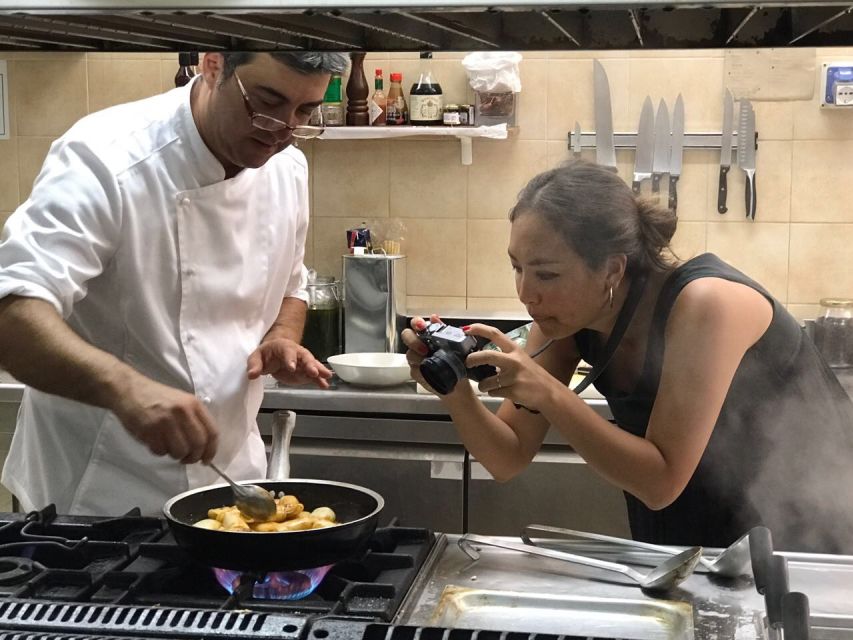
- Chef-led market shopping: Chef Ettore knows the Ortigia vendors and helps you select seafood, produce, pasta ingredients, and Sicilian specialties.
- A menu shaped by the day: What you cook depends on the best products available and your preferences, not just a preset recipe card.
- Real hands-on cooking: You help prepare fresh pasta, seafood sauces, tuna, arancini, bread, desserts, and other regional dishes.
- A generous final meal: Lunch includes the dishes you make, with some menus also featuring wine, limoncello, tastings, or a charcuterie board.
- Small-group setting: With no more than eight participants, you get more time at the counter and more attention from the chef.
- Four hours in Ortigia: The experience combines food shopping, local stories, cooking, and lunch without requiring a full day.
Why this Syracuse food experience works
Syracuse is easy to admire from the outside: Greek ruins, honey-colored stone, sea views, and narrow lanes. But food gives you a quicker way into local life. This experience begins in Ortigia’s market, where fish, vegetables, cured meats, cheese, fruit, and prepared foods are laid out for sale.
I like that the market visit is not just a quick stop for photographs. You walk through the stalls with the chef, see what looks good that day, and help decide what will go into lunch. Chef Ettore is a familiar face to many vendors, which changes the mood. Instead of simply pointing at products, he can chat with sellers, arrange tastings, and explain what you are seeing.
The market is full of practical lessons. You may taste fresh produce, pistachio spread, mortadella, red prawns, or other local products before buying. The exact selection depends on the day, the season, and the menu you choose, so do not arrive expecting a fixed list of dishes.
The class receives a 4.9 rating from 72 reviews, and the strongest praise centers on three things: Ettore’s warmth, his strong cooking background, and the quality of the meal. Those are important here because the class is as much about sharing a kitchen as it is about learning a technique.
More Ancient History Tours in Italy
- Colosseum: Underground and Ancient Rome Tour
★ 4.7 · 12,691 reviews - Colosseum & Ancient Rome with Arena Floor Option I Max 6 People
★ 5.0 · 3,306 reviews - Rome: Colosseum, Ancient Rome Tour or AudioGuided Tour
★ 4.4 · 2,879 reviews
Meeting Chef Ettore at Piazza Pancali
The official starting point is Bar Cristina at Piazza Pancali 24. You should arrive with the chef’s name and the activity details ready on your phone. Bar Cristina is large, and one person specifically found the meeting arrangement unclear because the meeting point did not identify exactly where inside the bar to wait.
That is a small issue, but it is worth planning for. If you do not see the chef right away, check the nearby corner and ask staff where the guide is meeting the cooking group. The chef or greeter speaks Italian and English.
The activity ends back at the meeting point. Depending on where the kitchen is located, a transfer from the market to the cooking class is arranged. That saves you from having to find an unfamiliar kitchen on your own, and it keeps the four-hour schedule practical.
Walking through the Ortigia market
The market is the heart of the experience. Ortigia’s street market brings together the smells, colors, voices, and daily trade that make Sicilian food feel like more than a restaurant menu. You will see products being sold as ingredients rather than polished souvenirs.
Chef Ettore’s role matters here. He does not simply lead you from one stall to the next. He helps you judge quality, explains how products are used, and speaks with the people selling them. His links with the vendors make the visit feel more like a local shopping trip.
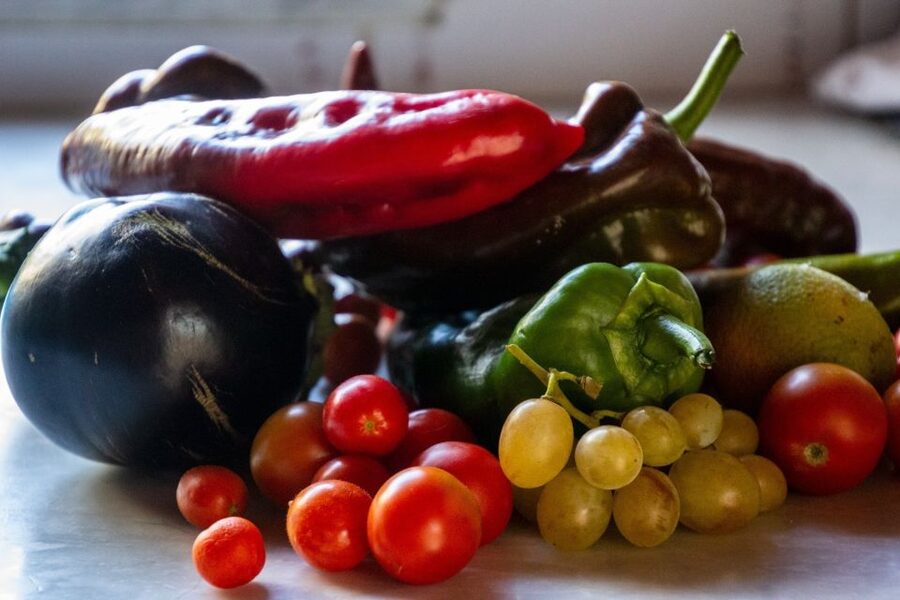
You may taste several items while the chef builds the meal. Past menus have included fresh seafood, tuna, mussels, calamari, sardines, shrimp, red prawns, pistachios, peppers, onions, tomatoes, eggplant, fruit, and cured foods. The range is wide, but the menu remains tied to what looks best that day.
This is also where you can make your preferences clear. One group wanted a seafood meal. Another did not care for much fish, and Ettore adjusted the dishes. The experience can include meat, pasta, vegetables, or seafood, depending on your interests and the products available.
If you love food markets, allow yourself to enjoy this part without rushing. It gives context to the cooking later. A pistachio pesto is more interesting after you have seen the ingredient being sold. A seafood pasta makes more sense after you have chosen the fish and watched the chef discuss it with the vendor.
From market basket to Sicilian lunch
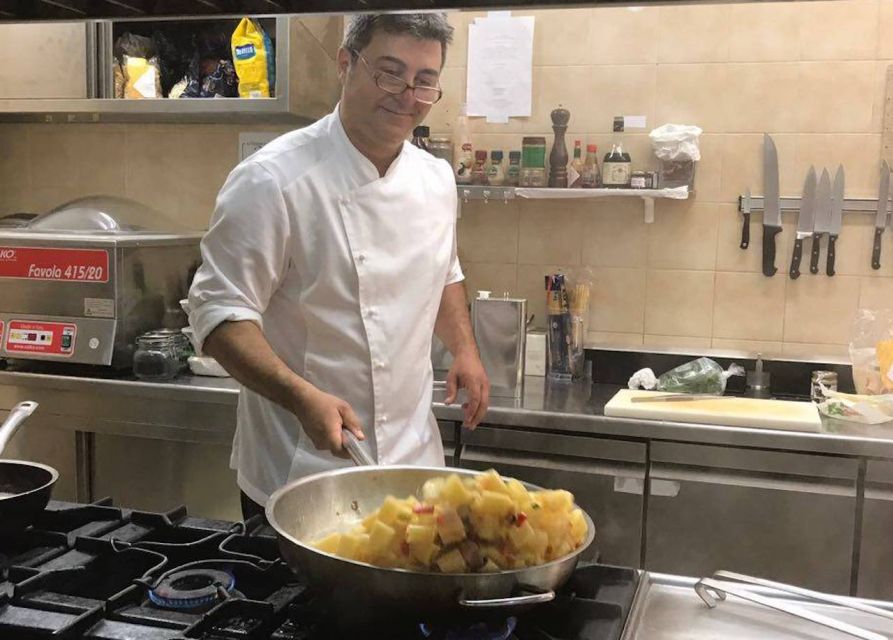
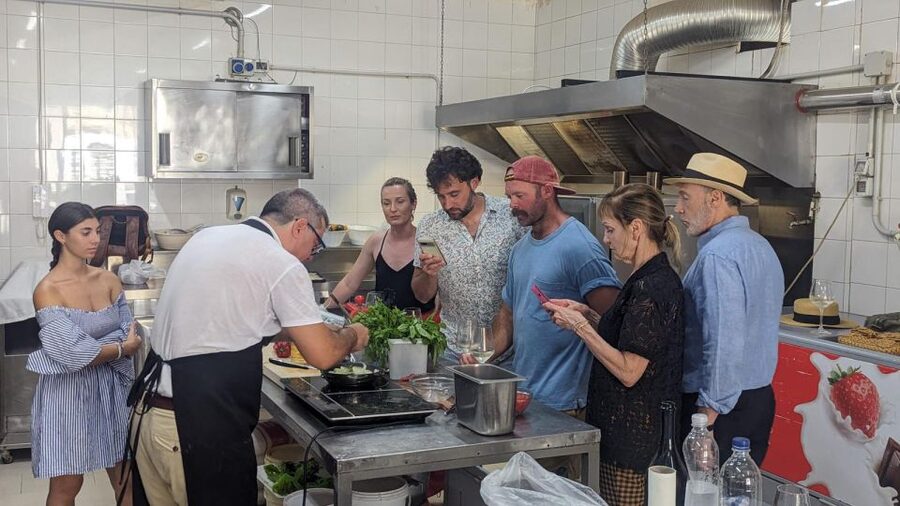
After the shopping, you move to the chef’s kitchen. The class location can vary, and past participants have cooked in a restaurant kitchen, at Cortile Di Bacco, or in a rugby club setting. The exact location affects the room and the view, but the main idea remains the same: you work with the chef to turn the market haul into lunch.
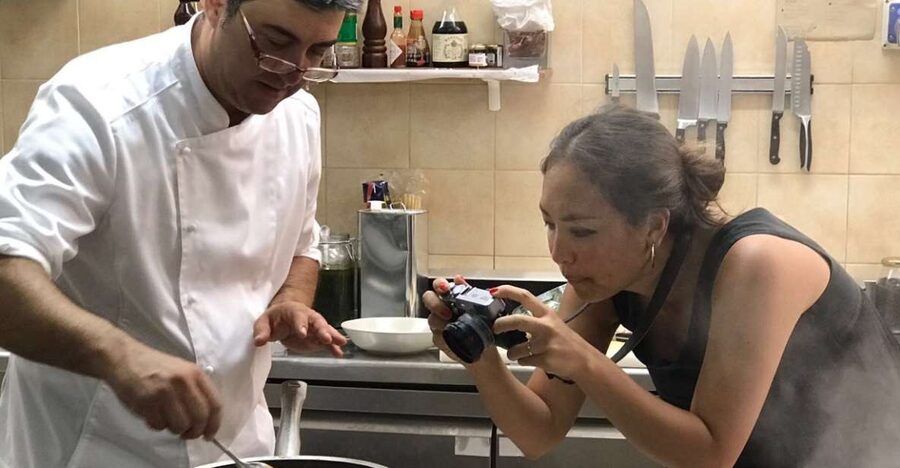
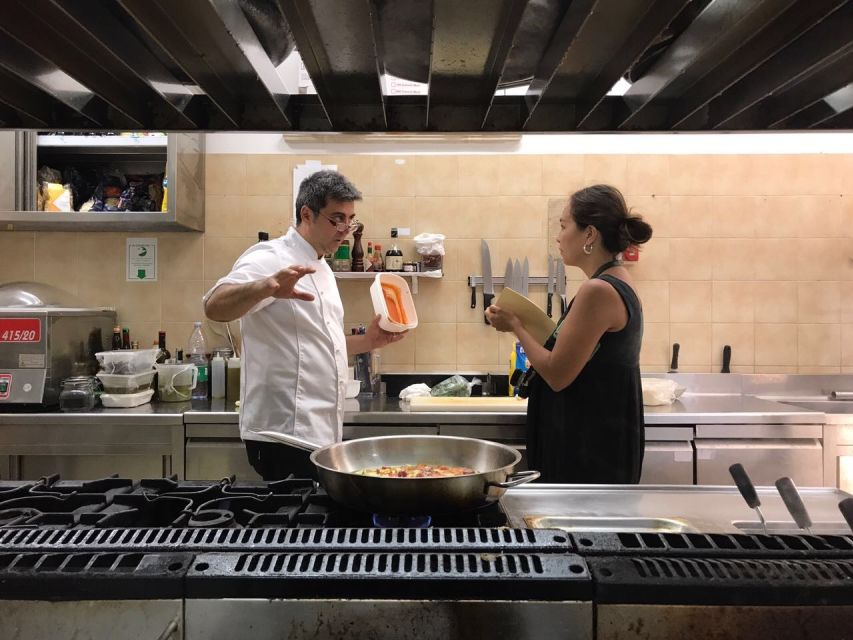
The cooking is hands-on. You are not simply watching Ettore prepare food while standing behind a counter. You help with the ingredients and take part in the preparation. The pace can also change according to the menu and the size of your group.
Fresh pasta has been a major feature. Some groups learned to make cavatelli, while others prepared two pasta dishes, including pistachio pesto pasta and seafood pasta. One participant was especially impressed by learning to make fresh pasta in about seven minutes. That kind of tip is useful because it makes homemade pasta seem less like a special-event project and more like something you could try at home.
Seafood cooking is another strong point. Past menus included shrimp, mussels, squid, sardines, mullet, calamari, and tuna. Ettore has shown how to build a sauce base from shrimp shells and olive oil, a simple step that gives the finished pasta far more flavor than using the seafood only as a topping.
Other reported dishes include tuna with sweet peppers, onions, capers, tomatoes, and olives; prawns with orange; eggplant with tomatoes and cheese; and arancini. Some groups prepared veal involtini, bread, strawberry salad, fruit salad, and cannoli.
You should not treat this as a guaranteed menu. The attraction is the opposite. The chef chooses according to the market and your preferences, so the meal is likely to be different from one date to another. If you have a particular food interest, tell the chef early in the market visit.
Same place, a different slice of the past:
- Rome: Colosseum with Arena, Roman Forum and Palatine Guided Tour
★ 4.0 · 5,598 reviews - Venice: St. Mark’s Basilica Guided Tour & VR History Intro
★ 3.9 · 4,880 reviews - Colosseum with Arena, Roman Forum and Palatine Hill Guided Tour
★ 4.5 · 3,526 reviews - Colosseum Underground & Ancient Rome Guided Tour
★ 4.5 · 2,590 reviews
What makes Ettore’s teaching effective
Ettore’s professional background adds weight to the class. Several participants praised his experience as a pasta chef at a two-star Michelin restaurant. That does not turn the class into a formal culinary school, and it should not be mistaken for a certificate course. It does mean you are learning from someone with serious restaurant experience.
The best teaching moments appear to be practical rather than showy. Ettore explains how to use shrimp shells for a bisque, how to make pistachio pesto, how to handle fresh pasta, and how ingredients work together in a Sicilian dish. He also shares cooking tips while you work, which makes the lesson easier to remember.
I particularly like the way the class seems to leave room for conversation. The chef cooks alongside you, answers questions, and adjusts the meal instead of forcing every group through the same script. His daughter has also helped with some classes, and she was praised for making the group feel welcome.
The tone sounds friendly and generous. Participants repeatedly describe feeling at home, eating together, and learning through conversation. That matters if you want a social meal rather than a sterile demonstration.
Lunch is part of the lesson
The reward comes when everyone sits down to eat. You do not prepare a token sample and then head off to find lunch elsewhere. The dishes you helped make become the meal.
Past lunches have included several courses. One group prepared pistachio pasta, seafood cavatelli, tuna steaks with vegetables, fruit salad, and cannoli. Another made seafood pasta, fried mullet, eggplant with tomatoes and cheese, cannoli, and brioche with ricotta.
Some groups were served wine, limoncello, or a large charcuterie board. These extras are not guaranteed as part of the stated inclusions, so check what is included in your specific menu. Food and drinks outside the planned menu are not included, and the chef organizes those additions.
The portions can be generous. One group even took leftovers away. That is useful to know if you plan another major meal immediately afterward: four hours of tasting, cooking, and lunch can be filling.
The meal also gives you time to ask final questions. You can discuss substitutions, sauces, pasta shapes, or ways to repeat the recipes at home. This relaxed table time is one reason the activity feels more personal than a standard market tour followed by a cooking demonstration.
Price, group size, and what you receive
The price is $134.81 per person for four hours. That is not a bargain basement activity, but the value is solid if you use all its parts: a guided market visit, a local chef, ingredient shopping, hands-on instruction, transfers when needed, and lunch.
You are paying for more than a cooking lesson. The chef’s market relationships, the ingredients, the kitchen, the meal, and the small group all matter. With a maximum of eight people, you have a better chance to chop, mix, shape, taste, and ask questions than you would in a large class.
The value depends partly on your interests. If you only want a short demonstration and a quick snack, four hours may feel long and the price may seem high. If you enjoy food markets and want a full meal built around local ingredients, the cost makes more sense.
This is also a useful option for a special occasion. One couple booked it for their 25th anniversary and found the market, cooking, and shared meal suited the celebration. It has enough structure to feel special, but enough flexibility to avoid feeling formal.
Free cancellation is available up to 24 hours before the activity, and you can reserve now and pay later. Those policies help if your Syracuse plans are still shifting.
Sunday and other practical details
Ortigia Market is closed on Sunday. The experience does not necessarily stop, but the market portion changes. The chef guides you through the island streets to purchase local products instead.
That alternative may still be worthwhile, but if the market is your main reason for booking, choose a non-Sunday date when possible. The market is a central part of the experience, and the vendor connections are one of its strongest features.
The meeting point is Piazza Pancali 24 at Bar Cristina, and the activity ends there. The chef speaks Italian and English. A transfer from the market to the kitchen is arranged if the cooking location requires it.
The booking states that monument entrance fees are not included. That is not a major concern because the focus is food, not sightseeing inside Syracuse’s monuments. Still, keep it in mind if you plan to combine this with a museum or archaeological visit.
Because the menu changes with the market, tell the chef about preferences as soon as you meet. The class has adapted well to groups that wanted seafood and to groups that preferred less fish. That flexibility is useful, but clear communication will help shape a better lunch.
Who should book this class?
I would choose this experience if you want to understand Sicilian food through its ingredients. It suits couples, families, small groups of friends, and solo participants who enjoy meeting people around a shared table.
It is especially good for people who:
- Enjoy markets as much as restaurants
- Want to cook rather than only watch
- Like seafood, fresh pasta, pistachios, vegetables, or regional desserts
- Prefer a small group to a large class
- Appreciate a flexible menu
- Want one substantial food activity during a Syracuse stay
I would think twice if you dislike market walking, do not want to handle ingredients, or need a precise menu in advance. The experience is built around what is fresh and what the group enjoys, so predictability is not its main selling point.
You should also plan around Sunday if the market visit matters to you. And because the meeting point is a busy bar, arrive prepared to identify the chef rather than assuming the meeting will be obvious.
Should you book the Syracuse cooking class?
Yes, if you want a food experience with real local contact and a proper lunch at the end. The best parts are the market relationships, the flexible menu, Ettore’s cooking background, and the chance to help make dishes such as fresh pasta, seafood sauces, tuna, arancini, and cannoli.
The experience is not simply a recipe lesson. It is a market visit, a kitchen session, and a long Sicilian meal rolled into four hours. I would book it on a non-Sunday date, tell the chef your food preferences, and allow room for a menu that changes with the market.
FAQ
How long does the Syracuse cooking class last?
The experience lasts four hours, including the Ortigia market visit, cooking class, and lunch.
Where does the experience begin?
It begins at Bar Cristina, Piazza Pancali 24, in Syracuse. The chef will be waiting there.
Where does the activity finish?
The activity ends back at the meeting point.
Is the Ortigia Market open every day for this experience?
No. Ortigia Market is closed on Sunday. On Sundays, the chef guides you through the streets of the island to buy local products instead.
Is transportation from the market to the kitchen included?
A transfer from the market to the cooking class is arranged if the location of the kitchen requires it.
What languages are available?
The host or greeter speaks Italian and English.
How many people can join the class?
The group is limited to eight participants.
Is lunch included?
Yes. Lunch featuring the dishes you prepare is included. Food and drinks outside the planned menu are not included, and any additions are organized by the local chef.
More Cooking Classes in Italy
- Florence Cooking Course with Historic Local Market Visit
★ 4.5 · 151 reviews - Rome: Five Shapes of Pasta Cooking Class in Ancient Tavern
★ 5.0 · 102 reviews - Cooking Class in a Historic Home in the Heart of Brindisi
★ 4.7 · 28 reviews - Sicilian cooking class in the historic baglio Florio Adamo
★ 5.0 · 27 reviews
More Local Culture and Traditions Tours in Italy
- Naples Spanish Quarters Walking Tour Street Art, Folklore & Sweet
★ 5.0 · 797 reviews - Matera’s Sassi Walking Tour – History & Culture
★ 5.0 · 476 reviews - Matera’s Sassi Walking Tour – History and Culture
★ 4.8 · 356 reviews - Amsterdam Food and Cultural Tour with Tastings
★ 5.0 · 4,315 reviews
Just added around Italy
- Rome: Colosseum and Ancient Rome Guided Walking Tour★ 4.5 · 95 reviews
- Sicilian cooking class in the historic baglio Florio Adamo★ 5.0 · 27 reviews
- Secrets of Rome: Historical True Crime Small Group Tour★ 4.9 · 85 reviews
- Rome: Private Colosseum Experience and Ancient Ruins Tour★ 4.6 · 25 reviews
- Rome Secrets: Dark History & Tasty Bites Tour★ 5.0 · 37 reviews
- Rome: Guided Tour of Colosseum and Ancient Rome★ 4.9 · 74 reviews
- Rome: Rome at Night Evening Historical Walking Tour★ 4.9 · 24 reviews
- Rome: Colosseum with Access to Arena Floor and Ancient Rome★ 4.2 · 320 reviews
Local Culture & Traditions Tours, compared.

Amsterdam Food and Cultural Tour with Tastings
Read our review →
Sevilla Food Tour: Tapas, Wine, History & Traditions
Read our review →
Tromsø: Reindeer Camp and Sami Cultural Tour with Lunch
Read our review →
Half Day Dominican Republic Cultural Tour : Small Group
Read our review →
Ultimate Melbourne Walking Tour: History, Laneways & Culture
Read our review →
Tromsø: Sámi Reindeer Sledding and Sami Cultural Tour
Read our review →
Kyoto Gion: 2-Hour Geisha Culture & History Walking Tour
Read our review →
Marrakech Historical and Cultural Tour – Half Day City Tour
Read our review →Browse the lists this tour appears in