
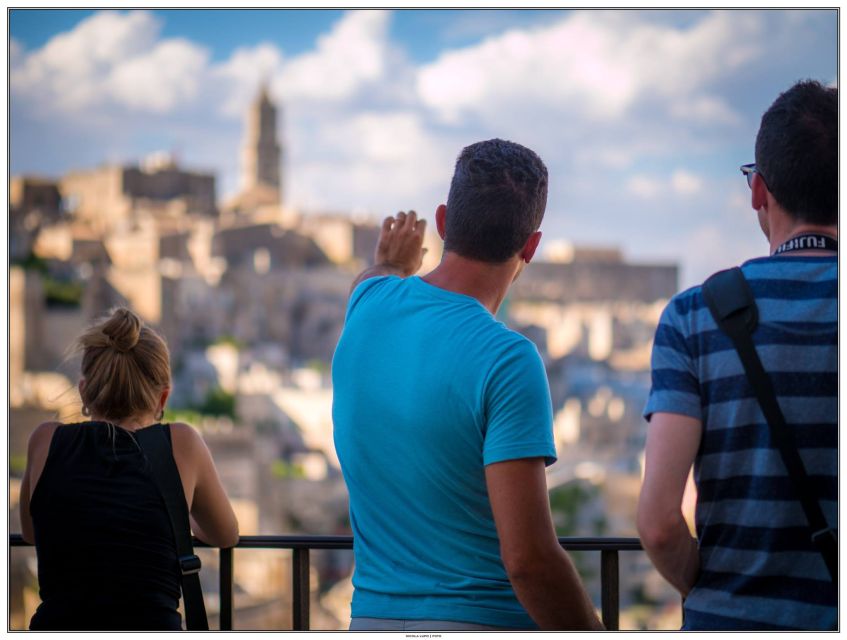
Review · BASILICATA
Matera’s Sassi Walking Tour – History and Culture
The Sassi reward a slower look. This two-hour walk brings Matera’s cave dwellings, churches, viewpoints, and social past together with a local certified guide. I especially like the small-group limit of 16 and the way the tour covers both Sasso Caveoso and Sasso Barisano, rather than showing you only the most polished streets. The main drawback is the uneven route, with steps and slopes that make it unsuitable for wheelchair users.
I also like that the rock church visit adds real substance for just €2.50, and that guides such as Antonio, Georgia, Cosimo, and Maria Theresa have brought personal stories from growing up in Matera. Bring sensible shoes, handle your personal needs before meeting the group, and expect a walking tour with plenty of pauses rather than a flat stroll.
Key points at a glance
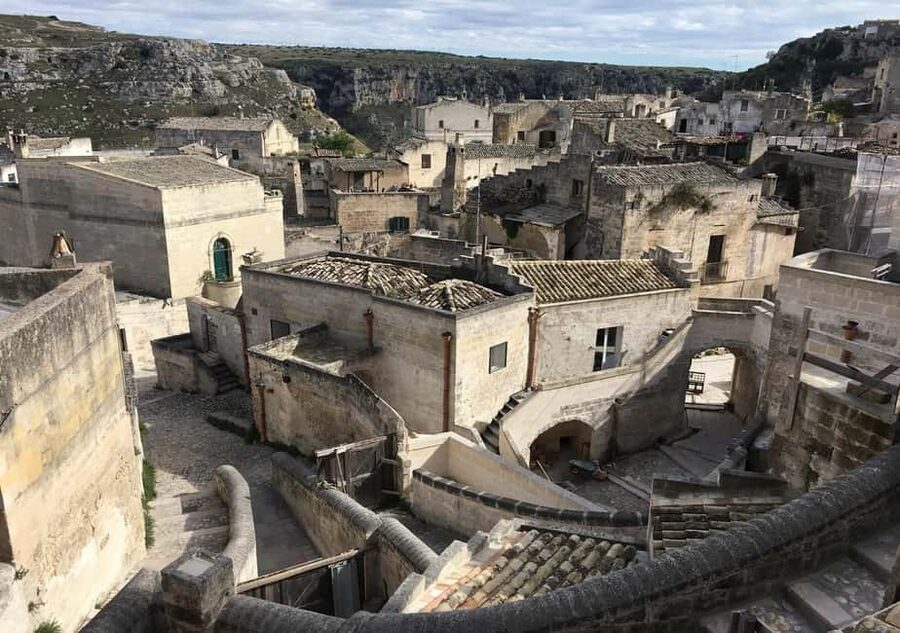
- Two Sassi districts in one walk: The route passes through Sasso Caveoso and Sasso Barisano, giving you a broader view of Matera’s old quarters.
- Local voices make the difference: Guides including Antonio, Georgia, Cosimo, and Maria Theresa have shared family memories, childhood details, and personal views of Matera’s revival.
- Santa Lucia alle Malve costs extra: The rock-hewn church is not included, but entry costs only €2.50 and adds an important look at Matera’s religious art and architecture.
- Small groups keep questions possible: The maximum group size is 16, with some tours reported at around eight to ten people.
- Expect steps and uneven ground: High heels are not allowed, and the tour is not suitable for wheelchair users.
- Good first-day orientation: The route helps you understand Matera’s layout before exploring the Sassi on your own.
Why a two-hour walk helps you understand Matera
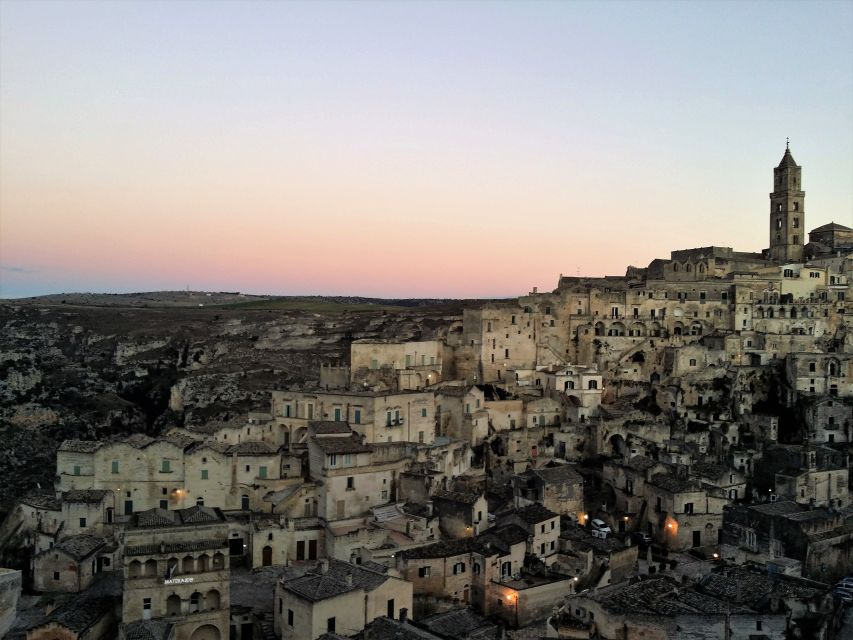
Matera can look simple at first: stone houses, pale rock, narrow lanes, and broad views across the ravine. Walk a little farther and the city becomes harder to read. A home may be partly carved into rock and partly built from stone. A church can appear modest from outside while containing a very different interior. A lane can rise steeply, then open onto a wide view of the Sassi.
That is where this tour earns its keep. You are not simply led from one photo stop to another. The guide explains how the Sassi changed over centuries, how homes and public spaces were altered, and how social and economic conditions shaped the city.
I like this approach because Matera’s appearance can tempt you into seeing only an ancient curiosity. The walk puts people back into the picture. You learn about the period when the Sassi became run-down and were treated as a ghost town, then about the long process that helped bring the area back to life.
The tour is conducted in English and comes with a radio guide, so you should be able to follow the commentary while standing with the group at viewpoints or along busy lanes. A city map is also included, which is useful after the tour when you want to retrace a street or find your way between the two Sassi districts.
More History Walking Tours in Italy
- Venice: City Center Historical Guided Walking Tour
★ 4.2 · 1,873 reviews - Palermo: Street Food and History Walking Tour
★ 4.9 · 1,486 reviews - Verona: History and Hidden Gems Guided Walking Tour
★ 5.0 · 1,379 reviews
Entering Sasso Caveoso and Sasso Barisano
The route twists through both Sasso Caveoso and Sasso Barisano. That matters because the two areas offer different impressions of Matera’s old urban fabric. Instead of seeing one concentrated section and leaving with a partial picture, you get a sense of how the historic quarters connect.
Expect regular stops for explanation. The guide may pause at a viewpoint to discuss the shape of the city, then move into a narrower lane to explain how buildings were adapted over time. The tour description promises attention to architecture, history, and culture, and the strongest guide reports describe a good balance between talking and walking.
This is also where a local guide can add something a map cannot. Antonio, who was described as born and raised in Matera, has shared stories about seeing the city change during his lifetime. Cosimo has offered personal details about life in the Sassi, while other guides have explained how local people experienced the area before its current revival.
Those details help you avoid a common mistake: treating every cave as if it belonged to the same period or served the same purpose. Matera’s buildings reflect several layers of use and repair. The guide’s job is to show you how to read those layers without burying you under dates.
The walking itself requires attention. The ground is uneven, and the route includes steps and uphill sections. The experience is not presented as difficult, but it is clearly not suitable for wheelchair users. High heels are specifically not allowed. I would choose shoes with a firm sole and enough grip, even if you are visiting in warm weather.
The rock church at Santa Lucia alle Malve
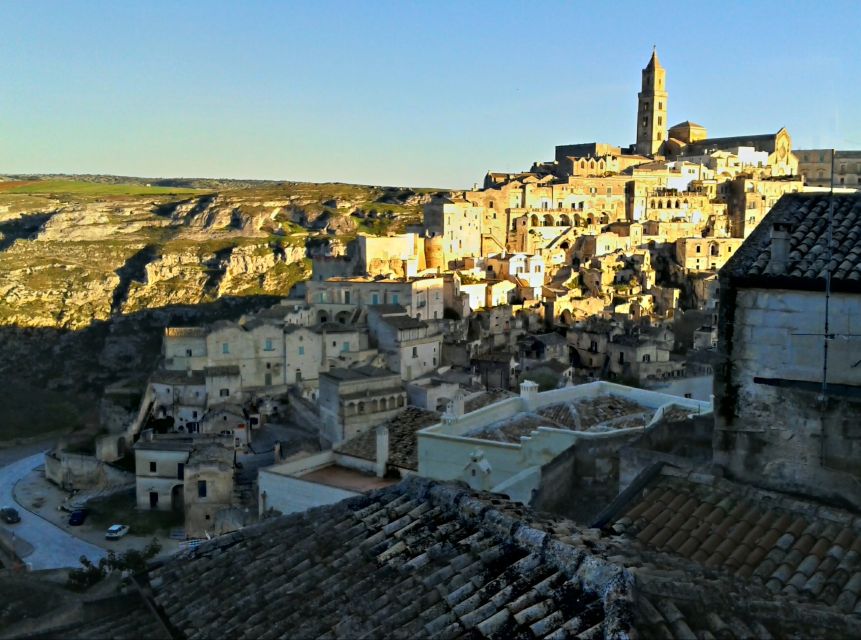
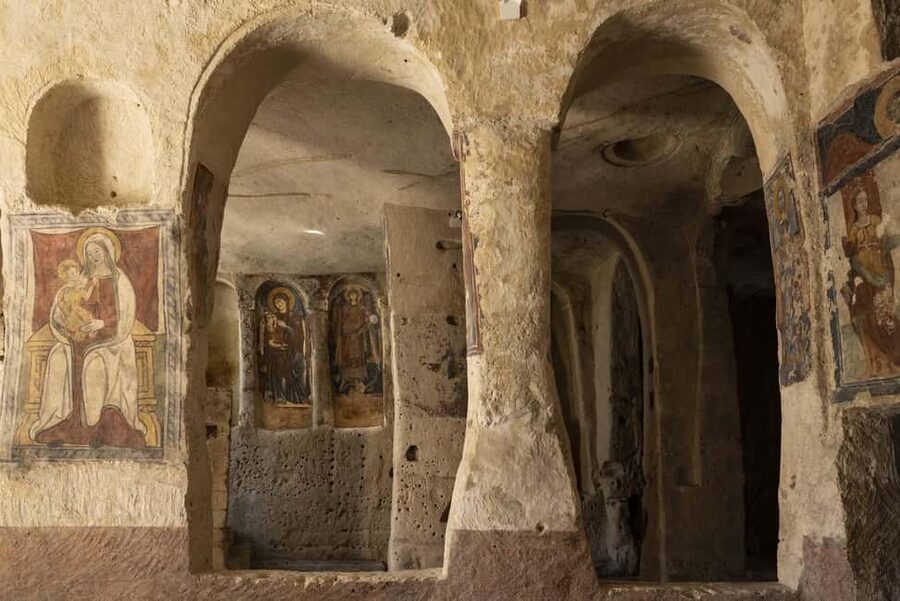
The tour includes a visit to a rock-hewn church, but the €2.50 entry ticket to Santa Lucia alle Malve is paid separately. This small extra cost is worth knowing before you arrive, especially because one guide may ask the group if people want to add the church visit during the walk.
That arrangement gives you some flexibility. If you are short on time or prefer to stay outside, you may not need to enter. If you want a fuller picture of Matera, I would pay the fee. The church lets you see the architectural structure from close up, rather than viewing carved spaces only from the street.
Maria Theresa’s storytelling inside the church was praised for adding drama, and one particularly practical account noted that the church’s art and history made the small fee more than worthwhile. The visit is not just a quick doorway stop. It gives the guide a place to explain how religious spaces were carved and used within the wider Sassi setting.
Do not expect a long museum visit. The church is one part of a two-hour walking route, not a separate church tour. Its value comes from the explanation that connects the carved interior to the city around it.
Matera’s move from ghost town to living city
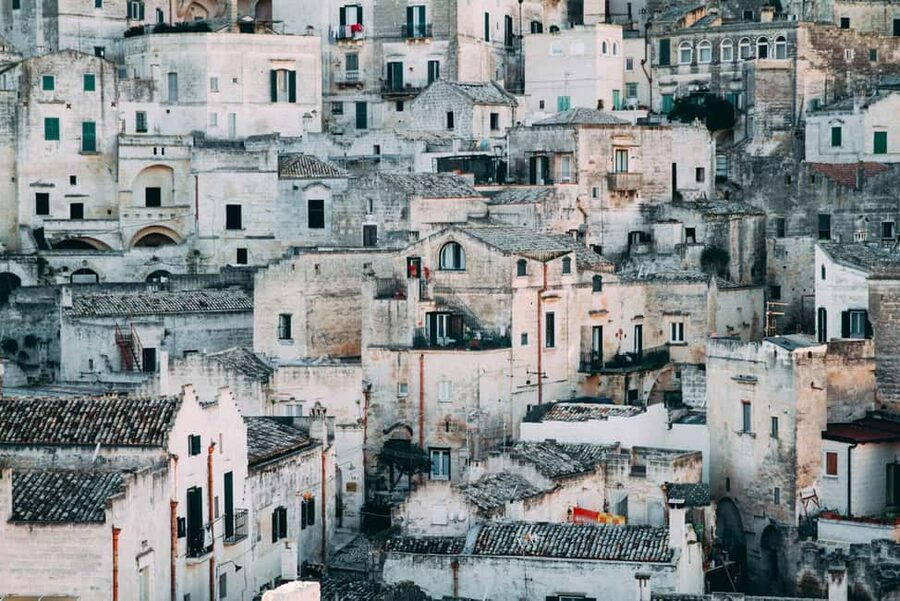
The most important story here is not simply that Matera is old. It is that the Sassi went through a severe decline, lost much of their population, and later began a difficult recovery.
The walk explains the social side of that change. Guides discuss the conditions that shaped the old neighborhoods, the way living standards changed, and the reasons the area was eventually abandoned by many residents. This gives you a more honest view than a tour focused only on attractive stone alleys.
The present-day Sassi are not untouched ruins. They are a place that has been repaired, reused, and carefully presented while still retaining signs of its earlier life. The contrast between decay and renewal is one of the most useful themes of the tour.
I find this particularly helpful because Matera’s beauty can hide its harder chapters. The views are striking, but the city’s appeal is stronger when you understand the human cost behind the empty homes and the work involved in preserving them.
Several guides bring this story down to a personal scale. Antonio has spoken about growing up in the city and witnessing its resurrection. Other local guides have shared small memories and observations rather than reciting only formal history. Those personal accounts make the change easier to picture.
More Local Culture and Traditions Tours in Italy:
- Naples Spanish Quarters Walking Tour Street Art, Folklore & Sweet
★ 5.0 · 797 reviews - Matera’s Sassi Walking Tour – History & Culture
★ 5.0 · 476 reviews - Amsterdam Food and Cultural Tour with Tastings
★ 5.0 · 4,315 reviews - Sevilla Food Tour: Tapas, Wine, History & Traditions
★ 5.0 · 3,468 reviews
Viewpoints, Baroque streets, and time for photographs
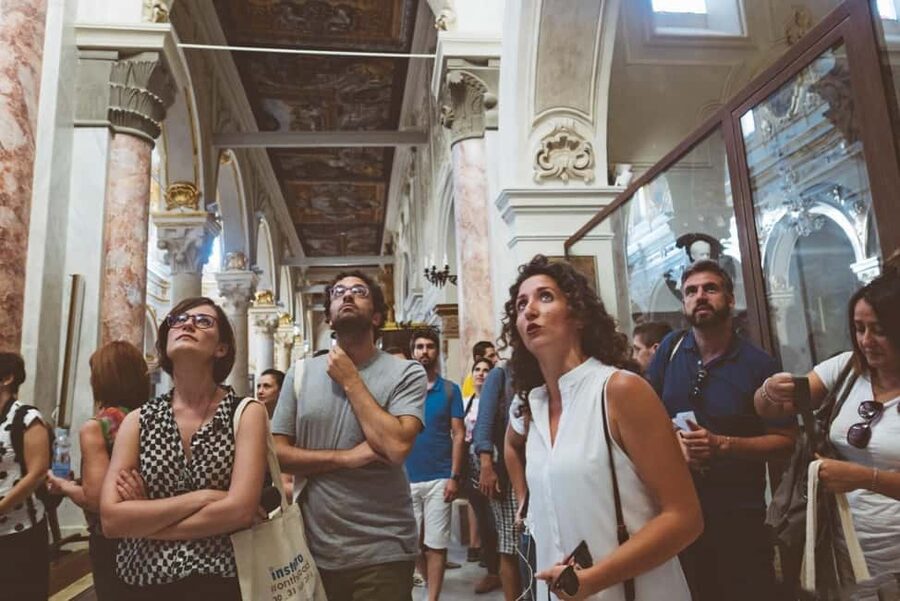
The walk includes panoramic views as well as the older cave quarters. At several points, you should have time to stop, take pictures, and ask questions. The pacing has been described as steady rather than rushed, with Georgia in particular praised for allowing the group to pause and look around.
You will also see the outsides of the Baroque part of Matera. This widens the experience beyond the Sassi and shows that the city is not made up only of carved dwellings. The contrast between the stone cave quarters and the more formal Baroque architecture helps explain the city’s layered appearance.
The guide’s position matters at these stops. A good explanation can turn a pretty overlook into a useful lesson about geography, settlement, and urban change. The tour includes several points where the guide discusses the shape of the city and the way its built areas developed.
I would bring a camera, but keep it secondary. The route includes steps, narrow passages, and group movement, so stopping for every possible image could make you lose the thread of the story. Your guide should allow picture breaks, but this remains a walking tour with a planned route.
The guides are the main reason to book
The strongest part of this experience is the people leading it. Antonio is repeatedly praised for combining dates and facts with memories from his own life. Georgia is described as friendly, funny, patient, and good at answering questions. Maria Theresa has been praised for theatrical storytelling, while Cosimo has offered detailed accounts of life in the Sassi.
That variety matters because a two-hour tour can become dry if it is delivered as a list of buildings. Here, the best guides use stories, humor, local examples, and clear explanations. One guide even stayed behind to help when a member of the group became ill, which suggests a thoughtful approach to group care.
The radio guide is a practical bonus. In a small group of up to 16, you may often hear the guide directly, but the audio system helps when the group spreads out on steps or when other people are nearby.
The English delivery has been praised as clear and easy to follow. If you have questions, the small format should make it easier to ask them than on a large coach excursion. The experience also works well for people who want a guide who can explain both official history and everyday life.
Is $29 a fair price?
At $29 per person, this is a reasonable price for a two-hour guided walk in one of Italy’s most unusual historic areas. The cost includes the guide, radio guide, and city map. You pay another €2.50 if you enter Santa Lucia alle Malve.
The value depends on how much context you want. If you are content to wander, photograph the lanes, and read signs on your own, you can explore parts of Matera without paying for a tour. But the Sassi are confusing enough that you may miss the meaning of what you are seeing.
I consider the fee good value for a first visit, especially if you take the tour early in your stay. It gives you a mental map, introduces both Sassi districts, and explains the city’s social changes before you start exploring independently.
The strongest value comes when you listen actively and ask questions. The guides have been praised for explaining architecture, local life, preservation, and the city’s transformation in a way that makes the two hours pass quickly.
Who will enjoy this walk most?
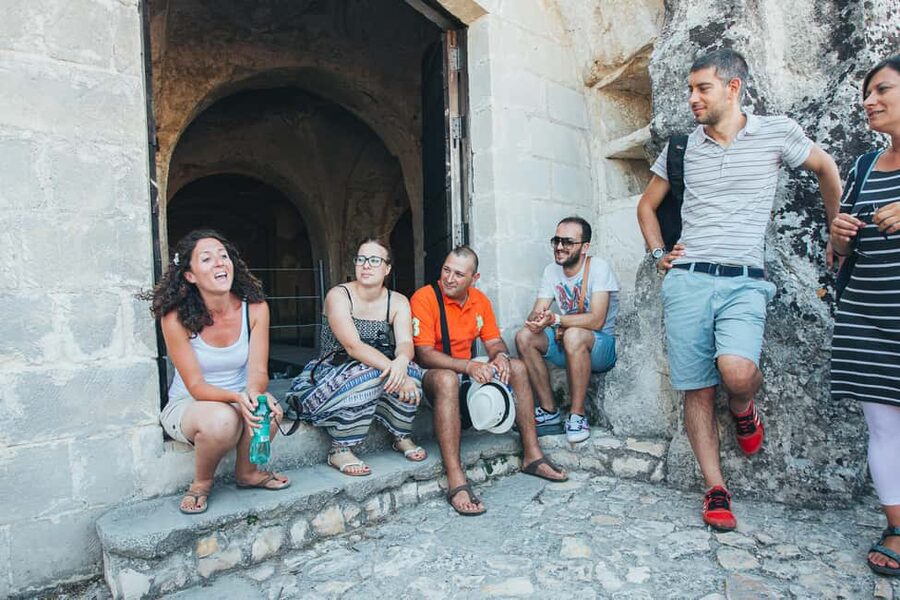
I would recommend it to first-time visitors who want to understand Matera rather than simply photograph it. It also suits anyone interested in architecture, religious spaces, urban history, or the way historic districts are brought back into use.
Families with older children may appreciate the stories and short format, though the steps and uneven ground require care. People who prefer a slow, polished sightseeing route should know that this is a proper walking tour through old streets, not a flat promenade.
It is a good choice for an arrival day because the route helps you get your bearings. One visitor took the 10:30 a.m. departure on the first day specifically to understand the city and both Sassi districts. That is a smart use of the experience.
I would be cautious if you have limited mobility. The tour is not suitable for wheelchair users, and high heels are prohibited. The uneven route may also be tiring for anyone who finds stairs difficult. The meeting point is Seekers Viaggi, although the operator may change it and notify you if needed.
You can cancel up to 24 hours before the start for a full refund, and the reserve-now, pay-later option keeps your plans flexible. Starting times vary, so check availability when choosing a date.
Should you book Matera’s Sassi Walking Tour?
Book it if you want the Sassi explained by someone who knows the city from the inside. The local stories, two-district route, rock church, and discussion of Matera’s decline and recovery give you far more than a quick orientation walk.
Skip it if you strongly dislike steps, uneven streets, or guided pacing. Also remember that the church ticket is separate from the $29 price.
For most first-time visitors, I would book this tour near the start of a Matera stay, choose supportive shoes, and bring €2.50 for Santa Lucia alle Malve. The best guides, including Antonio, Georgia, Cosimo, and Maria Theresa, make the old stone feel lived in rather than merely old.
FAQ
How long does the Matera Sassi walking tour last?
The tour lasts two hours.
What is the price of the tour?
The listed price is $29 per person.
Which parts of Matera does the route cover?
The walk passes through Sasso Caveoso and Sasso Barisano, and also includes views of the Baroque part of the city.
Is entry to Santa Lucia alle Malve included?
No. Entry to the rock church costs €2.50 and is paid separately.
What is included in the tour price?
The price includes a guide, a radio guide, and a map of Matera.
Is the tour conducted in English?
Yes. The live tour guide speaks English.
How large is the group?
The group has a maximum of 16 people. Some departures may be smaller.
Is the tour suitable for wheelchair users?
No. The tour is not suitable for wheelchair users, and high-heeled shoes are not allowed because the route includes uneven ground and steps.
Just added around Italy
- Marsala: Historic winery tour with wine tasting★ 4.8 · 112 reviews
- MANTOVAGANDO: Exploring Mantua’s Historic Center★ 4.5 · 53 reviews
- Lazise: Historical Center Wine Tasting Tour★ 4.9 · 110 reviews
- Lecce: Jewish History Walking Tour★ 4.7 · 67 reviews
- Pastrengo: Lake Garda Wine & Food Tasting in Historic Fort★ 4.7 · 73 reviews
- Lake Garda: Historic Castle Cruise with Wine Tasting★ 4.5 · 241 reviews
- Cosenza: Audio Guide of the Historic Center★ 4.1 · 19 reviews
- Historical walking tour of Turin (Private tour)★ 5.0 · 18 reviews
Local Culture & Traditions Tours, compared.

Amsterdam Food and Cultural Tour with Tastings
Read our review →
Sevilla Food Tour: Tapas, Wine, History & Traditions
Read our review →
Tromsø: Reindeer Camp and Sami Cultural Tour with Lunch
Read our review →
Half Day Dominican Republic Cultural Tour : Small Group
Read our review →
Ultimate Melbourne Walking Tour: History, Laneways & Culture
Read our review →
Tromsø: Sámi Reindeer Sledding and Sami Cultural Tour
Read our review →
Kyoto Gion: 2-Hour Geisha Culture & History Walking Tour
Read our review →
Marrakech Historical and Cultural Tour – Half Day City Tour
Read our review →Browse the lists this tour appears in