
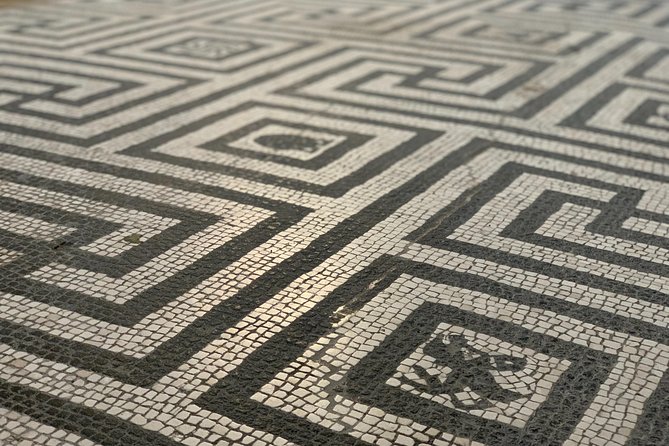
Review · NAPLES
Secret Herculaneum: The Hidden Treasure of Ancient Roman Civilization
Herculaneum preserves Roman life in startling detail. This two-hour walking tour gives you small-group access with an archaeologist, then brings the buried town to life through its homes, baths, mosaics, workshops, and waterfront. I especially like the compact route, which lets you see a great deal without the long marches common at Pompeii, and the guides, including Riccardo, Ornella, Raffaele, Corrado, Luigi, and Arcangelo, are praised for making complex archaeology clear and entertaining. The main drawback is that the €16 entrance ticket is not included, and a few visitors have waited while late arrivals checked in.
The tour costs $34.84 per person, runs in English, and accepts a maximum of 10 people. That is a fair price for a certified guide and archaeologist, particularly if you want context rather than a lonely walk past old walls. You should wear sturdy shoes, expect stairs, and arrive at the Herculaneum ticket office early enough to avoid delaying the group.
Key points at a glance
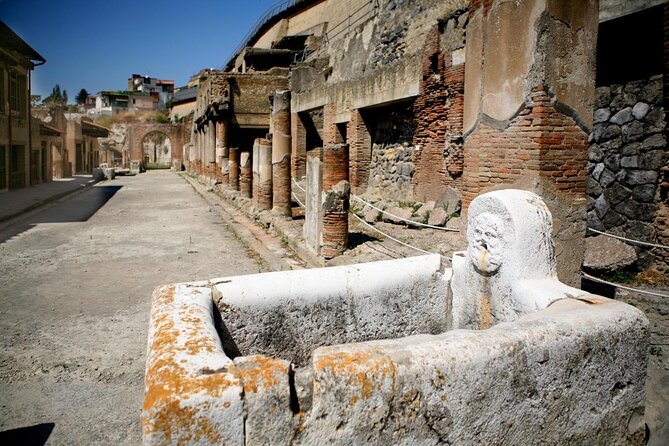
- Herculaneum is compact but remarkably preserved: See doors, bedrooms, frescoes, mosaics, shops, baths, and household objects in a manageable two-hour route.
- An archaeologist leads the walk: Guides such as Riccardo and Raffaele add detail about Roman homes, daily life, and the eruption of Mount Vesuvius.
- The ancient beach changes the story: The waterfront and preserved boat show how the eruption affected the town beyond its streets and houses.
- The maximum group size is 10: This makes it easier to ask questions, though a soft-spoken guide may be hard to hear.
- The entrance ticket costs extra: Budget $34.84 for the tour plus €16 for admission to the Archaeological Park.
- Late-day scheduling may help: A 4 p.m. start has sometimes meant fewer people and little or no ticket-office queue.
Why Herculaneum feels different from Pompeii
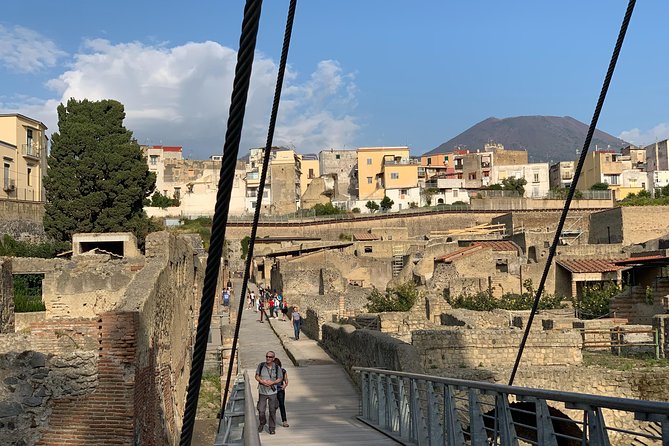
Pompeii is famous for its scale. Herculaneum wins on detail.
The two towns were buried by the eruption of Mount Vesuvius in AD 79, but Herculaneum was covered by hot volcanic material that preserved much of its wooden architecture, furniture, doors, and upper-level features. The excavated area is smaller than Pompeii, yet the remains often feel more intimate. You can look into a home and see the arrangement of rooms, not just the outline of a foundation.
That smaller size matters. You are not spending the day marching from one distant quarter to another. Instead, you move along paved Roman streets and repeatedly step into houses, public buildings, and shops. In about two hours, a good guide can help you understand how people lived, worked, worshiped, socialized, and displayed their wealth.
I like Herculaneum for exactly this reason. It is easier to read. Pompeii can feel like a giant archaeological puzzle. Herculaneum gives you more complete pieces.
The tour focuses on daily life as much as grand monuments. You will hear about bedrooms, atriums, studies, baths, political life, commerce, and household decoration. That human scale is the real strength of the experience.
More Ancient History Tours in Italy
- Day SPA like an ancient Roman
★ 3.5 · 106 reviews - Skip the Line Ancient Herculaneum Walking Tour with Top Rated Guide
★ 4.5 · 32 reviews - Skip-the-Line Exclusive Private Ancient Pompeii & Vesuvius Volcano Full Day Tour
★ 4.5 · 31 reviews
Starting at the Archaeological Park entrance
Meet at the Herculaneum ticket office in Ercolano, at the entrance to the Archaeological Park. The tour ends at the same meeting point, which keeps the outing simple if you are connecting it with public transportation or another Naples-area visit.
Your admission ticket is not included. The park entry fee is €16 per person, paid separately. Bring the mobile booking confirmation shown for the tour, and allow enough time to find the guide and complete any entrance arrangements. One group was held for almost 20 minutes because some people had not checked in correctly, so this is not the place to arrive at the last possible moment.
Once inside, the certified guide and archaeologist set the pace. The maximum group size is 10, a useful limit in narrow streets and small rooms. It also gives you a better chance to hear explanations and ask questions than a large coach group would.
The only recurring concern is sound. One guide was described as soft-spoken, so stand close if you have trouble hearing. This is especially important in open courtyards or when other groups are nearby.
The main streets and the Roman town plan
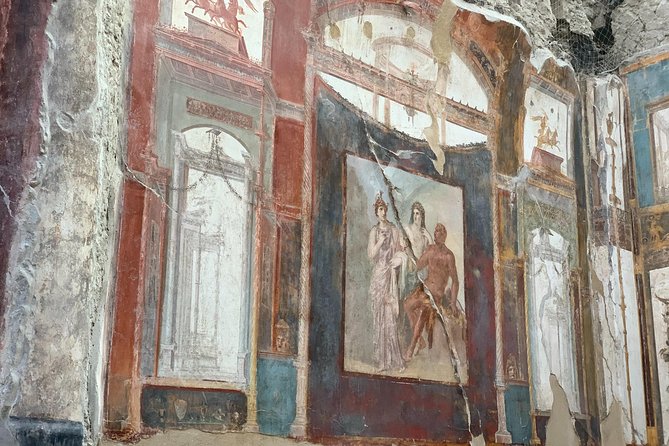
The first part of the walk introduces the city itself. You follow the paved streets and the decumanus maximus, the principal east-west road of a Roman town. In Herculaneum, this street was lined with important homes and civic buildings.
A guide helps you read the street as more than a row of ruins. Doorways show where people entered private homes. Shops and workshops point to commercial life. The orientation of the streets reveals a planned town rather than a random collection of surviving walls.
The paved surfaces can be uneven, and there are stairs in parts of the site. You should wear firm walking shoes and expect to walk up and down steps. Wheelchair use must be reported at least 24 hours before the visit, as the route may require advance planning.
This opening section is valuable because it gives you a mental map. Without it, the houses can blur together. With it, you begin to see where public life met private life, and why some streets carried more status than others.
The ancient beach and the terrace of Marcus Nonius Balbus
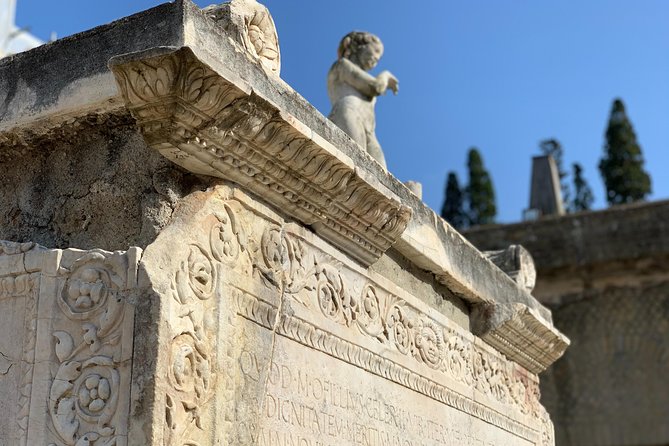
The ancient beach is one of the most striking parts of the visit. Herculaneum is unusual because its waterfront survives as part of an almost entirely preserved Roman town. Standing near the shore gives you a clearer sense of the city’s setting and of its connection to the Bay of Naples.
The beach also helps explain the human cost of the eruption. The remains are not limited to elegant houses above the street. The waterfront brings the disaster closer and shows how much of the town reached down toward the sea.
Nearby, the terrace of Marcus Nonius Balbus honors one of Herculaneum’s most important citizens and patrons. The terrace once overlooked the sea, and its position tells you something about status and civic pride. Roman towns used monuments and public spaces to honor powerful residents, and this site gives that political culture a physical setting.
These stops take about 10 minutes each in the planned route. That is enough time for a focused explanation, though not for a long independent pause.
More Pompeii and Vesuvius History Tours in Naples:
- Private Walking Tour through the Historical City of Herculaneum
★ 5.0 · 49 reviews - Naples/Salerno Port: Pompeii Tour – Shore Excursion
★ 4.0 · 36 reviews - Pompeii the Ancient City (Tour+Transfer)
★ 4.5 · 17 reviews - Discover the Ancient Ruins of Pompeii: Day Trip from Rome
★ 3.5 · 2,247 reviews
The House of the Deer and wealthy Roman comfort
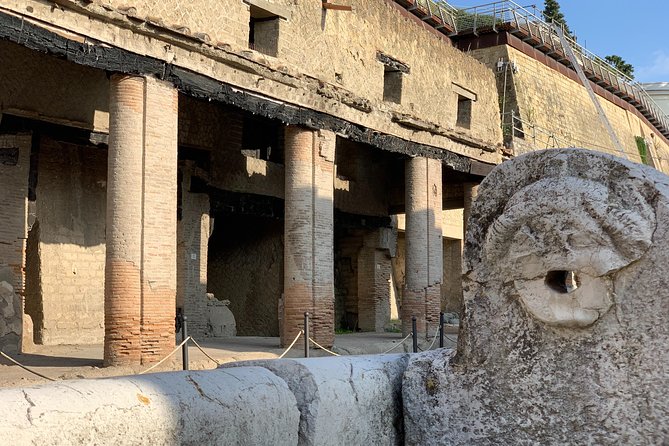
The House of the Deer is described as the finest and wealthiest residence found in the excavation area. Its name comes from two marble groups showing deer attacked by dogs.
Here the tour shifts from ordinary town planning to elite domestic life. You can expect the guide to point out how the house’s decoration, open spaces, and sculpture expressed wealth. Roman homes were not only places to sleep. Their courtyards, reception rooms, wall paintings, and garden features helped owners display taste and social position.
This is one of the places where a guide adds real value. Without explanation, a decorated room may simply look pretty. With context, you can see the choices behind it: what guests would have seen first, where household work took place, and how art shaped the experience of the home.
The site’s preservation makes this especially effective. Herculaneum does not ask you to imagine every detail from a few broken columns. It often gives you enough surviving material to picture the room as a lived space.
The Wooden Partition and the House of Neptune and Amphitrite
The House of the Wooden Partition takes its name from a folding wooden structure found between the atrium and the tablinum, the homeowner’s study or office. The survival of wood is one of Herculaneum’s great surprises.
At Pompeii and other Roman sites, you often see stone walls and faded decoration. Here, a wooden feature can show how rooms were divided and how the home changed from public reception space to more private areas. It is a small object with a large lesson: Roman houses were designed around movement, privacy, ceremony, and work.
The House of Neptune and Amphitrite belonged to a wealthy merchant. Its best-known feature is a beautiful mosaic showing Neptune and Amphitrite. The room gives you a chance to connect trade, wealth, and decoration. A prosperous merchant could turn the home into a statement about success, taste, and access to fine materials.
I would pay close attention to the guide’s explanation here. The mosaic is the obvious attraction, but the arrangement of the house and the surviving fixtures are just as useful for understanding how Roman families lived.
The Samnite House and the decumanus maximus
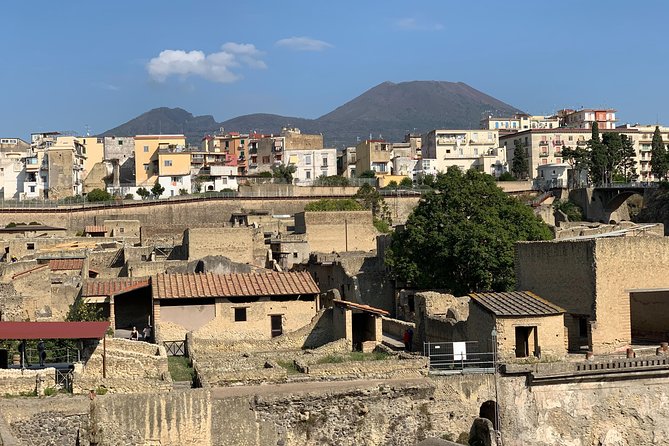
The Samnite House is considered one of the oldest residences in Herculaneum and is among the site’s most popular remains. Its age gives the guide a chance to explain that the city changed over time, rather than appearing fully formed in AD 79.
The house also helps you compare different building periods and styles. Roman towns were renovated, expanded, and redecorated as families changed and fortunes rose or fell. Looking at an older residence beside later homes makes that process easier to grasp.
You then return to the decumanus maximus, the main street. This is not merely a route between attractions. It was a social and commercial spine, lined by prestigious homes and connected to the city’s public life.
The walk here can feel crowded if several groups arrive at once. A small group helps, but the experience still depends on staying close enough to hear the guide. If you want quiet time for photographs, ask when the explanation ends and use the final minutes at each stop.
The College of the Augustales and Casa d’Argo
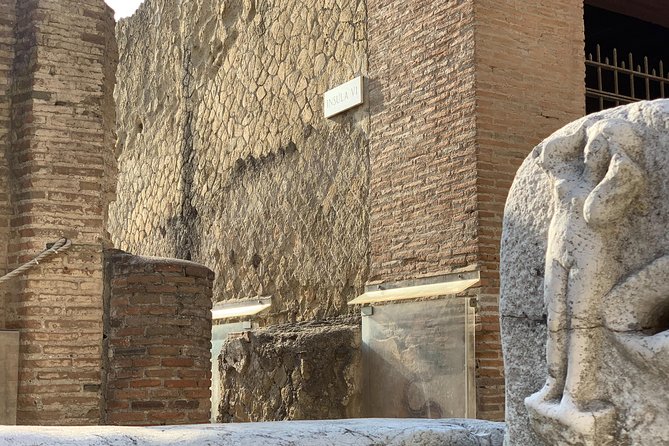
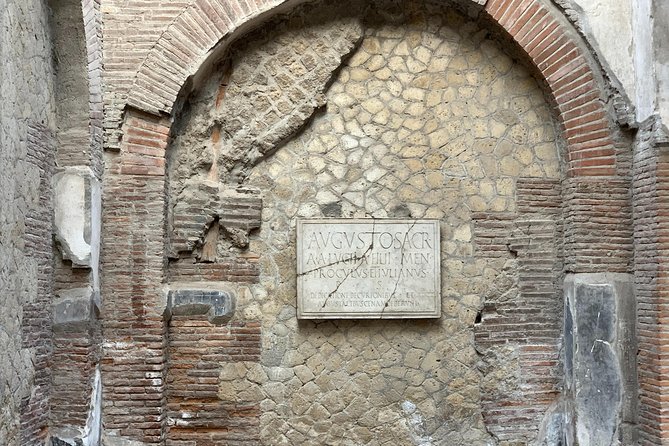
The College of the Augustales, also called the Sacellum of the Augustals, was used for rites honoring the emperors. Its presence reveals how religion and politics overlapped in Roman society.
The Augustales were connected with the worship of emperors, and the building reflects the official side of civic life. This stop broadens the tour beyond private houses. You see how ordinary residents, wealthy patrons, merchants, and religious officials all fit into the town’s public structure.
Casa d’Argo takes its name from a fresco that once showed Argus Panoptes, the hundred-eyed giant. The fresco has disappeared, but the name preserves a clue about the building’s former decoration.
This is a useful reminder that archaeology is not only about what survives. A missing painting can still tell you how scholars identified a house and what kinds of myths decorated Roman interiors. The guide can help separate what you are seeing from what is known through records, fragments, or comparison.
The boat pavilion and the final view of Herculaneum
The boat pavilion holds a charred boat discovered along the ancient beach during excavations in 1981. It is one of the most unusual displays on the route.
The boat adds an important physical object to the tour. After seeing streets and houses, you see evidence tied directly to the waterfront and the eruption. Its damaged condition is part of the story, not an imperfection to ignore.
This final section is also a reminder that Herculaneum is still an active place of study. Excavation did not end when the town was first uncovered. Finds continue to shape how the site is understood, and the boat gives you a memorable closing image.
The tour ends back at the park meeting point after roughly two hours. You may want to keep extra time afterward for a slower look at any house or display that caught your attention. The guided route is designed to give you the main story, not to replace independent exploration.
What the $34.84 price really buys you
The tour price is $34.84 per person, with the €16 park admission added separately. That makes the total cost higher than the headline price, so budget for both before booking.
Still, I think the fee is reasonable if you want a focused introduction. Herculaneum can be difficult to interpret on your own, especially when several buildings share similar features. The archaeologist’s comments turn mosaics, partitions, civic buildings, and street layouts into a connected story.
The small group is another part of the value. A group of no more than 10 is far more practical than a large guided crowd in narrow rooms. The strongest praise is directed toward the guides’ ability to explain the past, answer questions, use humor, and keep the walk lively. Luigi, Ornella, Riccardo, Raffaele, Corrado, and Arcangelo are all specifically praised for their teaching and enthusiasm.
The tradeoff is time. Ten minutes at each listed point is enough for a clear introduction, but not enough for a long study of every room. If you want to photograph every mosaic or read every sign, plan to return or stay after the tour.
Who should book this two-hour walk?
I would choose this tour if you are visiting Herculaneum for the first time and want help understanding what you see. It is particularly suitable for people who have limited time, prefer a compact site, or want comparisons with Pompeii and other Roman monuments.
It also works well for history-minded families and adults who enjoy asking questions. The guides use humor and practical explanations, which can keep the ancient material from feeling dry.
You may prefer a self-guided visit if you want to move slowly, linger in one house, or avoid a fixed pace. You should also think twice if stairs and uneven paths are difficult for you. Wheelchair use must be reported 24 hours in advance, and the route’s accessibility should be confirmed before arrival.
A late afternoon start may suit you. The 4 p.m. tour has sometimes avoided the worst crowds, and one group found no queue at 3:50 p.m. Still, opening conditions can change, so do not treat that as a guarantee.
Free cancellation is available up to 24 hours before the start time. Changes or cancellations made within 24 hours are not refunded, and poor weather may lead to a new date or a full refund.
Should you book Secret Herculaneum?
Yes, if you want the ruins to make sense rather than simply look impressive.
The site itself is the star: compact, unusually complete, and full of personal details. The tour earns its price through the archaeologist’s explanations, the manageable group size, and the chance to connect a wooden partition, a merchant’s mosaic, a civic shrine, and a charred boat into one story.
Add the €16 entrance fee, wear solid shoes, arrive early, and stay near the guide. If you do that, this is a strong choice for seeing Herculaneum in two hours, especially if Pompeii’s huge scale sounds tiring. Choose a self-guided visit only if you value total freedom more than expert interpretation.
FAQ
How long does the Herculaneum tour last?
The tour lasts approximately two hours and ends back at the meeting point near the Herculaneum ticket office.
Is the Archaeological Park entrance fee included?
No. The entrance ticket costs €16 per person and must be paid separately.
Where does the tour meet?
The meeting point is the Herculaneum ticket office at 80056 Ercolano, in the Metropolitan City of Naples, Italy.
What language is the tour offered in?
The experience is offered in English.
How large is the tour group?
The activity has a maximum of 10 travelers.
Can I cancel for a full refund?
Yes, if you cancel at least 24 hours before the experience start time. Cancellations made less than 24 hours before the start are not refunded.
More Ancient History Tours in Naples
- Private Walking Tour of Ancient Naples with an expert guide
★ 5.0 · 19 reviews - Colosseum: Underground and Ancient Rome Tour
★ 4.7 · 12,691 reviews - Colosseum & Ancient Rome with Arena Floor Option I Max 6 People
★ 5.0 · 3,306 reviews - Rome: Colosseum, Ancient Rome Tour or AudioGuided Tour
★ 4.4 · 2,879 reviews
Just added around Naples
- Visit of the Historic Center of Naples with an Expert Guide★ 5.0 · 17 reviews
- Skip-the-Line Exclusive Private Ancient Pompeii & Vesuvius Volcano Full Day Tour★ 4.5 · 31 reviews
- Spaccanapoli tour of the historical center of Naples★ 5.0 · 39 reviews
- Skip the Line Ancient Herculaneum Walking Tour with Top Rated Guide★ 4.5 · 32 reviews
- Naples/Salerno Port: Pompeii Tour – Shore Excursion★ 4.0 · 36 reviews
- Private Walking Tour through the Historical City of Herculaneum★ 5.0 · 49 reviews
- Private Walking Tour of Ancient Naples with an expert guide★ 5.0 · 19 reviews
- Pompeii the Ancient City (Tour+Transfer)★ 4.5 · 17 reviews
Pompeii & Vesuvius History Tours, compared.
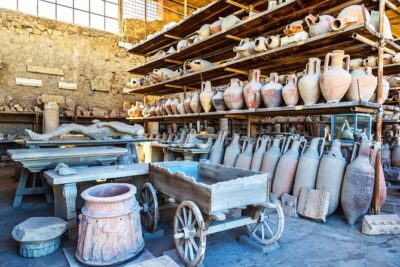
Discover the Ancient Ruins of Pompeii: Day Trip from Rome
Read our review →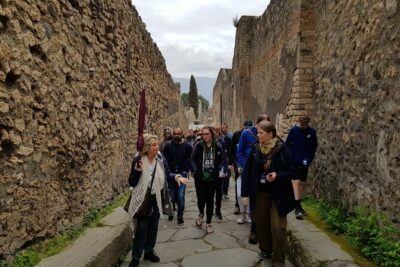
Small-Group Rome to Pompeii & Amalfi: Day of History & Sea
Read our review →Ancient Pompeii Private Tour: Skip the Line & Kid-Friendly Option
Read our review →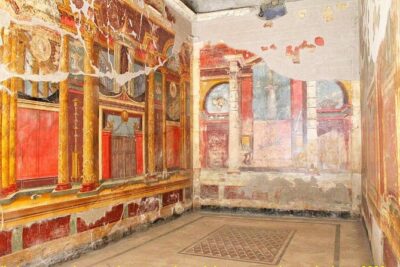
Skip-the-Line Half-Day Private Tour Ancient Pompeii Highlights with Native Guide
Read our review →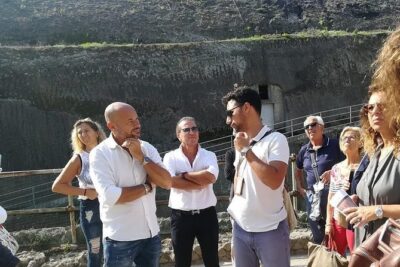
Private Walking Tour through the Historical City of Herculaneum
Read our review →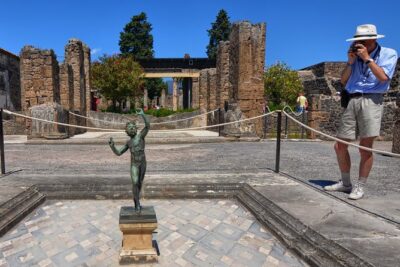
Naples/Salerno Port: Pompeii Tour – Shore Excursion
Read our review →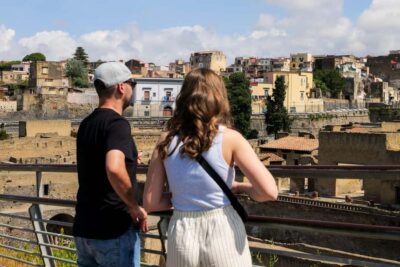
Discover Herculaneum: A guided tour of the ancient Roman city
Read our review →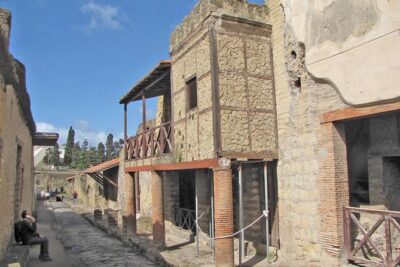
Skip the Line Ancient Herculaneum Walking Tour with Top Rated Guide
Read our review →Browse the lists this tour appears in