
Review · CAMPANIA
Discover Herculaneum: A guided tour of the ancient Roman city
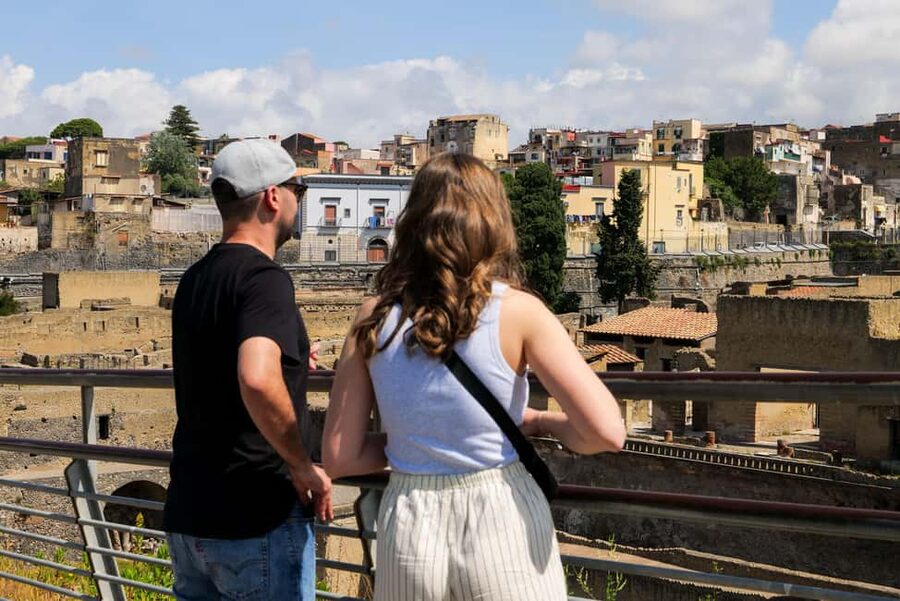
Herculaneum rewards careful looking. This two-hour guided visit brings you into an ancient Roman town preserved by Vesuvius, with wooden doors, vivid wall paintings, household objects, and grand seaside homes still visible. I like the smaller scale of the site and the way a good guide can turn ruins into a picture of ordinary Roman life. I also like that your ticket is handled for you, so you can spend your time looking instead of waiting at the entrance.
The main consideration is that transport is not included with the standard tour. You must reach the meeting point yourself, and the site is not suitable for wheelchair users. The optional Vesuvius combination adds bus transfers, but it creates a long day with fixed departure times.
Key points at a glance

- Preserved wooden features: See charred Roman structures, including the famous wooden partition, a rare glimpse of ancient construction.
- Grand homes: Visit the House of the Deer, House of the Bicentennial, and House of the Wooden Partition.
- Fine decorative work: Look closely at the mosaics in the Houses of Neptune and Amphitrite.
- A focused two-hour route: The guide covers the main sights without asking you to commit to an entire day underground.
- Guide-led interpretation: French, English, and Italian tours are available, with guides such as Danilo and Célestina praised for humor, clarity, and enthusiasm.
- Optional Vesuvius add-on: Combine the ruins with the volcano and bus transport from Naples for a full half-day or longer outing.
Why Herculaneum feels different from Pompeii
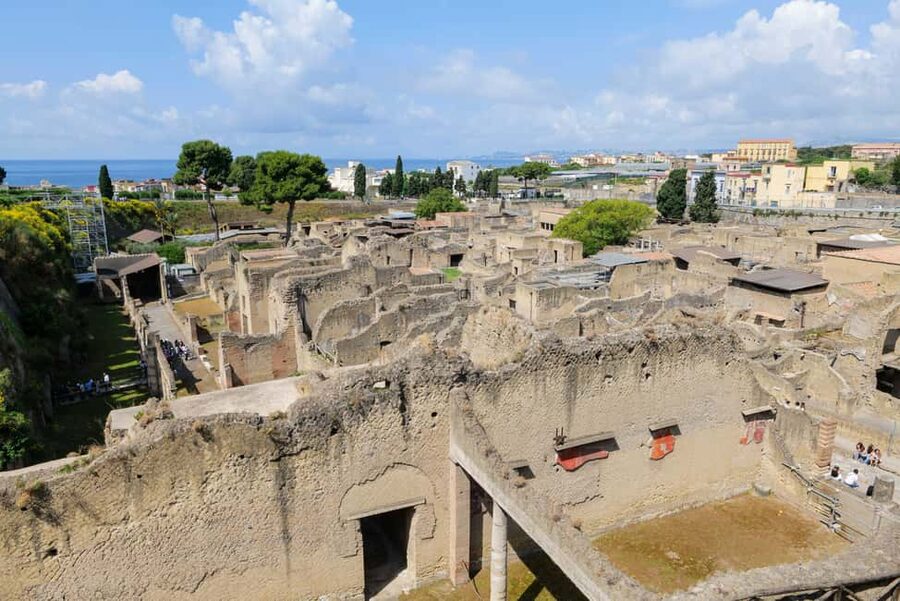
Pompeii gets the bigger crowds and the bigger headlines. Herculaneum offers a tighter, more intimate visit. The two cities were both struck by the eruption of Mount Vesuvius in AD 79, but the material covering Herculaneum helped preserve an unusual amount of domestic detail.
Here, I would pay attention to the parts that do not look grand at first glance. A wooden beam, a doorway, a painted wall, or a household object can tell you more about daily life than a large monument. The city feels less like a collection of broken stones and more like a set of rooms interrupted in the middle of ordinary life.
That is where the guide matters. On your own, you can appreciate the colors and shapes, but you may miss why a particular house matters or what a preserved piece of wood tells you about Roman building methods. The guides are expected to explain how people lived, not simply point out dates and names.
The tour has received a 4.9 rating from 34 reviews, and the strongest praise centers on the guides. Danilo is described as warm, funny, patient, and deeply informed. Célestina is praised for interesting explanations, while other guides are singled out for making the visit clear and lively. Your guide may be someone else, but the pattern is useful: this experience depends heavily on the person leading it.
More Ancient History Tours in Italy
- Colosseum: Underground and Ancient Rome Tour
★ 4.7 · 12,691 reviews - Colosseum & Ancient Rome with Arena Floor Option I Max 6 People
★ 5.0 · 3,306 reviews - Rome: Colosseum, Ancient Rome Tour or AudioGuided Tour
★ 4.4 · 2,879 reviews
Meeting the guide and entering the site
Your meeting point depends on the option you book. Look for the inStazione logo and follow the instructions sent before your reservation. The operator provides the ticket and visit information in advance, which should make the arrival process less stressful.
The standard experience lasts about two hours. That is enough time to see the main houses and understand the story of the city, but it is not a full-day archaeological study. You should arrive ready to walk, stand, and look closely. Comfortable shoes and a sun hat are sensible choices, especially during bright weather.
Skip-the-line entry is a practical benefit here. It does not make the site empty, but it removes one avoidable task. You can get inside and begin the visit with the guide rather than spending part of your morning sorting out admission.
The tour is listed as a two-hour guided experience in French, while live guide availability is also given in English and Italian. Check the language and meeting details at booking, since the available option matters more than the general listing.
The House of the Deer and Roman comfort
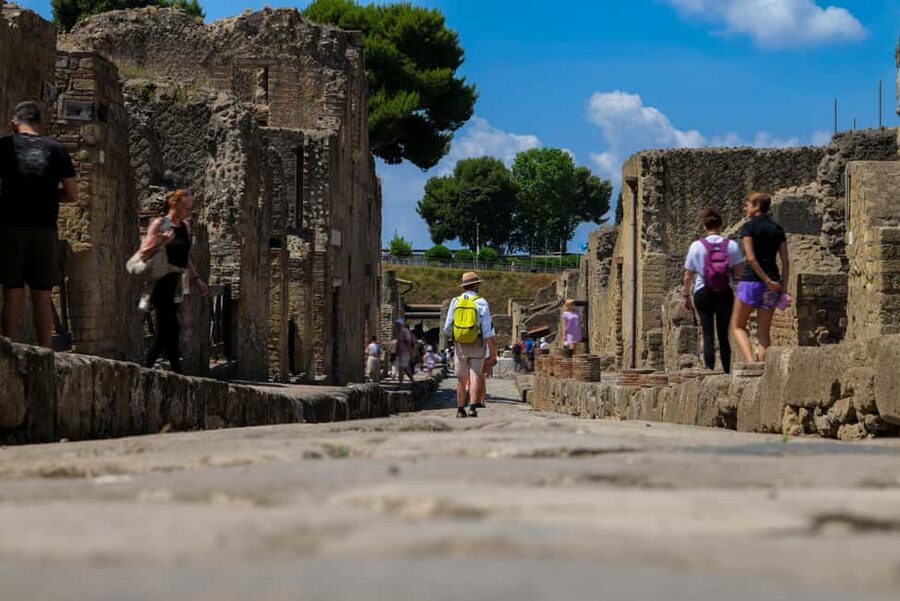
The House of the Deer is one of the stops that helps explain the wealth of Herculaneum. Its name comes from sculptures of deer found in the house, and its rooms offer a sense of how an affluent Roman family used private space.
Do not rush past the layout. A guide can help you read the relationship between the interior rooms and the open areas. Wealth in Roman homes was not only about decoration. It was also about having space for entertaining, relaxing, and displaying taste.
The house is useful early in the tour because it gives you a reference point. Once you have seen how an affluent home was arranged, smaller details elsewhere make more sense. You begin to notice the difference between grand decorative rooms and spaces designed for practical work.
The preserved condition is the main reason to visit this house with a guide. You might see a room that appears plain, but the explanation can show how the structure once functioned. Two hours goes quickly here, so listen for the guide’s main points instead of trying to memorize every name.
The Houses of Neptune and Amphitrite

The Houses of Neptune and Amphitrite are among the visual highlights. Their mosaics are refined and colorful, with decoration that reveals the taste and resources of the people who commissioned it.
This is a good place to slow down. Mosaics are easy to treat as background decoration, but their placement matters. Look at how the patterns frame walls and rooms. Their purpose was not just to cover a floor. They helped create an atmosphere and signaled the owner’s status.
The guide can also help you separate what is original from what has been restored or protected. Details such as color, scale, and subject matter make more sense when you know where they sit within the house.
I would keep your phone away for a few minutes here. The mosaics are a major reason to visit Herculaneum, but they are best appreciated with your eyes rather than through a screen. The tour gives you a useful introduction, and you can return to the area after the guided portion if you want another look.
More Pompeii and Vesuvius History Tours in Italy:
- Discover the Ancient Ruins of Pompeii: Day Trip from Rome
★ 3.5 · 2,247 reviews - Small-Group Rome to Pompeii & Amalfi: Day of History & Sea
★ 5.0 · 239 reviews - Ancient Pompeii Private Tour: Skip the Line & Kid-Friendly Option
★ 5.0 · 167 reviews - Skip-the-Line Half-Day Private Tour Ancient Pompeii Highlights with Native Guide
★ 5.0 · 146 reviews
The House of the Bicentennial and signs of private life
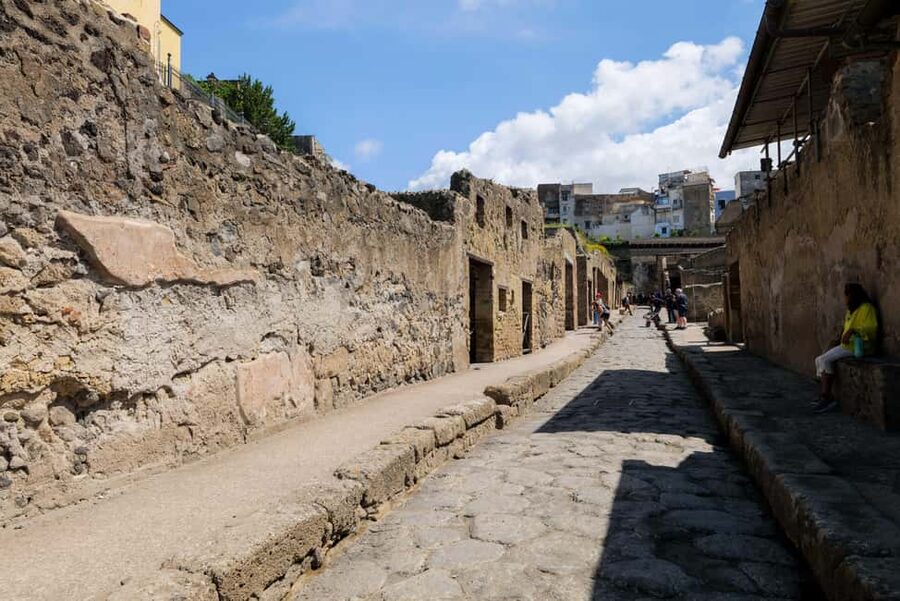
The House of the Bicentennial is another luxurious residence included in the route. It helps show the range of domestic life in Herculaneum, from formal spaces made for display to the less showy parts of a functioning home.
The name is tied to the modern history of its discovery and excavation, but the important point for your visit is the house itself. You see how decoration, architecture, and personal space worked together. The guide’s job is to connect the preserved rooms with the people who used them.
That human focus is one of the best reasons to choose a guided visit. You are not simply looking at an abandoned building. You are trying to understand how Roman residents moved through the rooms, received guests, stored possessions, and responded to the world around them.
The tour also puts the eruption into perspective. Herculaneum was not preserved as a neat museum display. Its condition reflects a sudden natural disaster. That makes the site powerful, but it can also make some areas feel intense or difficult to interpret without explanation.
The House of the Wooden Partition
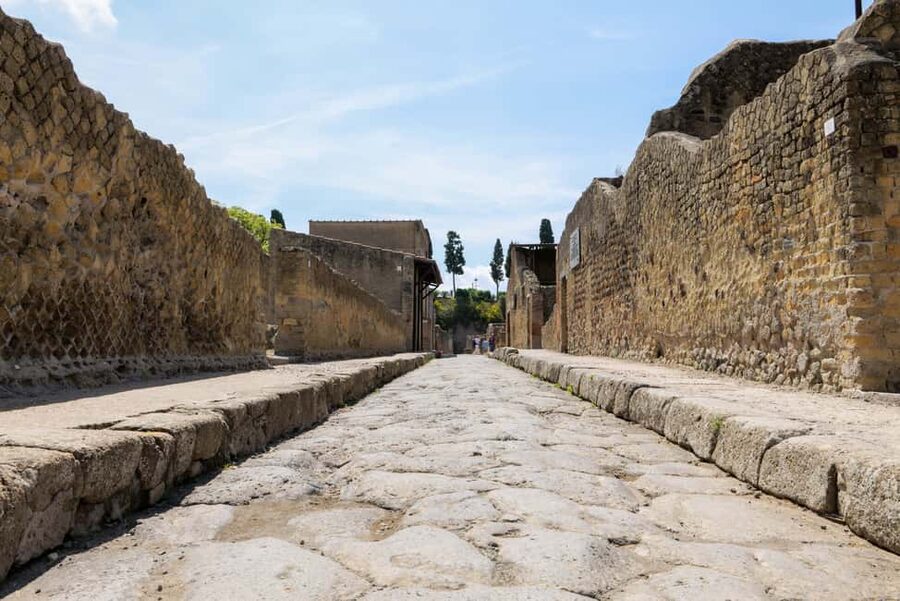
The House of the Wooden Partition offers one of Herculaneum’s most memorable details. The survival of charred wooden elements is extraordinary because wood normally disappears over time, especially in an archaeological site exposed to the open air.
The wooden partition helps you understand that Roman homes were not made only of stone and tile. Timber played a real part in domestic interiors, and its preservation gives you a direct connection to the craftsmanship of the period.
This stop is also a reminder to look down and around, not only straight ahead. A preserved wooden feature may not have the visual impact of a large fresco, but it carries a different kind of information. It shows the texture and materials of everyday life.
A guide can point out why this survival is unusual and help you understand its setting. Without that context, it would be easy to glance at the wood and move on. Give it a moment.
What the eruption reveals about daily life
Herculaneum is valuable because it preserves more than impressive houses. It gives you small clues about people who lived, worked, cooked, decorated, and stored belongings in the city.
The eruption in AD 79 brought that life to a sudden halt. The site therefore works on two levels. You see the beauty of Roman buildings and art, but you also see evidence of a catastrophe that changed the city forever.
That contrast can make the tour feel more personal than a visit focused only on emperors or monumental architecture. The guide explains how people lived at the start of the first millennium, then connects that daily life to the destructive natural event.
The best guides use humor and clear storytelling without making the subject feel trivial. Comments about Danilo describe precisely that balance: warm, funny, patient, and able to keep the group engaged. Other praise focuses on guides who made the ancient city feel understandable rather than remote.
Still, a two-hour tour cannot cover every corner. You should see it as a well-organized introduction. At the end, you may remain inside and continue independently, but remember that leaving the archaeological site is final. Plan your exit carefully if you want extra time.
The optional Vesuvius combination
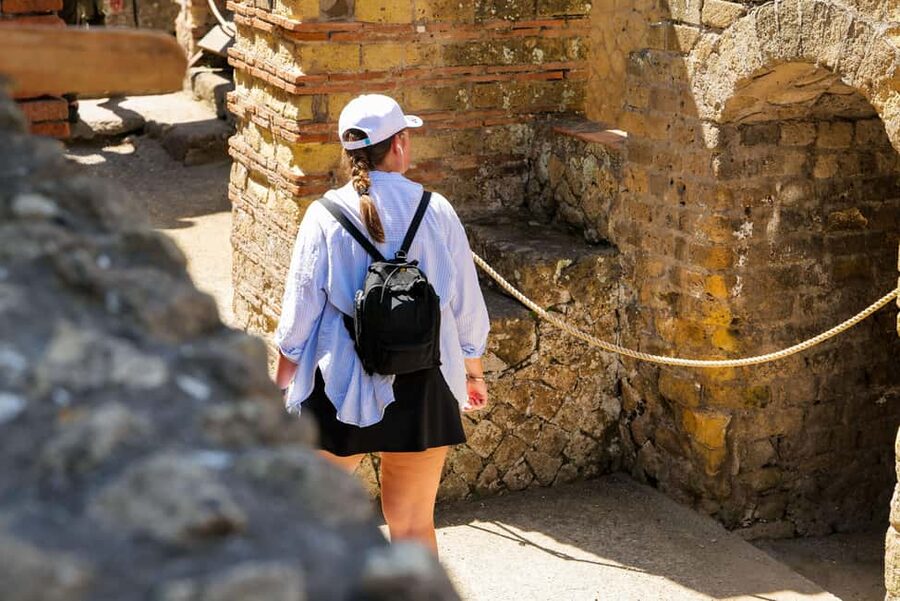
You can pair the Herculaneum tour with entry to Vesuvius National Park and bus transportation. This option changes the feel of the day from a focused archaeological visit into a broader Campania outing.
The bus picks you up outside Naples Central Station, takes you to Vesuvius, and allows about two hours to explore the volcano at your own pace. You then continue to Herculaneum for the guided archaeological tour before returning to Naples by bus.
The listed schedules include a 9:00 AM departure from Naples, a 11:40 AM departure from Vesuvius, and a 4:45 PM return from Herculaneum. Another schedule lists a 10:15 AM departure from Naples and a 1:30 PM departure from Vesuvius, with the same 4:45 PM departure from Herculaneum. Because both timetables are provided, check the exact schedule for your selected option before booking.
This combination is useful if you want both major sights without arranging separate transport. It also comes with less freedom. Your time at Vesuvius and Herculaneum is shaped by the bus, and the day can feel long, especially if you prefer slow museum visits.
Choose the combination if you value simplicity and want to link the volcano with the ancient city. Choose the Herculaneum-only visit if the ruins are your priority and you want a shorter, more focused outing.
Is the two-hour format good value?
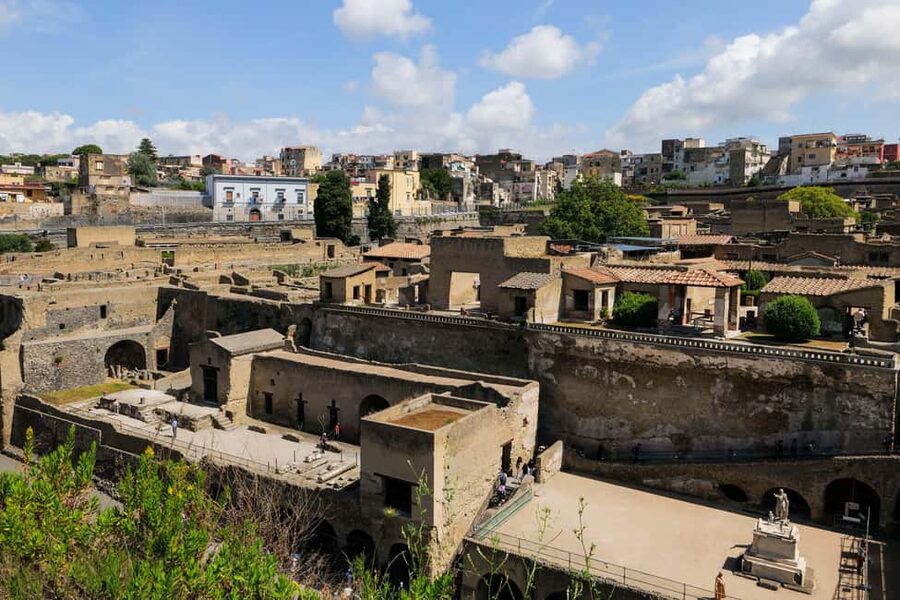
No price is provided, so I cannot judge the exact cost in euros. I can judge what you receive for the fee: admission, skip-the-line handling, a two-hour guide, and assistance before and during the visit.
For a first visit, that package can be good value. Herculaneum rewards context, and the strongest praise for this experience focuses on guides who made the site easier to understand. You are paying not only for entry, but also for a clear route through a place where the meaning of many details is not obvious.
The value is lower if you prefer to read every panel, photograph every room, or explore at your own pace from the start. In that case, the guided portion may feel fast. The useful compromise is to take the tour first, then stay inside and continue independently.
The optional Vesuvius package can offer stronger value for someone who would otherwise need to organize separate transfers and tickets. It is less attractive if you already have transport or want to spend a full day at one site.
Who should book this Herculaneum tour?
I would recommend it to first-time visitors who want the main sights explained clearly. It also suits anyone who prefers houses, mosaics, and domestic details over a large, open archaeological city.
Families may appreciate the guide’s storytelling and the manageable two-hour route, though young children still need to cope with walking and standing. History students and returning visitors may prefer more independent time, but the preserved wood and decorated homes can still reward a guided introduction.
This is not a good fit for wheelchair users, since the activity is specifically listed as unsuitable for them. It is also not ideal if you dislike fixed schedules or want to arrange every part of your day independently.
Bring comfortable shoes and a sun hat. Alcohol and drugs are not allowed. Food and drinks are not included, so plan those separately rather than expecting refreshments during the visit.
Free cancellation is available up to 24 hours before the activity for a full refund, and you can reserve now and pay later. Those terms help if your Campania schedule is still shifting, but the exact meeting point and start time still need checking before you set out.
FAQ
How long is the guided Herculaneum tour?
The guided portion lasts two hours. The overall activity duration can range from two to eight hours, depending on the option selected.
Is entry to Herculaneum included?
Yes. Entry tickets are included, along with assistance during the visit and the two-hour guided tour.
Does the tour include skip-the-line entry?
Yes. The activity includes skip-the-ticket-line access.
Which languages are available?
Live guides are available in French, English, and Italian. The listed guided experience specifically includes a two-hour tour in French, so check your chosen language when booking.
Can I stay inside Herculaneum after the guided tour?
Yes. You can continue exploring independently after the guided visit. Once you leave the archaeological site, your exit is final.
Is transportation included?
Transport is not included in the standard Herculaneum option. A separate combination includes bus transportation from Naples to Vesuvius, from Vesuvius to Herculaneum, and back to Naples.
Is the tour suitable for wheelchair users?
No. The activity is listed as unsuitable for wheelchair users.
Can I cancel the booking?
You can cancel up to 24 hours in advance for a full refund. Reserve now and pay later is also available.
Should you book it?
Book this tour if you want Herculaneum to make sense, not just look impressive. The preserved houses, mosaics, and wooden structures are worth seeing on their own, but a strong guide helps you connect them to Roman daily life and the eruption that ended it.
The best choice for most first-time visitors is the two-hour Herculaneum option, followed by extra independent time inside the site. Add Vesuvius only if you welcome a longer, tightly scheduled day and need the bus transfers. For a clear introduction to one of Campania’s most revealing ancient sites, this is a practical and worthwhile choice.
Just added around Italy
- Day drinking in Rome – Scandalous Roman History★ 4.8 · 31 reviews
- Communal dinner in an ancient Tuscan farmhouse★ 4.2 · 29 reviews
- Cooking Class in a Historic Home in the Heart of Brindisi★ 4.7 · 28 reviews
- Rome: Colosseum Arena and Ancient Rome Guided Tour★ 4.8 · 23 reviews
- Rome: Colosseum and Ancient Rome Access with Optional Arena★ 4.5 · 198 reviews
- Civitavecchia: Historical and Culinary Walking Tour★ 4.9 · 61 reviews
- Ostuni: E-bike Tour, Ancient Olive Trees & Oil Tasting★ 4.9 · 42 reviews
- Cefalù: History and Legends Guided Walking Tour★ 4.8 · 132 reviews
Pompeii & Vesuvius History Tours, compared.
Discover the Ancient Ruins of Pompeii: Day Trip from Rome
Read our review →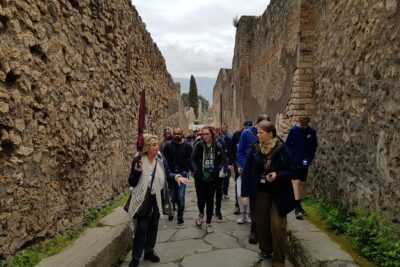
Small-Group Rome to Pompeii & Amalfi: Day of History & Sea
Read our review →Ancient Pompeii Private Tour: Skip the Line & Kid-Friendly Option
Read our review →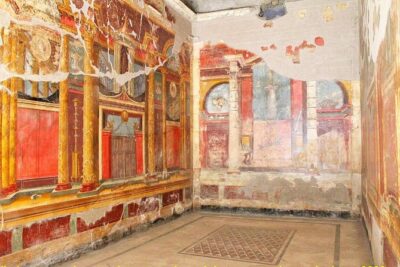
Skip-the-Line Half-Day Private Tour Ancient Pompeii Highlights with Native Guide
Read our review →Browse the lists this tour appears in