
Review · NEW SOUTH WALES
Sydney Historical Walking Tour including The Rocks
Sydney’s past is under your feet. This 2.5-hour walk links Hyde Park, colonial landmarks, harbour views, and The Rocks in one well-paced introduction to the city. I like the compact route and the chance to see major sights without spending a full day on a formal sightseeing bus. I also like the small group limit of 16 people, which should make it easier to hear the guide and ask questions.
The main consideration is the quality of the commentary. Most of the feedback praises Lily, or Lili, for her humour, warmth, and clear historical explanations, but one unhappy participant found the commentary hard to follow and felt the discussion of Lachlan Macquarie was too one-sided. The tour also involves steady walking, so comfortable shoes matter.
Key points at a glance
- Starts at Archibald Fountain: Meet at Hyde Park North, beside the fountain, with a guide carrying a pink flag.
- Covers two different sides of Sydney: The route begins with colonial government and civic sites, then moves into The Rocks and harbour history.
- Small group of up to 16: This is more personal than a large coach tour and includes voice amplification for easier hearing.
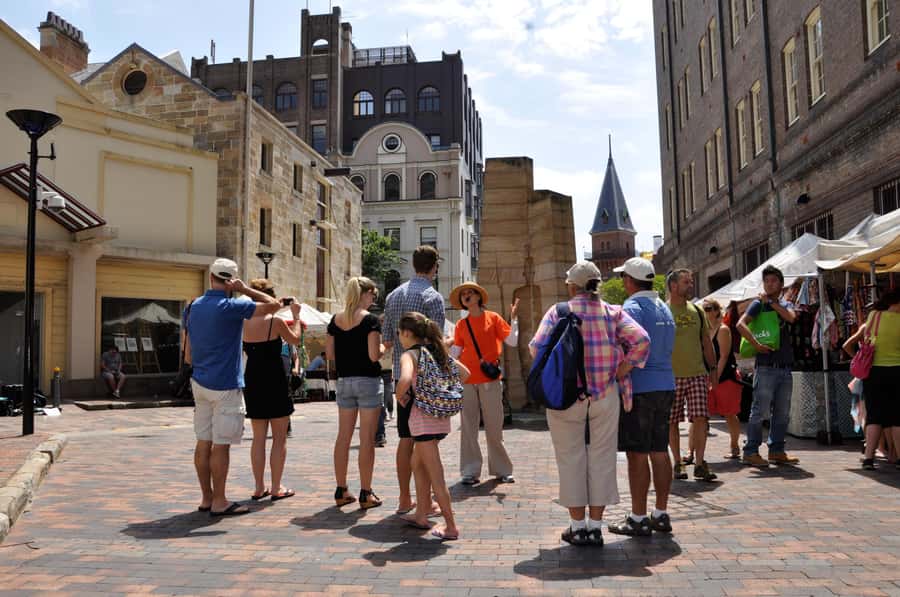
- The Rocks gets the most time: About 45 minutes are given to cobbled streets, old pubs, heritage buildings, and stories of convicts, settlers, and First Nations people.
- Harbour views finish the walk: Campbells Cove gives you photo stops near the Opera House and Sydney Harbour Bridge.
- Good value at $31: You get 150 minutes with a live English-speaking guide, though hotel transport and food are not included.
Why this walk works for a first look at Sydney
At $31 per person, this tour is priced as an affordable orientation walk rather than a premium private experience. You are paying for a live guide, a carefully connected route, and historical context at 17 listed stops. There is no hotel pickup, so the low price reflects a simple arrangement: meet in the city, walk for two and a half hours, and finish near the harbour.
I like this format for a first or second day in Sydney. The route gives you useful bearings quickly. You see where Hyde Park, Macquarie Street, Circular Quay, the Opera House, The Rocks, and Campbells Cove fit together. Just as important, you get suggestions about where to spend more time afterward.
The group size matters. Sixteen people is small enough for the guide to keep the group together without feeling like a moving crowd. Voice amplification is included, a helpful touch beside busy roads and open harbour spaces.
The route is not a gentle stroll through one park. It moves through central streets, civic areas, the Royal Botanic Garden, Circular Quay, and The Rocks. You should be ready to walk for most of 150 minutes, with only a short five-minute break at Circular Quay.
More History Walking Tours in Australia
- Ultimate Melbourne Walking Tour: History, Laneways & Culture
★ 5.0 · 1,451 reviews - Sydney: The Rocks 90-Minute History Walking Tour
★ 4.7 · 1,092 reviews - Discover Perth Walking Tour: History, Art, Local Insights + More!
★ 5.0 · 458 reviews
Starting at Hyde Park and Archibald Fountain
Your meeting point is Archibald Memorial Fountain at the northern end of Hyde Park. Look for a person with a pink flag and arrive five minutes early. If you take a taxi, ask for St James Station, then walk to the fountain. The supplied address pin for 110 Elizabeth Street is incorrect, so do not rely on that location alone.
The opening section introduces early colonial Sydney in Hyde Park. This is a useful place to begin because the park sits directly among several important civic and religious buildings. You are not simply being shown a fountain. You are being placed in the early city, where government, law, religion, and public life developed close together.
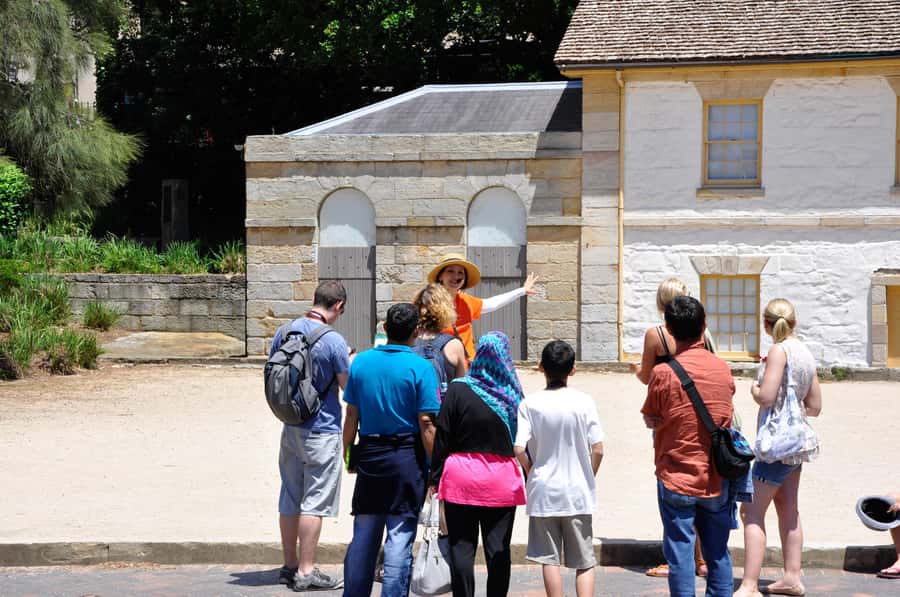
The walk then pauses at St James Church and Hyde Park Barracks. Each receives about five minutes of guided attention. That is enough for a clear explanation and exterior viewing, but not enough for a full interior visit. If either site catches your interest, make a note to return later on your own.
Hyde Park Barracks gives the route a strong human angle. Its history connects with the convict system and the growth of colonial Sydney. The guide’s job here is to link the building to the people and policies that shaped the city, rather than treat it as just another old facade.
Macquarie Street’s government and cultural landmarks
From Hyde Park, the route continues to The Mint, Parliament House, and the State Library of New South Wales. This part of the walk explains how Sydney changed from a young penal settlement into a major civic centre.
The Mint receives around ten minutes, a little longer than several earlier stops. That extra time helps because the site has several layers of interest, including its place in the development of colonial administration and public institutions. You should expect a guided exterior visit rather than a long museum session.
Parliament House and the State Library receive shorter stops of about five minutes each. These are useful orientation points, especially if you want to return later for a closer look. The tour keeps moving, so do not expect detailed architecture lessons or extended indoor visits at every building.
A strong part of this section is the link between history and present-day Sydney. Government buildings and cultural institutions are not presented as isolated attractions. They help explain how authority, education, and public life took shape in the city.
The historical discussion can also be direct. One criticism focused on the treatment of Governor Lachlan Macquarie and the colonial period. I would see that as a point to keep in mind rather than a reason to dismiss the tour. Sydney’s colonial past includes punishment, displacement, government ambition, and harsh living conditions. A guide who addresses those subjects frankly may suit you if you want a less polished version of the city’s story. If you prefer a lighter presentation, the tone may feel more serious.
A pause in the Royal Botanic Garden
The route enters or passes through the Royal Botanic Garden for about 15 minutes. This is one of the more pleasant changes of pace on the walk. After streets and civic buildings, you get open space and a chance to take photographs.
The garden stop is not a full botanical tour. It is a short guided visit and photo opportunity within a much longer route. You should treat it as a scenic break, not as a replacement for spending several hours exploring the gardens.
Next comes Macquarie Place Park, where the guide continues the story of early Sydney. The five-minute stop is brief, but its location helps connect the government district with the harbourfront route ahead.
This gradual shift is one of the walk’s best features. You begin with the city’s institutions, pass through its public garden and early civic spaces, then arrive at the waterfront. The route gives you a sense of how Sydney’s centre is arranged instead of presenting disconnected points on a map.
Same place, a different slice of the past:
- Puffing Billy Railway: Heritage Steam Train Journey
★ 4.6 · 1,195 reviews - Morning World Heritage Cruise on the Gordon River from Strahan
★ 5.0 · 1,193 reviews - Strahan: World Heritage Cruise on Gordon River with Lunch
★ 4.8 · 1,143 reviews - Experience History onboard The Mary Valley Rattler
★ 5.0 · 963 reviews
Customs House, Circular Quay, and the Opera House
Customs House receives about ten minutes. Its position near Circular Quay makes it a natural bridge between the old city and the harbour. You will hear about the role of trade, arrivals, and waterfront administration as the walk turns toward Sydney’s best-known views.
Circular Quay provides a short five-minute break. This is a good moment to drink water, adjust your shoes, or take a quick photograph. Do not expect a long café stop or a meal break. Bring your own water and keep your food plans separate from the tour.
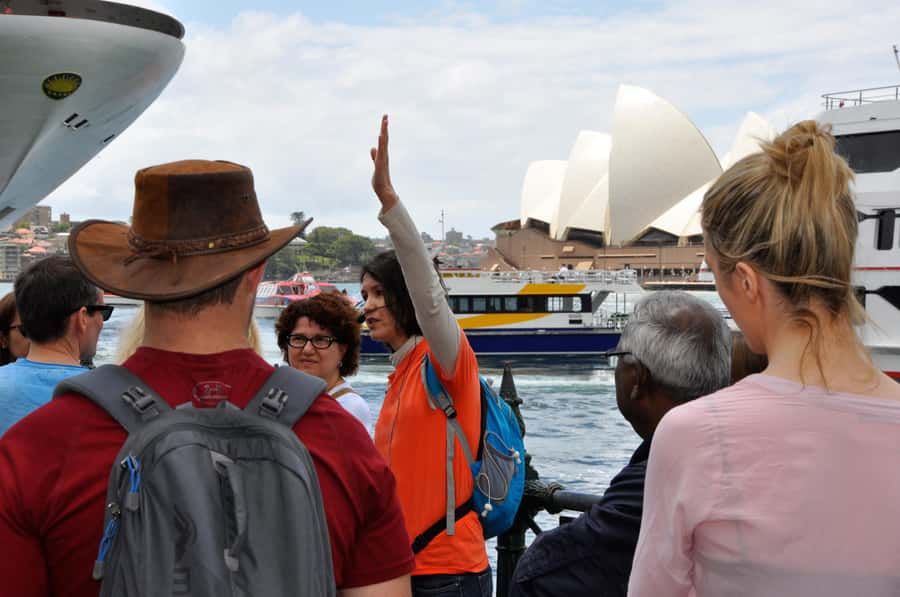
The route then heads toward the Sydney Opera House for a ten-minute photo stop and scenic view. The Opera House is familiar from photographs, but seeing it in relation to Circular Quay and the harbour gives you a better sense of its setting.
You may find this part busier than the earlier streets. The guide uses voice amplification, which should help, but you still need to stay close enough to hear. The route does not promise entry to the Opera House, a performance, or a behind-the-scenes visit. This is an outside viewing stop.
First Fleet Park and the story of The Rocks
First Fleet Park marks the transition into The Rocks. The five-minute guided stop provides context for the area before the walk slows down for its longest section.
The Rocks receives about 45 minutes, the largest single block of time on the tour. That is appropriate. This district has a more concentrated sense of place than the earlier civic stops, with old pubs, heritage buildings, narrow streets, and cobbled sections that help you picture the early settlement.
The guide discusses convicts, settlers, and the First Nations people connected to this land. That broader approach is important. The Rocks is often presented as a charming old quarter, but its story also involves colonisation, hard labour, social control, and the profound impact on Aboriginal communities.
I like that the tour gives The Rocks enough time to feel distinct from the rest of central Sydney. You are not just stopping for one photograph. You have time to notice the street pattern, building materials, and changing views toward the harbour.
Still, 45 minutes is not enough for every lane, pub, museum, and historic building in the district. If you enjoy The Rocks, use the guide’s advice to plan a return visit. The walk is an introduction, not a substitute for exploring the area at your own pace.
Campbells Cove and the final harbour views
The walk finishes at Campbells Cove, with photo stops near the Sydney Harbour Bridge and views back toward the Opera House. This is a satisfying finish because the final section brings together many of the city’s visual symbols.
Campbells Cove is also a practical ending point. You are near The Rocks and the harbour, so you can continue exploring after the tour instead of being returned to the original meeting point. The route is one-way, from Hyde Park to the waterfront, which saves you from retracing your steps.
The Harbour Bridge stop is short, about five minutes. You get scenic views and a chance to take photographs, but this is not a bridge climb or a long architectural talk. If you want to walk across the bridge afterward, plan that separately.
By the end, you have seen Sydney from several angles: colonial parkland, public institutions, gardens, waterfront commerce, the Opera House, The Rocks, and the bridge. The value comes from the connections between these places, not from spending a long time at any single one.
Guide style and the importance of the commentary
The strongest praise focuses on the guide’s delivery. Lily, also spelled Lili in the available feedback, is described as witty, kind, enthusiastic, and highly informed. Her humour and practical tips about what to do next appear to be a major reason the tour works so well for many people.
That matters because a walking tour lives or dies by its guide. The buildings are free to see from the street. What you are buying is the explanation, the route, the timing, and the ability to ask questions.
There is one clear warning: one participant found the guide difficult to understand and felt questions were brushed aside. The same person objected to strongly negative commentary about Lachlan Macquarie and colonial settlers. You should expect the tour to address uncomfortable parts of Australian history rather than avoid them.
I would not book this expecting a neutral list of dates or a purely cheerful sightseeing walk. The tour appears to take First Nations history and colonial harm seriously. That can make the experience more useful, but the balance and delivery may depend heavily on the guide leading your group.
Walking comfort, weather, and access
Wear comfortable walking shoes. You will cover several central areas over 150 minutes, with pavement, city streets, garden paths, and historic sections of The Rocks. Bring water, and dress for the weather.
The tour runs in rain or shine. An umbrella or raincoat is a sensible addition, since the route includes outdoor stops and the walk continues even in wet conditions. A rainy day can make the harbour views less rewarding, but the history and buildings remain available.
The information supplied describes the activity as wheelchair accessible but also says it is not suitable for wheelchair users or people with mobility impairments. That is a direct inconsistency. If you use a wheelchair or have limited mobility, contact the operator before booking and ask for a current route assessment. Do not assume the general accessibility label guarantees a suitable experience.
Oversize luggage is not allowed. Leave large bags at your accommodation or make another arrangement before arriving.
Booking flexibility and who gets the most value
You can cancel up to 24 hours before the start time for a full refund, and you can reserve now and pay later. Those terms are useful if your Sydney schedule depends on weather or changing arrival plans.
The tour suits first-time visitors who want a quick historical framework, as well as returning visitors who want more context for The Rocks and the harbourfront. It is especially useful if you like learning how places developed rather than simply collecting photographs.
At $31, I consider it good value if you would otherwise pay for a separate city orientation and then spend time working out the route yourself. It is less useful if you want long interior visits, a private guide, hotel transport, or a very slow photography walk.
The best time to take it is early in your Sydney stay. The guide’s suggestions can help you decide where to return, and the one-way route leaves you in an excellent area for more sightseeing afterward.
Should you book this Sydney walking tour?
Book it if you want a reasonably priced introduction to central Sydney, The Rocks, and the harbour in one outing. The small group, voice amplification, strong route, and often praised guide style add real value.
Think twice if you dislike walking in all weather, need guaranteed step-free access, or want detailed visits inside each landmark. Also keep the guide variation in mind. The content can be thoughtful and compelling, but the presentation may not suit everyone.
For most able walkers who want history with their Sydney views, this is a smart first-day choice. Bring water, wear good shoes, arrive at Archibald Fountain early, and keep the rest of your afternoon open for The Rocks and the harbour.
FAQ
How long does the Sydney Historical Walking Tour last?
The tour lasts 150 minutes, or two and a half hours.
How much does the tour cost?
The listed price is $31 per person.
Where does the tour start?
It starts at Archibald Memorial Fountain in Hyde Park North.
How do I identify the guide?
Look for a person carrying a pink flag. You should arrive five minutes before the start time.
Is the address at 110 Elizabeth Street accurate?
No. The supplied information says the 110 Elizabeth Street pin on Google Maps is incorrect. If taking a taxi, ask for St James Station and walk to the fountain.
Where does the tour finish?
It finishes at Campbells Cove near The Rocks and Sydney Harbour.
Is hotel pickup included?
No. Hotel pickup and drop-off are not included.
What language is the tour conducted in?
The live tour guide speaks English.
What should I bring?
Bring comfortable walking shoes, water, and clothing suited to the weather. An umbrella or raincoat is recommended because the tour operates in rain or shine.
Just added around Australia
- Sydney Convicts, History & The Rocks 2.5-Hour Walking Tour★ 4.9 · 181 reviews
- Port Arthur Historic Site Ghost Tour★ 4.2 · 173 reviews
- Yallingup: Ngilgi Cave Ancient Lands Experience★ 4.9 · 41 reviews
- Melbourne: City`s History and Unique Bar Scene Tour★ 4.7 · 19 reviews
- Longreach History and Town Tour★ 4.8 · 23 reviews
- Hobart Historic Walking Tour★ 4.6 · 19 reviews
- Hobart: Cascades Female Factory Historic Site [official]★ 4.8 · 18 reviews
- Melbourne: History and Donuts Walking Tour★ 4.9 · 72 reviews
History Walking Tours, compared.
History and Hauntings of Salem Guided Walking Tour
Read our review →
Freedom Trail History Small Group Walking Tour
Read our review →
Historic Charleston Guided Sightseeing Walking Tour
Read our review →
Tapas Walking Tour with Food, Wine, and History
Read our review →
Savannah History and Haunts Candlelit Ghost Walking Tour
Read our review →
A History of Terror – Belfast City Centre Walking Tour
Read our review →Browse the lists this tour appears in