
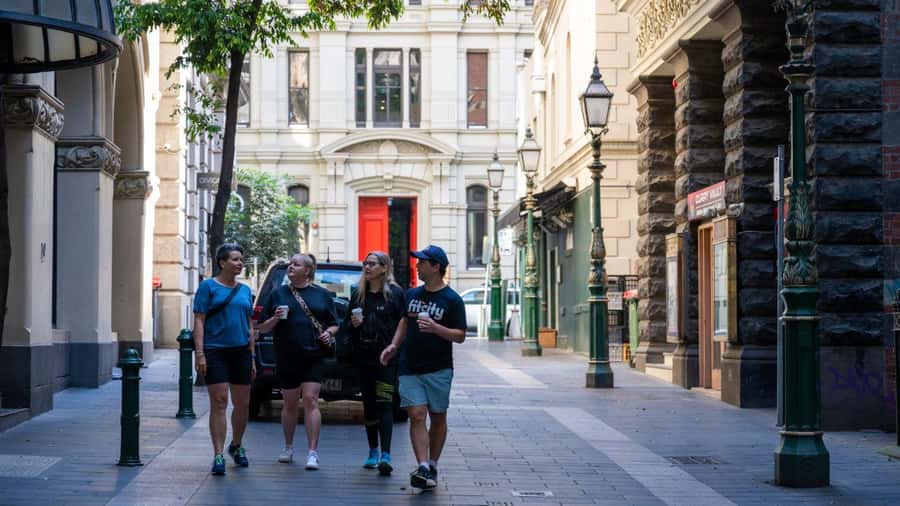
Review · VICTORIA
Melbourne: History and Donuts Walking Tour
Melbourne tastes better on foot. This 2.5-hour walk links Federation Square, colourful laneways, grand civic buildings, former slum areas, coffee, and two donuts into one easy introduction to the city. I especially like the small groups, capped at 10 people, and the way the tour mixes major sights with tucked-away lanes that are easy to miss on your own. The main drawback is pace: you cover a fair stretch of the central city, and some people may want more time at each historic stop.
The tour also works well for a short Melbourne visit. You get a quick orientation, practical food and café suggestions, street art, architecture, and stories about crime, commerce, settlement, and daily life. The history is informal rather than academic, so if you want long talks about each building, this may feel light.
Key points to know before you book
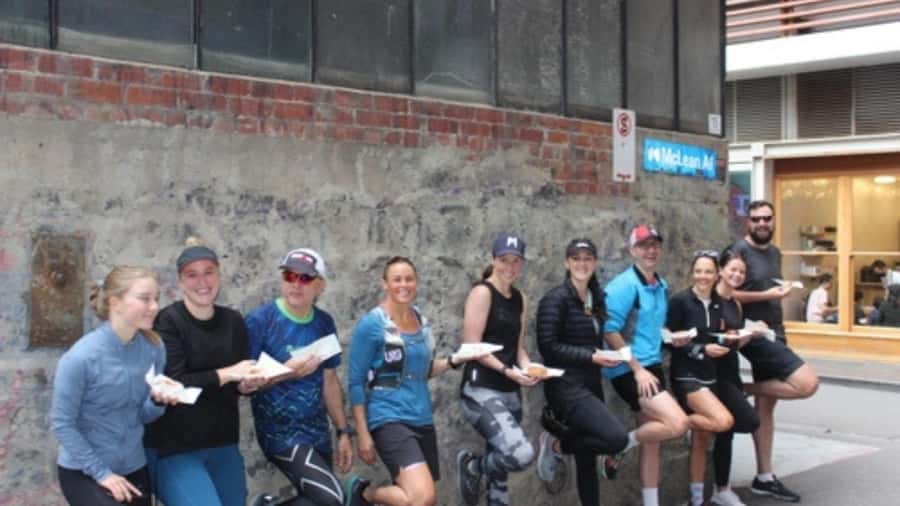
- Two donuts and a coffee are included: You get a mid-tour drink and two donut tastings, with stops linked to Melbourne’s café culture.
- The route crosses Melbourne’s central city: Expect Federation Square, Hosier Lane, Degraves Street, Collins Street, Hardware Lane, Guildford Lane, Queen Victoria Market, Old Melbourne Gaol, and the State Library Victoria.
- Small groups make a difference: With no more than 10 participants, it is easier to hear the guide and ask questions.
- The walk is mostly flat but not especially short: Allow about 2.5 hours at a relaxed pace, with a fair distance covered.
- The stories range from grand to grim: Banking fortunes, colonial mischief, street art, old slums, crime, punishment, and Melbourne’s early settlement all appear.
- It runs in most weather: Bring comfortable shoes and clothing. The tour goes ahead in rain and only cancels for thunderstorms.
Starting at Federation Square with Melbourne in view
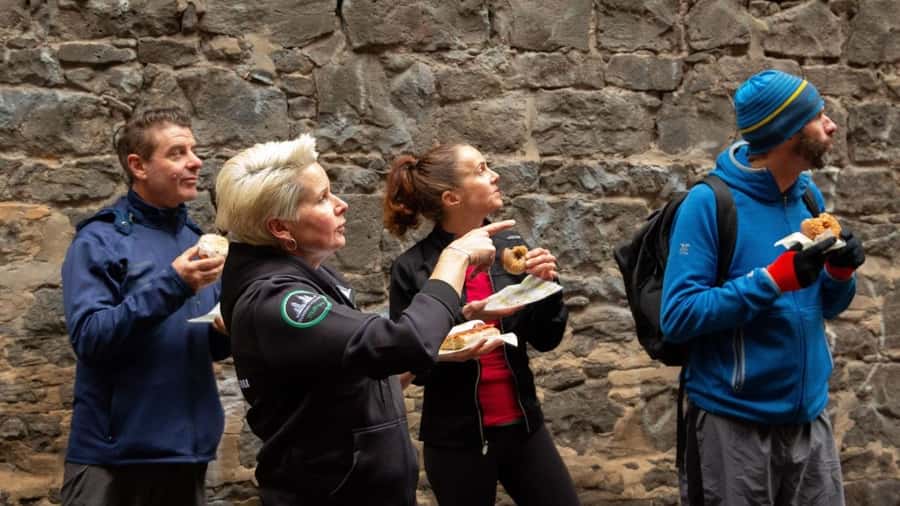
Meet outside Time Out Cafe at 2 Swanston Street. Look for the orange umbrellas and a guide wearing an orange or navy shirt and a navy cap marked Fit City Tours. This simple meeting point sits beside Federation Square, a useful place to begin because it shows Melbourne’s modern public face before you start tracing its older layers.
The opening walk takes you toward Young & Jackson’s Hotel and St Paul’s Cathedral. Young & Jackson’s is linked with one of Australia’s best-known paintings, while St Paul’s brings the conversation toward early settlement, religion, and the city’s public institutions.
This first section is more than a roll call of landmarks. It gives you a useful contrast between Melbourne’s newer cultural centre and the older stone buildings around it. Your guide can point out the changes in scale, materials, and purpose as the city shifts from civic gathering places to commercial streets and narrow lanes.
The tour is conducted in English. Guides including Rhiannon, Rhonda, Miles, Matt, Tony, Ant, and Simon have been praised for being warm, funny, clear, and full of local facts. The strongest part of the guiding seems to be the conversational tone. You are not simply listening to dates while walking. You are encouraged to notice how Melbourne’s buildings and lanes fit together.
More History Walking Tours in Australia
- Ultimate Melbourne Walking Tour: History, Laneways & Culture
★ 5.0 · 1,451 reviews - Sydney: The Rocks 90-Minute History Walking Tour
★ 4.7 · 1,092 reviews - Discover Perth Walking Tour: History, Art, Local Insights + More!
★ 5.0 · 458 reviews
Hosier Lane and Melbourne’s changing street art
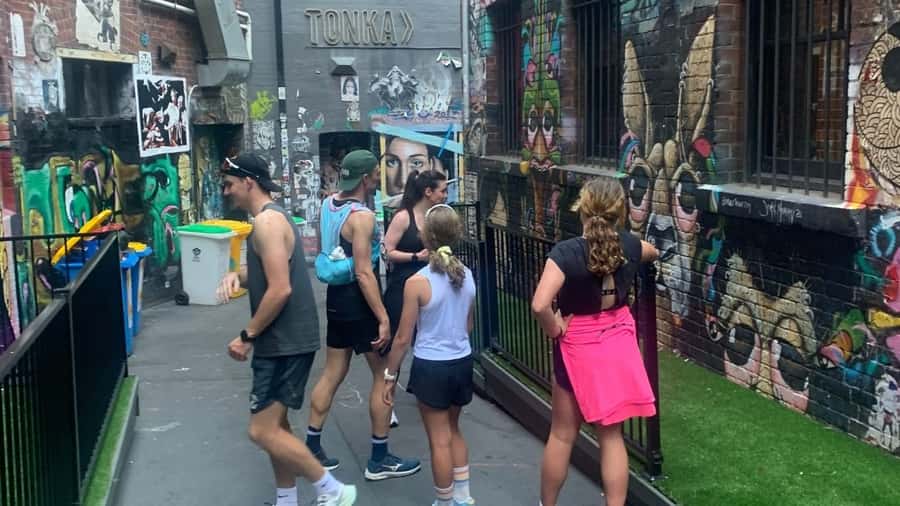
Hosier Lane is one of the route’s most obvious photo stops, but the guide adds context that a quick visit may miss. Its walls change often, so what you see depends on the day. That makes the lane feel less like a fixed monument and more like an ongoing public art space.
The useful idea here is connection. The tour places Melbourne’s street art beside its older buildings and former working districts. You see how the city has reused narrow service lanes and overlooked corners as places for art, food, and social life.
Expect people stopping for photos, especially around the most decorated walls. The lane can feel crowded at times, so it is not the best place for a long, quiet look. Still, the short stop works well in a morning tour because you get a strong visual hit without giving up too much time elsewhere.
Coffee, laneways, and the five-minute reset
The route continues through Degraves Street and Centre Place, two narrow lanes associated with Melbourne’s café scene. The plan includes a short coffee break, or an alternative drink, giving you a chance to pause after the opening walk.
Do not expect a long café visit. Five minutes is enough to collect a drink and take in the atmosphere, but not enough for a leisurely breakfast. That is worth knowing if you are hoping to sit down with a full meal.
I like this part because the coffee is not an add-on with no connection to the route. It explains one of Melbourne’s everyday habits. The city’s café culture is part of its identity, and the drink gives you a small taste of it before the walking continues.
A practical point: tell the operator about dietary requirements when you confirm your booking. The included drink can be adapted, but the precise alternatives are not specified, so it is best to raise any needs in advance.
Collins Street, the Mitre Tavern, and the money behind the city

From the lanes, you move toward Collins Street and the financial precinct. The change is sharp. Narrow brick passages give way to broad streets, formal facades, stone buildings, and offices connected with banking and commerce.
This is where the tour explains how Melbourne grew into a major city of business and ambition. Rather than treating the skyline as decoration, the guide connects the buildings to the people and industries that shaped them.
The Mitre Tavern adds a more intimate stop. It is described as one of Melbourne’s oldest buildings, and its stories bring in colonial mischief as well as commercial success. That combination keeps the history from becoming too solemn. Melbourne’s past includes respectable institutions, but it also includes drinking, arguments, questionable behaviour, and plenty of human foolishness.
The financial district section may appeal most to anyone who likes architecture and city development. If your main interest is Aboriginal history or the earliest settlers, you should know that this tour gives those subjects less attention than street art, colonial stories, crime, buildings, and café life. One guide was specifically praised for discussing early settlement, but the tour is not presented as a full account of First Nations history.
Same place, a different slice of the past:
- Puffing Billy Railway: Heritage Steam Train Journey
★ 4.6 · 1,195 reviews - Morning World Heritage Cruise on the Gordon River from Strahan
★ 5.0 · 1,193 reviews - Strahan: World Heritage Cruise on Gordon River with Lunch
★ 4.8 · 1,143 reviews - Experience History onboard The Mary Valley Rattler
★ 5.0 · 963 reviews
Hardware Lane and the first serious sugar stop
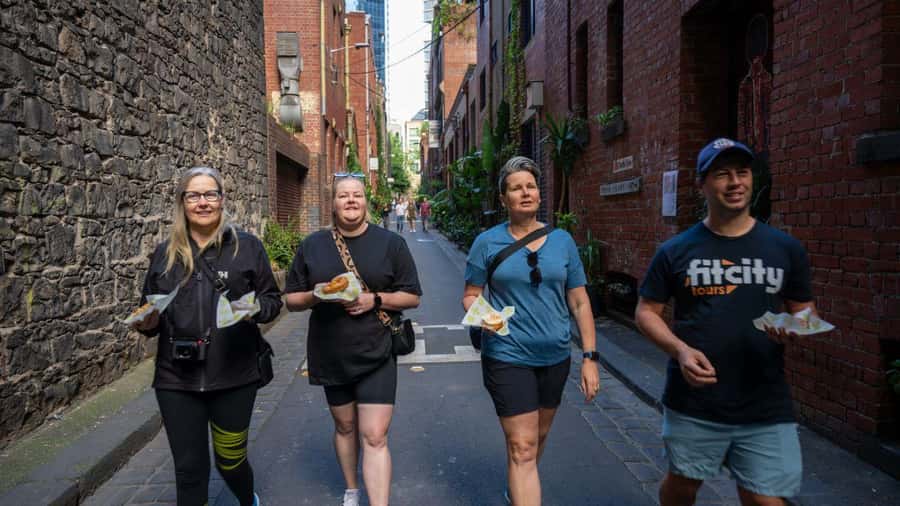
Hardware Lane brings another change in mood. Its European feel and restaurant-lined character make it a pleasant section for a walk, but the more important point is its layered past. Your guide uses the lane to show how parts of central Melbourne have shifted in use over time.
Then comes the main reward for anyone who booked this tour with an appetite: a donut stop at Short Stop. The examples include brown butter and maple, Earl Grey and rose, and cinnamon sugar. These are not simply generic bakery snacks. They are treated as part of Melbourne’s current food culture, with unusual flavours alongside a familiar classic.
Two donuts are included across the tour. That is enough for a satisfying taste without turning the entire morning into a sugar marathon, though one person suggested that an additional refreshment later would be welcome. If you prefer savoury food or do not eat much sugar, the donut theme may feel a little heavy.
The quality can also vary between stops. One donut stop was considered excellent and another more average, so keep expectations sensible. You are getting a tasting experience, not a dedicated pastry crawl with a dozen choices.
Guildford Lane and the quieter side of the CBD
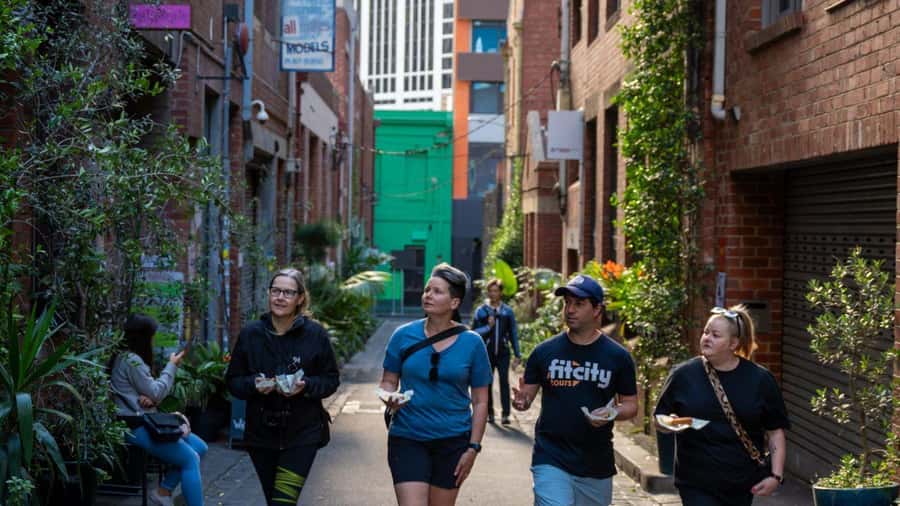
After the first donut, the route heads through Guildford Lane. This red-brick passage offers a calmer contrast to Hosier Lane and the bigger thoroughfares. Its heritage buildings and quirky details show how much character can be hidden behind the main streets.
This is one of my favourite ideas in the route. The major landmarks help you orient yourself, but the smaller lanes help you understand Melbourne’s scale. You see how a dense central district can contain quiet corners, old brickwork, small businesses, cafés, and traces of earlier city life within a short walk.
The lane is also a good reminder to look up and behind you. Melbourne is easy to experience at street level, but many details are found in upper windows, old facades, and entrances that you might pass without noticing.
Queen Victoria Market and the second donut
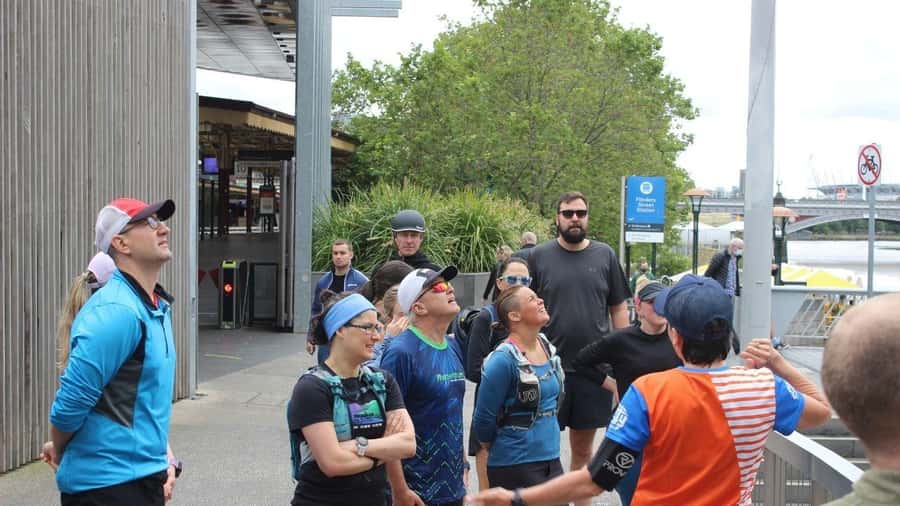
The final food stop takes you to Queen Victoria Market. The market is linked with Melbourne’s long-running donut culture, and you get another included treat here before the tour moves into its darker historical section.
This stop is useful because it connects food to place. The market is not presented as a detached attraction. It is part of the city’s working life and gives you a different setting from the polished cafés and gourmet donut shop earlier in the walk.
The food portion is still brief, around 10 minutes. You should not expect a full market visit or enough time to explore every stall. If Queen Victoria Market is high on your list, plan to return separately when you can browse without watching the clock.
The overall food value is fair at $77 per person, especially when you count two donuts, a coffee or alternative drink, a guide, and a small-group format. It is not the cheapest way to see Melbourne’s streets, but you are paying for interpretation and a carefully linked route, not just snacks.
Old Melbourne Gaol and the city’s darker stories
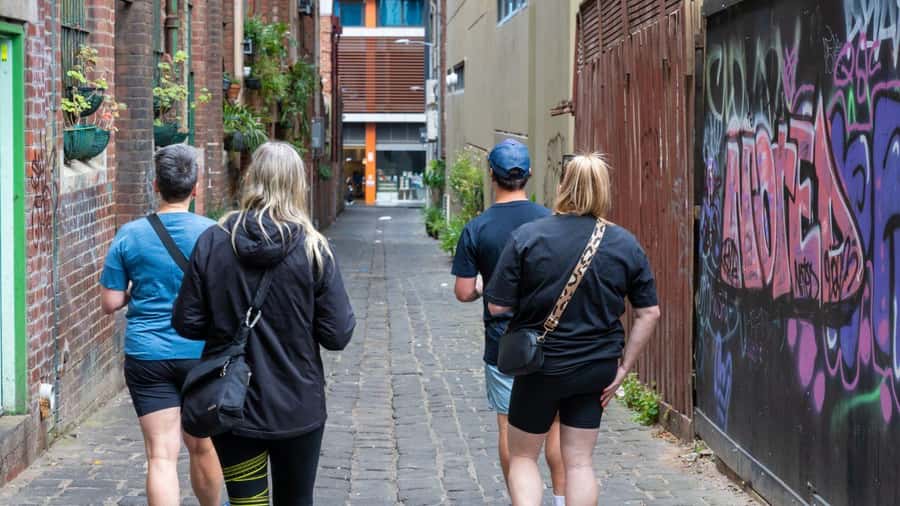
The Old Melbourne Gaol is a photo stop and a change of tone. Here, the guide turns to crime, punishment, and notorious figures connected with the city. After the cheerful food stops, this section gives the tour some edge.
You do not enter the gaol as part of the walking tour. The focus is on the exterior and the surrounding story, so you should not book this experience expecting a full prison visit. If you want to see the interior, that would require a separate ticket and visit.
This section suits people who prefer history with human drama. It can also feel brief if you have a strong interest in criminal justice or the gaol’s detailed past. The format is designed to keep the group moving toward the State Library rather than pause for a full museum-style presentation.
Finishing at the State Library Victoria
The walk ends at the State Library Victoria on Swanston Street. It is a fitting final stop because the building shifts the focus from punishment and public life to learning, books, and civic culture.
The library is one of Melbourne’s most impressive public buildings, and the exterior gives the tour a strong finish. It also leaves you in a useful central location for continuing your day. You can explore the CBD, return to Queen Victoria Market, visit the Old Melbourne Gaol separately, or stop for lunch nearby.
The tour includes photos taken during the experience. That is a nice extra, especially if you would rather pay attention to the guide and the streets instead of holding your phone up for the entire walk. The details of how and when those photos are delivered are not specified, so ask the operator if this matters to you.
How much walking and what to wear
This is a casual walk, but casual does not mean effortless. The route takes about 150 minutes and covers a fair distance through central Melbourne. The path is mostly flat, and the experience is listed as wheelchair accessible, but you should still wear supportive shoes.
The tour runs in rain or shine and cancels only for thunderstorms. Melbourne weather can change quickly, so bring clothing that works for the forecast rather than assuming a dry morning. Comfortable clothes matter more than dressing up.
The group limit of 10 is one of the tour’s best practical features. A smaller group lets you hear stories in narrow lanes, ask for food suggestions, and keep the walk moving without a long line of people. It also helps the tour feel more like a guided wander than a large city procession.
Who will get the most from this tour?
I would choose this tour for a first visit, a short stay, or a morning when you want to understand the CBD before exploring it alone. It is also a good choice for local residents hosting visitors. One Melbourne local used it to show the city to international visitors and still learned new things about familiar streets.
You will get the most from it if you enjoy:
- Street art alongside old buildings
- Informal stories rather than formal lectures
- Coffee, gourmet donuts, and market food
- Small groups and a relaxed walking pace
- Suggestions for places to eat, drink, and visit later
I would think twice if you dislike sweets, need long stops at museums, or want an in-depth account of Aboriginal history and the first settlers. You may also prefer a longer tour if you like extended explanations at each site. Some people found the two-and-a-half-hour format just right, while others wanted more time and detail.
Should you book the Melbourne History and Donuts Tour?
Book it if you want a friendly introduction to Melbourne that combines street art, architecture, local food, and unusual stories. At $77, the price makes sense for the guide, small group, coffee, two donuts, photos, and the amount of central Melbourne covered.
Do not book it as a substitute for a full museum tour or a dedicated food crawl. Think of it as a well-paced orientation with sugar built into the route. For a first morning in Melbourne, that is a useful formula: you learn where the city fits together, get a few ideas for later, and finish with enough energy to keep exploring.
FAQ
How long is the Melbourne History and Donuts Walking Tour?
The tour lasts 150 minutes, or about two and a half hours.
Where does the tour start?
It starts outside Time Out Cafe at 2 Swanston Street, near Federation Square. Look for the orange umbrellas and a guide wearing an orange or navy shirt with a navy Fit City Tours cap.
Where does the tour finish?
The tour ends at State Library Victoria on Swanston Street, Melbourne VIC 3000.
What food and drinks are included?
The price includes a mid-tour coffee or alternative drink and two donuts from Melbourne cafés and venues. Additional food and drinks are not included.
Is the tour suitable for wheelchair users?
Yes. The experience is listed as wheelchair accessible.
What should I bring?
Bring comfortable shoes and comfortable clothing. The tour runs in rain or shine and only cancels for thunderstorms.
Is this a private tour?
No. It is a small-group tour limited to 10 participants, with a live English-speaking guide.
Just added around Australia
- Discover Perth Walking Tour: History, Art, Sights + More!★ 4.9 · 183 reviews
- Darwin: Small Group 2-Hour Heritage Walk★ 4.9 · 28 reviews
- Albany: Historic Whaling Station Entry Ticket★ 4.8 · 24 reviews
- A Barossa Valley pickup: Wine and Heritage Tour, Local Guide★ 4.9 · 20 reviews
- Hobart: Historic Lunch Cruise★ 4.6 · 271 reviews
- Tasman Peninsula Tour, Cruise & Port Arthur Historic Site★ 4.9 · 339 reviews
- Ultimate Melbourne Walking Tour: History, Laneways & Culture★ 4.8 · 338 reviews
- Discover Perth Walking Tour: History, Art, Local Insights + More!★ 5.0 · 458 reviews
History Walking Tours, compared.
History and Hauntings of Salem Guided Walking Tour
Read our review →
Freedom Trail History Small Group Walking Tour
Read our review →
Historic Charleston Guided Sightseeing Walking Tour
Read our review →
Tapas Walking Tour with Food, Wine, and History
Read our review →
Savannah History and Haunts Candlelit Ghost Walking Tour
Read our review →
A History of Terror – Belfast City Centre Walking Tour
Read our review →Browse the lists this tour appears in