
Review · LIVERPOOL
Liverpool Heritage, History, Culture Walking Tour-Shore Excursion
Liverpool tells its story on foot. This two-hour, 15-minute shore excursion links the cruise terminal with the waterfront, the Three Graces, Royal Albert Dock, Beatles landmarks, and the old city center. I like the easy start at the cruise terminal and the way the route mixes maritime history, architecture, music, and local stories instead of treating Liverpool as only a Beatles destination. I also like the small-group limit of 20 people, which gives you a better chance to hear the guide.
The main consideration is the walking. The route covers about four miles, with cobbles and uneven surfaces along the way. I would also set your expectations carefully: this is a broad Liverpool introduction, not a dedicated Beatles tour. You get a useful dose of Fab Four history, but the tour gives equal space to docks, civic buildings, wartime stories, medieval Liverpool, and the city’s links to slavery and North America.
Key points to know before you book
- Meet inside the cruise terminal: You can begin without finding a distant city meeting point or arranging a taxi.
- Four miles of city walking: The pace is manageable, but comfortable shoes and a drink are important.
- The Three Graces anchor the waterfront: The Cunard Building, Port of Liverpool Building, and Liver Building provide Liverpool’s most famous architectural moment.
- Beatles history is part of a wider tour: Mathew Street and the Cavern Club get attention, but this is not a Beatles-only experience.
- Guides make a real difference: Pam, Peter, Michael, and Carl have each been praised for warmth, clear explanations, patience, and enthusiasm.
- The finish is close to the ship: You end at Our Lady and Saint Nicholas Church, about two minutes from the cruise terminal.
Starting at Cruise Liverpool with no frantic transfer
The tour begins at Cruise Liverpool, at the cruise terminal gate on Princes Parade. That is a major advantage on a port day. You do not need to work out a bus route, find a city-center meeting point, or spend part of your morning wondering if you are walking in the right direction.
After a short introduction, your guide leads the group into the city. The maximum group size is 20, which is still large enough to include a good mix of people but smaller than a coach excursion. You should be able to stay near the guide and ask questions, though you will want to keep an eye on the group in busy streets.
The walking is described as easy to moderate, but the distance matters more than the label. One recorded experience covered roughly four miles. That is not a punishing walk, but it is a full morning on your feet. Wear shoes with good grip, especially for cobbles and uneven pavement.
More History Walking Tours in the UK
- A Walk Through Time: History of Liverpool Walking Tour
★ 5.0 · 911 reviews - Best Of Liverpool Heritage, History & Culture Guided Walking Tour
★ 5.0 · 539 reviews - Liverpool Hidden History and Dead House Evening Walking Tour
★ 5.0 · 200 reviews
Titanic connections at the Marine Engine Room Heroes Memorial
Your first proper stop is the Titanic Memorial, also called the Memorial to the Marine Engine Room Heroes. Liverpool’s connection with the Titanic story is not simply a matter of the ship’s famous name. The city played a major role in the wider maritime world, and the memorial gives your guide a natural way to explain the people who worked below deck and kept ocean liners moving.
This is a brief stop, around five minutes, so do not expect a long memorial visit. Its value comes from the opening context. You begin to see Liverpool as a working port shaped by ships, engineers, sailors, passengers, and international trade.
The Three Graces and Liverpool’s grand waterfront
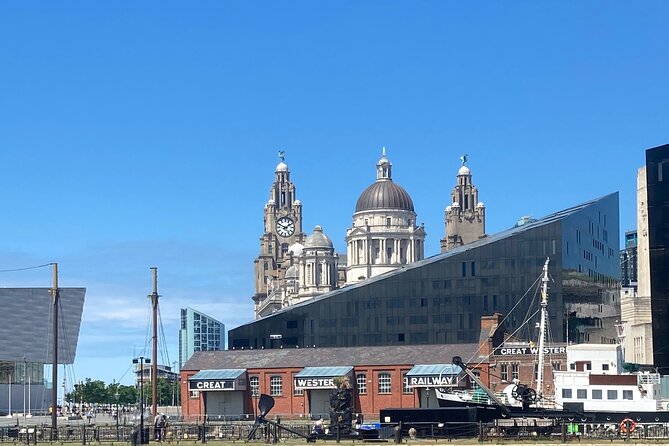
The Three Graces are the architectural centerpiece of the first part of the walk. The group includes the Cunard Building, the Port of Liverpool Building, and the Liver Building. All three are Grade II listed, and together they form the image most closely linked with Liverpool’s waterfront.
Your guide explains how each building relates to Liverpool’s commercial and maritime past. The Liver Building, with its famous Liver birds, makes the best photo backdrop, but do not rush past the other two. The Cunard Building and Port of Liverpool Building help show how much work once passed through this stretch of the city.
I like this part of the route because it gives you more than a photo stop. You learn to read the waterfront as a record of Liverpool’s former global connections. The guide also points out how the area has been used for films and television. You may recognize streets and buildings from productions filmed in Liverpool or used as substitutes for other cities.
Waterfront views, modern details, and the Beatles statue
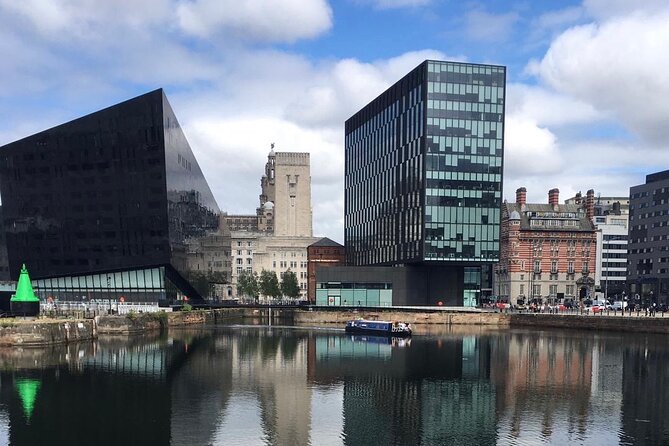
The walk continues along the waterfront and nearby streets, mixing old buildings with newer public spaces. Liverpool is especially good for this kind of contrast. A grand nineteenth-century facade may sit close to a modern walkway, public artwork, or shopping area.
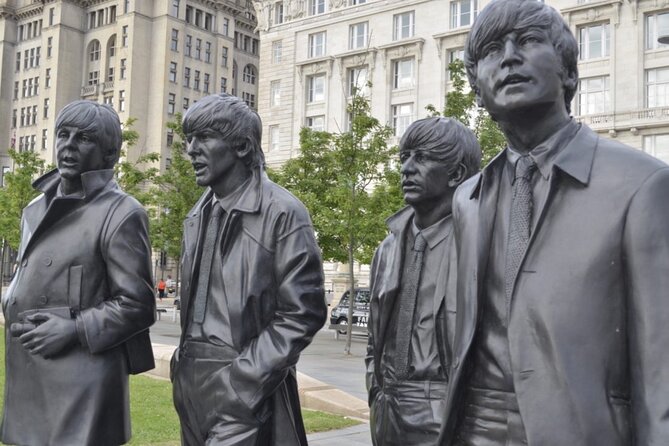
A Beatles statue near the waterfront gives you a straightforward photo opportunity. The bronze group was sculpted by Andrew Edwards, and you can pose with the Fab Four before continuing toward the docks. Access to this particular statue can sometimes be restricted. If that happens, the tour uses alternative statues, so you should not count on one exact photo.
This is a good point to remember what kind of tour you booked. The Beatles are an important part of Liverpool’s cultural identity, but the route is not built around every Beatles location. If you want recording studios, childhood homes, Penny Lane, or a long account of the band’s career, you need a separate Beatles-focused tour.
More Local Culture and Traditions Tours in Liverpool:
- Liverpool: Heritage, History & Culture Guided Walking Tour
★ 4.9 · 52 reviews - Amsterdam Food and Cultural Tour with Tastings
★ 5.0 · 4,315 reviews - Sevilla Food Tour: Tapas, Wine, History & Traditions
★ 5.0 · 3,468 reviews - Tromsø: Reindeer Camp and Sami Cultural Tour with Lunch
★ 4.7 · 3,326 reviews
Royal Albert Dock and the city’s maritime story
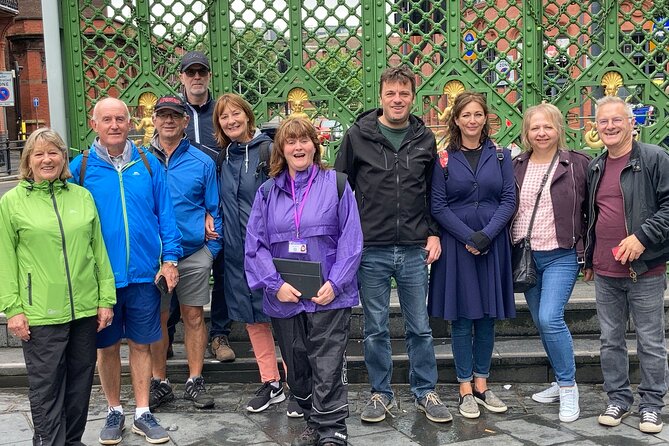
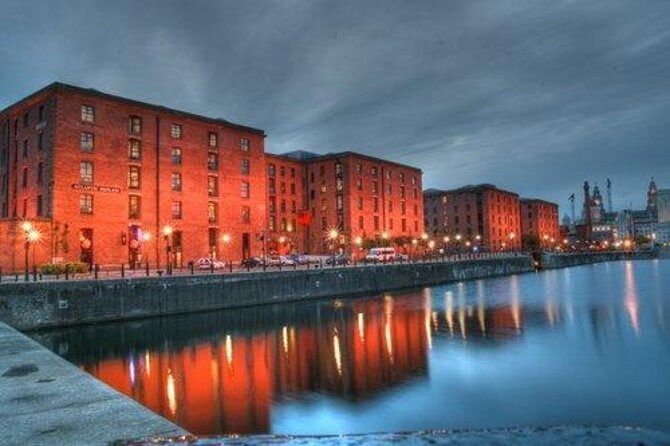
Royal Albert Dock receives about 20 minutes, making it one of the longer stops. Here your guide ties the dock to Liverpool’s maritime development and returns to the Titanic story. You also see a mix of old and new architecture around the waterfront.
The dock is a useful place to understand how Liverpool changed. It is not just a scenic waterfront for photographs. The buildings and open spaces help explain how the port shaped employment, trade, migration, and the city’s links with the wider world.
The route also passes a bronze statue of Bill Fury. It has become a gathering point for his fans and adds a smaller cultural detail to the walk. That kind of stop is easy to miss if you explore alone, yet it helps show that Liverpool’s music story goes well beyond one famous band.
Thomas Steers Way and the oversized Liverpool sign
At Thomas Steers Way, the guide explains the site’s connection with Liverpool’s first dry dock. This is another short but useful maritime pause. A large water fountain captures part of the dock story, and you can look through a port hole for a closer view.
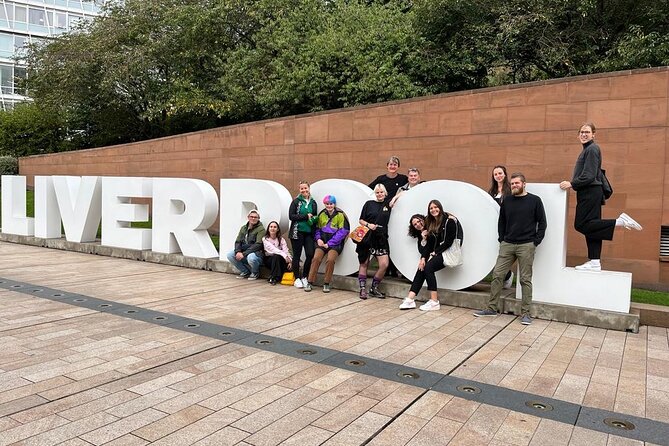
The oversized LIVERPOOL sign is here too. Its colors change with the season and special events, making it a popular place for a quick photograph. This stop is lighter in tone than the Titanic Memorial or Three Graces, but it gives the group a chance to enjoy modern Liverpool rather than hearing only about the past.
The nearby commercial area can feel less historic than the waterfront. One person found the shopping district an odd use of time, while others appreciated seeing the city beyond the postcard sights. I would view this section as a practical city orientation, not a major historical stop.
The Sailors Home Gateway and a golden Liver bird
The Liverpool Sailors Home Gateway is a striking monument linked to the maritime community. It also gives you another chance to photograph a golden Liver bird.
This stop connects well with the earlier port stories. Liverpool’s ships needed sailors, and sailors needed places to sleep, eat, and find support while in port. The gateway is a small reminder that the city’s maritime story involved ordinary workers as much as famous vessels and grand buildings.
Derby Square, Liverpool Castle, and the civic center
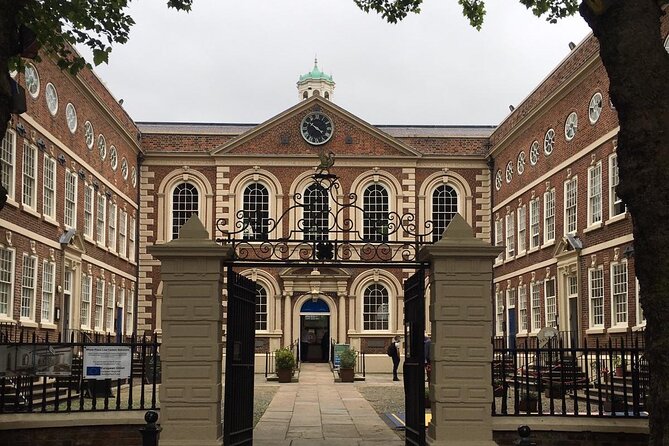
At Derby Square, your guide explains that Liverpool Castle once occupied this area. The castle has gone, but the site still gives you a glimpse of the medieval city beneath the later commercial center. The monument to Queen Victoria now dominates the square.
From there, the route continues along Castle Street. The street retains links to Liverpool’s earlier past and is framed by handsome buildings. It is a strong walking section because you can see the city changing from port district to civic and commercial center within a short distance.
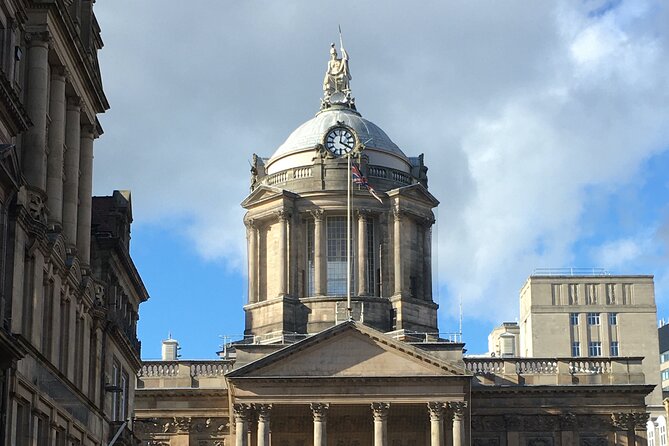
Liverpool Town Hall receives a brief stop. The current building is Grade I listed and is recognized as one of England’s finest surviving eighteenth-century town halls. Your guide also explains the story of earlier town halls, reaching back to the 1500s.
This part suits you if you enjoy architecture and city development. It is less theatrical than Mathew Street, but the information gives the Beatles story a useful counterweight. Liverpool is not just music venues and waterfront views. It is also a city of public buildings, old streets, and civic power.
Exchange Flags and the Nelson Monument
Exchange Flags forms a Grade II listed courtyard facing the Town Hall. The buildings and open space create one of the tour’s more formal architectural scenes.
The guide also covers the area’s role during the Second World War and points out the large bronze monument to Nelson, dating from the early 1800s. These details add political and military context to the port story. The stop is short, but it helps you see how Liverpool’s central district was shaped by commerce, war, civic pride, and national figures.
Mathew Street and the Cavern Club
Mathew Street is the loudest and most music-focused part of the tour. It is closely tied to the Cavern Club and the musicians who made Liverpool famous around the world. You have time for photographs outside the Cavern Club and for a look at signs and memorials connected with the street’s musical past.
This is the section Beatles fans will anticipate most. You walk in the footsteps of the musicians who played here and hear why Mathew Street has such a strong place in popular music.
Still, the pacing can vary by guide and group. One account found that the final portion became heavily focused on the Beatles, while another felt the balance was right. The safest expectation is this: you will receive a meaningful Beatles segment, but not a complete band biography. The tour’s purpose is to place the Beatles inside Liverpool’s wider cultural story.
Our Lady and Saint Nicholas Church, the final stop
The tour ends at Our Lady and Saint Nicholas Church, Liverpool’s parish church. The site has been used for worship for more than 750 years. Around the church are old tombstones, sculptures, gardens, and a setting that brings several difficult parts of Liverpool’s past into view.
Your guide discusses Liverpool’s links to the slave trade and North American history. This is an important part of the route because it moves beyond easy sightseeing. Liverpool’s prosperity was connected to international trade, and understanding that past gives you a more honest picture of the city.
The church is only about two minutes from the cruise terminal. Your guide can escort you back, or you can continue exploring the waterfront and shopping area before returning on your own. If your ship has a firm departure time, I would take the escort rather than stretching the final stop.
Guides, group size, and the value of the experience
At $37.10 per person, this is a fair price for a guided port-day introduction. You are paying for a local guide, a route that covers several districts, and the convenience of beginning and ending beside the cruise terminal. It is less expensive than many private excursions, though it does not include food, drinks, or admission to paid attractions.
The strongest part of the experience is the guide. Pam has been praised for answering questions and finding shade and seating when the group stopped. Peter is known for his passion for Liverpool’s past and for explaining both the waterfront and the commercial center. Michael has been praised for being friendly, helpful, enthusiastic, and generous with extra suggestions after the walk. Carl has received particularly strong praise for clear storytelling, promptness, professionalism, and answering questions.
That does not guarantee the same style on every departure. One account described the presentation as good but not exceptional, and another found the guide disorganized and the Beatles section too long. Those comments are useful because they show the main risk: the route is solid, but your enjoyment will depend partly on how your guide balances the many subjects.
The overall rating is 4.6 from 21 ratings, with 90 percent recommending it. That points to a generally dependable experience, while still leaving room for different guide styles and expectations.
Who should book this Liverpool walk?
You should consider this tour if you are visiting Liverpool from a cruise ship and want a low-stress first look at the city. It works especially well for you if you want a blend of maritime stories, architecture, Beatles landmarks, civic history, and local culture in one walk.
It also suits first-time visitors who do not want to spend the morning planning a route. The guide handles the sequence, explains what you are seeing, and keeps the port return simple.
You may want another option if your main goal is an intensive Beatles experience. You may also find the walk tiring if four miles of city streets is difficult for you. Children under 16 must be with an adult, and well-behaved dogs are allowed, though busy areas and group walking may not suit every dog.
Bring water, wear no-slip shoes, and leave room in your schedule for the full two hours and 15 minutes. Free cancellation is available up to 24 hours before the start, and poor weather may lead to a new date or a full refund.
Should you book it?
Book this tour if you want Liverpool explained as a port city, a civic center, and a music capital, all in one practical route. The cruise-terminal meeting point, close finish, small group, and strong guides make it good value for a first visit.
Skip it if you want only Beatles locations, indoor attractions, or a shorter walk. For most cruise passengers seeking an informed introduction without transport worries, this is a sensible way to spend a morning in Liverpool.
FAQ
Where does the tour begin?
It begins at Cruise Liverpool Cruise Terminal, Gate, 2 Princes Parade, Liverpool L3 1DL, England.
Where does the tour finish?
The guided walk finishes at Our Lady and Saint Nicholas Church, about a two-minute walk from the cruise terminal.
Can the guide escort me back to the ship?
Yes. Your guide can escort you back to the cruise terminal, or you can continue exploring and return on your own.
How long does the tour last?
The tour lasts approximately two hours and 15 minutes.
How much walking is involved?
The route covers about four miles and includes street walking over some uneven surfaces and cobbles.
Is this a Beatles-only tour?
No. The tour includes Beatles sites such as the Beatles statue, Mathew Street, and the Cavern Club, but it also covers maritime history, architecture, civic buildings, local culture, and Liverpool’s links to slavery and North America.
What should I wear?
Wear comfortable shoes with good grip. The route includes uneven surfaces and cobbles.
Is food or drink included?
No. Food and drink are not included. You are advised to bring a bottle of water or another drink.
Are children allowed?
Yes, but children under 16 must be accompanied by an adult.
What happens if the weather is poor?
The experience requires good weather. If it is canceled because of poor weather, you will be offered another date or a full refund.
More Shore Excursions in Liverpool
- Kona Shore Excursion: Sea Turtles, Historic Kona & Coffee
★ 4.5 · 324 reviews - Invergordon Cruise Excursion – Castle ,Whisky and History Tour
★ 5.0 · 37 reviews - Cruise Ship Shore Excursion of Historic Kona
★ 4.0 · 33 reviews - Ancient Olympia Shore Excursion with traditional lunch
★ 4.5 · 22 reviews
More History Walking Tours in Liverpool
- Liverpool: A Walk Through Time: Full History Walking Tour
★ 4.8 · 184 reviews - Evening Walking Historical Pub Crawl in Liverpool
★ 5.0 · 19 reviews - History and Hauntings of Salem Guided Walking Tour
★ 5.0 · 14,564 reviews - Lisbon: History, Stories and Lifestyle Walking Tour
★ 4.8 · 10,902 reviews
Just added around Liverpool
- Lennon and McCartney Songwriting History Tour★ 5.0 · 39 reviews
- Private Tour in Liverpool – History, Football, Views & Local Beer★ 5.0 · 18 reviews
- Evening Walking Historical Pub Crawl in Liverpool★ 5.0 · 19 reviews
- Liverpool Hidden History and Dead House Evening Walking Tour★ 5.0 · 200 reviews
- Liverpool: Heritage, History & Culture Guided Walking Tour★ 4.9 · 52 reviews
- Liverpool: A Walk Through Time: Full History Walking Tour★ 4.8 · 184 reviews
- Liverpool: Theatrical History Tour and The Dead House★ 4.9 · 37 reviews
- Liverpool: St James’ Cemetery Historical Ghost Tour★ 4.9 · 169 reviews
Local Culture & Traditions Tours, compared.

Amsterdam Food and Cultural Tour with Tastings
Read our review →
Sevilla Food Tour: Tapas, Wine, History & Traditions
Read our review →
Tromsø: Reindeer Camp and Sami Cultural Tour with Lunch
Read our review →
Half Day Dominican Republic Cultural Tour : Small Group
Read our review →
Ultimate Melbourne Walking Tour: History, Laneways & Culture
Read our review →
Tromsø: Sámi Reindeer Sledding and Sami Cultural Tour
Read our review →
Kyoto Gion: 2-Hour Geisha Culture & History Walking Tour
Read our review →
Marrakech Historical and Cultural Tour – Half Day City Tour
Read our review →Browse the lists this tour appears in