
Review · LIVERPOOL
A Walk Through Time: History of Liverpool Walking Tour
Ports tell Liverpool’s story best. This 1-hour-50-minute walking tour links the Three Graces, medieval Liverpool, the old docks, and the city’s rise as a world port. I like its clear route through more than 800 years of history, and I like that a local historian such as John or Julio can connect grand buildings with the people and trade behind them. The main drawback is that the talk can be fast, and much of the walk is outdoors beside the river, where cold wind may test your coat.
At $27.74 per person, I consider this a good-value introduction if you want the city to make sense before exploring it on your own. You should know that late cancellations have caused serious frustration for a small number of customers, so keep the free cancellation rule in mind and check the tour status before setting out.
Key points to know before booking
- Liverpool’s story is told through its docks: The route explains how trade, cotton, shipping, and the Old Dock helped turn Liverpool into a major port.
- The tour covers medieval to modern Liverpool: You move from the city’s 1207 origins to Liverpool ONE and the restored waterfront.
- The Three Graces provide a strong opening and finish: The Royal Liver Building and neighboring waterfront buildings frame the walk.
- John and Julio receive especially warm praise: Both guides are described as clear, engaging, and generous with local detail.
- The walk is excellent value for first-time visitors: At $27.74, you get a guided city overview without paying entry fees at most stops.
- Dress for exposed weather: The riverfront can be cold and windy, and the tour needs suitable weather to run.
Why Liverpool’s waterfront is the right place to begin
The tour begins at the Royal Liver Building at Pier Head, one of Liverpool’s famous Three Graces. This is an effective meeting point because the waterfront immediately shows the city’s old importance. The buildings here are not just attractive backdrops. They represent the money, shipping, insurance, and trade that once flowed through the port.
You receive an introduction to the Three Graces before walking inland. The opening lasts about 10 minutes, so do not expect to enter the Royal Liver Building. Admission is not included, and the tour is built around outdoor explanations rather than interior visits.
I like this beginning because it gives you a visual anchor. You are not starting with an abstract lecture about trade. You are looking at the buildings that helped manage it. If you are interested in Liverpool mainly because of music, this opening also widens the picture. The city’s story is much older and larger than the Beatles.
More History Walking Tours in the UK
- A History of Terror – Belfast City Centre Walking Tour
★ 5.0 · 2,883 reviews - Edinburgh: Old Town History and Tales Walking Tour
★ 4.8 · 2,361 reviews - Old Town Walking Tour History and Tales in Edinburgh
★ 5.0 · 2,168 reviews
St Nicholas Gardens and Liverpool’s medieval beginning
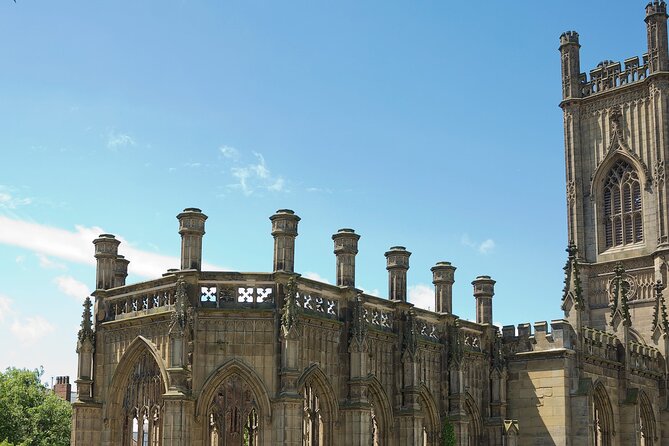
From Pier Head, the group crosses the Strand toward Liverpool Parish Church Gardens. This stop lasts about 15 minutes and focuses on the site once known as St Nicholas’ Church, named for the patron saint of the sea.
Here, the guide explains Liverpool’s medieval origins from 1207. The value of this stop is its sense of place. You are not simply hearing that Liverpool began as a medieval settlement. You are shown surviving evidence connected with the city’s earliest development.
The site is free to visit, and the outdoor setting keeps the pace moving. Still, the route is built around listening rather than long sightseeing breaks. If you need time for photographs or close inspection, you may have to return later on your own.
Old Hall Street and the hard truths of trade
The walk then continues down Old Hall Street, a route tied to Liverpool’s 13th-century town development. You pass Grade I listed buildings and reach the area associated with the Cotton Exchange, where goods from across the world were traded.
This is one of the most important parts of the walk because it explains how Liverpool changed from a small medieval town into a major port. Cotton sits at the center of the story, along with the commercial systems that linked Liverpool to the Atlantic world.
The tour does not present the city’s success as a simple tale of clever merchants and impressive buildings. It also covers Liverpool’s involvement in the Atlantic slave trade. That subject is painful, but leaving it out would give you a false picture of how the port grew.
I appreciate that the route connects money and architecture with human cost. You get a better understanding of why certain streets became important, and why Liverpool’s rise carried a darker side. The guide’s role matters here. John, in particular, is praised for making difficult subjects understandable without losing their seriousness.
Liverpool Town Hall and the business of a port
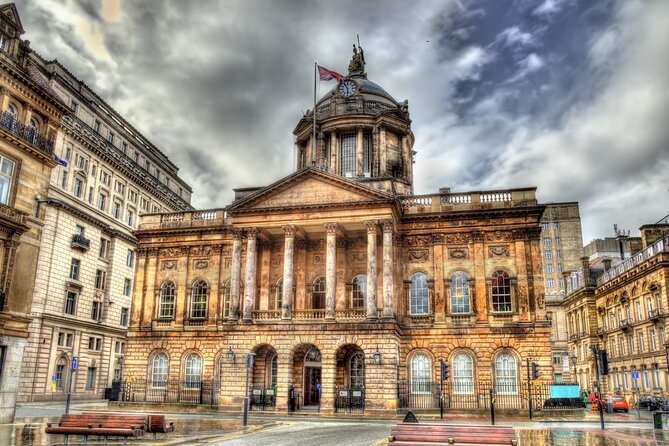
Liverpool Town Hall comes next. The building dates from 1749 and is described as one of the finest surviving Georgian buildings in the United Kingdom. The stop lasts around 10 minutes, with attention on the building itself and Liverpool’s growth as a commercial center.
You do not receive an included interior visit, so the value comes from the explanation outside. Look up as you walk. The architecture helps you see how a port city presented wealth and authority during its strongest period.
This stop also breaks up the dockside story with a civic one. Liverpool was not only ships, warehouses, and sailors. It needed a town government, merchants, officials, and public buildings to manage the growing city.
Same place, a different slice of the past:
- London Small Group Tour of Historical Pubs
★ 5.0 · 10,422 reviews - Edinburgh: Edinburgh Castle Guided History Tour with Tickets
★ 4.8 · 9,933 reviews - Edinburgh: Whisky Tasting with History and Storytelling
★ 4.9 · 2,451 reviews - Soho Music & Historic Pubs Tour
★ 5.0 · 1,993 reviews
Castle Street and the vanished castle
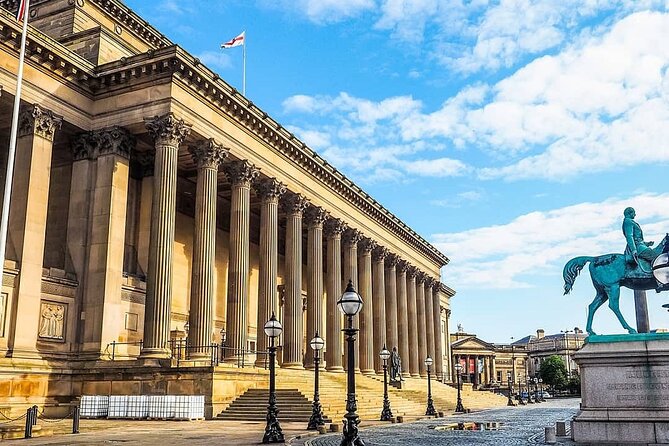
Castle Street offers one of the clearest changes in the city’s appearance. The architecture here reflects Liverpool’s development through the 18th century, while the name points back to Liverpool Castle and the city’s earlier defenses.
The route uses the street as a walk through time. You can see how different periods sit close together, even when the original structures are gone. The guide explains the importance of the castle site and how the area changed as Liverpool became one of the world’s leading ports by 1800.
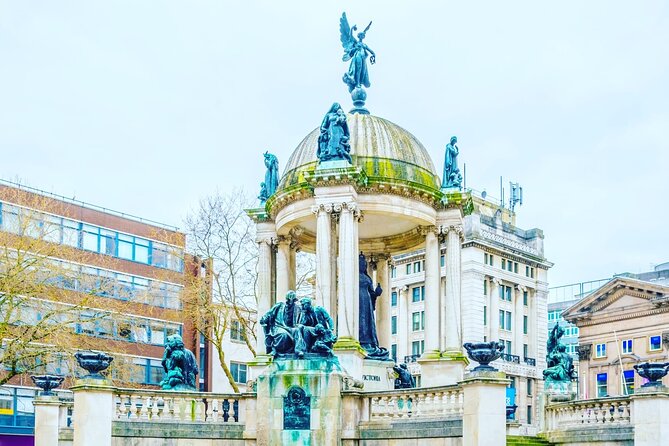
At the Queen Victoria Monument, the discussion continues for roughly 10 minutes. This is also the listed end point for the experience, at One Derby Square near the bottom of Castle Street. However, the route description also says the tour finishes back at the Three Graces. That is an important practical inconsistency. Confirm the final meeting point before booking or on the day, particularly if you have a train, reservation, or another tour afterward.
Liverpool ONE and the city after the docks
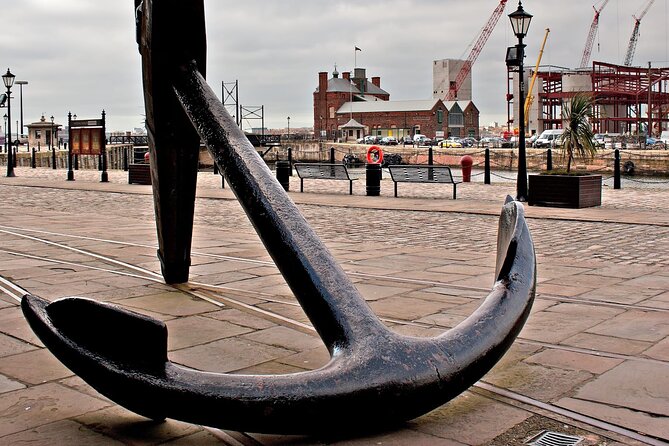
The walk then passes through Liverpool ONE, the modern shopping and entertainment district. The guide gives you an overview of the shops and attractions, showing how the city center has been reused in a very different era.
This part may feel less historic than the old streets and docks, but it has a useful purpose. Liverpool is not frozen in its port past. Its center has been reshaped for modern retail and leisure, and the tour places that change beside the older commercial quarters.
You will spend about 10 minutes here. I would treat this as orientation rather than a shopping stop. There is not time to browse properly, so return later if Liverpool ONE is on your list.
The Old Dock and Liverpool’s commercial breakthrough
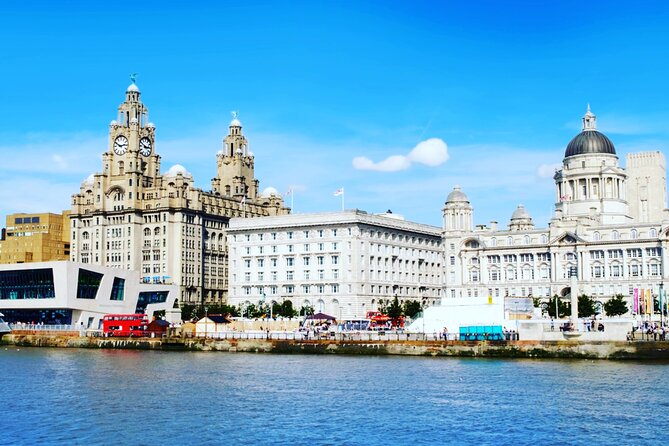
The Old Dock is one of the strongest stops on the route. Built in 1715, it was the first commercial wet dock of its kind in the world. The guide explains how this dock helped Liverpool handle ships and goods more efficiently.
This is where the city’s physical growth becomes easier to understand. A dock is more than a place where boats tie up. It changes the speed, order, and scale of trade. Liverpool’s success depended on making it easier for ships to load, unload, and connect with merchants.
The stop lasts around 10 minutes and is free. Do not expect a large preserved dock basin or a museum-style display. The interest comes from the guide’s explanation and from understanding what occupied this part of the city before later redevelopment.
For me, this is the kind of stop that makes a guided walk worth paying for. A sign can tell you a date. A good guide can explain why that date changed a city.
Royal Albert Dock and wartime Liverpool
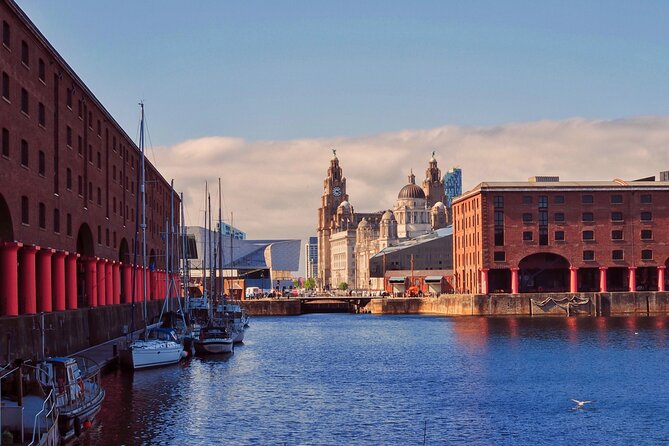
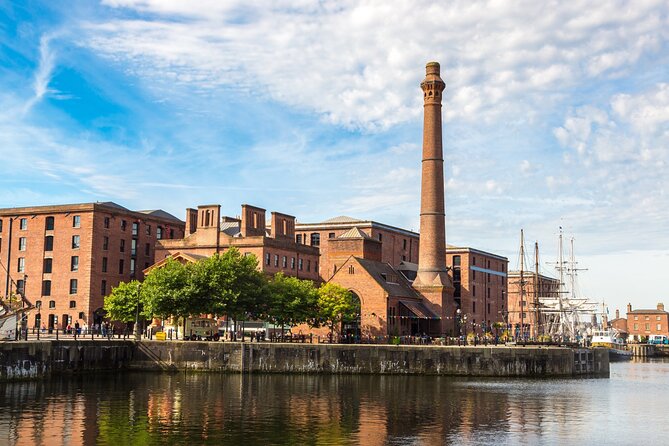
The route continues to Royal Albert Dock, built in 1846. This is one of Liverpool’s most recognizable areas, with large dock buildings, open water, and a strong connection to the city’s 19th-century commercial life.
The guide explains the dock’s role at the center of trade and also covers Liverpool’s involvement in the First and Second World Wars. That adds another layer to the waterfront. The dock was not merely a place of commercial success. It also became part of the city’s wartime experience.
The stop lasts about 10 minutes and is free. You will have time to see the setting, but not to visit every attraction around it. If you want museums, galleries, or a longer look at the dock buildings, plan a separate visit.
The route’s focus remains on connections. The Old Dock explains an early commercial breakthrough. Royal Albert Dock shows a later, more developed port. Together, they help you see how Liverpool kept adapting as shipping and trade changed.
Finishing with the Three Graces
The final section returns to the waterfront and the Three Graces, including the Royal Liver Building. The listed schedule allows about five minutes for the final explanation, although the meeting details also identify the Queen Victoria Monument as the end point.
This closing gives the walk a useful frame. You began with Liverpool’s most recognizable commercial buildings, then traced the city backward and forward through medieval origins, trade, civic power, docks, modern redevelopment, and war.
The waterfront is also a good place to continue exploring independently. You are near several of Liverpool’s best-known areas, and the central location makes it easy to reach other sights on foot or by public transport.
How the guides shape the experience
The guide is the heart of this walk. John receives repeated praise for his command of Liverpool’s story, his local pride, and his ability to keep people interested for nearly two hours. He is also described as clear enough to hear despite traffic noise and willing to answer questions.
Julio is praised for being engaging and helpful, especially as an introduction to the city at the start of a longer stay. If you are assigned either guide, expect a talk-led walk with a lot of facts, connections, and local stories.
The main caution is pace. One customer found the guide spoke too quickly, which is possible on a route covering so much ground. If you need repetition, ask questions early. The guides appear to welcome them, but the amount of material means you should not wait until the final minutes.
Group size can reach 40 people. That is large enough to affect how close you can stand to the guide and how easily you can ask questions. Some departures may feel more personal if the group is smaller. Service animals are allowed, the tour is near public transport, and most people can take part.
Is $27.74 good value?
At $27.74, I think the price is fair for a first look at Liverpool. You are paying for a local guide, nearly two hours of context, and a route that connects places you might otherwise visit as separate sights.
The tour does not include entry to the Royal Liver Building or other paid attractions. That keeps the cost down, but it also means you should not book it expecting interior tours or extended museum visits.
The best value comes if you are new to Liverpool and want to understand the city before choosing what to see next. It is less useful if you already know the waterfront well or prefer quiet sightseeing without a steady stream of explanation.
Weather, footwear, and the cancellation concern
Wear comfortable shoes. The walk lasts nearly two hours, and several stops are along open streets and the waterfront. Bring a warm coat or jacket, especially in cold or windy conditions. The river wind can make an otherwise manageable morning unpleasant.
The experience requires good weather. If poor weather causes cancellation, you are offered another date or a full refund. You can also cancel for a full refund up to 24 hours before the start time.
There have been a few reports of cancellations shortly before departure, including one only 10 minutes before the start and another when the customer had already reached the meeting point. The provider described these as rare and offered refunds or alternative dates, but the disruption is still worth taking seriously. If this walk is essential to your day, avoid scheduling a nonrefundable activity immediately afterward.
Who should book this Liverpool walk?
I would choose this tour if you want a broad historical framework rather than a single-theme attraction. It suits first-time visitors, people interested in ports and trade, and anyone who wants Liverpool explained through buildings and streets instead of a classroom lecture.
It is also useful for local residents. One local who had lived in Liverpool for decades said the walk revealed parts of the city’s story they had never learned. That is a good sign for anyone who thinks they already know the center.
You may want a different experience if you dislike long talks, need a slow pace, or want substantial indoor time. The tour is largely outdoors, and the guide may cover a great deal of information in a short period.
Should you book A Walk Through Time?
Book it if you want Liverpool’s pieces connected. The strongest parts are the Old Dock, the explanation of Atlantic trade, the medieval origins near St Nicholas’ Church, and the guide’s account of how commerce shaped the waterfront.
At $27.74, it offers solid value, especially early in your visit. Just dress for wind, allow for a fast flow of information, and confirm the ending point because the published route gives both the Queen Victoria Monument and the Three Graces as final locations. If you can accept those practical points, this is a useful and serious introduction to Liverpool, with enough local character to keep it from feeling like a basic orientation walk.
FAQ
How long is the Liverpool history walking tour?
The tour lasts approximately 1 hour and 50 minutes.
Where does the tour begin?
It begins at the Royal Liver Building, Liver Building, Pier Head, Liverpool L3 1HU.
Where does the tour end?
The meeting details identify the Queen Victoria Monument at One Derby Square, James Street, as the end point. The route description also refers to a final stop at the Three Graces, so you should confirm the exact ending point before the walk.
What language is the tour offered in?
The tour is offered in English.
Is the tour suitable for most people?
Most people can participate. Service animals are allowed, and the route is near public transportation.
What happens if the tour is canceled because of bad weather?
You will be offered a different date or a full refund. The tour requires good weather to operate.
Just added around the UK
- Curious Cambridge – The History Tour that’s FUN!!!★ 5.0 · 80 reviews
- Birmingham Gangs Nighttime Historical Walking Tour with Pub Stops★ 5.0 · 53 reviews
- 2.5-Hours Walking Tour of Birmingham into Black Heritage Madiba★ 5.0 · 49 reviews
- Belfast Walking Tour: City Centre History, Troubles & Stories★ 5.0 · 39 reviews
- Award Winning Private 2 Hour Belfast Political Black Taxi Tour★ 5.0 · 53 reviews
- Belfast Political/history/troubles private taxi/cab tour★ 5.0 · 69 reviews
- Private Political History & Murals Tour Belfast★ 5.0 · 182 reviews
- Ancient Britain Tour – Private Day Trip from Bath★ 5.0 · 17 reviews
History Walking Tours, compared.
History and Hauntings of Salem Guided Walking Tour
Read our review →
Freedom Trail History Small Group Walking Tour
Read our review →
Historic Charleston Guided Sightseeing Walking Tour
Read our review →
Tapas Walking Tour with Food, Wine, and History
Read our review →
Savannah History and Haunts Candlelit Ghost Walking Tour
Read our review →
A History of Terror – Belfast City Centre Walking Tour
Read our review →Browse the lists this tour appears in