
Review · LIVERPOOL
Best Of Liverpool Heritage, History & Culture Guided Walking Tour
Liverpool has more stories than Beatles songs. This 2-hour-15-minute walking tour links the old Ropewalks, the waterfront, grand civic buildings, and Beatles landmarks into one useful city introduction. I like the way it mixes maritime history with local character, and I like that local guides such as Mike, Pam, Carl, Roy, and Allan bring humor and personal knowledge to the walk. The main consideration is pace: you cover a lot of ground, and one audio-related comment suggests it can be harder to catch every question in a larger group.
The tour costs $31.90 per person, which is fair for more than two hours with an experienced local guide and no extra admission charges. It is especially useful early in your stay, when you want to understand Liverpool’s layout before choosing where to spend more time. The route ends by Mathew Street, so you can continue into the Cavern Quarter afterward.
Key points before you book
- A strong first look at Liverpool: The route connects the city center, Ropewalks, waterfront, Three Graces, Castle Street, and Mathew Street.
- Liverpool beyond the Beatles: You will hear about docks, sailors, trade, wartime Liverpool, civic buildings, and the city’s links with the United States.
- Plenty of photo stops: Look for the golden Liver bird, the Liverpool sign, the Beatles statue, Bill Fury’s statue, and the Three Graces.
- A local guide shapes the experience: Guide quality is central, with Mike, Carl, Pam, Roy, Allan, Paul, Rob, Chris, Colleen, and others praised for clear stories and good humor.
- Easy terrain, but uneven footing: There are no hills or stairs, though cobbles and other uneven surfaces call for comfortable, non-slip shoes.
- A convenient finish: The walk ends at Mathew Street, close to the Cavern Club and other city-center sights.
Why this walk works for a first day
Liverpool can seem scattered at first. The shopping streets, old commercial quarter, docklands, civic buildings, and Beatles sites each feel like separate pieces. This tour ties them together on foot, giving you a working map of the city while explaining why each area matters.
I like the route because it does not treat Liverpool as only the birthplace of the Beatles. The Beatles are part of the story, but the walk also covers the port, shipping, migration, wartime history, architecture, local industry, and civic pride. One especially useful fact shared along the way concerns Liverpool’s early links with the United States, including the city’s role in hosting the first US foreign consulate.
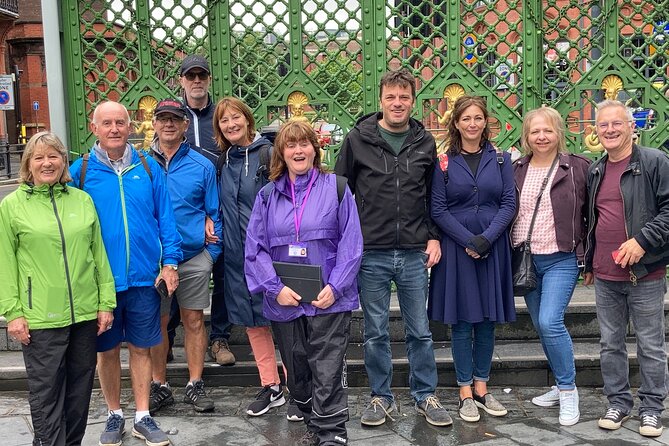
The walk is offered in English and is limited to a maximum of 20 people. That is small enough for a more personal feel, though the experience will still depend on where you stand and how clearly you can hear. If your group is small, guides can answer questions more freely and adjust parts of the conversation to your interests.
The route begins at the Bluecoat on School Lane and ends at the entrance to Mathew Street. There is no food or drink included, so bring water. The provider recommends comfortable shoes, and that advice matters more than it might sound. Liverpool’s center includes cobbled and uneven sections, even though the route has no hills or stairs.
More History Walking Tours in the UK
- A History of Terror – Belfast City Centre Walking Tour
★ 5.0 · 2,883 reviews - Edinburgh: Old Town History and Tales Walking Tour
★ 4.8 · 2,361 reviews - Old Town Walking Tour History and Tales in Edinburgh
★ 5.0 · 2,168 reviews
Bluecoat and Liverpool’s early city center
You meet outside the gates of the Bluecoat, a historic building on School Lane. The opening stop is brief, but it gives the group a clear starting point in the center and avoids the confusion of meeting at a busy landmark.
From here, the guide begins placing Liverpool in time. The route moves through areas shaped by trade, shipping, civic ambition, and later redevelopment. Guides often use maps, old images, or visual references to make the changes easier to picture. That approach is useful because much of Liverpool’s former dock activity is no longer visible in its original form.
The tour is not built around entering museums or paid sites. Instead, you learn by standing in the streets where the city’s story unfolded. That keeps the walk moving and helps explain how separate buildings and squares fit together.
Sailors Home and the Ropewalks
The Liverpool Sailors Home gateway makes a fine early photo stop. This monument recalls an institution that served the maritime community, and the golden Liver bird gives you an immediate visual link to Liverpool’s port identity.
Next comes Henry Street in the Ropewalks district. The name refers to the rope-making once carried out here for sailing ships. This is one of the better examples of the tour’s approach: an ordinary-looking city street becomes more interesting once you know what work took place there.
The Ropewalks area also helps you understand how Liverpool grew around the needs of shipping. Rope was not a decorative trade. It was essential to ships, and streets connected with this work remind you that the port depended on a wide network of skilled labor.
The route then reaches Campbell Square, where the Bridewell occupies a converted Victorian gaol. Depending on access, you may get a look inside one of the original cells. That small detail gives the walk a welcome change of mood. You move from maritime industry to law, punishment, and the reuse of old buildings.
One guide, Allan, is especially well regarded for pointing out offbeat places such as the old jail turned restaurant. That kind of stop is part of the tour’s appeal. You are not simply ticking off famous façades. You are also seeing corners you could easily pass without understanding.
Thomas Steers Way and the first dry dock
At Thomas Steers Way, the guide explains that the area sits on the site of Liverpool’s first dry dock. The fountain here carries a maritime theme, and a quick look through a porthole provides a small but memorable connection to the city’s seafaring past.
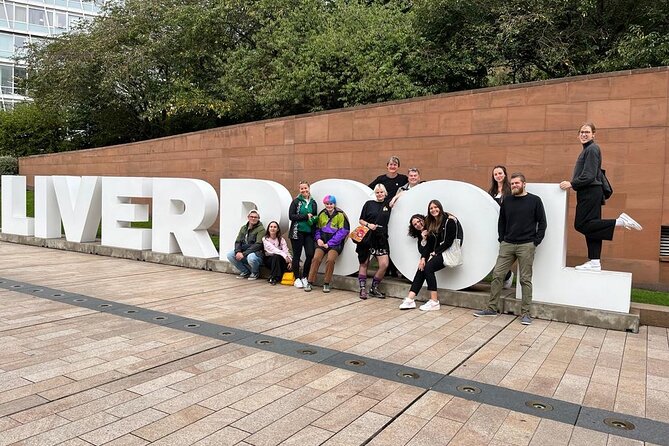
This is also where you find the oversized LIVERPOOL sign. Its colors change for seasons and events, making it an easy place for photographs. The sign may feel modern compared with the older parts of the walk, but that contrast is useful. Liverpool’s identity is not frozen in the past. The city continues to turn its history into public spaces and meeting points.
The stop is short, so expect an introduction rather than a long lecture. If you want detailed information about dock engineering, ship design, or the dry dock itself, you may need to ask questions or explore further on your own.
More Local Culture and Traditions Tours in the UK:
- Belfast: Best of Belfast History, Culture & Art Walking Tour
★ 4.9 · 158 reviews - Liverpool: Heritage, History & Culture Guided Walking Tour
★ 4.9 · 52 reviews - Amsterdam Food and Cultural Tour with Tastings
★ 5.0 · 4,315 reviews - Sevilla Food Tour: Tapas, Wine, History & Traditions
★ 5.0 · 3,468 reviews
Royal Albert Dock and the Titanic connection
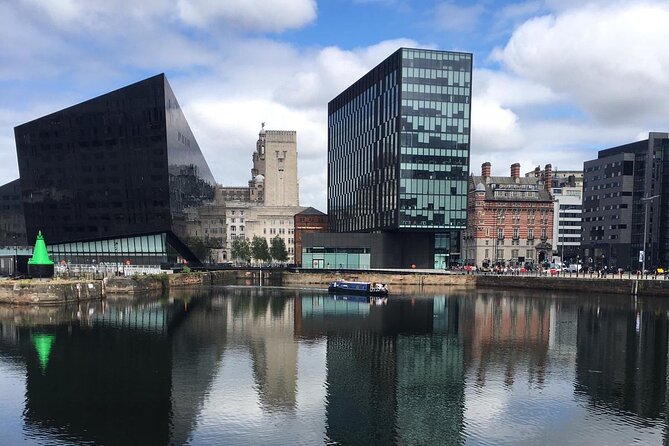
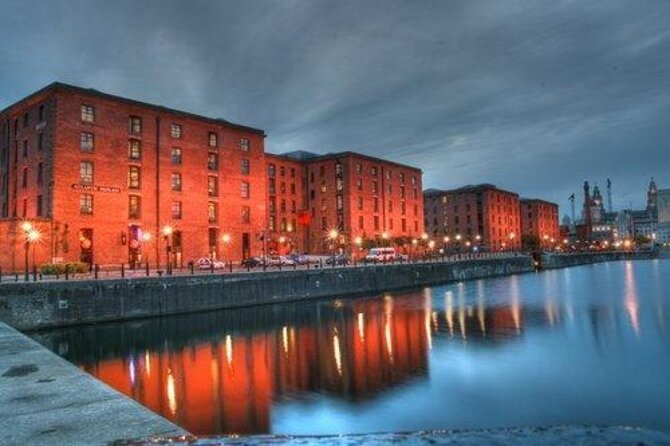
The Royal Albert Dock is the longest waterfront section of the walk, and rightly so. This is where Liverpool’s maritime story becomes most visible. The guide points out old and new architecture while explaining how the docks helped shape the city’s growth.
You also hear how the Titanic story became part of Liverpool’s maritime identity. Liverpool was closely tied to the ship’s story through its connection with the White Star Line, and the subject adds emotional weight to the waterfront. The tour keeps this as part of a broader port narrative rather than allowing one famous ship to overshadow everything else.
Look for the bronze statue of Bill Fury. It has become a fan shrine, adding a layer of local popular culture to the dock walk. This is a good example of the route’s variety: within a short stretch, you move from commercial shipping to tragedy, architecture, music, and public memory.
The Royal Albert Dock can be busy, particularly at popular times, so listen closely when the group stops. The open waterfront may also feel exposed in wet or windy weather. The tour requires good weather, and poor conditions can lead to a different date or a full refund.
The Beatles statue and Liverpool’s musical identity
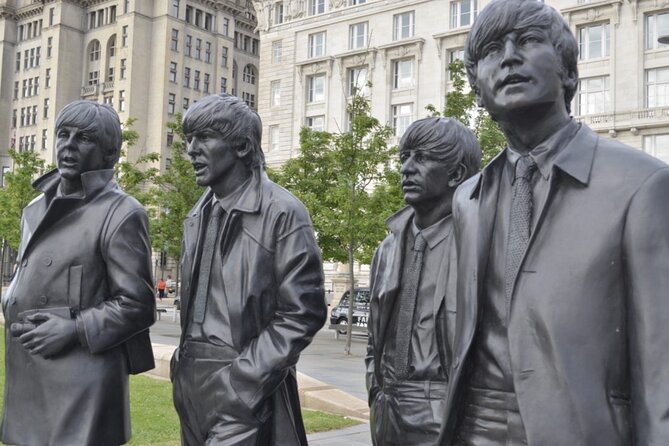
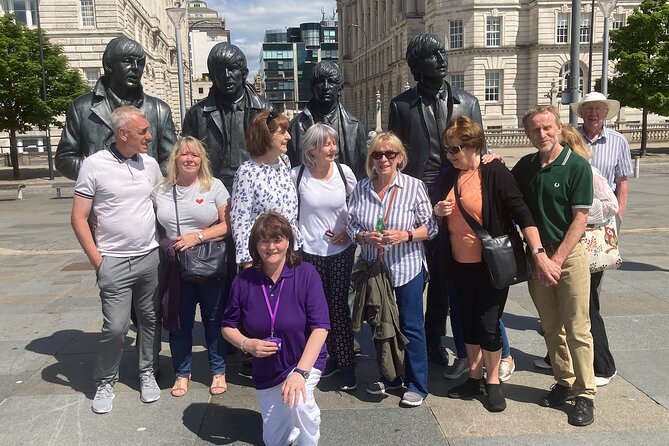
The Beatles statue is one of the walk’s most obvious photo stops. Sculpted by Andrew Edwards, it gives you the chance to pose with the Fab Four before the route heads toward the civic heart of the city.
The Beatles material is presented as part of Liverpool’s wider identity. That balance matters. If you come mainly for music history, this tour gives you a useful introduction, but it is not a full Beatles-focused walk. The tour ends near Mathew Street, and you can continue to the Cavern Club yourself or book a separate Beatles walking tour for a more detailed look at the band.
Access to the Andy Edwards Beatles statue can occasionally be restricted. If that happens, the guide may use alternative statues. So you should expect Beatles content, but not assume that every planned photo location will always be available.
The Three Graces and the waterfront skyline
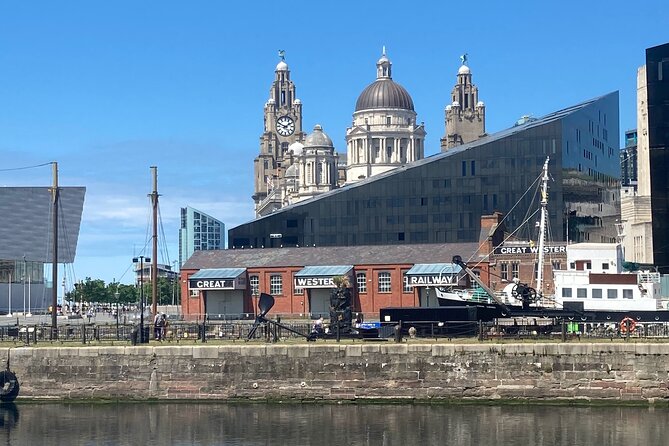
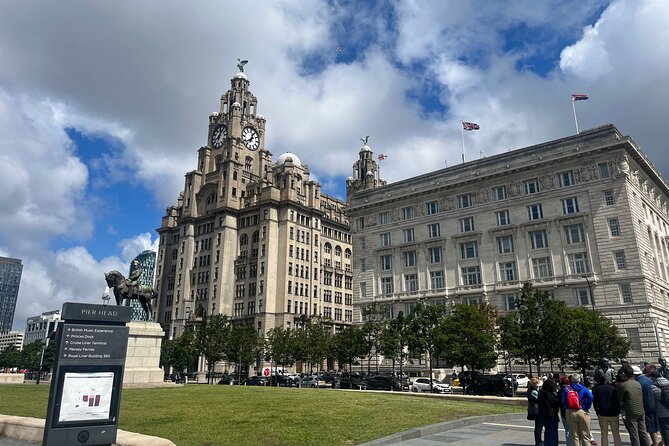
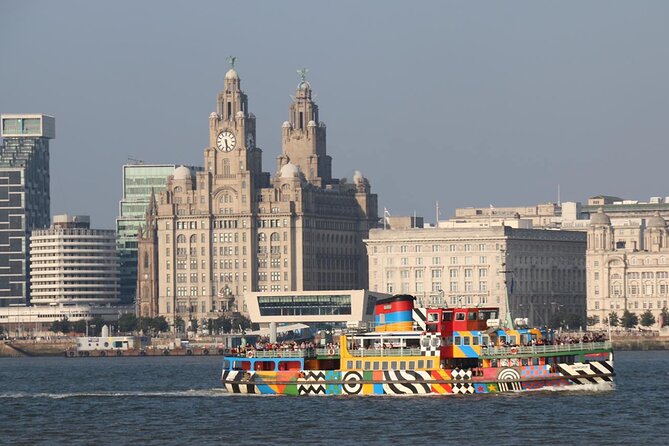
The Three Graces are the Cunard Building, the Port of Liverpool Building, and the Liver Building. Together, they form one of Liverpool’s most recognizable views and provide a strong architectural centerpiece for the walk.
You will hear about the heritage of these Grade II listed buildings and the iconic Liver Building. The pair of Liver birds, often nicknamed Bertie and Bella, are part of the city’s visual identity and help explain why Liverpool’s symbols appear so often around the waterfront.
This section is valuable even if architecture is not your main interest. The buildings show how strongly Liverpool once presented itself as a global port. Their scale and placement were designed to face the river and the ships arriving from abroad.
The Three Graces also make a natural pause in the route. You have time to take photographs, look across the waterfront, and connect the earlier dock stories with the commercial power represented by these grand offices.
Castle Street, Town Hall, and Exchange Flags
Castle Street takes you back toward Liverpool’s older civic center. Its buildings and layout retain links to the medieval city, giving you a sense of how the modern street plan grew from an earlier settlement.
The route then passes Liverpool Town Hall, a Grade I listed building recognized as one of England’s finest surviving 18th-century town halls. The guide also discusses earlier town halls dating to the 1500s, which helps you see the present building as part of a much longer civic story.
Exchange Flags faces the Town Hall and forms an impressive courtyard. Its history includes an important role during the Second World War. The Nelson Monument, a large bronze memorial dating from the early 1800s, adds another layer of national history to the square.
These stops are among the best reasons to take the tour even if you are not a Beatles fan. They show Liverpool as a place of government, commerce, war, shipping, and public ceremony. The streets are also relatively easy to explore independently later because the tour gives you names and landmarks to remember.
Derby Square and the walk toward Mathew Street
At Derby Square, the guide explains where Liverpool Castle once stood. The castle is gone, but the location still gives you a way to picture the medieval city and understand how Liverpool’s center shifted over time.
The square is now home to an imposing monument to Queen Victoria. One guide, Mathew, is praised for his entertaining comments about the statue. That detail points to an important part of the experience: the best moments may come from the guide’s local delivery rather than from the landmark alone.
The route finishes at the end of Mathew Street. From here, you can explore the Cavern Quarter independently, find the Cavern Club, or continue with a separate Beatles walk. Ending here is practical because you do not have to cross the city again to continue a music-themed afternoon.
The planned route includes Derby Square, Mathew Street, and other specific points, but an occasional change is possible because of access, operations, or the pace of the group. One past participant found that some listed stops were missed, including Derby Square, Mathew Street, and the Eleanor Rigby statue. The provider acknowledged the issue and said guides would be reminded to cover the planned route. It is a small but fair caution: ask your guide if there is a stop you especially want to see.
The guides make the biggest difference
The strongest part of this experience is the guide. Mike is repeatedly praised for passion, humor, and clear storytelling. Carl is valued for answering questions and giving a broad introduction to the city. Pam is known for her enthusiasm and command of Liverpool’s past.
Other guides bring different strengths. Roy adds local humor and a distinctly Scouse point of view. Allan uses photos and thoughtful photo stops. Paul has been praised for tailoring the walk to personal interests and offering suggestions for the rest of a stay. Colleen is noted for extensive research, while Rob and Chris are described as clear and easy to follow.
That range means the walk will not feel exactly the same every day. This is not a recorded audio route with a fixed script. It is a live introduction shaped by the person leading it, the size of the group, the weather, and the questions you ask.
Most feedback is extremely strong, with a 5 rating from 539 reviews and 100 percent recommendation shown for the experience. One practical criticism concerned the lack of earphones, which made it harder to hear questions in the group. If the group reaches the maximum of 20 people, stay near the guide and speak up if you miss something.
Price, pace, and who should book
At $31.90, the tour offers solid value if you want history, orientation, and local commentary in one session. You are not paying for admissions, food, or transport. You are paying for the guide’s time and for a route that links several parts of Liverpool without making you work out the geography yourself.
I would book it early in a Liverpool stay. It gives you ideas for later, points out areas worth revisiting, and helps you decide whether you want to spend more time at the docks, civic center, Ropewalks, or Beatles sites.
The tour suits first-time visitors, people with limited time, and locals who want a fresh look at the city. It can also work well for families, provided children under 16 are with a responsible adult. Well-behaved dogs are welcome, though busy streets and group walking may not suit every pet.
You need a moderate level of fitness. There are no hills or stairs, but two hours on foot and uneven cobbles can be tiring. Wear shoes with good grip, carry water, and dress for changing waterfront weather.
Should you book this Liverpool walking tour?
Yes, if you want a broad, lively introduction rather than a narrow Beatles tour. The route gives you Liverpool’s port, architecture, public history, old streets, music connections, and local humor in one compact walk.
I would choose it especially for a first morning or afternoon in the city. The main caution is that the experience depends on the guide and group conditions, and the busy route can make some commentary harder to hear. Still, the strong record of guides such as Mike, Pam, Carl, Roy, and Allan makes this a sensible way to get your bearings and understand why Liverpool is much more than the Beatles.
Free cancellation is available up to 24 hours before the start time. Changes made inside that window are not accepted, and if poor weather cancels the walk, you can be offered another date or a full refund.
FAQ
Where does the Liverpool walking tour start?
The tour starts in front of the Bluecoat building gates on School Lane, Liverpool L1 3BX.
Where does the tour finish?
The walk ends at the entrance to Mathew Street in Liverpool city center, near the Cavern Quarter.
How long does the tour last?
It lasts approximately 2 hours and 15 minutes.
Is the Beatles Cavern Club included?
The route passes Beatles-related landmarks and ends near Mathew Street, but entry to the Cavern Club is not included. You can explore the area afterward or book a separate Beatles walking tour.
Are food and drinks included?
No. Food and drinks are not included. You are advised to bring a bottle of water.
Is the walk suitable for children and dogs?
Children under 16 must be accompanied by a responsible adult. Well-behaved dogs are welcome, though the walk includes busy areas and group walking.
Just added around the UK
- Curious Cambridge – The History Tour that’s FUN!!!★ 5.0 · 80 reviews
- Birmingham Gangs Nighttime Historical Walking Tour with Pub Stops★ 5.0 · 53 reviews
- 2.5-Hours Walking Tour of Birmingham into Black Heritage Madiba★ 5.0 · 49 reviews
- Belfast Walking Tour: City Centre History, Troubles & Stories★ 5.0 · 39 reviews
- Award Winning Private 2 Hour Belfast Political Black Taxi Tour★ 5.0 · 53 reviews
- Belfast Political/history/troubles private taxi/cab tour★ 5.0 · 69 reviews
- Private Political History & Murals Tour Belfast★ 5.0 · 182 reviews
- Ancient Britain Tour – Private Day Trip from Bath★ 5.0 · 17 reviews
Local Culture & Traditions Tours, compared.

Amsterdam Food and Cultural Tour with Tastings
Read our review →
Sevilla Food Tour: Tapas, Wine, History & Traditions
Read our review →
Tromsø: Reindeer Camp and Sami Cultural Tour with Lunch
Read our review →
Half Day Dominican Republic Cultural Tour : Small Group
Read our review →
Ultimate Melbourne Walking Tour: History, Laneways & Culture
Read our review →
Tromsø: Sámi Reindeer Sledding and Sami Cultural Tour
Read our review →
Kyoto Gion: 2-Hour Geisha Culture & History Walking Tour
Read our review →
Marrakech Historical and Cultural Tour – Half Day City Tour
Read our review →Browse the lists this tour appears in