
Review · HONSHU
Kyoto: Nara & Traditional Matcha Experience Bus Tour
One day, three sides of old Japan. I like the smart mix of Nara temples and wild deer with a hands-on matcha session in Uji, and I like that admission fees, transport, and an English-speaking guide are included. The main drawback is the pace: 510 minutes covers several major sights, so free time at each stop is useful but limited.
This $122 tour is a strong choice if you want to see beyond central Kyoto without planning trains, buses, temple tickets, and meal arrangements yourself. Guides such as At-chan, Nanami, Mai, Yuta, Tsubasa, and Rina have earned especially warm praise for clear explanations, Japanese language help, and careful group management, though your guide will vary by date.
Key points at a glance
- Three major heritage stops: See Todaiji Temple, Kasuga Taisha Shrine, and Byodoin Temple in one day.
- The Great Buddha at Todaiji: Enter one of the world’s largest wooden buildings and greet Nara’s huge bronze Buddha.
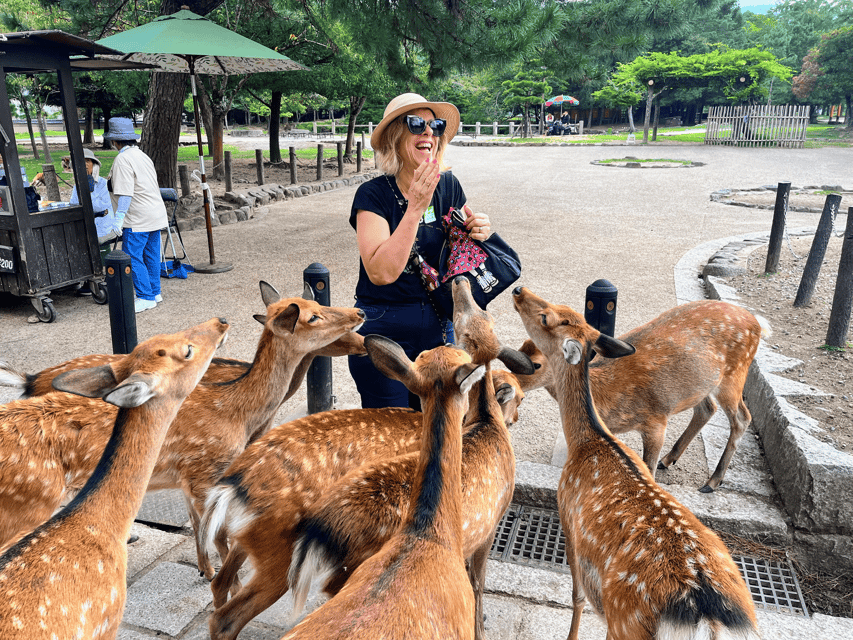
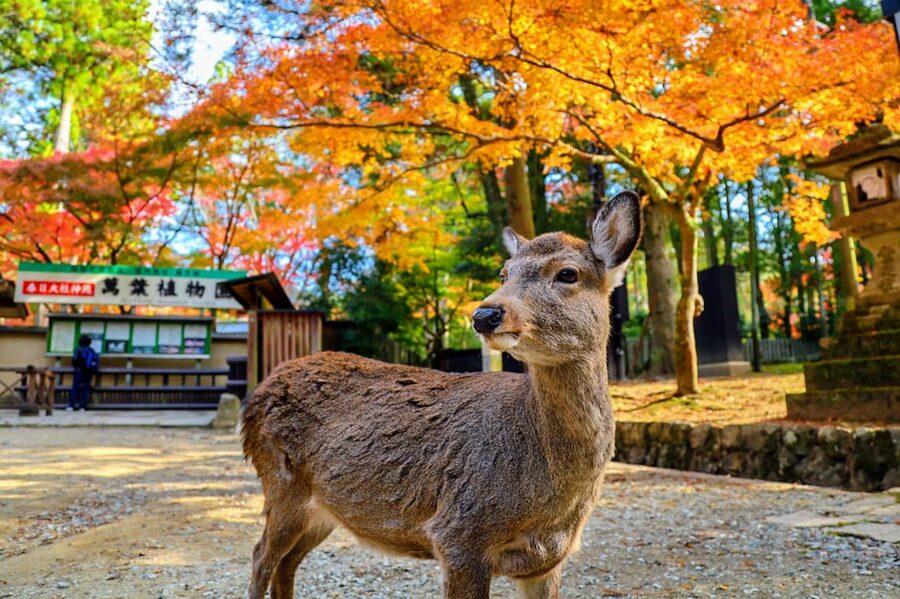
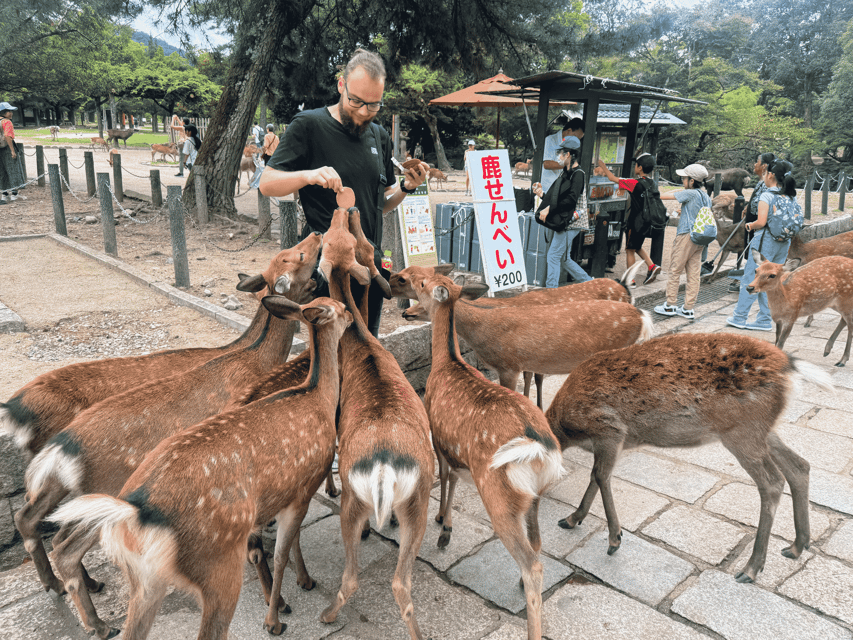
- Close contact with Nara deer: Walk through Nara Park and feed the deer with rice crackers sold nearby.
- Matcha made in Uji: Learn how powdered green tea is prepared in the region most associated with matcha.
- Comfortable long-distance transport: Ride an air-conditioned coach with free Wi-Fi and regular ventilation.
- A guide-led cultural day: Expect history, customs, simple Japanese language lessons, and practical help along the way.
Why this Nara and Uji combination works
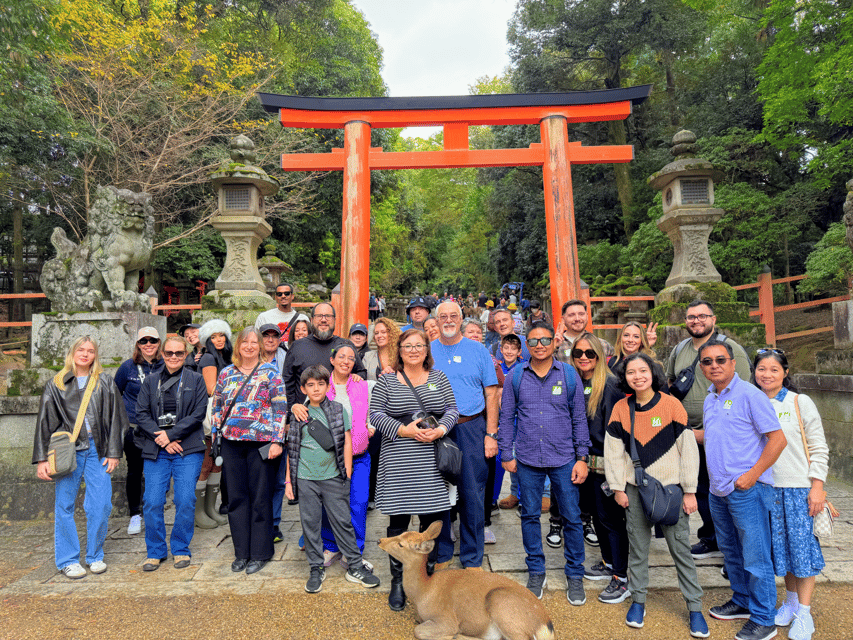
Kyoto can easily absorb several days, but the surrounding towns add a different feel. Nara brings Japan’s early Buddhist and imperial past, while Uji offers tea culture, riverside streets, and the elegant Byodoin Temple. This tour links both without asking you to master several rail connections.
I like the balance between famous sights and smaller personal moments. You get the enormous Great Buddha, rows of shrine lanterns, deer wandering freely, and a practical tea activity. Those experiences feel different from simply walking through one temple after another.
The tour begins at 8:00 AM and lasts about eight and a half hours. That early start matters. Nara’s main sights become crowded, and the day includes roughly an hour of coach travel to reach the area. You will see a lot, but you should arrive ready for a full day rather than a relaxed afternoon outing.
The schedule can change because of traffic, weather, or operating conditions. The order of the stops may also shift. That flexibility is normal for a coach tour, especially on busy days around Kyoto and Nara.
More Local Culture and Traditions Tours in Japan
- Kyoto Gion: 2-Hour Geisha Culture & History Walking Tour
★ 5.0 · 1,186 reviews - Nara: Half-Day UNESCO Heritage & Local Culture Walking Tour
★ 4.8 · 250 reviews - Tokyo: The Best of Izakaya in Shinjuku Food & Cultural Tour
★ 4.9 · 221 reviews
Meeting at Kyoto Station and settling into the coach
The meeting point is in front of Tully’s Coffee at the Kyoto Avanti Store, at 31 Higashikujo Nishisannocho, Minami Ward. Check-in is at 7:50 AM, with departure at 8:00 AM. Look for the green and white Japan Panoramic Tours flag.
Kyoto Station is large, so allow enough time to find the Avanti side of the complex. This is not a hotel pickup service. You must reach the meeting point yourself, and late arrivals or no-shows are not refunded.
Once aboard, you have an air-conditioned coach with free Wi-Fi. The vehicle is regularly ventilated and treated with an antibacterial coating. The guide gives live commentary in English, while audio headsets are available in French, German, Italian, Portuguese, Spanish, and Ukrainian.
The coach is a real advantage here. Nara and Uji are not impossibly difficult to reach by train, but moving between several temples and districts by public transport would take planning and walking. From the bus, you may pass Fushimi Castle and the Heijokyo palace area on the way to Nara, with the guide explaining what you are seeing.
Kasuga Taisha and the lanterns of Nara
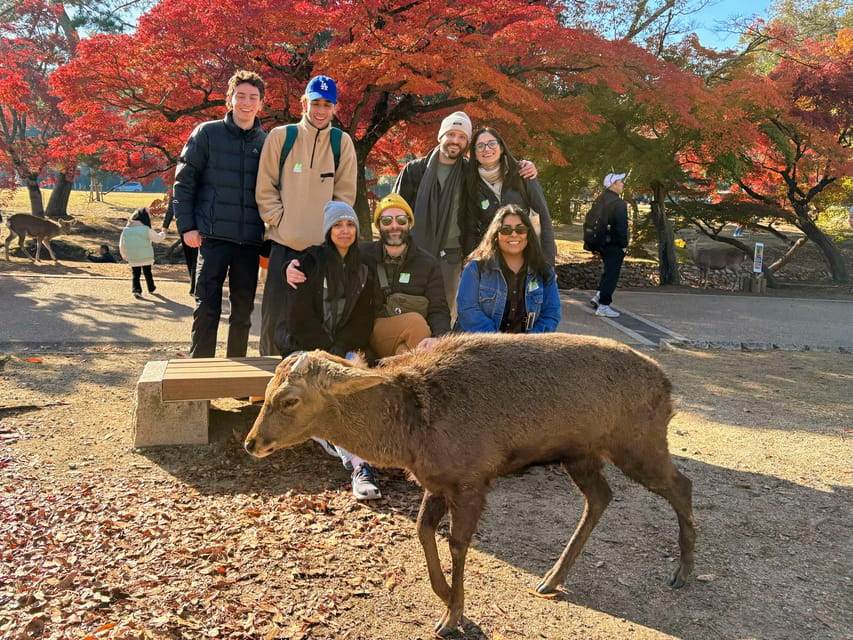
The Nara portion includes a visit to Kasuga Taisha, one of Japan’s best-known Shinto shrines. The listed stop is about 30 minutes, so you should expect a focused visit rather than a slow exploration of every path.
The shrine is famous for its thousands of stone lanterns, with about 3,000 associated with the grounds. Their repeated shapes create one of the most memorable visual moments of the day, especially if you take a moment to notice how the forest setting changes the mood.
Thirty minutes goes quickly. I would focus on the main approach, the lanterns, and the guide’s explanation of shrine customs. Comfortable shoes matter because the tour includes stairs and hills, and the shrine area is not designed as a flat, effortless stop.
Nara Park and the deer encounter
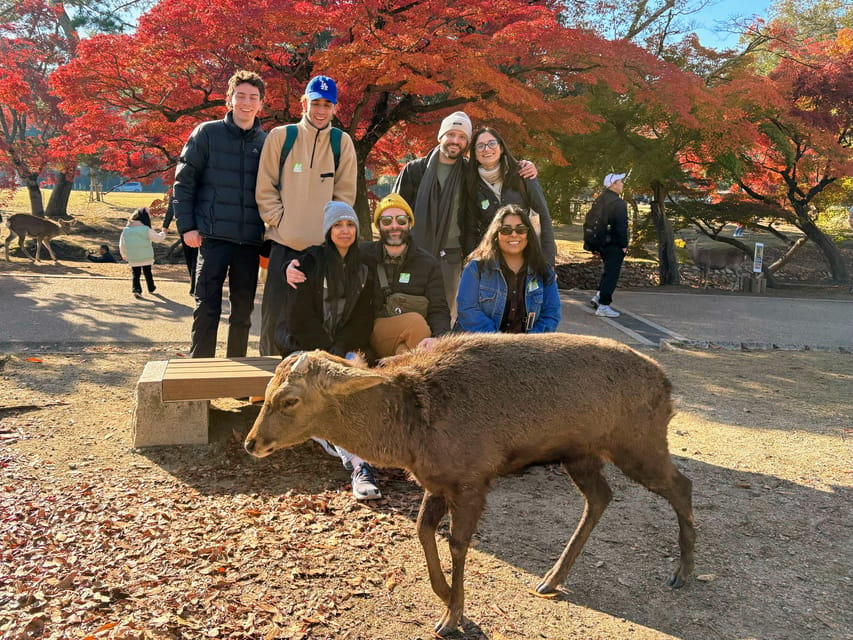
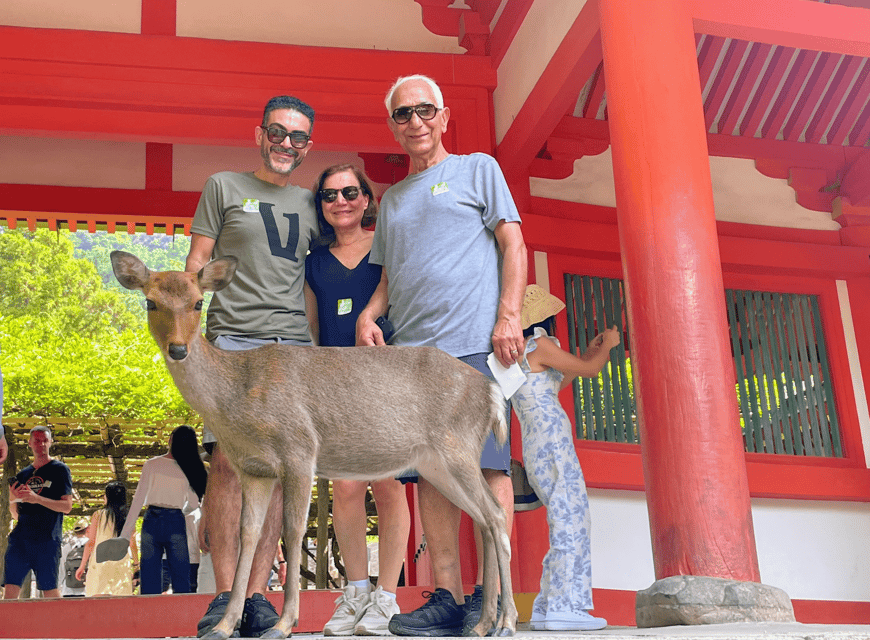
Nara Park sits beside Todaiji and gives the day its most playful moment. The deer roam freely, so the experience is not a staged animal show. You simply walk through the park and see how the animals move around the paths, temple grounds, and people.
Rice crackers are sold at roadside stalls and near the routes to the shrines. You can feed the deer, and some may bow in response. Keep your crackers visible only when you are ready to offer them, because an eager deer may follow you once it knows you have food.
One useful warning came up repeatedly in the practical advice: deer can bite. They are charming, but they are still animals. Feed them carefully, keep your hands clear after the crackers are gone, and listen to your guide’s instructions.
The planned park visit is about 30 minutes. That is enough to meet the deer and take photos, but not enough for a long walk through every section. If the deer are your top priority, stay focused and do not spend the first minutes shopping or lingering at the bus area.
Same place, a different slice of the past:
- Kyoto: Fushimi Inari, Kinkakuji, Bamboo Grove 1 Day Bus Tour
★ 4.8 · 4,316 reviews - World Heritage Shirakawa-go and Experience Tours from Kanazawa
★ 5.0 · 4,049 reviews - Tokyo: Imperial Palace and Shogun Historical Walking Tour
★ 5.0 · 2,251 reviews - World Heritage Kyoto & Nara Uji Authentic Matcha Experience
★ 5.0 · 1,573 reviews
Todaiji and the Great Buddha
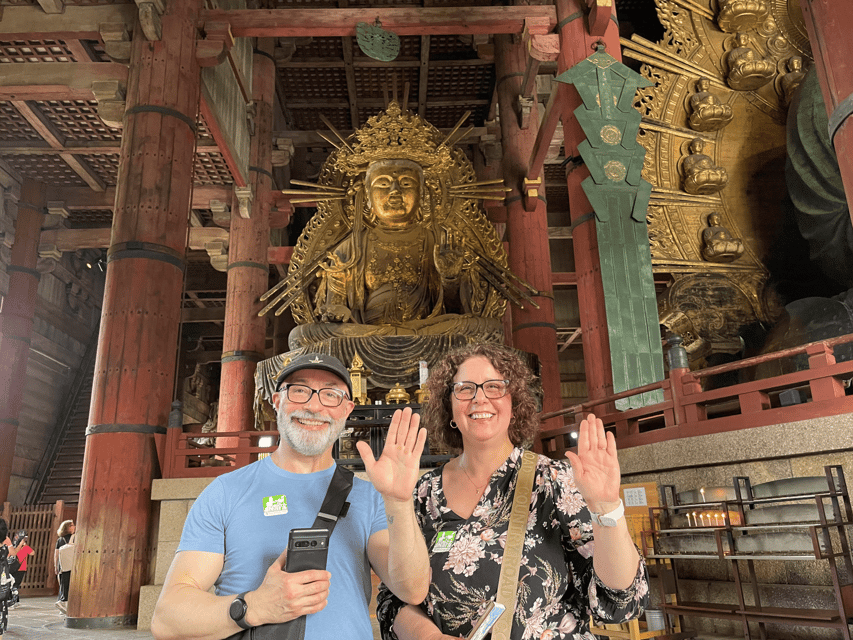
Todaiji is the heavyweight stop in Nara. The Daibutsuden Hall houses the Great Buddha of Nara, and the hall itself is among the world’s largest wooden buildings. The scale is hard to grasp until you are standing beneath its roof and looking toward the bronze figure.
The planned visit lasts about 50 minutes and includes admission. That removes one common hassle, especially during a busy sightseeing day. Your guide can explain the temple’s place in Japanese Buddhist history, while you still have time to look around and take photographs.
Depending on traffic and the day’s order, Todaiji may come before or after Kasuga Taisha and Nara Park. The three sites are close enough to form a sensible group, but you should expect walking between them rather than door-to-door bus service.
This is one of the tour’s strongest stops, but it is also one where time pressure can be felt. If you want quiet reflection, detailed architectural study, or every corner of the temple complex, a separate Nara visit would give you more freedom. If you want the main hall and the Great Buddha in a convenient day trip, this format works well.
Lunch in the Uji area
After Nara, the coach heads toward Uji. The schedule includes about 50 minutes for lunch at a local restaurant. A Japanese lunch is available if you select the lunch option when booking.
The meal is not automatically part of the basic package, so check your selection carefully. Vegetarian arrangements can be made up to two days before the tour date. Last-minute bookings receive the regular meal, according to the tour information.
A set lunch is useful on a packed day because it saves you from searching for food during a short break. It also gives you a taste of a Japanese meal without having to interpret a menu while watching the clock. Still, if you have strict dietary needs or prefer choosing your own restaurant, you may want to skip the option and use the break independently.
Additional food and drinks are not included. Bringing water and some cash is sensible, especially for deer crackers, snacks, or small purchases.
Byodoin Temple and the Phoenix Hall
Byodoin is the Uji stop with the strongest visual identity. Its Phoenix Hall appears on Japan’s 10-yen coin, making the building familiar even before you see it in person. The temple is also part of the UNESCO-listed Historic Monuments of Ancient Kyoto.
The visit lasts about an hour and includes admission. That gives you enough time to see the temple grounds and understand why the Phoenix Hall is so closely tied to Japanese art and national identity.
Byodoin offers a useful contrast with Todaiji. Todaiji impresses through size and its enormous Buddha, while Byodoin is more refined in its proportions and setting. Seeing both in one day helps you notice the range of Japanese religious architecture instead of treating every temple as the same.
The temple is not just a photo stop. Your guide can provide context about the building, its religious purpose, and the meaning of the Phoenix imagery. If you want to enter every available section or linger with a camera, the schedule may feel brief, but the one-hour visit is enough for the main experience.
Making matcha in Uji
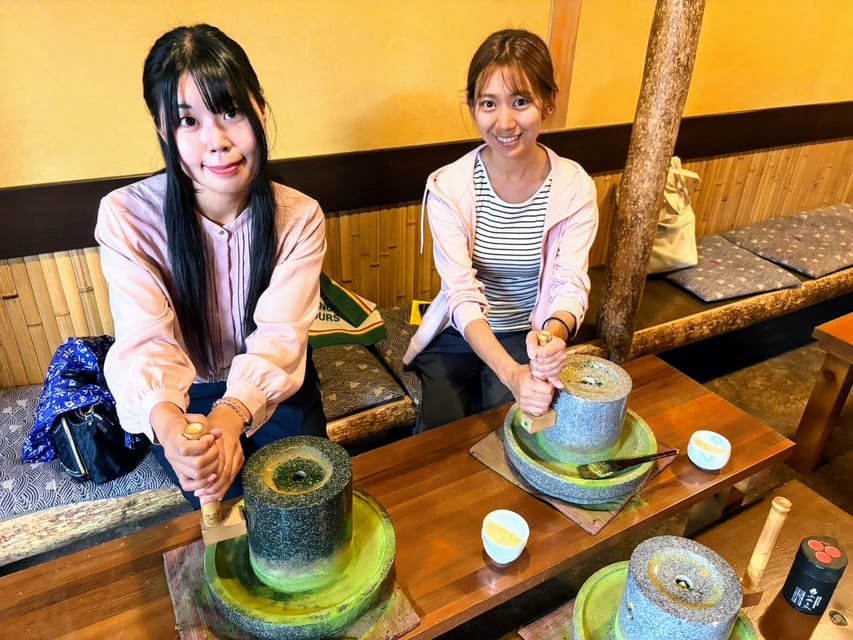
The final major activity is a matcha experience lasting about 70 minutes, combined with free time in Uji. This is more hands-on than simply ordering a green tea dessert or buying a tin from a shop.
Matcha is made from finely ground green tea leaves. In Japan, it is used not only in tea preparation but also in sweets and cooking. Here, you make the matcha yourself, which gives you a better sense of the work and method behind the powder in your bowl.
I like this part because it slows the day down after the large temple grounds. You are not only looking at an object or taking a photograph. You are learning through an activity, then tasting the result you prepared.
The Uji area also has small shops, restaurants, and other attractions. The free time is useful for buying tea and souvenirs, and some guides have helped people locate specific tea shops. One particularly practical detail from the feedback was a guide helping a visitor find Tsuen tea shop during the shopping period.
Do not confuse this with a full-day tea school. It is a compact introduction fitted into a larger sightseeing schedule. If tea culture is your main interest, you may want more time in Uji on another day. If you want one meaningful tea activity alongside Nara’s temples and deer, this is a very good fit.
The guides make a real difference
The tour includes a professional English-speaking guide, and the guide can shape the day. The strongest guide feedback centers on clear explanations, friendly energy, patience, and practical care when someone falls behind or needs help.
Several guides have added short Japanese lessons during the bus rides. At-chan, Mai, Tsubasa, Nanami, Yuta, Rina, and others have been praised for teaching numbers, useful phrases, and cultural details. Some have prepared visual materials to explain the stops, which can help when a large temple complex starts to blur into the next one.
Guide assignments vary, so you cannot book a specific person based on past praise. Still, the repeated pattern is encouraging. The guide is not simply pointing at a building and announcing its name. You can expect help with timing, meeting points, customs, and questions about modern Japan.
The bus rides also give the guide room to add context without cutting into temple time. That is where the practical language tips and cultural explanations fit best.
Is $122 a fair price?
At $122 per person, this is not the cheapest way to visit Nara and Uji. You could travel independently by train for less, especially if you already understand the routes and are comfortable arranging admission tickets and meals.
The value comes from what is bundled together: air-conditioned coach transport, an English-speaking guide, entry to Todaiji and Byodoin, the matcha activity, and lunch if selected. You also avoid spending part of the day working out how to connect Nara with Uji.
For a first visit, I think the price is reasonable if you value structure and explanation. It is particularly useful when you have only one open day and want both Nara and Uji without making several separate plans.
Independent visitors will have more freedom and may save money. You will also have to manage train schedules, walking routes, temple admissions, food, and timing yourself. This tour charges for convenience and guidance, not just transportation.
Who should book this day?
I would choose this tour if you are visiting Kyoto for the first time, want a broad introduction to Nara, or prefer not to navigate a full day of connections. Families and older members of a group may also appreciate having a guide and coach, although this is not suitable for wheelchair users or people with mobility impairments.
You should be comfortable walking up stairs and hills. The day is not physically extreme, but it is active, and the stops involve temple paths, shrine approaches, and time on your feet.
The tour also suits people who want more than famous buildings. The deer feeding, Japanese language tips, local lunch option, and matcha preparation add useful texture to the day.
I would not choose it if your plan is to photograph every detail of Nara, spend hours shopping in Uji, or move at your own pace. The schedule is well packed, and traffic or weather can alter the order.
Should you book the Nara and Uji tour?
Book it if you want an efficient, guided day with three major heritage sights, Nara’s deer, and a hands-on tea activity. The combination is stronger than a standard temple-only outing, and the consistently praised guides add real value.
Skip it if you dislike fixed schedules or already have strong plans for Nara and Uji. For everyone else, especially first-time visitors, $122 buys a practical day with little transport stress and plenty of cultural variety.
FAQ
Where does the tour meet?
It meets in front of Tully’s Coffee at the Kyoto Avanti Store, 31 Higashikujo Nishisannocho, Minami Ward, Kyoto. Check-in is at 7:50 AM, and departure is at 8:00 AM.
Is hotel pickup included?
No. You must reach the Kyoto Avanti meeting point yourself.
How long does the tour last?
The tour lasts 510 minutes, or about eight and a half hours. It departs at 8:00 AM and returns to the Tully’s Coffee meeting point.
Is lunch included?
Lunch is included only if you select the lunch option. Additional food and drinks are not included.
Can I request a vegetarian meal?
Vegetarian meal arrangements can be made up to two days before the tour date. Last-minute bookings receive the regular meal.
Which languages are available?
The live tour guide speaks English. Audio guides are available in French, German, Italian, Portuguese, Spanish, and Ukrainian.
Are temple admission fees included?
Admission to Todaiji Temple and Byodoin Temple is included. The matcha experience fee is also included.
Can I feed the deer?
Yes. Rice crackers are sold near Nara Park and the routes to the shrines. Feed the deer carefully, since they may bite.
Is the tour suitable for wheelchair users?
No. The tour is not suitable for wheelchair users or people with mobility impairments. You should also be prepared for stairs and hills.
Just added around Japan
- Private sake pairing@ancient underground★ 5.0 · 27 reviews
- [30 minutes] Rickshaw tour around Asakusa [History, sightseeing, Tokyo Skytree]★ 5.0 · 38 reviews
- Tokyo: Asakusa & Sensoji ー Oldest Temple Walking Tour (2hrs)★ 5.0 · 213 reviews
- Tokyo: Mount Fuji Private Full-Day Trip with Hotel Pickup★ 5.0 · 18 reviews
- Private Tour Through the Tokyo National Museum & Ukiyo-e★ 4.7 · 17 reviews
- Tokyo: Imperial Palace, the history of Japan (ENGLISH GUIDE)★ 5.0 · 77 reviews
- Tokyo: Customized Private Historical Guided Photoshoot Tour★ 5.0 · 25 reviews
- Tokyo: Edo Castle & East Garden of the Imperial Palace Tour★ 4.7 · 112 reviews
Local Culture & Traditions Tours, compared.

Amsterdam Food and Cultural Tour with Tastings
Read our review →
Sevilla Food Tour: Tapas, Wine, History & Traditions
Read our review →
Tromsø: Reindeer Camp and Sami Cultural Tour with Lunch
Read our review →
Half Day Dominican Republic Cultural Tour : Small Group
Read our review →
Ultimate Melbourne Walking Tour: History, Laneways & Culture
Read our review →
Tromsø: Sámi Reindeer Sledding and Sami Cultural Tour
Read our review →
Kyoto Gion: 2-Hour Geisha Culture & History Walking Tour
Read our review →
Marrakech Historical and Cultural Tour – Half Day City Tour
Read our review →Browse the lists this tour appears in