
Review · KATHMANDU
Kathmandu Guided Day Tour: Explore Top 4 UNESCO Heritage Sites
Four sacred sites, one busy day. This Kathmandu tour brings you to Swayambhunath, Patan, Pashupatinath, and Boudhanath in roughly five to seven hours. I like the private vehicle and the chance to move between Hindu and Buddhist landmarks with a licensed local guide. I also like that the route includes both grand monuments and living religious practice, not just palace courtyards.
The main drawback is pace. Five to seven hours is enough for a strong first look, but not enough for long, quiet visits at every stop. You also pay about $20 or NPR 2,600 per person in entrance fees on top of the $55 tour price, and lunch is not included.
Key points to know before booking
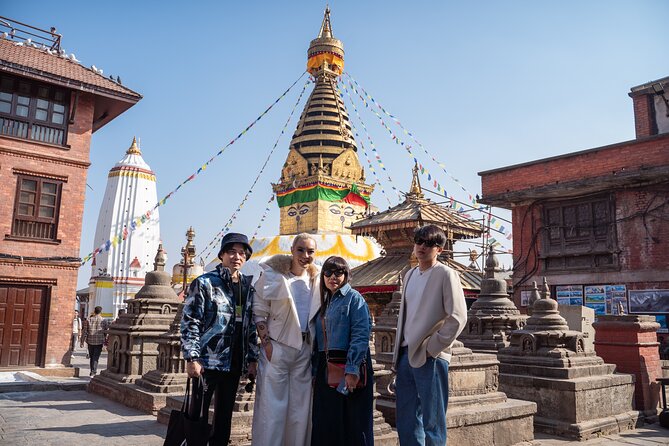
- Swayambhunath begins the day with valley views, prayer wheels, and monkeys.
- Patan Durbar Square receives the longest visit, about two hours, with the finest architectural detail on the route.
- Pashupatinath brings you close to important Hindu rituals along the Bagmati River.
- Boudhanath is the calmest stop, with a huge stupa and the traditional Kora walk around it.
- A private, air-conditioned vehicle keeps the day comfortable between sites.
- Guide Prakash receives especially warm praise for clear explanations, patience, and strong knowledge of Nepalese culture.
What this $55 Kathmandu tour really offers
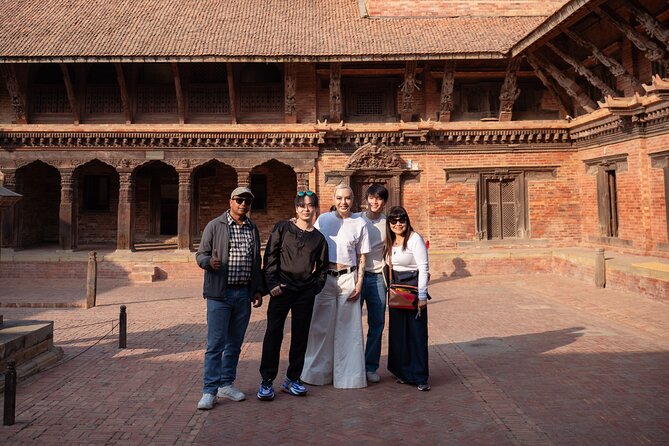
At $55 per person, this is not simply an admission ticket with transport attached. You are paying for a private outing, an air-conditioned vehicle, a government-licensed guide, pickup, bottled water, and a tightly arranged route through four major sites.
The value depends on how you like to travel. If you want to see the main UNESCO attractions in one day and prefer not to arrange taxis between them, the price is sensible. A private vehicle matters in Kathmandu, where moving between districts can take more effort than the map suggests.
The extra entrance charge changes the final cost. The tour information lists UNESCO site admission at $20 or NPR 2,600 per person, so budget for that separately. Lunch and other food are also your responsibility. The tour does include a 1,000-milliliter bottle of water per person, a small but useful touch in a warm and active sightseeing day.
You have your own group rather than joining a large shared departure. That gives you more room to ask questions and adjust the amount of time spent at each site, although the four-stop schedule still requires discipline. Group discounts are offered, which can make the outing more attractive for families or small parties.
More UNESCO World Heritage Tours in Kathmandu:
- Private Kathmandu Sightseeing Tour | UNESCO World Heritage sites
★ 5.0 · 756 reviews - UNESCO Seven World Heritage Tour in Kathmandu
★ 5.0 · 253 reviews - Nepal Discovery Tour: Heritage Sites & Scenic Hill Easy Hike
★ 5.0 · 121 reviews
Swayambhunath gives you Kathmandu from above
Swayambhunath, also called the Monkey Temple, sits on a hill above Kathmandu. The first reward is the view. From here, you can look across Kathmandu Valley and, when conditions allow, toward parts of the Himalayan range.
The setting also makes this a memorable introduction to Nepal. Prayer wheels, the hilltop stupa, and playful monkeys create a visit that feels both sacred and lively. The monkeys are part of the atmosphere, but keep your belongings close and avoid treating them as tame pets.
You have about one hour here. That is enough for the main viewpoint, the stupa area, and a basic explanation of the site. It is not a long meditation stop. If your ideal visit involves sitting quietly and watching worshippers for an extended time, you may wish the schedule allowed more room.
I like starting here because it gives you a broad visual sense of Kathmandu before the day moves into denser historic quarters. The guide can also explain how Buddhist and Hindu traditions overlap at important sites across the valley. This religious blend is one of the tour’s strongest themes.
Patan Durbar Square rewards a slower look
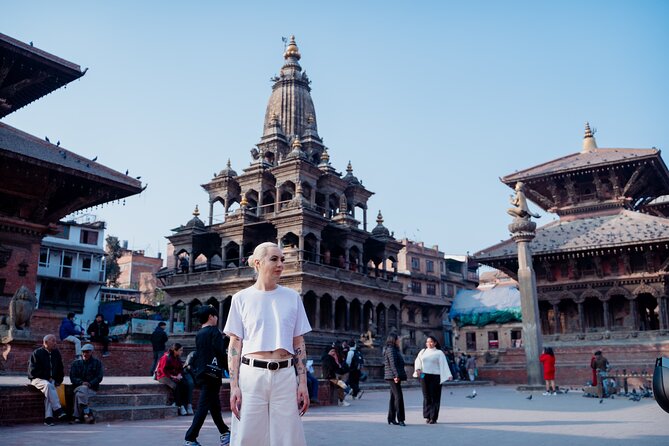
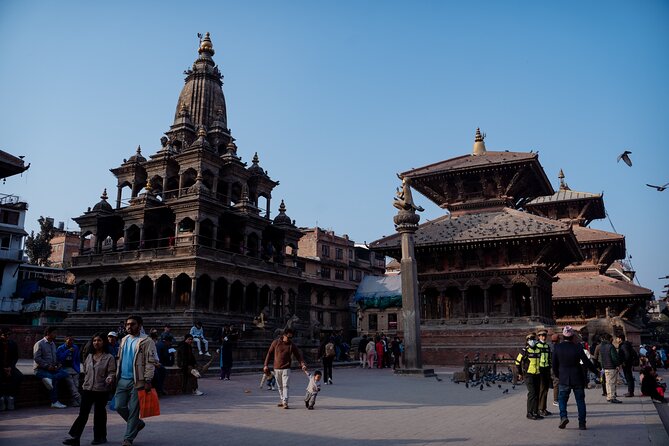
Patan receives about two hours, the longest stop of the day. That extra time is well used. Patan was once a royal city, and Durbar means palace in Nepali. Around the former palace complex, you find temples, monuments, courtyards, woodwork, and metal craftsmanship.
The Krishna Temple is one of the key sights. The tour also emphasizes the city’s detailed metalwork and carved wooden features. This is where a guide adds real value. Without context, you may see a collection of impressive buildings. With a good explanation, you start to notice how design, royal power, craft traditions, and religious devotion fit together.
The strongest praise for this experience centers on guide Prakash. He is described as friendly, patient, highly educated, and able to explain both historical details and cultural practices. He may not be the guide assigned to every departure, so treat his presence as something to confirm rather than a guarantee. Still, the repeated emphasis on his teaching style is useful when judging the operator’s guiding standards.
Patan is likely the most rewarding stop for anyone interested in architecture and traditional craft. It is also the place where you will want comfortable shoes and a little patience. The area contains several monuments rather than one single viewing point, so your time passes quickly.
Pashupatinath shows religion as lived practice
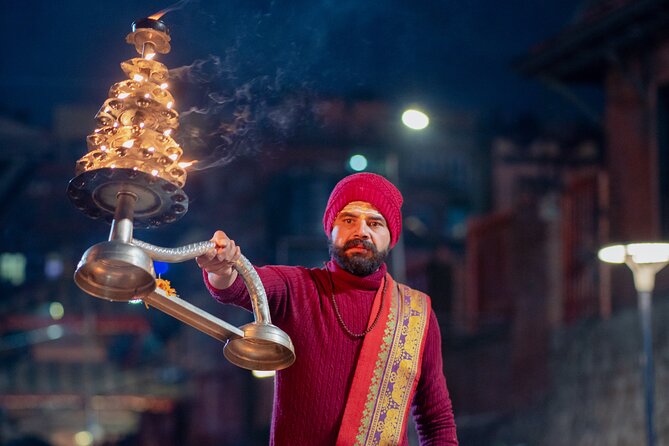
Pashupatinath is one of the most important Hindu temples in the world and a major pilgrimage site for Hindu worshippers. The complex lies along the Bagmati River, where sacred cremation ceremonies take place.
This can be a profound visit, but it is not a conventional sightseeing attraction. You may see religious rituals that involve grief, prayer, and death. Watch quietly, follow your guide’s instructions, and remember that this is an active place of worship rather than a performance arranged for visitors.
The allotted time is about one hour. That gives you a focused look at the temple area and the riverfront, along with an explanation of the site’s spiritual importance. The main limitation is that the exact activity you see depends on what is taking place during your visit. Cremation rites are part of the site, but no tour can promise a particular ceremony at a particular moment.
For me, this is the stop that gives the day emotional weight. Swayambhunath offers views and Patan offers design. Pashupatinath asks you to pay attention to how faith shapes daily life, ritual, and the way a community treats its dead.
More Guided Tours in Kathmandu:
- Kathmandu Heritage Day Tour with Guide.
★ 5.0 · 30 reviews - History and Hauntings of Salem Guided Walking Tour
★ 5.0 · 14,564 reviews - Edinburgh: Edinburgh Castle Guided History Tour with Tickets
★ 4.8 · 9,933 reviews - Historic Charleston Guided Sightseeing Walking Tour
★ 5.0 · 6,216 reviews
Boudhanath closes the day with a Kora walk
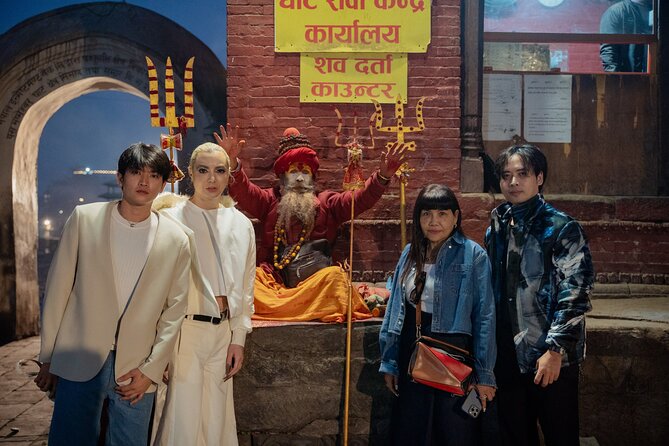
Boudhanath is one of Kathmandu’s major Buddhist centers and the final stop. The huge white dome and watchful eyes create a powerful focal point, especially when you see worshippers walking around it in the Kora ritual.
Kora means a ritual walk around a sacred object. You can join the flow by walking clockwise around the stupa, turning prayer wheels as you go. The movement is simple, but it changes the way you experience the monument. Instead of standing outside and taking a picture, you take part in the rhythm of the place.
The visit lasts about one hour. That is enough to circle the stupa and hear its basic story, though you may want longer if you enjoy observing religious practice. Boudhanath can feel more meditative than the other stops, making it a fitting end to a packed day.
The supplied description calls it the biggest Buddhist temple in Nepal and the second biggest Buddhist stupa in the world. More important for your visit, it is a major Buddhist pilgrimage site with a clear, memorable form and an easy ritual walk. You do not need specialist knowledge to appreciate it.
The two extra visits deserve a clear expectation
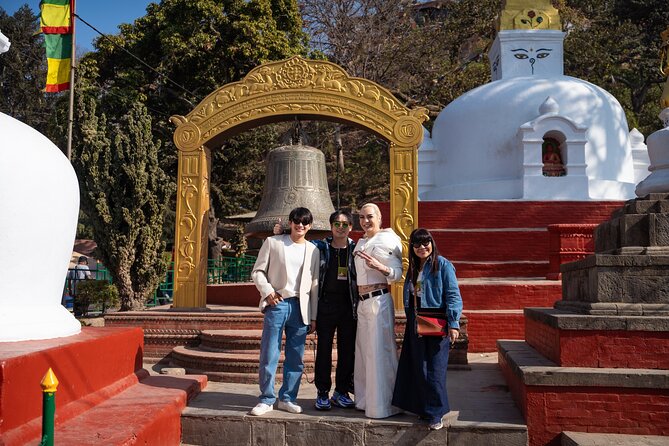
The package includes a visit to a Thanka, or traditional art, painting school and a healing bowl demonstration center. These additions offer a look at Nepalese artistic and spiritual traditions beyond the four headline monuments.
They also make the day less focused than a pure heritage tour. If you want every minute spent at temples and palaces, these stops may feel like a detour. If you enjoy seeing how traditional arts are taught and how sound-based healing is presented, they add variety.
The information does not specify how long either visit lasts or whether purchases are expected. I would ask your guide about the planned timing before setting out. That simple question helps you decide how much time you want to protect for Patan or Boudhanath.
Transport and timing shape the experience
The advertised duration is approximately five to seven hours. The scheduled visits total five hours, so the remaining time covers driving, pickup, and the movement between sites. The actual day may feel compact because you are crossing several parts of Kathmandu Valley.
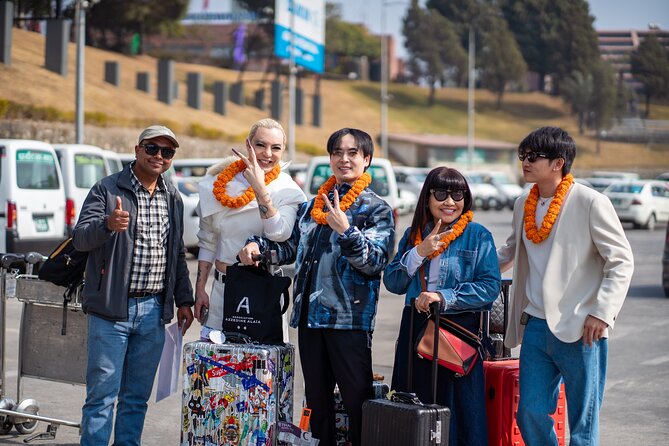
An air-conditioned vehicle is included, which is useful after walking around hilltop and temple sites. Pickup is offered, but the supplied information does not specify the pickup zone or exact starting time. Confirm those details when booking.
A private tour is a strong advantage here. You can ask for a fuller explanation at Patan, request a little more time at Boudhanath, or clarify a ritual at Pashupatinath without competing with a large coach group. The route remains ambitious, so flexibility does not turn it into a leisurely day.
The guide and driver are important to the overall quality. The feedback places particular emphasis on Prakash, along with praise for a careful driver and a roadworthy car. You should still judge the tour as an operator experience rather than book solely on the assumption that one named guide will lead your departure.
What the price includes, and what it leaves out
The $55 price includes:
- An air-conditioned vehicle
- A government-licensed tour guide
- Pickup service
- Bottled water
- Visits to a Thanka painting school and healing bowl demonstration center
- A private experience for your own group
You pay separately for entrance fees, listed as $20 or NPR 2,600 per person. Lunch and drinks are also excluded, as are tips for the guide and driver.
That makes the total cost higher than the headline price, but the package remains reasonable for a private day with transport and a licensed guide. The strongest value comes from convenience and interpretation, not from low-cost entry alone. If you are comfortable arranging taxis, entrance tickets, and explanations yourself, you may find a self-guided day cheaper. If you want the four sites connected into one clear cultural story, the package earns its price.
Who should book this experience
I would recommend it for a first visit to Kathmandu, especially if you have only one full day for the valley’s main UNESCO sites. It suits couples, families, and small groups who prefer a private car and a guide rather than public transport or several separate taxi rides.
It is also a good match for anyone interested in both Hindu and Buddhist traditions. The route does not treat Kathmandu as a collection of old buildings. It takes you from a hilltop stupa to a royal square, a Hindu temple complex, and a major Buddhist pilgrimage center.
You should think twice if you dislike packed schedules, religious sites, or visits that include active cremation grounds. The tour asks you to change mood several times in one day. You also need to be comfortable with the added entrance fee and the two included cultural demonstration stops.
The tour is described as suitable for most participants, but no detailed mobility information is provided. If you have specific access needs, ask the operator before booking. Free cancellation is available when you cancel at least 24 hours before the local start time. Changes or cancellations made later are not accepted for a refund.
The best way to approach the day
Wear practical shoes and carry modest clothing suitable for religious sites. Keep your schedule open enough to listen, rather than treating each stop as a quick photograph.
At Swayambhunath, give yourself time to look beyond the monkeys and the view. At Patan, ask your guide to point out the wood and metal details. At Pashupatinath, lower your voice and observe respectfully. At Boudhanath, walk the Kora instead of only circling the plaza with a camera.
I would also confirm three things before departure: the exact pickup time, the entrance-fee payment arrangement, and whether Prakash is assigned to your group. These questions remove the only significant uncertainties in an otherwise clear package.
Should you book this Kathmandu UNESCO tour?
Book it if you want an efficient, private introduction to Kathmandu’s four major UNESCO attractions, with transport and cultural explanations handled for you. The combination of Swayambhunath’s views, Patan’s craftsmanship, Pashupatinath’s spiritual gravity, and Boudhanath’s Kora walk gives you a strong first picture of the valley.
Skip it if you want long, unhurried visits or prefer to choose each site independently. The day moves quickly, and the $55 price does not include the listed entrance fees or lunch.
For most first-time visitors with limited time, I think the tour is good value. Its greatest strength is the guide-led connection between places that can otherwise feel unrelated. Just budget for the extra admission cost and accept that four important sites in one day will be an introduction, not the final word on Kathmandu.
FAQ
How long does the Kathmandu UNESCO tour last?
The tour lasts approximately five to seven hours. The four main visits are scheduled for about one hour at Swayambhunath, two hours at Patan, one hour at Pashupatinath, and one hour at Boudhanath.
Are entrance fees included in the $55 price?
No. Entrance fees for the UNESCO World Heritage Sites are listed separately at USD 20 or NPR 2,600 per person.
Is lunch included?
No. Lunch and all other food and drinks are not included. One 1,000-milliliter bottle of water per person is provided.
Is this a private or shared tour?
It is a private activity, so only your own group participates.
What is included with the vehicle and guide?
The package includes an air-conditioned vehicle and a government-licensed tour guide. Pickup is offered, and the tour also includes visits to a Thanka painting school and a healing bowl demonstration center.
Can I cancel for a full refund?
Yes. You can receive a full refund if you cancel at least 24 hours before the experience start time. Cancellations or changes made less than 24 hours before the start time are not accepted for a refund.
Just added around Kathmandu
- Full Day Private Tour of Seven World Heritage Sites in Kathmandu★ 5.0 · 19 reviews
- Seven World Heritage Day Tour in Kathmandu Nepal★ 5.0 · 26 reviews
- Kathmandu World Heritage Tour★ 5.0 · 74 reviews
- Kathmandu UNESCO World Heritage Tour★ 5.0 · 24 reviews
- Kathmandu Heritage Day Tour with Guide.★ 5.0 · 30 reviews
- Kathmandu World Heritage Full Day Culture Tour★ 5.0 · 41 reviews
- Kathmandu: Full Day Private Top 4 UNESCO Heritage Tour W/Lunch.★ 5.0 · 86 reviews
- UNESCO World Heritage Sightseeing Tour in Kathmandu – 5 Days★ 5.0 · 22 reviews
UNESCO World Heritage Tours, compared.
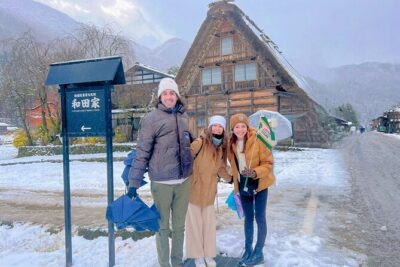
World Heritage Shirakawa-go and Experience Tours from Kanazawa
Read our review →
Bali: Tanah Lot UNESCO World Heritage Sites Full-Day Tour
Read our review →World Heritage Kyoto & Nara Uji Authentic Matcha Experience
Read our review →
UNESCO’s Ayutthaya Historical Park: Full-Day Tour from Bangkok
Read our review →
Rotterdam: Kinderdijk UNESCO World Heritage Entry Ticket
Read our review →
From Busan: Gyeongju UNESCO World Heritage Guided Day Tour
Read our review →Browse the lists this tour appears in