
Review · KATHMANDU
UNESCO Seven World Heritage Tour in Kathmandu
Seven heritage sites, one very long day. This private Kathmandu tour is built for seeing the valley’s major monuments when time is short, and I like its private car and hotel pickup, which cut down the effort of crossing a sprawling city. I also like that the price includes entry fees and a personal guide, with guides such as Shanti, Pankaj, Kabita, and Sarita praised for clear explanations and flexible pacing. The main drawback is simple: 12 hours is a lot, with plenty of walking, stairs, traffic, and information packed into one outing.
You visit the seven UNESCO-listed heritage areas through individual monuments and courtyards, including Swayambhunath, Kathmandu Durbar Square, Patan, Bhaktapur, Changu Narayan, Pashupatinath, and Boudhanath. It is an efficient first look at Kathmandu, but not a slow, reflective tour. Bring comfortable shoes, water, sun protection, and enough attention for a full day of temples, carvings, rituals, and city streets.
Key points at a glance
- Seven UNESCO areas in one day: The route covers Swayambhunath, Kathmandu Durbar Square, Patan Durbar Square, Bhaktapur, Changu Narayan, Pashupatinath, and Boudhanath.
- Private transport matters: A private car and driver save time between sites and make it easier to adjust the schedule.
- Strong guide service: Shanti, Pankaj, Kabita, Sarita, and Som are praised for religious context, local history, patience, and help with photographs or small requests.
- Bhaktapur is the meal break: Lunch is not included, but you can choose from several eateries in the old city.
- Expect a serious walking day: Swayambhunath has 365 stairs, and the squares and temple grounds require plenty of time on foot.
- Good for short stays: This is an excellent orientation tour if Kathmandu is one stop in a larger Nepal trip.
What the $180 price really buys you
At $180 per person, this is not a bargain sightseeing bus. It is a private full-day service with a vehicle, an English-speaking guide, hotel pickup and drop-off, and entry fees at all seven heritage sites.
That package has real value in Kathmandu. The sites are spread across the valley, and getting from one to another by taxi or public transport can consume much of your day. A private driver also gives you a place to leave bags, rest your feet, and escape the noise between monuments.
The price makes more sense for solo visitors, couples, or a small private group that wants a lot done without arranging each ride and admission separately. Group discounts are offered, which may improve the cost for a larger party. Lunch and tips are extra, so your final spending will be higher than the tour price.
I would not choose this outing if you have several days in Kathmandu and prefer spending half a day at one square. I would choose it if your schedule is tight, especially if this is your first stay and you want a useful sense of how the valley fits together.
More UNESCO World Heritage Tours in the world:
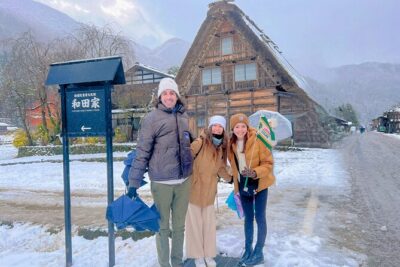
- World Heritage Shirakawa-go and Experience Tours from Kanazawa
★ 5.0 · 4,049 reviews - From Tirana: Berat UNESCO Heritage & Belshi Lake Tour
★ 4.9 · 3,863 reviews - Bali: Tanah Lot UNESCO World Heritage Sites Full-Day Tour
★ 4.7 · 1,947 reviews
A private car makes the ambitious route possible
The tour lasts about 12 hours, usually beginning early and ending in the evening. Several bookings began around 7 a.m., with the guide meeting the group in the hotel lobby.
That early start matters. Kathmandu traffic can be slow, and the route crosses several parts of the valley. The driver is not simply a way to get from one gate to another. Good timing, safe driving, and knowing where to wait can make the difference between seeing all seven areas and cutting the last stops short.
The tour is private, so only your group participates. That gives you room to ask questions, request photographs, spend longer at a favorite shrine, or shorten a stop that does not hold your interest. Guides have also adjusted the route for shopping and other personal requests.
The tradeoff is that a private schedule can still feel packed. You are not joining a slow walking tour of one neighborhood. You are crossing Kathmandu Valley repeatedly, then walking through major religious and historic sites.
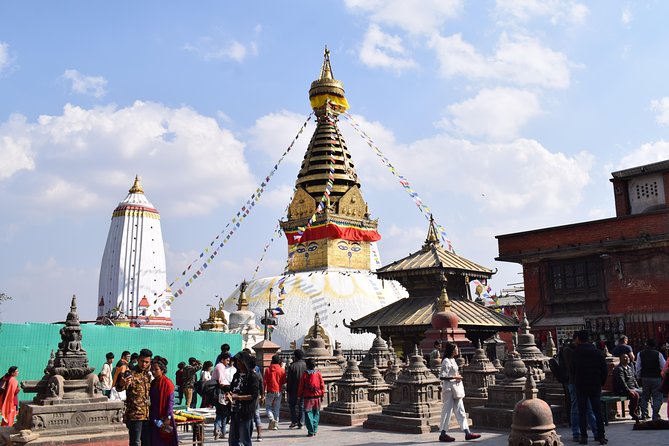
Swayambhunath begins the day above Kathmandu
Swayambhunath, often called the Monkey Temple, sits on a hilltop reached by 365 stairs. The climb is part of the experience, but it is also your first warning about the physical nature of this tour.
At the top, prayer wheels, shrines, Buddhist details, and Hindu images share the same sacred setting. The hill gives you an exceptional view over Kathmandu, so this is a strong first stop for getting your bearings.
Your guide can help explain how Buddhist and Hindu practices appear side by side here. That context is useful because many details can look similar at first glance, especially if you are new to South Asian religious art.
The short listed stop is only about 15 minutes, with another 10 minutes at Amideva Buddha Park. In practice, the hill, stairs, views, and shrines may feel like more than a quick photo stop. If you want time for quiet observation, tell your guide early.
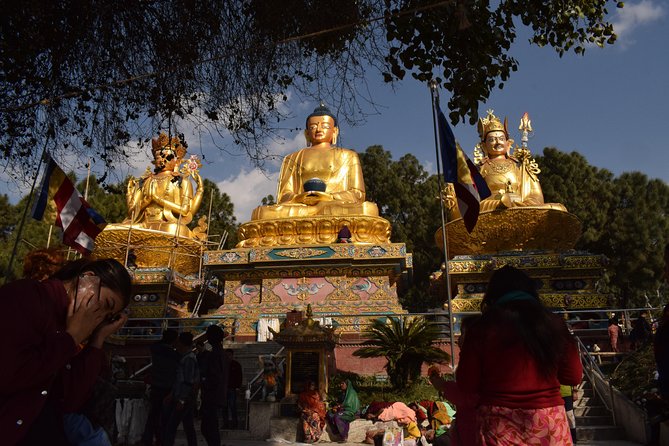
Amideva Buddha Park sits on the other side of the hill and is marked by three large Buddha statues. It is brief, but it adds another visual angle to the Swayambhunath visit.
Kathmandu Durbar Square and the living goddess
The next major area is Kathmandu Durbar Square, where palaces, courtyards, shrines, and religious buildings show both the beauty and damage of the valley’s built heritage. Some structures remain under reconstruction, so you should expect scaffolding or partially restored areas.
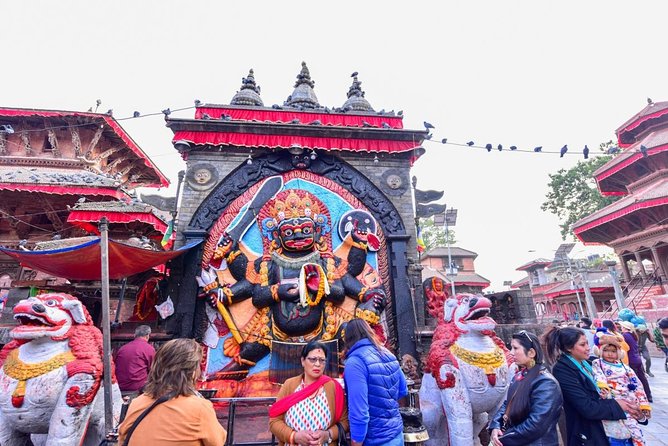
The Kumari Chowk is one of the most memorable stops. This red-brick, three-level building contains a courtyard associated with the Kumari, a girl chosen to serve as the city’s living goddess until puberty.
The guide is especially useful here. The Kumari tradition can be difficult to understand from architecture alone, and a clear explanation helps connect the courtyard to Nepal’s religious and royal history. The listed visit lasts about 10 minutes, so this is another place where questions and timing matter.
Do not expect every building in Kathmandu Durbar Square to be open or fully restored. The value is in seeing the square as a working historic center, not in finding a perfectly preserved museum set.
A few more history tours around the world worth a look
- History and Hauntings of Salem Guided Walking Tour
★ 5.0 · 14,564 reviews - Colosseum: Underground and Ancient Rome Tour
★ 4.7 · 12,691 reviews - Lisbon: History, Stories and Lifestyle Walking Tour
★ 4.8 · 10,902 reviews - London Small Group Tour of Historical Pubs
★ 5.0 · 10,422 reviews
Patan brings the finest Newari details
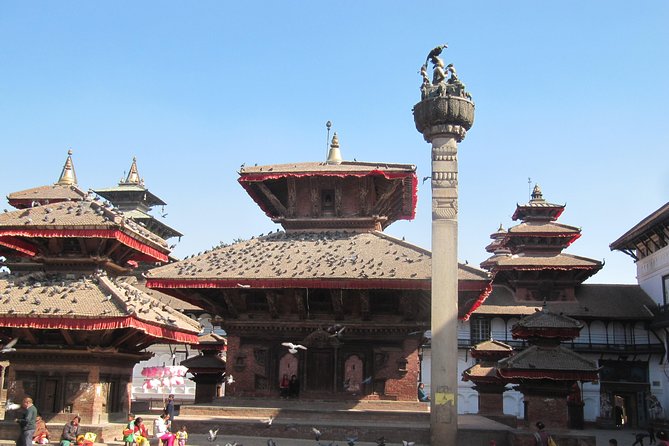
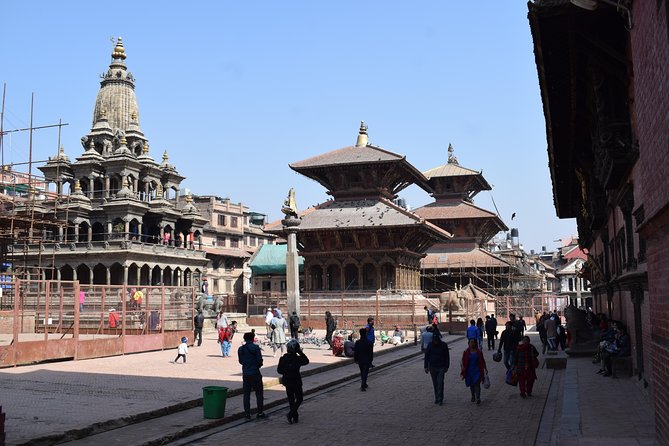
Patan Durbar Square, in Lalitpur, is the next major cluster. It was once the courtyard of the old Malla palace and is surrounded by Newari architecture and local community life.
The central square includes Krishna Temple, a stone structure with 21 shrines. Its carved forms are different from the brick-and-timber pagodas nearby, making this a good point in the day to compare building materials and styles.
The tour also includes the Golden Temple, formally Hiranya Varna Mahavihar. This 12th-century pagoda-style temple has bronze statues and silver details. It is a compact religious site, so the 10-minute allocation is short but enough for a guided introduction.
Patan Museum occupies Keshav Narayan Chowk and adds an indoor change of pace. The museum focuses on Nepal’s traditions and history, including historic artistic and cultural objects. After several outdoor courtyards, this stop gives you a clearer framework for understanding the carvings and religious images seen along the way.
The listed times are roughly 25 minutes for the central square, 10 minutes for the Golden Temple, and 15 minutes for the museum. That is enough for an overview, not a detailed museum visit. If art is your main interest, you may want to ask in advance how much time can be shifted toward Patan.
Bhaktapur is the day’s most rewarding old city
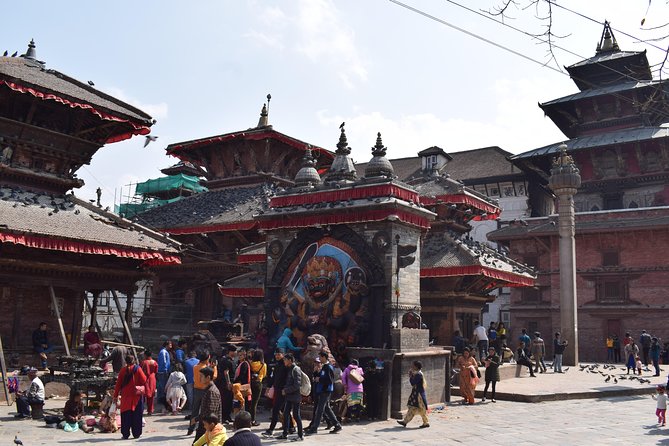
Bhaktapur, known as the City of Devotees, often becomes the favorite part of the route. Many old houses and structures remain intact, and the pedestrian-friendly historic areas give you more room to look closely at brickwork, carved windows, temples, and courtyards.
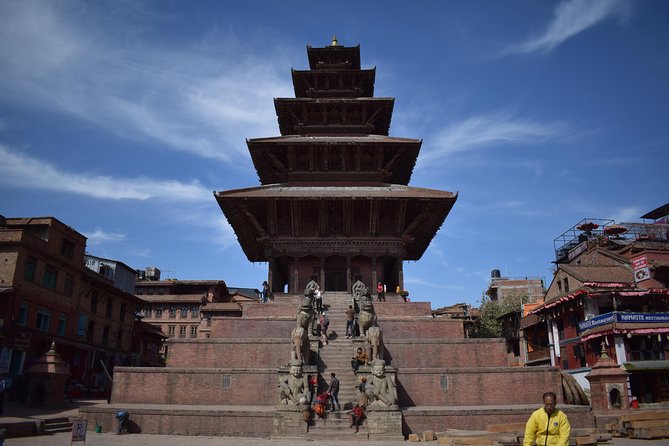
Nyatapola Temple is a five-level pagoda with carefully sculpted details. It is one of the tallest pagodas in Nepal and shows the skill behind the valley’s traditional building style. The stop is listed at 10 minutes, but you will likely want a moment to study the stairway and the figures guarding the ascent.
Dattatreya Temple sits in Dattatreya Square and is traditionally said to have been built from a single tree. The claim is part of the temple’s story, and your guide can add the religious and local context.
The Palace of Fifty-Five Windows is one of Bhaktapur Durbar Square’s major sights. Its name comes from the carved windows in the palace facade. The building gives you a strong sense of the former royal center, even though the visit itself is scheduled for only about 10 minutes.
Siddha Pokhari is a man-made pond near the old town gate. At about five minutes, it is a quick pause rather than a major sightseeing session. It can provide a welcome break after the squares and temples.
Lunch in Bhaktapur is at your own expense. That is a sensible arrangement because you can choose from the available eateries rather than being tied to one set menu. Still, lunch takes time, so the day can run close to the full 12 hours.
Changu Narayan adds a hilltop temple
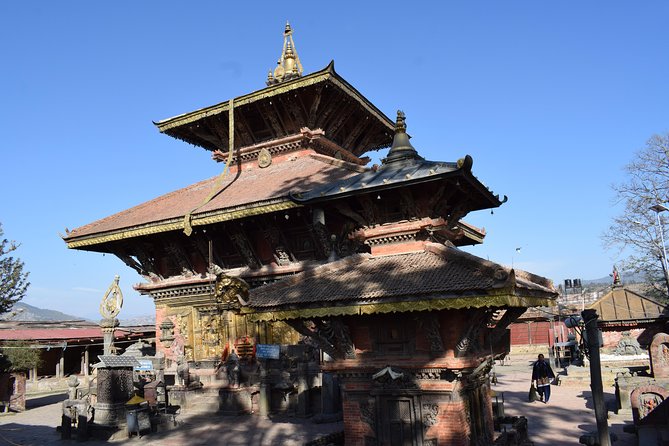
Changu Narayan is reached after Bhaktapur and feels more remote than the central city sites. The temple dates to the Licchavi period and is regarded as one of the oldest temples in Kathmandu Valley.
Stone and wood carvings are the main attraction. After the larger urban squares, Changu Narayan offers a quieter setting and a more concentrated look at early Nepalese temple art.
The stop is scheduled for about one hour, which is appropriate. You need time to look around the temple area, listen to the guide, and take in the carvings without racing from one doorway to the next.
This is one of the reasons the private car is useful. Changu Narayan is not a casual add-on from central Kathmandu, and combining it with the other six UNESCO areas would be awkward without dedicated transport.
Pashupatinath requires respect and attention
Pashupatinath is one of Nepal’s largest temple complexes, covering about 0.64 hectares and containing more than 500 temples and shrines. It is one of the most important Hindu religious places in the country.
The site is not just a monument to photograph. It remains a place of worship, and the riverfront area is associated with Hindu cremation ceremonies. Dress respectfully and listen carefully to your guide about where you may walk and what is appropriate to photograph.
The scheduled visit lasts one hour. That gives you time to see the complex and understand its role, but the scale can be hard to absorb after a full day already on foot. A strong guide helps you focus on the most important courtyards, shrines, and practices rather than trying to inspect every corner.
Boudhanath closes with a Buddhist landmark
Boudhanath Stupa is about 36 meters tall, with more than 50 monasteries around it. It is one of Nepal’s key Buddhist pilgrimage places and gives the tour a fitting final stop after the Hindu sacred center of Pashupatinath.
The stupa is best understood by walking around it, observing the prayer wheels, and noticing the steady religious activity around the circular base. The tour allows about one hour, enough to hear the background and make a full circuit at a reasonable pace.
Ending here can be pleasant, but it also means you may reach the final stop tired. If you have already climbed Swayambhunath and crossed several squares, the last hour should be treated as a final major visit, not a quick photo opportunity.
Guides are the main strength
The most consistent praise goes to the guides and drivers. Shanti is repeatedly described as friendly, well informed, flexible, and helpful with photographs. Pankaj is praised for explaining both Hinduism and Buddhism and for answering questions about Nepal and the Himalayan region.
Kabita is noted for adjusting the pace, adding context about mythology and culture, and helping reduce unwanted attention from street vendors. Sarita is praised for clear explanations and patience, while Som is described as polite and strong on site history.
Names are not a guarantee that a particular guide will be assigned, but they show the level of service you can expect from a good match. The best part of this tour is not simply reaching each gate. It is having someone explain why a shrine matters, how Hindu and Buddhist traditions overlap, and what you are looking at in the carvings.
The driver matters too. Kathmandu traffic is demanding, and the most useful feedback about the driving focuses on safety, punctuality, a clean car, and good navigation. Those practical details become increasingly important as the day gets longer.
How to prepare for a 12-hour heritage day
Wear your most comfortable walking shoes. You will climb stairs at Swayambhunath, walk over uneven surfaces, and spend much of the day moving between courtyards and temple grounds.
Bring water and sun protection. The tour includes outdoor sites, and there may be little reason to expect cool shade at every stop.
Dress smart casual and respectfully. This is especially important at active Hindu and Buddhist religious sites. The stated dress code is smart casual, but modest clothing is the safer choice.
Keep your expectations realistic. You can see all seven UNESCO areas, but you cannot study every temple, museum object, and courtyard in detail. Think of this as a strong orientation that helps you decide where to return.
The booking receives confirmation at the time of reservation. Free cancellation is available up to 24 hours before the start time for a full refund. Changes or cancellations inside that 24-hour window are not accepted for a refund.
Who should book this tour?
I would recommend it to a first-time visitor with only one free day in Kathmandu, a solo visitor who wants simple transport and company, or anyone using Nepal as part of a larger trip such as an Everest Base Camp itinerary.
It also suits people who want cultural explanation rather than self-guided sightseeing. The combination of Hindu and Buddhist sites can be confusing without context, and a good guide turns the day into more than a checklist.
I would think twice if you dislike early starts, long drives, stairs, or tight schedules. Families and older visitors may still manage it because the activity is private and the pace can be adjusted, but the full route is physically demanding.
Final verdict: book it for breadth, not slowness
This is one of the most efficient ways to see Kathmandu Valley’s seven UNESCO heritage areas in a single day. The private vehicle, included admissions, hotel service, and strong guide support justify the $180 price for a short stay.
You will not get a slow, intimate visit at every monument. You will get a well-organized first look at the valley’s major religious and royal centers, with enough flexibility to ask questions, take photographs, and adjust the pace.
Book this tour if you need a broad introduction fast. If you have several days, use it as your first orientation, then return to Patan, Bhaktapur, or Boudhanath for a slower visit.
FAQ
How long does the UNESCO Seven World Heritage Tour last?
The tour lasts approximately 12 hours.
How many UNESCO heritage areas does the tour cover?
It covers all seven UNESCO-listed heritage areas in Kathmandu Valley.
Which major sites are included?
The route includes Swayambhunath, Kathmandu Durbar Square, Patan Durbar Square, Bhaktapur, Changu Narayan, Pashupatinath, and Boudhanath.
Is hotel pickup and drop-off included?
Yes. Hotel pickup and drop-off are included.
Is transportation provided?
Yes. The tour uses a private vehicle.
Is a guide included?
Yes. An English-speaking guide is included.
Are entrance fees included?
Yes. Required entry fees for the seven heritage sites are included.
Is lunch included?
No. Lunch in Bhaktapur is not included, but you can choose from several eateries there.
Is this a private tour?
Yes. Only your group participates in the activity.
Is cancellation available?
You can cancel up to 24 hours before the start time for a full refund. Cancellations within 24 hours are not refunded.
Just added around the world
- The Queenstown Story @ Cobh Heritage Centre , Great Stories of Emigration.★ 4.5 · 181 reviews
- Visit 16 Sites Key Historical Sites And Experience Cobh Rebel Tours★ 5.0 · 167 reviews
- Historical Bicycle Tour of Dunedin★ 5.0 · 44 reviews
- Cincy Brunch History and Streetcar Tour with Riverside Food Tours★ 5.0 · 108 reviews
- 2.5 Hour Kayaking with Manatee and History Tour in Tarpon Springs★ 5.0 · 24 reviews
- Private Tour in Chichen Itza Official History Guide★ 5.0 · 36 reviews
- Dazu Ancient Rock Carvings Private Tour Extension★ 5.0 · 24 reviews
- Chicago River Architecture Tour Aboard a Historic Yacht★ 5.0 · 45 reviews
UNESCO World Heritage Tours, compared.
World Heritage Shirakawa-go and Experience Tours from Kanazawa
Read our review →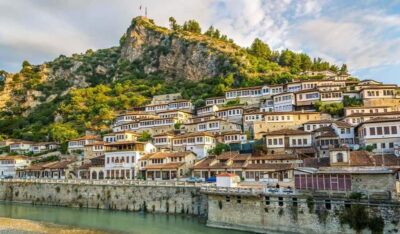
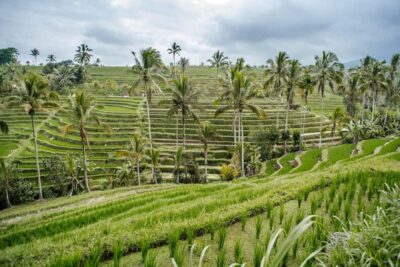
Bali: Tanah Lot UNESCO World Heritage Sites Full-Day Tour
Read our review →World Heritage Kyoto & Nara Uji Authentic Matcha Experience
Read our review →
UNESCO’s Ayutthaya Historical Park: Full-Day Tour from Bangkok
Read our review →
Rotterdam: Kinderdijk UNESCO World Heritage Entry Ticket
Read our review →
From Busan: Gyeongju UNESCO World Heritage Guided Day Tour
Read our review →Browse the lists this tour appears in