
Review · KATHMANDU
Seven World Heritage Day Tour in Kathmandu Nepal
See seven UNESCO sites before dinner. This 10 to 12-hour private tour links Kathmandu Valley’s major monuments in one long day, with hotel pickup, a private vehicle, and a local guide. I like the door-to-door setup, especially in a city where moving between distant sites can take time. I also like that the route includes both famous places and quieter corners such as Changu Narayan.
The main tradeoff is pace. You get about a day to cover seven World Heritage sites, plus several extra temples, courtyards, museums, and ponds. Entrance fees are not included, so the $65 price is only part of the final cost. Still, this is a practical choice if your time in Kathmandu is short and you want a strong first look at the valley.
Key points to know before booking
- Seven UNESCO sites in one day: Visit Swayambhunath, Kathmandu Durbar Square, Patan Durbar Square, Bhaktapur Durbar Square, Changu Narayan, Pashupatinath, and Boudhanath.
- Private transport and pickup: Hotel pickup and drop-off are included within Kathmandu’s Ring Road, along with a private vehicle for your group.
- Many stops beyond the seven main sites: The route adds Kumari Chowk, the Golden Temple, Patan Museum, Nyatapola Temple, Dattatraya Temple, the 55 Window Palace, and Siddha Pokhari.
- Strong guide feedback: Shanti Karki receives special praise for detailed explanations, while guide Pankaj is noted for adjusting the pace and reducing stair climbing.
- A long but useful day: The plan works best for first-time visitors, short stays, and anyone who wants cultural context without arranging several separate outings.
- Extra costs matter: Food, drinks, and entrance tickets at the heritage sites are paid separately.
What the $65 tour really gives you
At $65 per person, the value comes from the amount of ground covered and the private setup. You are not paying only for admission to monuments. You are paying for a vehicle, hotel transfers, a guide, and a full day of organization across Kathmandu Valley.
That matters because the seven sites are spread across different parts of the valley. Swayambhunath sits west of central Kathmandu. Patan is south of the city. Bhaktapur and Changu Narayan lie farther east, while Pashupatinath and Boudhanath are on the eastern side of Kathmandu.
The price does not include entrance fees. Those costs vary by site and are paid separately, so you should plan for an added amount on top of the tour fee. Food and drinks are also extra, though you can buy them at the sites.
I see the price as fair if you value convenience and a private vehicle. It is less attractive if you want to spend half a day at only one or two monuments, or if you prefer to explore independently at a slow pace.
More UNESCO World Heritage Tours in Kathmandu:
- Private Kathmandu Sightseeing Tour | UNESCO World Heritage sites
★ 5.0 · 756 reviews - UNESCO Seven World Heritage Tour in Kathmandu
★ 5.0 · 253 reviews - Nepal Discovery Tour: Heritage Sites & Scenic Hill Easy Hike
★ 5.0 · 121 reviews
The day begins at Swayambhunath
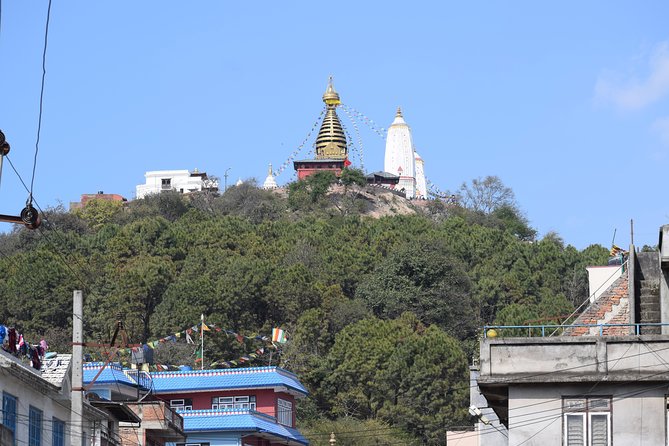
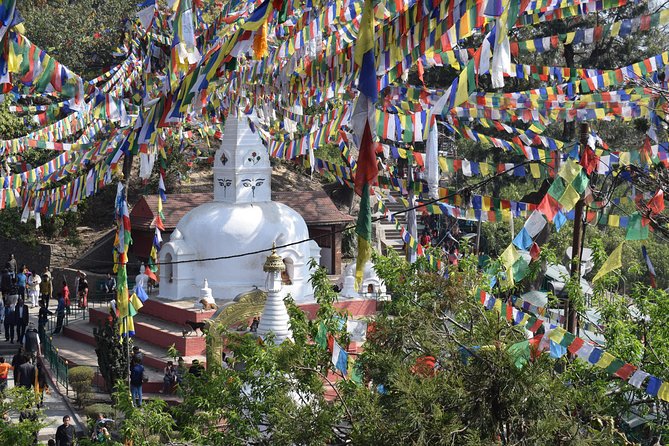
Swayambhunath, often called the Monkey Temple, is the first major stop. It is a Buddhist pilgrimage site and one of the UNESCO-listed places in the Kathmandu Valley.
You can reach the stupa by two entrances. One involves an inclined walk to the top, while the other provides a different approach. The visit is scheduled for about an hour, which gives you time to see the stupa and its surrounding religious structures, though not enough for a slow, wandering visit.
This is a good opening stop because it introduces the Buddhist side of Kathmandu’s religious life. The visit also requires attention to stairs and slopes, depending on the entrance and route used. If climbing is a concern, tell your guide early. Pankaj is specifically praised for slowing the pace and limiting stair climbing when needed.
After Swayambhunath, the tour pauses for about 30 minutes at Amideva Buddha Park. Large Shakyamuni Buddha statues dominate the park, with smaller religious and architectural features nearby. Admission is free, making this a simple add-on rather than a major time commitment.
Kathmandu Durbar Square and the living goddess
Kathmandu Durbar Square follows, with about an hour set aside for the historic palace area. The square contains old courtyards, temples, and architectural details, though some structures remain under construction.
The earthquake damage and ongoing repair work are part of the current view here. That can make the square feel less polished than a fully restored monument, but it also shows how Nepal’s historic buildings are being cared for over time. Your guide can help connect the courtyards and buildings, which might otherwise blur together during a quick visit.
The nearby Kumari Chowk takes only about five minutes. This red-brick courtyard is connected with the Kumari, a Newari girl selected to serve as a living goddess until puberty. The three-level construction and enclosed courtyard are easy to miss if you only hurry through the main square, so this brief stop adds useful cultural context.
The tour does not promise a sighting of the Kumari herself. The value here is seeing the courtyard and learning about the tradition.
Patan’s courtyards, Krishna Temple, and Golden Temple
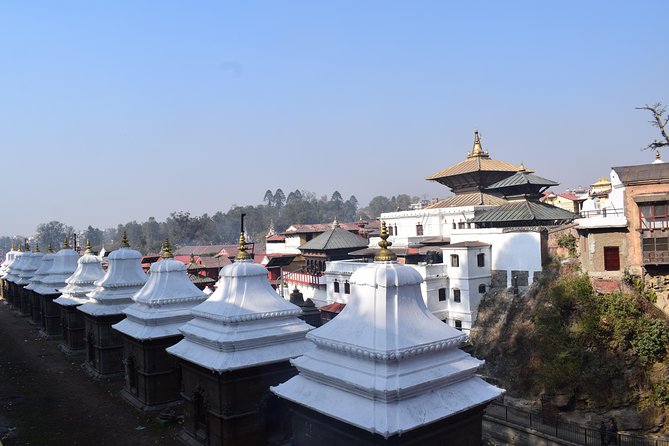
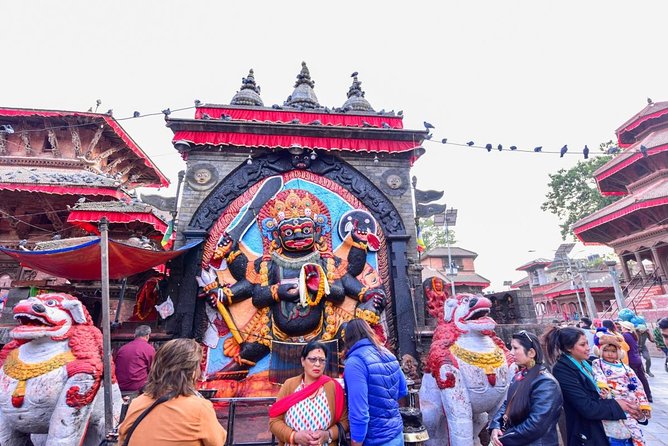
Patan Durbar Square is scheduled for about an hour and is one of the strongest parts of the day for architecture. Located in Lalitpur, the former Malla palace courtyard is filled with Newari design, crimson brick paving, carved details, and temples.
The Krishna Temple is an important stop within the square. Its stone construction includes 21 shrines, with carvings connected to the Ramayana and Mahabharata. A large bell adds another recognizable detail.
You then visit the Golden Temple, formally called Hiranya Varna Mahavihar. This 12th-century pagoda-style temple contains bronze statues and silver and gold decoration. The planned visit lasts about 15 minutes, so expect a focused look rather than a long period of quiet observation.
Patan Museum receives about 30 minutes. Located in Keshav Narayan Chowk, the museum presents records of earlier daily life and displays historical objects. This stop is useful because it gives you more than temple facades. It helps explain how people lived, worshiped, and made the objects surrounding you.
Patan is particularly good for you if carved wood, metalwork, and traditional Newari architecture interest you. The downside is that the hour at the main square can pass quickly, especially when you add the Golden Temple and museum.
A few more history tours around Kathmandu worth a look
- Kathmandu Private Sightseeing Tour | UNESCO World Heritage Sites
★ 5.0 · 109 reviews - Kathmandu: Full Day Private Top 4 UNESCO Heritage Tour W/Lunch.
★ 5.0 · 86 reviews - Kathmandu World Heritage Tour
★ 5.0 · 74 reviews - Kathmandu Heritage Tour (Full Day)
★ 5.0 · 63 reviews
Bhaktapur gives you the longest stop
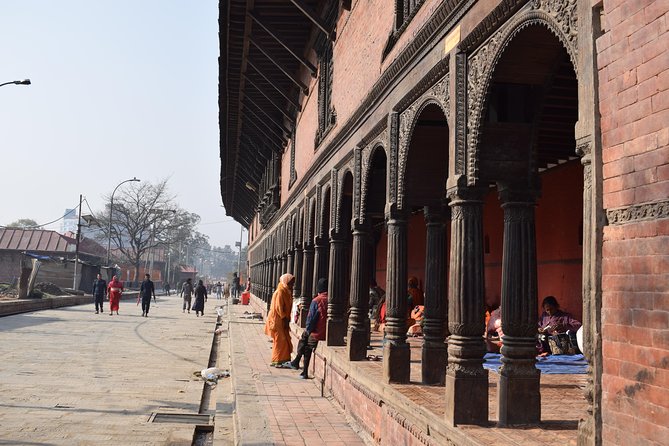
Bhaktapur Durbar Square receives about two hours, the longest scheduled visit of the day. That extra time is welcome. Bhaktapur is known for Newari culture and architecture, and the square includes several major structures that deserve more than a quick photograph.
Nyatapola Temple is one of the key sights. Its five roof levels rise more than 30 meters, making it one of the tallest pagoda-style temples in Nepal. The sculpted forms and upward design are easy to appreciate from the square, though the planned visit is only about 10 minutes.
The Dattatraya Temple sits in Dattatraya Square. It is said to have been built from the stem of a single tree, a detail that gives the massive temple an unusual place in local tradition. You get about 15 minutes here.
The 55 Window Palace is another major stop. Its name refers to the exactly 55 carved windows in the palace facade. The building links several courtyards, so look beyond the front windows and notice how the spaces connect.
Siddha Pokhari offers a short change of pace. This human-made pond measures 171 meters long and about 3 meters deep. The 15-minute stop lets you pause near a place used by local people rather than moving from one temple to another without a break.
Bhaktapur is likely to be the most satisfying section of the tour if you want time to look around. Two hours is still not enough for every lane and building, but it gives you a more reasonable visit than the shorter stops elsewhere.
Changu Narayan brings the valley into view
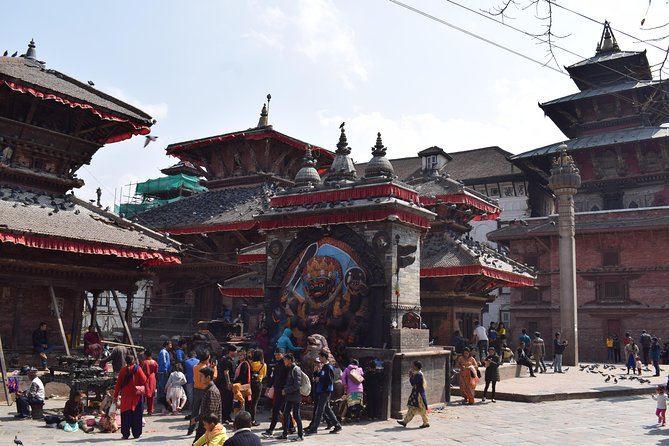
Changu Narayan is described as the least visited of the seven UNESCO sites on this route. The scheduled visit lasts about 30 minutes, so this is a brief stop, but it adds a different feel from the large city squares.
The village setting is linked with Newari craftsmen and traditional carving. You might see artisans working on carved pieces, depending on what is happening during your visit. The site is useful for showing how religious art and craft traditions continue beyond the central urban monuments.
The short visit is also the clearest limitation. Changu Narayan deserves more time if you want to examine the village and craftsmanship closely. Still, reaching it by private vehicle is much easier than trying to fit it into an independent day using local transport.
Pashupatinath shows Nepal’s Hindu tradition
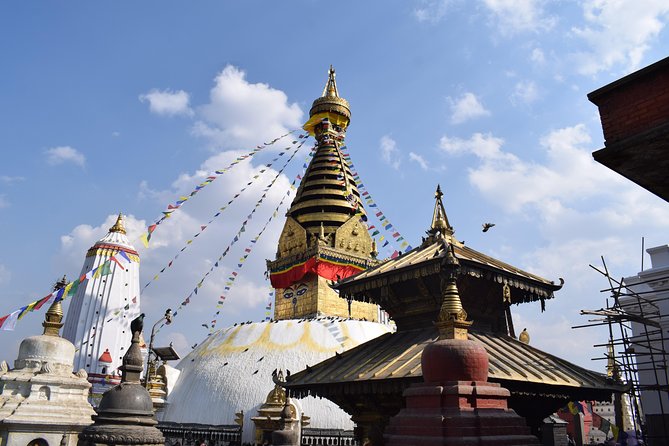
Pashupatinath Temple receives about an hour. This is Nepal’s largest temple complex, with more than 500 temples and shrines spread across the area.
The complex covers about 0.64 hectares and draws Hindu pilgrims. Its importance is religious as much as architectural, so you should approach it with respect and follow your guide’s instructions about where you can go and what you can see.
An hour gives you a useful introduction, though the complex is large enough that you may want more time. The visit helps balance the Buddhist sites at Swayambhunath and Boudhanath with one of Nepal’s most important Hindu centers.
Admission is not included. As with the other main sites, allow extra money for the entrance ticket.
Boudhanath closes the cultural loop
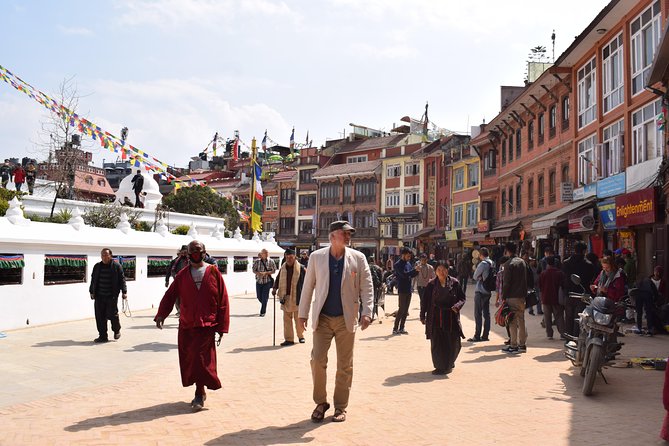
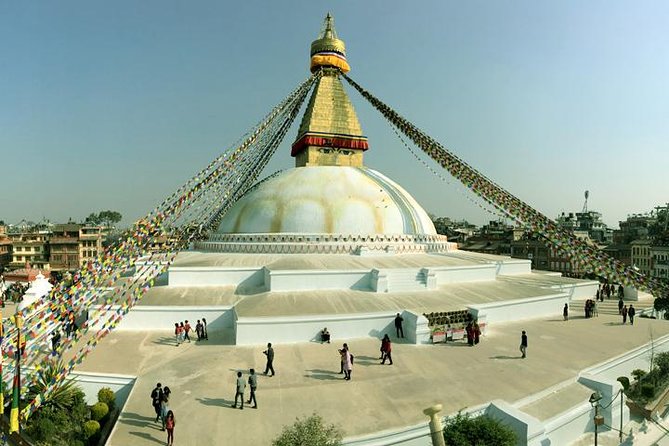
Boudhanath Stupa is the final major stop and receives about an hour. The stupa rises 36 meters and is surrounded by more than 50 gompas, or Buddhist monasteries.
This is one of the most important Buddhist pilgrimage places in Nepal. Its circular design and surrounding religious buildings give you a different experience from the hilltop setting of Swayambhunath. Ending here makes sense because the stupa provides a calm final point after a full day of palace squares, temples, museums, and long drives.
The one-hour schedule lets you see the main area, but you will need to keep moving if you want to stay on time. If you enjoy quiet observation, photography, or visiting religious buildings at length, you may feel ready for a return visit on another day.
How the private format affects the day
This is a private activity, so only your group participates. That gives you more control than a large shared coach tour. You can ask questions as they arise, request a slower pace, and make your needs clear to the guide.
The feedback about Pankaj is useful here. He adjusted the pace for a traveler who needed less stair climbing, showing why a private format can matter in practice. Shanti Karki is also praised for giving detailed explanations about history and daily life, not just naming buildings.
Hotel pickup and drop-off are included inside the Ring Road. The exact timing depends on your selected morning start, with multiple start times available. A morning departure is important because the day already includes a lot of driving and 15 listed stops.
You should expect traffic and a full schedule. The private vehicle makes transfers easier, but it cannot remove Kathmandu’s road delays or shorten the distance between the sites.
Who should book this Kathmandu day tour?
I would recommend it most strongly if you have limited time in Kathmandu. You get a useful overview of the valley’s Buddhist, Hindu, royal, and Newari traditions without having to plan several separate outings.
It also suits you if you want a guide to explain what you are seeing. The strongest praise is directed at the guides’ care, flexibility, and ability to explain the sites. That human context can make a major difference when many temples and courtyards appear in one day.
This is less suitable if you dislike early starts, long sightseeing days, or frequent changes of location. It is also not ideal if your goal is detailed photography, extended museum time, or quiet exploration of every square.
At $65, the private vehicle and hotel transfers help justify the cost. Just remember to add entrance fees and food. Free cancellation is available if you cancel at least 24 hours before the start time. Cancellations within 24 hours are not refunded, and late changes are not accepted.
Should you book it?
Book this tour if you want to see all seven Kathmandu Valley UNESCO sites in one organized day and you value a private guide. The mix of major squares, living religious traditions, museums, and smaller stops gives you a strong first orientation to Kathmandu.
I would skip it only if you have several days and prefer to explore at a slower speed. For a short visit, though, this is one of the more efficient ways to cover the valley. Ask for a guide such as Shanti Karki or Pankaj if available, confirm the pickup location is inside the Ring Road, and budget separately for every entrance ticket.
FAQ
How long does the Seven World Heritage Day Tour last?
The tour lasts approximately 10 to 12 hours.
How many UNESCO World Heritage sites does the tour visit?
It visits all seven UNESCO World Heritage sites in the Kathmandu Valley: Swayambhunath, Kathmandu Durbar Square, Patan Durbar Square, Bhaktapur Durbar Square, Changu Narayan, Pashupatinath, and Boudhanath.
Is hotel pickup included?
Yes. Hotel pickup and drop-off are included for locations inside Kathmandu’s Ring Road.
Is transportation private?
Yes. Transport is provided by private vehicle, and only your group participates in the activity.
Are entrance fees included in the $65 price?
No. Entrance fees at the heritage sites are paid separately according to the sites you visit.
Are food and drinks included?
No. Food and drinks are not included, but you can buy them at the sites.
Are there different start times?
Yes. You can choose from multiple morning start times.
Can most people participate?
The tour states that most people can participate. If you need a slower pace or less stair climbing, tell the guide in advance. One guide, Pankaj, is specifically praised for adjusting the pace and reducing stair climbing.
What is the cancellation policy?
You receive a full refund if you cancel at least 24 hours before the experience start time. Cancellations or changes made within 24 hours are not accepted and are not refunded.
Just added around Kathmandu
- Full Day Private Tour of Seven World Heritage Sites in Kathmandu★ 5.0 · 19 reviews
- Kathmandu World Heritage Tour★ 5.0 · 74 reviews
- Kathmandu UNESCO World Heritage Tour★ 5.0 · 24 reviews
- Kathmandu Heritage Day Tour with Guide.★ 5.0 · 30 reviews
- Kathmandu World Heritage Full Day Culture Tour★ 5.0 · 41 reviews
- Kathmandu: Full Day Private Top 4 UNESCO Heritage Tour W/Lunch.★ 5.0 · 86 reviews
- Kathmandu Guided Day Tour: Explore Top 4 UNESCO Heritage Sites★ 5.0 · 19 reviews
- UNESCO World Heritage Sightseeing Tour in Kathmandu – 5 Days★ 5.0 · 22 reviews
UNESCO World Heritage Tours, compared.
World Heritage Shirakawa-go and Experience Tours from Kanazawa
Read our review →
Bali: Tanah Lot UNESCO World Heritage Sites Full-Day Tour
Read our review →World Heritage Kyoto & Nara Uji Authentic Matcha Experience
Read our review →
UNESCO’s Ayutthaya Historical Park: Full-Day Tour from Bangkok
Read our review →
Rotterdam: Kinderdijk UNESCO World Heritage Entry Ticket
Read our review →
From Busan: Gyeongju UNESCO World Heritage Guided Day Tour
Read our review →Browse the lists this tour appears in