
Review · HONSHU
Kanazawa: World Heritage Shirakawa-go & Two Local Experience
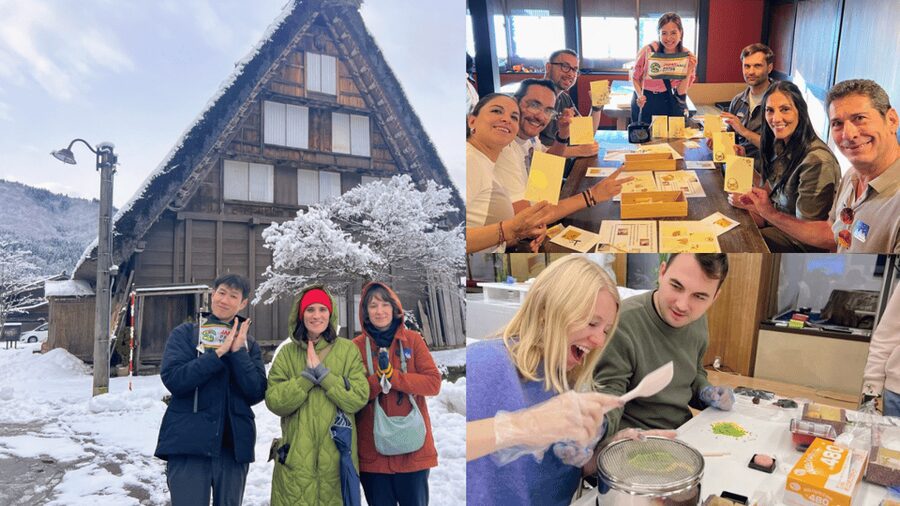
Snowy roofs make the morning memorable. This $116 full-day trip links Shirakawa-go and Kanazawa without the hassle of arranging buses, tickets, and timing yourself. I like the early visit to Shirakawa-go, before the village fills up, and I like the afternoon shift from grand sights to hands-on craft work.
The guide is another strong point. Guides such as Yasushi, Aiko, Keita, and Ciel have earned repeated praise for clear English, humor, local insight, and small touches such as quizzes, photo help, and picture books. The main drawback is pace: you cover a lot in nine hours, and some people will want more than about two and a half hours in Shirakawa-go.
The day at a glance
- Shirakawa-go before the crowds: Walk among World Heritage gassho-zukuri houses with roughly 2 hours and 20 minutes to explore.
- A guide who adds context: English and Japanese commentary brings meaning to the village, garden design, crafts, and local customs.
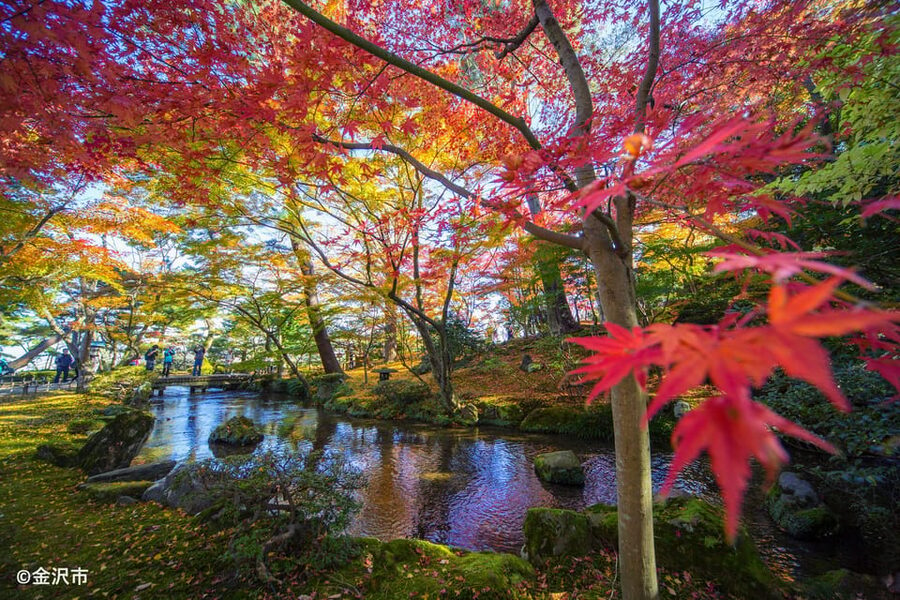
- Kenrokuen in changing seasons: Spend about an hour in one of Japan’s best-known gardens, with water, trees, bridges, stones, flowers, and quiet viewpoints.
- Two Kanazawa craft activities: Make wagashi Japanese sweets or paint a Daruma doll, then create a gold leaf postcard.
- Gold leaf is part of daily Kanazawa: The city produces most of Japan’s gold leaf, and you can finish with gold leaf ice cream at your own expense.
- Comfortable transport from Kanazawa Station: The air-conditioned coach has free Wi-Fi, regular ventilation, and an antibacterial coating.
Why this combination works so well
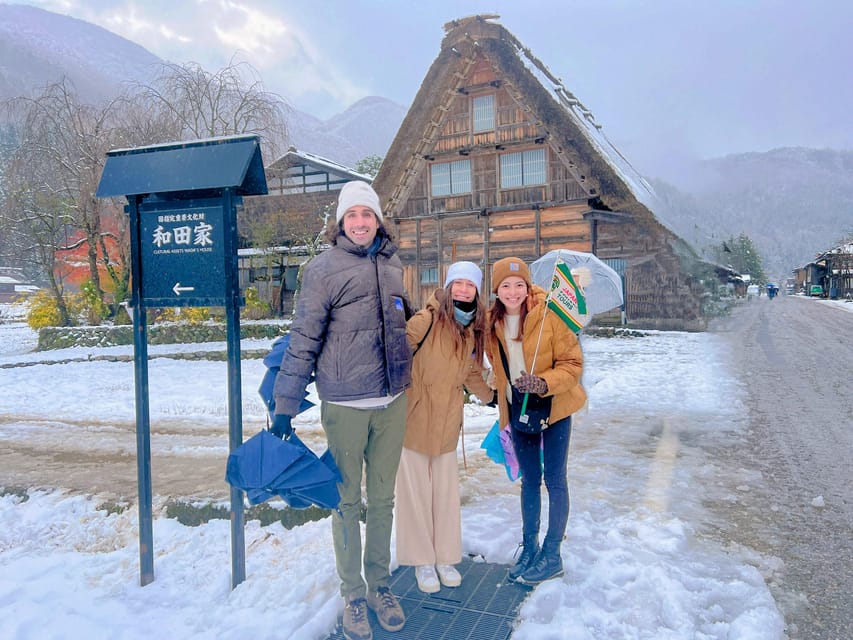
Kanazawa and Shirakawa-go make a sensible pair. Shirakawa-go gives you rural Japan, mountain scenery, old farmhouses, and a village shaped by heavy snow. Kanazawa gives you gardens, former samurai-era culture, geisha districts, and highly polished traditional crafts.
Doing both independently is possible, but it takes planning. You would need to coordinate transport to Shirakawa-go, allow for road conditions, find your way around the village, return to Kanazawa, and still reach the afternoon visits on time. This tour puts you on one coach and gives you a guide for the parts that benefit from explanation.
I especially like the balance between guided time and free time. At Shirakawa-go, you receive an introduction and orientation, then have room to walk, take photographs, browse, and find lunch at your own speed. In Kenrokuen, the guide explains what you are seeing instead of leaving you to admire a pretty garden without understanding its design.
The activity is not a quiet, slow-paced tour. It is a full day with several changes of scene. That suits you if you want a strong first look at the region. It may not suit you if you prefer one village or one museum with hours to spare.
More UNESCO World Heritage Tours in Japan
- World Heritage Shirakawa-go and Experience Tours from Kanazawa
★ 5.0 · 4,049 reviews - World Heritage Kyoto & Nara Uji Authentic Matcha Experience
★ 5.0 · 1,573 reviews - Kanazawa: World Heritage Shirakawa-go Morning Guided Tour
★ 4.9 · 988 reviews
Starting at Kanazawa Station before 8 a.m.
The meeting point is the Kanazawa Station West Plaza Short-term Car Park at 1-chōme-6-802 Hirooka. Check-in is at 7:50 a.m., with departure scheduled for 8:00 a.m.
Look for the green and white Japan Panoramic Tours flag. This is a simple detail, but it matters at a large station, especially when you are arriving early and the coach will not wait for latecomers. There are no refunds or changes for late arrivals and no-shows, so build in extra time.
Hotel pickup and drop-off are not included. You need to reach the station yourself. Wear comfortable shoes, since the day includes village streets, garden paths, and walking through the Higashi Chaya District.
The coach ride to Shirakawa-go
The coach takes roughly 80 minutes by expressway. The vehicle is air-conditioned and includes free Wi-Fi, which makes the early start easier. The coach is also regularly ventilated and treated with an antibacterial coating.
This ride is useful guide time, not just dead time. Guides such as Yasushi have used the journey to explain Kanazawa, Japanese customs, regional food, and the places ahead. Aiko has also kept the ride lively with pictures and quiz-style questions. That kind of preparation helps you notice more once you arrive.
Audio guidance is available in English, French, Italian, Spanish, German, Portuguese, and Ukrainian. Live guiding is in English and Japanese. If you need more language support than the live commentary offers, the headset is a practical backup.
Shirakawa-go: gassho-zukuri houses and mountain views
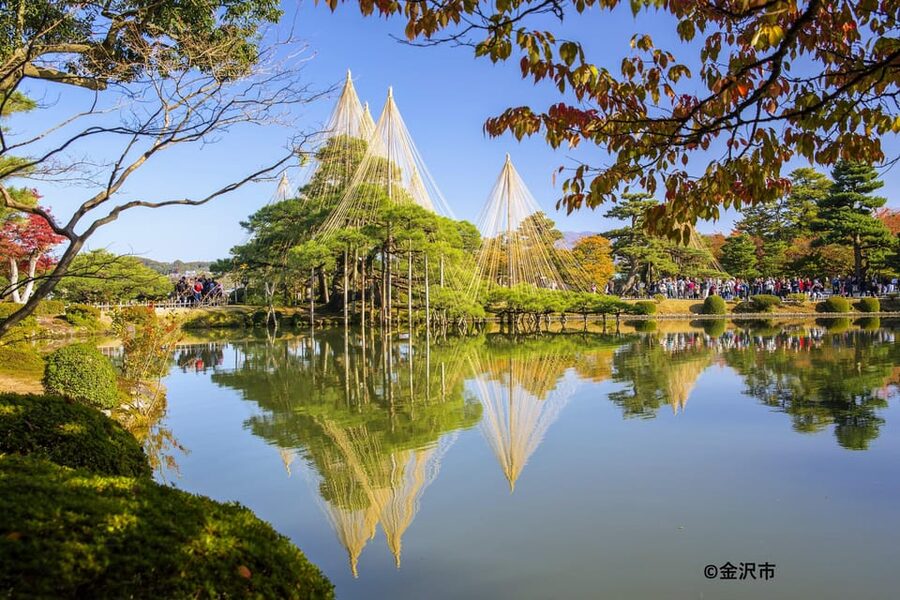
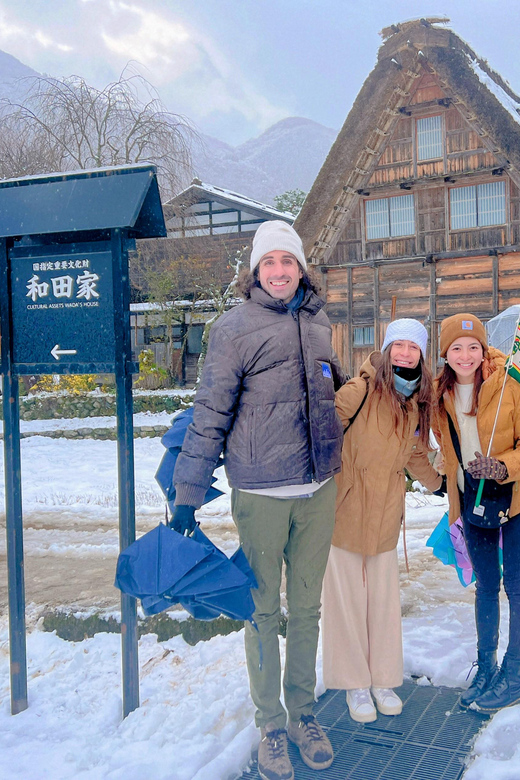
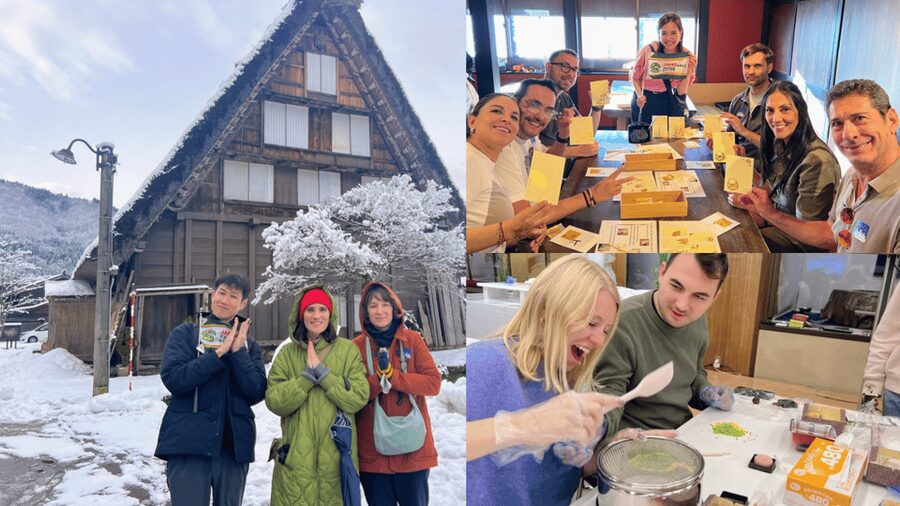
Shirakawa-go is the morning centerpiece. The village became a UNESCO World Heritage Site in 1995, largely because of its distinctive gassho-zukuri farmhouses. Their steep thatched roofs were designed for heavy snowfall, and the shape gives the houses their instantly recognizable appearance.
The setting changes dramatically with the season. Winter can bring snow-covered roofs and a storybook feel. Autumn brings color and clear views. Spring and summer offer a different look, with greener surroundings and changing light. The weather will influence how much you enjoy the outdoor walking, so dress for the forecast.
You have about 2 hours and 20 minutes here, including the guided introduction and your own time. That is enough for a good first visit, photographs, local snacks, and a look around the village. It is not enough for a slow, exhaustive exploration of every path and house.
I would use the guide’s orientation first, then decide what matters most to you. You might spend your free time seeking the best elevated view, examining the traditional houses, or sampling regional foods. Hida beef and doburoku ice cream are among the local specialties mentioned for the area. Lunch is not included, so use the free time to buy your own meal or snacks.
One practical point: a direct visit early in the day is a real advantage. Several people praised arriving before many other groups, when the streets and views were easier to enjoy. Traffic and weather can change the order or timing, so treat the schedule as a framework rather than a promise.
Same place, a different slice of the past:
- Kyoto: Fushimi Inari, Kinkakuji, Bamboo Grove 1 Day Bus Tour
★ 4.8 · 4,316 reviews - Tokyo: Imperial Palace and Shogun Historical Walking Tour
★ 5.0 · 2,251 reviews - Kyoto Gion: 2-Hour Geisha Culture & History Walking Tour
★ 5.0 · 1,186 reviews - Tokyo Castle & Imperial PalaceーShogun Walking Tour
★ 4.7 · 1,068 reviews
Returning to Kanazawa for Kenrokuen
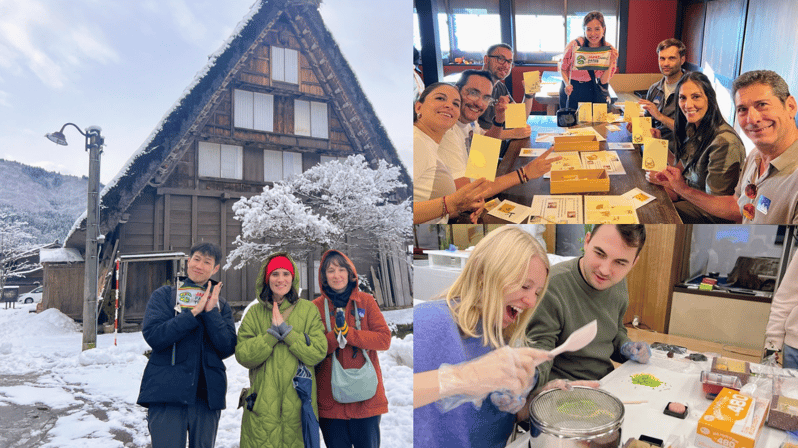
After Shirakawa-go, the coach returns to Kanazawa for Kenrokuen Garden. Admission is included, and the guided walk lasts about an hour.
Kenrokuen is often described as one of Japan’s three great gardens. Its appeal is not one single flower bed or a dramatic building. The garden is arranged around variety and changing viewpoints. As you walk, you see water, trees, flowers, stones, bridges, teahouses, and tucked-away corners.
This is where a guide adds real value. A solo visit can be beautiful, but you may miss the ideas behind the layout. The guide explains how Japanese garden design uses different views, controlled space, and carefully placed natural elements. The garden also changes with the season, so snow, autumn color, spring flowers, or summer greenery each give you a different visit.
The schedule allows enough time for an introduction and a purposeful walk, but not a long independent stay. One useful detail from the tour format is that some people who had already visited Kenrokuen alone found the guided walk revealed details they had missed. If you have only one day in Kanazawa, this is a good way to see the garden with context.
The itinerary also includes a walk near Kanazawa Castle. The supplied schedule does not give a separate long stop there, so think of it as part of the city sightseeing rather than a full castle visit.
Wagashi, Daruma painting, and local craft
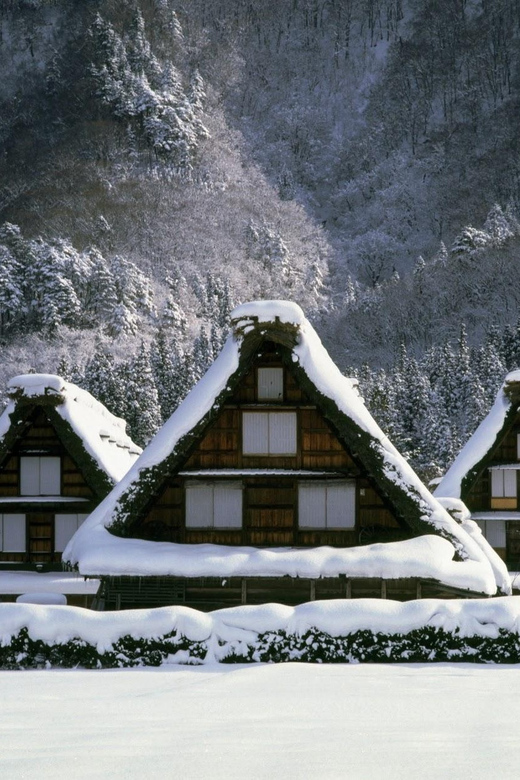
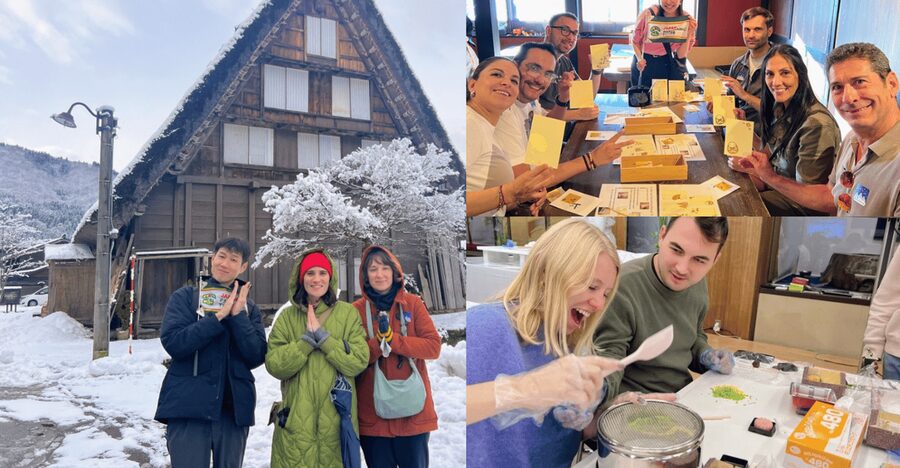
The afternoon becomes more hands-on. Depending on the artisan’s schedule, you either make wagashi Japanese sweets or paint a Daruma doll.
The wagashi activity is a particularly good fit for this tour. You work with an artisan, make attractive sweets, and can take what you create home. It adds a personal connection to Japanese food culture without requiring advanced artistic skill. The activity has also been praised as more enjoyable than expected, especially for people who were unsure about making sweets.
If the schedule changes to Daruma painting, you get a different kind of souvenir. Daruma dolls are traditional good-luck figures, and painting one gives you something personal to carry home. The activity is simple and accessible, although you may prefer watching a craftsperson demonstrate the work rather than spending your own time painting. That is one of the few clear preference points in the feedback.
The tour includes the admission and activity fee for either wagashi making or Daruma painting. You do not need to budget separately for the workshop itself.
Higashi Chaya District and Kanazawa gold leaf
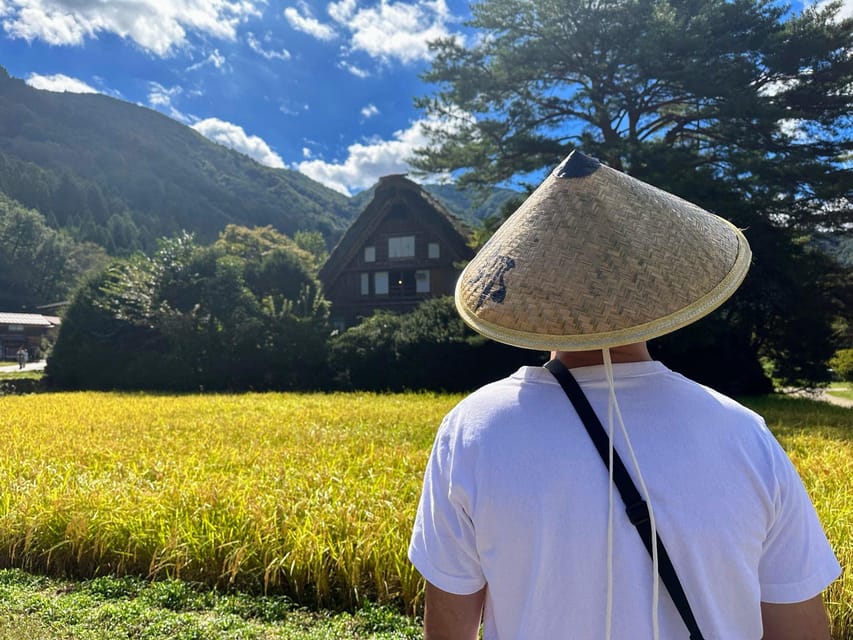
The final main area is Higashi Chaya District, one of Kanazawa’s historic entertainment quarters. Geisha performed music, dance, and other traditional arts here, and the district remains associated with teahouse culture.
You have about 30 minutes for the district visit and another 30 minutes for the gold leaf workshop, according to the published schedule. That is enough for a guided look, photographs, browsing, and the craft activity, but it is not a long evening visit.
Kanazawa is known for its gold leaf production, and the city produces 99 percent of Japan’s gold leaf. The workshop lets you make a postcard by applying gold leaf. You may also see part of the production process, depending on the day’s arrangement. This gives the gold decoration some meaning instead of treating it as just a shiny souvenir.
Gold leaf ice cream is another popular local treat in Higashi Chaya. It is not included, and food and drinks are extra, but it is an easy optional purchase if you want to try the city’s most photogenic snack. I would consider it a fun finish, not a reason to book the tour by itself.
The district can feel short on time. If you want long browsing sessions, tea, or a more relaxed look at the teahouses, you may wish to return on another day. The tour gives you an introduction and a craft, not a full evening in the neighborhood.
The guides make the difference
The strongest part of this experience is the guiding. Yasushi is repeatedly praised for energy, humor, clear English, and detailed explanations of Kanazawa and Japanese culture. Aiko is noted for warmth, patience, quizzes, and the ability to bring a group together. Keita and Ciel also receive praise for friendly, welcoming help.
That matters because the tour covers places where context changes what you see. A steep farmhouse roof becomes an adaptation to snow. A garden path becomes part of a plan of changing views. A gold leaf postcard connects with a major local craft.
The guide style also appears flexible. You can join the explanations, ask questions, and then use free time at your own pace. Solo visitors may appreciate the built-in group, while families can benefit from the quizzes and approachable explanations.
Is $116 good value?
At $116 per person, this is not the cheapest way to spend a day in the area. You pay for transportation, an English-speaking guide, audio support, Kenrokuen admission, and two craft-related experiences. Lunch, snacks, drinks, hotel transfers, and optional gold leaf ice cream cost extra.
The value is strongest if you want both destinations in one day. The coach removes the stress of coordinating transport, and the guide adds practical information throughout the day. The craft fees are already covered, which makes the price easier to judge.
The value is weaker if you have several days in Kanazawa and want to explore every stop slowly. You could give Shirakawa-go a longer visit, spend more time in Higashi Chaya, or return to Kenrokuen at a different hour. This tour trades depth for variety.
The overall rating is 4.9 from 274 reviews, with 97 percent of participants giving the transport a perfect score. That matches the practical strengths: an early departure, a comfortable coach, Wi-Fi, a well-organized route, and guides who keep the long day moving.
Who should book this day trip?
I would choose this tour if you have one or two days in Kanazawa and want to see the area’s major sights without handling the transport yourself. It is also a good choice for solo visitors, families, first-time visitors to Japan, and anyone who likes a mix of scenery, history, food, and making things by hand.
You should think twice if you dislike early starts, group schedules, or short visits. Shirakawa-go receives the largest block of free time, but some people will still want another hour. The Higashi Chaya stop is useful but brief, and the itinerary can change with traffic, weather, closures, or operational needs.
Book it if your priority is seeing a lot with clear guidance and little transport stress. Skip it if your ideal day means lingering in one place. For most visitors using Kanazawa as a base, the combination of Shirakawa-go, Kenrokuen, wagashi or Daruma painting, and gold leaf offers strong value for a single day.
FAQ
Where does the tour begin?
It begins at the Kanazawa Station West Plaza Short-term Car Park, at 1-chōme-6-802 Hirooka, Kanazawa. Check-in is at 7:50 a.m., and departure is at 8:00 a.m.
How long does the tour last?
The tour lasts about nine hours and returns to the Kanazawa Station West Plaza Short-term Car Park.
Is hotel pickup included?
No. Hotel pickup and drop-off are not included, so you need to reach the Kanazawa Station meeting point yourself.
What languages are available?
Live guiding is available in English and Japanese. Audio guidance is available in English, French, Italian, Spanish, German, Portuguese, and Ukrainian.
How much time is spent in Shirakawa-go?
The itinerary provides about 2 hours and 20 minutes at Shirakawa-go, including the visit and photo opportunities. The exact timing can change because of traffic, weather, or operational reasons.
Is lunch included?
No. Lunch is not included, and you need to pay separately for food and drinks.
Which craft activities are included?
You will make Japanese sweets or paint a Daruma doll, depending on the artisan’s schedule. You will also take part in a gold leaf craft activity, such as making a gold leaf postcard.
What should I bring?
Bring comfortable shoes. Pets are not allowed on the tour.
Just added around Japan
- Historic Kanda Sake Tasting at Tokyo’s Oldest Shop (1596)★ 4.9 · 33 reviews
- Hiroshima: Peace Walking Tour of World Heritage Sites★ 4.9 · 190 reviews
- Hiroshima: History and Hidden Gems Tour★ 4.9 · 81 reviews
- Hiroshima & Miyajima Island Private Tour: History & Culture★ 5.0 · 26 reviews
- Himeji: Himeji Castle Guided Tour – UNESCO Heritage★ 4.7 · 115 reviews
- Fukuoka Essentials: History, Culture, & Charms★ 4.8 · 39 reviews
- From Tokyo: Private Nikko World Heritage Sights One Day Trip★ 4.7 · 52 reviews
- From Tokyo: Guided Day Trip to Nikko World Heritage Sites★ 4.8 · 51 reviews
UNESCO World Heritage Tours, compared.
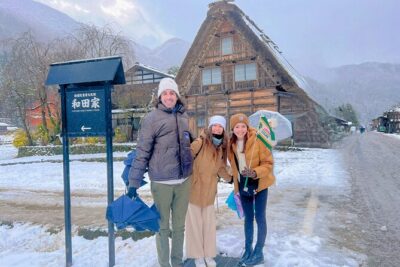
World Heritage Shirakawa-go and Experience Tours from Kanazawa
Read our review →
Bali: Tanah Lot UNESCO World Heritage Sites Full-Day Tour
Read our review →World Heritage Kyoto & Nara Uji Authentic Matcha Experience
Read our review →

UNESCO’s Ayutthaya Historical Park: Full-Day Tour from Bangkok
Read our review →
Rotterdam: Kinderdijk UNESCO World Heritage Entry Ticket
Read our review →
From Busan: Gyeongju UNESCO World Heritage Guided Day Tour
Read our review →Browse the lists this tour appears in