
Review · LATVIA
Riga: 2-Hour History of Art Nouveau Walking Tour
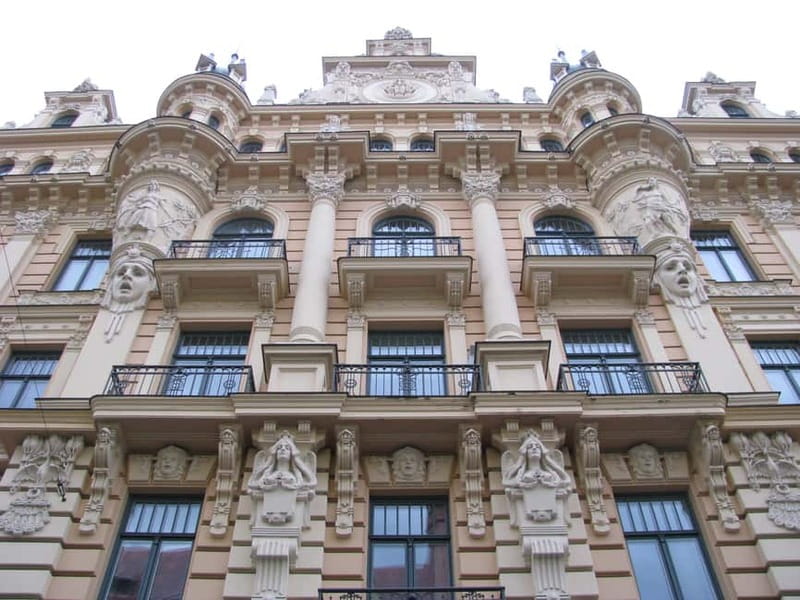
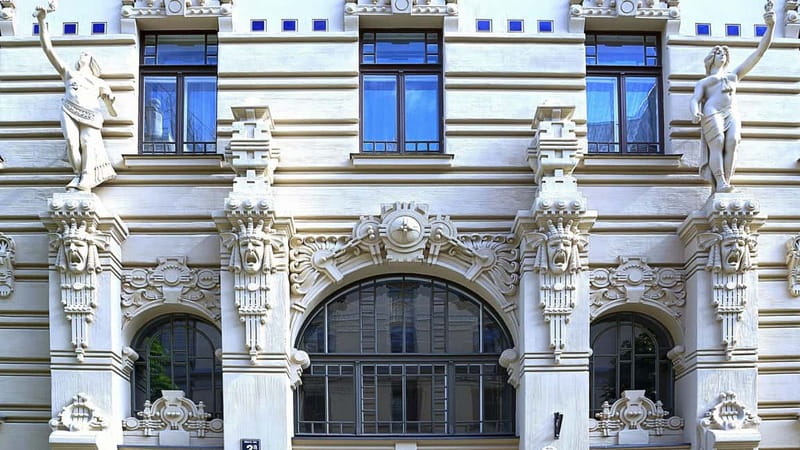
Riga puts its best face on the street. This two-hour walk connects the Old Town with the Art Nouveau district, where elaborate facades, national romantic designs, and Mikhail Eisenstein’s bold buildings turn an ordinary stroll into an outdoor architecture lesson. I like the clear focus on Riga’s many Art Nouveau styles, and I like that guides such as Tatiana, Gunta, Caspars, Liga, and Nelli bring local history into the details. The main drawback is simple: children over six pay the full price, and younger kids may lose interest before the two hours are up.
The route begins at the Smile Line office in the House of the Black Heads on Townhall Square. From there, you walk through central Riga toward Alberta Street and the Art Nouveau district. I especially value the small-group format when numbers stay low, since it gives you room to ask questions. Still, the group requires at least three participants, so a low number of bookings can lead to cancellation or a private-tour upgrade.
Key details before you book
- Mikhail Eisenstein’s Riga: Learn about the architect behind some of the city’s most decorative and debated Art Nouveau buildings.
- Old Town to Alberta Street: The route links Riga’s historic center with its celebrated Art Nouveau quarter on foot.
- More than pretty facades: Your guide explains how beauty, function, national identity, and social history shaped the buildings.
- A guide-led architecture lesson: German and English tours are available, with other languages possible by request.
- Two hours for $39: A fair price if you want context and visual detail rather than simply photographing buildings.
- Minimum three participants: The tour may be cancelled with a full refund if too few people book.
Why Riga is such a good city for Art Nouveau
Riga is an unusually rewarding place to study Art Nouveau because the style appears across a concentrated part of the city. You do not need a bus, museum pass, or long transfer to see a large range of buildings. Much of the lesson happens at street level, where you can compare one facade with the next.
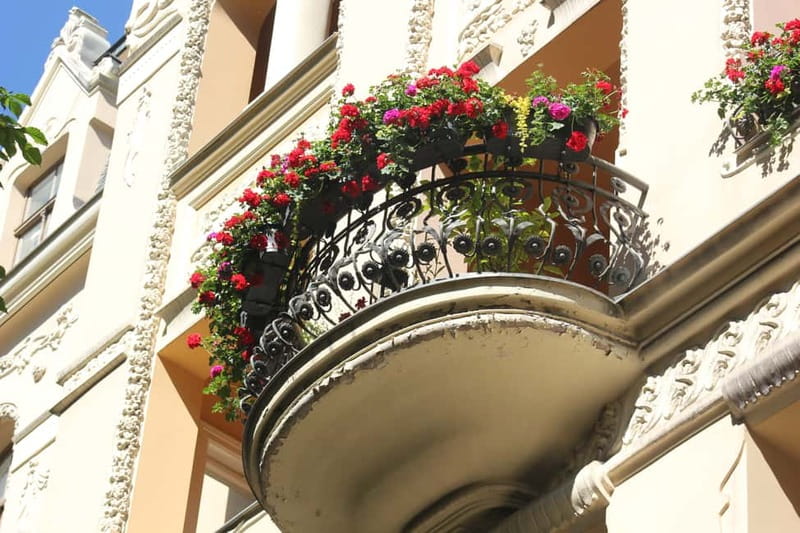
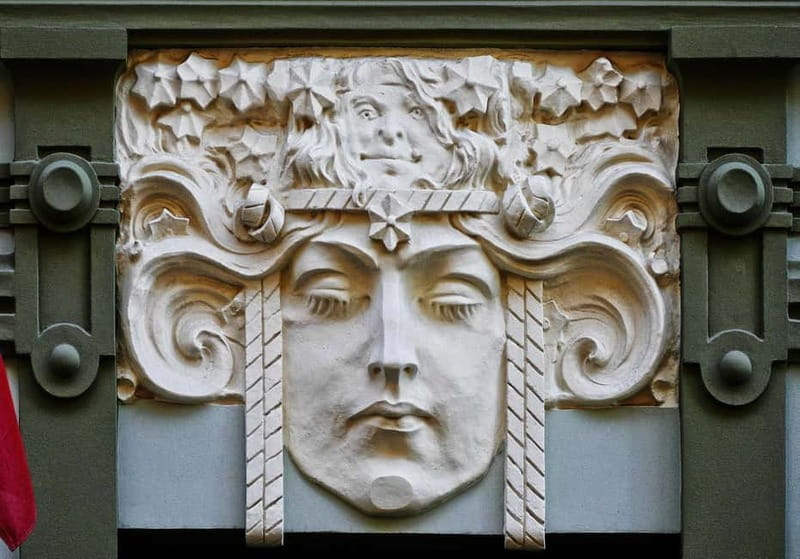
The style itself was never just one look. Some buildings lean toward heavy decoration, with expressive faces, sculpted figures, curling lines, and theatrical details. Others take a more intellectual approach, using restrained shapes and carefully arranged ornament. National romanticism adds another layer, bringing local design ideas into the architecture rather than copying the same European pattern everywhere.
That variety gives the walk its purpose. Without a guide, you can admire the buildings, but it is easy to miss why one facade feels dramatic and another feels severe. Your guide helps you read the stone, plaster, windows, symbols, and proportions. You begin to notice how an architect can make a practical apartment building feel like a piece of stage scenery.
The tour also places Riga in its early twentieth-century setting. At the time, the city was an important port in the Russian Empire, and Latvian, German, Russian, and Jewish architects all contributed to its built character. That mix helps explain why the city’s Art Nouveau quarter does not feel like the work of a single school.
More History Walking Tours in the world:
- History and Hauntings of Salem Guided Walking Tour
★ 5.0 · 14,564 reviews - Lisbon: History, Stories and Lifestyle Walking Tour
★ 4.8 · 10,902 reviews - Boston: Freedom Trail History Small Group Walking Tour
★ 5.0 · 6,450 reviews
Starting at the House of the Black Heads
You meet at the Smile Line office in the House of the Black Heads, Townhall Square, 7. This is a useful central starting point because it gives you a clear place to gather before leaving the Old Town.
The House of the Black Heads is itself one of Riga’s best-known historic buildings, so the meeting point begins the architectural conversation before the walk even gets going. The route then moves from the medieval center toward the newer district shaped by the city’s early twentieth-century growth.
That change of setting matters. You are not dropped beside a row of Art Nouveau buildings with no context. You first see the older city, then walk toward the district where new ideas in architecture became especially visible. The shift helps you understand that Art Nouveau was part of a changing city, not an isolated decorative trend.
Wear comfortable shoes. This is a walking tour, and the two-hour length is enough time to cover a meaningful route without turning the outing into a full-day march. A guide has described the pace as easy, which should suit most people who want time to look up, take photographs, and listen.
Crossing central Riga toward the Art Nouveau district
The walk from the Old Town to the Art Nouveau district is part of the experience, not wasted time between attractions. Your guide can point out how Riga changes as you move away from its oldest streets and into areas shaped by later expansion.
This is where the tour’s historical approach becomes useful. You are not only looking at famous facades. You are learning why the buildings appeared where they did, who designed them, and how Riga’s cultural mix affected their appearance.
The route includes Latvian, German, Russian, and Jewish architectural contributions. That detail gives the district a broader human story. Riga’s Art Nouveau buildings were not produced by one national style or a single circle of designers. They reflect a city where different communities lived, worked, designed, and competed for attention.
Your guide also discusses the idea that Art Nouveau buildings should be beautiful and functional. That is a good question to keep in mind as you walk. Some facades may seem almost overloaded with decoration, yet they were still part of working urban buildings. The tour invites you to consider how well the artistic ambitions and daily practical needs fit together.
Meeting Mikhail Eisenstein on Alberta Street
Alberta Street is the visual centerpiece of the outing. It is famous for its Art Nouveau buildings, and the tour uses the street to explain Mikhail Eisenstein, one of Riga’s most controversial architects.
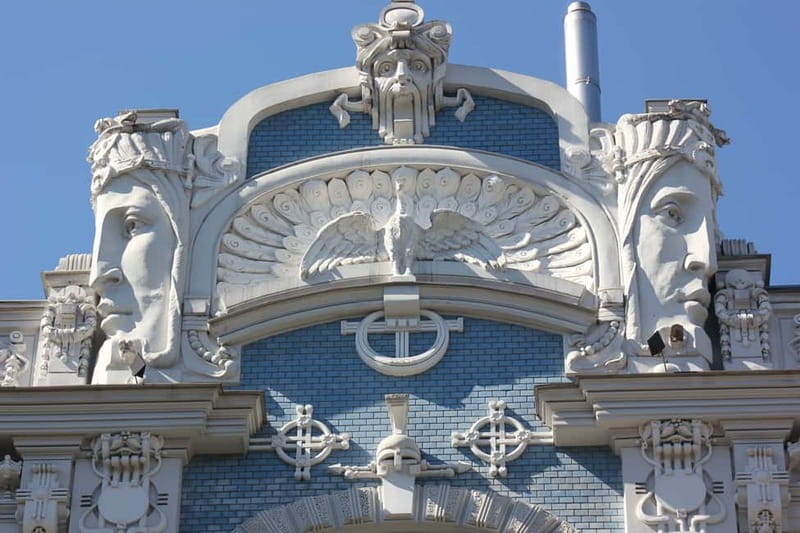
Eisenstein’s work is not quiet. His facades can feel theatrical, intellectual, and highly decorative at the same time. The guide explains his life in Riga, then part of the Russian Empire, and places his buildings within the city’s wider growth as a major port.
The word controversial is useful here because Eisenstein’s architecture invites strong reactions. You may love the ornament or find it excessive. Either way, it gives your guide something worthwhile to explain. Instead of simply naming the architect, the tour helps you think about why his work attracted attention and why it remains such an important part of Riga’s architectural identity.
Look closely at the upper sections of the buildings. The most memorable details are often above eye level, where faces, figures, geometric patterns, and sculpted motifs compete for attention. A guide can direct your gaze to the parts you would likely miss while walking alone.
The architecture also rewards repeated comparison. One building may present an energetic, decorative facade. Another may feel more controlled and intellectual. The point is not to find one perfect example, but to see how many versions of Art Nouveau developed within a compact area.
More Two-Hour Tours in the world:
- 2-Hour Gettysburg Battlefield Guided History Bus Tour with a National Park Guide
★ 4.5 · 2,201 reviews - Kyoto Gion: 2-Hour Geisha Culture & History Walking Tour
★ 5.0 · 1,186 reviews - 2 Hour LoDo Historic Walking Tour in Denver
★ 5.0 · 1,106 reviews - 2-Hour Historical Walking Tour from Dublin
★ 5.0 · 875 reviews
National romanticism and the idea of local identity
Not every building on the route aims for the same kind of drama. National romanticism appears in some designs, adding local character to the international Art Nouveau movement.
This is one of the strongest reasons to take the tour with a guide. You may recognize decoration, but it is harder to identify the ideas behind it. National romantic designs can express a sense of place through forms and details associated with local culture. Your guide explains how that approach differs from the more decorative work associated with Eisenstein.
The contrast makes the walk more than a parade of pretty buildings. You begin to see architecture as an argument about identity. Should a city look modern and international? Should it express local traditions? Should an apartment building be restrained, practical, grand, or provocative? Riga’s streets offer several answers.
The guide’s explanations also help you separate Art Nouveau from the broader label of Art Deco, which sometimes gets used loosely for Riga’s decorative architecture. The tour focuses on Art Nouveau and its different interpretations, so you get a more precise way to describe what you are seeing.
What the guides add to the experience
The strongest part of this tour is the human explanation. The guides are not simply leading you from one address to another. They give the buildings a story and answer questions along the way.
Tatiana has been praised for clear English, energy, and strong command of the subject. Gunta has led a small group through the major landmarks and answered questions attentively. Caspars has been noted for careful organization and close attention to architectural detail. Liga and Nelli have also received praise for their insight and engaging manner.
You should not assume you will get a particular guide, but these names show the range of people leading the walks. The repeated strengths are useful: good English, enthusiasm for the subject, patient answers, and practical recommendations for shops and cafes.
An audio system may be used, which can help you hear the guide while looking at buildings rather than standing shoulder to shoulder around the speaker. That is especially useful on a street tour, where traffic and city noise can make conversation difficult.
The tour is offered in English and German. Swedish, Norwegian, Polish, Spanish, Portuguese, French, Italian, and Japanese may be available by request. Ask ahead if language is important to your plans.
Group size, pace, and accessibility
The tour requires at least three participants. If that number is not reached, the outing may be cancelled with a full refund, or you may choose to upgrade to a private tour. Keep this in mind if your schedule is tight.
One participant described a group of under ten people, which made the walk feel personal. That size is not guaranteed, but a smaller group usually makes it easier to hear the guide and ask about details. Larger groups can still work, though you may need to position yourself near the guide when stopping at busy streets.
The activity is listed as wheelchair accessible. Since the route is outdoors and some route changes may occur, you should still confirm current conditions if you have specific mobility needs. The organizer notes that some excursions can change their route.
The pace has been described as easy, and the tour lasts two hours. That makes it a practical choice for a first morning or afternoon in Riga. It is long enough to build a basic understanding, but short enough to combine with the Old Town, a museum, or a cafe afterward.
Is $39 a fair price?
At $39 per person, the tour is not the cheapest way to see Riga’s architecture, but the value depends on what you want from the walk. If you only want photographs, you can explore parts of the district on your own. If you want to know who designed the buildings, why the styles differ, and how Riga’s communities shaped them, the guide makes the cost easier to justify.
No entry tickets are included, but this is mainly an outdoor walking experience, so the lack of admissions is not a serious weakness. You are paying for the guide’s interpretation, route planning, language skills, and ability to point out details that are easy to miss.
The price is also reasonable for visitors who have limited time. Two hours gives you a focused introduction without requiring a whole day. The tour can be especially useful at the beginning of a Riga visit, since you can return to favorite buildings later with a better eye.
Children under six can join free. Children over six pay the full price, and older children may find the final part less interesting if architecture is not their thing. For families, I would consider the tour most suitable for children who already enjoy cities, buildings, or history.
Who should take this Riga walking tour?
I would recommend it to first-time visitors who want a clear introduction to Riga’s architecture. It also suits solo visitors who would rather explore with a local guide than study an unfamiliar district alone.
Architecture fans will get the most from the comparisons between decorative, intellectual, and national romantic designs. History-minded visitors will appreciate the discussion of Riga as a major port in the Russian Empire and the role of Latvian, German, Russian, and Jewish architects.
It is also a good choice for people who think they are not interested in architecture. The guide-led format gives you a simple way into the subject. You do not need to know architectural terms before arriving. You only need to be willing to look up.
I would be more cautious if you dislike walking, have a very young family, or want interior access to buildings. Entry tickets are not included, and the focus is on seeing the exteriors and understanding their story from the street.
Practical booking advice
Book with comfortable shoes and allow yourself a few minutes to find the Smile Line office inside the House of the Black Heads. The meeting point is central, but Townhall Square can be busy with visitors and surrounding sights.
Free cancellation is available up to 24 hours before the start time, and you can reserve now while paying later. That flexibility helps if your Riga schedule depends on weather or transport.
The tour has a 4.8 rating from 118 ratings, with especially strong praise for guide knowledge, clear explanations, friendly manner, and an easy pace. I would treat that as a sign that the guide quality is central to the experience, not an extra detail.
Should you book it?
Book this tour if you want Riga’s Art Nouveau buildings to become more than attractive backdrops. For $39, you get a focused route, a local guide, context about Mikhail Eisenstein, and a useful introduction to the city’s many architectural voices.
Skip it if you prefer exploring at your own pace, dislike guided walks, or mainly want to enter buildings. For everyone else, especially first-time visitors and solo explorers, this is a sensible way to see Alberta Street and understand why Riga is so closely linked with Art Nouveau.
FAQ
Where does the tour meet?
Meet the guide at the Smile Line office in the House of the Black Heads, Townhall Square, 7.
How long does the walking tour last?
The tour lasts two hours.
What languages are available?
The regular tour languages are English and German. Swedish, Norwegian, Polish, Spanish, Portuguese, French, Italian, and Japanese may be available upon request.
Is the tour wheelchair accessible?
Yes, the activity is listed as wheelchair accessible. Some route changes may occur, so confirm current arrangements if you have specific access needs.
What happens if fewer than three people book?
The group requires at least three participants. If there are not enough bookings, the tour may be cancelled with a full refund, or you may choose to upgrade to a private tour.
Can I cancel for a full refund?
Yes. You can cancel up to 24 hours in advance for a full refund.
Just added around the world
- Rio de Janeiro: Historical Downtown and Lapa Walking Tour★ 4.4 · 32 reviews
- Old Riga in Italian: History&Legends★ 4.8 · 125 reviews
- Riga: Jewish History and Heritage Tour★ 4.9 · 25 reviews
- Rimini: Guided Walking Tour of the Historic City Center★ 4.6 · 56 reviews
- “Rotes Bier” and “Blaue Zipfel”. A historical-culinary walk★ 4.4 · 190 reviews
- REDKULT: Red Light District & Historical City Center★ 4.5 · 107 reviews
- Regensburg: City Highlights Historical Boat Tour★ 4.0 · 259 reviews
- Recoleta Cemetery – Small Group Tour of History & Secrets★ 5.0 · 53 reviews
History Walking Tours, compared.
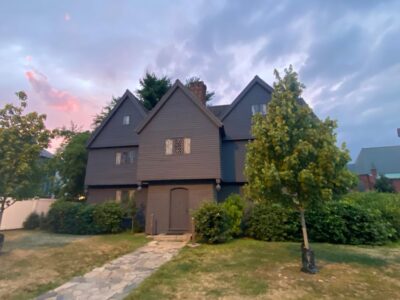
History and Hauntings of Salem Guided Walking Tour
Read our review →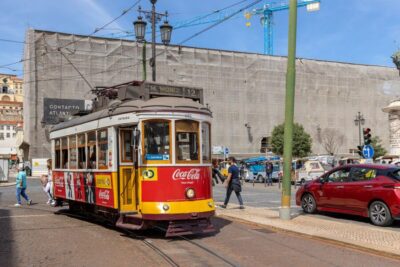
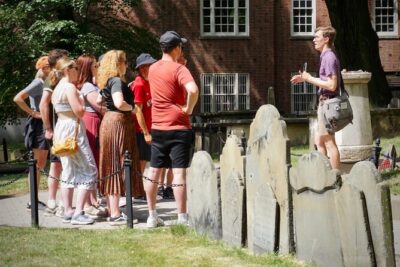
Freedom Trail History Small Group Walking Tour
Read our review →
Historic Charleston Guided Sightseeing Walking Tour
Read our review →
Tapas Walking Tour with Food, Wine, and History
Read our review →
Savannah History and Haunts Candlelit Ghost Walking Tour
Read our review →
A History of Terror – Belfast City Centre Walking Tour
Read our review →Browse the lists this tour appears in