
Review · EMILIA-ROMAGNA
Rimini: Guided Walking Tour of the Historic City Center
Rimini has more than beaches. I like how this $15 walking tour links Roman ruins, medieval defenses, Renaissance buildings, and Federico Fellini sites in just 90 minutes. I also like the clear old-town route, which helps you get your bearings quickly while adding context to places you might otherwise pass without noticing.
The main drawback is the Italian-only guide service, which limits the tour’s value if you do not understand Italian. The pace may also be awkward for anyone who walks slowly, despite the activity being described as wheelchair accessible. One poor experience involved a guide moving ahead of slower participants, so this is worth considering before booking.
Key points at a glance
- Roman Rimini in one short walk: See the Arch of Augustus, Surgeon’s Domus, and five-arch Ponte di Tiberio.
- A clear historical sequence: The route moves from Roman remains to medieval walls and Renaissance architecture.
- Fellini connections: Visit Cinema Fulgor and finish near San Giuliano’s colorful murals.
- Strong value at $15: The price is low for a guided introduction to the center, especially on a first visit.
- Italian-language tour: The guide speaks Italian, so language ability matters.
- Bring practical footwear: Narrow streets, historic paving, and a rain-or-shine schedule call for comfortable shoes.
Why this short Rimini tour works
Rimini is often treated as a seaside resort, but its center tells a much older story. The city began as a Roman settlement and later became an important medieval and Renaissance power under the Malatesta family. This walking tour gives you a fast introduction to those layers without asking you to spend half a day indoors.
I see the tour as an orientation walk rather than a complete study of Rimini. In 1.5 hours, you will see a lot from the outside and hear the main historical connections, but you will not have time for long museum visits or detailed architectural analysis.
That is not a flaw at this price. For $15, you are paying for a live guide, a planned route, and enough context to make the city easier to explore on your own afterward. The tour is especially useful at the start of a Rimini stay, when you want to know which monuments deserve a closer return visit.
The guide meets you inside the tourist office at Corso d’Augusto 152. That central starting point is practical because the route begins with major sights in and around the old center rather than requiring a taxi or a separate transfer.
More History Walking Tours in Italy
- Venice: City Center Historical Guided Walking Tour
★ 4.2 · 1,873 reviews - Palermo: Street Food and History Walking Tour
★ 4.9 · 1,486 reviews - Verona: History and Hidden Gems Guided Walking Tour
★ 5.0 · 1,379 reviews
Beginning at the Arch of Augustus
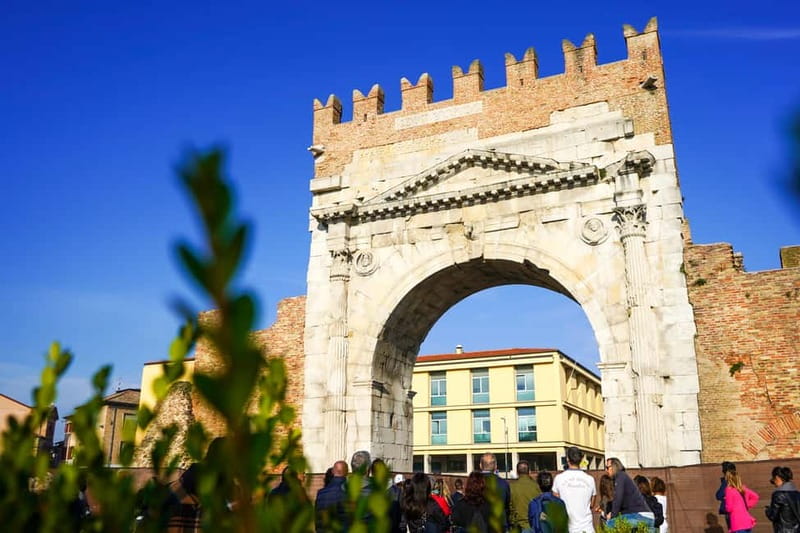
The Arch of Augustus gives the tour a fitting opening. Built in Roman times, it marked the main entrance to Rimini’s old center and still provides a strong sense of how the ancient city was organized.
Here, I would pay attention to the arch as both a monument and a piece of city planning. Roman gateways were not placed at random. They marked arrival, controlled movement, and connected Rimini to the wider road system of the empire.
A guide can add the details that a quick photograph misses, such as the arch’s role in the city’s original layout and its place at the start of the walking route. You will not simply be looking at an isolated ruin. You will be seeing the first chapter of Rimini’s urban story.
The area around the arch also helps you shift from modern Rimini into the older center. The route then continues through streets where different periods appear close together, often with ancient, medieval, and later buildings sharing the same view.
The Surgeon’s Domus and Roman life beneath the city
The Surgeon’s Domus is one of the tour’s more unusual stops. This archaeological complex offers a look at Roman life through the remains of a medical building, rather than through a grand public monument alone.
That distinction matters. The Arch of Augustus and Ponte di Tiberio show Rome’s power and engineering. The Surgeon’s Domus points toward everyday life, work, and medicine. It helps make ancient Rimini feel less abstract.
The tour passes by the complex, so you should not expect an extended archaeological visit as part of the 90-minute walk. If the site catches your interest, note it as a place to investigate later, especially if you prefer detailed excavation displays to quick outdoor stops.
The route is designed to keep moving. That works well for anyone who wants a broad introduction, but it means you should not expect to linger at every monument.
Ponte di Tiberio and the practical skill of Rome
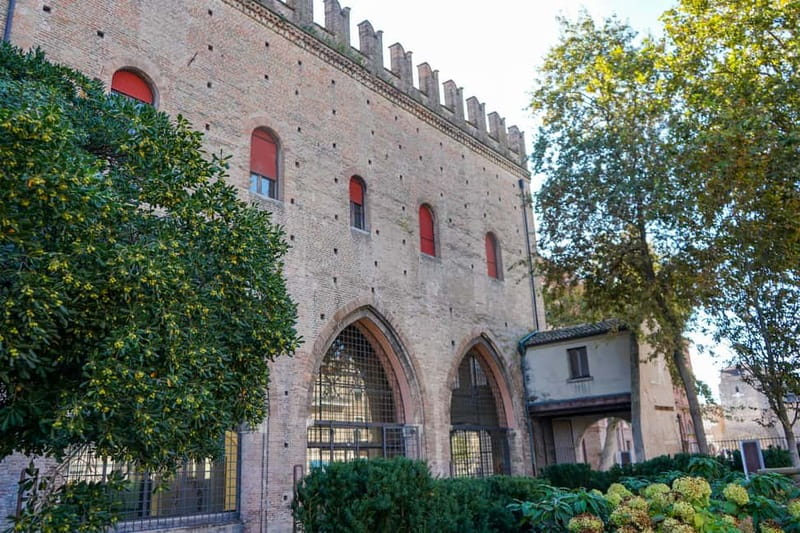
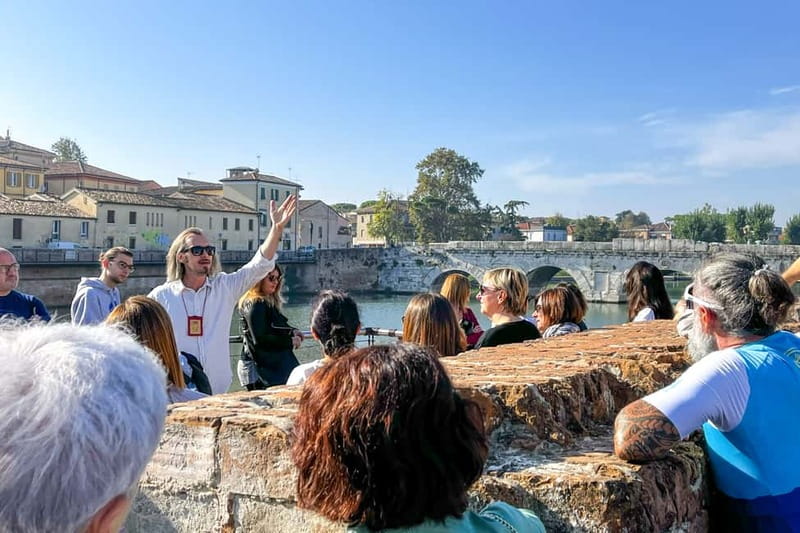
The Ponte di Tiberio is one of the walk’s strongest sights. Its five arches cross the waterway near the old center and show how Roman infrastructure could remain useful long after the empire itself disappeared.
I like this stop because it gives you something large and easy to understand. You can see the bridge’s structure, its repeated arches, and its place in the city’s movement between areas. It is not just a historical label on a map.
The guide can explain how the bridge fits into Rimini’s Roman past and why it remains such an important part of the city’s identity. The view also breaks up the sequence of streets and churches with an open, easily recognized landmark.
You may want to pause here for photographs, but the walking tour has a fixed duration. If you are a keen photographer, keep your expectations in check. This is a guided introduction, not a photo walk with unlimited time at each stop.
Same place, a different slice of the past:
- Colosseum: Underground and Ancient Rome Tour
★ 4.7 · 12,691 reviews - Rome: Colosseum with Arena, Roman Forum and Palatine Guided Tour
★ 4.0 · 5,598 reviews - Venice: St. Mark’s Basilica Guided Tour & VR History Intro
★ 3.9 · 4,880 reviews - Colosseum with Arena, Roman Forum and Palatine Hill Guided Tour
★ 4.5 · 3,526 reviews
Galliana Gate and the medieval edge of town
From the Roman bridge, the route continues to the Galliana Gate. This medieval gateway connected the city with the port area and once formed part of Rimini’s defensive wall.
The gate helps explain a change in the city’s priorities. Roman Rimini was organized around roads and imperial connections. Medieval Rimini also needed walls, controlled entrances, and protection. Within a short distance, you can see how the city adapted to a different political and military world.
This part of the walk is particularly useful if you want to understand Rimini as a living town rather than a collection of famous monuments. The narrow streets and older buildings make more sense once you know where the defensive boundary ran and how the port related to the center.
The walking itself is not described as difficult, but the route includes narrow streets and historic surfaces. Wear shoes with good support. Rain does not cancel the tour, so a wet-weather plan is sensible.
Malatesta Temple and Renaissance Rimini
The Malatestiano Temple brings you into Rimini’s Renaissance period. It is closely tied to the Malatesta family, whose rule shaped the city’s architecture and political identity.
The building is valuable on a short walking tour because it shows how power was expressed through design. After the practical Roman bridge and medieval gate, the temple introduces a more ambitious and polished architectural style.
You will see the temple as part of the city’s larger story, not as a separate church with no connection to the rest of the route. The guide links it to the period when Rimini’s leaders wanted to present the city as cultured, important, and worthy of attention.
The tour does not include food, drinks, or hotel transfers, and the listed inclusions cover the walk and guide only. If you want to enter every church or monument along the way, check what is open and available separately. The value here is the guided context and the sequence of exterior sights.
Castel Sismondo and the Malatesta legacy
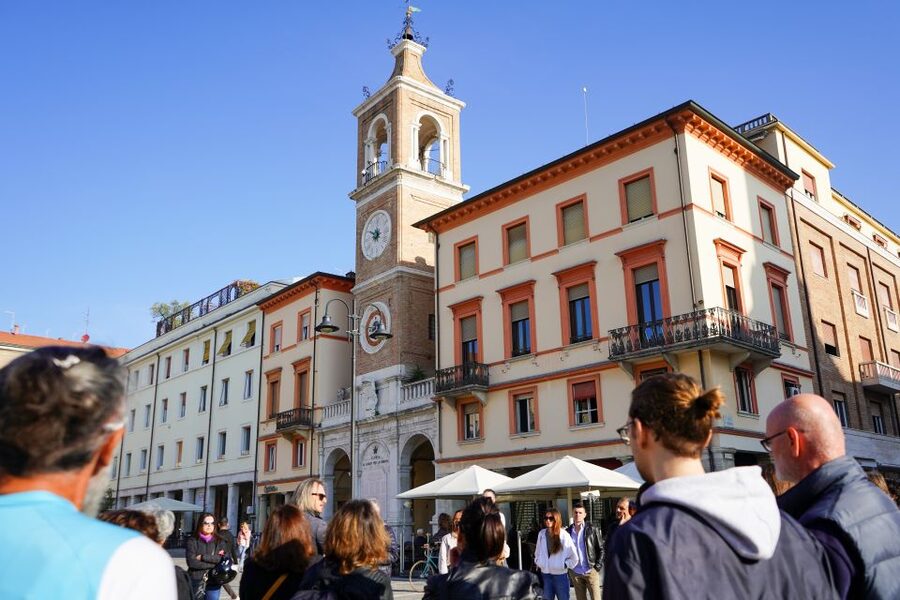
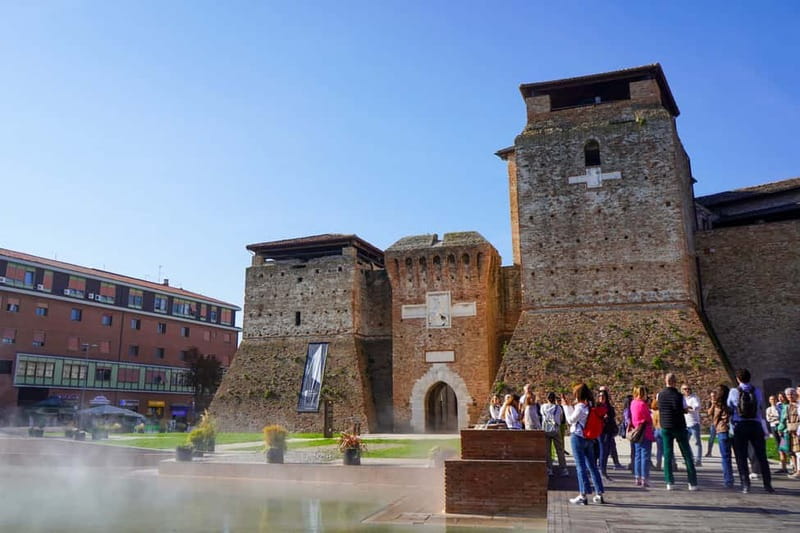
Castel Sismondo adds another major Malatesta-era building to the route. Its presence gives the Renaissance section a defensive counterpart to the temple’s religious and civic character.
I appreciate the pairing of these two sights. One helps you think about patronage, art, and public image. The other brings in authority, security, and the physical power of a ruling family.
The tour allows you to see how close important buildings are to one another. That is one of the pleasures of walking Rimini’s center. You do not need a complicated transport plan to move between major periods of the city’s past.
Because the entire activity lasts only 90 minutes, the guide has to keep the group moving. You will get a useful explanation of Castel Sismondo, but this is not the right choice if you want a slow, room-by-room castle visit.
Piazza Cavour, Teatro Galli, and Cinema Fulgor
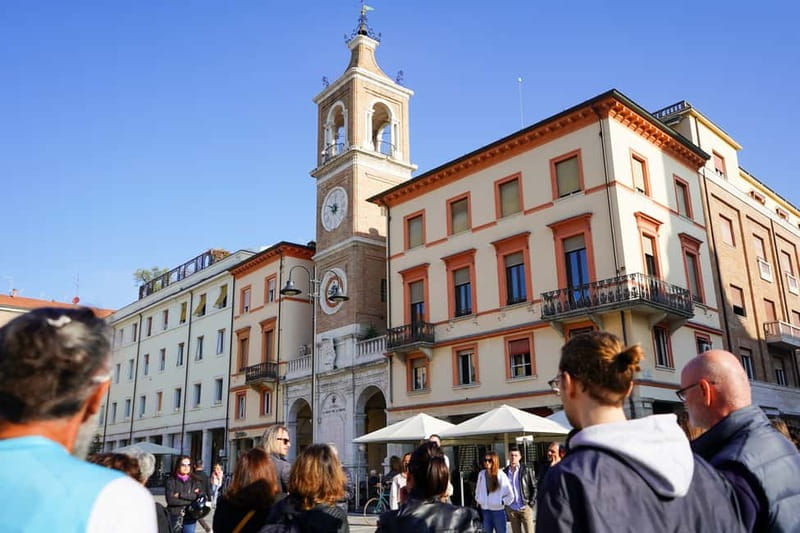
Piazza Cavour was once the heart of Rimini, and it remains one of the most useful places on the walk for understanding the city as a civic center. The square brings together public architecture, theater, and local identity.
The renovated Teatro Amintore Galli adds a cultural note to the route. Seeing it alongside older buildings shows how Rimini has continued to update and reuse its central spaces rather than leaving the old center frozen in one period.
Cinema Fulgor provides a more personal connection. The ornate Art Nouveau theater is linked to Federico Fellini, the famous director born in Rimini. For cinema fans, this is more than another decorative building. It connects the city to the director’s imagination and to the places that shaped his artistic world.
If you enjoy film, this section may be the emotional high point of the tour. If you are mainly interested in Roman archaeology, it offers a welcome change of subject but may feel less essential than the bridge or arch.
The mix is one reason the tour works for first-time visitors. You are not given only one version of Rimini. You see an ancient city, a medieval city, a Renaissance court, and a modern cultural city in one compact route.
San Giuliano and Fellini’s painted world
The tour ends with a walk through the San Giuliano district, where colorful murals depict scenes from Fellini’s films along with portraits of the director and his wife.
This ending changes the tone. Earlier stops rely on stone, walls, bridges, and formal architecture. San Giuliano uses painted images to show how Rimini remembers one of its most famous cultural figures.
I like this as a final stop because it gives the walk a local, visual finish. The murals are not simply historic objects. They show how a neighborhood has built a public connection to Fellini and his work.
The murals also make a strong case for keeping the tour until the end rather than leaving after the main monuments. If you are short on time, you might be tempted to focus only on the Roman and Renaissance sights. The Fellini section gives the city a more recent human story.
The route’s order can change, so do not assume that San Giuliano will always be the final stop. Still, the listed route makes it clear that the experience moves beyond the postcard center and includes a district with a distinct artistic character.
Guide quality and the Italian-language issue
The guide is an important part of the value. Strong feedback focuses on preparation, clear explanation, organization, and a light sense of humor. Francesca is specifically praised for her engaging way of speaking and for presenting a large amount of history in an organized fashion.
That praise matters because this route covers several centuries in a short time. A poorly structured explanation would make the walk feel like a list of names. A well-organized guide can connect the sights so that the sequence feels logical.
The official language is Italian. If you understand Italian, this can be a very good low-cost introduction to Rimini. If you do not, do not book it expecting English commentary or multilingual explanations.
Guide performance can also affect the pace. One negative account described a guide walking ahead of slower participants while focusing on another member of the group. I would arrive ready to mention your walking speed and stay near the guide so you do not miss explanations.
Who should book this Rimini walk?
I would recommend this tour to you if you want a short, inexpensive introduction before exploring Rimini independently. It suits first-time visitors, history fans who want several periods in one route, and film lovers interested in Fellini’s connection to the city.
It is also a sensible choice for a port-of-call visit or a tight schedule. Ninety minutes is long enough to see the main landmarks without consuming an entire morning or afternoon.
The tour is less suitable if you need English commentary, want extensive time inside monuments, or prefer a very slow pace. Children under five are not accepted, and the activity is not intended for people with mobility impairments according to the stated restrictions.
There is also conflicting practical information about mobility. The tour is marked wheelchair accessible, yet people with mobility impairments are listed as unsuitable. I would contact the provider before booking if you use a wheelchair, walker, or need a slower route. Do not rely on the general accessibility label alone.
Is $15 good value?
Yes, provided Italian is useful to you and your expectations match the format. At $15, the tour gives you a live guide and a concentrated route through some of Rimini’s most important central sights.
You are not paying for admission to attractions, meals, drinks, or hotel pickup. Those items are not included, so budget separately if you want to enter sites or stop for refreshments.
The strongest value comes from the connections between places. You could walk past the arch, bridge, temple, castle, theater, and murals on your own, but the guide helps you understand how Roman, medieval, Renaissance, and modern Rimini fit together.
Free cancellation is available up to 24 hours before the start, and you can reserve now while paying later. That flexibility is useful if your Rimini schedule depends on weather or transport, but the tour operates rain or shine.
Should you book it?
Book it if you want a low-cost historical orientation in Italian, especially early in your stay. The route covers an impressive range of sights, the price is modest, and the Fellini ending gives the walk a character that a purely Roman tour would miss.
Skip it if you need English, dislike fixed walking routes, or want long interior visits. For most Italian-speaking visitors, though, this is a smart way to meet Rimini’s old center before choosing which monuments deserve more of your time.
FAQ
Where does the Rimini walking tour meet?
Meet your guide inside the tourist office at Corso d’Augusto 152.
How long does the tour last?
The walking tour lasts 1.5 hours.
How much does the tour cost?
The listed price is $15 per person.
What language is the tour offered in?
The live guide speaks Italian.
Which Roman sights are included?
The route includes the Arch of Augustus, the Surgeon’s Domus, and Ponte di Tiberio.
Does the tour visit medieval sights?
Yes. The route includes the medieval Galliana Gate, which once formed part of Rimini’s defensive wall and connected the city with the port area.
Which Renaissance buildings are included?
The tour includes the Malatesta Temple and Castel Sismondo.
Does the tour include Fellini-related places?
Yes. You see Cinema Fulgor and colorful murals in San Giuliano dedicated to Federico Fellini, his work, and his wife.
Is hotel pickup included?
No. Hotel pickup and drop-off are not included.
What should I bring?
Bring comfortable shoes. The tour runs rain or shine, so suitable clothing for the weather is also sensible.
Can children join the tour?
Children under five are not permitted.
Is the tour wheelchair accessible?
The activity is marked wheelchair accessible, but it also lists people with mobility impairments as unsuitable. If you have mobility needs, confirm the route and conditions with the provider before booking.
Just added around Italy
- Private Colosseum & Ancient Rome Family Tour for Kids★ 4.8 · 124 reviews
- Pisa: Historic Center Tour by Bike Self-Guided★ 4.4 · 68 reviews
- Pienza: Typical Gourmet Lunch at Ancient Tuscan Farmhouse★ 4.6 · 42 reviews
- Partinico: Historic Sicilian Vineyard & Wine Tasting Tour★ 4.8 · 36 reviews
- Palermo: Mafia history and present, Street Food Walking Tour★ 5.0 · 29 reviews
- Palermo: Historic Center Guided Bike Tour with Food Tasting★ 4.7 · 85 reviews
- Palermo: Tour of the historic center by train★ 3.7 · 242 reviews
- Palermo : Historic Markets & monuments Walking Tour★ 4.7 · 129 reviews
History Walking Tours, compared.
History and Hauntings of Salem Guided Walking Tour
Read our review →
Freedom Trail History Small Group Walking Tour
Read our review →
Historic Charleston Guided Sightseeing Walking Tour
Read our review →
Tapas Walking Tour with Food, Wine, and History
Read our review →
Savannah History and Haunts Candlelit Ghost Walking Tour
Read our review →
A History of Terror – Belfast City Centre Walking Tour
Read our review →Browse the lists this tour appears in