
Review · SOUTHEAST REGION
Rio de Janeiro: Historical Downtown and Lapa Walking Tour
Rio’s story begins far from the beach. This three-hour walk brings you into historic downtown Rio, where imperial buildings, grand public spaces, churches, and ordinary daily life share the same streets. I like the mix of old and new architecture, and I like that the guides add practical advice about restaurants, photo spots, evening samba, and caipirinhas. The main drawback is that downtown may feel less packed with obvious sights than Rio’s famous beaches and viewpoints.
You meet in front of Theatro Municipal at Praça Cinelândia, a useful central starting point for understanding the city. The group is limited to 10 people, which should make it easier to ask questions and keep close to the guide. Still, wear good walking shoes, expect the tour to run rain or shine, and note that it is not suitable for people with mobility impairments.
Key points to know before you book
- Theatro Municipal meeting point: Begin at Praça Cinelândia, in front of one of Rio’s most important cultural buildings.
- Three major interiors included: The old cathedral, the Imperial Palace, and the National Library are part of the walking route.
- Small groups of up to 10: A compact group suits a history walk, especially when guides are explaining buildings in busy city streets.
- A useful first-day tour: You get background on Rio’s past, plus suggestions for food, photos, nightlife, samba, and caipirinhas.
- A steady three-hour pace: The tour is described as easy walking, though the full route requires you to stay on your feet.
- Languages and flexible booking: Tours are offered in English, Portuguese, and Spanish, with free cancellation up to 24 hours before departure.
Why Rio’s downtown deserves your time
Rio is often sold through its beaches, mountains, and famous statues. Those sights matter, but downtown explains how the city became what it is. Here you can connect Brazil’s royal and imperial past with the working city you see today.
I like this tour as a first introduction because it gives you a timeline. The route covers kings and queens, emperors, freedom fighters, and revolutionaries, while also pointing out how the center changed over the centuries. That context helps later visits make more sense.
You also get a different view of Rio’s daily life. Downtown is not presented as a museum frozen in time. People go to work, pass through public squares, enter shops, and use the streets as part of normal city life. That contrast between grand architecture and everyday movement is one of the walk’s strongest features.
The tour also helps correct a common mistake: treating Rio as only a beach destination. The old center shows the influence of a European-style court, along with the political and cultural changes that shaped Brazil. You may not find a dramatic landmark at every turn, but you get a better sense of the city beneath the postcard image.
More History Walking Tours in Brazil:
- Rio de Janeiro: Little Africa Heritage Walking Tour
★ 4.9 · 177 reviews - Paraty: Historic Centre Walking Tour & Cachaça Tasting
★ 4.8 · 96 reviews - Salvador Historic Walking Tour – Pelourinho
★ 4.8 · 62 reviews
Starting at Praça Cinelândia and Theatro Municipal
The meeting point is in front of Theatro Municipal, at Praça Cinelândia. This is a sensible place to begin because the square gives you an immediate lesson in the city’s architectural contrasts.
The area places formal civic buildings beside the movement of modern Rio. Your guide can use the setting to explain how the center developed and how public buildings reflected the ambitions of the city. It is the kind of opening that works better with a local guide than with a quick photograph and a name read from a guidebook.
Be precise when arranging your meeting. One person found the meeting instructions less exact than expected and wished the organizer had been easier to reach by phone around the start time. I would arrive early, locate the theater, and keep the tour provider’s contact details handy.
This first stop also sets the tone for the walk. You are not simply ticking off buildings. You are learning why they were built, what role they played, and how the surrounding streets changed over time.
The old cathedral and the value of going inside
The tour includes an interior visit to the old cathedral. That matters because the outside of a church tells only part of its story. Inside, your guide can explain its place in Rio’s religious and civic life, as well as the details that are easy to miss when you are moving through the city on your own.
The cathedral is also a useful pause from the street. After walking through public squares and city blocks, stepping indoors changes the pace and gives you time to focus on architecture and atmosphere. The exact order of the stops can vary, but the interior visit is one of the experiences included in the walk.
The practical value here is guidance. A good explanation can show you where to look, what period a feature belongs to, and why the building matters. Several people have praised the guides for explaining buildings and historical events clearly, though one English-language participant found a strong accent difficult at times.
If your hearing or language comprehension is a concern, English, Portuguese, and Spanish are available, but the individual guide’s accent and speaking style can still affect how easy the tour is to follow. Keep your questions coming, since the small group format allows room for them.
The Imperial Palace and Rio’s royal connection
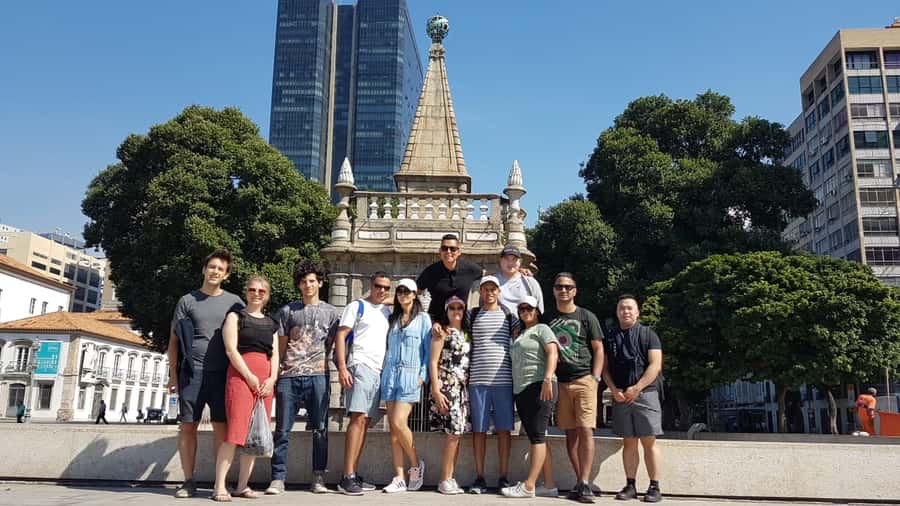
The Imperial Palace adds a different layer to the walk. Rio was once the center of a royal and imperial court, and this stop helps explain why the city contains architecture more associated with European capitals than with a typical coastal resort.
The palace gives the tour historical weight without requiring you to leave downtown. You can connect political power, royal life, and the growth of the city in one place. I especially like that this subject is handled on foot, with the guide linking the building to the streets around it rather than presenting it as an isolated monument.
Do not expect a palace visit to feel like a long museum tour. This is a walking experience, and the palace is one part of a larger route. The advantage is variety. You see the city, move between stops, and keep the story connected to real streets.
The tour is at its best when the guide answers questions and adjusts the explanation to the group. One private outing included only the guide and one participant, allowing changes to the route and plenty of questions. A small group does not guarantee a private tour, but the limit of 10 gives you a better chance of personal attention than a large coach excursion.
A few more history tours around Brazil worth a look
- Maria Fumaça – Wines and History
★ 4.0 · 242 reviews - Rio de Janeiro: Historic Rio and Santa Teresa Half-Day Tour
★ 4.4 · 228 reviews - São Paulo: Downtown Historical Bike Tour
★ 4.9 · 191 reviews - Ancient Rio and Santa Teresa Tour with Hotel pick-up and drop-off
★ 4.5 · 154 reviews
The National Library and Rio’s cultural side

The National Library brings the city’s intellectual and cultural life into the picture. Its inclusion helps balance the churches and royal buildings with an institution tied to books, learning, and public culture.
For you, the main benefit is variety. The route is not only about façades, rulers, and political events. It also shows how Rio developed as a center of culture. The interior visit gives the guide another chance to point out details that you might otherwise walk past.
The exact amount of time spent at each place is not specified, and the guide may adjust the pace based on the group. That flexibility is useful if people have many questions, but it also means you should not expect a precisely timed checklist of every downtown sight.
This is where the tour’s value depends heavily on the guide. Several outings have been praised for clear historical explanations and interesting small facts. A good guide can make a plain-looking building meaningful. A less effective delivery, or a strong accent that is hard to follow, can reduce the benefit.
Lapa, local life, and the modern city
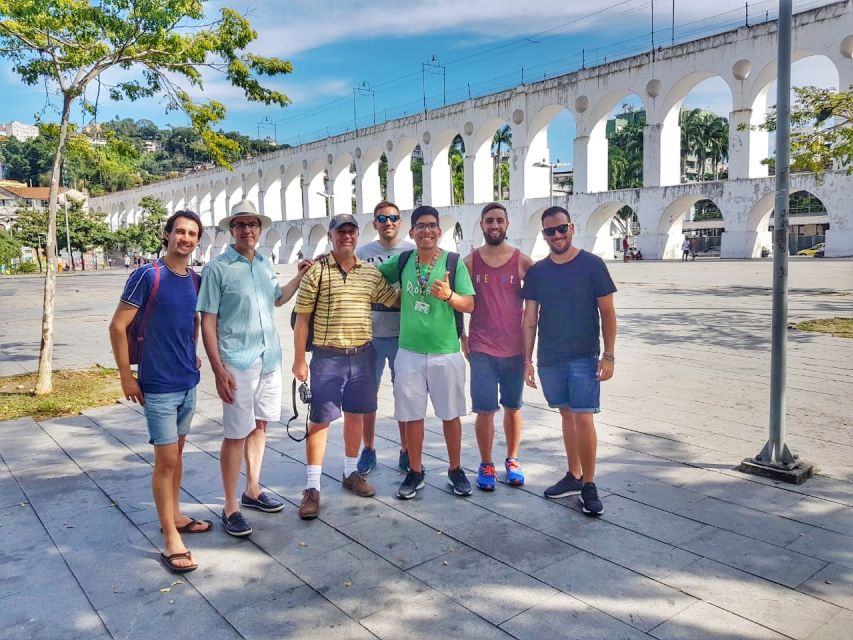
Lapa is part of the tour’s focus, and the wider walk helps you see how it relates to central Rio. The area is linked with the city’s evening social life, samba, and drinks, which is why the guide’s local advice can be useful beyond the three-hour route.
You can ask about places for photographs, restaurants, and areas to visit later for samba and caipirinhas. That turns the walk into a planning tool for the rest of your stay. I would bring a short list of questions, since guides may know which neighborhoods and venues fit your interests better than a general online search.
The tour also highlights the shift from historical architecture to the modern city. That contrast is one of the stated aims, and it gives you a more balanced view of Rio. You see the grand remains of earlier periods while watching the city function around them.
A note of realism is important here. One participant felt the old center did not contain many major highlights. If your ideal walking tour is packed with famous monuments, this may feel modest. If you enjoy urban texture, historical context, and the chance to understand how a city works, the route should be more rewarding.
The guide makes or breaks the three hours
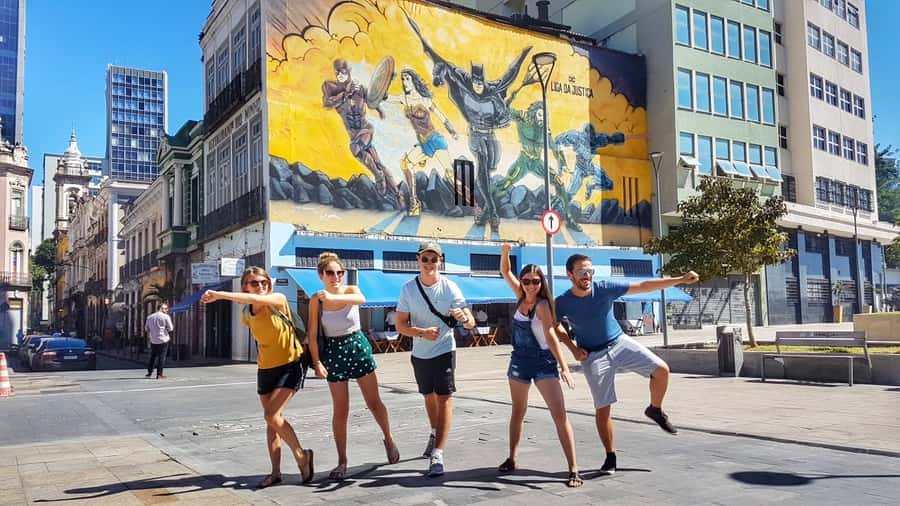
The company places strong emphasis on guides who care about Rio, and the best feedback supports that claim. People have praised guides who answered every question, explained the transformation of the center across centuries, and pointed out places they would not have found alone.
That is the central strength of this tour. The buildings are important, but the guide turns them into a connected story. You get more than names and dates. You learn how the city’s royal, imperial, political, religious, and everyday sides fit together.
The small group limit of 10 helps. It should be easier to hear, ask questions, and stay with the guide while crossing city streets. In one case, the outing became exclusive, with a guide adapting the route to the participant’s requests.
The main caution is language delivery. The tours are available in English, Portuguese, and Spanish, but one English speaker found the guide’s accent hard to understand. That does not make the tour unsuitable, but it is worth remembering if you need very clear spoken English.
The Colombo Café pause and the walking pace
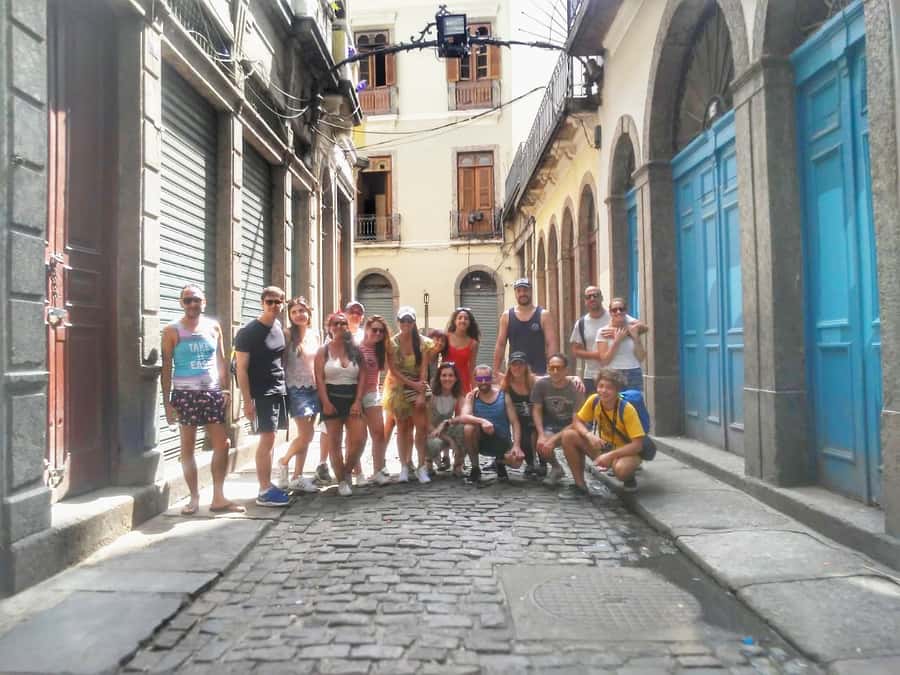
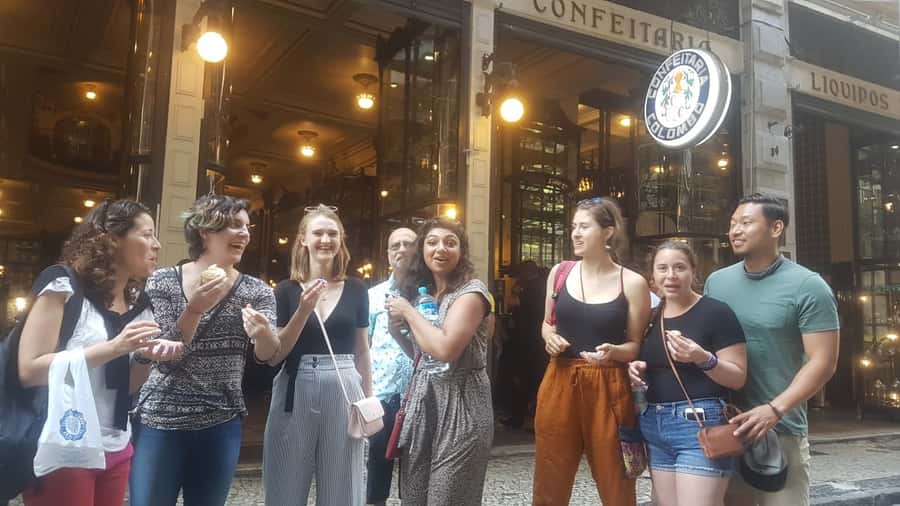
A well-timed pause at Colombo Café has been part of at least one outing. This kind of break is welcome during a three-hour city walk, especially when you want a moment to sit, gather your thoughts, or ask the guide about the next part of the route.
Because the café stop is not listed as a guaranteed inclusion, treat it as a possible bonus rather than a promise. The confirmed inclusions are the walking tour and interior visits to the old cathedral, Imperial Palace, and National Library.
The walking pace has been described as easy, and the tour lasts about three hours. Even so, you should wear comfortable shoes and be ready to remain on your feet for much of the morning or afternoon. The route runs in rain or shine, so check the forecast and carry suitable weather protection.
This is not a good choice for anyone with mobility limitations. The combination of city streets, standing, and several interior visits requires you to manage a full walking route.
Is $60 a fair price?
At $60 per person, the tour is not the cheapest way to see downtown Rio. The value depends on how much you want explanation rather than simple sightseeing.
You are paying for three hours with a live guide, a small group capped at 10, and entry inside three significant historic buildings. You also receive local suggestions for food, photographs, samba, and evening drinks. For a first visit, that combination can save you time and help you plan the rest of your stay.
The price is easier to justify if you care about architecture and history, or if you prefer asking questions as you go. It is less compelling if you are happy to wander independently, mainly want famous views, or expect a long list of spectacular monuments.
The tour can also offer better value early in your trip. Once you understand the center’s layout and historical role, later visits to downtown, Lapa, and nearby cultural sites should feel more purposeful.
Who should book this Rio walking tour?
I would recommend it to first-time visitors who want more than beaches and viewpoints. It suits people who enjoy city stories, older buildings, churches, public institutions, and the chance to see local life at street level.
It is also a good match for travelers who want practical help. Ask about photo locations, restaurants, samba, and caipirinhas before the tour ends. The guides are encouraged to share that kind of advice, and it may be one of the most useful parts for a short stay.
You should think twice if you have limited mobility, dislike walking in poor weather, or want a tour built around Rio’s most famous sights. The historical center has plenty to explain, but it does not deliver a major attraction on every block.
Free cancellation up to 24 hours before departure reduces the risk, and the reserve-now, pay-later option gives you more flexibility when planning. Just make sure you are ready for the physical demands and arrive at the correct meeting point.
Final verdict: a strong first look at Rio’s past
I would book this tour if I had three hours to spare near the start of a Rio visit and wanted to understand the city beyond the beach. The combination of historic interiors, imperial connections, modern street life, and local recommendations gives the walk a clear purpose.
The strongest reason to go is the guide. Clear explanations and an engaging style can turn familiar-looking buildings into meaningful stops. The main risks are a less exact meeting point, a possible language barrier, and the fact that downtown may feel understated if you expect nonstop major attractions.
Book it for context, local advice, and a compact introduction to central Rio. Skip it if your priority is scenery, famous viewpoints, or a route with little walking.
FAQ
How long is the Rio historical downtown and Lapa walking tour?
The tour lasts three hours.
How much does the tour cost?
The price is $60 per person.
Where does the tour meet?
The meeting point is in front of Theatro Municipal at Praça Cinelândia.
Which languages are available?
The live guide service is available in English, Portuguese, and Spanish.
What places are visited inside?
The tour includes interior visits to the old cathedral, the Imperial Palace, and the National Library.
How large is the group?
The group is limited to 10 participants.
Is this tour suitable for people with mobility impairments?
No. The activity is listed as unsuitable for people with mobility impairments.
What should I bring?
Bring comfortable shoes because this is a walking tour lasting about three hours.
Does the tour operate in bad weather?
Yes. The walk takes place rain or shine.
Can I cancel for a refund?
Yes. You can cancel up to 24 hours before the tour for a full refund.
Just added around Brazil
- Salvador Historic Walking Tour – Pelourinho★ 4.8 · 62 reviews
- Historic City Tour Manaus by car with 3 stops.★ 4.9 · 18 reviews
- From Foz do Iguazu: Triple Frontier Landmark Ticket★ 4.4 · 136 reviews
- Florianópolis: Historical Center, Beach & Nature Tour★ 3.3 · 25 reviews
- Florianopolis: Walking Tour – History, Art and Gastronomy★ 5.0 · 21 reviews
- Paraty: Historic Centre Walking Tour & Cachaça Tasting★ 4.8 · 96 reviews
- Ancient Rio and Santa Teresa Tour with Hotel pick-up and drop-off★ 4.5 · 154 reviews
- Rio de Janeiro: Little Africa Heritage Walking Tour★ 4.9 · 177 reviews
History Walking Tours, compared.
History and Hauntings of Salem Guided Walking Tour
Read our review →
Freedom Trail History Small Group Walking Tour
Read our review →
Historic Charleston Guided Sightseeing Walking Tour
Read our review →
Tapas Walking Tour with Food, Wine, and History
Read our review →
Savannah History and Haunts Candlelit Ghost Walking Tour
Read our review →
A History of Terror – Belfast City Centre Walking Tour
Read our review →Browse the lists this tour appears in