
Review · HONSHU
Kyoto: Gion Hidden Gems & Geisha Culture Tour
Gion rewards slow looking. This two-hour walking tour pairs famous Kyoto sights with quiet lanes, old wooden townhouses, small shrines, and a useful introduction to geisha culture. I especially like the route through Gion Shirakawa and the chance to hear clear explanations about geiko, maiko, kimonos, hairstyles, and traditional dance. I also like that guides such as Uta, Takumi, Dan, Mai, Wajid, and Alex have been praised for answering questions and offering restaurant suggestions.
The main drawback is the pace. You cover a lot in two hours, including Ninenzaka, Hōkan-ji, Yasui Kompira-Gu, and Hanamikoji Street. The walk is not suited to wheelchair users or people with mobility problems, and rain or summer humidity can make the route harder. A geisha sighting is possible, not promised.
Four details that shape the experience
- Gion Shirakawa opens the tour beautifully: Willow trees, a canal, stone paths, and traditional tea houses give you an immediate sense of old Kyoto.
- The route mixes major sights with quieter lanes: You see Yasaka Shrine, Ninenzaka, Hōkan-ji Temple, and lesser-seen corners that are easy to miss alone.
- Geisha culture receives real attention: You learn about training, performance, clothing, hairstyles, and the difference between geiko and maiko.
- The evening timing can be a smart choice: Several departure times are available, and later walks may feel calmer once daytime crowds thin out.
- The price is modest for a live English guide: At $23 per person, the tour offers a useful orientation before you explore Gion on your own.
- Comfort matters: Wear walking shoes, carry water, and bring sunscreen or rain protection depending on the forecast.
Starting beside Shijo Bridge
The meeting point is the McDonald’s Shijo Ohashi store at 105-1 Hashimoto-cho, Shimogyo-ku, Kyoto-shi. Look for a guide holding a Local Guide Stars sign beside the restaurant. The front entrance can be crowded, so the instruction to meet at the side matters.
This is a practical place to begin because Shijo Bridge puts you near the eastern side of the Kamo River and close to Gion. Still, allow a few extra minutes to find the correct side of the building. A busy fast-food restaurant is not the most romantic start to an old-city walk, but it is easy to recognize.
The tour lasts two hours and is conducted in English. It is a walking route rather than a sightseeing bus or temple-entry package, so you should expect regular stops, short photo pauses, and movement through narrow streets.
More Local Culture and Traditions Tours in Japan
- Kyoto Gion: 2-Hour Geisha Culture & History Walking Tour
★ 5.0 · 1,186 reviews - Nara: Half-Day UNESCO Heritage & Local Culture Walking Tour
★ 4.8 · 250 reviews - Tokyo: The Best of Izakaya in Shinjuku Food & Cultural Tour
★ 4.9 · 221 reviews
Gion Shirakawa and the Shirakawa Canal
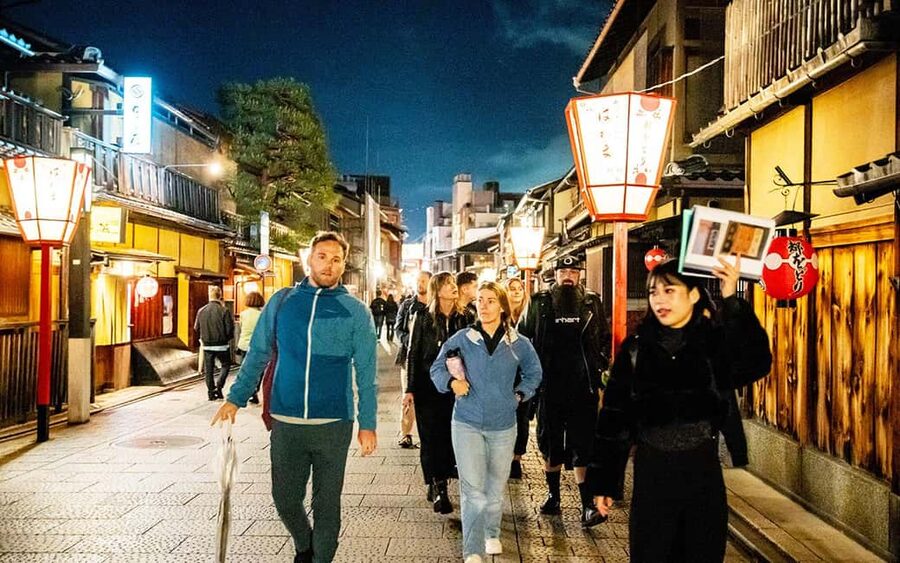
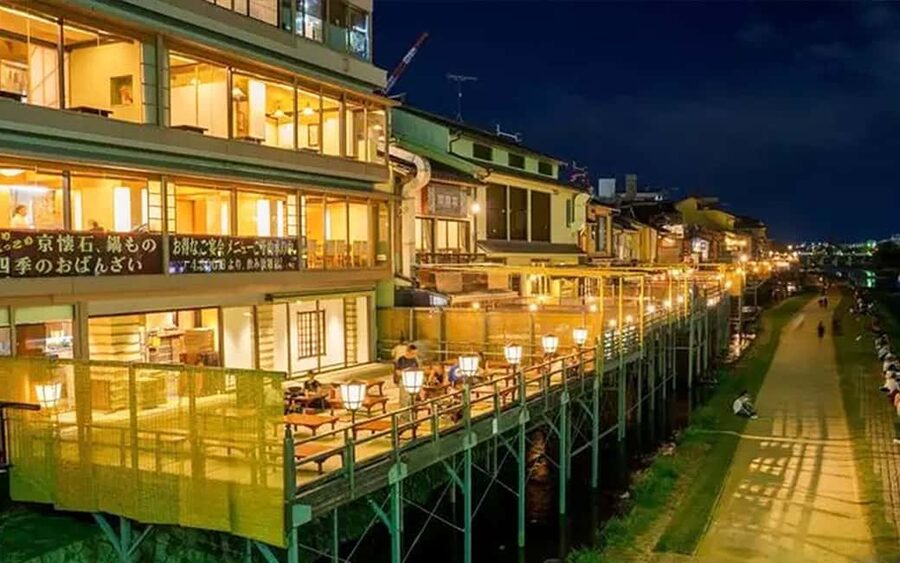
The first attractive section is Gion Shirakawa, where the canal runs beside willow trees, traditional tea houses, and stone-paved paths. This is the sort of place that explains why Gion remains one of Kyoto’s most memorable districts. The buildings are close to the water, the lanes feel intimate, and the setting changes with the light.
Your guide uses this area to explain how Gion works as a traditional entertainment district. You are not simply taking pictures of old façades. You are learning how the streets, tea houses, performers, and evening appointments fit together.
This stop can be popular, especially during the day and during busy travel periods. That is one reason an evening departure may suit you. One visitor who took a later tour liked seeing Gion after the daytime crowds had gone. Still, do not expect complete silence. Gion is a working neighborhood, not an outdoor museum.
Tatsumi-jinja Shrine and small-scale Kyoto
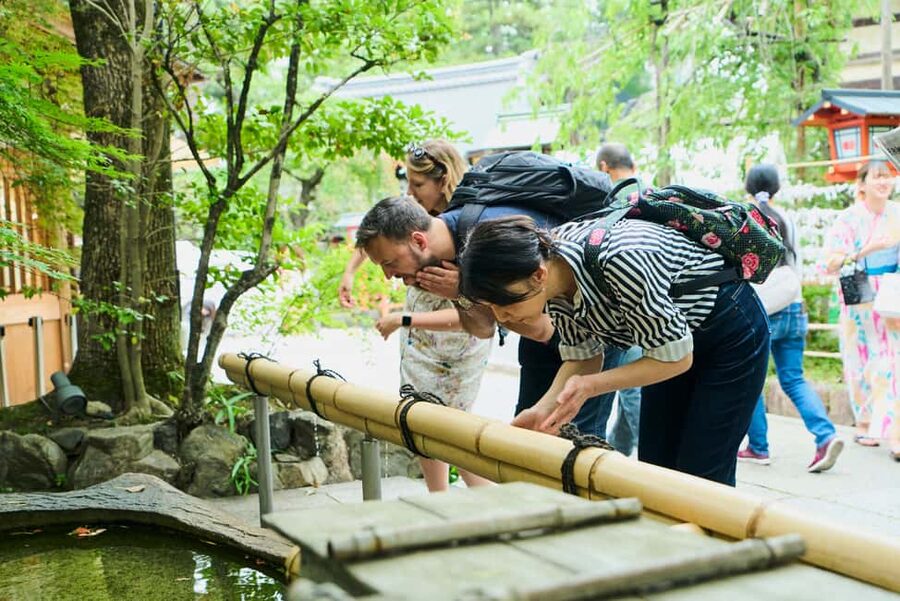
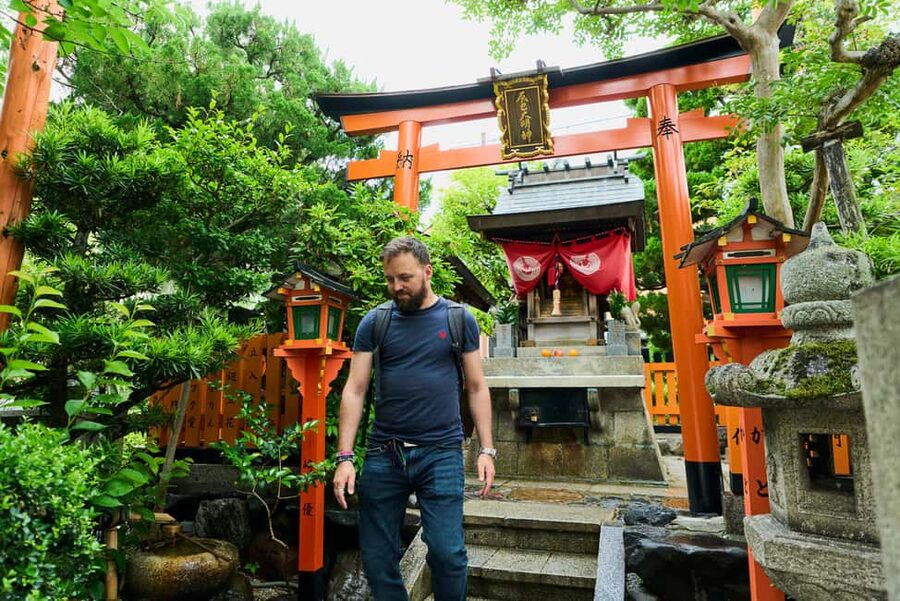
Tatsumi-jinja Shrine offers a smaller, more intimate pause after the canal. The shrine is part of the route for its setting and cultural meaning, and your guide provides context while you walk and take photographs.
Small shrines can be more rewarding with a guide because their importance is not always obvious from the gate or courtyard. You get help noticing the details and understanding how these places fit into local religious life. Keep your voice low and follow the usual etiquette around worship areas.
The tour also includes a shrine described as 1,000 years old. That detail gives the walk a useful sense of time, especially when paired with the Edo-period wooden townhouses along the route. Kyoto’s appeal here comes from layers: religious sites, merchant homes, entertainment streets, and ordinary lanes all sit close together.
Yasaka Shrine and the wider Gion district

Yasaka Shrine is one of the route’s major stops. Here, the scale changes. Instead of a tiny neighborhood shrine, you reach a prominent religious site with a larger approach and more room to pause.
This is a good place to ask questions. The guides have been praised for explaining Japanese words, local customs, and historical details in clear English. Kenta, Wajid, Dan, and Oliver are among the guides specifically praised for making the subject easy to follow, while Uta has been noted for turning each stop into a lively story.
The quality of a walking tour depends heavily on the guide, and that is particularly true here. The route contains plenty to see, but a list of names alone would not be enough. The best guides keep the group moving while giving you a reason to care about each place.
Same place, a different slice of the past:
- Kyoto: Fushimi Inari, Kinkakuji, Bamboo Grove 1 Day Bus Tour
★ 4.8 · 4,316 reviews - World Heritage Shirakawa-go and Experience Tours from Kanazawa
★ 5.0 · 4,049 reviews - Tokyo: Imperial Palace and Shogun Historical Walking Tour
★ 5.0 · 2,251 reviews - World Heritage Kyoto & Nara Uji Authentic Matcha Experience
★ 5.0 · 1,573 reviews
Old townhouses and quiet backstreets
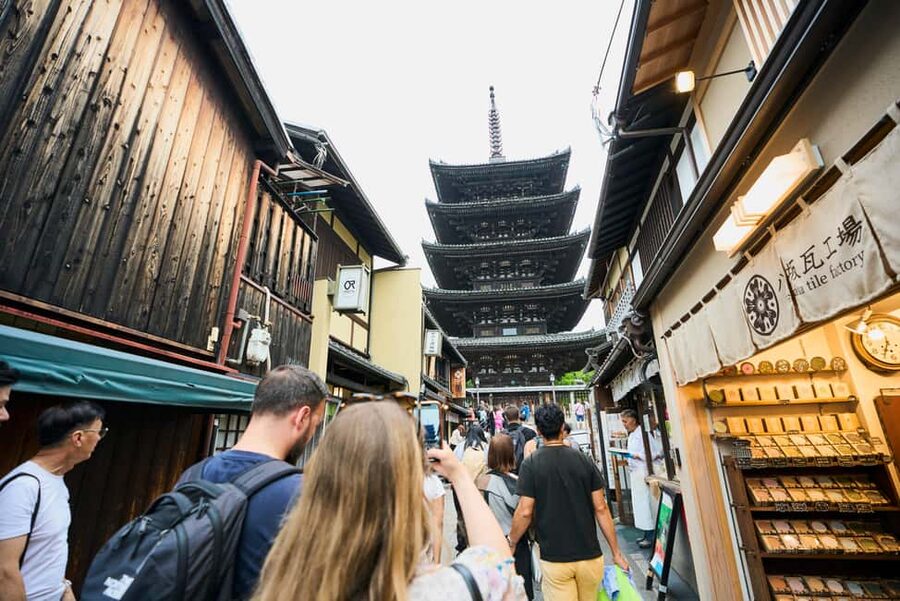
One of the strongest parts of the route is the shift away from the best-known streets. You walk through quieter backstreets and see Edo-period wooden townhouses. These structures offer a more grounded view of Kyoto than a single famous temple does.
The townhouses help you picture how the district developed before modern hotels, shops, and tour groups filled the center. You also get a sense of how narrow streets shape movement through Gion. A guide can point out details you might otherwise pass without noticing.
This is also where the tour earns its low price. For $23, you are paying less for admission to a single attraction and more for orientation, local interpretation, and route planning. You could walk through Gion alone for free, but you would likely miss some of the smaller stops and have fewer answers to your questions.
Ninenzaka and Hōkan-ji Temple
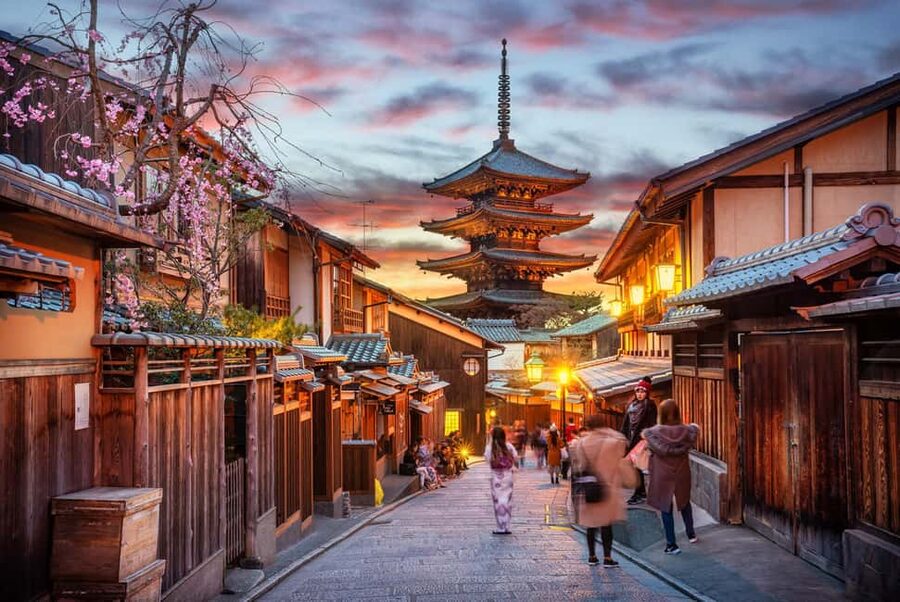
The route continues toward Ninenzaka, a sloping historic lane lined with old-style buildings and shops. It is one of Kyoto’s most photogenic areas, but it can also be crowded and uneven underfoot.
The guide helps you connect Ninenzaka with the larger walk rather than treating it as an isolated photo stop. You see how the lanes lead toward Hōkan-ji Temple and the wider Higashiyama area. If you have already visited this district during the day, the evening atmosphere may show you a different side of it.
Hōkan-ji is recognizable by its tall pagoda and is one of the route’s strongest visual landmarks. The stop is mainly for viewing, explanation, and photographs. The information provided does not promise an extended interior visit, so set your expectations accordingly.
The route includes a fair amount of walking between stops. One visitor described the pace as quick but necessary to fit everything into two hours. That is fair. If you like frequent pauses and a leisurely wander, this may feel brisk. If you want to see a lot in a short time, the pace works better.
Yasui Kompira-Gu and a different kind of shrine visit
Yasui Kompira-Gu provides another change of mood. It is included as a visit rather than a simple pass-by, giving you time to hear about the shrine and look around.
This stop adds variety to the route. You have already seen a canal, a major shrine, old houses, a busy historic lane, and a temple pagoda. Yasui Kompira-Gu keeps the walk from becoming a string of similar photo stops.
As with every religious site, show basic respect. Photography is allowed, but flash photography is not permitted inside temples. Your guide can help you understand where to pause and how to behave without turning the visit into a formal lesson.
Hanamikoji Street and the chance to see a geisha
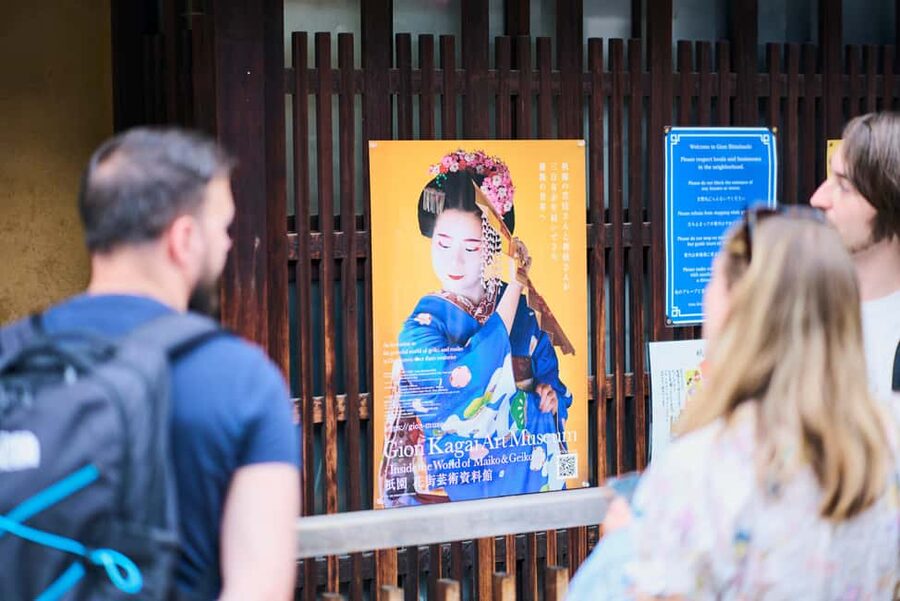
The walk ends on Hanamikoji-dori, the center of Gion’s geisha district. This is the part many people anticipate most, but it is best approached with sensible expectations.
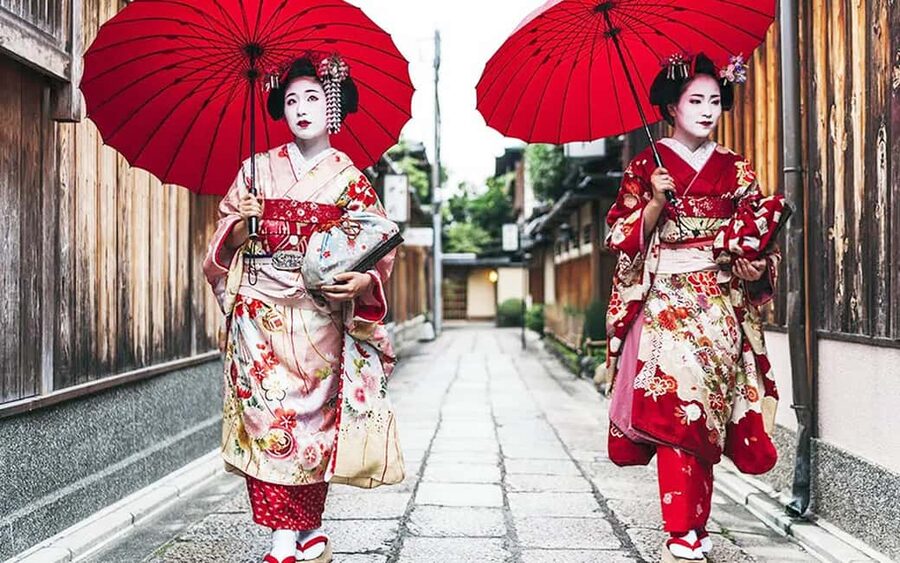
You may see a geisha, more accurately called a geiko in Kyoto, or a maiko on the way to an evening engagement. Several people on the tour have seen one, and one account described seeing both a geisha and a maiko. But appearances depend on timing and chance. The tour cannot guarantee one.
The guide explains the demanding training behind the profession, along with graceful dances, formal hairstyles, and the craftsmanship of the kimono. This context matters. Without it, a quick glimpse can become a shallow photo opportunity. With it, you gain a better understanding of the discipline and work behind the polished appearance.
Please remember that Hanamikoji is a working district. Do not block doorways, follow performers, or use flash. A respectful distance is part of the experience. The tour’s focus on culture is stronger than a simple hunt for a photograph.
Why the guide makes the difference
The route itself is good, but the guide determines how much you take away. The strongest feedback centers on clear explanations, friendly personalities, an easy walking pace, and patience with questions.
Uta has been praised several times for her warmth, cultural insight, and ability to make the walk enjoyable for families. Takumi has been noted for bringing geiko and maiko traditions to life and keeping a larger group engaged. Dan has received praise for historical explanations and restaurant suggestions. Wajid was singled out for excellent English and for explaining Japanese words in an accessible way.
Other guides, including Mai, Alex, Noa, Kenta, Oliver, Ukyo, and Amane, have also been praised for making the walk informative and enjoyable. Since guide assignments can vary, you should book for the route and format rather than expecting one particular person.
Restaurant suggestions are a useful extra. Several guides have shared places to eat after the walk, and that can help you turn the tour into an evening plan. The experience ends on Hanamikoji Street, so you are well placed to continue exploring nearby.
Timing, weather, and walking comfort
The tour takes two hours, but that does not mean it feels effortless. You move through narrow lanes, historic streets, and areas with uneven surfaces. Comfortable shoes are essential.
Bring water and sunscreen in warm weather. One person still enjoyed the walk despite high humidity, but summer conditions can make a quick pace feel harder. Rain does not automatically cancel the experience. The walk continues in wet weather, so carry an umbrella or raincoat.
Evening departures have a particular appeal. Gion can feel more atmospheric after dark, and the streets may be less crowded. On the other hand, low light can make photographs less reliable, and rain can affect the mood. A daytime start may suit you better if you want clearer views and easier photography.
The tour is not suitable for wheelchair users or people with mobility impairments. The route includes walking through backstreets and historic areas, so consider this limitation carefully before booking.
Is $23 a fair price?
Yes, if you want a guided introduction to Gion rather than a private or highly specialized cultural program. At $23 per person, the cost is modest for two hours with an English-speaking local guide and a route that includes several districts and landmarks.
You are not paying for a meal, private access, or guaranteed geisha viewing. You are paying for local explanations, help finding less obvious streets, and a well-planned route through a confusing part of Kyoto. That is good value for a first visit.
The price is especially reasonable if you are new to Kyoto and want to understand the area before returning alone. If you already know Gion well, the tour may feel less essential, though the geisha culture explanations and quieter lanes could still add something.
Who should book this Gion walk?
I would recommend it to first-time Kyoto visitors, couples, families with older children, and anyone curious about traditional entertainment districts. It is also a smart choice for your first evening in Kyoto because it gives you useful orientation and restaurant ideas.
The tour suits people who enjoy history, local customs, photography, and walking. It is less suitable if you want a slow, private experience, guaranteed access inside every temple, or a certain geisha sighting.
Book it if you want a friendly introduction to Gion with plenty of context and a good mix of famous and quieter places. Skip it if mobility is a concern or if a fast two-hour route sounds tiring.
FAQ
How long is the Kyoto Gion tour?
The tour lasts two hours.
What language is the tour conducted in?
The live tour guide speaks English.
How much does the tour cost?
The listed price is $23 per person.
Where does the tour meet?
Meet beside the McDonald’s Shijo Ohashi store at 105-1 Hashimoto-cho, Shimogyo-ku, Kyoto-shi, Kyoto. Look for a guide holding a Local Guide Stars sign.
Can I see a geisha on this tour?
You may see a geisha or maiko traveling to an evening engagement, but a sighting is not guaranteed.
Which major places are included?
The walk includes Gion Shirakawa, Tatsumi-jinja Shrine, Yasaka Shrine, Ninenzaka, Hōkan-ji Temple, Yasui Kompira-Gu Shrine, and Hanamikoji-dori.
Is photography allowed?
Photography is allowed, but flash photography is not permitted inside temples.
What should I bring?
Wear comfortable walking shoes and bring water and sunscreen. If rain is expected, carry an umbrella or raincoat.
Is the tour suitable for wheelchair users?
No. The tour is not suitable for wheelchair users or people with mobility impairments.
Just added around Japan
- Kyoto: Historic Higashiyama Walking Tour★ 5.0 · 31 reviews
- Kyoto: Private 2.5 Hour Historical Walking Tour★ 4.9 · 121 reviews
- Kyoto/Osaka: Kobe & Himeji Journey Through Culture & History★ 3.7 · 18 reviews
- Kyoto/Osaka: Kyoto and Nara Sites & History Day Trip★ 4.5 · 32 reviews
- Kyoto Early Bird English Tour: Fushimi-Inari and Arashiyama★ 5.0 · 17 reviews
- Kyoto: Nijo Castle World Heritage Guided Tour with Admission★ 4.9 · 37 reviews
- Kanazawa: World Heritage Shirakawa-go & Two Local Experience★ 4.9 · 274 reviews
- Historic Kanda Sake Tasting at Tokyo’s Oldest Shop (1596)★ 4.9 · 33 reviews
Local Culture & Traditions Tours, compared.

Amsterdam Food and Cultural Tour with Tastings
Read our review →
Sevilla Food Tour: Tapas, Wine, History & Traditions
Read our review →
Tromsø: Reindeer Camp and Sami Cultural Tour with Lunch
Read our review →
Half Day Dominican Republic Cultural Tour : Small Group
Read our review →
Ultimate Melbourne Walking Tour: History, Laneways & Culture
Read our review →
Tromsø: Sámi Reindeer Sledding and Sami Cultural Tour
Read our review →
Kyoto Gion: 2-Hour Geisha Culture & History Walking Tour
Read our review →
Marrakech Historical and Cultural Tour – Half Day City Tour
Read our review →Browse the lists this tour appears in