

Review · TUSCANY
Essential Florence Walking Tour to discover its history
Florence rewards slow walking. This three-hour tour links Roman origins, Medici power, Renaissance art, churches, palaces, and artisan streets in a clear route through the old center. I especially like the mix of famous sights and small details, from Orsanmichele’s outdoor statues to Dante’s home and the workshops of artists.
I also like the gelato tasting and the supplied headsets, useful when the streets get noisy. The main consideration is physical: this is a full walking tour over cobblestones with possible steps, and it is not suitable for children under eight, wheelchair users, people with mobility limits, recent surgery, or back problems. Wear proper walking shoes, not sandals or flip flops.
Key Points Before You Book
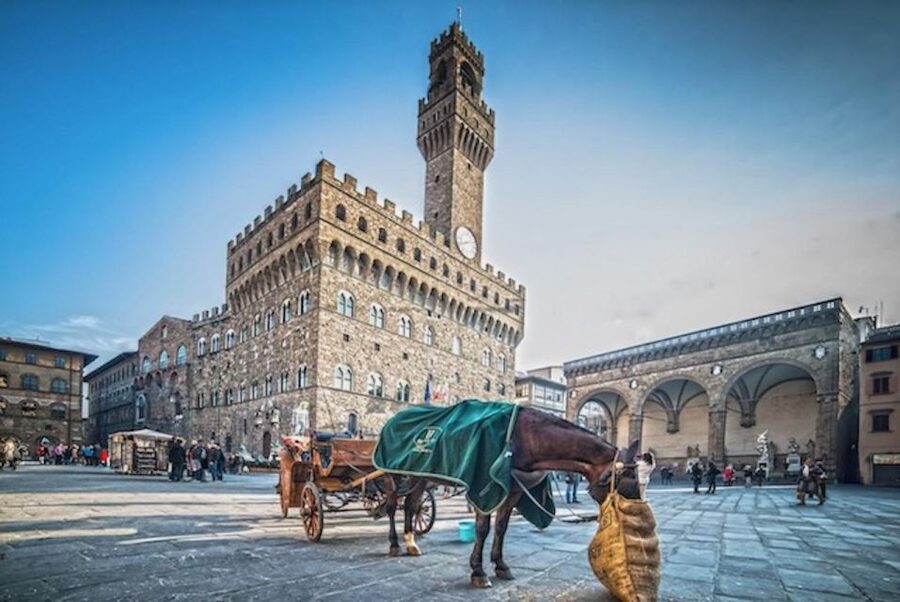
- Three hours on foot: The route covers central Florence, the religious quarter, the Arno bridges, and Oltrarno.
- Medici stories with real context: You learn how money, politics, religion, art, and family power shaped the city.
- Many outdoor sights: Most major monuments are viewed from outside, with Santa Trinita Church offering an interior look at Ghirlandaio’s frescoes.
- English only: The live guide and audio support are both in English.
- Gelato included: The tasting adds a welcome food break to a history-heavy walk.
- Good practical value at $41: You receive three hours with a local guide, headsets, and gelato, without paying museum admission fees.
Starting in Piazza della Repubblica
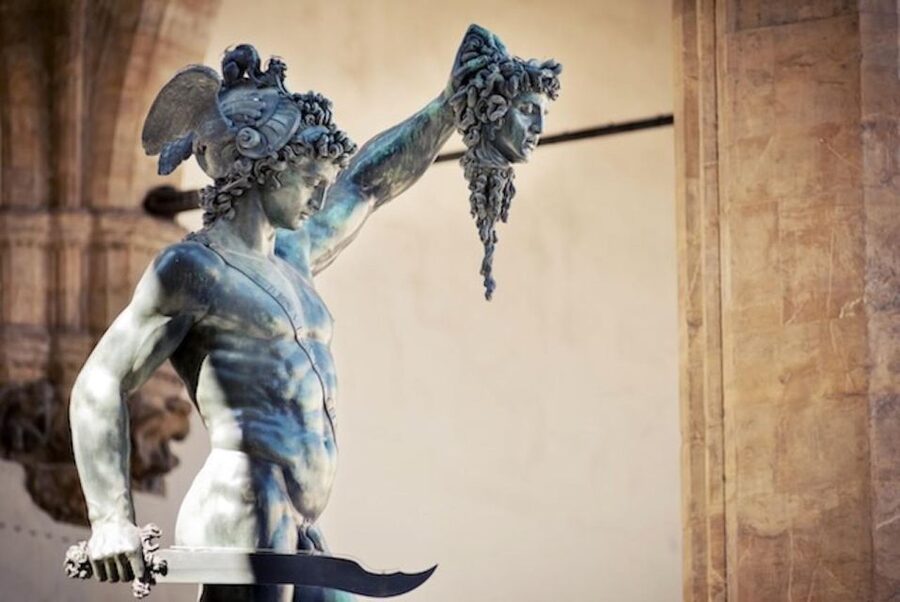
The tour begins in Piazza della Repubblica, a useful place to start because it introduces Florence before the Renaissance took over its image. Here you hear about the Roman foundation of the city and begin to understand why Florence developed where it did.
From this opening point, the guide moves through the medieval city and explains how Florence gained wealth and influence. That background matters. Without it, the palaces, churches, and family names can blur into a parade of pretty stone buildings. With it, you can read the city as a record of commerce, civic pride, religion, and political competition.
The storytelling is a major part of the experience. The route includes tales of murder, betrayal, powerful families, and ambitious artists. This should suit you if dates and names stick better when attached to human drama. It is less suitable if you prefer a quiet stroll with only a few broad facts.
Past guides have included Becky, Lisa, and Andrea. Becky receives especially warm praise for her art history background, lively explanations, and ability to point out details that are easy to miss. Guide assignments can vary, but the experience clearly depends heavily on who leads your group.
More History Walking Tours in Italy
- Venice: City Center Historical Guided Walking Tour
★ 4.2 · 1,873 reviews - Palermo: Street Food and History Walking Tour
★ 4.9 · 1,486 reviews - Verona: History and Hidden Gems Guided Walking Tour
★ 5.0 · 1,379 reviews
Medieval Streets and Renaissance Architecture
One strength of this walk is the way it lets you compare Florence’s building styles in a short distance. You see medieval tower houses, Renaissance palaces, religious buildings, and later streetscapes without needing transport between them.
The guide explains how architecture reflects power. Tower homes suggest an earlier age of family rivalry and defense. Palaces show a more polished form of wealth, where a family wanted to look stable, educated, and fit to rule. This is the sort of explanation that helps you recognize the difference between a building that simply looks old and one designed to project political strength.
Orsanmichele is one of the route’s most rewarding outdoor stops. Its famous statues, including works by Donatello and Ghiberti, show how Florence placed major art in public view. You do not need to enter a museum to begin seeing the city’s art. A guide can point out why these sculptures matter and help you connect them to the guilds and civic life of Florence.
The outdoor format keeps the tour moving, but it also means you should set your expectations correctly. This is not a museum tour with long indoor viewing time. You will see many important places from the street, then decide later which interiors deserve a separate visit.
Dante, the Duomo, and Florence’s Religious Center
A stop near Dante’s house adds a personal note to the tour. Florence is often presented through the Medici and the Renaissance, but Dante helps take you back to an earlier world of poetry, politics, faith, and rivalry. The guide’s job here is to connect one person’s story to the city around him.
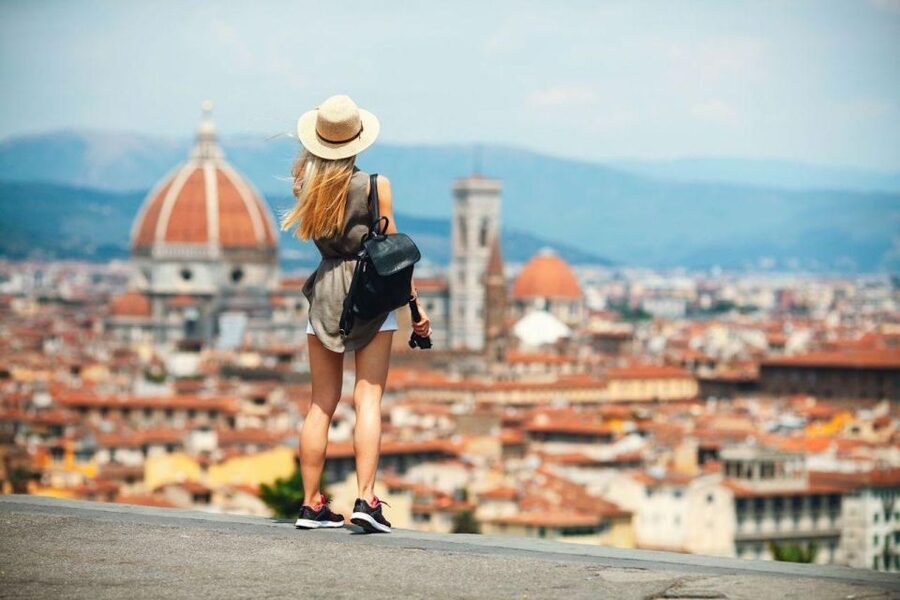
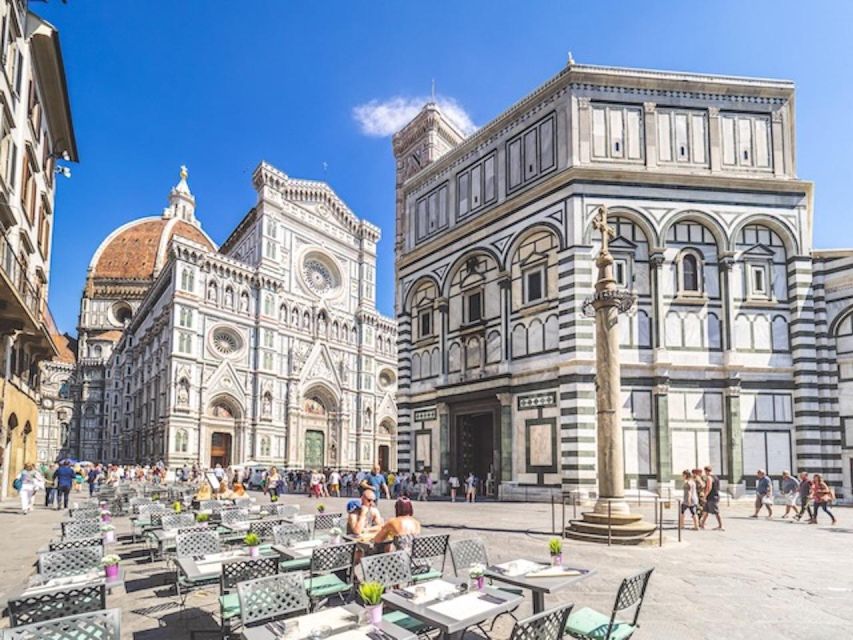
The religious center follows, with the Duomo, Baptistery, and Campanile viewed from outside. This is one of Florence’s most powerful urban scenes, and the guide can help you see more than the familiar dome. You learn how religion shaped daily life and public identity, rather than treating the cathedral complex as a single photo stop.
Because the buildings are viewed externally, this tour will not replace a ticketed visit to the cathedral, dome, Baptistery, or bell tower. That is not a flaw, but it is an important distinction. The walk gives you orientation and context, while a separate visit gives you time inside.
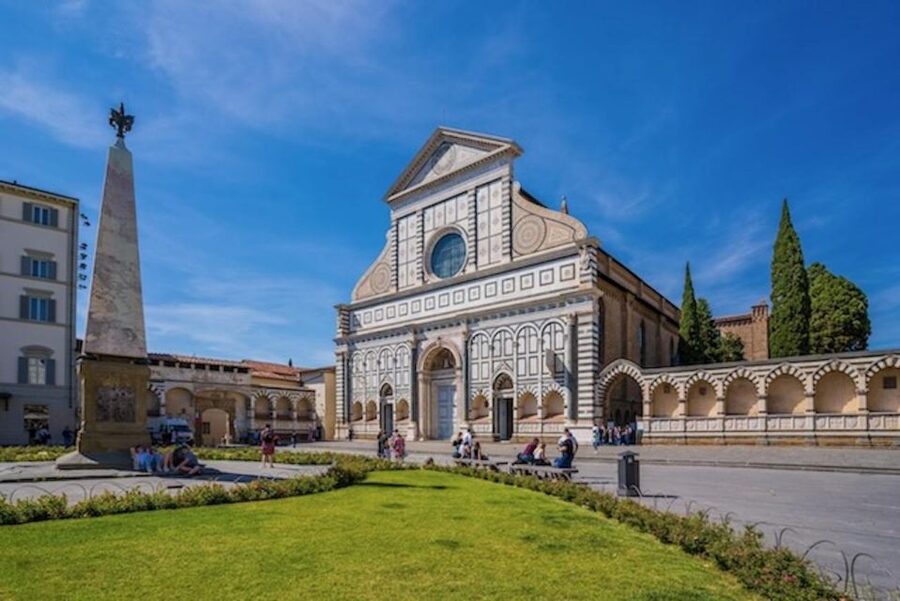
The route also passes Santa Maria Novella Church from outside. Its facade and position near the city’s main transport area make it an easy sight to overlook when you are arriving or leaving Florence. A guide can turn that passing view into part of the city’s larger story.
Palaces Along Via Tornabuoni
Via Tornabuoni brings a different side of Florence. Today it is known for designer shopping, but its buildings also reveal the city’s long connection between money, taste, and status.
You pass the Rucellai Palace and Strozzi Palace, both strong examples of Renaissance architecture. These are not just attractive facades. They help explain how Florentine families used urban palaces to show refinement and influence without building isolated castles.
Via Maggio adds another layer. It is associated with antique shopping and gives you a look at a street with a different feel from the luxury storefronts of Via Tornabuoni. I like this contrast because it keeps the walk from becoming a single-note tour of grand monuments. Florence’s character comes from the meeting of formal palaces, commercial streets, churches, workshops, and ordinary lanes.
Headsets are included, which is useful here. City streets can be noisy, and a guide’s explanation about a facade or side street is easy to lose when a group stops beside traffic or other tour groups.
Same place, a different slice of the past:
- Colosseum: Underground and Ancient Rome Tour
★ 4.7 · 12,691 reviews - Rome: Colosseum with Arena, Roman Forum and Palatine Guided Tour
★ 4.0 · 5,598 reviews - Venice: St. Mark’s Basilica Guided Tour & VR History Intro
★ 3.9 · 4,880 reviews - Colosseum with Arena, Roman Forum and Palatine Hill Guided Tour
★ 4.5 · 3,526 reviews
Santa Trinita and Ghirlandaio’s Frescoes
Santa Trinita Church is one of the more valuable stops because the tour includes an interior visit to see the frescoes by Ghirlandaio. After so many outdoor sights, stepping inside gives you a chance to focus on art in a quieter setting.
The frescoes also connect neatly with the tour’s wider interest in Renaissance painters and workshops. You are not only hearing the names of artists. You are seeing how painting, religious patronage, family prestige, and church decoration worked together.
Do not expect a long museum-style examination of every detail. The full route has many stops, and the church visit is one part of a three-hour walk. Still, it gives the tour a useful balance. You get architecture from the street, sculpture in public spaces, and painted art inside a church.
The guide may also explain details that you would walk past on your own. One of the strongest themes from the tour’s feedback is that the explanations make familiar buildings easier to read. That is a real benefit in Florence, where a first visit can bring visual overload very quickly.
Crossing Santa Trinita and Ponte Vecchio
The walk continues across the Santa Trinita and Ponte Vecchio bridges. These crossings are scenic, but they also help you understand how the Arno divides and connects Florence.
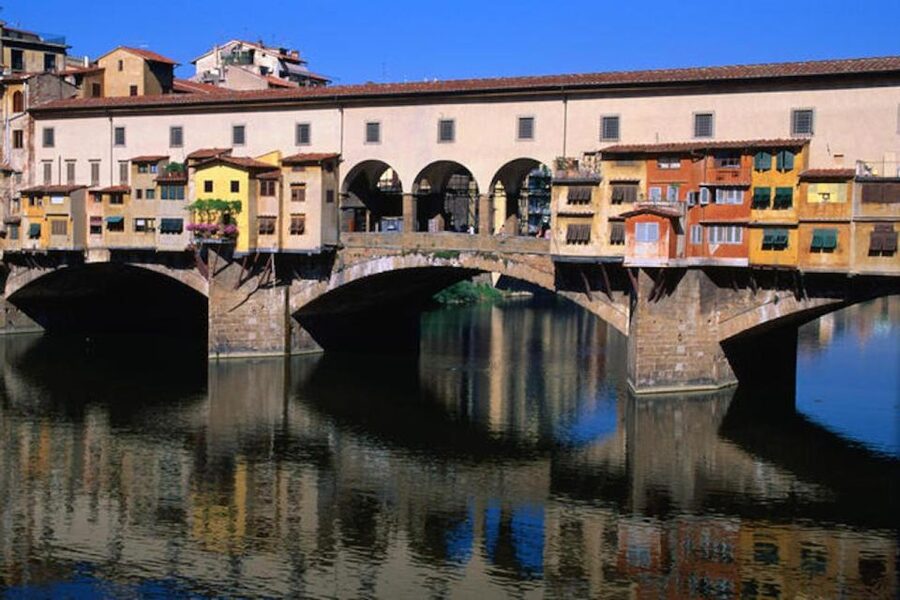
Ponte Vecchio is the more famous of the two, yet the route does not treat it as a quick backdrop for photographs. You hear about the Vasari Corridor, the elevated passage associated with the Medici, and how the bridge fits into the city’s political and architectural story.
The Vasari Corridor is particularly interesting because it shows how power can be built into a city’s structure. It was not simply a decorative feature. Its presence reminds you that Florence’s rulers wanted private movement and control while remaining connected to the public city below.
The bridges can be busy, and the cobbled surfaces require attention. Keep your pace steady and leave room for other people crossing. You will get more from the guide if you focus on the explanation instead of trying to photograph every angle at once.
Oltrarno, Pitti Palace, and Santa Felicita
Across the river, the tour enters Oltrarno, where cobblestone streets and artisan workshops give the walk a more local, hands-on character. The route includes notable churches, Medici residences, palaces, and squares, but it also leaves room for the feel of working streets and craft traditions.
Pitti Palace is viewed from outside. As a former Medici residence, it gives the guide another chance to explain the family’s reach and changing fortunes. The palace is grand, but its importance becomes clearer when you connect it to the family’s movement across Florence and its use of architecture as a public statement.
Santa Felicita Church is another useful stop. It is one of Florence’s oldest churches, which gives you a link to a period before the city’s best-known Renaissance monuments. That broader timeline is one of the tour’s better features. You are not seeing Florence as a single Renaissance snapshot. You are watching it change over many centuries.
Oltrarno is also where the tour feels less like a checklist of central landmarks. The artisan workshops and quieter cobbled streets give the route variety. Still, the walking surface can be uneven, and there may be steps. If your knees, back, or balance are a concern, this is a serious point to consider.
Gelato, Headsets, and the $41 Price
At $41 per person, the tour offers a reasonable deal if you want a structured introduction to Florence. The price covers three hours with a local guide, headsets, and an Italian gelato tasting. It does not include admission to the major museums or interiors viewed only from outside, so you should budget separately for those if they are part of your plans.
The value comes from the connections between sights. You could walk past the Duomo, Ponte Vecchio, palaces, churches, and Dante’s house on your own, but you would not necessarily understand how they fit together. The guide supplies that framework in a single morning or afternoon.
The gelato stop is a small but welcome touch. It breaks up a history-focused route and gives you a taste of an Italian staple without turning the tour into a food excursion. You should book this for Florence’s history, art, and streets, with gelato as a pleasant extra.
Free cancellation up to 24 hours before the start and the option to reserve now and pay later make the booking less rigid. Starting times depend on availability, so check the schedule before you build the rest of your day around it.
Who Will Get the Most From This Walk
I would choose this tour for a first or early visit to Florence, especially if you want the city explained before tackling museums on your own. It is also a strong choice if you enjoy stories about political families, artists, religious life, and old scandals.
It suits adults and children eight or older who can walk for three hours. English speakers will get the full benefit, since the live tour and audio support are in English only.
You should think twice if you dislike group walking, need frequent rest, or want long indoor visits. The route includes possible steps and uneven streets, and it does not accept wheelchair users or people with mobility impairments. It is also not suitable for people with back problems or recent surgery.
Comfortable clothes and sturdy shoes are essential. Sandals and flip flops are not allowed, and they would be a poor choice for cobblestones in any case.
Should You Book the Essential Florence Walking Tour?
Book it if you want a lively historical map of Florence, not just a list of photo stops. The strongest part is the guide-led storytelling, with Becky, Lisa, and Andrea all praised for clear, friendly explanations and engaging delivery. Art history background is especially useful here because the city’s statues, churches, and palaces can otherwise feel like a flood of names.
At $41, the tour is good value for a three-hour introduction that includes gelato and headsets. Just remember that most sights are viewed from outside, Santa Trinita is the notable interior visit, and museum admission is not part of the price.
I would skip it if your mobility makes a long cobblestone walk difficult, or if you want to spend most of your time inside the Duomo and museums. For an active visitor who wants Florence’s Medici stories, Renaissance art, bridges, churches, and streets to make sense, this is a smart first step.
FAQ
How long does the Essential Florence Walking Tour last?
The tour lasts three hours.
What language is the tour offered in?
The live tour is offered in English, and the included audio support is also in English.
Where does the walking tour begin?
The tour begins in Piazza della Repubblica.
Is gelato included?
Yes. An Italian gelato tasting is included in the tour.
Are headsets provided?
Yes. Headsets are included so you can hear the guide clearly.
Which Florence sights are viewed from outside?
The route views Orsanmichele, Dante’s house, the Duomo, Baptistery, Campanile, Santa Maria Novella Church, Rucellai Palace, Strozzi Palace, Pitti Palace, and the Vasari Corridor from outside.
Is there an interior church visit?
Yes. The tour includes a visit inside Santa Trinita Church to admire frescoes by Ghirlandaio.
Who should not take this tour?
The tour is not suitable for children under eight, people with back problems, people with mobility impairments, wheelchair users, or people who have had recent surgery.
Just added around Italy
- Florence: Fashion History Guided Walking Tour & Museum Visit★ 4.2 · 72 reviews
- Florence Medici Bike Tour – Cycle Through History and Power★ 4.2 · 23 reviews
- Discover Herculaneum: A guided tour of the ancient Roman city★ 4.9 · 34 reviews
- Day drinking in Rome – Scandalous Roman History★ 4.8 · 31 reviews
- Communal dinner in an ancient Tuscan farmhouse★ 4.2 · 29 reviews
- Cooking Class in a Historic Home in the Heart of Brindisi★ 4.7 · 28 reviews
- Rome: Colosseum Arena and Ancient Rome Guided Tour★ 4.8 · 23 reviews
- Rome: Colosseum and Ancient Rome Access with Optional Arena★ 4.5 · 198 reviews
History Walking Tours, compared.
History and Hauntings of Salem Guided Walking Tour
Read our review →
Freedom Trail History Small Group Walking Tour
Read our review →
Historic Charleston Guided Sightseeing Walking Tour
Read our review →
Tapas Walking Tour with Food, Wine, and History
Read our review →
Savannah History and Haunts Candlelit Ghost Walking Tour
Read our review →
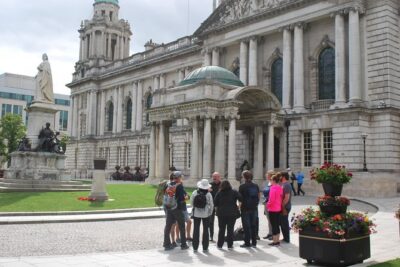
A History of Terror – Belfast City Centre Walking Tour
Read our review →Browse the lists this tour appears in