
Review · FLORENCE
Basilica Santa Croce: Walking Among the Masters of Florence
Santa Croce rewards a slower look. This one-hour tour makes the vast basilica easier to understand, with an official guide explaining Giotto’s frescoes, Donatello’s crucifix, Brunelleschi’s chapel, and the tombs of figures such as Michelangelo, Galileo, Machiavelli, and Rossini. I especially like the art-by-art explanations and the chance to see the church, crypt, chapels, bell tower area, and cemetery in one visit.
I also like the small-group limit of 20 people and the radio system, which should help you hear the guide inside the large church. The main drawback is the price, $58.05 per person, for a tour lasting about an hour. One review also reported difficulty understanding a newer guide’s English, so the experience can depend greatly on who leads your group.
Key points to know before booking
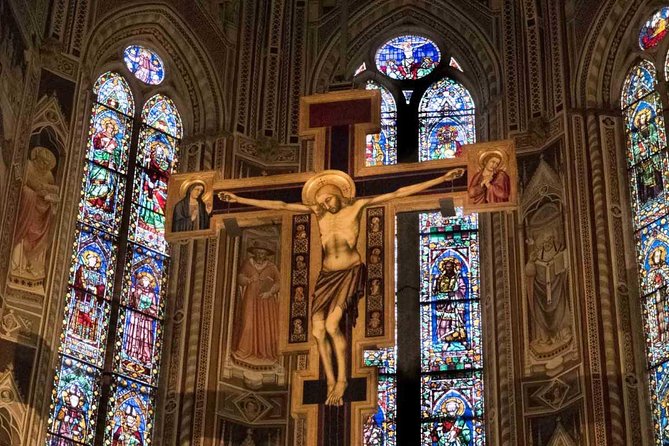
- Giotto and Donatello take center stage: You’ll see important works in the Bardi and Peruzzi Chapels, along with Donatello’s celebrated crucifix.
- Famous tombs fill the church: Michelangelo, Galileo, Machiavelli, and Rossini are among the figures commemorated here.
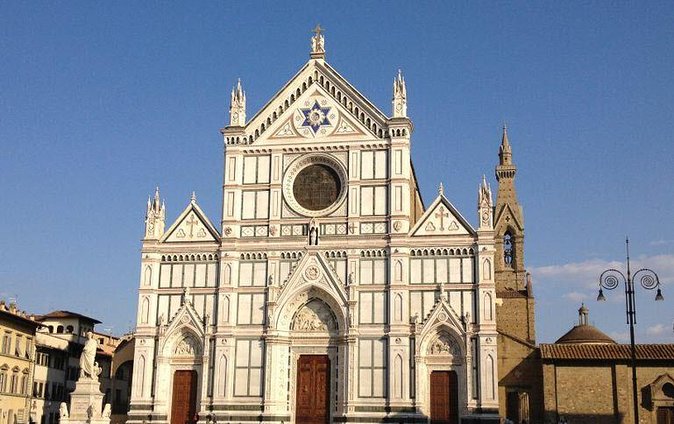
- The tour starts in Piazza di Santa Croce: The square hosts Florence’s Calcio Storico Florentino in June.
- The 1966 flood is part of the story: Damaged paintings and restoration work help explain why some works look different today.
- Dress rules are strict: Knees and shoulders must be covered for everyone entering the church.
- Plan to arrive early: Late arrivals cannot join, receive a refund, or reschedule.
Why Santa Croce deserves time in Florence
Florence has no shortage of grand churches. Santa Croce earns its place on your list because it brings together major art, public memory, religious tradition, and the burial monuments of famous Italians in one enormous setting.
The building is not just a quiet place of worship. It is also a record of Florence’s cultural life. You can look from a fresco to a tomb, then from a sculpted memorial to a chapel designed by one of the city’s leading architects. Without help, it is easy to see plenty and understand very little.
That is where this tour makes sense. The guide gives you a route through the church and points out details you might otherwise pass. Several guides received especially warm praise for combining facts with humor and clear storytelling. Chiara Conti was described as patient and kind, while Jenny brought a personal connection to the neighborhood after growing up nearby. Matteo was praised for presenting the church almost like a lively history lesson.
The experience is best for you if you like context. If you only want a quick look inside the church, you can probably manage without a guide. But if names such as Giotto, Donatello, Brunelleschi, Galileo, and Michelangelo mean something to you, the explanations add real value.
More Architecture and Landmark Tours in Italy
- Historical Guided Tour of Florence’s Iconic Cathedral
★ 3.5 · 88 reviews - Private Guided Visit Florence’s Santa Croce Basilica and Ancient Leather School
★ 5.0 · 19 reviews - Venice: St. Mark’s Basilica Guided Tour & VR History Intro
★ 3.9 · 4,880 reviews
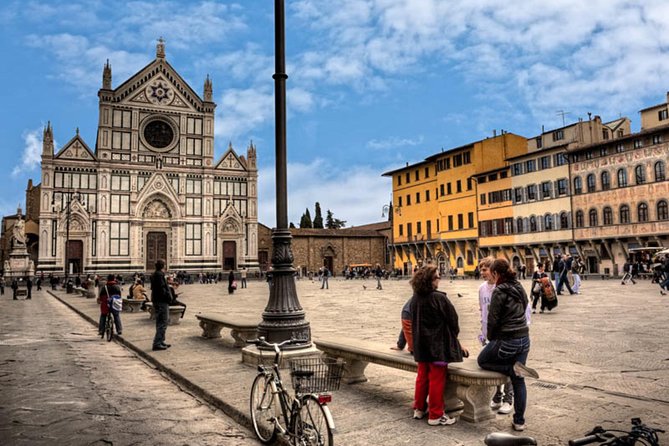
Starting at Dante’s monument in Piazza di Santa Croce
The meeting point is the Monument to Dante Alighieri in Piazza di Santa Croce. Give yourself extra time to find the correct spot, especially if you are arriving by taxi or on foot from another part of central Florence.
The square itself is worth noticing before you enter. Each June, it becomes the setting for Calcio Storico Florentino, Florence’s rough and highly traditional soccer game played in medieval costume. Your guide uses the square to place Santa Croce within Florentine life, rather than treating the church as an isolated museum.
This opening also gives you a chance to settle in and identify your guide. One practical complaint was that the guides do not always carry the flags or pennants some booking information may suggest. Because of that, look for the exact meeting point and allow enough time to locate the group.
The tour requires at least two people to operate and accepts a maximum of 20. A smaller group can make it easier to ask questions, though the radio system matters when the full group is present.
The church interior and its major works
Santa Croce can feel surprisingly large once you step inside. The scale makes it easy to miss the details that give the church its character, especially if you are trying to follow a guidebook while keeping track of your route.
Your guide will explain the church’s artistic program, including the frescoes in the Cappella Maggiore. The paintings by Gaddi, dated to around 1380, tell the story of Santa Croce. They are not simply decorative panels. They help you understand how the church used images to teach religious stories to people who could not read.
The Bardi and Peruzzi Chapels contain frescoes by Giotto showing episodes from the lives of St. Francis and St. John the Evangelist. These chapels are among the tour’s most important stops. The guide can direct your eyes to individual scenes and explain why Giotto’s work mattered so much to later Italian art.
I would not rush these sections. Santa Croce rewards you when you stop looking at the whole wall and focus on faces, gestures, and the arrangement of each scene. The guide’s commentary is especially useful here because a quick glance may not reveal what makes the frescoes important.
Donatello’s crucifix is another key point. It is described as one of the church’s Renaissance treasures, and the guide explains its place in the development of sculpture. This is a good example of why a tour can help. You are not only seeing a religious object. You are learning how an artist treated the human body, emotion, and suffering in a period of major artistic change.
Michelangelo, Galileo, Machiavelli, and Florence’s famous dead
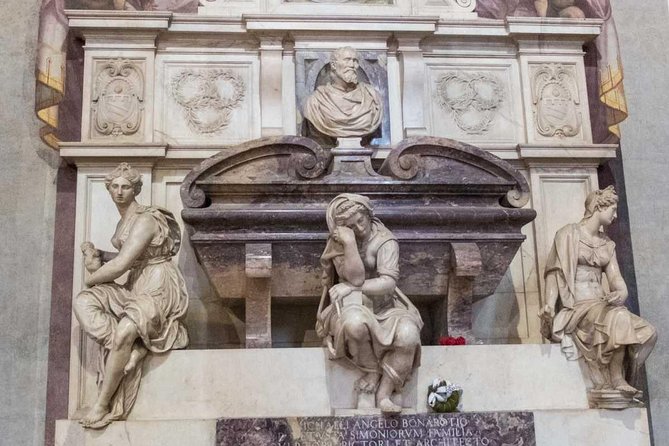
One of Santa Croce’s strongest draws is its collection of tombs and memorials. The church is associated with Michelangelo, Galileo, Machiavelli, and Rossini, among other major figures.
The tombs are not all alike. Some are imposing monuments. Others are quieter memorials that reward a closer look. Together, they turn the church into a kind of civic hall of fame, though the setting remains religious rather than theatrical.
Your guide explains who these people were and why their presence in Santa Croce matters. That context is important. Without it, you may see a grand tomb and move on. With it, the church becomes a place where Florence remembers artists, scientists, writers, and political thinkers.
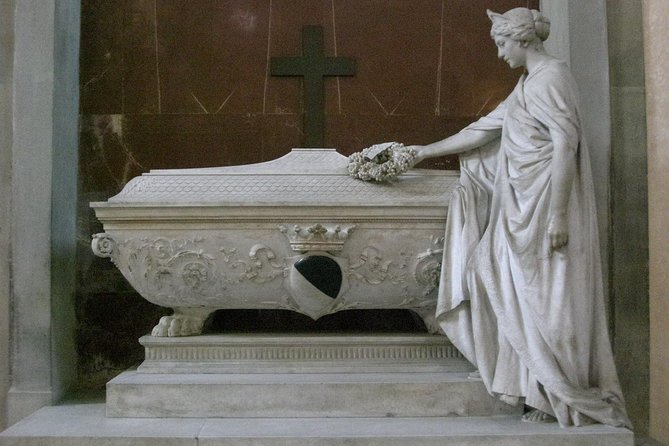
The memorial to Giovanni Battista Niccolini sits to the left of the entrance. This 19th-century monument is especially interesting because it served as an inspiration for the Statue of Liberty. It is an easy detail to miss if you enter quickly, making it one of the tour’s useful small discoveries.
The connection between the church and its memorials also gives the tour a human scale. You are not only studying art on walls. You are considering how Florence chose to honor people who shaped Italian culture.
More History Walking Tours in Italy
- Florence: Fashion History Guided Walking Tour & Museum Visit
★ 4.2 · 72 reviews - Florence Highlights: Guided Walking Tour of the Historic Center
★ 5.0 · 27 reviews - Art and History in Florence: Small Group Walking Tour
★ 5.0 · 25 reviews - Essential Florence Walking Tour to discover its history
★ 5.0 · 21 reviews
Brunelleschi’s chapel and the church’s architecture
The tour also covers Brunelleschi and his Chapel of Fools, described as an example of architectural harmony. The chapel gives you a chance to shift your attention from painted surfaces to space, proportion, and design.
Brunelleschi is closely linked with Florence’s Renaissance architecture, and the guide explains how the chapel fits into that story. You will likely get more from the visit if you pay attention to the shape of the space, the balance of its parts, and the way the design guides your eye.
This is one area where the quality of the guide matters most. A skilled guide can show you why the chapel feels orderly and balanced. A rushed presentation may leave you with little more than a name and a famous architect.
Several guides were praised for keeping a good pace while still allowing questions. That balance matters in a one-hour tour. You want enough detail to understand the works, but not so much that you spend the entire visit listening with your back turned to the church.
The flood of 1966 and the work of restoration
Santa Croce also carries visible reminders of Florence’s devastating 1966 flood. Some paintings were damaged, and restoration work followed. The tour includes an explanation of the damage and the effort to preserve the church’s art.
This part of the visit adds a modern chapter to a place often presented only through medieval and Renaissance history. You can see how fragile old frescoes and religious works are, even inside a solid stone church.
The flood story is valuable because restoration is not simply a matter of cleaning a painting. Experts must decide how to repair damage while preserving the original work. Your guide can help you recognize areas affected by the disaster and explain why some sections may look different from others.
If conservation interests you, this may become one of the most memorable parts of the tour. It also makes clear that Santa Croce is not frozen in the past. The church continues to require care, money, and careful decisions.
Crypt, cemetery, bell tower, and sixteen chapels
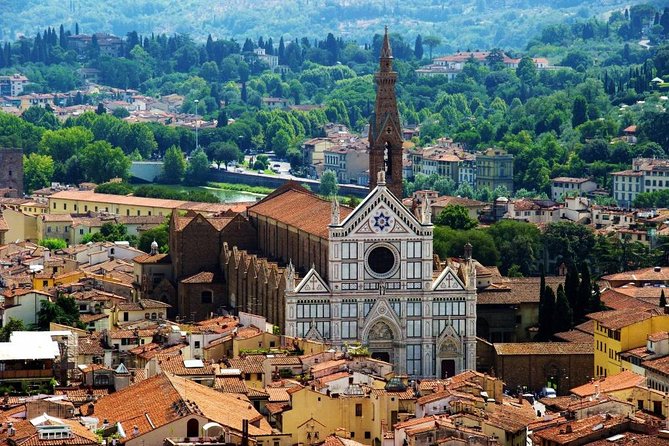
After the main interior, the route includes the crypt, cemetery, bell tower area, and 16 chapels. The exact amount of time spent at each point may depend on the group and the guide, so you should not assume that every section receives equal attention.
The cemetery and memorial spaces add another layer to Santa Croce. The church is famous for its tombs, but the surrounding burial areas help show how the complex developed as a place of remembrance.
The crypt offers a change in atmosphere from the high main church. If you prefer a quick, focused tour, this extended route may feel like a lot to cover in an hour. One rating noted that the visit ran longer than expected, with the final section among the most interesting. That suggests you should keep a little flexibility in your schedule rather than booking a tight connection immediately afterward.
At the end, you have the opportunity to return to anything you want to inspect again. That is useful because the tour moves at a steady pace, and you may want a second look at a tomb, fresco, or sculpture once the guide has explained it.
How much value do you get for $58.05?
At $58.05 per person, this is not a budget entry ticket. The fee includes an official certified guide, a radio system, and reserved admission. It does not include transportation, food, drinks, or hotel pickup.
The value depends on how you use the hour. If you enter Santa Croce alone and simply walk through, the ticket and reserved access may be enough for you. If you want the church’s works explained in a clear order, the guide can save you time and help you notice far more.
I think the price is easier to justify for first-time visitors who want a structured introduction to Florentine art. It is harder to justify if you already know Santa Croce well or prefer to explore at your own pace.
The strongest reports describe guides who were warm, witty, and able to answer questions. Matteo, Elena, Hillary, Raphael, Sarah, Marcello, Guido, and Helena were all praised for clear explanations or engaging delivery. One guide received criticism for poor English, and the operator identified that person as a newer guide rather than a regular member of the team. That isolated warning is worth keeping in mind, since language clarity is central to a short guided visit.
Timing, clothing, and arrival advice
The tour operates in all weather, so dress for the conditions outside. You will also need suitable clothing inside the church: no shorts or sleeveless tops, and knees and shoulders must be covered for both men and women.
This rule is enforced at places of worship. If you arrive dressed inappropriately, you may be refused entry, and the tour will not be rescheduled or refunded. A light layer or longer trousers can solve the problem without much fuss.
Arrive before the scheduled start. If you arrive late, you cannot join the group, receive a refund, or move the booking to another time. This is especially important if you are coming from another part of Florence and are relying on a taxi.
The tour has free cancellation if you cancel at least 24 hours before the start time. Changes or cancellations inside that window are not refunded. The operator can also cancel if the minimum number of participants is not reached, in which case you are offered another option or a full refund.
Who should book this Santa Croce tour?
I would choose this tour if you want a short but serious introduction to one of Florence’s most important churches. It suits visitors who enjoy art, religious history, architecture, famous memorials, and stories about how old buildings survived modern disasters.
It also works well as an add-on to a busy Florence day. One hour is easy to fit between other sights, though I would leave extra time in case the visit runs over. The tour is especially useful if you do not already have a strong grasp of Renaissance art.
You may want to skip it if your schedule is packed, you dislike guided visits, or the $58.05 fee feels too high for an hour. You should also think twice if you cannot meet the dress code or are likely to arrive late.
Final verdict: book it for context, not just entry
Santa Croce is worth seeing even without a tour, but the right guide changes what you notice. The strongest part of this experience is the connection between the frescoes, sculptures, chapels, tombs, flood damage, and Florence’s wider story.
I would book it if this is your first visit to Santa Croce and you want the major works explained without spending half a day on research. Look for an early arrival, dress conservatively, and keep your schedule loose after the tour.
At nearly $60, it is not the cheapest way into a church. But for an art-focused introduction led by a strong guide, it can be a worthwhile use of one hour in Florence.
FAQ
Where does the Santa Croce tour begin?
The tour begins at the Monument to Dante Alighieri in Piazza di Santa Croce, Florence.
Where does the tour end?
The activity ends back at the meeting point in Piazza di Santa Croce.
How long does the tour last?
The tour lasts approximately one hour.
What does the tour include?
It includes an official certified guide, a radio system to hear the guide, and reserved entrance tickets.
What places inside Santa Croce are included?
The visit includes Santa Croce Square, the church interior, the crypt, cemetery, bell tower area, and 16 chapels.
Which artworks are discussed?
The guide discusses Gaddi’s frescoes in the Cappella Maggiore, Giotto’s frescoes in the Bardi and Peruzzi Chapels, Donatello’s crucifix, and Brunelleschi’s Chapel of Fools.
Which famous people are buried or commemorated at Santa Croce?
The church includes tombs or memorials connected with Michelangelo, Galileo, Machiavelli, and Rossini. It also contains the memorial to Giovanni Battista Niccolini.
What should I wear to enter the basilica?
Knees and shoulders must be covered for both men and women. Shorts and sleeveless tops are not allowed.
Can I cancel for a full refund?
Yes. You can cancel at least 24 hours before the experience starts for a full refund. Cancellations or changes made less than 24 hours before the start time are not refunded.
More History Walking Tours in Florence
- History and Hauntings of Salem Guided Walking Tour
★ 5.0 · 14,564 reviews - Lisbon: History, Stories and Lifestyle Walking Tour
★ 4.8 · 10,902 reviews - Boston: Freedom Trail History Small Group Walking Tour
★ 5.0 · 6,450 reviews - Historic Charleston Guided Sightseeing Walking Tour
★ 5.0 · 6,216 reviews
More Architecture and Landmark Tours in Florence
- Venice’s Best: Basilica, Doge’s Palace, Gondola & History Gallery
★ 4.5 · 2,478 reviews - Córdoba: Skip-the-Line Great Mosque-Cathedral History Tour
★ 4.7 · 1,690 reviews - Pantheon Elite Guided Tour – Rome’s Iconic Ancient Temple
★ 5.0 · 1,447 reviews - Dubai: Abu Dhabi Grand Mosque, Palace, and Heritage Village
★ 4.8 · 1,265 reviews
Just added around Florence
- Florence Highlights: Guided Walking Tour of the Historic Center★ 5.0 · 27 reviews
- Florence tour of the historic center. Stories, legends and gossip★ 5.0 · 27 reviews
- The History of Florence: The Renaissance Era Private Tour★ 5.0 · 49 reviews
- EXCLUSIVE – Wine Tasting near Florence with Castle and Ancient Cellars Tour★ 5.0 · 34 reviews
- Private Tour of the Historic Center of Florence by Golf Car★ 4.5 · 40 reviews
- Private Chianti Classico Tour with wine and food tasting in a Historic Estate★ 4.5 · 23 reviews
- Pitti Palace and Palatine Gallery: A Royal Art and History Tour★ 4.5 · 42 reviews
- Private Guided Visit Florence’s Santa Croce Basilica and Ancient Leather School★ 5.0 · 19 reviews
Architecture & Landmark Tours, compared.
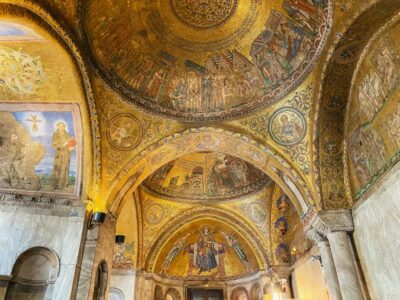
St. Mark’s Basilica Guided Tour & VR History Intro
Read our review →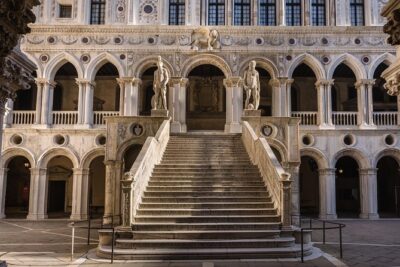
Venice’s Best: Basilica, Doge’s Palace, Gondola & History Gallery
Read our review →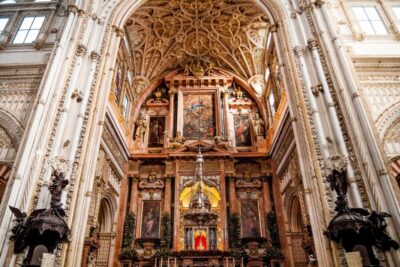
Córdoba: Skip-the-Line Great Mosque-Cathedral History Tour
Read our review →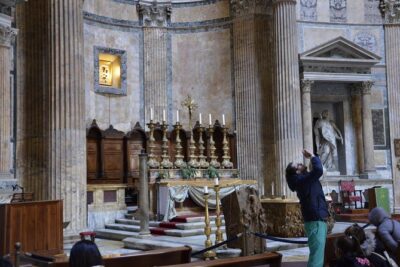
Pantheon Elite Guided Tour – Rome’s Iconic Ancient Temple
Read our review →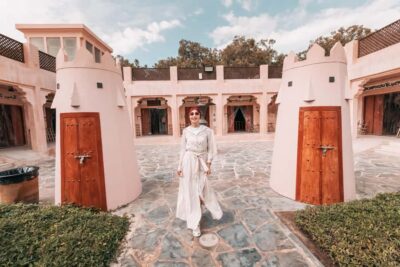
Abu Dhabi Grand Mosque, Palace, and Heritage Village
Read our review →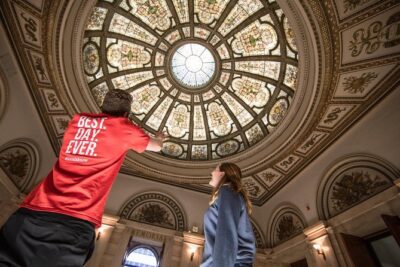
Chicago in a Day: Food, History & Architecture Walking Tour
Read our review →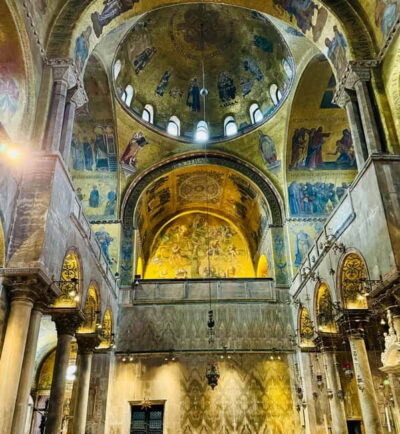
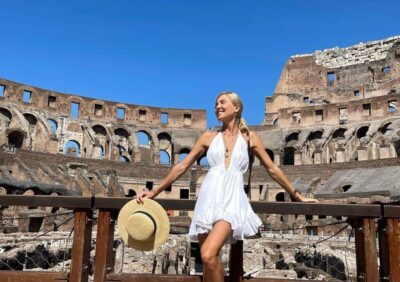
Colosseum Special Access Tour, with Ancient Temples & Tombs
Read our review →Browse the lists this tour appears in