
Review · PHILADELPHIA
Historic Sites of Philadelphia Self-Guided Walking Audio Tour
Philadelphia’s revolution fits neatly into one walk. This self-guided audio tour links Elfreth’s Alley, the Liberty Bell, Independence Hall, and several lesser-known Revolutionary sites for $9.49 per person. I like the freedom to pause, wander, and resume whenever I wish, and the route includes colorful stories about Benjamin Franklin, Haym Salomon, Alexander Hamilton, and George Washington.
I also like the simple phone navigation. Start at Elfreth’s Alley, press play, put your phone away, and let the WalknTours app guide you from stop to stop. The main drawback is just as clear: this is not a human-led tour, and the commentary may feel brief if you want long explanations or lots of obscure detail. You will also want earbuds, since one person found it hard to listen without them.
Key points to know before you go
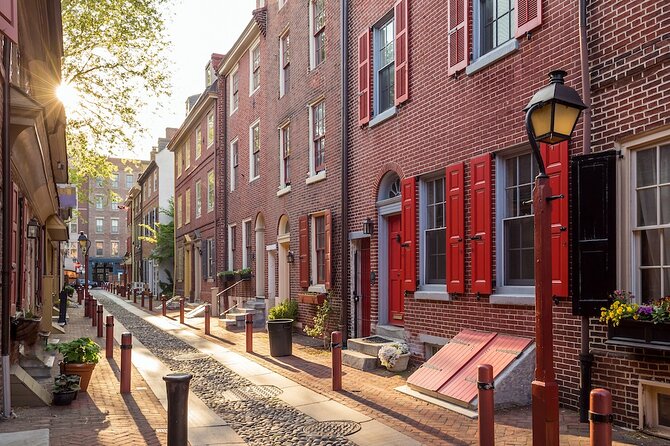
- The walk begins on Elfreth’s Alley, one of Philadelphia’s most atmospheric historic streets and a National Historic Landmark.
- You see the major patriotic sights from outside, including the Liberty Bell Center and Independence Hall. Entry tickets are not included.
- The route takes about one hour to 90 minutes, but the app lets you pause and customize your day.
- The $9.49 price is strong value for a private, flexible walk, especially if you are short on time.
- The stories focus on Revolutionary figures, including Franklin, Washington, Hamilton, and Haym Salomon.
- Bring earbuds and a charged phone, since the experience depends entirely on the WalknTours app.
Why this route works for a short Philadelphia visit
Philadelphia’s historic core is compact, but the important sites are spread across several streets and squares. You can walk between them on your own, yet it is easy to miss the stories that connect the places. This tour gives you a basic route and a steady stream of narration without tying you to a group schedule.
The walk takes approximately one hour to 90 minutes. That timing is useful if you have only part of a day in Old City, or if you want a short introduction before visiting the museums and historic buildings nearby. You can also pause the tour to explore Reading Market, Chinatown, or another nearby area, then return to the route later.
That freedom is the tour’s strongest feature. You are not waiting for a guide, keeping up with a large group, or rushing past a site because the next departure time is approaching. If your children lose interest, you can stop. If a story catches your attention, you can linger.
The experience is private in the sense that only your group participates, but do not expect a guide to walk beside you. The WalknTours app provides the directions and commentary. Its arrow points toward the next stop if you lose your way, which makes the route fairly easy to follow.
More History Walking Tours in the USA
- Philadelphia Old City Historic Walking Tour with 10+ Top Sites
★ 5.0 · 2,020 reviews - Philadelphia: History, Highlights & Revolution Walking Tour
★ 4.9 · 317 reviews - Philadelphia: Revolutionary Walk Through Historic Old City
★ 4.8 · 208 reviews
Starting among the old houses of Elfreth’s Alley
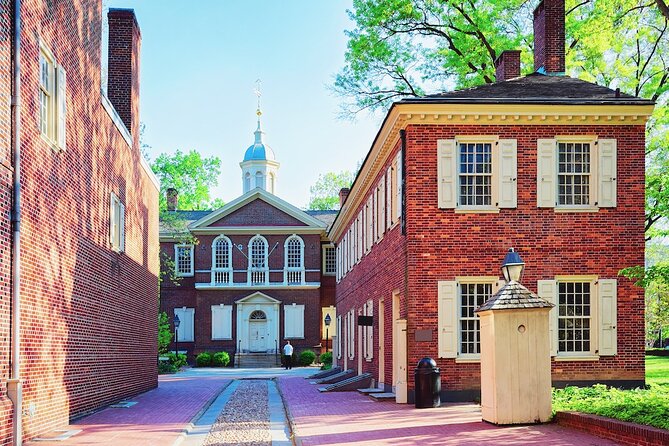
The tour begins at the Elfreth’s Alley Museum at 126 Elfreth’s Alley. This is a smart starting point. The narrow street gives you an immediate feel for the city during the era of the American Revolution, before the route moves into grander civic spaces.
Elfreth’s Alley is named for Jeremiah Elfreth, an 18th-century blacksmith. Much of Philadelphia has changed, but this street has remained remarkably intact and is now a National Historic Landmark. Even if you know little about early Philadelphia, the setting gives the opening story some weight.
You start the tour here by pressing the button in the app. After that, the WalknTours technology guides you through the streets. The app is meant to let you keep your phone in your pocket as you walk, though you will need to check the arrow if you become unsure of the route.
This opening section is short, so do not treat it as a full house museum visit. The value comes from standing in a preserved colonial street and using it as a visual introduction to the city’s Revolutionary period.
Betsy Ross, Franklin, and the people behind the symbols

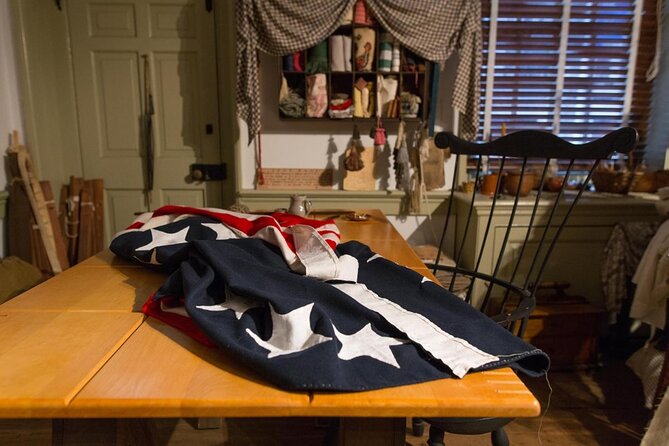
One stop takes you outside the Betsy Ross House. The story centers on the famous account of Ross meeting George Washington and designing the American flag. The tour presents this as one of its lively early stories, supported by music that adds a little theatrical energy.
You should keep your expectations measured. The route does not include admission to the house, and the stop is brief. Still, it is useful to hear the story while standing at the place linked to one of America’s best-known symbols.
The next major stop is Benjamin Franklin’s grave. Here, the narration turns to Franklin’s role in the Revolution and his work with France. The phrase about Franklin being electric fits his career, since the tour connects his scientific reputation with his political importance.
Franklin’s grave is a quick stop, but it gives you a chance to think about the Revolution beyond battlefield leaders. Franklin helped build support abroad, and the French connection was vital to the American cause. The tour keeps the explanation accessible rather than turning it into a long lecture.
Haym Salomon and the finance behind the Revolution
The walk then stops outside the synagogue known as the Synagogue of the Revolution. The story here is Haym Salomon, a financier who helped support the Revolutionary cause.
This is one of the more useful parts of the route because it shifts attention away from the usual names. Revolutions need money, credit, supplies, and people willing to take financial risks. Salomon’s story gives you a look at that side of independence.
The narration is still concise. If you are hoping for a full explanation of the synagogue’s congregation or the wider history of Jewish Philadelphia, this tour may not go far enough. But as a short introduction to Salomon and the financial work behind the Revolution, it adds variety to the route.
More Self-Guided History Audio Tours in Philadelphia:
- Philadelphia Historic Sites Self-Guided Walking Tour
★ 4.0 · 25 reviews - Taormina: Ancient Theater Skip-the-Line Ticket & Audio Guide
★ 4.5 · 2,412 reviews - Athens: Ancient Agora E-Ticket and Audio Tour
★ 3.9 · 413 reviews - Katakolo Port: Transfer to Ancient Olympia and VR Audio Tour
★ 4.1 · 403 reviews
The President’s House and Washington’s unusual nickname
At the President’s House, you reach the site where George Washington lived. The tour uses this stop to talk about Washington and the secrets of the rebels, including one unusual nickname: Town Killer.
That detail is exactly the kind of odd fact that can keep a walking tour from becoming a string of dates and building names. It gives Washington a less polished, more personal edge. The tour is built around these small pieces of character rather than long historical speeches.
The site itself is important because the first president’s residence reminds you that early national government took shape here, in the same streets where the Revolution had unfolded. You see the location from outside, so plan on a short stop rather than an interior visit.
The Liberty Bell and the story after independence
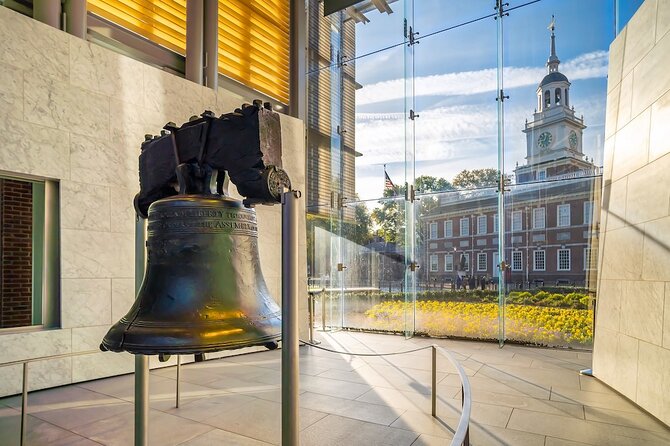
The Liberty Bell Center is one of the route’s central stops. The bell has become a symbol of liberty, but the tour points out that this meaning grew after the Revolution. During the war, the bell was hidden in Allentown for safekeeping.
That distinction is helpful. The Liberty Bell is often presented as if it carried its modern symbolic meaning from the moment it was cast. The route instead gives you a little historical separation between the bell’s wartime protection and its later public role.
You can see the bell for free, but this audio walk does not include entry tickets or a guided visit inside the center. If you want to explore the building, you will need to handle that separately. The tour works best here as an orientation and a way to connect the bell with the surrounding Revolutionary district.
Independence Hall from the outside
Independence Hall is the major landmark of the route. Inside its halls, the founding leaders debated and adopted the Declaration of Independence and the United States Constitution.
The tour also explains that the name Independence Hall came from the Marquis de Lafayette, a French general who called the statehouse the Hall of Independence. That is a small but memorable detail, and it gives the building a connection to the French role in the American cause.
You only visit the exterior as part of this experience. Admission is not included, and you will need to book a separate ticket if you want to enter. That limitation matters. The outside view is worthwhile, but the interior rooms are where the debates and decisions become easier to picture.
I would use this tour to get oriented, then decide if you want a separate visit inside. At $9.49, the walking experience does not pretend to replace a full Independence Hall visit.
Signer’s Garden and the risks of independence

Signer’s Garden offers a quieter pause near the most famous buildings. The central statue honors the signers of the Declaration of Independence and the risks they accepted by opposing British rule.
The statue depicts George Clymer, a local merchant and politician. The tour uses this stop to return to its main idea: independence was not created by only the most famous names. Local merchants, politicians, financiers, and organizers all played roles.
This stop may be less dramatic than the Liberty Bell or Independence Hall, but it helps fill in the human scale of the Revolution. You are not simply moving between monuments. You are hearing about people who had property, businesses, and reputations at risk.
Carpenters’ Hall and the boycott of British goods
Carpenters’ Hall is one of the route’s strongest stops. It was built for and is still owned by the Carpenters Company of Philadelphia, the country’s oldest craft guild. The building is also known as the Birthplace of Liberty.
The tour explains that the rebels met here and organized a boycott of British goods. It also touches on the surprising possibility that Quebec might have become one of the original colonies. That detail gives the stop a wider North American frame and shows how uncertain the political future was at the time.
Carpenters’ Hall is free to visit, which makes it an easy place to add extra time to your walk. The audio portion is short, so I would pause here if the building interests you. This is one location where the combination of exterior context and a free interior visit can add more value than the basic route alone.
Alexander Hamilton’s money trail
The latter part of the walk turns toward Alexander Hamilton and early American finance. At the First Bank of the United States, the tour explains Hamilton’s belief that a national bank was needed to strengthen the country’s credit and manage government finances under the new Constitution.
The bank operated from 1791 to 1811. This stop takes you beyond the fighting and declarations and into the difficult work of building a functioning nation. Independence was not finished when the war ended. The new government needed a financial system, and Hamilton pushed hard for one.
The route then points out where Hamilton once lived. The story includes his affair with Maria Reynolds, a scandal that damaged his career. That personal episode gives the financial and political material a more human turn, though the explanation remains brief.
If Hamilton interests you, these stops will be among the most appealing. If you are mainly looking for military history, this section may feel like a change of subject. I think that change improves the walk because it shows what happened after the famous revolutionary speeches.
Ending at City Tavern
The tour ends at City Tavern on South 2nd Street. This old tavern was a meeting place where the founding leaders ate, drank, and exchanged ideas.
It is a fitting endpoint. After visiting the buildings where political decisions were made, you finish at a place associated with the informal side of public life. The route ends near the same historic core where you began, so you remain close to Old City attractions and public transportation.
The end point also gives you a practical choice. You can finish the tour and move on, or use City Tavern as a natural place to continue your Philadelphia visit. Food and drinks are not included in the tour price.
What the $9.49 price really gets you
At $9.49 per person, this is an inexpensive way to organize a first walk through Philadelphia’s historic district. The price covers the WalknTours app, the audio content, navigation, and the ability to go at your own pace.
You are not paying for a human guide, museum admission, food, or drinks. That keeps the cost low, but it also means you should view the experience as a flexible introduction rather than a full educational program.
The value is best for a solo visitor, couple, or family that wants structure without a fixed schedule. Group discounts may also be available, which can make the per-person cost even more appealing for a larger party.
Some of the sites are free, including the Liberty Bell viewing area and Carpenters’ Hall, while Independence Hall requires a separate ticket for interior access. The tour helps you find and understand the places, but it does not bundle admission.
App performance, audio, and practical tips
The app is designed to guide you with an arrow and location-based directions. You can pause when needed, and you can leave the route to explore nearby areas before returning to it. That flexibility received especially strong praise from people who wanted to customize the day.
Bring earbuds if you have them. One person found that listening without earbuds was difficult, and you may not want to hold your phone up at every stop. The supplied information does not indicate that earbuds are provided or sold along the route, so bring your own.
You should also make sure your phone is ready for an app-based walk. The tour depends on the WalknTours application, and there is no human guide to provide directions if you stop using it.
The tour is offered in English. Most people can participate, and the start and end points are near public transportation. It is generally booked about five days in advance, though the experience allows you to choose your own schedule within the available booking system.
Free cancellation is available if you cancel at least 24 hours before the start time. Cancellations made within 24 hours are not refunded, and changes during that period are not accepted.
Who should choose this Philadelphia walk?
I would recommend it to you if you want a low-cost introduction to Old City and prefer to control the pace. It is especially useful if you have only an hour or so, dislike large groups, or want to stop for food and sightseeing along the way.
Families may appreciate the freedom to pause, though the short historical explanations may not hold every child’s attention. The unusual stories about Washington and Hamilton help, but this is not designed as a children’s performance.
History fans should see it as a starting point. You will encounter many key places and several less familiar figures, but the commentary is not long enough to fully explain every site. If you want detailed architectural, political, or religious history, you will need to add museum visits or separate tours.
Should you book this tour?
Book it if you want flexibility, low cost, and a clear route through Philadelphia’s Revolutionary center. The best part is the freedom to pause, wander, and return without losing a group. The route also does a good job of mixing famous sights with stories about Haym Salomon, Hamilton’s financial plans, and Washington’s unusual nickname.
Skip it if you want a live guide, deep explanations, or included entry to Independence Hall. You will see the major landmarks from outside, and some descriptions may feel too brief if you already know Philadelphia well.
For $9.49, I think it works as a practical first look at the historic district. Bring earbuds, leave room for your own detours, and treat the walk as a smart framework for exploring more of Old City on your own.
FAQ
How long does the Historic Sites of Philadelphia Self-Guided Walking Audio Tour take?
The tour takes approximately one hour to 90 minutes. You can pause the app and adjust the timing to suit your schedule.
Where does the tour begin?
It begins at the Elfreth’s Alley Museum, located at 126 Elfreth’s Alley, Philadelphia, Pennsylvania 19106.
Where does the tour end?
The tour ends at City Tavern on South 2nd Street in Philadelphia.
Is a human guide included?
No. This is a solo walking tour navigated through the WalknTours app. Only your group participates.
Are admission tickets included?
No. The tour visits the sites from outside. Some locations, including the Liberty Bell Center and Carpenters’ Hall, can be visited for free, while Independence Hall requires a separate ticket for interior access.
What language is the tour offered in?
The tour is offered in English.
Is the tour suitable for most people?
Most people can participate, and the route is near public transportation. The supplied information does not provide more specific accessibility details.
Can I cancel for a refund?
Yes. You can receive a full refund if you cancel at least 24 hours before the experience start time. Cancellations or changes made less than 24 hours before the start time are not accepted or refunded.
More History Walking Tours in Philadelphia
- Philadelphia Historical Independence Walking Tour
★ 4.5 · 164 reviews - Walking Tour of Historic Philadelphia
★ 5.0 · 99 reviews - Badass Women’s History Walking Tour of Philadelphia
★ 5.0 · 97 reviews - The Black Journey: An African-American History Walking Tour of Philadelphia
★ 5.0 · 76 reviews
Just added around Philadelphia
- Badass Women’s History Walking Tour of Philadelphia★ 5.0 · 97 reviews
- The Black Journey: An African-American History Walking Tour of Philadelphia★ 5.0 · 76 reviews
- Walking Tour of Historic Philadelphia★ 5.0 · 99 reviews
- Philadelphia Old City History Pub Crawl Small-Group Tour★ 5.0 · 294 reviews
- One Hour Tour Of Philadelphia Historical Sites In A Vintage Car★ 4.5 · 52 reviews
- Philly Gayborhood and LGBTQ History Walking Tour★ 5.0 · 36 reviews
- Independence Mall (Entrance to 2 Historic Sites) 2.5 Hour Walking★ 5.0 · 21 reviews
- Beyond the [Liberty] Bell History Walking Tour★ 5.0 · 73 reviews
Self-Guided History Audio Tours, compared.
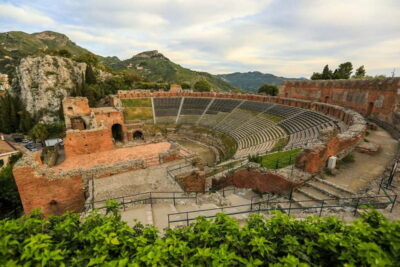
Taormina: Ancient Theater Skip-the-Line Ticket & Audio Guide
Read our review →
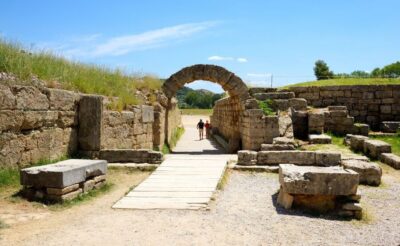
Katakolo Port: Transfer to Ancient Olympia and VR Audio Tour
Read our review →
Budapest Paddle Steamer Danube Cruise with Tokaj & Audio Guide
Read our review →
Matera: Sassi di Matera Historical Self-Guided Audio Tour
Read our review →
Self-Guided Ngilgi Cave Ancient Lands Experience
Read our review →
Hagia Sophia History Museum Entry with Audio Guide
Read our review →
Browse the lists this tour appears in