
Review · PHILADELPHIA
2.5 Hour Philadelphia History Tour with Washington War Tent Show
History comes alive on Philadelphia’s brick sidewalks. I like the small group of up to 12 and the chance to see George Washington’s actual war tent at the Museum of the American Revolution. The route also covers Independence Hall, the Liberty Bell area, Elfreth’s Alley, and Franklin’s grave, giving you a useful first look at Old City.
The main drawback is that several landmarks are viewed from outside, including Independence Hall, Congress Hall, Old City Hall, and Carpenters’ Hall. You should also plan a separate visit to the Liberty Bell interior if that matters to you, since this walk passes the center but does not include entry.
Key points to know before you book
- Washington’s war tent is the tour’s special feature: You see a presentation of the tent George Washington used during much of the Revolutionary War.
- The route covers the essential Old City sights: Independence Hall, Congress Hall, the Liberty Bell Center, Carpenters’ Hall, Elfreth’s Alley, and more.
- A maximum of 12 people keeps it personal: You can ask questions without trying to catch a guide’s voice across a large crowd.
- The museum discount adds value: After the guided portion, you can return to the Museum of the American Revolution using a discounted ticket.
- This is a serious walking tour: The route lasts about two and a half hours and moves through several blocks of historic Philadelphia.
- The guide can make or break the experience: Guides such as John, Maria Gorshin, Tom, PJ, Caroline, Carla, and David have been praised for clear explanations, humor, and strong command of local history.
Why this Philadelphia history walk works
At $45 per person, this is priced as an affordable introduction to Philadelphia’s founding-era sights rather than a full museum tour. You get a local guide, a small group, the Washington tent presentation, and a donation to a local historic nonprofit.
I think the value is strongest if you have limited time in Philadelphia. The route puts many major sights within one connected story, so you do not need to work out the order of the landmarks yourself. You also finish in Old City, where you can continue sightseeing, eat, or return to the museum.
The experience receives a 4.9 rating from 924 reviews, with 97 percent of people recommending it. The praise centers on the guides’ ability to explain complicated events in plain language, answer questions, and keep the walk moving without turning it into a dry lecture.
Several guides have earned especially warm praise. John has been singled out for his historical facts, quick trivia, and ability to hold children’s attention. Maria Gorshin has been praised for personal attention and vivid explanations of life in the 1700s. Tom, PJ, Caroline, Carla, David, Pat, Peter, Laura, Alex, Donato, and PK have also been praised for enthusiasm, patience, and local insight.
The exact guide is not guaranteed, so I would not book expecting one particular person. The consistent pattern is more useful: the company has a broad team of guides who know the area and can adjust their explanations to the group.
More Shows in the USA:
- Lisbon: Live Fado Show with Port Wine in Historic Center
★ 4.7 · 4,166 reviews - Porto: An Intimate Fado Show in a Historical Tavern
★ 4.8 · 2,055 reviews - Lisbon: Fado Show with Wine in a Historic Venue
★ 4.8 · 1,294 reviews
Starting at the Signer’s Garden
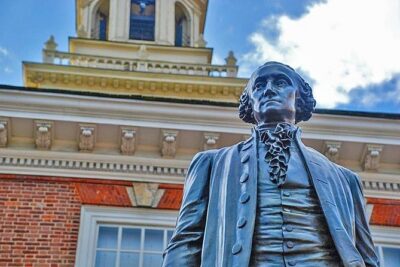
The tour begins at the statue called The Signer in Signer’s Garden, at 434 to 498 Chestnut Street. The statue represents the people who signed the Declaration of Independence and the United States Constitution, along with the ideals of freedom connected to those documents.
This is a brief five-minute introduction, but it gives the group a clear starting point. You are not simply meeting at a random street corner. You begin with a symbol that links the rest of the walk to the nation’s founding.
Arrive ready to walk, listen, and ask questions. The tour is near public transportation, and most people can take part, but you should expect to remain on your feet for much of the two and a half hours.
Independence National Historical Park and Independence Hall
The first major section moves through Independence National Historical Park. Your guide explains Independence Hall, Congress Hall, and Old City Hall, showing how these buildings shaped Philadelphia and the early United States.
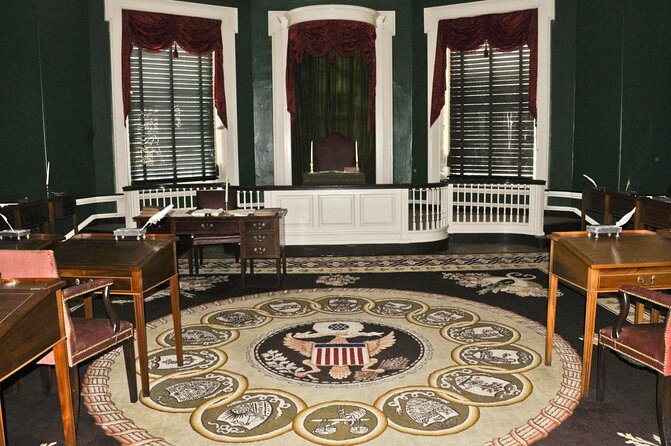
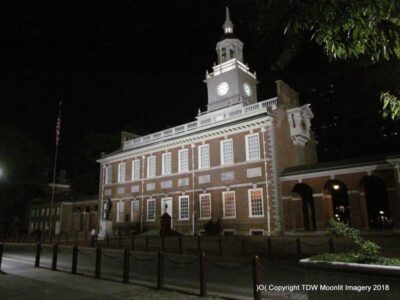
Independence Hall is the famous red-brick building shown on the $100 bill. The walk circles the building from outside rather than taking you through its interior. That approach lets the guide focus on the political debates, competing ideas, and difficult decisions tied to the site, but it does not replace an interior tour.
For many people, this is the emotional center of the walk. You are standing where the Declaration of Independence and Constitution were debated and adopted. The guide’s storytelling matters here because the building itself can seem quieter and less dramatic than its role in American history.
Congress Hall sits beside Independence Hall and once housed the United States Congress. Old City Hall adds another piece to the story, helping you understand how Philadelphia functioned as a center of national government before Washington, DC became the capital.
Allow about 40 minutes for the Independence National Historical Park section and Independence Hall, Congress Hall, and Old City Hall. The schedule is tight enough to keep the group moving, but there is still time for questions.
The Liberty Bell beyond the usual photograph
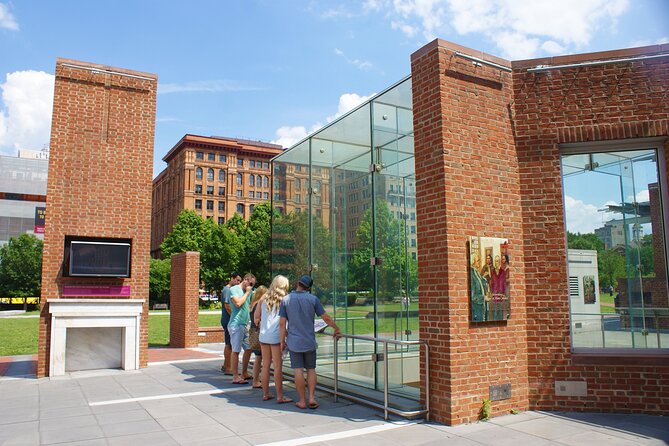
The Liberty Bell Center is another outdoor stop. You learn about the bell’s changing meaning and the way abolitionists, suffragettes, and civil rights activists used it as a symbol.
The guide also covers myths connected to the bell. That can be more useful than simply taking a photograph and moving on, since the Liberty Bell’s public meaning has changed across different periods of American life.
Entry to the Liberty Bell Center is not included in this tour. You can plan a separate visit before or after the walk if you want to see the bell inside. One guide specifically advised setting aside time for that if an interior photograph is important to you.
This is a good example of the tour’s limits. You get context and orientation, but not every building visit. I see that as a fair trade for covering so many locations in one morning or afternoon, as long as you plan your independent entries.
A few more history tours around the USA worth a look
- History and Hauntings of Salem Guided Walking Tour
★ 5.0 · 14,564 reviews - Charleston’s Old South Carriage Historic Horse & Carriage Tour
★ 5.0 · 10,023 reviews - Beneath The Streets Underground History Tour
★ 4.5 · 8,006 reviews - Boston: Freedom Trail History Small Group Walking Tour
★ 5.0 · 6,450 reviews
Carpenters’ Hall and the first Continental Congress
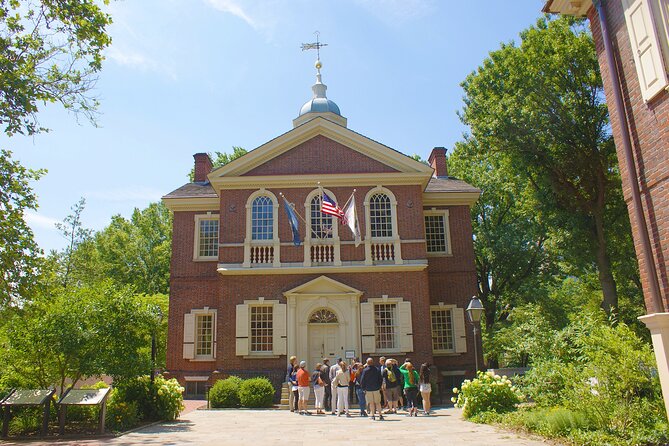
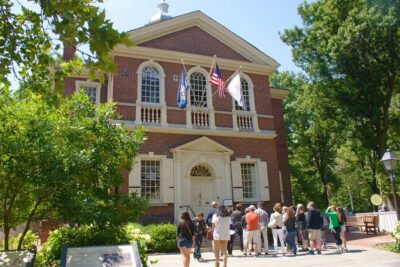
Carpenters’ Hall is viewed from outside, with no admission charge for the stop. The building is associated with the founding of the Commonwealth of Pennsylvania and hosted the First Continental Congress.
That meeting makes the site especially important. It helps connect local Philadelphia history with the growing conflict between the colonies and Britain. Your guide can explain how the movement toward independence developed before the Declaration was signed.
The ten-minute stop is short, so expect a focused explanation rather than an interior tour. If you want to explore the building at length, you will need to return on your own.
Seeing Washington’s war tent at the museum
The most distinctive part of the experience comes at the Museum of the American Revolution. The tour includes a presentation featuring George Washington’s war tent, which he used during much of the Revolutionary War and during several key moments in the conflict.
This changes the pace of the day. Most of the route takes place outdoors, in front of buildings and along public streets. At the museum, you step inside for a focused presentation and see an object directly connected to Washington’s life in the field.
I think this is the strongest reason to choose this particular walk over a basic Old City orientation. You are not only hearing about military leadership and the Revolutionary War. You are seeing the tent that served as Washington’s working and living space during the war.
The museum portion lasts about 20 minutes. That is enough for the featured presentation, not enough for the entire museum. After the guided tour ends, you can use the discounted museum admission at a time of your choice.
That discount gives the $45 price more weight. If you return to see the rest of the museum, you turn a short presentation into a fuller afternoon of exhibits, objects, and stories about the Revolution. Ask your guide or the operator how to use the discount during your visit, since the practical process is not detailed here.
Elfreth’s Alley and Philadelphia’s residential past
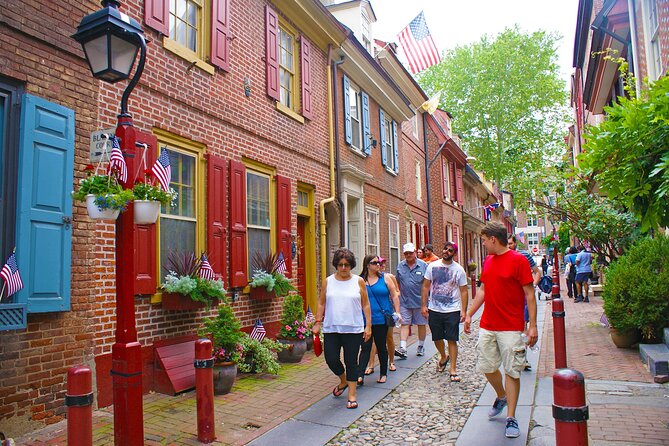
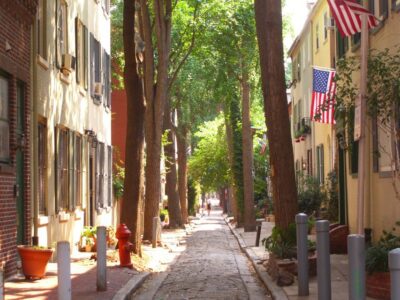
Elfreth’s Alley provides a welcome change from the grand government buildings. It is described as the oldest continuously occupied residential street in the United States, with narrow brick homes dating to the early 1700s.
The street helps you picture ordinary urban life rather than only famous leaders and political speeches. The small scale of the homes, brick paving, and close-set buildings show how different Philadelphia looked from the broad avenues and modern blocks you may see elsewhere in the city.
The stop lasts about ten minutes and is free. You will likely want photographs, but listen to the explanation too. The value here comes from seeing how early residents lived, not just from admiring a picturesque street.
Betsy Ross, Benjamin Franklin, and the President’s House
The walk continues past the Betsy Ross House. Betsy Ross is often credited with sewing the first American flag, but the tour addresses the uncertainty and myths around that story.
That correction is typical of the experience. Instead of presenting every popular tale as settled fact, the guide separates legend from what can be supported. You still get the familiar story, but with a clearer sense of its limits.
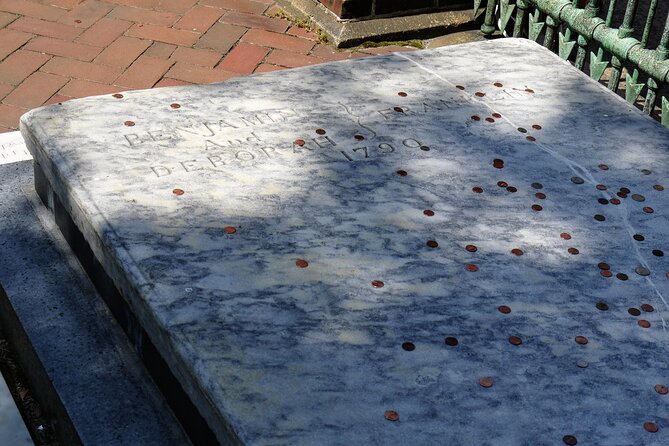
Next comes Benjamin Franklin’s grave on Arch Street. Franklin was an inventor, printer, diplomat, and political figure, so the brief stop adds another personality to the larger story of Philadelphia’s founding era.
The final stop is the President’s House site, where George Washington and John Adams lived while serving as president. The location also raises difficult questions about slavery, since enslaved people lived there as part of the presidential household.
The site remains an active archaeological area, which gives the stop a modern purpose. You are not only looking backward at famous presidents. You are also considering the people and systems that helped support early national government.
Pace, group size, and guide quality
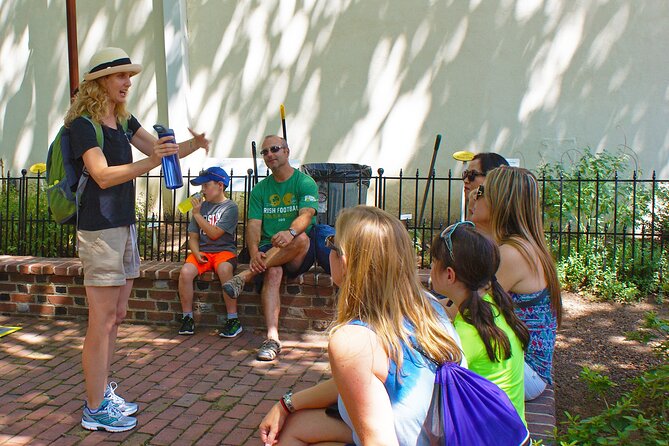
A maximum of 12 people is a major advantage on a route with so many stops. A guide can usually answer individual questions, keep the group together, and adjust the explanation when children or history fans want more detail.
The walking pace appears steady rather than rushed. One guide was praised for covering a great deal in two and a half hours while still allowing questions. Another kept children interested, and several guides offered restaurant and sightseeing suggestions after the historical portion.
You should still expect a full outing, not a casual stroll. The tour lasts approximately 150 minutes and crosses the Historic District. Wear comfortable shoes and check the weather before setting out. Food, drinks, souvenirs, and personal shopping are not included.
Guide quality is clearly one of the experience’s biggest strengths. John has been praised for going beyond the planned material, while David was noted for making the most of a complicated day when some buildings were closed. Other guides have been praised for warmth, humor, patience, and the ability to explain events in a way that feels connected rather than scattered.
Occasional closures can affect what you enter. Past conditions included government shutdowns that closed some buildings, but guides adapted by adding explanation, recommendations, and extra context outdoors. Since several stops are already exterior visits, the tour can still work well when access changes.
Who should take this tour
I would recommend this walk to first-time Philadelphia visitors, families, couples, solo sightseers, and anyone with only a few hours in the city. It gives you a strong orientation to Old City without asking you to plan a complicated route.
It is also a good fit for history fans who enjoy interpretation more than simply checking off buildings. The stories about the Liberty Bell, Betsy Ross, slavery at the President’s House, and Washington’s tent add useful context.
Families may find the small group and active route easier than a long indoor lecture. The guide can keep younger participants involved, and the changing settings help break up the information.
I would be more cautious if your top priority is entering every historic building. Independence Hall, Congress Hall, Old City Hall, Carpenters’ Hall, the Liberty Bell Center, and the Betsy Ross House are not presented as included interior visits. You should schedule those separately and treat this tour as an outdoor overview with one important museum presentation.
Free cancellation is available if you cancel at least 24 hours before the start time. Changes or cancellations inside that window are not refunded, so check your schedule before the cutoff.
Should you book the Philadelphia Washington war tent tour?
Book it if you want an efficient introduction to Philadelphia’s Revolutionary sights, prefer a small group, and like having a guide connect the landmarks into one story. The Washington war tent presentation and discounted museum entry make this more than a standard street walk.
Skip it if you want lengthy interior visits at Independence Hall or the Liberty Bell Center. In that case, build a separate museum and historic-site plan, then use this tour only if you want the wider context.
For most first visits, I think the $45 price is sensible. You see the city’s key founding landmarks, hear clear explanations from a local guide, and finish with the option to spend more time at the Museum of the American Revolution. Just keep your expectations straight: this is a brisk, story-led walk through Old City, not a full admission package for every famous building.
FAQ
How long does the Philadelphia history tour last?
The tour lasts approximately two hours and 30 minutes.
How much does the tour cost?
The listed price is $45 per person. Group discounts are available.
How large is the tour group?
The tour has a maximum of 12 people.
Is admission to Independence Hall included?
No. The tour views Independence Hall from outside. Admission to the building is not included.
Can I enter the Liberty Bell Center during the tour?
No. The tour passes the Liberty Bell Center and explains its history, but admission is not included. You should plan a separate visit if you want to go inside.
Is the Museum of the American Revolution included?
The tour includes admission for the presentation featuring George Washington’s war tent. You also receive discounted admission to return and see the rest of the museum after the tour.
Where does the tour begin and end?
The tour begins at The Signer statue in Signer’s Garden, at 434 to 498 Chestnut Street, Philadelphia. It ends in Old City, Philadelphia, in the Historic District.
Just added around the USA
- Historical Bicycle Tour of Dunedin★ 5.0 · 44 reviews
- Safety Harbor Ghost Tour★ 5.0 · 60 reviews
- Tarpon Springs Ghost Tour★ 4.5 · 19 reviews
- Cincy Brunch History and Streetcar Tour with Riverside Food Tours★ 5.0 · 108 reviews
- 2.5 Hour Kayaking with Manatee and History Tour in Tarpon Springs★ 5.0 · 24 reviews
- Chicago River Architecture Tour Aboard a Historic Yacht★ 5.0 · 45 reviews
- Walkin’ with Colin: Chicago History-Mystery-Comedy-Tragedy Tour★ 5.0 · 218 reviews
- Historic Homes and Cottages of Wicker Park Walking Tour★ 5.0 · 44 reviews
Philadelphia History Tours, compared.
Revolution and the Founders: History Tour of Philadelphia
Read our review →
Philadelphia Old City Historic Walking Tour with 10+ Top Sites
Read our review →

Browse the lists this tour appears in