
Review · BUCHAREST-ILFOV
Bucharest: Sweet Delights History and Desserts Walking Tour
Bucharest has a sweet tooth. I like this tour for its clever pairing of desserts and city history, and for the way it moves from French-style elegance to communist-era memory and medieval Old Town traditions. You get an eclair, chocolate, a Romanian sweet snack, and papanasi while learning how Bucharest became known as Little Paris. The main drawback is simple: three hours of walking and several desserts may feel tiring if you prefer a slower sightseeing pace or do not care much for sweets.
The small group, limited to 10 people, makes the experience feel personal. Guides Mara and Elena have earned especially warm praise for their humor, clear storytelling, and ability to connect Romania’s past with daily life today. I also like that the route gives you useful city bearings early in your visit, though the tour does not include entry to the Romanian Athenaeum.
Key points at a glance
- Start with an eclair at the Romanian Athenaeum: Hear about Romania’s prosperous monarchy beside Bucharest’s grand concert hall.
- Taste history at Revolution Square: A famous Romanian chocolate bar accompanies stories of communism and the 1989 Revolution.
- Walk Calea Victoriei: See the French influence that helped earn Bucharest its Little Paris nickname.
- Visit Capsa Pastry: Pause at one of the city’s oldest surviving cake shops and sample a dessert linked to Bucharest’s past.
- Finish with papanasi in Old Town: Romanian doughnuts provide a fitting final course among medieval legends and later imperial influences.
- Keep the group small: With no more than 10 participants and an English-speaking guide, questions and conversation should be easy.
Why sweets are a smart way to read Bucharest
Food gives this walk a useful thread. Instead of treating Bucharest’s history as a string of dates, the tour shows how outside influences changed both the city and its desserts.
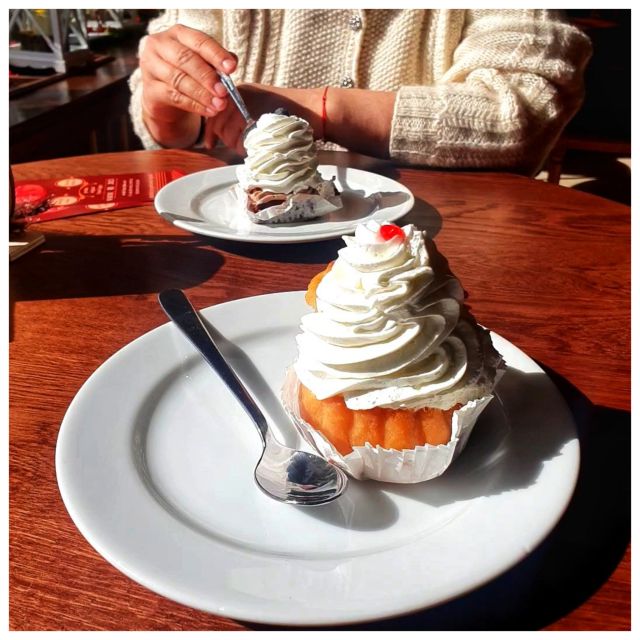
French pastry chefs helped bring eclairs and refined cakes to Romanian aristocratic circles. At the same time, Turkish, Oriental, and Balkan traditions remained part of local food culture. That mixture is central to Bucharest. The city can look French on one street, Ottoman or Balkan in its flavors, and distinctly Romanian in the next.
I like this approach because the tastings are not random snack stops. Each one fits a period or theme. You begin with the elegance of the monarchy, move into the hard decades of communism, pause at an old pastry institution, and end with papanasi in the Old Town.
The food also keeps the walking lively. You are not expected to stand for three hours while listening to a lecture. You pause, taste, ask questions, and then continue through the center. If you learn best through stories and small sensory details, this format should work well.
More History Walking Tours in Romania:
- Bucharest: Communism and History Guided City Walking Tour
★ 4.9 · 918 reviews - Guided Walking Tour of Historical Bucharest
★ 5.0 · 84 reviews - Roma Culture, Realities and Slavery History, Walking tour
★ 4.9 · 52 reviews
The Romanian Athenaeum and the taste of monarchy
The meeting point is on the stairs of the Romanian Athenaeum at Strada Benjamin Franklin 10. Look for a guide wearing a tag and carrying a sign for Mara’s Tours & Travel.
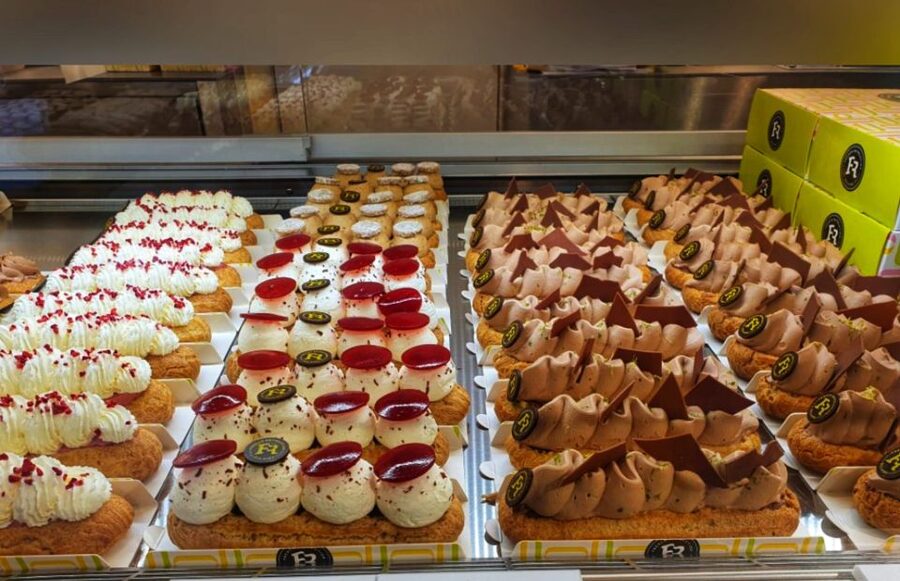
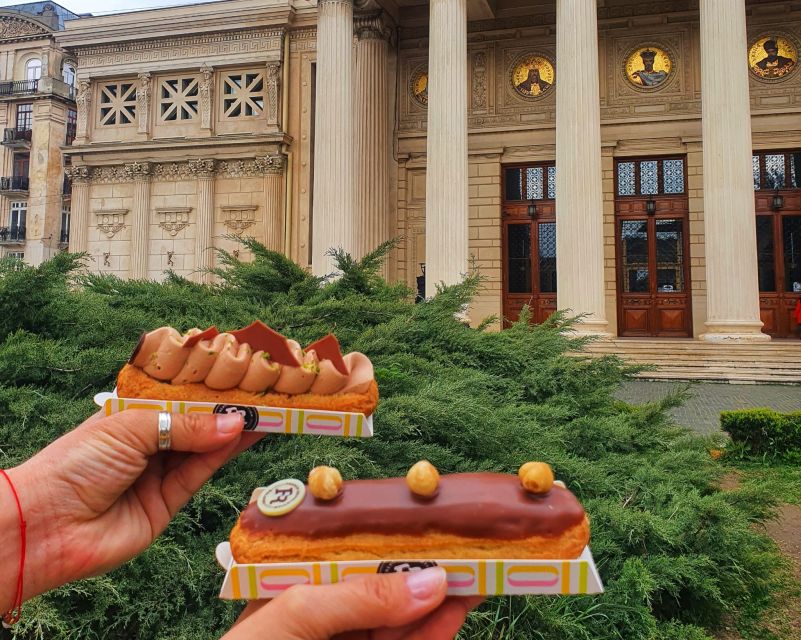
The Athenaeum gives the opening stop real presence. This famous concert hall provides an impressive setting for a conversation about the period when Romania was a prosperous monarchy. While you enjoy an eclair from French Revolution Ateneul Român, the guide explains the link between French pastry and the tastes of Bucharest’s upper classes.
That first bite sets up the main idea of the tour. Bucharest did not simply copy Paris. It adapted French fashion, architecture, and baking to local tastes and older regional customs.
The official timing here is about 15 minutes, including the dessert and guided explanation. It is a compact beginning, but the location does much of the work. You get an immediate introduction to the city’s grand side without needing a long museum visit.
The tour does not include admission to the Athenaeum. If you want to enter, admission is listed at 15 lei, about 3 euros, payable in cash. Since the group meets outside, plan on seeing the building from the exterior unless you choose to pay separately.
Carol I and the road toward Revolution Square
From the Athenaeum, the walk continues to the equestrian statue of Carol I. This is a short guided stop of about 10 minutes, but it helps place the monarchy in the city’s public spaces.
Carol I is an important figure in the story of modern Romania, and the statue gives the guide a natural point for explaining how Bucharest changed during the royal period. You are still close to the elegant central streets, so the route begins with a strong sense of ceremony and public grandeur.
This part of the tour is not a major food stop. That is useful if you need a few minutes between tastings. The walk also lets you look around instead of moving from one pastry counter straight to another.
The route is mainly on foot, so comfortable shoes matter. Casual clothing is recommended. The tour lasts three hours, and the central streets can make the walk feel easy at times, but you should still expect to be on your feet for most of the experience.
Revolution Square, chocolate, and the memory of 1989
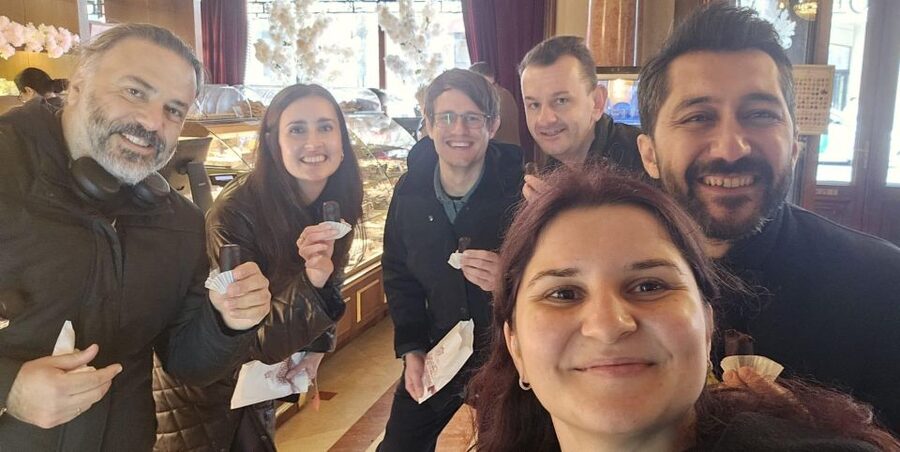
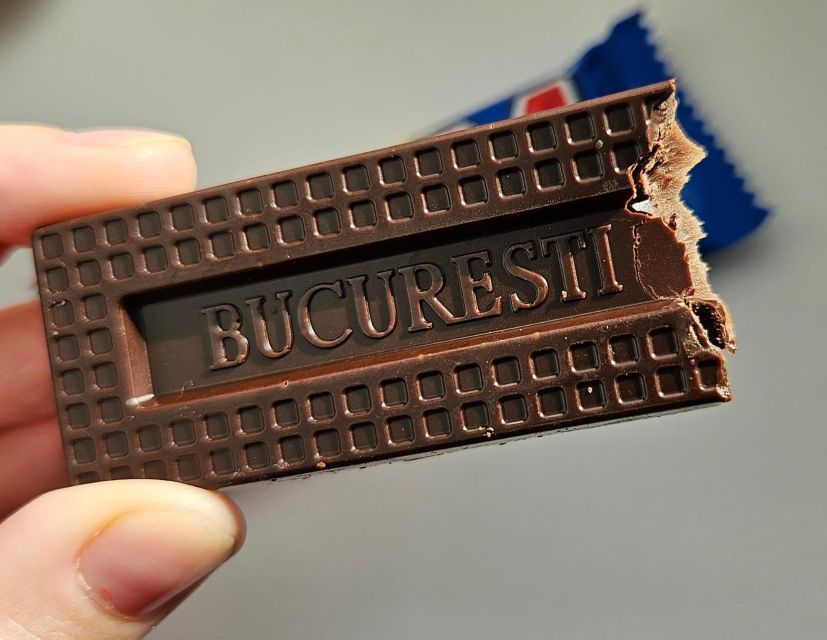
Revolution Square changes the tone. Here, the guide discusses life under communism and the 1989 Revolution, then gives you a taste of that era through a famous Romanian chocolate bar.
I appreciate this contrast. The tour does not present Bucharest as a city of pretty facades and pastries only. It makes room for the difficult parts of recent Romanian history. The chocolate snack creates a small, memorable link to ordinary life during the communist period, while the square provides the setting for the political story.
This is one of the longer stops, at about 25 minutes. That gives the guide room to explain the setting rather than rushing through it. Elena, one of the guides praised for her work on this experience, is described as especially clear and personable when connecting historical events with Romanian life today. Mara is also praised for making the history detailed, funny, and easy to follow.
You may find this section more serious than the opening. That is part of its value. The route gives you a better sense of why Bucharest can feel full of contrasts, with elegant royal buildings standing close to places tied to fear, protest, and political change.
A few more history tours around Romania worth a look
- Bucharest: 3-Hour Dark History Tour with a Local
★ 4.9 · 301 reviews - Bucharest: Small Group History, Art & Secrets Tour
★ 4.7 · 152 reviews - Bucharest Jewish Heritage | Holocaust Memorial | Private Car Tour
★ 5.0 · 38 reviews - Private Bucharest: History & Food with Traditional Meal
★ 5.0 · 34 reviews
Calea Victoriei and Bucharest’s Little Paris image
The walk along Calea Victoriei lasts about 20 minutes. This is where the Little Paris idea comes into focus.
Look for French-style architecture and the polished urban character that helped shape Bucharest’s old nickname. The guide explains how the city adopted French influences in design, fashion, and pastry without losing its Balkan and Oriental connections.
This section is especially useful if you are new to Bucharest. A guide can point out the relationship between the buildings, the street, and the city’s social ambitions. You are not just looking at attractive architecture. You are learning why French culture became so important to the Romanian capital.
I would pay close attention here even if you are mainly coming for dessert. The architecture gives context to the eclair you tasted earlier, and the walk helps connect the monarchy section with the old cake shop that follows.
There is no separate tasting listed on Calea Victoriei, so this is a good moment to focus on the city itself. It also gives your appetite a little time before the next stop.
Capsa Pastry and a taste from the past
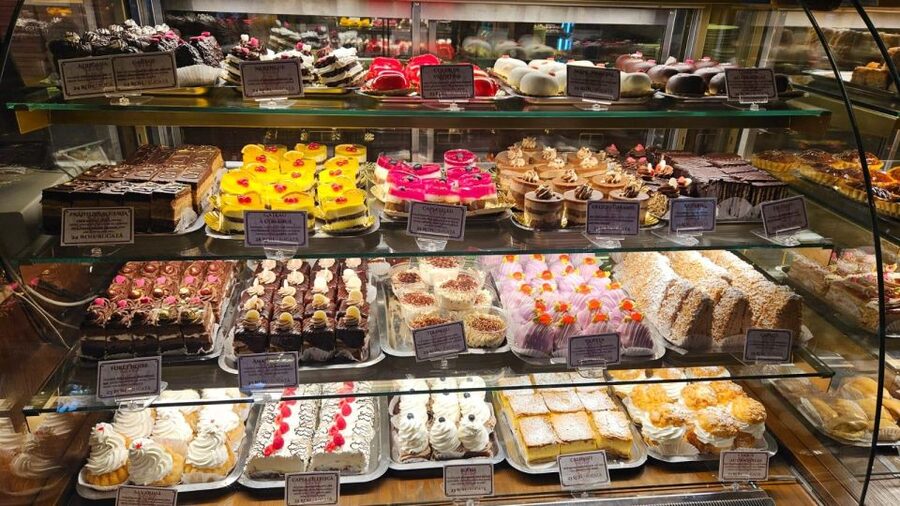
Capsa Pastry is one of the most distinctive stops. The tour describes it as the oldest standing cake shop in town, and the visit lasts about 20 minutes.
This is where the experience moves from broad history to a specific piece of Bucharest’s food culture. A long-running pastry shop can show you how the city’s love of cakes survived changes in politics, fashion, and daily life. The dessert here is meant to offer a taste from the past, not simply another modern sweet.
I like that the tour includes a historic pastry institution rather than relying only on contemporary food shops. You get a sense of continuity. The city changed dramatically, but certain food traditions remained part of its identity.
The exact pastry served at this stop is not specified, so you should not book the tour expecting a particular Capsa item. What is clear is that the visit forms the bridge between the French-influenced center and the more layered history of the Old Town.
Old Town, medieval stories, and papanasi
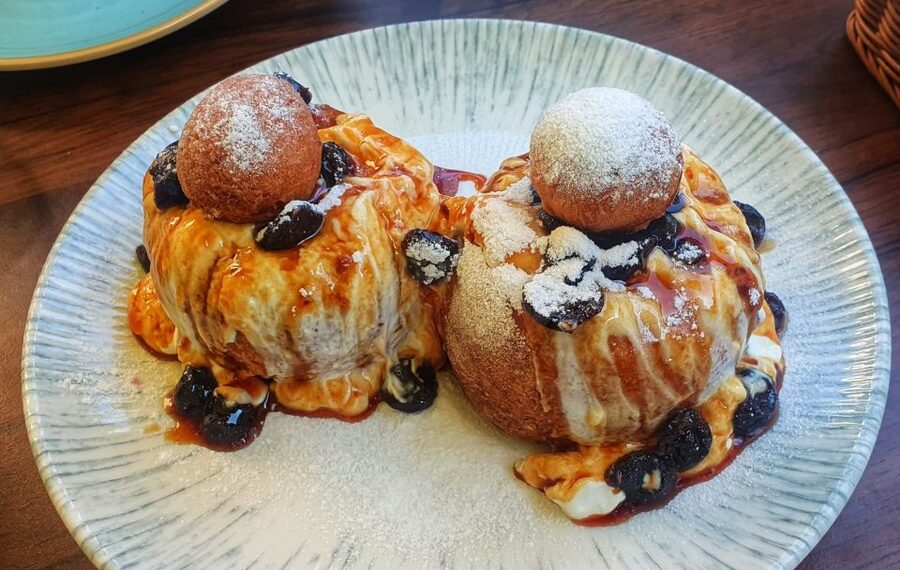
The final section takes place in Bucharest’s Old Town and lasts about 45 minutes. This is the longest guided portion, and it brings together medieval legends, customs, and influences from the empires that shaped Romanian culture.
The Old Town is a fitting place to finish because it adds older layers to the story. Earlier stops focus heavily on monarchy, French influence, and the twentieth century. Here, the guide turns toward legends and traditions that reach further back.
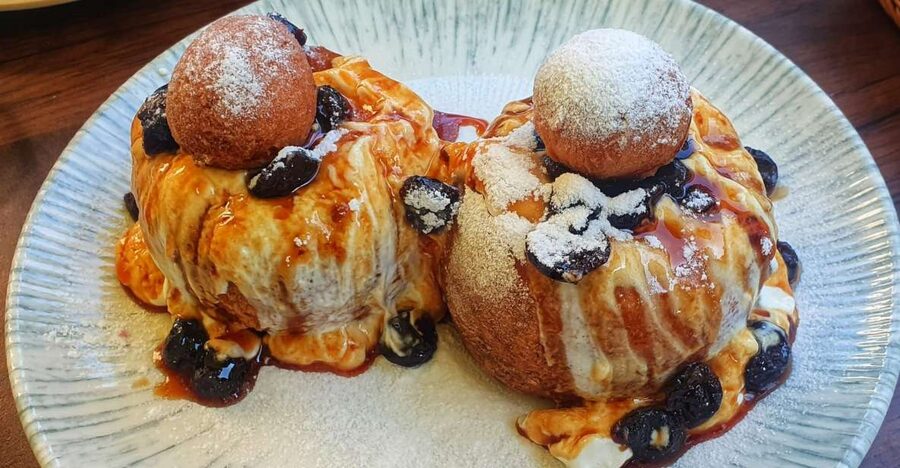
The final tasting is papanasi, one of Romania’s best-known desserts. It is described as a Romanian doughnut and provides the tour’s most clearly traditional finish. If you have a sweet tooth, this may be the highlight. If you are not usually interested in desserts, the portion sizes and steady pacing should still make the tastings manageable, but you may want to share or eat lightly before starting.
The tour ends at City Grill Covaci. That is useful because you finish in the Old Town, where you can continue exploring or stop for a full meal. Additional food and drinks are not included, so budget separately if you want to stay for lunch or dinner.
What the $77 price gives you
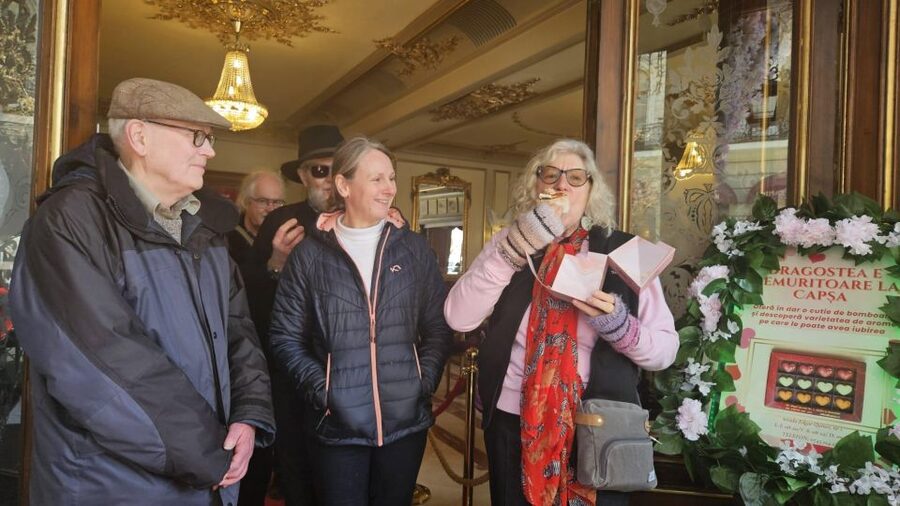
At $77 per person, this is not a bargain walking tour in the narrowest sense. You are paying for a small group, a live English-speaking guide, four listed food elements, water, and a themed route through central Bucharest.
The included tastings are:
- One eclair
- One chocolate truffle
- One Romanian sweet snack
- One Romanian doughnut, connected with the papanasi finale
- One water
The value depends on what you want from a city walk. If you only want to see the main streets, a free orientation walk may cost less. But this experience combines food, local interpretation, and a route that covers royal Bucharest, communism, the 1989 Revolution, Calea Victoriei, Capsa Pastry, and the Old Town.
The guide is a major part of the price. Mara is praised for detailed explanations, energy, restaurant suggestions, and practical ideas for what to do next. Elena receives similar praise for her warmth, humor, and personal connection to Romanian history. In a group capped at 10, you have a better chance to ask questions than on a large coach excursion.
The Athenaeum entrance fee is extra, at 15 lei, about 3 euros, and cash only. Everything else listed as part of the tasting program is included, but extra food and drinks are not.
Who will enjoy this three-hour walk
I would recommend this tour most strongly if you:
- Want a first look at central Bucharest with a local guide
- Enjoy dessert as much as sightseeing
- Prefer stories about politics, culture, and daily life over a list of monuments
- Want to understand the Little Paris nickname
- Like small groups and conversational guiding
- Need suggestions for restaurants and other activities after the tour
It also works well for people who do not know much about Romania. The route gives you a basic timeline, from older customs and medieval legends through monarchy, communism, and the 1989 Revolution.
You may want a different experience if you dislike sweets, have trouble walking for three hours, or want extended interior visits. The Athenaeum is viewed from the meeting point unless you pay the separate admission, and the tour is built around outdoor walking rather than long museum stops.
The food is a central part of the experience, not a small extra. That makes the tour fun, but it also means the route may not suit someone seeking a strictly architectural or political tour.
Practical details before you book
The tour runs in English and has a maximum group size of 10. Check the available starting times when booking, since the exact departure time is not fixed in the information provided.
Meet on the stairs of the Romanian Athenaeum at Strada Benjamin Franklin 10. Arrive in casual clothes and comfortable shoes. You should also keep the 15 lei cash admission in mind if you want to enter the Athenaeum.
The tour allows cancellation up to 24 hours before the start for a full refund. You can also reserve now and pay later, which helps if your Bucharest schedule is still changing.
Because the route ends at City Grill Covaci in the Old Town, you can easily continue sightseeing afterward. The guides also offer ideas for other things to do and places to eat, which makes this a useful first or second-day activity.
Should you book the Sweet Delights tour?
Book it if you want Bucharest explained through food, public spaces, and personal stories. The strongest part is the connection between each sweet and a different chapter of the city, from the eclair near the Athenaeum to papanasi in the Old Town.
Mara and Elena add real value through clear, friendly guiding, and the small group keeps the experience from feeling mechanical. I would especially choose it early in a Bucharest visit, since the route gives you a city-center overview and practical suggestions for the rest of your stay.
Skip it if desserts are not your thing or if you want a tour focused mainly on entering monuments. For most curious eaters, though, $77 buys more than a few samples. It buys a readable introduction to Bucharest, with chocolate, pastry, and a good deal of historical perspective along the way.
FAQ
Where does the Bucharest dessert tour begin?
It begins at Strada Benjamin Franklin 10, on the stairs of the Romanian Athenaeum, the city’s famous concert hall.
Where does the tour end?
The tour ends at City Grill Covaci in Bucharest’s Old Town.
How long does the experience last?
The walking tour lasts three hours.
What language is the tour offered in?
The tour is conducted in English with a live English-speaking guide.
How many people can join the tour?
The group is limited to 10 participants.
Which desserts are included?
The included tastings are one eclair, one chocolate truffle, one famous Romanian sweet snack, and one Romanian doughnut connected with the papanasi finale. One water is also included.
Is admission to the Romanian Athenaeum included?
No. Entrance costs 15 lei, about 3 euros, and is payable in cash.
What should I wear?
Casual clothing and comfortable walking shoes are recommended.
Can I cancel the booking?
Yes. You can cancel up to 24 hours in advance for a full refund. You can also reserve now and pay later.
Just added around Romania
- Half-Day Jewish Heritage Walking Tour in Bucharest★ 5.0 · 20 reviews
- Bucharest Historical Food Tour in Old Center★ 5.0 · 21 reviews
- Bucharest Jewish Heritage | Holocaust Memorial | Private Car Tour★ 5.0 · 38 reviews
- Bucharest Heritage City Tour – The Last Days of Communism★ 5.0 · 20 reviews
- Experience the History of Bran Castle and Saxon Fortifications in Burzenland★ 5.0 · 19 reviews
- Roma Culture, Realities and Slavery History, Walking tour★ 4.9 · 52 reviews
- Private Bucharest: History & Food with Traditional Meal★ 5.0 · 34 reviews
- Discover Romania’s Wine Heritage in Brasov’s Historic Center★ 4.6 · 19 reviews
History Walking Tours, compared.
History and Hauntings of Salem Guided Walking Tour
Read our review →
Freedom Trail History Small Group Walking Tour
Read our review →
Historic Charleston Guided Sightseeing Walking Tour
Read our review →
Tapas Walking Tour with Food, Wine, and History
Read our review →
Savannah History and Haunts Candlelit Ghost Walking Tour
Read our review →
A History of Terror – Belfast City Centre Walking Tour
Read our review →Browse the lists this tour appears in