
Review · BUCHAREST-ILFOV
Bucharest: 3-Hour Dark History Tour with a Local
Dark stories make Bucharest vivid. This three-hour tour links cemetery art, revolution sites, interwar sex trade, and communist terror into one thoughtful walk through the city. I like the way Bellu Cemetery gives the tour a quiet, atmospheric center, and I also like how guides connect famous events with small details such as bullet holes, street art, local customs, and personal memories. The main drawback is the amount of walking, especially in cold weather.
You meet at the main entrance of the Ion Luca Caragiale National Theatre and travel between several stops with metro tickets included. Guides such as Alex, Elena, Andra, Vlad, and Irina have been praised for clear storytelling and warm personalities, but the experience is still serious at times. Children under 16 cannot join, and the subject matter includes murder, torture, prisons, and political violence.
Key points at a glance
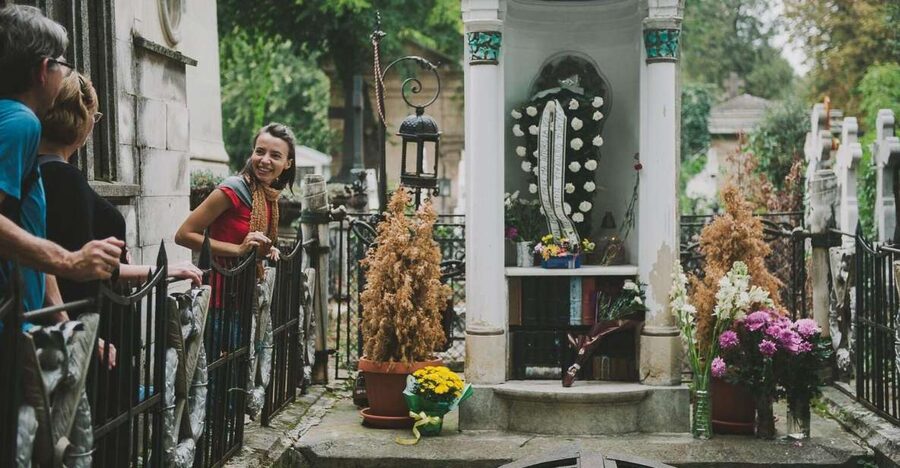
- Bellu Cemetery is the emotional center: Explore an old cemetery filled with ornate tombs, memorial art, sad love stories, folklore, and unsettling mysteries.
- Six cemeteries share one Bucharest street: The route begins near a striking concentration of burial grounds, including Jewish, Russian military, and Revolution memorial cemeteries.
- The 1989 Revolution gets personal: University Square and Revolution Square reveal where anti-communist protests, gunfire, and political change shaped modern Romania.
- Interwar Bucharest gets a darker look: Learn about sex work during the Little Paris era and see what remains of a former brothel.
- The Vampire of Bucharest appears in the story: The tour covers the serial killer who frightened the city in the early 1970s.
- Small groups help the storytelling: With no more than 12 people, you can ask questions and follow the guide’s explanations without feeling lost.
Why this dark history tour is different
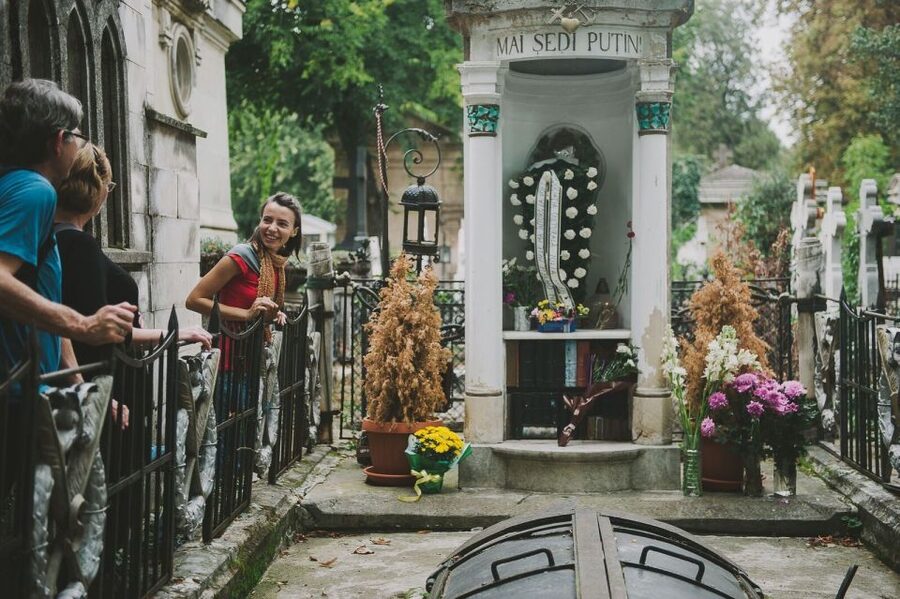
Many Bucharest sightseeing walks focus on grand buildings, royal landmarks, and the old town. This tour takes another route. It asks you to look at the city through death, fear, political repression, crime, and survival.
That may sound grim, but the experience is not built only around shock. The strongest part is the connection between personal stories and large events. A grave can introduce Romanian beliefs about death. A city square can explain how dictatorship ended. A former brothel can open a window onto social life in interwar Bucharest.
I like this approach because it gives you a better sense of how Bucharest changed over time. The route moves from historic burial grounds to the 1989 Revolution, then back to the interwar period and forward again into the communist era. It is not simply a collection of spooky tales.
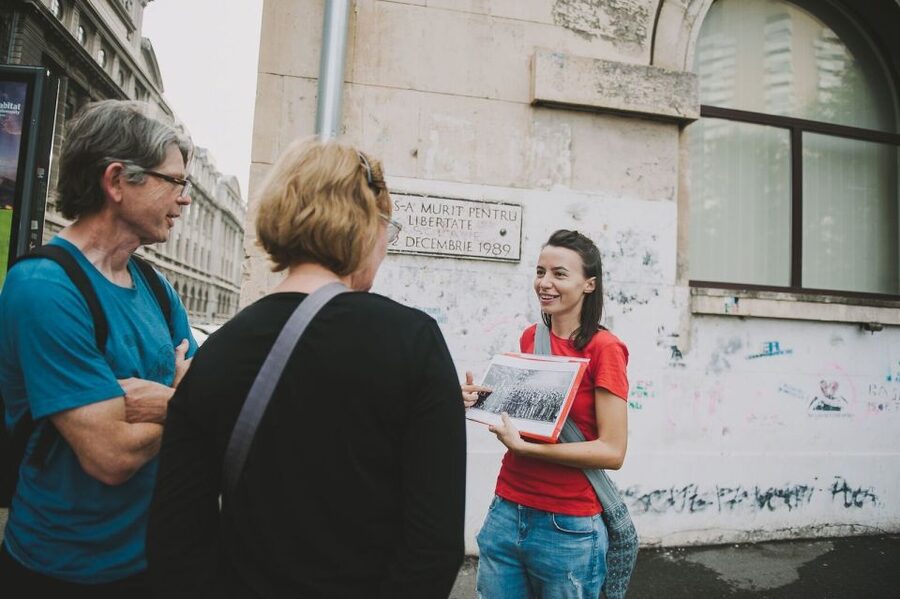
The tour is led in English by a local guide, and the small maximum group of 12 matters. The guides are not just reciting dates. Alex has been praised for using photographs, personal anecdotes, architecture, street art, bullet holes, and local plants to make the city easier to read. Elena is often described as warm and funny, while Andra and Vlad are noted for making complex subjects clear.
You should still expect a serious tone. The route deals with murder, prostitution, executions, prisons, labour camps, torture, and the Securitate, Romania’s secret police. It suits adults and older teenagers, but it is not an easygoing family outing.
More Dark History and Haunted Tours in Romania:
- Savannah History and Haunts Candlelit Ghost Walking Tour
★ 5.0 · 3,235 reviews - Stockholm: Ghost Walk and Historical Tour
★ 4.7 · 2,685 reviews - New Orleans Small-Group Haunted History Carriage Tour
★ 4.5 · 2,289 reviews
Six cemeteries and the road to Bellu
The opening section begins on a street not far from central Bucharest that accommodates six cemeteries. This unusual concentration immediately shows how the city has grown around its dead.
Among the burial grounds are the Cemetery of the Victims of the 1989 Revolution, a Jewish cemetery, a cemetery for Russian soldiers, and Bellu Cemetery. Each points toward a different part of Bucharest’s past. The route does not treat the cemeteries as identical spaces. Their communities, memorials, and historical roles help explain the city’s mixed identity.
The first stretch also sets the tone for the walk. You are not rushing from one famous sight to another. You stop, listen, and learn why a particular place matters. That slower rhythm is useful because the subject needs context.
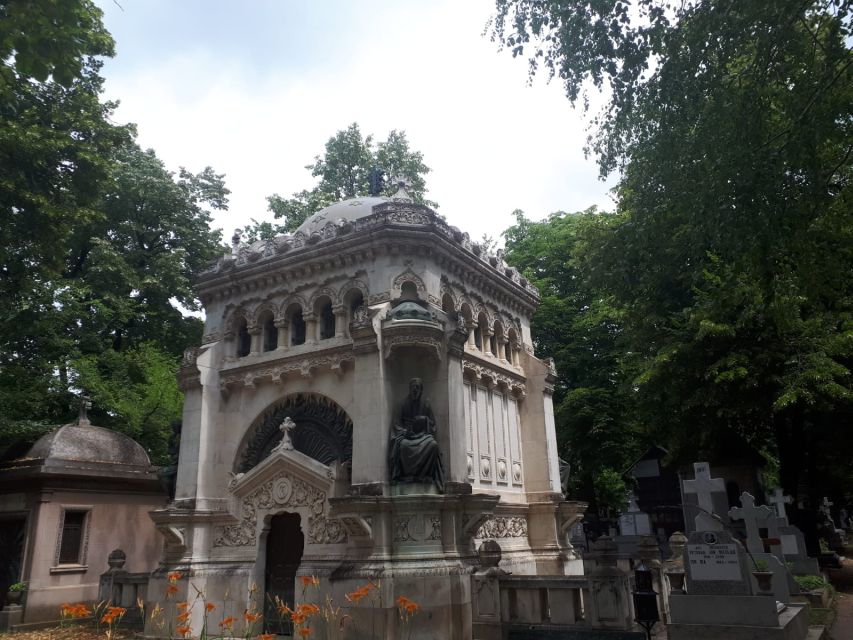
If you enjoy architecture, pay close attention here. The cemetery section includes monuments and funerary buildings that can feel more like an outdoor gallery than a conventional burial ground. The stories range from tragic romances to sinister mysteries, with Romanian folklore adding another layer to the discussion.
Bellu Cemetery, Bucharest’s open-air memorial gallery
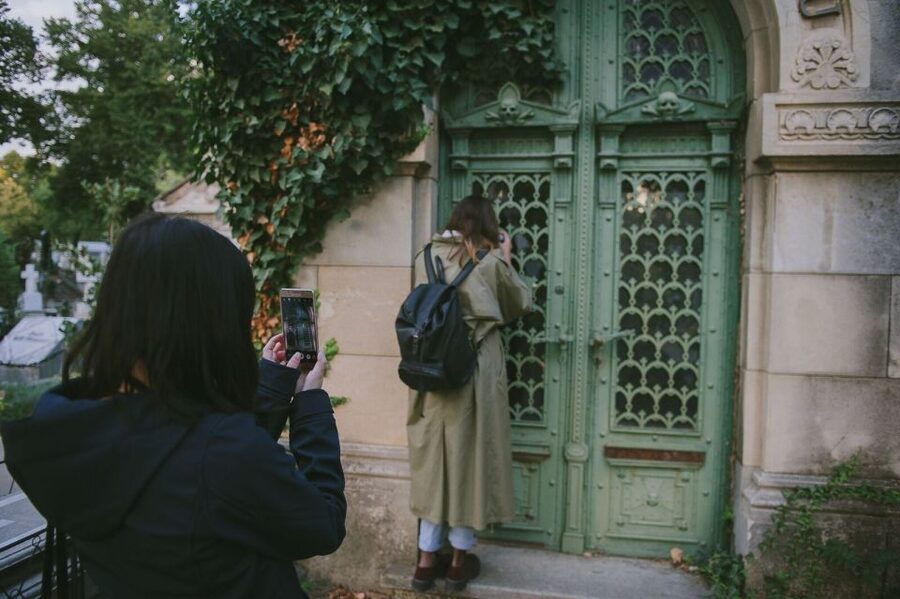
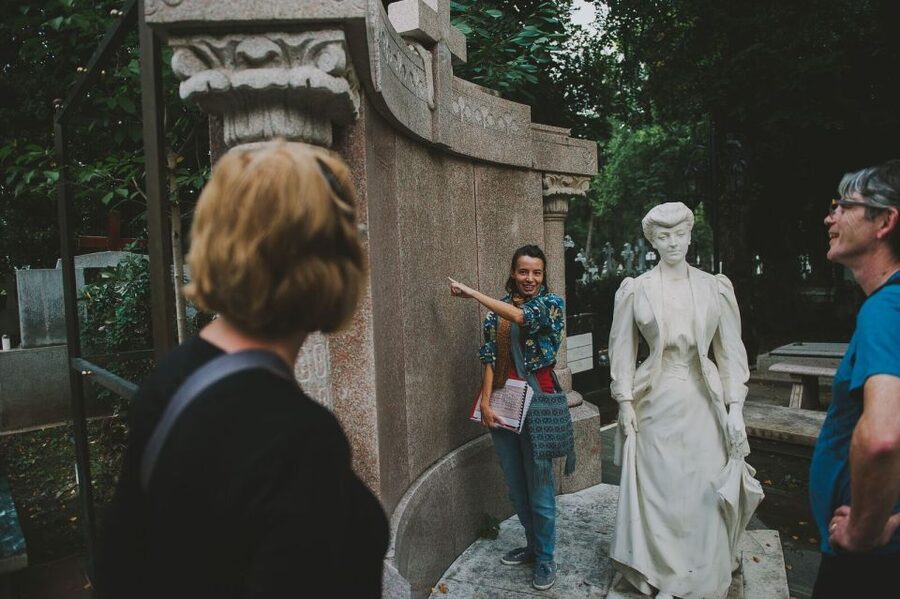
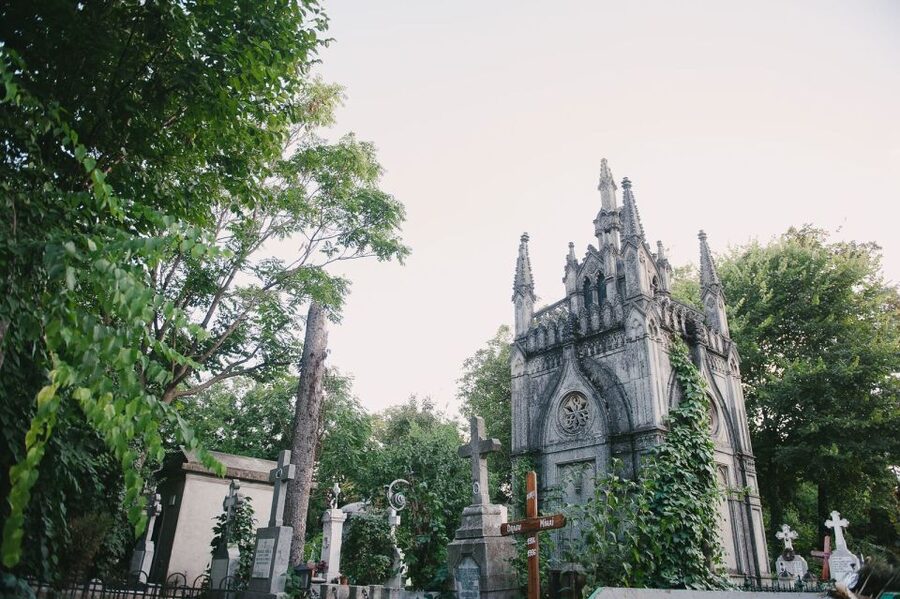
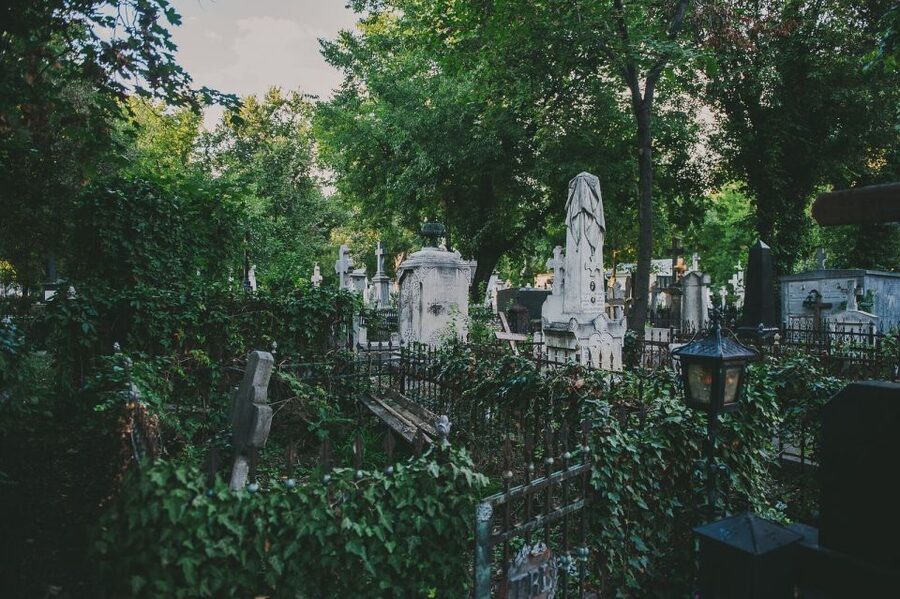
Bellu Cemetery is the tour’s main visual draw. It is a national historical monument, and its tombs, crypts, sculptures, and memorial structures create a striking setting for the guide’s stories.
I like this stop because the cemetery makes history physical. Instead of hearing only about prominent figures or old customs, you look at the objects built to remember them. A guide can point out details in stone and architecture, then explain the person, family, belief, or tragedy behind them.
The cemetery also rewards curiosity. Ask questions about symbolism, burial customs, local legends, and the people commemorated here. Guides including Elena and Irina have been praised for turning the visit into a lively conversation rather than a formal lecture.
There is also a gentler side to the stop. Several guides care for the cemetery’s stray cats and dogs, and you may see them feeding or greeting the animals. This is not the reason to book the tour, but it adds a very local touch to a place that could otherwise feel solemn and distant.
Give yourself room to absorb the atmosphere. The cemetery is beautiful, but the stories can be sad or disturbing. If you prefer light sightseeing, this section may feel intense. If you like unusual places with strong local character, it is likely to be the part you remember longest.
University Square and the blood of 1989
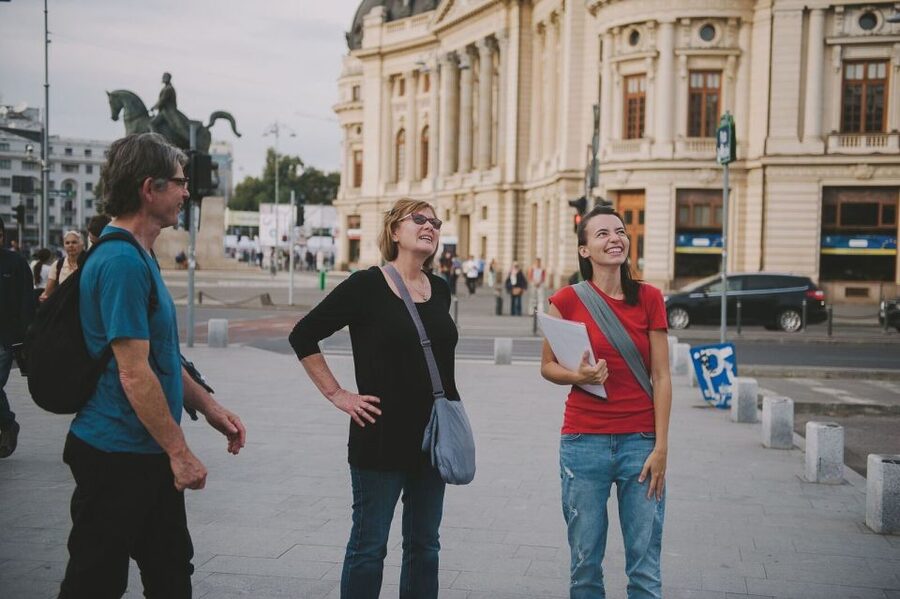
The route then shifts from old tombs to University Square, one of Bucharest’s key public spaces. Here the focus turns to the 1989 Revolution and the anti-communist student protests of the 1990s.
The value of this stop lies in understanding the square as a place of action, not simply as an urban landmark. The guide explains how demonstrations unfolded and why the site became associated with bloodshed and political conflict.
The tour gives you a way to connect Romania’s recent history with the streets around you. You may pass through the square on your own and see traffic, buildings, and ordinary city life. With the guide’s explanation, the same space becomes a place where people challenged power and where the future of the country was fought over.
This is one of the strongest reasons to choose the tour instead of relying on a standard city walk. The guide can explain how national events affected ordinary people and how Romanians remember them today.
The subject is heavy, so this section works best when you are willing to listen rather than simply collect photographs. Several guides have been praised for answering questions about communism, daily life, architecture, and modern Romanian society. That flexibility is useful if you want to go beyond the basic timeline.
More Three-Hour Tours in Romania:
- Berlin: 3-Hour World Heritage Cruise to Potsdam
★ 4.5 · 1,569 reviews - Edinburgh: 3-Hour Historical Walking Tour in Italian
★ 4.7 · 734 reviews - 3-Hour Porto Jewish Heritage Walking Tour with Local Guide
★ 4.5 · 396 reviews - 3-Hour Atlanta Beltline Food, Street Art and History Tour
★ 5.0 · 345 reviews
Little Paris, brothels, and the Vampire of Bucharest
Bucharest was once nicknamed Little Paris, a reference to its sophisticated cultural and architectural ambitions. The tour looks at the less polished side of that era by discussing sex work in interwar Bucharest and showing what remains of a former brothel.
This part gives the tour a welcome change of pace. Instead of focusing only on state violence and political terror, it explores private life, social rules, and the way people made a living in the city. The subject is handled as urban history rather than cheap scandal.
The route also introduces the serial killer known as the Vampire of Bucharest, who terrorized the city at the start of the 1970s. The story adds a crime-history thread to the tour, but it is placed within the wider setting of Bucharest under communist rule.
You should not expect a long true-crime investigation with every detail of the case. The provided outline identifies the killer and period, while the guide supplies the storytelling. The real purpose is to show another kind of fear in the city, one created not by the state or a mass protest, but by a criminal who frightened residents.
I like this section because it keeps the tour from becoming a single-topic account of dictatorship. You get social history, urban folklore, interwar culture, and crime alongside the political story.
Revolution Square and the machinery of communist fear
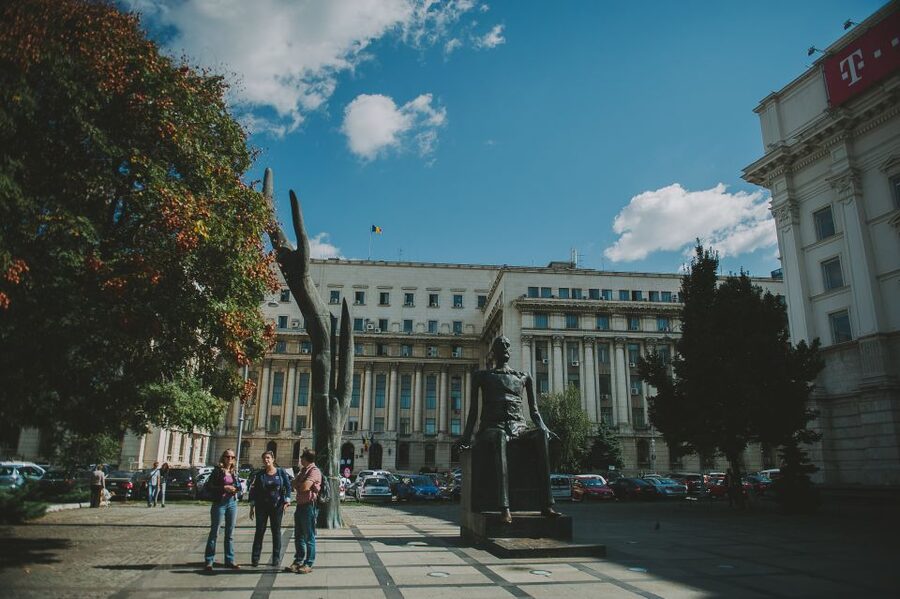
The final major stop is Revolution Square, where the 1989 Revolution began in Bucharest. Here the discussion turns directly to Ceaușescu’s dictatorship, the Securitate, prisons, labour camps, and methods of torture used against critics.
This is the point where the earlier stops come together. University Square shows protest and resistance. Revolution Square shows the collapse of the old order. The guide also explains the fear that shaped ordinary life before the regime fell, including the pressure to stay silent and the difficulty of getting through daily life.
Personal stories are especially useful here. Vlad has been praised for adding his own memories of life under communism, while other guides bring family and local perspectives into the discussion. These details help you understand that dictatorship was not only a matter of leaders and institutions. It affected food, work, speech, trust, and family life.
The subject matter can be painful, but the guide’s role is not to turn suffering into entertainment. The best moments explain how people adapted, what they feared, and why the Revolution mattered. I would pay close attention to this part even if your main interest is architecture or folklore, because it explains much of modern Romania.
The route ends with a stronger sense of Bucharest as a city shaped by repeated breaks: monarchy, interwar modernity, communist control, revolution, and uncertain change.
Walking, metro rides, and the practical rhythm
This is a walking tour, but it is not entirely on foot. Metro tickets are included, and the route uses public transportation to connect areas that would otherwise make the three-hour schedule harder.
The timing is efficient, though you should wear comfortable shoes. Several guides add regular pauses, and the tour can feel conversational rather than tightly scripted. A private or very small group may also allow the guide to spend extra time on your questions, interests, or local recommendations.
Weather matters. People who took the tour in winter specifically advise wrapping up warmly because you spend time standing outdoors while listening. Cold can creep in when you are focused on a story, especially in the cemetery or open squares. In warmer months, bring water and expect plenty of walking.
The meeting point is the main entrance of the Ion Luca Caragiale National Theatre at Bulevardul Nicolae Bălcescu 2. It is a clear starting place, but arrive with enough time to find the correct entrance and meet the guide.
The group size is capped at 12. That is small enough for questions and personal attention, but it does not guarantee a private tour. Some bookings have ended up private or nearly private, while others include a small group.
A traditional Romanian street snack is included, and the metro tickets are covered. Guides have also handed out items such as a Romanian chocolate bar, water, or extra snacks during individual tours. These touches are welcome, but the real value is the guide’s time and local interpretation, not the food.
Is $55 a fair price?
At $55 per person, this tour costs more than a basic free walking tour, but it includes three hours with an English-speaking local guide, metro fares, a snack, and access to several parts of Bucharest that are easy to miss.
The value depends on what you want from a guide. If you only need directions and a list of landmarks, the price may feel high. If you want historical context, personal stories, cemetery architecture, political background, and help understanding the city’s difficult past, the cost is easier to justify.
The small group limit also improves the value. A guide can answer questions and adjust the explanation instead of delivering a speech to a large crowd. Past guides have offered restaurant and café suggestions, food advice, and follow-up material through WhatsApp, though these extras should be viewed as a bonus rather than a guarantee.
The free cancellation option up to 24 hours before the tour and the reserve-now, pay-later choice make planning less rigid. You can check the available start times before booking, since the schedule is not fixed in the information provided.
Who should book this Bucharest tour?
I would choose this experience if you have already seen the usual central sights or want a more serious introduction to Romania. It is especially useful early in your stay, since the guides can help you understand later visits to Revolution Square, communist-era sites, museums, restaurants, and neighbourhoods.
It suits you if you enjoy:
- Political and social history
- True-crime stories handled as local history
- Cemetery art and folklore
- Walking tours with plenty of explanation
- Small groups and informal conversation
- Hearing how Romanian guides relate to their country’s past
You may want another tour if you dislike cemeteries, murder stories, or discussions of torture and political repression. It is also not a good match for anyone looking for a short, gentle introduction to Bucharest’s main monuments.
Should you book it?
Book this tour if you want Bucharest explained through the people, fears, and turning points that shaped it. Bellu Cemetery, the Revolution sites, and the local guides are the strongest reasons to go.
Wear good shoes and warm clothes in cold weather. Be ready for difficult subjects and a fair amount of standing outdoors. If you want a polished sightseeing loop with only cheerful stories, choose something else. If you want a thoughtful, unusual look at Romania’s past, this is a strong use of three hours and $55.
FAQ
How long is the Bucharest Dark History Tour?
The tour lasts three hours.
Where does the tour meet?
It meets at the main entrance of the Ion Luca Caragiale National Theatre, Bulevardul Nicolae Bălcescu 2, Bucharest.
Is the tour conducted in English?
Yes. The tour includes a live English-speaking local guide.
Are metro tickets included?
Yes. Metro tickets are included in the tour price.
Can children join the tour?
No. Travelers under 16 are not permitted to participate.
What should I bring?
Bring comfortable shoes. Warm clothing is also a smart choice during colder months because the tour includes outdoor stops and periods of standing.
Just added around Romania
- Private Tour – Food, Culture, History & Traditions★ 5.0 · 18 reviews
- Half-Day Jewish Heritage Walking Tour in Bucharest★ 5.0 · 20 reviews
- Bucharest Historical Food Tour in Old Center★ 5.0 · 21 reviews
- Bucharest Jewish Heritage | Holocaust Memorial | Private Car Tour★ 5.0 · 38 reviews
- Bucharest Heritage City Tour – The Last Days of Communism★ 5.0 · 20 reviews
- Experience the History of Bran Castle and Saxon Fortifications in Burzenland★ 5.0 · 19 reviews
- Roma Culture, Realities and Slavery History, Walking tour★ 4.9 · 52 reviews
- Private Bucharest: History & Food with Traditional Meal★ 5.0 · 34 reviews
Dark History & Haunted Tours, compared.

Savannah History and Haunts Candlelit Ghost Walking Tour
Read our review →

New Orleans Small-Group Haunted History Carriage Tour
Read our review →

Genteel and Bard’s Savannah Dark History and Ghost Encounter Walking Tour
Read our review →
Shadows of York: Ghost Walk and Horrible History.
Read our review →Browse the lists this tour appears in