
Review · SOUTHEAST REGION
Rio de Janeiro: Little Africa Heritage Walking Tour
History lives in the pavement here. This 150-minute walk through Rio’s port district explains how African culture shaped the city, from food and dance to samba and daily life. I especially like the rooftop view from the Rio Art Museum and the stop at Pedra do Sal, where music and community remain central. The main drawback is simple: you spend the full tour outdoors, often in heat or rain.
I also like the tour’s focus. It does not treat Afro-Brazilian culture as a side note to Rio’s beaches and viewpoints. Guides such as Luana, Nathalia, Larissa, Eddie, Marina, and Ryane have been praised for bringing personal warmth, strong research, and thoughtful answers to difficult questions about slavery and racism. Wear proper walking shoes, carry water, and allow time afterward for lunch in the port area.
Key points to know before you book
- A serious look at Little Africa: Learn how formerly enslaved people shaped Rio after Brazil ended the slave trade.
- A useful first stop at the Rio Art Museum: The rooftop gives you broad views over Mauá Square and Guanabara Bay.
- Samba’s birthplace is on the route: Pedra do Sal connects music, religion, community, and Afro-Brazilian identity.
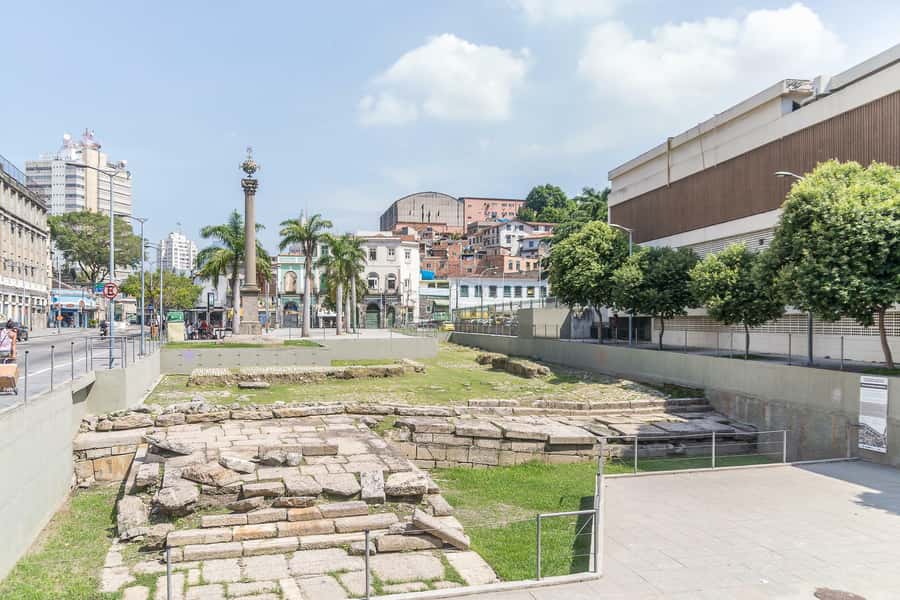
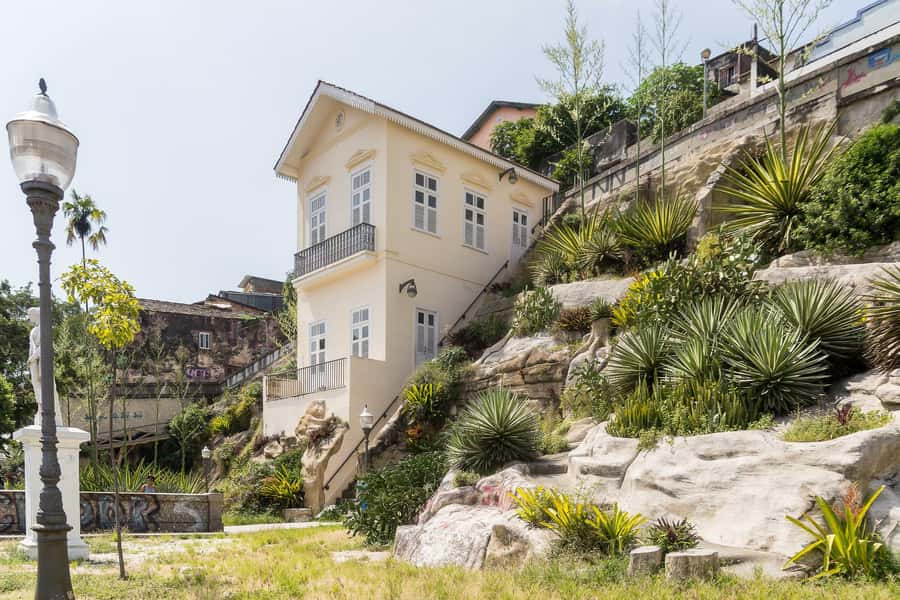
- The tour covers five main historic areas: Morro da Conceição, Largo de São Francisco da Prainha, Pedra do Sal, the Hanging Garden of Valongo, and Cais do Valongo.
- The guides are the heart of the experience: The strongest praise goes to guides who make difficult subjects clear, personal, and open to questions.
- Plan for outdoor conditions: The tour runs rain or shine and lasts two and a half hours, with no hotel pickup.
Why Little Africa belongs on your Rio schedule
Rio can be easy to admire and hard to understand. You see beaches, granite peaks, samba schools, and grand avenues, but the city’s African foundations are often given less attention than they deserve. This walk corrects that imbalance.
The port neighborhoods became known as Little Africa around the turn of the 20th century. After the slave trade ended in Brazil, formerly enslaved people remained in the area and built communities, businesses, traditions, and musical forms that still shape Rio.
That context makes this tour more than a sightseeing stroll. You are not simply checking off statues and plazas. You are learning how food, dance, religion, language, and music carried memory through a period of brutal oppression and into modern Brazil.
The subject matter can be painful. Slavery, structural racism, and the treatment of Black Brazilians are discussed directly. That is a strength, but it also means this is not a light, purely entertaining walk. You should come ready to listen, ask respectful questions, and think about what you are seeing.
The tour has earned a 4.9 rating from 177 bookings, and the strongest praise centers on the guides. Participants repeatedly describe them as warm, expressive, patient, and deeply committed to the subject. That matters here. A plaque or street corner cannot explain itself. The guide turns the area into a connected story.
More History Walking Tours in Brazil:
- Paraty: Historic Centre Walking Tour & Cachaça Tasting
★ 4.8 · 96 reviews - Salvador Historic Walking Tour – Pelourinho
★ 4.8 · 62 reviews - Rio: Historical Walking Tour
★ 4.7 · 32 reviews
Starting at the Rio Art Museum and Mauá Square
Meet your guide in front of the Museu de Arte do Rio, usually called MAR, near Mauá Square. Arrive five minutes early. The guide can wait only 15 minutes for late arrivals, so do not treat the meeting time casually.
The opening talk covers Brazil’s colonial period. This may sound like standard background, but it gives the rest of the walk its framework. You need to understand colonization, slavery, and the legal end of the slave trade before the streets of Little Africa make full sense.
There is also a short break of about 10 minutes at the museum. The rooftop view is one of the tour’s best visual moments. You can look across Mauá Square toward Guanabara Bay and see the port area as a whole rather than as isolated streets.
This viewpoint helps you get your bearings fast. It also makes a useful contrast: the bay and renovated square can look polished and modern, while the nearby streets hold evidence of a far older and more difficult past.
Do not expect a long museum visit. The point is the introduction and the view, not a detailed examination of the museum’s art collection. If you want to explore MAR properly, return at another time.
Morro da Conceição and the shape of Little Africa
From the museum, the walk continues toward Morro da Conceição. The guided portion here lasts about 20 minutes, though the exact pace can vary with the group and the guide’s explanations.
This is where the tour starts to feel less like a lecture and more like a conversation with the city. The streets and slopes help explain how communities developed around the port. You begin to see Little Africa as a lived-in part of Rio, not just a historical label.
Pay attention to the connection between physical space and social history. The port brought people, goods, forced labor, and later new forms of work and community. A short walk through this district can reveal why certain traditions took root here.
The amount of walking is manageable for most people who are comfortable on city streets, but the tour is not a vehicle-based overview. You will be outside for the duration, with sun, humidity, uneven surfaces, and possible rain. Comfortable clothing is not a suggestion. It is the right call.
Largo de São Francisco da Prainha and Afro-Brazilian food
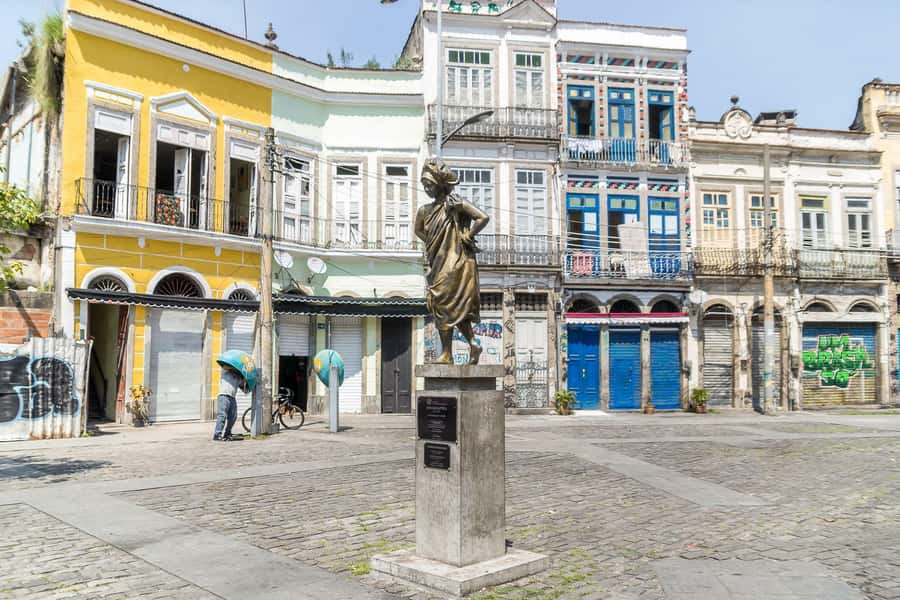
The next major stop is Largo de São Francisco da Prainha, a square associated with African influence on Brazilian gastronomy. The guided visit takes about 20 minutes.
This is a welcome reminder that culture is not only found in monuments. Food preserves migration, memory, adaptation, and family tradition. The guide uses the area to explain how African influence entered Brazilian cooking and became part of everyday life.
Several guides have also offered food suggestions for after the tour. Some participants chose to continue to lunch together, and one particularly useful recommendation involved a restaurant serving bobó de camarão, a shrimp stew. That is not included in the tour, but it gives you a sensible way to extend the experience with a meal.
One guide also suggested places to eat and spend time in Little Africa and other parts of Rio. If food is important to you, bring a few questions. The guide may be able to point you toward options, though specific recommendations can vary by guide and day.
The square is also home to a statue honoring Mercedes Baptista, the first Black dancer at Rio’s Municipal Theater and a pioneer of Afro-Brazilian dance. Her story adds another dimension to the walk. The tour is not limited to suffering and survival. It also highlights artistic achievement and people who opened doors in Brazilian culture.
A few more history tours around Brazil worth a look
- Maria Fumaça – Wines and History
★ 4.0 · 242 reviews - Rio de Janeiro: Historic Rio and Santa Teresa Half-Day Tour
★ 4.4 · 228 reviews - São Paulo: Downtown Historical Bike Tour
★ 4.9 · 191 reviews - Ancient Rio and Santa Teresa Tour with Hotel pick-up and drop-off
★ 4.5 · 154 reviews
Pedra do Sal, where samba found its home
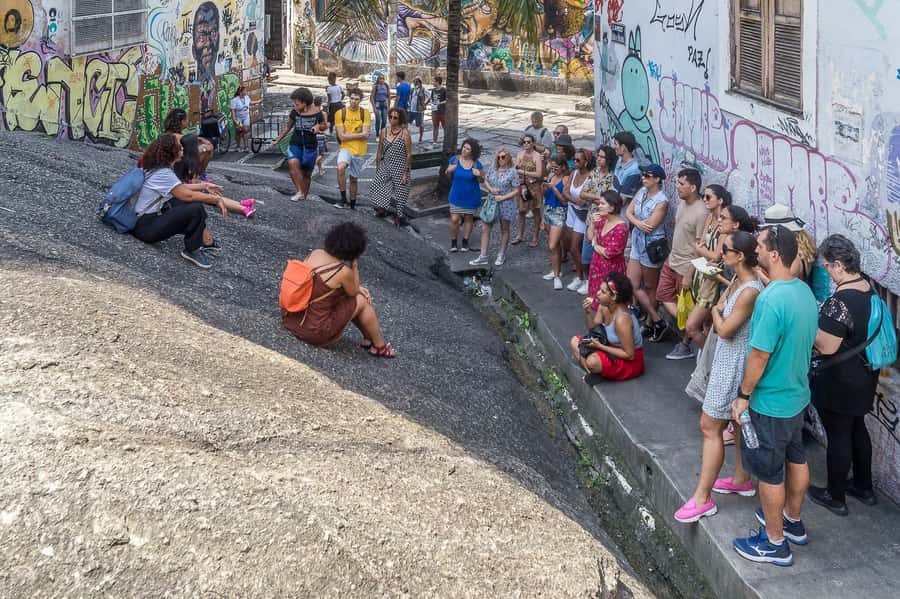
Pedra do Sal is likely to be the emotional and cultural high point for many people. The stop lasts about 20 minutes and focuses on the site’s connection to the birth of samba.
This area is described as the oldest continuously inhabited Black neighborhood in the country. That fact gives the site weight, but the guide’s explanation is what makes it memorable. You learn how music, community, and Afro-Brazilian identity came together in this part of Rio.
The stone itself is not a grand attraction in the usual tourist sense. You will not find a giant monument designed to impress from a distance. Its importance comes from the people, gatherings, and traditions connected to it.
That is exactly why this stop works best with a guide. Alone, you might pass through, take a picture, and miss the larger meaning. With context, you can connect Pedra do Sal to the history of samba and to the continuing presence of Black culture in Rio.
The guides are often praised for asking questions rather than delivering a memorized speech. Nathalia, Larissa, Ryane, Eddie, and others have been described as engaging and open to discussion. Some guides also use expressive storytelling and role-playing to make historical moments easier to picture. That style will appeal to you if you prefer a lively talk over a dry timeline.
The Hanging Garden of Valongo
The walk then reaches the Jardim Suspenso do Valongo, or Hanging Garden of Valongo. This stop lasts about 20 minutes.
The garden gives you a chance to pause and consider how public spaces can be reshaped and reinterpreted. The area is closely tied to Valongo and the port’s role in the forced arrival of Africans in Brazil. The tour explains that connection instead of presenting the garden as a decorative viewpoint alone.
This part may feel quieter than Pedra do Sal. That is useful. The subject is heavy, and the change of pace gives you room to absorb what the guide has explained.
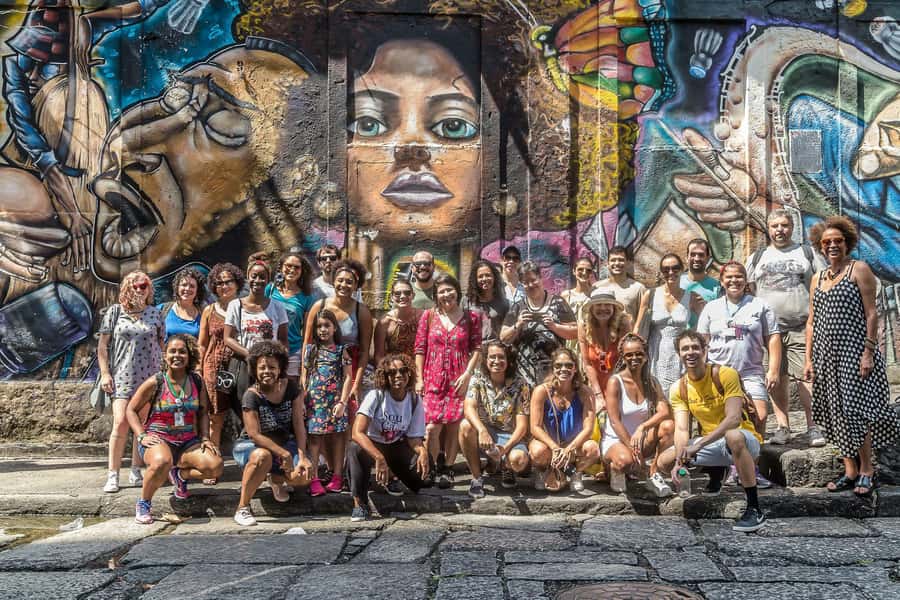
The guide may also point out art and murals in the area. One participant found that the graffiti added another layer to the walk, especially because it connects historic figures with present-day cultural identity. Look around rather than keeping your attention fixed only on official signs.
Cais do Valongo and the difficult center of the story
The final major stop is Cais do Valongo. The guided visit takes about 20 minutes before the group returns to the Rio Art Museum.
Cais do Valongo is essential to understanding the port district because it connects the physical city to the history of the slave trade. The stop is not presented as a comfortable story, and it should not be. Brazil’s slavery era lasted until 1888, which is much more recent than many visitors first realize.
The guide links the port’s past to present-day racial dynamics. That wider connection is one of the tour’s most valuable features. You are not left with the impression that slavery is a closed chapter with no effect on modern life.
Several guides have been praised for handling sensitive questions with care and good humor when appropriate. That balance matters. A guide who is too casual can diminish the subject, while one who simply recites dates can leave you disconnected. The best guides make room for seriousness, curiosity, and honest discussion.
After Cais do Valongo, you return to the museum. The complete route takes about 150 minutes, though the pace can depend on weather, group size, questions, and the guide’s style.
What the $40 price gets you
At $40 per person, this is not the cheapest way to spend two and a half hours in Rio. But the value is strong if you want context that you would struggle to assemble on your own.
The price covers a live English-speaking guide and a carefully connected route through several important sites. It does not include hotel pickup, drop-off, food, museum admission beyond the planned stop, or personal drinks and snacks.
I would compare the cost with the quality of the explanation, not with the number of stops. Five locations without context would be a poor deal. Here, the stops build on one another: colonial Brazil, the port, Black community life, food, dance, samba, Valongo, and the modern meaning of that past.
The experience is especially good value early in your Rio visit. Several participants said it helped them understand Brazil and made the rest of their trip more meaningful. That makes sense. Once you understand the port district’s role, you will notice Afro-Brazilian influence elsewhere in the city with sharper eyes.
Free cancellation up to 24 hours before the start and the option to reserve now and pay later add useful flexibility. Still, check the language details carefully. The activity information says the tour is offered only in English, while the inclusion notes mention an English or Portuguese-speaking guide. If Portuguese is important to you, confirm before paying.
Heat, rain, walking, and practical comfort
This tour runs rain or shine. One participant completed it during heavy rain, and another specifically advised preparing for heat because you remain outdoors for the full two and a half hours.
Bring:
- Comfortable walking shoes
- Water
- Sunscreen
- Comfortable clothes
A small umbrella or rain layer may be sensible because the tour does not move indoors whenever the weather changes. You should also avoid scheduling something immediately afterward if you want time to stop for food, cool down, or continue the conversation with the guide.
Children under five are not suitable for this activity. Older children may enjoy it, but the subject matter includes slavery, racial injustice, and difficult historical events. Use your judgment based on the child’s age and interest.
The tour begins and ends at the Rio Art Museum, which makes planning easier than a route with a distant final stop. You arrange your own transport to the meeting point and after the return. The guide will wait only 15 minutes, so allow extra time for Rio traffic.
Which guide style suits you best
The provider uses several guides, and individual personalities differ. Luana has been praised for kindness, enthusiasm, and staying with a participant while waiting for an Uber. Nathalia is often described as charismatic, sharp, and able to answer sensitive questions with care. Larissa receives high marks for warmth, personal storytelling, and thoughtful questions.
Eddie is known for his energy, broad perspective, and strong recommendations for food and other activities. Marina brings an academic background in history and tourism, while Ryane has been praised for passion and a clear connection to the subject.
You may not choose your guide, so book this experience for the subject and route rather than a particular person. Still, the consistently positive response to the guiding team is reassuring. The human side of this tour is one of its strongest features.
Who should book this walk
I recommend it most for first-time visitors who want more than postcard Rio. It is also a strong choice if you care about African diaspora history, music, food, dance, social justice, or the roots of samba.
You will get the most from it if you enjoy listening and asking questions. The route is not built around constant photo stops or flashy attractions. Its reward is understanding.
It may not suit you if you want a relaxed sightseeing walk with little discussion of painful subjects. It may also feel demanding if you dislike heat, rain, or two and a half hours on foot.
Should you book the Little Africa Heritage Walking Tour?
Yes, if you want to understand Rio beyond its beaches and famous views. The rooftop look over Mauá Square is pleasant, but the real value comes from the stories at Largo da Prainha, Pedra do Sal, the Hanging Garden of Valongo, and Cais do Valongo.
Book it near the beginning of your stay, wear light comfortable clothing, and leave room for lunch afterward. At $40, you are paying for a guide who connects places that might otherwise seem unrelated. For Rio’s African story, that context is worth the price.
FAQ
Where does the Little Africa Heritage Walking Tour begin?
The tour begins in front of the Museu de Arte do Rio.
Where does the tour finish?
The walk returns to the Museu de Arte do Rio after visiting the port-area sites.
How long does the tour last?
The tour lasts 150 minutes, or two and a half hours.
What language is the tour offered in?
The activity information says the live tour is offered in English only. The inclusion details also mention an English or Portuguese-speaking guide, so confirm the language available when booking if this matters to you.
What places does the tour visit?
The route includes the Rio Art Museum, Morro da Conceição, Largo de São Francisco da Prainha, Pedra do Sal, the Hanging Garden of Valongo, and Cais do Valongo.
Is hotel pickup included?
No. You must arrange your own transport to the museum and after the tour.
Does the tour run in bad weather?
Yes. The tour takes place rain or shine.
What should I bring?
Bring comfortable shoes, sunscreen, water, and comfortable clothes.
Are young children allowed?
Children under five are not suitable for this activity.
Can I cancel for a refund?
You can cancel up to 24 hours before the activity for a full refund. You can also reserve now and pay later.
Just added around Brazil
- Germanic Route – Cultural and historical in Ilhota, Blumenau and Pomerode★ 4.5 · 67 reviews
- Rio: Historical Walking Tour★ 4.7 · 32 reviews
- Rio: Olympic Boulevard, Museum of Tomorrow & History Tour★ 4.1 · 47 reviews
- Rio de Janeiro: Historical Downtown and Lapa Walking Tour★ 4.4 · 32 reviews
- Salvador Historic Walking Tour – Pelourinho★ 4.8 · 62 reviews
- Historic City Tour Manaus by car with 3 stops.★ 4.9 · 18 reviews
- From Foz do Iguazu: Triple Frontier Landmark Ticket★ 4.4 · 136 reviews
- Florianópolis: Historical Center, Beach & Nature Tour★ 3.3 · 25 reviews
History Walking Tours, compared.
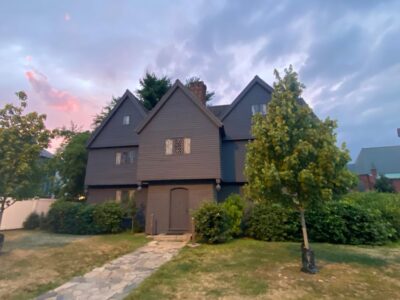
History and Hauntings of Salem Guided Walking Tour
Read our review →
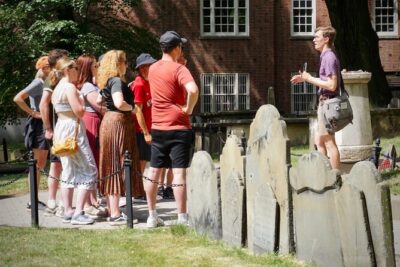
Freedom Trail History Small Group Walking Tour
Read our review →
Historic Charleston Guided Sightseeing Walking Tour
Read our review →
Tapas Walking Tour with Food, Wine, and History
Read our review →
Savannah History and Haunts Candlelit Ghost Walking Tour
Read our review →
A History of Terror – Belfast City Centre Walking Tour
Read our review →Browse the lists this tour appears in