
Review · MASSACHUSETTS
Plymouth: Plimoth Patuxet Museums – 3 tickets available
History comes alive in Plymouth. Plimoth Patuxet Museums brings the 17th century into reach through a Wampanoag homesite, an English settlement, skilled craft workers, and optional visits to the Mayflower II and Plimoth Grist Mill. I especially like the honest attention given to Indigenous history and the chance to ask questions directly to costumed interpreters rather than simply read wall panels.
I also like the freedom to explore at your own speed. You can spend two or three hours at the main campus, add the waterfront ship and mill on the same day or separate days, and return to exhibits that catch your interest. The main drawback is that the experience is spread across separate sites, and transportation between them is not included. The Mayflower also requires stairs and is not ADA accessible.
Key things to know before you go
- The main campus includes two living-history areas: Visit the Historic Patuxet Homesite and the 17th-Century English Village with one admission.
- The Indigenous presentation is central, not an afterthought: Culture keepers and educators explain that Native people lived here for more than 12,000 years and remain part of the region today.
- The English Village asks you to participate: You might help with a garden task, learn a dance, join a song, play games, or watch a militia drill.
- The Mayflower II and grist mill require an upgrade: Both are less than three miles away in Plymouth’s Downtown Waterfront District.
- You can stretch the ticket across several days: Multi-exhibit tickets can be used on different days, and the admission is valid for 10 days.
- The best value depends on your pace: The main campus takes about two to three hours, while the Mayflower takes about 30 minutes and the mill about 30 to 45 minutes.
Start at the Henry Hornblower Visitor Center

Your visit begins at the Henry Hornblower Visitor Center at 137 Warren Avenue. This is where you exchange your electronic voucher for admission, pick up maps, and get oriented to the grounds.
Two theaters show an orientation film in English with subtitles. Written translated maps are available, but there are no audio tours. That matters if you prefer to move independently or if members of your group have different interests. You can take in the film, then head out to the living-history sites without being tied to a guide or fixed group.
Parking at the main campus is free, which makes this a practical stop for a family or anyone driving around Plymouth. The waterfront sites have metered parking, so plan your route before leaving the main campus. The attractions are close, less than three miles apart, but admission does not include transportation between them.
The Plentiful Café is open from 11 a.m. to 4 p.m. It serves modern favorites along with 17th-century tastings, a useful break if you are staying for several hours. Four retail stores offer Plimoth-made pottery and other New England artisan goods. The shops are not essential to the visit, but the pottery connects nicely with the craft demonstrations.
More Museum and Gallery History Tours in the USA
- Guided African American History Tour with Reserved Museum Entry
★ 4.5 · 1,180 reviews - Chicago: Field Museum of Natural History Ticket or VIP Tour
★ 4.7 · 717 reviews - Field Museum of Natural History Admission Tickets
★ 4.5 · 489 reviews
Meet the people of the Historic Patuxet Homesite
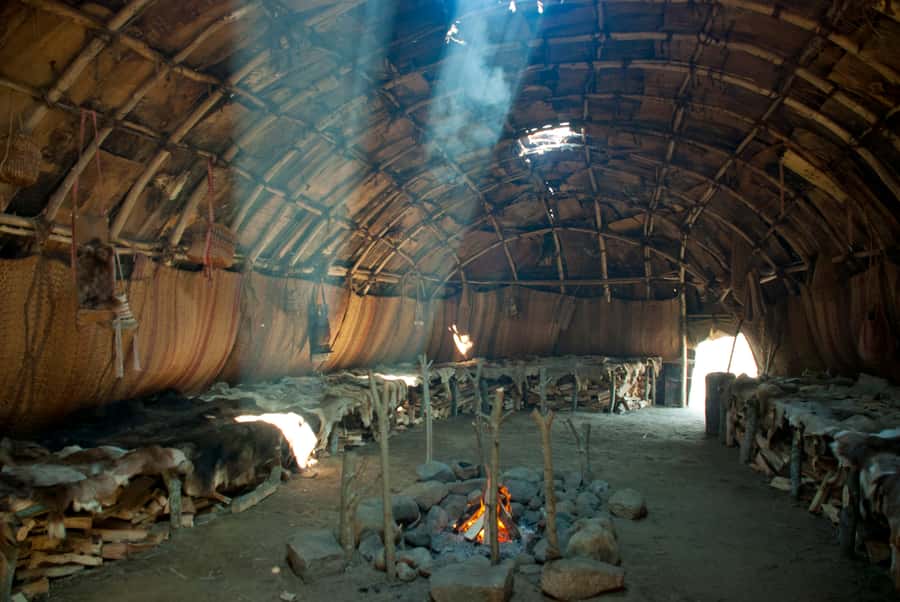
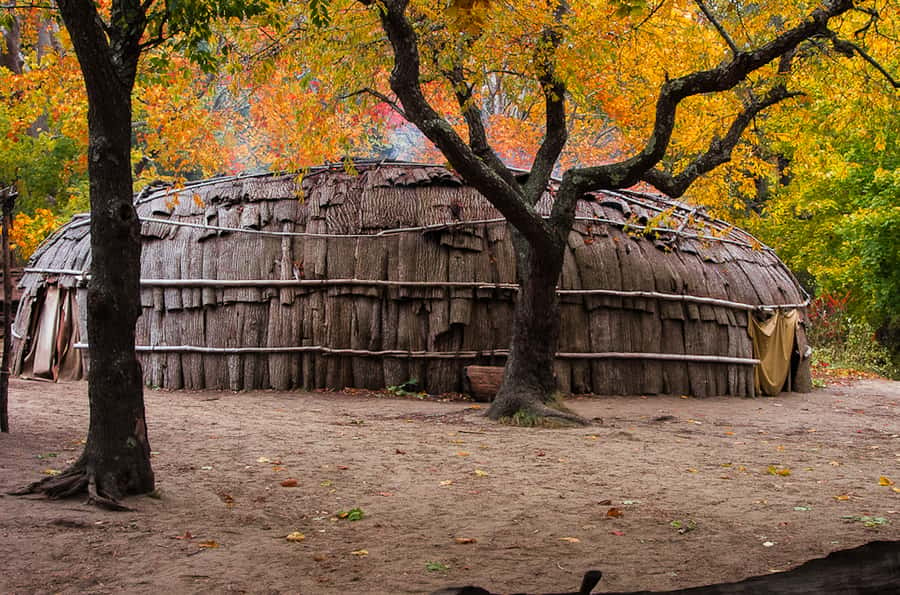
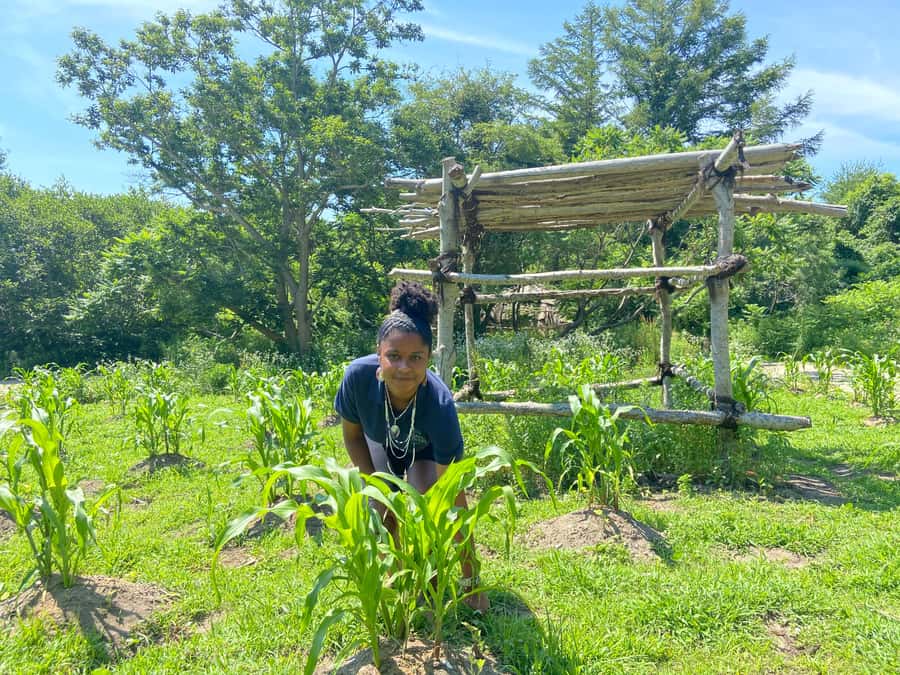
The Historic Patuxet Homesite is one of the most important parts of the experience. Culture keepers and educators represent their own community and culture as they explain life in this place before European arrival.
The presentation makes a clear point: Indigenous people lived here for more than 12,000 years, and Native communities are still here today. That framing gives the site more weight than a simple recreation of an earlier way of life. You are not being shown a vanished people as if they disappeared from the story.
The homesite focuses on daily life, cultural knowledge, and the relationship between people and the land. The details you encounter are meant to support conversation. Take time to ask questions, especially if you have only learned Plymouth history through the familiar Pilgrim story.
Seasonal events add another layer. The June Strawberry Thanksgiving and August Green Corn Festival are included with admission. Indigenous Peoples Weekend takes place in October. These events may offer a fuller program than a regular day, but schedules can change, so check availability before planning around one.
Step into the 17th-Century English Village
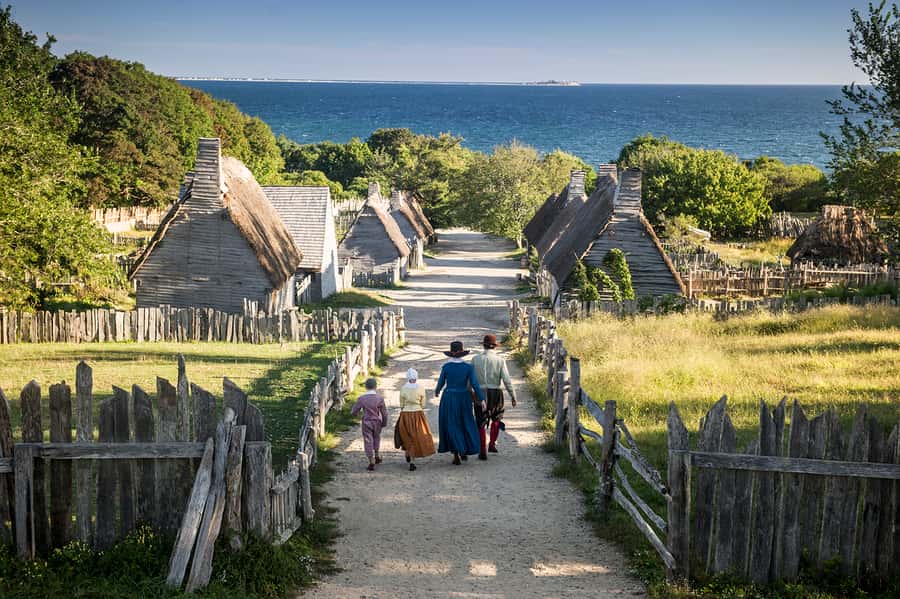
The English Village presents Plymouth in 1627, when first-person interpreters portray Pilgrims living in the settlement. The goal is not to watch a staged show from a distance. You are encouraged to speak with the people in the village and take part in simple activities.
Depending on the day, you might help in a garden, learn a period dance, sing a song, play a game, assist with chores, or take part in a militia drill. These small tasks help children understand how much work daily life required. Adults often get more from the conversations, especially if they arrive with a few questions about food, work, religion, settlement, or relations with Indigenous communities.
The interpreters remain in character and speak from the viewpoint of the year being presented. That creates a strong sense of place, though it also means you may need to ask carefully worded questions to understand the difference between the character’s beliefs and the museum’s broader historical interpretation.
The village includes heritage rare-breed animals. You can see cows, sheep, and goats, with pigs and chickens also possible. For families, the animals provide a welcome change of pace. For anyone interested in historic farming, they help show that the settlement was a working community rather than a row of empty buildings.
In November, the setting changes to 1621 for the First Harvest Feast, the event widely known in the United States as the First Thanksgiving. This seasonal shift gives repeat visitors a reason to return, though it also means the exact focus of your visit depends on the calendar.
Watch historic crafts take shape
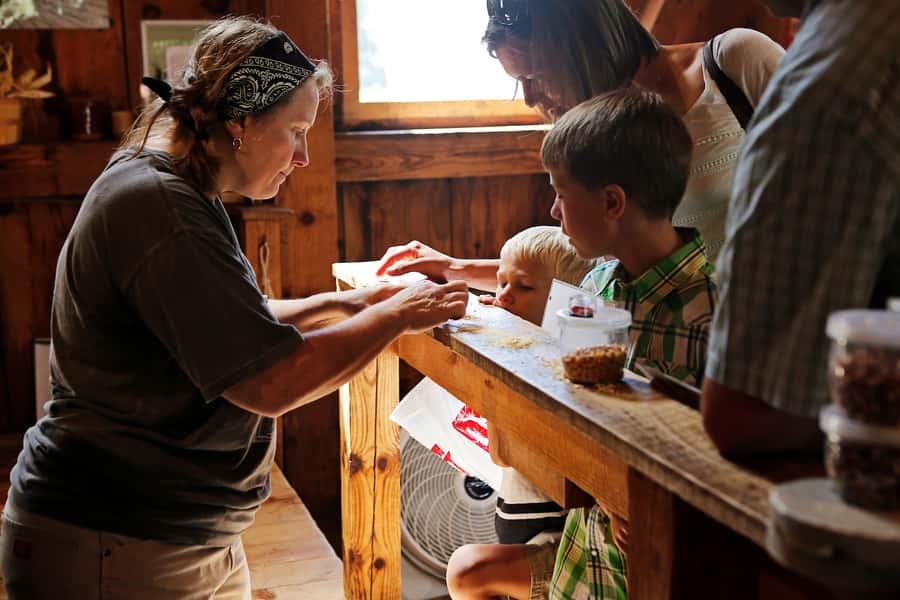
The Craft Center features reproductions of 17th-century European pottery and other artisan displays that change with the season. The value here is seeing the work rather than only seeing a finished object behind glass.
Artisans explain how historic crafts were made and why those skills mattered. Pottery was useful, durable, and part of ordinary household life. Watching the process gives you a better sense of the labor behind objects that can look simple in a museum case.
The retail store sells Plimoth artisan-made pottery. I would treat this as an optional stop, but it can be a good place to find a useful souvenir instead of a generic Plymouth keepsake. The Craft Center and shops also give you a quieter indoor pause between the two outdoor living-history areas.
The Davis Gallery Exhibit adds another museum-style element to the visit. Since the main campus combines galleries, demonstrations, animals, buildings, and interpreters, you can adjust your pace. If a child has had enough period conversation, move on to the animals. If you want more context, spend extra time with the exhibits.
Same place, a different slice of the past:
- History and Hauntings of Salem Guided Walking Tour
★ 5.0 · 14,564 reviews - Charleston’s Old South Carriage Historic Horse & Carriage Tour
★ 5.0 · 10,023 reviews - Beneath The Streets Underground History Tour
★ 4.5 · 8,006 reviews - Boston: Freedom Trail History Small Group Walking Tour
★ 5.0 · 6,450 reviews
Add the Mayflower II at Plymouth’s waterfront
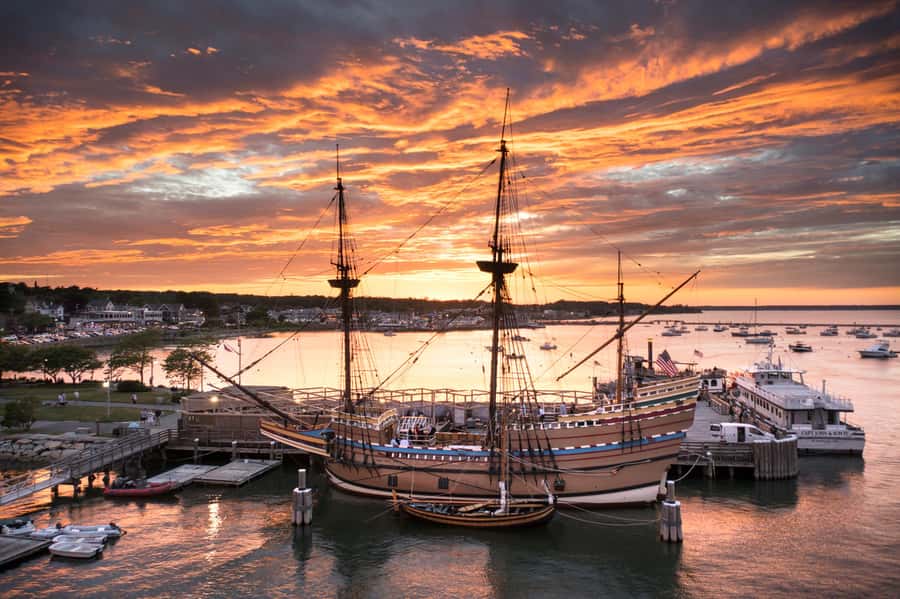
The Mayflower II is a reproduction of the ship associated with the 1620 crossing and is listed on the U.S. Register of Historic Places. You can climb aboard and get a physical sense of the cramped voyage that is difficult to gain from a book or classroom lesson.
Modern-day guides provide the interpretation here. This is different from the first-person approach in the English Village, and that change works well. You can ask direct questions about the ship, the voyage, and the history of the Mayflower without staying inside a character’s point of view.
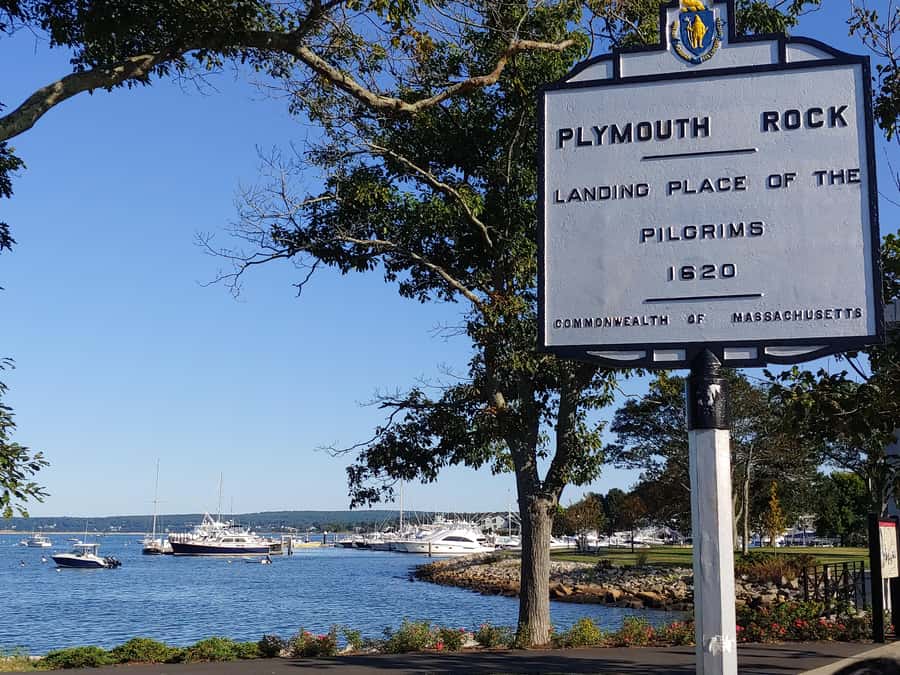
The visit usually takes about 30 minutes. Add roughly an hour if you also want to see Plymouth Rock and Cole’s Hill nearby. The waterfront setting makes this a convenient pairing, especially if you are already visiting downtown Plymouth.
Be realistic about access. The ship has a ramp and stairs, but it is not ADA accessible. Wheelchair users can enter the exhibit dock area and view the ship from there. One visitor with an injured ankle used a walker and golf cart service at the main site but could not manage the Mayflower steps. That is a useful reminder to plan around the ship’s physical limits.
Two guided tour times are offered, and displays around the ship provide additional reading. If you are short on time, the Mayflower is still worth adding, but it is a compact visit rather than a half-day attraction.
See the machinery at Plimoth Grist Mill
The Plimoth Grist Mill sits along Town Brook on the original location associated with Pilgrim John Jenney’s mill. It is a working reproduction, not just a building dressed up for photographs.
Water power drives the machinery, and the demonstrations show how grain was processed. The mill also includes STEM and history programs for all ages, making it a useful addition for families who want something mechanical and hands-on after the interpretive work at the village.
Plan on 30 to 45 minutes. The site also explains the ecology of Town Brook, so the visit connects technology with the waterway that made the mill possible. Cornmeal and grits are available for purchase, a practical souvenir that fits the site better than another plastic trinket.
The mill hosts the Herring Run Festival in April and the Grist Mill Grain Fest in November. These special events are included with admission. If you enjoy machinery, food history, or demonstrations with a clear result, the mill may be the most satisfying add-on.
How much time should you plan?
The main Plimoth Patuxet campus takes two to three hours for most people, though you can spend longer if you attend several presentations, ask many questions, stop for food, and browse the galleries or shops.
A sensible full visit looks like this:
- Two to three hours at the Historic Patuxet Homesite, English Village, Craft Center, and Davis Gallery
- About 30 minutes aboard the Mayflower II
- About one hour for the ship, Plymouth Rock, and Cole’s Hill together
- Thirty to 45 minutes at Plimoth Grist Mill
You do not need to force all three locations into one rushed block. Multi-exhibit tickets may be used on different days, as long as you keep the receipt you receive when exchanging your voucher for admission to the second location. The ticket is valid for 10 days, which is helpful if you are staying in the area.
Morning visits may include school groups. If you prefer a quieter pace, an afternoon visit to the main campus can be a better choice. The outdoor areas are weather dependent in feel, so allow extra time for walking, conversation, and pauses rather than treating the visit like a quick museum stop.
Is the $35 admission good value?

The listed price is $35 per person for the main admission. That includes the Historic Patuxet Homesite, 17th-Century English Village, Craft Center, and Davis Gallery Exhibit. It also includes special events held at those sites when scheduled.
At that price, the value is strongest if you stay for at least two hours and speak with the interpreters. You are paying for a collection of settings, programs, living animals, demonstrations, and staff interaction, not just entry to a single building.
The Mayflower II and Plimoth Grist Mill require an upgraded combination ticket or Heritage Pass. The exact upgrade cost is not provided here, so check the current option before booking. If you already plan to see Plymouth Rock and spend time downtown, adding the ship makes sense because it fits naturally into that part of town.
The mill is a smaller stop, but it adds a type of experience the main campus cannot provide. If you enjoy working machinery, food production, or STEM programs, I would choose the package that includes both the ship and mill. If your schedule is tight, start with the main campus and add the waterfront attractions only if you have enough time.
Who will enjoy this visit most?
Families with school-age children have plenty to do, especially in the village, among the animals, and at the mill. Children can take part in activities rather than simply listen, although some sections depend on their willingness to ask questions and pay attention.
Adults who already know the basic Thanksgiving story may find the Indigenous presentation especially valuable. It adds context that is often missing from a simple Pilgrim narrative and makes clear that Native history did not end when Europeans arrived.
The experience also suits anyone who likes museums with real people in them. The interpreters are a major strength. They answer questions, perform demonstrations, and help you connect ordinary chores with larger historical themes.
It may be less satisfying if you want a fast, highly structured tour with one guide leading the entire day. There is no tour guide included, no audio tour, and some of the best information comes from conversations you choose to start.
Practical details that affect your day
The site is wheelchair accessible overall, but the Mayflower is not ADA accessible. The main campus can provide a walker and golf cart service in some circumstances, but you should ask ahead about current availability.
Wear comfortable shoes. The main visit involves moving between outdoor areas, buildings, animal spaces, and demonstration sites. Bring time for pauses, particularly if you plan to speak with several interpreters.
The café operates from 11 a.m. to 4 p.m. If you arrive earlier, do not count on it for breakfast. The visitor center has orientation theaters and translated written maps, but no audio tours.
Free parking is available at Plimoth Patuxet. Waterfront parking near the Mayflower and Plymouth Rock is metered. Since the attractions are close but not connected by included transportation, a car is the simplest option for moving between them.
Cancellation is free up to 24 hours before the scheduled visit, and you can reserve now and pay later. That flexibility helps if your Plymouth plans depend on weather.
Should you book Plimoth Patuxet Museums?
Yes, if you want more than a quick photograph of Plymouth Rock. The main campus gives you several ways to approach the past: Indigenous cultural interpretation, first-person English settlers, craft demonstrations, animals, galleries, and seasonal events.
I would book the base admission for anyone with two or three free hours. I would choose the combo option if you also want the Mayflower II and working grist mill, especially since the ticket can be used across different days. Just plan transportation, allow extra time for the waterfront, and remember that the ship has stairs.
This is best approached as a place for questions and conversation. Read a little beforehand, slow down, and take advantage of the people working in the exhibits. That is where the visit moves beyond a schoolbook version of Plymouth and becomes much more useful.
FAQ
Where does the visit begin?
Begin at the Henry Hornblower Visitor Center at 137 Warren Avenue, Plymouth, Massachusetts 02360. This is where you exchange your electronic voucher for admission.
What does the main admission include?
The main admission includes the Historic Patuxet Homesite, 17th-Century English Village, Craft Center, and Davis Gallery Exhibit.
Are the Mayflower II and Plimoth Grist Mill included?
They are included only if you book the relevant upgraded combination ticket or Heritage Pass.
How long should I plan for the main campus?
Plan on two to three hours at Plimoth Patuxet, although you can stay longer for additional presentations, exhibits, food, shopping, or conversations.
How long does the Mayflower II visit take?
The Mayflower II takes about 30 minutes. Allow about one hour if you also plan to visit Plymouth Rock and Cole’s Hill.
How long does the Plimoth Grist Mill visit take?
Plan on 30 to 45 minutes at the grist mill.
Can I use a multi-exhibit ticket on different days?
Yes. Multi-exhibit tickets may be used on different days. Keep the receipt you receive when exchanging your voucher for admission to the second location.
Is the Mayflower II wheelchair accessible?
No. The ship has a ramp and stairs but is not ADA accessible. Wheelchair users may access and view the ship from inside the exhibit dock area.
Is parking available?
Parking at Plimoth Patuxet is free. Parking along the Plymouth waterfront is metered. Transportation between the main campus and the waterfront sites is not included.
Just added around the USA
- Raleigh Downtown: Historic Walking Tours★ 4.9 · 17 reviews
- Portland, Maine: 2-Hour Guided History Tour★ 4.9 · 127 reviews
- Portland: Walking Food Tour – Warm Donuts & History★ 4.7 · 27 reviews
- Pittsburgh: Evening Ghost & History Downtown Walking Tour★ 4.5 · 71 reviews
- Pittsburgh: Best of the Burgh History and Architecture Tour★ 4.8 · 115 reviews
- Philadelphia: Revolutionary Walk Through Historic Old City★ 4.8 · 208 reviews
- Philadelphia: History, Highlights & Revolution Walking Tour★ 4.9 · 317 reviews
- Philadelphia: Guided Walking Tour of Historic District!★ 5.0 · 42 reviews
Museum & Gallery History Tours, compared.
Louvre Museum Entry with History of Mona Lisa
Read our review →
Venice’s Best: Basilica, Doge’s Palace, Gondola & History Gallery
Read our review →
Guided African American History Tour with Reserved Museum Entry
Read our review →
POLIN Museum of the History of Polish Jews Ticket
Read our review →
Bell Tower & St Mark’s Square History Gallery Ticket
Read our review →
Field Museum of Natural History Ticket or VIP Tour
Read our review →
Madrid in a Day Tour:Royal Palace, Historic Center & Prado Museum
Read our review →
Basilica, Doge’s Palace, History Gallery & Bell Tower Option
Read our review →Browse the lists this tour appears in