
Review · LOUISIANA
New Orleans: French Quarter Food History Walking Tour
Come hungry, leave with a better map of New Orleans.
This three-hour walk through the French Quarter ties local dishes to the people, migrations, and traditions that shaped them. I like the broad menu, from Cajun gumbo and red beans to both a muffuletta and po-boy, and I like that the route mixes sit-down restaurants, candy shops, and smaller local spots. The main drawback is food flexibility: the vegetarian version is available, but there is no vegan, gluten-free, or dairy-free option.
At $85 per person, this is not a cheap way to grab lunch. It can still be good value if you want a filling meal, a guided walk, and a useful introduction to New Orleans food culture in one outing. The most practical tip is to book it early in your stay, then use the guide’s restaurant advice for later meals.
Key points at a glance
- Eight substantial food samples: Expect gumbo, pralines or brittle, a catfish po-boy, muffuletta, boudin balls, red beans and rice, and dessert, with some variation possible.
- A compact French Quarter route: The walk begins at 316 Chartres Street and finishes on Toulouse Street, with several short walks between food stops.
- Food and history are linked: Guides explain how local dishes connect to New Orleans culture rather than simply handing you samples.
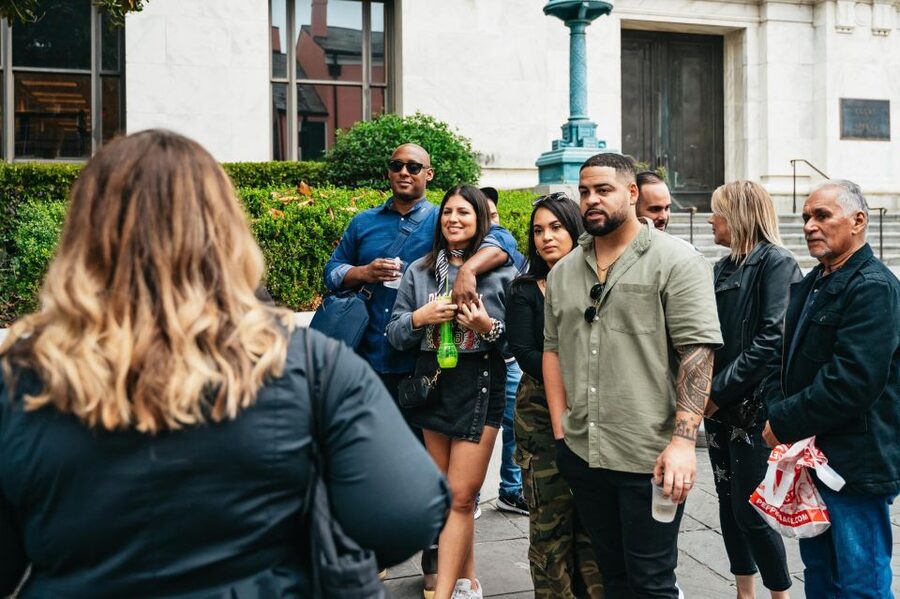
- A small-group feel: The tour accommodates up to nine people, making it easier to hear the guide and ask questions.
- Vegetarian food is available: The alternate menu includes black-eyed pea soup, vegetable jambalaya, and portobello po-boys.
- The guides are a major strength: Beth, Gary, John, Meg, Cat, Kat, Mike, and others are praised for clear storytelling, humor, and local knowledge.
Starting with gumbo on Chartres Street
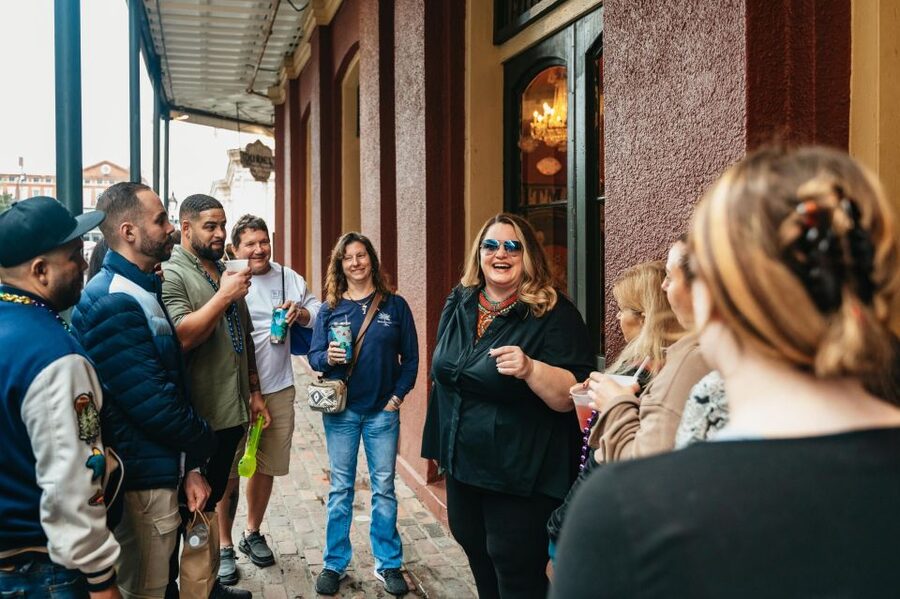
Meet your guide inside the 3rd Block Depot restaurant at 316 Chartres Street. That meeting point matters because the first tasting begins almost at once, so you do not need to gather outside and then walk across the Quarter before eating.
The opening dish is rustic Cajun-style gumbo with warm potato salad. It is a useful first lesson because gumbo is not one fixed recipe. The dish can reflect Louisiana’s African, French, Spanish, Caribbean, and regional influences, and your guide uses the bowl in front of you to explain that larger story.
I like beginning with a warm, savory dish rather than a tiny nibble. It gives the tour a proper meal rhythm, especially if you have arrived hungry. The stop lasts about 25 minutes, leaving time for the guide to explain the food and the surrounding streets.
One practical issue is noise. The restaurant can be lively, and one account described staff speaking loudly while the guide was talking. If you have trouble hearing in busy rooms, stand close to the guide and ask to move nearer when the group settles in.
More History Walking Tours in New Orleans
- New Orleans Garden District History Walking Tour
★ 5.0 · 2,879 reviews - French Quarter Historical Sights and Stories Walking Tour
★ 5.0 · 2,724 reviews - New Orleans Food and History Walking Tour
★ 5.0 · 1,544 reviews
Hot sauce, pralines, and the sweeter side of the Quarter
After the first stop, the group walks about five minutes to another food tasting. The route is broken into short stretches, so this is not a strenuous march through the city. You are moving through the French Quarter, though the focus stays on food rather than on a long list of architectural stops.
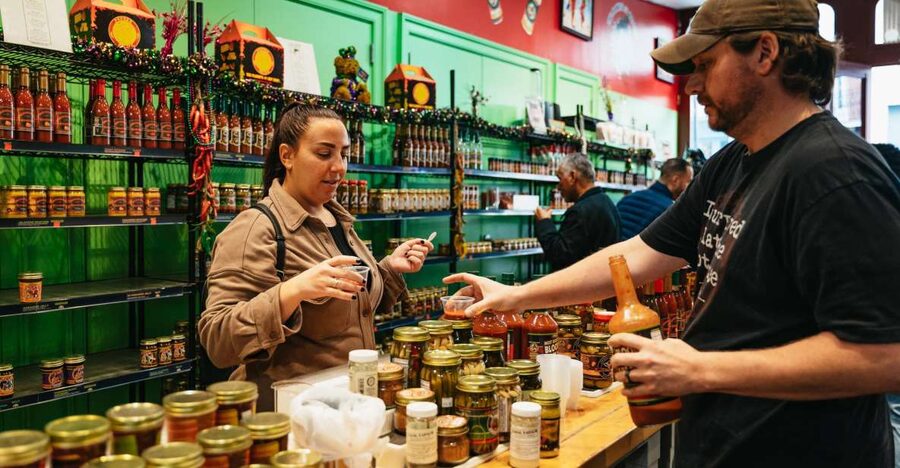
A popular hot sauce bar brings a playful change of pace. You can sample many varieties, from manageable heat to sauces that demand caution. One person described needing milk after trying a particularly spicy salsa, so take small tastes. This is a sampling stop, not a contest.
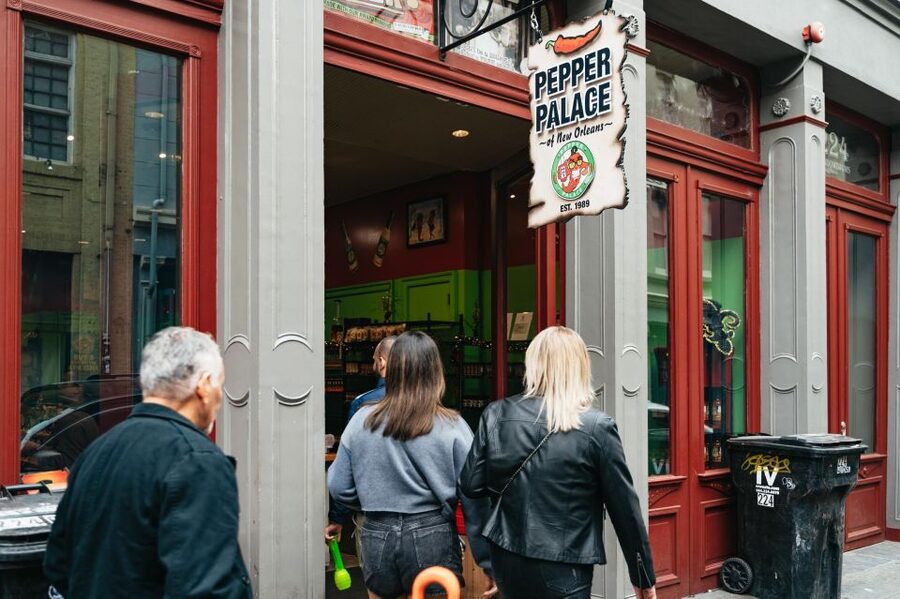
The next stop is Leah’s Pralines, where you try a traditional Creole praline or the newer bacon pecan brittle. This is one of the tour’s helpful contrasts. New Orleans food is not only gumbo and fried seafood. Sugar, pecans, butter, and candy-making also belong to the city’s culinary story.
The praline stop lasts about 25 minutes. It is also a good point to notice how the tour balances established specialties with newer variations. The bacon pecan brittle may appeal to you if standard pralines seem too sweet, though the exact sample can depend on the day.
Learning why the po-boy matters
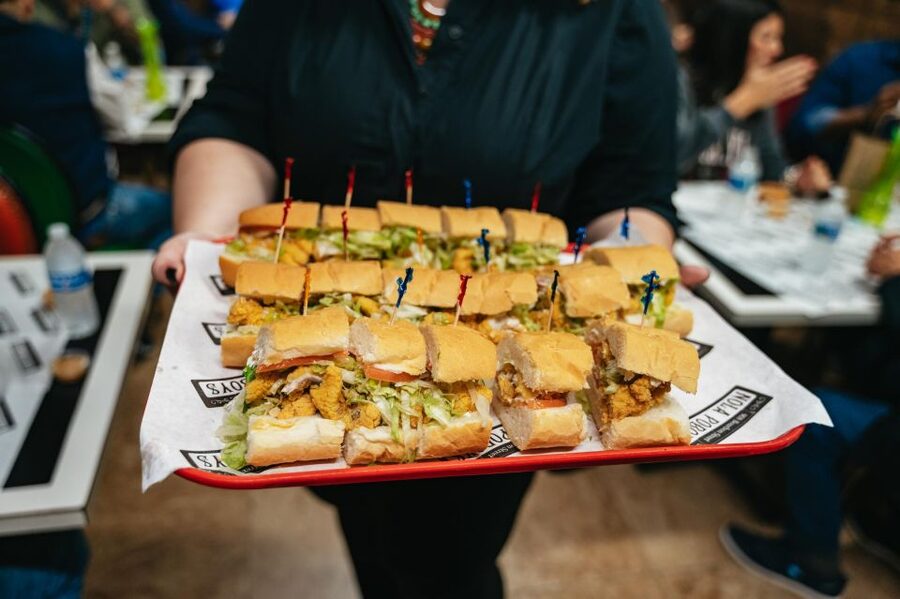
From the candy shop, the route continues on foot for about ten minutes to NOLA Poboys. Here you learn about Louisiana’s seafood traditions before trying a freshly fried catfish po-boy.
The sandwich is simple in outline: seafood, bread, and toppings. But the guide’s explanation gives it more meaning. You hear how a humble local sandwich became one of the foods most closely linked with New Orleans. The fried catfish also adds a texture contrast after the soft gumbo and sweet candy.
This is one of the more filling samples, and the portions are not merely decorative bites. Several people found that the food added up to a full meal, so you should avoid eating a large breakfast or lunch before arriving.
The route’s ten-minute walking stretch may feel longer in hot and humid weather. New Orleans can be uncomfortable outdoors, and the tour runs in rain or shine. Wear comfortable shoes, carry water, and dress for the forecast. Water is included, but soft drinks and alcohol are not.
Muffuletta and boudin balls: two very different bites
The tour then turns to two New Orleans originals: the muffuletta and boudin balls. The walk between stops is listed at about ten minutes, followed by roughly 35 minutes for food and explanation.
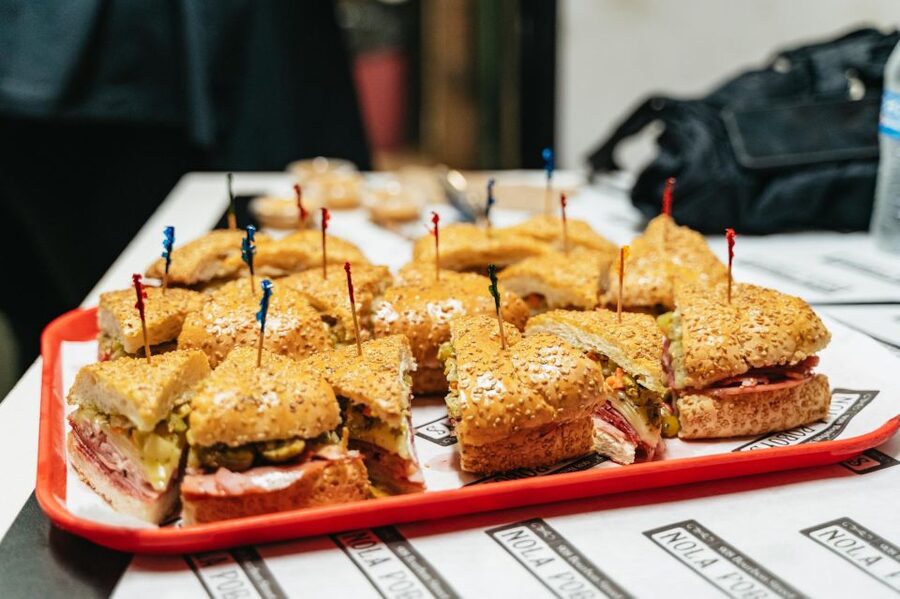
A muffuletta is a large round sandwich associated with Italian food traditions in New Orleans. It is heavier and more substantial than a po-boy, with a savory filling and the key olive salad that gives it its distinct character. Trying both sandwiches in one tour is useful because you can compare two local staples instead of treating every famous dish as if it had the same roots.
Boudin balls offer another change. Boudin is a seasoned sausage mixture, and the ball format is commonly fried for serving. The flavor is savory, hearty, and different from both the catfish sandwich and the muffuletta.
This stop can be a lot of food. If you are a light eater, pace yourself and treat each sample as part of a meal rather than a snack crawl. The group does not simply rush from one counter to another. The longer tasting period allows you to eat, listen, and ask questions.
More History Walking Tours in the USA
- New Orleans Cocktail History Walking Tour in the French Quarter
★ 5.0 · 604 reviews - New Orleans Jazz History and Music Walking Tour
★ 4.5 · 477 reviews - New Orleans Historic Cemetery Walking Tour
★ 5.0 · 175 reviews - New Orleans: Drunk History Walking Tour
★ 4.2 · 165 reviews
Red beans and rice at Creole Cookery
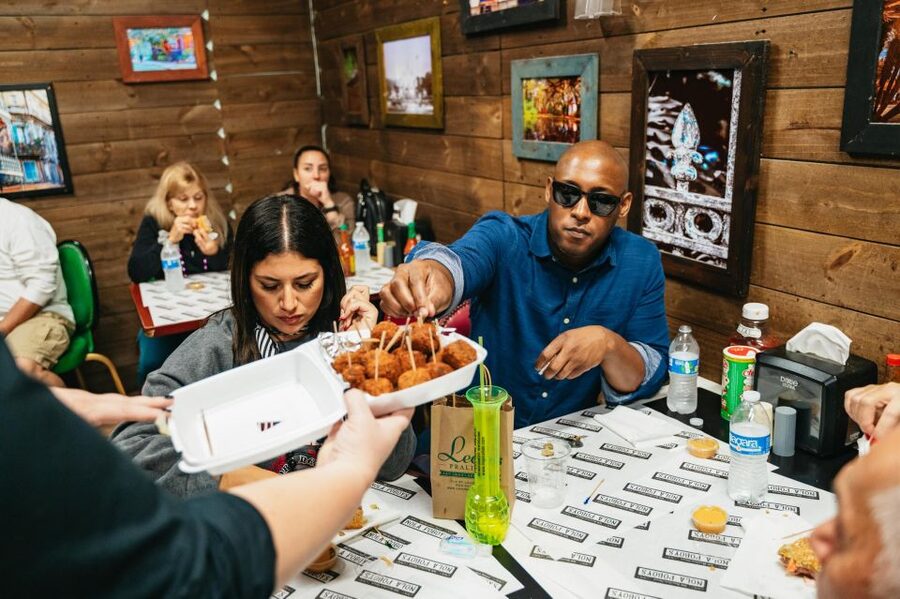
The next stop is Creole Cookery, reached after another walk of about ten minutes. You sit down for red beans and rice, one of the most familiar home-style dishes associated with New Orleans.
This sample is valuable because it shows a slower, simpler side of the city’s food traditions. Red beans and rice is not flashy. It is filling, economical, and deeply connected to everyday cooking. On a food tour that includes sandwiches, seafood, candy, and hot sauce, this bowl helps round out the picture.
The tasting and discussion here take about 45 minutes, making it the longest stop on the route. That gives the guide room to connect ingredients and cooking habits with the city’s past. Past guides have included Beth, Gary, John, Meg, and others. The strongest praise goes to guides who can explain the links between food, local culture, and New Orleans history without turning the tour into a lecture.
John is sometimes called Professor by participants, while Beth is praised for lively storytelling and careful timing. Gary is noted for connecting regional food with the wider story of the city. Guide assignments vary, so you cannot select one specific person from the information provided.
Finishing with bananas Foster bread pudding
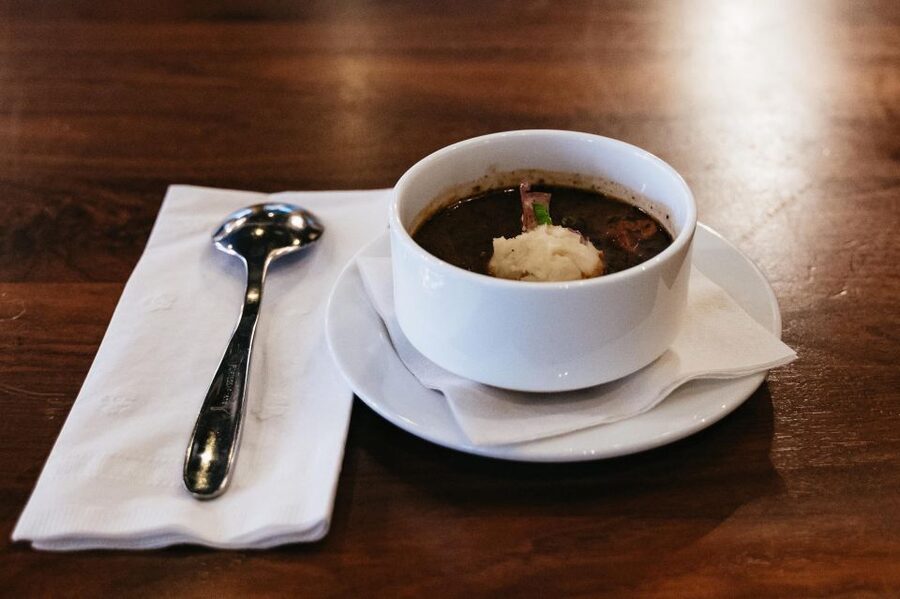
The last tasting is dessert: bananas Foster bread pudding. It is a warm, sweet finish after several savory portions, and it gives the tour a clear ending rather than leaving you to find dessert on your own.
The dessert has been a favorite for some people, along with the gumbo. Others have liked the red beans and rice most. That range is a good sign for anyone who wants to sample several styles of local cooking rather than hunt for one perfect dish.
The tour finishes on Toulouse Street in the French Quarter. Since the start and finish are in different spots, you can continue exploring on foot afterward. The route does not include hotel pickup or drop-off, so plan your own way to the meeting point and from the final stop.
The vegetarian option and its limits
A vegetarian menu is available if you request it at checkout. It includes black-eyed pea soup, vegetable jambalaya, portobello po-boys, and other versions of Southern classics.
That is a meaningful option, not simply a plate of side dishes. You still get a range of tastes and a way to follow the same food-and-history theme. A pescatarian group can also work well with the regular menu, though you should state your needs when booking.
The limits are clear. There is no vegan, gluten-free, or dairy-free menu. The provider asks you to report food allergies when booking, but not every personal dislike or food preference can be accommodated. One person who avoided seafood and alligator found that the lack of choice meant missing food, so read the menu carefully before paying.
The supplied information also describes the tour as wheelchair accessible, while another note says it is not suitable for people with mobility impairments. Because the route includes walking between stops and restaurant access can vary, contact the provider before booking if you use a wheelchair or have mobility concerns.
What the three-hour format feels like
The tour lasts three hours and includes several short walks of about five to ten minutes. The walking itself is manageable for many people, but the heat, humidity, crowds, and uneven conditions of an old city district can affect how comfortable you feel.
The group size is capped at nine. That is small enough for questions and personal attention, and it helps the guide manage several restaurant stops. It also means the group’s pace can shape the outing. If you prefer to wander alone or choose each restaurant yourself, this will feel structured.
The schedule has a good balance between eating and explanation. Food stops range from about 20 to 45 minutes, so you are not constantly standing outside waiting for a sample. The best guides, including Beth, Gary, Meg, Kat, and John, are praised for keeping the tone friendly and informative rather than overly theatrical.
English is the tour language. The guide covers both food and local history, so I would treat this as an orientation walk as much as a meal. It is especially useful during your first day or two in New Orleans, when you are still deciding where to eat.
Is $85 a fair price?
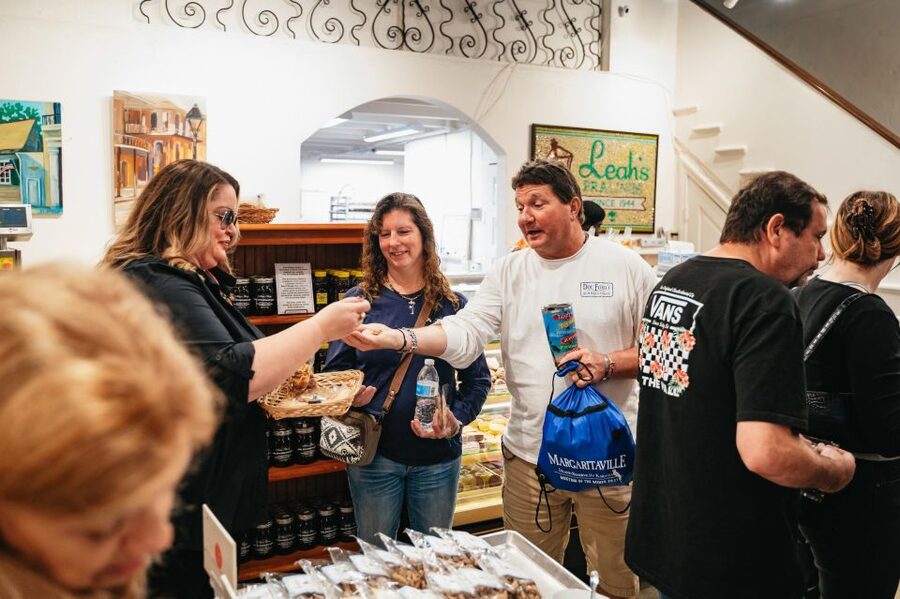
At $85 per person, the price is fair if you value the complete package. You receive a three-hour guided walk, up to eight food samples, water, and tips for servers and waitstaff. You also avoid paying separately for several dishes while learning how they fit into New Orleans culture.
The value drops if you dislike several listed foods or plan to eat a full meal before the tour. It also drops for anyone who needs strict dietary control, since the menu cannot cover vegan, gluten-free, or dairy-free requirements.
Alcohol and soft drinks cost extra. Most restaurant stops have bars, so you can buy a cold drink if you want one. That flexibility is useful, but budget for it separately.
The strongest value comes from the variety. Gumbo, catfish po-boy, muffuletta, boudin balls, red beans and rice, pralines, hot sauce, and dessert would take several independent stops to arrange. You are paying partly for food, but also for the guide’s explanation and the ease of moving between places.
Who should book this French Quarter food tour?
I would recommend it to first-time visitors who want a practical introduction to New Orleans cooking. It suits people who enjoy trying several foods, asking questions, and learning the story behind a dish.
It is also a good choice for couples, families with adventurous eaters, and small groups that want more substance than a basic sightseeing walk. The vegetarian option widens the audience, though only if your diet allows dairy, gluten, and the other ingredients used in the alternate dishes.
I would be cautious if you avoid seafood, have several food allergies, need a fully vegan menu, or dislike guided schedules. The food is served as selected tastings, not chosen from a personal menu. You should also think twice if hot weather and three hours on foot are a poor match for you.
The tour has earned a 4.9 rating from 713 ratings, and the recurring strengths are clear: guides who explain the city well, generous food portions, and a useful connection between history and cuisine. The occasional weaknesses are also easy to understand: limited dietary flexibility, a possible noisy first restaurant, and a price that may feel high if you do not eat most of the menu.
Should you book it?
Book this tour if you want to taste the French Quarter while getting your bearings and learning why the food matters. Schedule it near the start of your visit, arrive hungry, and tell the provider about allergies when you reserve.
Skip it if you need vegan, gluten-free, or dairy-free food, or if you want complete control over every dish. For most curious eaters who can handle the menu, the mix of gumbo, sandwiches, Creole dishes, candy, and dessert makes this a practical and satisfying introduction to New Orleans.
FAQ
How long is the New Orleans food tour?
The tour lasts three hours.
Where does the tour begin?
Meet your guide inside the 3rd Block Depot restaurant at 316 Chartres Street in the French Quarter.
Where does the tour finish?
The tour finishes on Toulouse Street in New Orleans, Louisiana.
How many food samples are included?
The tour includes up to eight food samples. The listed tastings include gumbo, a praline or bacon pecan brittle, a catfish po-boy, muffuletta, boudin balls, red beans and rice, and bananas Foster bread pudding.
Is a vegetarian option available?
Yes. Request the vegetarian option at checkout. It includes black-eyed pea soup, vegetable jambalaya, portobello po-boys, and other Southern-style alternatives.
Is there a vegan, gluten-free, or dairy-free option?
No. The tour does not offer vegan, gluten-free, or dairy-free options.
Are drinks included?
Water is included. Alcoholic drinks and soft drinks are not included, but most restaurant stops have bars where you can buy beverages.
What happens if it rains?
The tour operates rain or shine. You should dress for the weather and wear comfortable walking shoes.
Can I cancel my booking?
Yes. You can cancel up to 24 hours in advance for a full refund. The reserve-now, pay-later option lets you hold a place without paying immediately.
More Food Tours in New Orleans
- New Orleans Cocktail and Food History Tour
★ 5.0 · 819 reviews - New Orleans: Combo Cocktail and Food History Tour
★ 4.9 · 180 reviews - New Orleans: Garden District Food, Drinks & History Tour
★ 4.9 · 97 reviews - Amsterdam Food and Cultural Tour with Tastings
★ 5.0 · 4,315 reviews
Just added around New Orleans
- New Orleans: Garden District Food, Drinks & History Tour★ 4.9 · 97 reviews
- New Orleans: Drunk History Walking Tour★ 4.2 · 165 reviews
- New Orleans: French Quarter Saints & Sinners History Tour★ 4.6 · 56 reviews
- New Orleans: History, Culture & Architecture Guided Tour★ 4.6 · 38 reviews
- New Orleans: Haunted Drunken History Walking Tour★ 4.9 · 50 reviews
- New Orleans, French Quarter: Pirate History Walking Tour★ 5.0 · 45 reviews
- New Orleans: 2-Hour French Quarter History and Voodoo Tour★ 4.7 · 89 reviews
- New Orleans: Early Evening Cocktail History Tour★ 5.0 · 51 reviews
History Walking Tours, compared.

History and Hauntings of Salem Guided Walking Tour
Read our review →
Freedom Trail History Small Group Walking Tour
Read our review →
Historic Charleston Guided Sightseeing Walking Tour
Read our review →
Tapas Walking Tour with Food, Wine, and History
Read our review →
Savannah History and Haunts Candlelit Ghost Walking Tour
Read our review →
A History of Terror – Belfast City Centre Walking Tour
Read our review →Browse the lists this tour appears in